Uma doença inflamatória intestinal que envolve a superfície da mucosa do intestino grosso e do reto. Pode se apresentar com início agudo ou lento e segue um curso intermitente ou contínuo. Os sinais e sintomas incluem dor abdominal, diarreia, febre, perda de peso e hemorragia intestinal.
Introdução
O que você precisa saber de cara
Visão geral
A colite ulcerosa é uma doença inflamatória intestinal que afeta a superfície da mucosa do intestino grosso e do reto. Pode ter início agudo ou lento e seguir um curso intermitente ou contínuo.[1]
Sinais e sintomas
Os sinais e sintomas incluem dor abdominal, diarreia, febre, perda de peso e hemorragia intestinal.[1]
Causas genéticas
Diagnóstico
Tratamento e manejo
Diversos medicamentos são utilizados no manejo da colite ulcerosa, conforme citado na literatura científica. Entre eles estão: mesalamina, infliximabe, esteroides, vedolizumabe, sulfassalazina, azatioprina, adalimumabe, ciclosporina, tofacitinibe e golimumabe. No Brasil, o nível de cobertura pelo SUS é classificado como 'Cobertura mínima'.[1][3]
Tratamentos citados na literatura
A seguir estão os fármacos mais frequentemente associados à colite ulcerosa em publicações científicas (fonte: PubTator3). Estas são associações mineradas da literatura e não constituem recomendação de tratamento: Mesalamina (1729 publicações), Infliximabe (1556), Esteroides (948), Vedolizumabe (801), Sulfassalazina (624), Azatioprina (596), Adalimumabe (546), Ciclosporina (492), Tofacitinibe (490), Golimumabe (271).[3]
Prognóstico e qualidade de vida
Conteúdo informativo gerado e mantido automaticamente a partir de fontes oficiais (Orphanet, HPO, OMIM, SUS). Não substitui avaliação médica.
A colite ulcerativa é um distúrbio crônico que afeta o sistema digestivo. Esta condição é caracterizada por inflamação anormal da superfície interna (epitélio) do reto e do cólon. O reto e o cólon constituem a maior parte do comprimento do intestino grosso. A inflamação geralmente provoca feridas abertas (úlceras) que se desenvolvem no intestino grosso. A colite ulcerativa costuma aparecer entre 15 e 30 anos de idade, embora possa se desenvolver em qualquer idade. A inflamação tende a se agravar várias vezes ao longo da vida de uma pessoa, o que causa sinais e sintomas recorrentes.
Os sintomas mais comuns da colite ulcerativa são dor abdominal em cólica e diarreia frequente, frequentemente com sangue, pus ou muco nas fezes. Outros sinais e sintomas incluem náuseas, perda de apetite, urgência intestinal, fadiga e febre. O sangramento crônico do tecido intestinal inflamado e ulcerado pode causar escassez de glóbulos vermelhos (anemia) em algumas pessoas com a condição. Pessoas com esse distúrbio têm dificuldade em absorver fluidos e nutrientes suficientes de sua dieta e frequentemente apresentam perda de peso. Crianças afetadas geralmente crescem mais lentamente que o normal. Menos frequentemente, a colite ulcerativa causa problemas na pele, nas articulações, nos olhos, nos rins ou no fígado, que provavelmente são devidos à inflamação anormal.
Megacólon tóxico é uma complicação rara da colite ulcerativa que pode ser potencialmente fatal. O megacólon tóxico envolve um alargamento (dilatação) do cólon e uma resposta inflamatória avassaladora. A colite ulcerativa também aumenta o risco de desenvolver câncer de cólon, especialmente em pessoas cujo cólon inteiro está inflamado e naquelas que têm colite ulcerativa há 8 anos ou mais.
A colite ulcerativa é uma forma comum de doença inflamatória intestinal (DII). Outro tipo de DII, a doença de Crohn, também causa inflamação crônica dos intestinos. Ao contrário da colite ulcerativa, que afeta apenas a superfície interna do intestino grosso, a doença de Crohn pode causar inflamação em qualquer parte do sistema digestivo, e a inflamação se estende mais profundamente ao tecido intestinal.
Fonte: MedlinePlus Genetics (NLM/NIH), traduzidoUma doença inflamatória intestinal que envolve a superfície da mucosa do intestino grosso e do reto. Pode se apresentar com início agudo ou lento e segue um curso intermitente ou contínuo. Os sinais e sintomas incluem dor abdominal, diarreia, febre, perda de peso e hemorragia intestinal.
Tem tratamento?
Encontrou um erro ou informação desatualizada? Sugira uma correção →
Entender a doença
Do básico ao detalhe, leia no seu ritmo
Preparando trilha educativa...
Sinais e sintomas
O que aparece no corpo e com que frequência cada sintoma acontece
Linha do tempo da pesquisa
Encontrou um erro ou informação desatualizada? Sugira uma correção →
Genética e causas
O que está alterado no DNA e como passa nas famílias
Nenhum gene associado encontrado
Os dados genéticos desta condição ainda estão sendo catalogados.
Diagnóstico
Os sinais que médicos procuram e os exames que confirmam
Tratamento e manejo
Remédios, cuidados de apoio e o que precisa acompanhar
Onde tratar no SUS
Hospitais de referência no Brasil e o protocolo oficial do SUS (PCDT)
🇧🇷 Atendimento SUS — Colite ulcerosa
Selecione um estado ou use sua localização para ver resultados.
Dados de DATASUS/CNES, SBGM, ABNeuro e Ministério da Saúde. Sempre confirme a disponibilidade diretamente com o estabelecimento.
Pesquisa ativa
Ensaios clínicos abertos e novidades científicas recentes
Ensaios em destaque
Com ensaio aberto em 62 países. O ponto verde marca onde há vaga agora.
🟢 Recrutando agora
100 pesquisas recrutando participantes. Converse com seu médico sobre a possibilidade de participar.
Outros ensaios clínicos
Publicações mais relevantes
Outcomes of inflammatory bowel disease in patients with obesity following bariatric surgery: propensity score-matched cohort study.
Obesity is increasing among patients with inflammatory bowel disease, but bariatric surgery has been rare in this group owing to concerns about worsening the inflammatory bowel disease. The aim of the study was to evaluate inflammatory bowel disease-related outcomes following bariatric surgery. Nationwide cohort of all adult patients in Sweden between 2007 and 2020 with obesity and inflammatory bowel disease. Patients were matched 1 : 1 with a two-stage matching process between those undergoing bariatric surgery with those who did not (classified by inflammatory bowel disease subtype followed by a propensity score match including sex, age, number of previous targeted therapies, presence of immunotherapy, cumulative oral corticosteroid dose, and previous intestinal surgery). The primary composite outcome comprised inflammatory bowel disease-related hospitalization, initiation of corticosteroid therapy, immunomodulation, commencement of a new targeted therapy or major inflammatory bowel disease-related surgery. The study included 798 patients with inflammatory bowel disease and obesity: 399 who underwent bariatric surgery (145 Crohn's disease, 238 ulcerative colitis, 16 unclassified inflammatory bowel disease) versus 399 who did not. Over a median observation period of 3.3 years in the surgery group and 3.0 years in the non-surgery group, the composite primary endpoint occurred in 201 patients who had surgery (incidence rate 11.9 (95% confidence interval (c.i.) 10.2 to 13.5) per 100 person-years) and 226 without surgery (incidence rate 15.1 (13.1 to 17.0) per 100 person-years), corresponding to an adjusted hazard ratio of 0.66 (95% c.i. 0.51 to 0.85) in those undergoing bariatric surgery compared with those who did not. Bariatric surgery was associated with improved inflammatory bowel disease-related outcomes among patients with inflammatory bowel disease and obesity, suggesting a potential benefit from bariatric surgery among patients with concomitant obesity and inflammatory bowel disease.
Increased risk of gastric cancer in relation with pernicious anaemia in patients with primary antibody deficiency: A nationwide case control study.
We aimed to assess gastrointestinal cancers risks in a large cohort of individuals with primary antibody deficiency (PAD) and their association with risk of autoimmune and inflammatory gastrointestinal diseases. Investigating a French national database of inpatient admissions between 2010 and 2018, we identified 12,748 patients with PAD and 38,244 control non-exposed individuals. We performed multiple exposed-non-exposed studies using conditional logistic regression. In comparison with non-exposed patients, PAD patients had increased risk of in situ gastric carcinoma (Odds Ratio (OR) =10.5 [95 % CI 2.2; 50.5]), malignant gastric tumor (OR=3.2 [95 % CI 2.2; 4.4]) and colorectal cancer (OR=1.2 [95 % CI 1; 1.5]). PAD patients had also increased risk of pernicious anaemia (OR=8 |95 % CI 5.6; 11.5]), Crohn's disease (OR= 4.4 [95 % CI 3.5; 5.6]), ulcerative colitis (OR=2.9 [95 % CI 2.4; 3.6]) and coeliac disease (OR=13.3 [95 % CI 9.1; 19.5]). Within patients with gastric cancer, those with PAD had increased risk of pernicious anaemia (OR=8.4 [95 % CI 1.5; 215]; p = 0.01) but not of H. pylori infection. Risk of gastric cancer is particularly high in PAD patients and notably risk of in situ gastric carcinoma in association with pernicious anaemia. It supports indication of early endoscopic screening in these patients.
Updates on the diagnosis and management of cryptogenic multifocal ulcerative stenosing enteropathy (CMUSE) and non-steroidal enteropathy.
Crohn's disease and coeliac disease are well-known to induce ulcerations in the small-bowel. However, there is a group of very rare chronic ulcerative conditions of the small intestine that has emerged from the intestinal black box nearly 70 years ago, and that has gained interest with the advent of small-bowel capsule endoscopy and device-assisted enteroscopy. These distinct ulcerative enteropathies have come to our attention, and continue to reveal their aetiology and treatment options. Two distinct entities, called cryptogenic multifocal ulcerative stenosing enteritis/enteropathy (CMUSE) and chronic nonspecific multiple ulcers of the small intestine (CNSU) are gaining more clinical attention. CMUSE was first reported in Europe, whereas CNSU was exclusively diagnosed in Japanese patients. With the identification of susceptibility genes impacting prostaglandin metabolism, CMUSE and CNSU have become two distinct pathologies within the group of prostaglandin-associated enteropathies, to be differentiated from medication-induced enteropathies, especially non-steroidal anti-inflammatory drugs (NSAID)-induced enteropathy with similar intestinal ulcerations due to interference with prostaglandin metabolism. The current review provides an historical overview of CMUSE and CNSU publications, in addition to the currently available diagnostic and treatment options, and how to differentiate these rare enteropathies from NSAID-induced enteropathy.
A survey of genome-wide association studies, polygenic scores and UK Biobank highlights resources for autoimmune disease genetics.
Autoimmune diseases share a general mechanism of auto-antigens harming tissues. Still. they are phenotypically diverse, with genetic as well as environmental factors contributing to their etiology at varying degrees. Associated genomic loci and variants have been identified in numerous genome-wide association studies (GWAS), whose results are increasingly used for polygenic scores (PGS) that are used to predict disease risk. At the same time, a technological shift from genotyping arrays to next generation sequencing (NGS) is ongoing. NGS allows the identification of virtually all - including rare - genetic variants, which in combination with methodological developments promises to improve the prediction of disease risk and elucidate molecular mechanisms underlying disease. Here we review current, publicly available autoimmune disease GWAS and PGS data based on information from the GWAS and PGS catalog, respectively. We summarize autoimmune diseases investigated, respective studies conducted and their results. Further, we review genetic data and autoimmune disease patients in the UK Biobank (UKB), the largest resource for genetic and phenotypic data available for academic research. We find that only comparably prevalent autoimmune diseases are covered by the UKB and at the same time assessed by both GWAS and PGS catalogs. These are systemic (systemic lupus erythematosus) as well as organ-specific, affecting the gastrointestinal tract (inflammatory bowel disease as well as specifically Crohn's disease and ulcerative colitis), joints (juvenile ideopathic arthritis, psoriatic arthritis, rheumatoid arthritis, ankylosing spondylitis), glands (Sjögren syndrome), the nervous system (multiple sclerosis), and the skin (vitiligo).
Golimumab improves work productivity in patients suffering from moderate to severe ulcerative colitis: results of a prospective study over 24 months.
Ulcerative colitis (UC) is a chronic inflammatory bowel disease with recurrent episodes of debilitating symptoms negatively affecting work productivity and health-related quality of life (HRQoL). The use of biologics in UC treatment improves work and HRQoL but prospective long-term data concerning the treatment with TNFα inhibitor golimumab in UC patients are still rare. Therefore, our study aimed to evaluate the change in work productivity, capacity for daily activities and HRQoL in UC patients treated with golimumab in Germany. Using the Work Productivity and Activity Impairment questionnaire, the change in work productivity and in capacity for daily activities after 3 months and over the whole observational period of 24 months were assessed (both primary endpoints). Disease-specific and health-related quality of life (QoL) were analyzed with the Inflammatory Bowel Disease Questionnaire (IBDQ), the Short-Form 12 Health Survey Questionnaire (SF-12), and the Partial Mayo Score (secondary endpoints). Further, disease-related hospitalization rates were assessed. This prospective non-interventional study included 286 patients. Thereof, 212 patients were employed at baseline (modified intention to treat analysis set employed at baseline, mITTe). 61.3% of the mITTe patients had moderate and 17.0% had severe UC. Three months after initiation of golimumab therapy, total work productivity impairment (TWPI) score and activity impairment score improved significantly from baseline with a mean change of - 17.3% (p < 0.0001) and - 14.4% (p < 0.0001), respectively. Results persisted over 24 months (mean change TWPI score: - 24.5%, mean change activity impairment score: - 30.0%). Disease- and health-related QoL also improved significantly under golimumab treatment as indicated by increased IBDQ [mean change: 28.0 (SD: ± 36.1, month 3), 42.1 (SD: ± 39.5, month 24)] and SF-12 scores [PCS-12: 45.9 (SD: ± 8.5), MCS-12: 4.9 (SD: ± 10.6, month 3), PCS-12: 5.9 (SD: ± 9.0), MCS-12: 6.4 (SD: ± 11.1, month 24)]. Disease-related hospitalization rate decreased from 16.0% (BL) to 4.3% at month 24 and the mean number of missed working days due to UC decreased from 8.2 (SD: 17.6, BL) to 0.7 (SD: 2.1) after golimumab induction. Golimumab leads to notable long-term improvements in work productivity, daily activity, HRQoL, and disease-related hospitalization rates in patients with moderate to severe UC. PEI (Paul-Ehrlich-Institute, Langen, Germany) Registration Nr: NIS#255 ( https://www.pei.de/SharedDocs/awb/nis-0201-0300/0255.html ).
Publicações recentes
An estimation of global genetic prevalence of PLA2G6-associated neurodegeneration.
Nosology of genetic skeletal disorders: 2023 revision.
Abbreviated Antiplatelet Therapy After Coronary Stenting in Patients With Myocardial Infarction at High Bleeding Risk.
Audiological and otologic manifestations of glutaric aciduria type I.
The role of primary care in management of rare diseases in Ireland.
📚 EuropePMCmostrando 18
Outcomes of inflammatory bowel disease in patients with obesity following bariatric surgery: propensity score-matched cohort study.
BJS openIncreased risk of gastric cancer in relation with pernicious anaemia in patients with primary antibody deficiency: A nationwide case control study.
Digestive and liver disease : official journal of the Italian Society of Gastroenterology and the Italian Association for the Study of the LiverUpdates on the diagnosis and management of cryptogenic multifocal ulcerative stenosing enteropathy (CMUSE) and non-steroidal enteropathy.
Best practice & research. Clinical gastroenterologyA survey of genome-wide association studies, polygenic scores and UK Biobank highlights resources for autoimmune disease genetics.
Frontiers in immunologyGolimumab improves work productivity in patients suffering from moderate to severe ulcerative colitis: results of a prospective study over 24 months.
BMC gastroenterologyCommon and Rare Variant Prediction and Penetrance of IBD in a Large, Multi-ethnic, Health System-based Biobank Cohort.
GastroenterologyIncidence, risk factors, and health service burden of sequelae of campylobacter and non-typhoidal salmonella infections in England, 2000-2015: A retrospective cohort study using linked electronic health records.
The Journal of infectionNo increased risk of nephrotoxicity associated with 5-aminosalicylic acid in IBD: a population-based cohort and nested case-control study.
Alimentary pharmacology & therapeuticsA High Prevalence of Gastrointestinal Manifestations in Common Variable Immunodeficiency.
The American journal of gastroenterologyElevation in Cell Cycle and Protein Metabolism Gene Transcription in Inactive Colonic Tissue From Icelandic Patients With Ulcerative Colitis.
Inflammatory bowel diseasesFeatures of Autoimmune Pancreatitis Associated With Inflammatory Bowel Diseases.
Clinical gastroenterology and hepatology : the official clinical practice journal of the American Gastroenterological AssociationPatient Age, Sex, and Inflammatory Bowel Disease Phenotype Associate With Course of Primary Sclerosing Cholangitis.
GastroenterologyAutoimmune cytopenias associated with inflammatory bowel diseases: Insights from a multicenter retrospective cohort.
Digestive and liver disease : official journal of the Italian Society of Gastroenterology and the Italian Association for the Study of the LiverGenetic architecture differences between pediatric and adult-onset inflammatory bowel diseases in the Polish population.
Scientific reportsCancer in Elderly Onset Inflammatory Bowel Disease: A Population-Based Study.
The American journal of gastroenterologyThe experience of a referral centre and literature overview of GIST and carcinoid tumours in inflammatory bowel diseases.
International journal of surgery (London, England)Toxic megacolon and human Cytomegalovirus in a series of severe ulcerative colitis patients.
Journal of clinical virology : the official publication of the Pan American Society for Clinical VirologyNeoplasia in the colorectal specimens of patients with ulcerative colitis and ileal pouch-anal anastomosis - need for routine surveillance?
Scandinavian journal of gastroenterologyAssociações
Organizações que acompanham esta doença — pra ter apoio e orientação
Ainda não temos associações cadastradas para Colite ulcerosa.
É de uma associação que acompanha esta doença? Fale com a gente →
Doenças relacionadas
Doenças com sintomas parecidos — ajudam quem ainda está buscando diagnóstico
Ainda não achamos doenças com sintomas parecidos o suficiente.
Perguntas frequentes
O que as famílias mais perguntam sobre esta doença — cada resposta com a fonte de onde saiu
A colite ulcerosa é uma doença inflamatória intestinal que atinge o cólon e o reto. A alteração inflamatória provoca o surgimento de úlceras que resultam em cólicas, sangramento e diarreia.
Referências
Fontes citadas no texto, publicações do grafo e bases de dados usadas neste verbete
4 fontes citadas no texto · 10 publicações do grafo RarasNet (PubMed) · 4 bases de dados. Títulos, periódicos e PMIDs vêm direto da fonte, sem intermediação de IA.
Dados compilados pelo RarasNet a partir de fontes abertas (Orphanet, OMIM, MONDO, PubMed/EuropePMC, ClinicalTrials.gov, DATASUS, PCDT/MS). Este conteúdo é informativo e não substitui avaliação médica.
Citar este verbete
Raras. (2026). Colite ulcerosa. Em Raras — Enciclopédia de Doenças Raras do Brasil. https://raras.org/doenca/colite-ulcerosa
Formato APA. Conteúdo sob CC BY 4.0 — reuso livre com atribuição.
Conteúdo mantido por Agente Raras · Médicos e pesquisadores podem colaborar
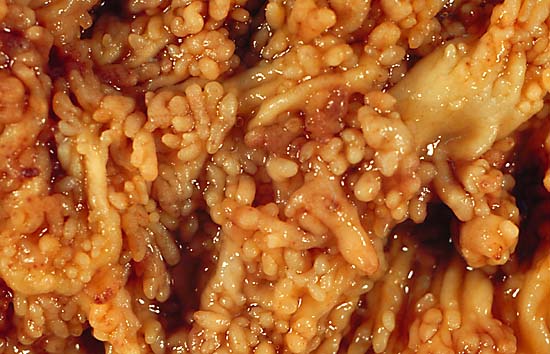
Colite ulcerosa
📋 Origem dos dados
Esta página agrega dados de fontes públicas e oficiais. Dados sobre cobertura no SUS (PCDT, CEAF) são verificados ativamente por agente proativo (ver badge no infobox). Demais dados têm atribuição de fonte + data da última sincronização — clique para abrir o original.
- Doença rara (ontologia)
- fonte: Orphanet
- Identificador unificado
- fonte: MONDO
- Codificação WHO/SUS
- fonte: WHO ICD-10 / DATASUS
- Indexação biomédica
- fonte: MeSH (NLM)
- Dado público estruturado
- fonte: Wikidata
- Reposicionamento
- fonte: Drug Repurposing Hub
- Ensaios clínicos
- fonte: ClinicalTrials.gov

