OBSOLETO. Doença infecciosa fúngica rara.
Introdução
O que você precisa saber de cara
Visão geral
O termo "Micose rara" refere-se a uma classificação que engloba infecções fúngicas incomuns, sendo atualmente apontado como um conceito obsoleto na base de dados.[1]
Conteúdo informativo gerado e mantido automaticamente a partir de fontes oficiais (Orphanet, HPO, OMIM, SUS). Não substitui avaliação médica.
A micose rara é um termo que reúne diferentes infecções graves ou incomuns provocadas por fungos no organismo. Como não se trata de uma única doença, as manifestações podem incluir desde feridas na pele e na boca até problemas respiratórios e infecções generalizadas. No Brasil, esta categoria geral não consta na lista oficial de Protocolos Clínicos e Diretrizes Terapêuticas (PCDT) para doenças raras do Ministério da Saúde. Atualmente, novas alternativas terapêuticas para fungos invasivos raros continuam em avaliação em ensaios clínicos com centros de pesquisa no país.
OBSOLETO. Doença infecciosa fúngica rara.
Encontrou um erro ou informação desatualizada? Sugira uma correção →
Entender a doença
Do básico ao detalhe, leia no seu ritmo
Preparando trilha educativa...
Sinais e sintomas
O que aparece no corpo e com que frequência cada sintoma acontece
Linha do tempo da pesquisa
Encontrou um erro ou informação desatualizada? Sugira uma correção →
Genética e causas
O que está alterado no DNA e como passa nas famílias
Nenhum gene associado encontrado
Os dados genéticos desta condição ainda estão sendo catalogados.
Diagnóstico
Os sinais que médicos procuram e os exames que confirmam
Tratamento e manejo
Remédios, cuidados de apoio e o que precisa acompanhar
Onde tratar no SUS
Hospitais de referência no Brasil e o protocolo oficial do SUS (PCDT)
🇧🇷 Atendimento SUS — Micose rara
Selecione um estado ou use sua localização para ver resultados.
Dados de DATASUS/CNES, SBGM, ABNeuro e Ministério da Saúde. Sempre confirme a disponibilidade diretamente com o estabelecimento.
Pesquisa ativa
Ensaios clínicos abertos e novidades científicas recentes
Ensaios em destaque
Com ensaio aberto em 15 países. O ponto verde marca onde há vaga agora.
🟢 Recrutando agora
1 pesquisa recrutando participantes. Converse com seu médico sobre a possibilidade de participar.
Outros ensaios clínicos
7 ensaios clínicos encontrados, 1 ativos.
Publicações mais relevantes
Pulmonary Adiaspiromycosis in humans: an updated review of a rare mycosis.
The potential for rapid antigen testing for mucormycosis in the context of COVID-19.
Mucormycosis is a highly aggressive angio-invasive disease of humans caused by Mucorales fungi. Prior to the COVID-19 pandemic, mucormycosis was a rare mycosis typically seen in immunocompromised patients with hematological malignancies or in transplant recipients. During the second wave of the pandemic, there was a dramatic increase in the disease, especially in India where a unique set of circumstances led to large numbers of life-threatening and disfiguring rhino-orbital-cerebral mucormycosis (ROCM) infections. The review examines mucormycosis as a super-infection of COVID-19 patients, and the risk factors for COVID-19-associated mucormycosis (CAM) that drove the ROCM epidemic in India. The limitations of current diagnostic procedures are identified, and the measures needed to improve the speed and accuracy of detection discussed. Despite increased awareness, global healthcare systems remain unprepared for further outbreaks of ROCM. Current diagnosis of the disease is slow and inaccurate, negatively impacting on patient survival. This is most evident in low- to middle-income countries which lack suitably equipped diagnostic facilities for rapid identification of the infecting pathogens. Rapid antigen testing using point-of-care lateral-flow assays could potentially have aided in the quick and accurate diagnosis of the disease, allowing earlier intervention with surgery and Mucorales-active antifungal drugs.
First report of rhino-orbital mucormycosis caused by Syncephalastrum racemosum in a diabetic patient with COVID-19 in Iran and review of recent literature.
Invasive mucormycosis is a rare mycosis that affects most cases of uncontrolled diabetes and has a high mortality rate. Patients with COVID-19 are at high risk of developing invasive mucormycosis due to the consumption of anti-inflammatory drugs such as corticosteroids and dexamethasone. Rhizopus species followed by Rhizomucor spp. and Mucor spp. are the main common etiological agents of rhino-orbital mucormycosis. Therefore, this study aimed to present a case of mucormycosis due to Syncephalastrum racemosum in a diabetic patient with COVID-19 for the first time in Iran. A 73-year-old diabetic female was referred to Ayatollah Rouhani Hospital in Babol, Iran, with a confirmed COVID-19 diagnosis, based on positive RT-PCR and computed tomography of the lungs. She has received methylprednisolone due to severe lung complications. Nasal involvement and left orbital swelling were observed 20 days after the hospitalization. By sinus endoscopic surgery, debridement was done and histopathology indicated wide hyphae (without septa). The sequenced PCR products displayed Syncephalastrum racemosum. In the antifungal susceptibility test, amphotericin B showed good activity against S. racemosum and the patient survived with timely treatment. This is the first case report of rhino-orbital mucormycosis due to S. racemosum in COVID-19 patient; therefore, S. racemosum can be considered one of the etiological factors of rhino-orbital mucormycosis in COVID-19 cases.
Case report: Severe deep ulcer on the left abdomen mimicking mycosis fungoides caused by Trichophyton tonsurans in a patient with novel CARD9 mutation.
Dermatophytosis is the most common type of superficial fungal infection caused by dermatophytes. Occasionally, the fungus invades deep into the dermis or other tissues, causing deep dermatophytosis. Deep dermatophytosis is often associated with Caspase Recruitment Domain-containing protein 9 (CARD9) deficiency in patients. Here, we report the first case of deep dermatophytosis with a rare mycosis fungoides manifestation caused by T. tonsurans in a patient with a novel mutation in exon 4 of CARD9. The condition presented with heterozygous K196E mutation, which leads to deficiency of innate and adaptive immune responses in the patient, and caused intractable severe lesions. The patient received treatment with multiple antifungal drugs and was ultimately alleviated by posaconazole. These findings extend the pathogen spectrum of deep dermatophytosis linked with CARD9 deficiency and enriched their phenotypic spectrum.
Rhinofacial Conidiobolomycosis: A Case Series and Review of the Literature.
Conidiobolomycosis is an uncommon, chronic, localized subcutaneous mycosis primarily affecting rhinofacial region. It is reported mainly from tropical and subtropical countries. The condition is underreported due to the lack of clinical suspicion and usually mismanaged. This rare mycosis is due to the genus Conidiobolus within the order Entomophthorales of class Zygomycetes. Here we present 3 cases of rhinofacial conidiobolomycosis in otherwise healthy adults from different parts of Sri Lanka over 1-year period. All patients had disfiguring subcutaneous lesions in the rhinofacial area. The diagnoses were based on isolation of Conidiobolus coronatus in clinical specimens.
Publicações recentes
Pulmonary Adiaspiromycosis in humans: an updated review of a rare mycosis.
The potential for rapid antigen testing for mucormycosis in the context of COVID-19.
First report of rhino-orbital mucormycosis caused by Syncephalastrum racemosum in a diabetic patient with COVID-19 in Iran and review of recent literature.
Case report: Severe deep ulcer on the left abdomen mimicking mycosis fungoides caused by Trichophyton tonsurans in a patient with novel CARD9 mutation.
Rhinofacial Conidiobolomycosis: A Case Series and Review of the Literature.
📚 EuropePMC5 artigos no totalmostrando 9
Pulmonary Adiaspiromycosis in humans: an updated review of a rare mycosis.
Archivos de bronconeumologiaThe potential for rapid antigen testing for mucormycosis in the context of COVID-19.
Expert review of molecular diagnosticsFirst report of rhino-orbital mucormycosis caused by Syncephalastrum racemosum in a diabetic patient with COVID-19 in Iran and review of recent literature.
Current medical mycologyCase report: Severe deep ulcer on the left abdomen mimicking mycosis fungoides caused by Trichophyton tonsurans in a patient with novel CARD9 mutation.
Frontiers in immunologyRhinofacial Conidiobolomycosis: A Case Series and Review of the Literature.
Ear, nose, & throat journalClinical features and endemic trend of histoplasmosis in China: A retrospective analysis and literature review.
The clinical respiratory journalGastrointestinal basidiobolomycosis: An emerging mycosis difficult to diagnose but curable. Case report and review of the literature.
Travel medicine and infectious diseaseOrofacial infection by Conidiobolus coronatus.
Biomedica : revista del Instituto Nacional de Salud[T-cell non-Hodgkin lymphoma as a rare mycosis fungoide complication].
Revista espanola de geriatria y gerontologiaAssociações
Organizações que acompanham esta doença — pra ter apoio e orientação
Ainda não temos associações cadastradas para Micose rara.
É de uma associação que acompanha esta doença? Fale com a gente →
Doenças relacionadas
Doenças com sintomas parecidos — ajudam quem ainda está buscando diagnóstico
Ainda não achamos doenças com sintomas parecidos o suficiente.
Perguntas frequentes
O que as famílias mais perguntam sobre esta doença — cada resposta com a fonte de onde saiu
É uma categoria da Orphanet de código ORPHA:163591 que agrupa doenças infecciosas causadas por fungos de ocorrência rara. O registro do catálogo define o termo como obsoleto em sua estrutura classificatória.
Referências
Fontes citadas no texto, publicações do grafo e bases de dados usadas neste verbete
3 fontes citadas no texto · 5 publicações do grafo RarasNet (PubMed) · 4 bases de dados. Títulos, periódicos e PMIDs vêm direto da fonte, sem intermediação de IA.
Dados compilados pelo RarasNet a partir de fontes abertas (Orphanet, OMIM, MONDO, PubMed/EuropePMC, ClinicalTrials.gov, DATASUS, PCDT/MS). Este conteúdo é informativo e não substitui avaliação médica.
Citar este verbete
Raras. (2026). Micose rara. Em Raras — Enciclopédia de Doenças Raras do Brasil. https://raras.org/doenca/micose-rara
Formato APA. Conteúdo sob CC BY 4.0 — reuso livre com atribuição.
Conteúdo mantido por Agente Raras · Médicos e pesquisadores podem colaborar
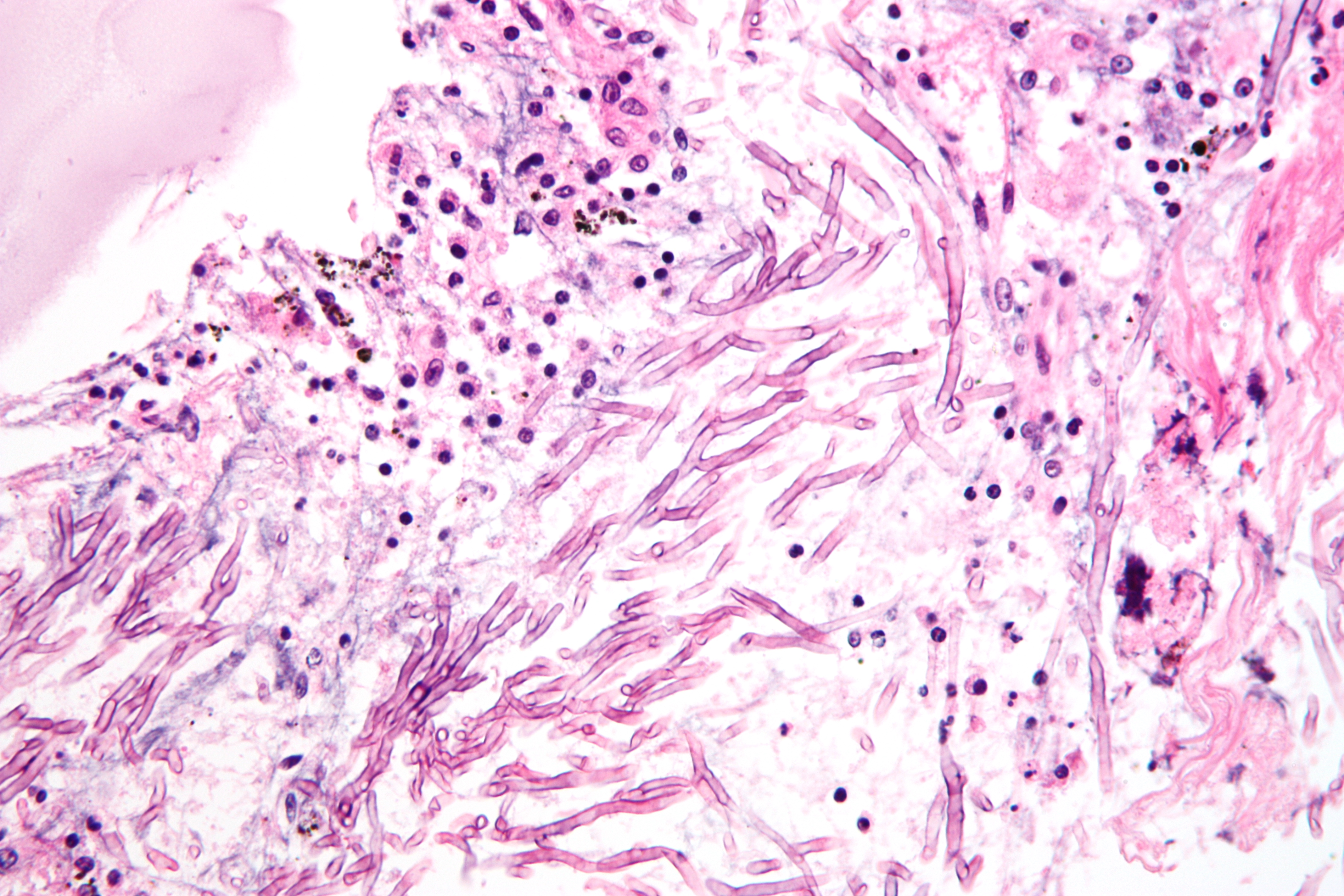
Micose rara
📋 Origem dos dados
Esta página agrega dados de fontes públicas e oficiais. Dados sobre cobertura no SUS (PCDT, CEAF) são verificados ativamente por agente proativo (ver badge no infobox). Demais dados têm atribuição de fonte + data da última sincronização — clique para abrir o original.
- Doença rara (ontologia)
- fonte: Orphanet
- Identificador unificado
- fonte: MONDO
- Indexação biomédica
- fonte: MeSH (NLM)
- Dado público estruturado
- fonte: Wikidata
- Reposicionamento
- fonte: Drug Repurposing Hub
- Ensaios clínicos
- fonte: ClinicalTrials.gov

