
Largura da boca muito exagerada, resultante da falha na união dos processos maxilar e mandibular, com extensão do orifício oral em direção à orelha. O defeito pode ser unilateral ou bilateral. (Dorland, 27ª ed.)
Introdução
O que você precisa saber de cara
Largura da boca muito exagerada, resultante da falha na união dos processos maxilar e mandibular, com extensão do orifício oral em direção à orelha. O defeito pode ser unilateral ou bilateral. (Dorland, 27ª ed.)
Encontrou um erro ou informação desatualizada? Sugira uma correção →
Entender a doença
Do básico ao detalhe, leia no seu ritmo
Preparando trilha educativa...
Sinais e sintomas
O que aparece no corpo e com que frequência cada sintoma acontece
Linha do tempo da pesquisa
Encontrou um erro ou informação desatualizada? Sugira uma correção →
Genética e causas
O que está alterado no DNA e como passa nas famílias
Genes associados
2 genes identificados com associação a esta condição.
Plays a role in the control of cellular growth (PubMed:18285427). May have a role in epidermal development. May act as a receptor for Sonic hedgehog (SHH)
Membrane
Medulloblastoma
Malignant, invasive embryonal tumor of the cerebellum with a preferential manifestation in children.
Involved in cytokinesis and spindle organization. May play a role in actin cytoskeleton organization and microtubule stabilization and hence required for proper cell adhesion and migration
Cytoplasm, cytoskeletonCytoplasm, cytoskeleton, spindleCell junction, gap junction
Facial clefting, oblique, 1
A rare form of facial clefting. A facial cleft is any of the fissures between the embryonic prominences that normally unite to form the face.
Variantes genéticas (ClinVar)
1.139 variantes patogênicas registradas no ClinVar.
Vias biológicas (Reactome)
1 via biológica associada aos genes desta condição.
Diagnóstico
Os sinais que médicos procuram e os exames que confirmam
Tratamento e manejo
Remédios, cuidados de apoio e o que precisa acompanhar
Onde tratar no SUS
Hospitais de referência no Brasil e o protocolo oficial do SUS (PCDT)
🇧🇷 Atendimento SUS — Fenda facial Tessier número 7
Selecione um estado ou use sua localização para ver resultados.
Dados de DATASUS/CNES, SBGM, ABNeuro e Ministério da Saúde. Sempre confirme a disponibilidade diretamente com o estabelecimento.
Pesquisa ativa
Ensaios clínicos abertos e novidades científicas recentes
Pesquisa e ensaios clínicos
Nenhum ensaio clínico registrado para esta condição.
Publicações mais relevantes
Transverse facial cleft repair: Preventing pigmentation around the postoperative scar by excising the pigmented white lip at the cleft margin-A retrospective case series of Japanese patients.
Numerous transverse facial cleft repair techniques and designs have been described; however, a complication of surgical reconstruction is scar formation with brown discoloration. This study investigated the histological basis of the darker white lip at the cleft margin, its role in postoperative brown discoloration, and the potential esthetic benefits of extending the excision. In this retrospective analysis, patients with transverse facial cleft were divided into limited and extended excision groups. Histological assessment of melanin pigment was performed using Fontana-Masson staining, and postoperative buccal scars were evaluated from photographs using the Stony Brook Scar Evaluation Scale. The Mann-Whitney U test was used for statistical analysis. We divided 16 Japanese patients (4 boys and 12 girls) into limited (n = 9) and extended excision groups (n = 7). The cleft length was 8.6 ± 2.1 and 8.9 ± 3.3 mm in the limited and extended excision groups, respectively, with unilateral/bilateral laterality being 9/0 and 6/1, respectively. Initial surgeries for both groups were performed at 11.4 ± 8.4 and 8.3 ± 7.7 months, and scar evaluations were based on photographs obtained at 47.8 ± 13.5 and 27.1 ± 14.2 months, respectively. Histology showed increased melanin in the darker area of the white lip at the cleft margin, with markedly reduced pigment density in the normal-toned area. The extended excision group had less colored scar than the limited excision group (p < 0.05). Incorporating pericleft pigmentation excision into surgical design may reduce postoperative periscar hyperpigmentation and improve esthetic outcomes for several years.
The Presentation Patterns of Tessier 7 Clefts.
Given its rarity, there are few large-number studies regarding Tessier 7 clefts. A review and classification of 81 Tessier 7 patients who presented to our craniofacial center was performed. The most common Tessier 7 clefts were middle positioned, followed by agenetic, superiorly rotated, and inferiorly rotated clefts, respectively. A total of 77/81 patients had simple macrostomia and 4/81 patients had macrostomia with muscle diastasis. The most common associated anomalies were craniofacial microsomia, skin tags, and ear anomalies occurring in 80%, 71%, and 37% of patients, respectively. In this cohort, the most common subsequent procedures performed in our center were orthognathic surgery (15), fat grafting (11), and facial contouring (7). This information can assist clinicians in patient assessment, family counseling, and refining surgical planning. In this work, we compared our results to other centers by performing a meta-analysis and found we had a higher rate of left-sided clefts, craniofacial microsomia, and simple macrostomia. Our rates of bilaterality and gender distribution were similar to that of other centers. A review of 766 Tessier 7 presentations across 34 recent studies demonstrated unilateral clefts in 84.3% and bilateral clefts in 15.7% overall. Up to 62% of black African patients had bilateral Tessier 7 presentations. There was also increased rates of associated craniofacial microsomia in ethnically Chinese population groups. Overall review of 766 patients demonstrated more right-sided clefts than left, and a slight female preponderance.
Unilateral Craniofacial Microsomia with Severe Tessier No. 7 Cleft and Mandibular Agenesis: A Rare Case Report.
Craniofacial microsomia (CFM) presents with variable underdevelopment of craniofacial structures. The clinical severity varies widely and may lead to airway compromise and feeding difficulties in neonates. Herein, we describe a rare case of unilateral CFM with a severe Tessier number 7 cleft, complete mandibular agenesis, ear deformities, and extensive intraoral adhesions. Particularly, adhesions between the tongue and oral mucosa induced a deficiency of reconstructable soft tissue, making the release of the adhesion challenging and complicating the timing of surgical intervention. The patient required tracheostomy for respiratory distress and was fed via a nasogastric tube due to severe Tessier number 7 cleft, which caused significant difficulty with oral feeding. Considering the need for oral feeding and the anatomical challenges, surgical intervention was performed on day 70. The procedure involved removal of intraoral adhesions, separation of the oral cavity from the external face to restore functional integrity, and reconstruction of the oral commissure. This allowed initiation of oral feeding and facilitated aesthetic improvement without complications. This case illustrates a severe form of CFM and highlights the importance of timely, growth-adapted interventions to restore essential functions.
Long-Term Follow-Up of the Patients With Combined Tessier Number 7 Cleft and Unilateral Cleft Lip.
The Tessier number 7 cleft is a rare congenital anomaly making up between 0.3% and 1.0% facial clefts. When combined with a concomitant unilateral cleft lip deformity, we are only aware of 1 previously reported case. We report the presentation, treatment course and long-term follow-up of 3 patients with combined Tessier number 7 cleft, unilateral cleft lip and craniofacial microsomia. All patients received multidisciplinary treatment at our Craniofacial Centre with a minimum follow-up of 29 years. This study demonstrates the phenotype, treatment philosophy, lessons learnt, and principles of reconstruction from birth to adulthood in this patient subset.
Facial Bone Defects Associated with Lateral Facial Clefts Tessier Type 6, 7 and 8 in Syndromic Neurocristopathies: A Detailed Micro-CT Analysis on Historical Museum Specimens.
Lateral facial clefts are rare and often part of more complex syndromic neurocristopathies. According to Tessier's classification, they correspond to facial cleft numbers 6, 7 and 8. Using micro-computer tomography (micro-CT), we analyzed their underlying bone defects (resolution 50 and 55 µm/voxel) in the context of the known syndrome-specific genetic background. Lateral facial clefts were diagnosed in three severely affected museum specimens representing mandibulofacial dysostosis type Treacher Collins syndrome (TCS), acrofacial dysostosis syndrome of Rodriguez (AFD-Rod) and tetra-amelia syndrome (TETAMS). The TCS specimen mainly showed an absence of the zygomatic bones and most of the lateral maxilla. The AFD-Rod specimen showed an extensive defect of the lateral maxilla, zygomatic bones, and mandible. The TETAMS specimen showed almost isolated agnathia. Possible relationships are discussed between the diverse facial bone defects due to apoptosis of neural crest-derived cells, known to be associated with ribosomopathies and spliceosomopathies, such as TCS and AFD-Rod, and the more targeted bone defects due to genetic variants known to cause TETAMS.
Publicações recentes
Eyebrow Reconstruction in Craniofacial Clefts by Abnormal Hairline Extention.
The Arkansas Tessier Number 3 Cleft Experience: Soft Tissue and Skeletal Findings With Primary Surgical Management: Four-Step Approach.
A rare case of cleft number nine associated with atypical cleft number two.
The Tessier number 14 facial cleft: a 20 years follow-up.
Rare nasal cleft in a patient with holoprosencephaly due to a mutation in the ZIC2 gene.
📚 EuropePMCmostrando 22
Transverse facial cleft repair: Preventing pigmentation around the postoperative scar by excising the pigmented white lip at the cleft margin-A retrospective case series of Japanese patients.
JPRAS openUnilateral Craniofacial Microsomia with Severe Tessier No. 7 Cleft and Mandibular Agenesis: A Rare Case Report.
The Cleft palate-craniofacial journal : official publication of the American Cleft Palate-Craniofacial AssociationLong-Term Follow-Up of the Patients With Combined Tessier Number 7 Cleft and Unilateral Cleft Lip.
The Cleft palate-craniofacial journal : official publication of the American Cleft Palate-Craniofacial AssociationThe Presentation Patterns of Tessier 7 Clefts.
The Journal of craniofacial surgeryFacial Bone Defects Associated with Lateral Facial Clefts Tessier Type 6, 7 and 8 in Syndromic Neurocristopathies: A Detailed Micro-CT Analysis on Historical Museum Specimens.
BiologyMacrostomia Surgery Using Small Z-plasty for Construction of the Corner of the Mouth.
Plastic and reconstructive surgery. Global openTessier Craniofacial Clefts.
Clinics in plastic surgeryComprehensive surgical reconstruction of Tessier number 7 congenital craniofacial cleft. A rare case report.
International journal of surgery case reportsEyebrow Reconstruction in Craniofacial Clefts by Abnormal Hairline Extention.
The Journal of craniofacial surgeryTracheoesophageal Fistula with Bilateral Facial Cleft: A Rare Occurrence.
Journal of Indian Association of Pediatric SurgeonsTessier's Cleft Number 6 Revisited: A Series of 26 new Cases and Literature Review of 44.
The Cleft palate-craniofacial journal : official publication of the American Cleft Palate-Craniofacial AssociationPresentation and Management of Atypical Orofacial Clefts: A Single-Institution Experience for 13 Year Period.
The Cleft palate-craniofacial journal : official publication of the American Cleft Palate-Craniofacial AssociationAn Extended 45-year Long-term Follow-up on a 1-13 Rare Facial Cleft Patient.
The Journal of craniofacial surgeryMISSED DIAGNOSIS OF ISOLATED BILATERAL TRANSVERSE FACIAL CLEFT: A CASE REPORT.
Annals of Ibadan postgraduate medicineRare Facial Cleft: Surgical Treatment and Middle-Term Follow-up During Charity Operation.
Craniomaxillofacial trauma & reconstructionOrbicularis oris muscle reconstruction and cheiloplasty with Z-plasty in a patient with a transverse facial cleft.
Maxillofacial plastic and reconstructive surgeryThe Arkansas Tessier Number 3 Cleft Experience: Soft Tissue and Skeletal Findings With Primary Surgical Management: Four-Step Approach.
The Journal of craniofacial surgeryA rare case of cleft number nine associated with atypical cleft number two.
Indian journal of ophthalmologyPrenatal ultrasound diagnosis of Tessier number 7 cleft: Case report and review of the literature.
Journal of obstetrics and gynaecology : the journal of the Institute of Obstetrics and GynaecologyThe "Double" Tessier 7 Cleft: An Unusual Presentation of a Transverse Facial Cleft.
The Cleft palate-craniofacial journal : official publication of the American Cleft Palate-Craniofacial Association[Isolated bilateral macrostomia: case report and literature review].
Cirugia pediatrica : organo oficial de la Sociedad Espanola de Cirugia PediatricaAn unusual presentation of oculoauriculovertebral spectrum with a Tessier 30 cleft: report on two cases.
Clinical dysmorphologyAssociações
Organizações que acompanham esta doença — pra ter apoio e orientação
Ainda não temos associações cadastradas para Fenda facial Tessier número 7.
É de uma associação que acompanha esta doença? Fale com a gente →
Comunidades
Grupos ativos de quem convive com esta doença aqui no Raras
Ainda não existe comunidade no Raras para Fenda facial Tessier número 7
Pacientes, familiares e cuidadores se organizam em comunidades pra compartilhar experiências, fazer perguntas e se apoiar. Você pode ser o primeiro.
Tire suas dúvidas
Perguntas, dicas e experiências compartilhadas aqui na página
Participe da discussão
Faça login para postar dúvidas, compartilhar experiências e interagir com especialistas.
Fazer loginDoenças relacionadas
Doenças com sintomas parecidos — ajudam quem ainda está buscando diagnóstico
Ainda não achamos doenças com sintomas parecidos o suficiente.
Referências e fontes
Bases de dados externas citadas neste artigo
Publicações científicas
Artigos indexados no PubMed ligados a esta doença no grafo RarasNet — título, periódico e PMID direto da fonte, sem intermediação de IA.
- Transverse facial cleft repair: Preventing pigmentation around the postoperative scar by excising the pigmented white lip at the cleft margin-A retrospective case series of Japanese patients.
- The Presentation Patterns of Tessier 7 Clefts.
- Unilateral Craniofacial Microsomia with Severe Tessier No. 7 Cleft and Mandibular Agenesis: A Rare Case Report.The Cleft palate-craniofacial journal : official publication of the American Cleft Palate-Craniofacial Association· 2025· PMID 41223119mais citado
- Long-Term Follow-Up of the Patients With Combined Tessier Number 7 Cleft and Unilateral Cleft Lip.The Cleft palate-craniofacial journal : official publication of the American Cleft Palate-Craniofacial Association· 2025· PMID 41223048mais citado
- Facial Bone Defects Associated with Lateral Facial Clefts Tessier Type 6, 7 and 8 in Syndromic Neurocristopathies: A Detailed Micro-CT Analysis on Historical Museum Specimens.
- Eyebrow Reconstruction in Craniofacial Clefts by Abnormal Hairline Extention.
- The Arkansas Tessier Number 3 Cleft Experience: Soft Tissue and Skeletal Findings With Primary Surgical Management: Four-Step Approach.
- A rare case of cleft number nine associated with atypical cleft number two.
- The Tessier number 14 facial cleft: a 20 years follow-up.
- Rare nasal cleft in a patient with holoprosencephaly due to a mutation in the ZIC2 gene.
Bases de dados e fontes oficiais
Identificadores e referências canônicas usadas para montar este verbete.
- ORPHA:141276(Orphanet)
- OMIM OMIM:613545(OMIM)
- MONDO:0013300(MONDO)
- GARD:16975(GARD (NIH))
- Variantes catalogadas(ClinVar)
- Busca completa no PubMed(PubMed)
- Artigo Wikipedia(Wikipedia)
- Q10322835(Wikidata)
Dados compilados pelo RarasNet a partir de fontes abertas (Orphanet, OMIM, MONDO, PubMed/EuropePMC, ClinicalTrials.gov, DATASUS, PCDT/MS). Este conteúdo é informativo e não substitui avaliação médica.
Conteúdo mantido por Agente Raras · Médicos e pesquisadores podem colaborar
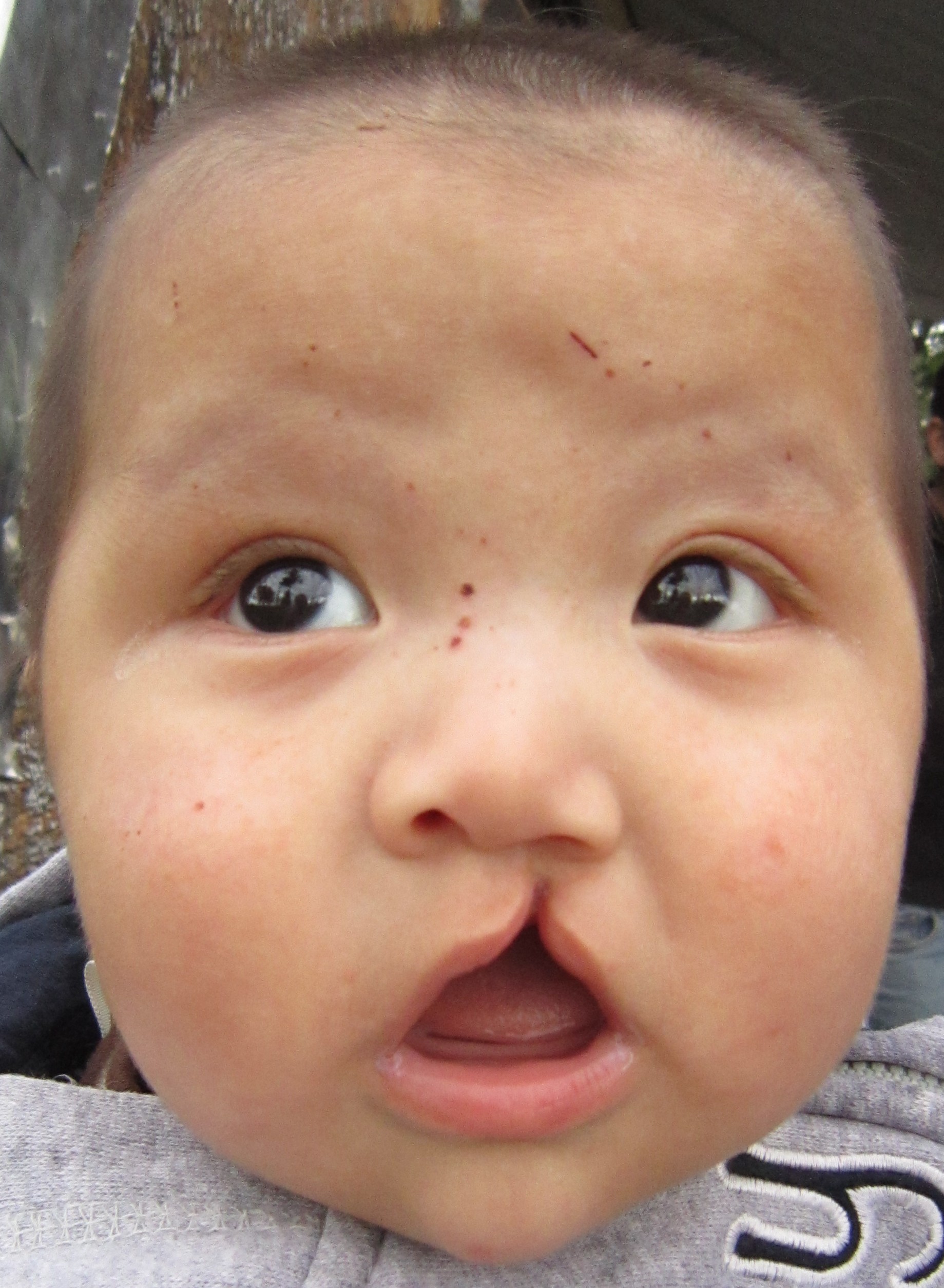
Fenda facial Tessier número 7
📋 Origem dos dados
Esta página agrega dados de fontes públicas e oficiais. Dados sobre cobertura no SUS (PCDT, CEAF) são verificados ativamente por agente proativo (ver badge no infobox). Demais dados têm atribuição de fonte + data da última sincronização — clique para abrir o original.
- Doença rara (ontologia)
- fonte: Orphanet
- Identificador unificado
- fonte: MONDO
- Genética mendeliana
- fonte: OMIM
- Codificação WHO/SUS
- fonte: WHO ICD-10 / DATASUS
- CID-11 (futuro)
- fonte: WHO ICD-11
- NIH/GARD
- fonte: GARD (NIH)
- Indexação biomédica
- fonte: MeSH (NLM)
- Dado público estruturado
- fonte: Wikidata