
Doença vascular é uma classe de doenças dos vasos do sistema circulatório no corpo, incluindo os vasos sanguíneos – as artérias e veias, e os vasos linfáticos. A doença vascular é um subgrupo da doença cardiovascular. Distúrbios nesta vasta rede de vasos sanguíneos e linfáticos podem causar uma série de problemas de saúde que, por vezes, podem tornar-se graves e fatais. A doença arterial coronariana, por exemplo, é a principal causa de morte de homens e mulheres nos Estados Unidos.
Introdução
O que você precisa saber de cara
Doença vascular é uma classe de doenças dos vasos do sistema circulatório no corpo, incluindo os vasos sanguíneos – as artérias e veias, e os vasos linfáticos. A doença vascular é um subgrupo da doença cardiovascular. Distúrbios nesta vasta rede de vasos sanguíneos e linfáticos podem causar uma série de problemas de saúde que, por vezes, podem tornar-se graves e fatais. A doença arterial coronariana, por exemplo, é a principal causa de morte de homens e mulheres nos Estados Unidos.
Encontrou um erro ou informação desatualizada? Sugira uma correção →
Entender a doença
Do básico ao detalhe, leia no seu ritmo
Preparando trilha educativa...
Sinais e sintomas
O que aparece no corpo e com que frequência cada sintoma acontece
Linha do tempo da pesquisa
Encontrou um erro ou informação desatualizada? Sugira uma correção →
Genética e causas
O que está alterado no DNA e como passa nas famílias
Nenhum gene associado encontrado
Os dados genéticos desta condição ainda estão sendo catalogados.
Diagnóstico
Os sinais que médicos procuram e os exames que confirmam
Tratamento e manejo
Remédios, cuidados de apoio e o que precisa acompanhar
Onde tratar no SUS
Hospitais de referência no Brasil e o protocolo oficial do SUS (PCDT)
🇧🇷 Atendimento SUS — Disseminated intravascular coagulation associated with a vascular anomaly
Selecione um estado ou use sua localização para ver resultados.
Dados de DATASUS/CNES, SBGM, ABNeuro e Ministério da Saúde. Sempre confirme a disponibilidade diretamente com o estabelecimento.
Pesquisa ativa
Ensaios clínicos abertos e novidades científicas recentes
Pesquisa e ensaios clínicos
Nenhum ensaio clínico registrado para esta condição.
Publicações mais relevantes
Hemostatic abnormalities at the time of fetal death: A retrospective study evaluating the prevalence and relevance of targeted testing.
To assess the prevalence of hemostasis abnormalities at the time of fetal death diagnosis. This retrospective single-center study included all fetal deaths between 22 and 42 weeks from July 2017 to December 2023, excluding multiple pregnancies, patients on anticoagulant therapy, and those with known pre-existing coagulation disorders. Hemostatic abnormalities were classified as: (1) probable disseminated intravascular coagulation (DIC), defined by a modified International Society on Thrombosis and Hemostasis (ISTH) probability score above 25, and (2) confirmed DIC, requiring clinical diagnosis with transfusion, intensive care admission, or maternal death. To evaluate this score and hemostasis abnormalities, platelet count, prothrombin time difference (PT), activated partial thromboplastin time (aPTT) and fibrinogen level are described. Maternal characteristics and obstetrical history were evaluated to identify a high-risk of DIC situation such as sepsis, placenta abruption and hypertensive disorders of pregnancy. Etiology of fetal death are also described, searching for a vascular etiology. Cases of confirmed DIC are detailed. Among 163 cases of fetal death, 12 women (7.4%) had probable DIC, and three women (1.8%) had confirmed DIC. When the initial blood test was normal, none of the subsequent blood tests revealed any abnormalities. The main causes of fetal death included vascular-related intrauterine growth restriction (42%), unexplained deaths (19%) and fetal malformations (14%). Two cases of confirmed DIC were associated with retroplacental hematomas, while the third involved severe intrauterine growth restriction (IUGR) with pathologic uterine Dopplers, suggesting a vascular etiology. The risk of confirmed DIC in the context of fetal death is low (1.8%) and primarily associated with retroplacental or vascular pathologies. These findings support a selective approach to hemostasis testing based on clinical context rather than routine systematic testing.
Fatal rupture of a flow-related Iliac artery aneurysm associated with an enormous arteriovenous malformation of abdominal wall and left thigh.
We report the first case of a fatal rupture of a flow-related iliac artery aneurysm (IAA) associated with an enormous arteriovenous malformation (AVM). A 47-year-old male presented with an extensive AVM involving the abdominal wall and left thigh, alongside a left IAA measuring 4.16 cm in diameter. Despite multiple AVM-targeted treatments and close IAA monitoring, the aneurysm ruptured after one year of follow-up, causing hemorrhagic shock. Emergency endovascular repair was performed, but the patient succumbed to uncorrected disseminated intravascular coagulation post-procedure. This outcome suggests the need for a more proactive management strategy for flow-related aneurysms in AVM patients.
[Disseminated intravascular coagulation associated with vascular abnormalities].
This paper discusses the diagnostic findings and treatment options for DIC associated with vascular abnormalities based on the "Clinical practice guidelines for management of disseminated intravascular coagulation (DIC) in Japan 2024" released in early 2025. The guidelines define vascular abnormalities as aortic aneurysm, aortic dissection, vasculitis syndromes, and vascular malformations. DIC with enhanced fibrinolysis is a type of DIC often observed in association with vascular abnormalities. Key diagnostic tests for DIC include coagulation activation markers such as thrombin-antithrombin complexes and fibrinolysis activation markers such as plasmin-α2 plasmin inhibitor complex. Treatment consists of addressing the underlying disease, anticoagulant therapy, and combination therapy with anticoagulants and antifibrinolytics, or potentially observation, depending on bleeding symptoms and test results. Use of Factor XIII concentrates may also be considered. Treatment selection should consider the patient's condition and the treatment duration, with ongoing adjustments based on continuous testing. A well-established testing system and collaboration with experts are crucial in the treatment of DIC associated with vascular abnormalities.
Clinical practice guidelines for management of disseminated intravascular coagulation in Japan 2024. Part 3: solid cancers and vascular abnormalities.
This study discusses disseminated intravascular coagulation (DIC) associated with solid cancers and various vascular abnormalities, both of which generally exhibit chronic DIC patterns. Solid cancers are among the most significant underlying diseases that induce DIC. However, the severity, bleeding tendency, and progression of DIC vary considerably depending on the type and stage of the cancer, making generalization difficult. Moreover, during the process of creating these guidelines, it became apparent that despite solid cancers being a major underlying condition for DIC, there is a lack of high-quality research on DIC associated with solid cancers. Nevertheless, we developed recommendations for clinical questions (CQs) regarding the use of heparin and recombinant thrombomodulin. Additionally, statements concerning these five questions were provided. DIC associated with various vascular abnormalities, is characterized by hyperfibrinolytic activity and linked to underlying conditions such as aortic aneurysm, aortic dissection, vasculitis syndromes, and vascular malformations. These conditions must always be considered differential diagnoses when unexplained thrombocytopenia or bleeding tendencies are observed. Although no evidence was found to support the assignment of recommendation levels, three statements were made. However, traumatic vascular abnormalities have not been discussed in this context.
COL4A2 -Related Disorder Presenting in Adulthood With Rhabdomyolysis.
The alpha 1 and 2 chains of type IV collagen, encoded by the COL4A1 (MIM 120130) and COL4A2 (MIM 120090) respectively, play essential roles in the vascular basement membranes. Pathogenic variants in COL4A1/ COL4A2 are associated with autosomal dominant cerebral angiopathies. The clinical manifestations of COL4A1/COL4A2-related disorders include: aneurysms, intracerebral hemorrhage, polymicrogyria, porencephaly, heterotopia, periventricular leukomalacia, epilepsy, and neurodevelopmental disorders. COL4A1 pathogenic variants that are in exons 24 and 25 have been associated with hereditary angiopathy, nephropathy, aneurysms, and cramps. The multisystemic phenotypes of COL4A1/COL4A2-related disorders are increasingly being studied. Animal models have suggested that COL4A2-related disorders may also manifest with a variable combination of multisystemic abnormalities affecting the eyes, muscles, and kidneys. Okano and colleagues recently reported a case of recurrent episodes of rhabdomyolysis in a 2-year-old with COL4A1-related disorder raising fundamental questions on mechanisms of COL4A1/COL4A2 variants in muscle homeostasis. To date, rhabdomyolysis has not been associated with COL4A2-related disorder in humans. Rhabdomyolysis is a medical emergency, where there is elevated creatine kinase (CK) level in the blood and increased excretion of myoglobin in urine, due to skeletal muscle damage and release of intracytoplasmic proteins into systemic circulation. Rhabdomyolysis is a serious medical condition. It require intensive care management due to an increased risk of some life-threatening complications [including disseminated intravascular coagulation, renal failure, and severe hyperkalemia]. Herein, we report a case of rhabdomyolysis in an adult with COL4A2-related structural brain malformations (including polymicrogyria and heterotopia).
Publicações recentes
Endotheliopathy within the thromboinflammatory network of sepsis-induced coagulopathy.
Anticoagulation Treatment in Patients with Septic Thrombophlebitis of the Internal Jugular Vein.
Endothelial Activation and Stress Index Is Associated With Adverse Maternal and Perinatal Outcomes in Preeclampsia.
Arterial Complications Assessed by Duplex Ultrasound After Decannulation of Peripheral Venoarterial Extracorporeal Membrane Oxygenation.
Resuscitative endovascular balloon occlusion of the aorta: A novel approach for treating amniotic fluid embolism with disseminated intravascular coagulopathy-A report of two cases.
📚 EuropePMCmostrando 22
Hemostatic abnormalities at the time of fetal death: A retrospective study evaluating the prevalence and relevance of targeted testing.
International journal of gynaecology and obstetrics: the official organ of the International Federation of Gynaecology and ObstetricsFatal rupture of a flow-related Iliac artery aneurysm associated with an enormous arteriovenous malformation of abdominal wall and left thigh.
BMC cardiovascular disorders[Disseminated intravascular coagulation associated with vascular abnormalities].
[Rinsho ketsueki] The Japanese journal of clinical hematologyClinical practice guidelines for management of disseminated intravascular coagulation in Japan 2024. Part 3: solid cancers and vascular abnormalities.
International journal of hematologyCOL4A2 -Related Disorder Presenting in Adulthood With Rhabdomyolysis.
American journal of medical genetics. Part A[Fetal death: Expert consensus from the College of French Gynecologists and Obstetricians].
Gynecologie, obstetrique, fertilite & senologie[Liver failure caused by recurrent biliary bleeding associated with Osler's disease: a case report].
Nihon Shokakibyo Gakkai zasshi = The Japanese journal of gastro-enterologyLocalised intravascular coagulation complicating venous malformations: Clinical characterisation.
PhlebologyComprehensive Analyses of Coagulation Parameters in Patients with Vascular Anomalies.
BiomoleculesNeonatal giant dural sinus ectasia: a multimodality imaging approach.
BMJ case reportsManagement of disseminated intravascular coagulation associated with aortic aneurysm and vascular malformations.
International journal of hematologyPeri-procedural Anticoagulation in Patients with Head and Neck Versus Extremity Venous Malformations.
The LaryngoscopeRetrospective study of hematologic complications in patients with slow-flow vascular malformations undergoing sclerotherapy.
Pediatric blood & cancerPenile prosthesis implant for primary erectile dysfunction in patient with Klippel-Trenaunay syndrome complicated by consumptive coagulopathy: A case report.
MedicineRepeated Intracranial Hemorrhage After Delivery Induced by Coagulopathy Associated with Multiple Venous Malformations.
World neurosurgeryKasabach-Merritt syndrome arising from a vascular fistula.
The American journal of emergency medicineEffectiveness and Safety of Treatment with Direct Oral Anticoagulant Rivaroxaban in Patients with Slow-Flow Vascular Malformations: A Case Series.
Lymphatic research and biologySuccessful treatment with dabigatran for consumptive coagulopathy associated with extensive vascular malformations.
Blood coagulation & fibrinolysis : an international journal in haemostasis and thrombosisLocalised intravascular coagulation complicating venous malformations in children: Associations and therapeutic options.
Journal of paediatrics and child healthDabigatran etexilate versus low-molecular weight heparin to control consumptive coagulopathy secondary to diffuse venous vascular malformations.
Blood coagulation & fibrinolysis : an international journal in haemostasis and thrombosisMRI phenotypes of localized intravascular coagulopathy in venous malformations.
Pediatric radiologyPulmonary manifestation of a condition resembling Kasabach-Merritt syndrome in a woman with abdominal angiomatosis associated with consumptive coagulopathy--surgical management: a case report.
Journal of medical case reportsAssociações
Organizações que acompanham esta doença — pra ter apoio e orientação
Ainda não temos associações cadastradas para Disseminated intravascular coagulation associated with a vascular anomaly.
É de uma associação que acompanha esta doença? Fale com a gente →
Comunidades
Grupos ativos de quem convive com esta doença aqui no Raras
Ainda não existe comunidade no Raras para Disseminated intravascular coagulation associated with a vascular anomaly
Pacientes, familiares e cuidadores se organizam em comunidades pra compartilhar experiências, fazer perguntas e se apoiar. Você pode ser o primeiro.
Tire suas dúvidas
Perguntas, dicas e experiências compartilhadas aqui na página
Participe da discussão
Faça login para postar dúvidas, compartilhar experiências e interagir com especialistas.
Fazer loginDoenças relacionadas
Doenças com sintomas parecidos — ajudam quem ainda está buscando diagnóstico
Ainda não achamos doenças com sintomas parecidos o suficiente.
Referências e fontes
Bases de dados externas citadas neste artigo
Publicações científicas
Artigos indexados no PubMed ligados a esta doença no grafo RarasNet — título, periódico e PMID direto da fonte, sem intermediação de IA.
- Hemostatic abnormalities at the time of fetal death: A retrospective study evaluating the prevalence and relevance of targeted testing.International journal of gynaecology and obstetrics: the official organ of the International Federation of Gynaecology and Obstetrics· 2025· PMID 41328722mais citado
- Fatal rupture of a flow-related Iliac artery aneurysm associated with an enormous arteriovenous malformation of abdominal wall and left thigh.
- [Disseminated intravascular coagulation associated with vascular abnormalities].
- Clinical practice guidelines for management of disseminated intravascular coagulation in Japan 2024. Part 3: solid cancers and vascular abnormalities.
- COL4A2 -Related Disorder Presenting in Adulthood With Rhabdomyolysis.
- Endotheliopathy within the thromboinflammatory network of sepsis-induced coagulopathy.
- Anticoagulation Treatment in Patients with Septic Thrombophlebitis of the Internal Jugular Vein.
- Endothelial Activation and Stress Index Is Associated With Adverse Maternal and Perinatal Outcomes in Preeclampsia.
- Arterial Complications Assessed by Duplex Ultrasound After Decannulation of Peripheral Venoarterial Extracorporeal Membrane Oxygenation.
- Resuscitative endovascular balloon occlusion of the aorta: A novel approach for treating amniotic fluid embolism with disseminated intravascular coagulopathy-A report of two cases.
Bases de dados e fontes oficiais
Identificadores e referências canônicas usadas para montar este verbete.
- ORPHA:717593(Orphanet)
- Busca completa no PubMed(PubMed)
Dados compilados pelo RarasNet a partir de fontes abertas (Orphanet, OMIM, MONDO, PubMed/EuropePMC, ClinicalTrials.gov, DATASUS, PCDT/MS). Este conteúdo é informativo e não substitui avaliação médica.
Conteúdo mantido por Agente Raras · Médicos e pesquisadores podem colaborar
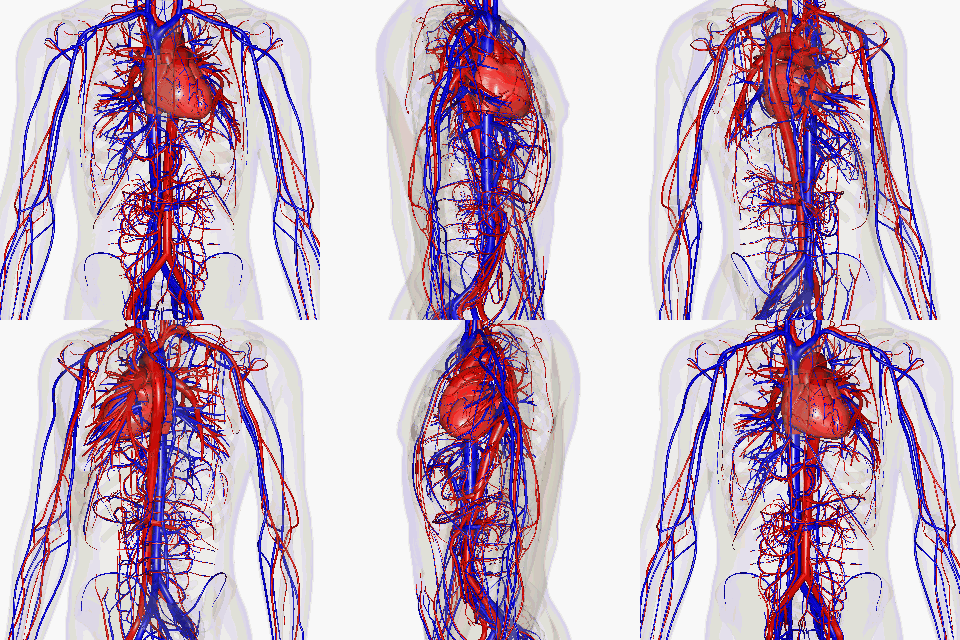
Disseminated intravascular coagulation associated with a vascular anomaly
📋 Origem dos dados
Esta página agrega dados de fontes públicas e oficiais. Dados sobre cobertura no SUS (PCDT, CEAF) são verificados ativamente por agente proativo (ver badge no infobox). Demais dados têm atribuição de fonte + data da última sincronização — clique para abrir o original.
- Doença rara (ontologia)
- fonte: Orphanet
- Medicamentos aprovados FDA
- fonte: FDA OpenFDA