
Uma epilepsia caracterizada por crises epilépticas desencadeadas por estímulos visuais que possuem padrões definidos, seja na forma ou na sequência, como luzes piscando.
Introdução
O que você precisa saber de cara
Uma epilepsia caracterizada por crises epilépticas desencadeadas por estímulos visuais que possuem padrões definidos, seja na forma ou na sequência, como luzes piscando.
Tem tratamento?
Escala de raridade
<1/50kMuito rara
1/20kRara
1/10kPouco freq.
1/5kIncomum
1/2k
Encontrou um erro ou informação desatualizada? Sugira uma correção →
Entender a doença
Do básico ao detalhe, leia no seu ritmo
Preparando trilha educativa...
Sinais e sintomas
O que aparece no corpo e com que frequência cada sintoma acontece
Características mais comuns
Os sintomas variam de pessoa para pessoa. Abaixo estão as 1 características clínicas mais associadas, ordenadas por frequência.
Linha do tempo da pesquisa
Encontrou um erro ou informação desatualizada? Sugira uma correção →
Genética e causas
O que está alterado no DNA e como passa nas famílias
Nenhum gene associado encontrado
Os dados genéticos desta condição ainda estão sendo catalogados.
Diagnóstico
Os sinais que médicos procuram e os exames que confirmam
Tratamento e manejo
Remédios, cuidados de apoio e o que precisa acompanhar
Onde tratar no SUS
Hospitais de referência no Brasil e o protocolo oficial do SUS (PCDT)
🇧🇷 Atendimento SUS — Epilepsia do lobo occipital fotossensível
Selecione um estado ou use sua localização para ver resultados.
Dados de DATASUS/CNES, SBGM, ABNeuro e Ministério da Saúde. Sempre confirme a disponibilidade diretamente com o estabelecimento.
Pesquisa ativa
Ensaios clínicos abertos e novidades científicas recentes
Pesquisa e ensaios clínicos
Nenhum ensaio clínico registrado para esta condição.
Publicações mais relevantes
Clinical and Electrophysiological Characteristics and Prognosis of Childhood Occipital Visual Epilepsy in Light of Current ILAE Criteria.
ObjectivesChildhood Occipital Visual Epilepsy (COVE) is a self-limited epileptic syndrome that typically begins in late childhood or adolescence characterized by brief visual seizures. The recent 2022 International League Against Epilepsy (ILAE) classification distinguishes COVE from photosensitive occipital lobe epilepsy (POLE), emphasizing the absence of photic-induced seizures in COVE. In this study, we aimed to describe the clinical and electrophysiological features of patients with COVE diagnosed according to the new ILAE criteria.MethodsThis retrospective cohort study analyzed 30 patients diagnosed with COVE at a tertiary epilepsy center between 1988 and 2023. Patients were selected based on ILAE 2022 criteria, and all cases with intermittent photic stimulation (IPS)-induced seizures were excluded.ResultsMost patients (93%) presented with elementary visual hallucinations, such as colorful lights. Orofacial seizures occurred in 7%, and 37% had nocturnal seizures. EEG abnormalities were primarily occipital and resolved in 85% of cases over time. Generalized spike-wave discharges (GSWDs) were rare (5%), and only one patient developed juvenile myoclonic epilepsy during follow-up. At final follow-up, 77% of patients achieved seizure freedom, and 47% discontinued medication.ConclusionCOVE is an epileptic syndrome associated with a favorable prognosis. By excluding photosensitivity in light of the newly proposed diagnostic criteria from the ILAE, future research should focus on a more homogenous group of COVE patients to enhance understanding of this syndrome. Accurate classification using updated ILAE criteria allows for clearer clinical delineation and more reliable outcome predictions.
[Self-limited focal epilepsies of childhood].
Self-limited Focal Epilepsies of Childhood (SELFEs) are the most prevalent electroclinical syndromes in pediatric age, whose typical evolution, with age-dependent onset and remission, has allowed the ILAE Nosology and Definitions Working Group (2022) to define them as "Selflimited Focal Epilepsies of Childhood", thus establishing alert and exclusion criteria to standardize their diagnosis. These syndromes include: Self-limited Epilepsy with Centrotemporal Spikes (previously Rolandic Epilepsy), Self-limited Epilepsy with Autonomic Seizures (previously Panayiotopoulos Syndrome), Childhood Occipital Visual Epilepsy, (previously Gastaut Syndrome), and Photosensitive Occipital Lobe Epilepsy. Using the term "benign" to refer to them is no longer recommended, as this would ignore the comorbidities some individuals suffer. Also, the term "idiopathic" is now only used to refer to the syndromes classified as Idiopathic Generalized Epilepsies. Las Epilepsias Focales Autolimitadas de la Infancia (SELFEs - siglas en inglés) son los síndromes electroclínicos más prevalentes en edad pediátrica, cuya evolución típica, con inicio y remisión dependientes de la edad, ha permitido que el Grupo de Trabajo de Nosología y Definiciones de la ILAE (2022) las defina como "Epilepsias focales autolimitadas de la infancia", estableciendo así, criterios de alerta y exclusión para estandarizar su diagnóstico. Dentro de estos síndromes se incluyen: la Epilepsia Autolimitada con Espigas Centrotemporales (previamente Epilepsia Rolándica), Epilepsia Autolimitada con Crisis Autonómicas. (previamente Síndrome de Panayiotopoulos), Epilepsia Visual Occipital Infantil (previamente Síndrome de Gastaut), y Epilepsia Fotosensible del Lóbulo occipital. Ya no se recomienda utilizar el término "benignas" para referirse a ellas, ya que esto haría caso omiso de las comorbilidades que padecen algunos individuos. Asimismo, el término "idiopático" sólo se utiliza ahora para denominar a los síndromes clasificados como Epilepsias Generalizadas Idiopáticas.
Photosensitive occipital lobe epilepsy: Delineation of an under-recognized reflex epilepsy syndrome according to the new ILAE criteria and long-term follow-up.
Photosensitive occipital lobe epilepsy (POLE) should be suspected in patients with occipital lobe seizures triggered by photic stimuli, who have normal motor-mental development and brain imaging. We aimed to examine the clinical, electrophysiological, and prognostic features of POLE, which is a rare and under-investigated syndrome. Archives from two tertiary epilepsy centers were retrospectively scanned and patients with normal neurological examination and cranial imaging were identified with POLE if they had: (1) seizures consistently triggered by photic stimuli; (2) non-motor seizures with visual symptoms; and (3) photosensitivity documented on EEG. The clinical and electrophysiological features and prognostic factors were evaluated for patients who had follow-up ≥5 years. We identified 29 patients diagnosed with POLE with a mean age of 20.1 ± 7.6 years. In one-third of the patients, POLE syndrome overlapped with genetic generalized epilepsy (GGE). The overlap group had higher rates of febrile seizure history and self-induction; when compared to pure POLE patients, their EEGs showed more frequent interictal generalized epileptic discharges and posterior multiple spikes during intermittent photic stimulation. During long-term follow-up, the remission rate for POLE was 80%, but EEG photosensitivity persisted in three quarters of patients despite clinical remission, and more than half had relapsed after clinical remission. This first long-term follow-up study, utilizing newly suggested criteria of the International League Against Epilepsy, showed that POLE syndrome shows a notable overlap with GGE but also has distinctive features. POLE has a good prognosis; however, relapses are common, and photosensitivity persists as an EEG finding in the majority of patients.
Familial occipital lobe epilepsy associated with GABAA receptor variants.
International League Against Epilepsy classification and definition of epilepsy syndromes with onset in childhood: Position paper by the ILAE Task Force on Nosology and Definitions.
The 2017 International League Against Epilepsy classification has defined a three-tier system with epilepsy syndrome identification at the third level. Although a syndrome cannot be determined in all children with epilepsy, identification of a specific syndrome provides guidance on management and prognosis. In this paper, we describe the childhood onset epilepsy syndromes, most of which have both mandatory seizure type(s) and interictal electroencephalographic (EEG) features. Based on the 2017 Classification of Seizures and Epilepsies, some syndrome names have been updated using terms directly describing the seizure semiology. Epilepsy syndromes beginning in childhood have been divided into three categories: (1) self-limited focal epilepsies, comprising four syndromes: self-limited epilepsy with centrotemporal spikes, self-limited epilepsy with autonomic seizures, childhood occipital visual epilepsy, and photosensitive occipital lobe epilepsy; (2) generalized epilepsies, comprising three syndromes: childhood absence epilepsy, epilepsy with myoclonic absence, and epilepsy with eyelid myoclonia; and (3) developmental and/or epileptic encephalopathies, comprising five syndromes: epilepsy with myoclonic-atonic seizures, Lennox-Gastaut syndrome, developmental and/or epileptic encephalopathy with spike-and-wave activation in sleep, hemiconvulsion-hemiplegia-epilepsy syndrome, and febrile infection-related epilepsy syndrome. We define each, highlighting the mandatory seizure(s), EEG features, phenotypic variations, and findings from key investigations.
Publicações recentes
Clinical and Electrophysiological Characteristics and Prognosis of Childhood Occipital Visual Epilepsy in Light of Current ILAE Criteria.
Familial occipital lobe epilepsy associated with GABA(A) receptor variants.
[Self-limited focal epilepsies of childhood].
Photosensitive occipital lobe epilepsy: Delineation of an under-recognized reflex epilepsy syndrome according to the new ILAE criteria and long-term follow-up.
International League Against Epilepsy classification and definition of epilepsy syndromes with onset in childhood: Position paper by the ILAE Task Force on Nosology and Definitions.
📚 EuropePMC4 artigos no totalmostrando 9
Clinical and Electrophysiological Characteristics and Prognosis of Childhood Occipital Visual Epilepsy in Light of Current ILAE Criteria.
Clinical EEG and neuroscienceFamilial occipital lobe epilepsy associated with GABAA receptor variants.
Seizure[Self-limited focal epilepsies of childhood].
MedicinaPhotosensitive occipital lobe epilepsy: Delineation of an under-recognized reflex epilepsy syndrome according to the new ILAE criteria and long-term follow-up.
Epileptic disorders : international epilepsy journal with videotapeInternational League Against Epilepsy classification and definition of epilepsy syndromes with onset in childhood: Position paper by the ILAE Task Force on Nosology and Definitions.
EpilepsiaGenetic Epilepsy Syndromes.
Continuum (Minneapolis, Minn.)Genetic (idiopathic) generalized epilepsy with occipital semiology.
Epileptic disorders : international epilepsy journal with videotapeGenetic (idiopathic) epilepsy with photosensitive seizures includes features of both focal and generalized seizures.
Scientific reportsElectroclinical and prognostic characteristics of epilepsy patients with photosensitivity.
Ideggyogyaszati szemleAssociações
Organizações que acompanham esta doença — pra ter apoio e orientação
Ainda não temos associações cadastradas para Epilepsia do lobo occipital fotossensível.
É de uma associação que acompanha esta doença? Fale com a gente →
Comunidades
Grupos ativos de quem convive com esta doença aqui no Raras
Ainda não existe comunidade no Raras para Epilepsia do lobo occipital fotossensível
Pacientes, familiares e cuidadores se organizam em comunidades pra compartilhar experiências, fazer perguntas e se apoiar. Você pode ser o primeiro.
Tire suas dúvidas
Perguntas, dicas e experiências compartilhadas aqui na página
Participe da discussão
Faça login para postar dúvidas, compartilhar experiências e interagir com especialistas.
Fazer loginDoenças relacionadas
Doenças com sintomas parecidos — ajudam quem ainda está buscando diagnóstico
Referências e fontes
Bases de dados externas citadas neste artigo
Publicações científicas
Artigos indexados no PubMed ligados a esta doença no grafo RarasNet — título, periódico e PMID direto da fonte, sem intermediação de IA.
- Clinical and Electrophysiological Characteristics and Prognosis of Childhood Occipital Visual Epilepsy in Light of Current ILAE Criteria.
- [Self-limited focal epilepsies of childhood].
- Photosensitive occipital lobe epilepsy: Delineation of an under-recognized reflex epilepsy syndrome according to the new ILAE criteria and long-term follow-up.
- Familial occipital lobe epilepsy associated with GABAA receptor variants.
- International League Against Epilepsy classification and definition of epilepsy syndromes with onset in childhood: Position paper by the ILAE Task Force on Nosology and Definitions.
Bases de dados e fontes oficiais
Identificadores e referências canônicas usadas para montar este verbete.
- ORPHA:166409(Orphanet)
- MONDO:0015643(MONDO)
- Epilepsia(PCDT · Ministério da Saúde)
- GARD:5648(GARD (NIH))
- Busca completa no PubMed(PubMed)
- Q1150299(Wikidata)
Dados compilados pelo RarasNet a partir de fontes abertas (Orphanet, OMIM, MONDO, PubMed/EuropePMC, ClinicalTrials.gov, DATASUS, PCDT/MS). Este conteúdo é informativo e não substitui avaliação médica.
Conteúdo mantido por Agente Raras · Médicos e pesquisadores podem colaborar
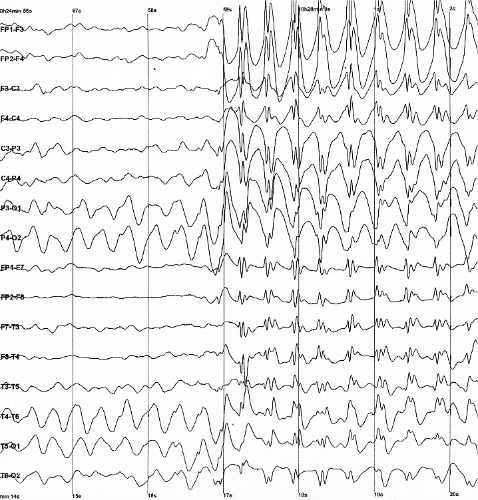
Epilepsia do lobo occipital fotossensível
📋 Origem dos dados
Esta página agrega dados de fontes públicas e oficiais. Dados sobre cobertura no SUS (PCDT, CEAF) são verificados ativamente por agente proativo (ver badge no infobox). Demais dados têm atribuição de fonte + data da última sincronização — clique para abrir o original.
- Doença rara (ontologia)
- fonte: Orphanet
- Identificador unificado
- fonte: MONDO
- Codificação WHO/SUS
- fonte: WHO ICD-10 / DATASUS
- CID-11 (futuro)
- fonte: WHO ICD-11
- NIH/GARD
- fonte: GARD (NIH)
- Dado público estruturado
- fonte: Wikidata
- Medicamentos (literatura)
- fonte: Orphanet
- Reposicionamento
- fonte: Drug Repurposing Hub