
Doença dos gânglios da base caracterizada pelo acúmulo de depósitos de cálcio em diferentes regiões do cérebro, particularmente nos gânglios da base e no núcleo denteado, e está frequentemente associada à neurodegeneração.
Introdução
O que você precisa saber de cara
Doença dos gânglios da base caracterizada pelo acúmulo de depósitos de cálcio em diferentes regiões do cérebro, particularmente nos gânglios da base e no núcleo denteado, e está frequentemente associada à neurodegeneração.
Escala de raridade
<1/50kMuito rara
1/20kRara
1/10kPouco freq.
1/5kIncomum
1/2k
Encontrou um erro ou informação desatualizada? Sugira uma correção →
Entender a doença
Do básico ao detalhe, leia no seu ritmo
Preparando trilha educativa...
Sinais e sintomas
O que aparece no corpo e com que frequência cada sintoma acontece
Partes do corpo afetadas
+ 55 sintomas em outras categorias
Características mais comuns
Os sintomas variam de pessoa para pessoa. Abaixo estão as 109 características clínicas mais associadas, ordenadas por frequência.
Linha do tempo da pesquisa
Encontrou um erro ou informação desatualizada? Sugira uma correção →
Genética e causas
O que está alterado no DNA e como passa nas famílias
Genes associados
8 genes identificados com associação a esta condição. Padrão de herança: Autosomal dominant, Autosomal recessive, Not applicable.
Mitochondrial nucleotide monophosphate kinase needed for salvage dNTP synthesis that mediates immunomodulatory and antiviral activities through IFN-dependent and IFN-independent pathways (PubMed:17999954, PubMed:30083606, PubMed:36930652, PubMed:37075076). Restricts the replication of multiple viruses including flaviviruses or coronaviruses (PubMed:30083606, PubMed:36930652, PubMed:37075076). Together with viperin/RSAD2 and ddhCTP, suppresses the replication of several coronaviruses through inhi
Mitochondrion
Basal ganglia calcification, idiopathic, 10, autosomal recessive
A form of basal ganglia calcification, a genetically heterogeneous condition characterized by symmetric calcification in the basal ganglia and other brain regions. Affected individuals can either be asymptomatic or show a wide spectrum of neuropsychiatric symptoms, including parkinsonism, dystonia, tremor, ataxia, dementia, psychosis, seizures, and chronic headache. Serum levels of calcium, phosphate, alkaline phosphatase and parathyroid hormone are normal. The neuropathological hallmark of the disease is vascular and pericapillary calcification, mainly of calcium phosphate, in the affected brain areas. IBGC10 is a progressive form characterized by motor dysfunction, speech impairment, and impaired cognition.
N-alpha-acetyltransferase that specifically mediates the acetylation of N-terminal residues of the transmembrane proteins, with a strong preference for N-termini facing the cytosol (PubMed:25732826, PubMed:38480682). Displays N-terminal acetyltransferase activity towards a range of N-terminal sequences including those starting with Met-Lys, Met-Val, Met-Ala and Met-Met (PubMed:21750686, PubMed:25732826, PubMed:27320834, PubMed:27550639). Required for normal chromosomal segregation during anaphas
Golgi apparatus membrane
Basal ganglia calcification, idiopathic, 9, autosomal recessive
A form of basal ganglia calcification, a genetically heterogeneous condition characterized by symmetric calcification in the basal ganglia and other brain regions. Affected individuals can either be asymptomatic or show a wide spectrum of neuropsychiatric symptoms, including parkinsonism, dystonia, tremor, ataxia, dementia, psychosis, seizures, and chronic headache. Serum levels of calcium, phosphate, alkaline phosphatase and parathyroid hormone are normal. The neuropathological hallmark of the disease is vascular and pericapillary calcification, mainly of calcium phosphate, in the affected brain areas.
Inorganic ion transporter that mediates phosphate ion export across the plasma membrane (PubMed:23791524, PubMed:25938945, PubMed:27080106, PubMed:31043717, PubMed:39169184, PubMed:39325866, PubMed:39747008, PubMed:39814721). Plays a major role in phosphate homeostasis, preventing intracellular phosphate accumulation and possible calcium phosphate precipitation, ultimately preserving calcium signaling (PubMed:27080106). Binds inositol hexakisphosphate (Ins6P) and similar inositol polyphosphates,
Cell membrane
Basal ganglia calcification, idiopathic, 6
A form of basal ganglia calcification, an autosomal dominant condition characterized by symmetric calcification in the basal ganglia and other brain regions. Affected individuals can either be asymptomatic or show a wide spectrum of neuropsychiatric symptoms, including parkinsonism, dystonia, tremor, ataxia, dementia, psychosis, seizures, and chronic headache. Serum levels of calcium, phosphate, alkaline phosphatase and parathyroid hormone are normal. The neuropathological hallmark of the disease is vascular and pericapillary calcification, mainly of calcium phosphate, in the affected brain areas.
Sodium-phosphate symporter which preferentially transports the monovalent form of phosphate with a stoichiometry of two sodium ions per phosphate ion (PubMed:12205090, PubMed:15955065, PubMed:16790504, PubMed:17494632, PubMed:22327515, PubMed:28722801, PubMed:30704756). Plays a critical role in the determination of bone quality and strength by providing phosphate for bone mineralization (By similarity). Required to maintain normal cerebrospinal fluid phosphate levels (By similarity). Mediates ph
Cell membraneApical cell membrane
Basal ganglia calcification, idiopathic, 1
A form of basal ganglia calcification, an autosomal dominant condition characterized by symmetric calcification in the basal ganglia and other brain regions. Affected individuals can either be asymptomatic or show a wide spectrum of neuropsychiatric symptoms, including parkinsonism, dystonia, tremor, ataxia, dementia, psychosis, seizures, and chronic headache. Serum levels of calcium, phosphate, alkaline phosphatase and parathyroid hormone are normal. The neuropathological hallmark of the disease is vascular and pericapillary calcification, mainly of calcium phosphate, in the affected brain areas.
Growth factor that plays an essential role in the regulation of embryonic development, cell proliferation, cell migration, survival and chemotaxis. Potent mitogen for cells of mesenchymal origin (PubMed:26599395). Required for normal proliferation and recruitment of pericytes and vascular smooth muscle cells in the central nervous system, skin, lung, heart and placenta. Required for normal blood vessel development, and for normal development of kidney glomeruli. Plays an important role in wound
Secreted
Basal ganglia calcification, idiopathic, 5
A form of basal ganglia calcification, an autosomal dominant condition characterized by symmetric calcification in the basal ganglia and other brain regions. Affected individuals can either be asymptomatic or show a wide spectrum of neuropsychiatric symptoms, including parkinsonism, dystonia, tremor, ataxia, dementia, psychosis, seizures, and chronic headache. Serum levels of calcium, phosphate, alkaline phosphatase and parathyroid hormone are normal. The neuropathological hallmark of the disease is vascular and pericapillary calcification, mainly of calcium phosphate, in the affected brain areas.
Tyrosine-protein kinase that acts as a cell-surface receptor for homodimeric PDGFB and PDGFD and for heterodimers formed by PDGFA and PDGFB, and plays an essential role in the regulation of embryonic development, cell proliferation, survival, differentiation, chemotaxis and migration. Plays an essential role in blood vessel development by promoting proliferation, migration and recruitment of pericytes and smooth muscle cells to endothelial cells. Plays a role in the migration of vascular smooth
Cell membraneCytoplasmic vesicleLysosome lumen
Alpha-galactosidase with unusual specificity for the Gal-alpha1,4-Glc structure, whose in vivo substrate is still unknown (PubMed:36129849). Promotes myogenesis by activating AKT signaling through the maturation and secretion of IGF2 (By similarity)
Nucleus membraneEndoplasmic reticulum membrane
Basal ganglia calcification, idiopathic, 7, autosomal recessive
A form of basal ganglia calcification, a genetically heterogeneous condition characterized by symmetric calcification in the basal ganglia and other brain regions. Affected individuals can either be asymptomatic or show a wide spectrum of neuropsychiatric symptoms, including parkinsonism, dystonia, tremor, ataxia, dementia, psychosis, seizures, and chronic headache. Serum levels of calcium, phosphate, alkaline phosphatase and parathyroid hormone are normal. The neuropathological hallmark of the disease is vascular and pericapillary calcification, mainly of calcium phosphate, in the affected brain areas.
Junctional adhesion protein that mediates heterotypic cell-cell interactions with its cognate receptor JAM3 to regulate different cellular processes (PubMed:11590146, PubMed:11823489, PubMed:24357068). Plays a role in homing and mobilization of hematopoietic stem and progenitor cells within the bone marrow (PubMed:24357068). At the surface of bone marrow stromal cells, it contributes to the retention of the hematopoietic stem and progenitor cells expressing JAM3 (PubMed:11590146, PubMed:24357068
Cell membraneCell junctionCell junction, tight junction
Basal ganglia calcification, idiopathic, 8, autosomal recessive
A form of basal ganglia calcification, a genetically heterogeneous condition characterized by symmetric calcification in the basal ganglia and other brain regions. Affected individuals can either be asymptomatic or show a wide spectrum of neuropsychiatric symptoms, including parkinsonism, dystonia, tremor, ataxia, dementia, psychosis, seizures, and chronic headache. Serum levels of calcium, phosphate, alkaline phosphatase and parathyroid hormone are normal. The neuropathological hallmark of the disease is vascular and pericapillary calcification, mainly of calcium phosphate, in the affected brain areas.
Variantes genéticas (ClinVar)
135 variantes patogênicas registradas no ClinVar.
Vias biológicas (Reactome)
12 vias biológicas associadas aos genes desta condição.
Diagnóstico
Os sinais que médicos procuram e os exames que confirmam
Tratamento e manejo
Remédios, cuidados de apoio e o que precisa acompanhar
Onde tratar no SUS
Hospitais de referência no Brasil e o protocolo oficial do SUS (PCDT)
🇧🇷 Atendimento SUS — Calcinose-estrio-pálido-dentada bilateral
Selecione um estado ou use sua localização para ver resultados.
Dados de DATASUS/CNES, SBGM, ABNeuro e Ministério da Saúde. Sempre confirme a disponibilidade diretamente com o estabelecimento.
Pesquisa ativa
Ensaios clínicos abertos e novidades científicas recentes
Pesquisa e ensaios clínicos
Nenhum ensaio clínico registrado para esta condição.
Publicações mais relevantes
The role of calcium serum level in clinical manifestation and progress of psoriasis vulgaris in a patient with Fahr's syndrome.
Fahr's syndrome is a rare entity characterized by symmetrical and bilateral non-atherosclerotic intracerebral calcifications in the basal ganglia. This entity is usually asymptomatic or may present mainly with neuro-neuropsychiatric and dermatological manifestations. Secondary bilateral striopallidodentate calcinosis (BSPDC) presentations are associated with various diseases. We describe a case of psoriasis vulgaris associated with secondary BSPDC due to hypoparathyroidism. Laboratory tests revealed hypocalcemia, hyperphosphatemia, and a low parathormone serum level; in cerebral computed tomography (CT), bilateral basal ganglia calcification was observed. Correction of calcium deficiency restored the calcium-phosphate balance and led to an improvement in psoriatic lesions. Psoriasis vulgaris is a common condition that may be associated with disturbances in calcium metabolism. Dermatologists should be aware that investigating cases resistant to conventional therapies can uncover underlying systemic disorders that significantly affect patients' quality of life.
Fahr's disease presenting with ischemic stroke in young adult: a case report of rare disease with unique presentation.
Fahr's disease, or bilateral striopallidodentate calcinosis, is a rare autosomal dominant neurological disorder characterized by bilateral symmetrical calcifications in the basal ganglia, thalamus, hippocampus, dentate nucleus, cerebral cortex, and cerebellar subcortical white matter. Typically presenting with cognitive, psychiatric, and extrapyramidal symptoms in middle age, its presentation as an acute ischemic stroke is exceedingly rare. This case report presents this unusual occurrence. A 32-year-old female presented with sudden onset weakness in her left lower limb, slurred speech, and facial deviation to the right. Over the next 2 days, the weakness extended to her left upper limb. Neurological examination revealed left-sided lower motor neuron lesion of the facial nerve, upper motor neuron signs, mild left-sided motor weakness, and cerebellar signs. Non-contrast computed tomography (CT) and magnetic resonance imaging (MRI) imaging showed extensive symmetrical calcifications in the basal ganglia, thalamus, dentate nucleus, and other deep gray matter structures, along with acute ischemic changes in the right corona radiata and internal capsule. All metabolic and endocrine evaluations were normal. Fahr's disease is associated with abnormal calcium deposition in the brain. The underlying mechanisms for the calcifications remain unclear but may involve disrupted calcium metabolism and alterations in the blood-brain barrier, contributing to a cycle of vascular injury. The coexistence of acute ischemic stroke in this context is rare and may result from microinfarcts due to calcification in small vessels. This case illustrates that acute ischemic stroke can occur as a manifestation of Fahr's disease. CT scan plays vital role in establishing diagnosis by revealing the symmetrical calcification pattern in the basal ganglia, thalami, and cerebellar dentate nucleus. Establishing the association between Fahr's disease and cerebrovascular disease warrants further studies.
Balance Impairment in Fahr's Disease: Mixed Signs of Parkinsonism and Cerebellar Disorder. A Case Study.
Fahr's disease is a rare idiopathic degenerative disease characterized by calcifications in the brain, and has also been associated with balance impairment. However, a detailed analysis of balance in these patients has not been performed. A 69-year-old woman with Fahr's disease presented with a long-lasting subjective imbalance. Balance was analyzed using both clinical (EquiScale, Timed Up and Go test, and Dizziness Handicap Inventory-short form) and instrumented tests (the sway of the body center of mass during quiet, perturbed, and self-perturbed stance, and the peak curvature of the center of mass during single stance while walking on a force-treadmill). The patient's balance was normal during clinical tests and walking. However, during standing, a striking impairment in vestibular control of balance emerged. The balance behavior displayed mixed parkinsonian (e.g., slowness and reduced amplitude of movement) and cerebellar (e.g., increased sway during standing in all conditions and decomposition of movement) features, with a discrepancy between the high severity of the static and the low severity of the dynamic balance impairment. The balance impairment characteristics outlined in this study could help neurologists and physiatrists detect, stage, and treat this rare condition.
[Numerous intracerebral calcifications].
Fahr syndrome - an incidental finding in a patient with lymphocytic meningitis.
Fahr syndrome is a rare condition mainly characterized by symmetric and bilateral calcification of basal ganglia and cerebellar nuclei. Herein, we report a case of a 67-year-old woman with a history of parathyroidectomy and Parkinsonism, who was admitted to hospital with suspected neuroinfection, and imaging features that were consistent with Fahr syndrome. The objective of this study is to teach clinicians about a neurologic illness that requires comprehensive medical and neurologic investigation due to the manifestations of lymphocytic meningitis might distract you from Fahr syndrome symptoms.
Publicações recentes
Chronic pruritus treated with alendronate in bilateral striopallidodentate calcinosis associated with an SLC20A2 gene mutation.
The role of calcium serum level in clinical manifestation and progress of psoriasis vulgaris in a patient with Fahr's syndrome.
Fahr's disease presenting with ischemic stroke in young adult: a case report of rare disease with unique presentation.
[Numerous intracerebral calcifications].
Balance Impairment in Fahr's Disease: Mixed Signs of Parkinsonism and Cerebellar Disorder. A Case Study.
📚 EuropePMC20 artigos no totalmostrando 14
The role of calcium serum level in clinical manifestation and progress of psoriasis vulgaris in a patient with Fahr's syndrome.
Dermatology reportsFahr's disease presenting with ischemic stroke in young adult: a case report of rare disease with unique presentation.
Annals of medicine and surgery (2012)[Numerous intracerebral calcifications].
La Revue de medecine interneBalance Impairment in Fahr's Disease: Mixed Signs of Parkinsonism and Cerebellar Disorder. A Case Study.
Frontiers in human neuroscienceFahr syndrome - an incidental finding in a patient with lymphocytic meningitis.
Radiology case reportsFahr's Syndrome Presenting With Hypocalcemia and Psychotic Features.
CureusThe Effects of Lee - Silverman Voice Treatment on Voice and Swallowing Functions in a Case with Bilateral Striopallidodentate Calcinosis.
Neurology IndiaCase Report: An Incidental Finding of Fahr's Disease in a Patient with Hypochondria.
CureusFahr's Disease Presenting with Manic Symptoms.
JNMA; journal of the Nepal Medical AssociationBilateral striopallidodentate calcinosis associated with Sjögren's syndrome and IgDλ monoclonal gammopathy of undetermined significance.
Joint bone spineAnarthria in a patient with bilateral striopallidodentate calcinosis.
Neurology IndiaFemoral neck's fracture in Fahr's Syndrome: case report.
Clinical cases in mineral and bone metabolism : the official journal of the Italian Society of Osteoporosis, Mineral Metabolism, and Skeletal DiseasesExtensive bilateral striopallidodentate calcinosis: a 50 years history of hypoparathyroidism presenting like a parkinsonian syndrome.
Journal of neurologyFahr disease: use of susceptibility-weighted imaging for diagnostic dilemma with magnetic resonance imaging.
Quantitative imaging in medicine and surgeryAssociações
Organizações que acompanham esta doença — pra ter apoio e orientação
Ainda não temos associações cadastradas para Calcinose-estrio-pálido-dentada bilateral.
É de uma associação que acompanha esta doença? Fale com a gente →
Comunidades
Grupos ativos de quem convive com esta doença aqui no Raras
Ainda não existe comunidade no Raras para Calcinose-estrio-pálido-dentada bilateral
Pacientes, familiares e cuidadores se organizam em comunidades pra compartilhar experiências, fazer perguntas e se apoiar. Você pode ser o primeiro.
Tire suas dúvidas
Perguntas, dicas e experiências compartilhadas aqui na página
Participe da discussão
Faça login para postar dúvidas, compartilhar experiências e interagir com especialistas.
Fazer loginDoenças relacionadas
Doenças com sintomas parecidos — ajudam quem ainda está buscando diagnóstico
Referências e fontes
Bases de dados externas citadas neste artigo
Publicações científicas
Artigos indexados no PubMed ligados a esta doença no grafo RarasNet — título, periódico e PMID direto da fonte, sem intermediação de IA.
- The role of calcium serum level in clinical manifestation and progress of psoriasis vulgaris in a patient with Fahr's syndrome.
- Fahr's disease presenting with ischemic stroke in young adult: a case report of rare disease with unique presentation.
- Balance Impairment in Fahr's Disease: Mixed Signs of Parkinsonism and Cerebellar Disorder. A Case Study.
- [Numerous intracerebral calcifications].
- Fahr syndrome - an incidental finding in a patient with lymphocytic meningitis.
- Chronic pruritus treated with alendronate in bilateral striopallidodentate calcinosis associated with an SLC20A2 gene mutation.
Bases de dados e fontes oficiais
Identificadores e referências canônicas usadas para montar este verbete.
- ORPHA:1980(Orphanet)
- MONDO:0008947(MONDO)
- GARD:6406(GARD (NIH))
- Variantes catalogadas(ClinVar)
- Busca completa no PubMed(PubMed)
- Q1947307(Wikidata)
Dados compilados pelo RarasNet a partir de fontes abertas (Orphanet, OMIM, MONDO, PubMed/EuropePMC, ClinicalTrials.gov, DATASUS, PCDT/MS). Este conteúdo é informativo e não substitui avaliação médica.
Conteúdo mantido por Agente Raras · Médicos e pesquisadores podem colaborar
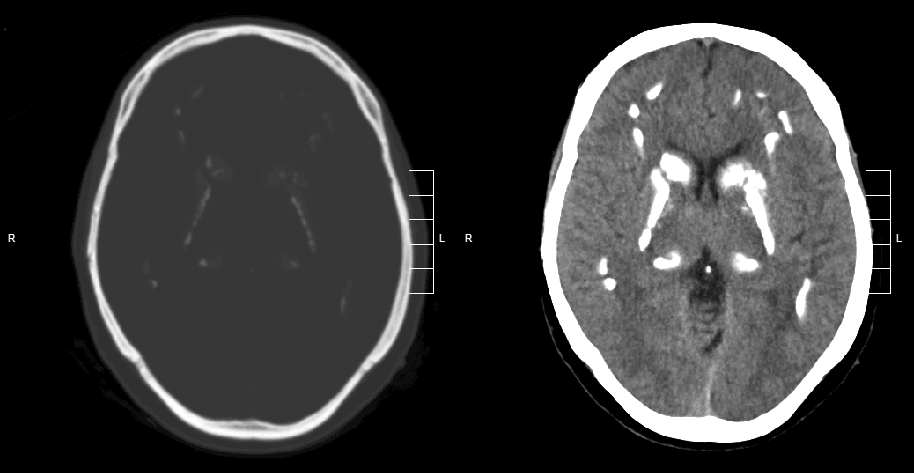
Calcinose-estrio-pálido-dentada bilateral
📋 Origem dos dados
Esta página agrega dados de fontes públicas e oficiais. Dados sobre cobertura no SUS (PCDT, CEAF) são verificados ativamente por agente proativo (ver badge no infobox). Demais dados têm atribuição de fonte + data da última sincronização — clique para abrir o original.
- Doença rara (ontologia)
- fonte: Orphanet
- Identificador unificado
- fonte: MONDO
- Codificação WHO/SUS
- fonte: WHO ICD-10 / DATASUS
- CID-11 (futuro)
- fonte: WHO ICD-11
- NIH/GARD
- fonte: GARD (NIH)
- Indexação biomédica
- fonte: MeSH (NLM)
- Dado público estruturado
- fonte: Wikidata