
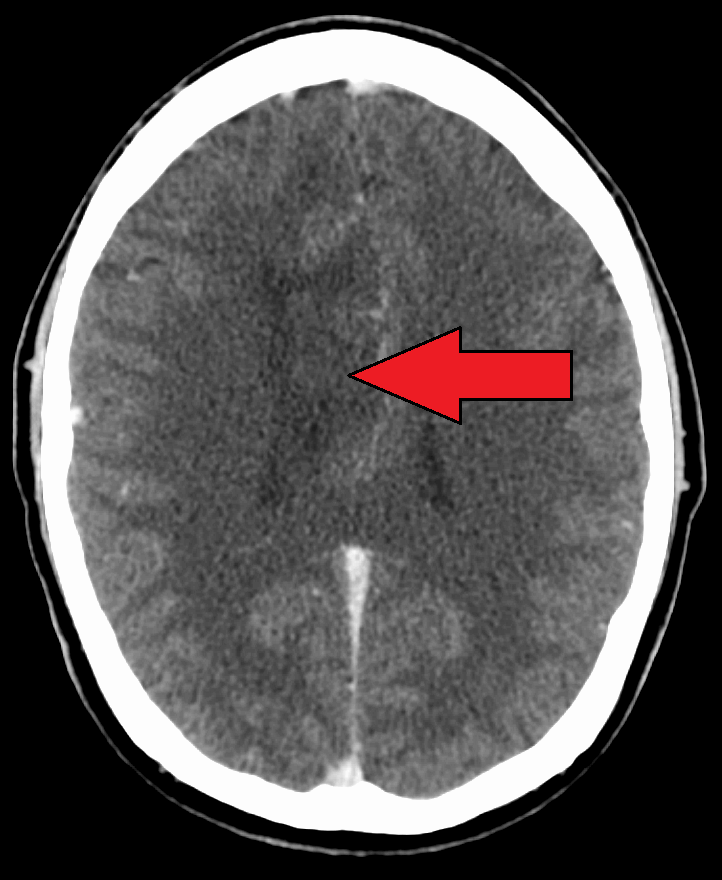
Oligoastrocitoma caracterizado pela presença de celularidade aumentada, atipia nuclear, pleomorfismo e alta atividade mitótica.
Introdução
O que você precisa saber de cara
Oligoastrocitoma caracterizado pela presença de celularidade aumentada, atipia nuclear, pleomorfismo e alta atividade mitótica.
Encontrou um erro ou informação desatualizada? Sugira uma correção →
Entender a doença
Do básico ao detalhe, leia no seu ritmo
Preparando trilha educativa...
Sinais e sintomas
O que aparece no corpo e com que frequência cada sintoma acontece
Linha do tempo da pesquisa
Encontrou um erro ou informação desatualizada? Sugira uma correção →
Genética e causas
O que está alterado no DNA e como passa nas famílias
Genes associados
1 gene identificado com associação a esta condição.
Plays a role in intermediary metabolism and energy production (PubMed:19228619, PubMed:22416140). It may tightly associate or interact with the pyruvate dehydrogenase complex (PubMed:19228619, PubMed:22416140)
Mitochondrion
D-2-hydroxyglutaric aciduria 2
A neurometabolic disorder causing developmental delay, epilepsy, hypotonia, and dysmorphic features. Both a mild and a severe phenotype exist. The severe phenotype is homogeneous and is characterized by early infantile-onset epileptic encephalopathy and cardiomyopathy. The mild phenotype has a more variable clinical presentation. Diagnosis is based on the presence of an excess of D-2-hydroxyglutaric acid in the urine.
Variantes genéticas (ClinVar)
82 variantes patogênicas registradas no ClinVar.
Vias biológicas (Reactome)
4 vias biológicas associadas aos genes desta condição.
Diagnóstico
Os sinais que médicos procuram e os exames que confirmam
Tratamento e manejo
Remédios, cuidados de apoio e o que precisa acompanhar
Onde tratar no SUS
Hospitais de referência no Brasil e o protocolo oficial do SUS (PCDT)
🇧🇷 Atendimento SUS — Oligoastrocitoma anaplásico
Selecione um estado ou use sua localização para ver resultados.
Dados de DATASUS/CNES, SBGM, ABNeuro e Ministério da Saúde. Sempre confirme a disponibilidade diretamente com o estabelecimento.
Pesquisa ativa
Ensaios clínicos abertos e novidades científicas recentes
Ensaios em destaque
🟢 Recrutando agora
2 pesquisas recrutando participantes. Converse com seu médico sobre a possibilidade de participar.
Outros ensaios clínicos
57 ensaios clínicos encontrados, 4 ativos.
Publicações mais relevantes
Revisiting pediatric HGGs and PNETs according to the WHO CNS5 criteria: A clinical and genomic retrospective analysis.
The 2021 WHO Classification of Tumors of the Central Nervous System, 5th edition (WHO CNS5), introduced revised diagnostic criteria for pediatric brain tumors (BTs), redefining pediatric-type diffuse high-grade gliomas (pHGGs) into 4 subtypes: diffuse midline glioma, H3 K27-altered (DMG-H3K27), diffuse hemispheric glioma, H3 G34-mutant (DHG-H3G34), diffuse pediatric-type high-grade glioma, H3-wildtype and IDH-wildtype (DpHGG-H3wt/IDHwt), and infant-type hemispheric glioma (IHG). This study revisits prior diagnoses of HGGs and primitive neuroectodermal tumors (PNETs) in children and incorporates next-generation sequencing (NGS) to classify tumors according to the revised criteria and analyze their clinicogenomic characteristics and outcomes. A retrospective review of pediatric patients diagnosed with glioblastoma (GBM), anaplastic astrocytoma, anaplastic oligoastrocytoma (AOA), gliomatosis cerebri, or PNET between 1997 and 2023 was conducted. Cases underwent pathology review, immunohistochemistry (IHC), and BT-targeted NGS for reclassification per WHO CNS5. An additional 20 patients diagnosed with pHGG via genetics-integrated diagnosis since 2020 were included. Clinical characteristics, genomic alterations, and outcomes were analyzed. Among the 78 reviewed cases, 41 were reclassified as pHGGs. TP53 mutations were the most prevalent, particularly in DpHGG-H3wt/IDHwt, which showed associations with cancer predisposition syndrome (CPS). Two patients with Li-Fraumeni syndrome (LFS) developed DpHGG-H3wt/IDHwt adjacent to prior radiation fields. The 2-year overall survival (OS) rates were lowest in DpHGG-H3wt/IDHwt (23.2%) and highest in IHG (92.3%). Long-term survival was observed in IHG patients, with a 5-year OS rate of 73.8%, indicating the need for different adjuvant treatment strategies compared to other pHGGs. BT-targeted NGS facilitates the reclassification of pHGGs, revealing associations with CPS. Routine germline sequencing is warranted, and accurate molecular diagnosis enables a shift in treatment strategies tailored to specific pHGG subtypes.
Recombinant polio-rhinovirus immunotherapy for recurrent paediatric high-grade glioma: a phase 1b trial.
Outcomes of recurrent paediatric high-grade glioma are poor, with a median overall survival of less than 6 months. Viral immunotherapy, such as the polio-rhinovirus chimera lerapolturev, is a novel approach for treatment of recurrent paediatric high-grade glioma and has shown promise in adults with recurrent glioblastoma. The poliovirus receptor CD155 is ubiquitously expressed in malignant paediatric brain tumours and is a treatment target in paediatric high-grade glioma. We aimed to assess the safety of lerapolturev when administered as a single dose intracerebrally by convection enhanced delivery in children and young people with recurrent WHO grade 3 or grade 4 glioma, and to assess overall survival in these patients. This phase 1b trial was done at the Duke University Medical Center (Durham, NC, USA). Patients aged 4-21 years with recurrent high-grade malignant glioma (anaplastic astrocytoma, glioblastoma, anaplastic oligoastrocytoma, anaplastic oligodendroglioma, or anaplastic pleomorphic xanthoastrocytoma) or anaplastic ependymoma, atypical teratoid rhabdoid tumour, or medulloblastoma with infusible disease were eligible for this study. A catheter was tunnelled beneath the scalp for a distance of at least 5 cm to aid in prevention of infection. The next day, lerapolturev at a dose of 5 × 10⁷ median tissue culture infectious dose in 3 mL infusate loaded in a syringe was administered via a pump at a rate of 0·5 mL per h as a one-time dose. The infusion time was approximately 6·5 h to compensate for volume of the tubing. The primary endpoint was the proportion of patients with unacceptable toxic effects during the 14-day period after lerapolturev treatment. The study is registered with ClinicalTrials.gov, NCT03043391. Between Dec 5, 2017, and May 12, 2021, 12 patients (11 unique patients) were enrolled in the trial. Eight patients were treated with lerapolturev. The median patient age was 16·5 years (IQR 11·0-18·0), five (63%) of eight patients were male and three (38%) were female, and six (75%) of eight patients were White and two (25%) were Black or African American. The median number of previous chemotherapeutic regimens was 3·50 (IQR 1·25-5·00). Six of eight patients had 26 treatment-related adverse events attributable to lerapolturev. There were no irreversible (ie, persisted longer than 2 weeks) treatment-related grade 4 adverse events or deaths. Treatment-related grade 3 adverse events included headaches in two patients and seizure in one patient. Four patients received low-dose bevacizumab on-study for treatment-related peritumoural inflammation or oedema, diagnosed by both clinical symptoms plus fluid-attenuated inversion recovery MRI. The median overall survival was 4·1 months (95% CI 1·2-10·1). One patient remains alive after 22 months. Convection enhanced delivery of lerapolturev is safe enough in the treatment of recurrent paediatric high-grade glioma to proceed to the next phase of trial. Solving Kids Cancer, B+ Foundation, Musella Foundation, and National Institutes of Health.
Meningioma and glioma as the first collision brain tumour reported in small animals.
We describe the clinical and pathological features of a brain collision tumour consisting of a fibrous meningioma and an anaplastic oligoastrocytoma in a 14-year-old male neutered French Bulldog. Computed tomography of the brain revealed a poorly defined, intra-axial lesion affecting the left frontal lobe. Following euthanasia, histological examination showed an anaplastic oligoastrocytoma invading the brain parenchyma and an adjacent fibrous meningioma. As synchronous intracranial tumours are rare in animals, the aims of this report are to describe the clinical, imaging and histopathological features of an intracranial collision tumour in a dog and highlight the importance of a complete histopathological study despite the imaging findings.
Concurrent IDH1 and IDH2 mutations in glioblastoma: A case report.
Isocitrate dehydrogenase (IDH) mutations are cornerstone diagnostic features in glioma classification. IDH mutations are typically characterized by mutually exclusive amino acid substitutions in the genes encoding for the IDH1 and the IDH2 enzyme isoforms. We report our institutional case of a diffuse astrocytoma with progression to secondary glioblastoma and concurrent IDH1/IDH2 mutations. A 49-year-old male underwent a subtotal resection of a lobular lesion within the right insula in 2013, revealing a WHO grade 3 anaplastic oligoastrocytoma, IDH1 mutated, 1p19q intact. Symptomatic tumor progression was suspected in 2018, leading to a surgical tumor biopsy that demonstrated WHO grade 4 IDH1 and IDH2 mutant diffuse astrocytoma. The patient subsequently underwent surgical resection followed by medical management and finally died in 2021. Although concurrent IDH1/IDH2 mutations have been rarely reported in the current literature, further study is required to better define their impact on patients' prognoses and their response to targeted therapies.
True anaplastic oligoastrocytoma with dual genotype: illustrative case.
The revised fourth edition of the World Health Organization classification of central nervous system tumors was published in 2016. Based on this classification, one of the infiltrating glioma entities named "oligoastrocytoma/anaplastic oligoastrocytoma" is discouraged. It is proposed that these mixed gliomas should be classified as diffuse astrocytoma/anaplastic astrocytoma or oligodendroglioma/anaplastic oligodendroglioma when analyzing their genetic alteration. A 78-year-old female underwent brain computed tomography (CT) because of a traffic accident. Cranial CT revealed a brain tumor in the left temporoparietal lobe; therefore, she was hospitalized. She underwent awake craniotomy. After the operation, she was treated with only local radiotherapy; the authors could not prescribe temozolomide, because she had had levetiracetam-induced pancytopenia. The remaining tumor neuroradiologically disappeared, and she was alive 40 months after the operation without tumor recurrence. Histopathologically, this tumor was diagnosed as an anaplastic oligoastrocytoma with a distinct dual phenotype of astrocytoma and oligodendroglioma components. Genetically, these two components revealed astrocytoma and oligodendroglioma genotypes, respectively. Therefore, the authors considered the integrated diagnosis of the temporal tumor as a true anaplastic oligoastrocytoma with a dual genotype. Interestingly, this case also included an area composed of spindle to oval neoplastic cells that revealed intermediate genetic alterations between astrocytomas and oligodendrogliomas.
Publicações recentes
Revisiting pediatric HGGs and PNETs according to the WHO CNS5 criteria: A clinical and genomic retrospective analysis.
Meningioma and glioma as the first collision brain tumour reported in small animals.
Concurrent IDH1 and IDH2 mutations in glioblastoma: A case report.
Recombinant polio-rhinovirus immunotherapy for recurrent paediatric high-grade glioma: a phase 1b trial.
True anaplastic oligoastrocytoma with dual genotype: illustrative case.
📚 EuropePMC26 artigos no totalmostrando 51
Revisiting pediatric HGGs and PNETs according to the WHO CNS5 criteria: A clinical and genomic retrospective analysis.
Neuro-oncology advancesMeningioma and glioma as the first collision brain tumour reported in small animals.
Journal of comparative pathologyConcurrent IDH1 and IDH2 mutations in glioblastoma: A case report.
Frontiers in oncologyRecombinant polio-rhinovirus immunotherapy for recurrent paediatric high-grade glioma: a phase 1b trial.
The Lancet. Child & adolescent healthTrue anaplastic oligoastrocytoma with dual genotype: illustrative case.
Journal of neurosurgery. Case lessonsSynergistic anti-tumor efficacy of mutant isocitrate dehydrogenase 1 inhibitor SYC-435 with standard therapy in patient-derived xenograft mouse models of glioma.
Translational oncologyIncremental Utility of Tc-99m Glucohepatonate Single-Photon Emission Computed Tomography over 18F-Flourodeoxyglucose Positron Emission Tomography in Diagnosis of Brain Tumor Recurrence - Old is Gold.
Indian journal of nuclear medicine : IJNM : the official journal of the Society of Nuclear Medicine, IndiaAnaplastic oligoastrocytoma with dual genotype: A case report of a rare entity.
Clinical neuropathologyPhase I clinical trial of temsirolimus and perifosine for recurrent glioblastoma.
Annals of clinical and translational neurologyA Pilot Study of Vaccine Therapy with Multiple Glioma Oncoantigen/Glioma Angiogenesis-Associated Antigen Peptides for Patients with Recurrent/Progressive High-Grade Glioma.
Journal of clinical medicineSuccessful treatment of a BRAF V600E-mutant extracranial metastatic anaplastic oligoastrocytoma with vemurafenib and everolimus.
Cancer biology & therapyPossibility of venoarterial extracorporeal membranous oxygenator being a bridging therapy for hemodynamic deterioration of pulmonary tumor thrombotic microangiopathy prior to initiating chemotherapy: A case report.
MedicineExtracranial metastasis of anaplastic oligoastrocytoma.
Cancer biology & medicineClinical importance of eflornithine (α-difluoromethylornithine) for the treatment of malignant gliomas.
CNS oncologySEOM clinical guidelines for anaplastic gliomas (2017).
Clinical & translational oncology : official publication of the Federation of Spanish Oncology Societies and of the National Cancer Institute of MexicoThreshold of the extent of resection for WHO Grade III gliomas: retrospective volumetric analysis of 122 cases using intraoperative MRI.
Journal of neurosurgeryWHO 2016 Classification of gliomas.
Neuropathology and applied neurobiologyExtracranial metastasis of anaplastic oligoastrocytoma: a case report and review of the literature.
International journal of clinical and experimental pathologyTreatment Outcomes in 1p19q Co-deleted/Partially Deleted Gliomas.
The Canadian journal of neurological sciences. Le journal canadien des sciences neurologiquesMulticenter phase II study of temozolomide and myeloablative chemotherapy with autologous stem cell transplant for newly diagnosed anaplastic oligodendroglioma.
Neuro-oncologyMapping an Extended Neurochemical Profile at 3 and 7 T Using Accelerated High-Resolution Proton Magnetic Resonance Spectroscopic Imaging.
Investigative radiologyClinical predictors for survival and treatment outcome of high-grade glioma in Prasat Neurological Institute.
Asian journal of neurosurgeryOutcomes for Anaplastic Glioma Treated With Radiation Therapy With or Without Concurrent Temozolomide.
American journal of clinical oncologyFocal seizure induced by preoperative navigated transcranial magnetic stimulation in a patient with anaplastic oligoastrocytoma.
Brain stimulationA case of medulloblastoma in adult patient affected by anaplastic oligoastrocytoma.
Neurological sciences : official journal of the Italian Neurological Society and of the Italian Society of Clinical NeurophysiologyDevelopment of a transplantable glioma tumour model from genetically engineered mice: MRI/MRS/MRSI characterisation.
Journal of neuro-oncologyHigh-grade glioma with anterior skull base erosion and intranasal extension: case report.
Journal of neurosurgeryAnaplastic astrocytoma and non-1p/19q co-deleted anaplastic oligoastrocytoma: long-term survival, employment, and performance status of survivors.
Neuro-oncology practice18F-fluoroethyl-L-tyrosine positron emission tomography for the differential diagnosis of tumefactive multiple sclerosis versus glioma: A case report.
Oncology lettersOverview of Transgenic Glioblastoma and Oligoastrocytoma CNS Models and Their Utility in Drug Discovery.
Current protocols in pharmacologyDetection of ATRX and IDH1-R132H immunohistochemistry in the progression of 211 paired gliomas.
OncotargetPrimary spinal cord anaplastic oligoastrocytoma presenting with paraplegia.
The spine journal : official journal of the North American Spine SocietyPresence of neural progenitors in spontaneous canine gliomas: A histopathological and immunohistochemical study of 20 cases.
Veterinary journal (London, England : 1997)Clinicopathological factors predictive of postoperative seizures in patients with gliomas.
SeizureEpidermal growth factor receptor (EGFR) gene amplification in high-grade gliomas: Western Indian tertiary cancer center experience.
Neurology IndiaPrognostic significance of histomolecular subgroups of adult anaplastic (WHO Grade III) gliomas: applying the 'integrated' diagnosis approach.
Journal of clinical pathologyPC or PCV, That Is the Question: Primary Anaplastic Oligodendroglial Tumors Treated with Procarbazine and CCNU With and Without Vincristine.
Anticancer researchSolitary "aggressive" leptomeningeal anaplastic oligoastrocytoma.
Revue neurologiqueDendritic cell-based immunotherapy targeting Wilms' tumor 1 in patients with recurrent malignant glioma.
Journal of neurosurgeryApplication of technical strategies for surgical management of adult intrinsic pontine gliomas: a retrospective series.
International journal of clinical and experimental medicineIDH1 and IDH2 mutations in different histologic subtypes and WHO grading gliomas in a sample from Northern Brazil.
Genetics and molecular research : GMRPhase II trial of pre-irradiation and concurrent temozolomide in patients with newly diagnosed anaplastic oligodendrogliomas and mixed anaplastic oligoastrocytomas: long term results of RTOG BR0131.
Journal of neuro-oncologyImmunohistochemical profiles of IDH1, MGMT and P53: practical significance for prognostication of patients with diffuse gliomas.
Neuropathology : official journal of the Japanese Society of NeuropathologyAnaplastic glioma: current treatment and management.
Expert review of neurotherapeuticsOpsoclonus-myoclonus syndrome in a patient with an anaplastic oligoastrocytoma.
Journal of neuro-oncologyPrognostic value of volume-based measurements on (11)C-methionine PET in glioma patients.
European journal of nuclear medicine and molecular imagingDynamic study of methionine positron emission tomography in patients with glioblastoma with oligodendroglial components.
Brain tumor pathologyBevacizumab and irinotecan in recurrent malignant glioma, a single institution experience.
Radiology and oncologyImpact of 1p/19q codeletion and histology on outcomes of anaplastic gliomas treated with radiation therapy and temozolomide.
International journal of radiation oncology, biology, physicsThe impact of adjuvant radiation therapy for high-grade gliomas by histology in the United States population.
International journal of radiation oncology, biology, physicsAnaplastic oligoastrocytoma: is molecular stratification based on 1p/19q status alone appropriate?
Journal of neuro-oncologyAssociações
Organizações que acompanham esta doença — pra ter apoio e orientação
Ainda não temos associações cadastradas para Oligoastrocitoma anaplásico.
É de uma associação que acompanha esta doença? Fale com a gente →
Comunidades
Grupos ativos de quem convive com esta doença aqui no Raras
Ainda não existe comunidade no Raras para Oligoastrocitoma anaplásico
Pacientes, familiares e cuidadores se organizam em comunidades pra compartilhar experiências, fazer perguntas e se apoiar. Você pode ser o primeiro.
Tire suas dúvidas
Perguntas, dicas e experiências compartilhadas aqui na página
Participe da discussão
Faça login para postar dúvidas, compartilhar experiências e interagir com especialistas.
Fazer loginDoenças relacionadas
Doenças com sintomas parecidos — ajudam quem ainda está buscando diagnóstico
Ainda não achamos doenças com sintomas parecidos o suficiente.
Referências e fontes
Bases de dados externas citadas neste artigo
Publicações científicas
Artigos indexados no PubMed ligados a esta doença no grafo RarasNet — título, periódico e PMID direto da fonte, sem intermediação de IA.
- Revisiting pediatric HGGs and PNETs according to the WHO CNS5 criteria: A clinical and genomic retrospective analysis.
- Recombinant polio-rhinovirus immunotherapy for recurrent paediatric high-grade glioma: a phase 1b trial.
- Meningioma and glioma as the first collision brain tumour reported in small animals.
- Concurrent IDH1 and IDH2 mutations in glioblastoma: A case report.
- True anaplastic oligoastrocytoma with dual genotype: illustrative case.
Bases de dados e fontes oficiais
Identificadores e referências canônicas usadas para montar este verbete.
- ORPHA:251663(Orphanet)
- MONDO:0016703(MONDO)
- GARD:10637(GARD (NIH))
- Variantes catalogadas(ClinVar)
- Busca completa no PubMed(PubMed)
- Q19000915(Wikidata)
Dados compilados pelo RarasNet a partir de fontes abertas (Orphanet, OMIM, MONDO, PubMed/EuropePMC, ClinicalTrials.gov, DATASUS, PCDT/MS). Este conteúdo é informativo e não substitui avaliação médica.
Conteúdo mantido por Agente Raras · Médicos e pesquisadores podem colaborar
Oligoastrocitoma anaplásico
📋 Origem dos dados
Esta página agrega dados de fontes públicas e oficiais. Dados sobre cobertura no SUS (PCDT, CEAF) são verificados ativamente por agente proativo (ver badge no infobox). Demais dados têm atribuição de fonte + data da última sincronização — clique para abrir o original.
- Doença rara (ontologia)
- fonte: Orphanet
- Identificador unificado
- fonte: MONDO
- Codificação WHO/SUS
- fonte: WHO ICD-10 / DATASUS
- CID-11 (futuro)
- fonte: WHO ICD-11
- NIH/GARD
- fonte: GARD (NIH)
- Dado público estruturado
- fonte: Wikidata
- Reposicionamento
- fonte: Drug Repurposing Hub
- Ensaios clínicos
- fonte: ClinicalTrials.gov