
A doença da urina do xarope de bordo intermediária (MSUD intermediária) é uma forma mais leve da MSUD. Ela é caracterizada por níveis que estão sempre altos de aminoácidos de cadeia ramificada (BCAAs) e de cetoácidos, mas com menos ou nenhuma crise aguda de piora grave da condição.
Introdução
O que você precisa saber de cara
A doença da urina do xarope de bordo intermediária (MSUD intermediária) é uma forma mais leve da MSUD. Ela é caracterizada por níveis que estão sempre altos de aminoácidos de cadeia ramificada (BCAAs) e de cetoácidos, mas com menos ou nenhuma crise aguda de piora grave da condição.
Escala de raridade
<1/50kMuito rara
1/20kRara
1/10kPouco freq.
1/5kIncomum
1/2k
Encontrou um erro ou informação desatualizada? Sugira uma correção →
Entender a doença
Do básico ao detalhe, leia no seu ritmo
Preparando trilha educativa...
Sinais e sintomas
O que aparece no corpo e com que frequência cada sintoma acontece
Linha do tempo da pesquisa
Triagem neonatal (Teste do Pezinho)
A triagem neonatal permite diagnóstico precoce e início imediato do tratamento.
Encontrou um erro ou informação desatualizada? Sugira uma correção →
Genética e causas
O que está alterado no DNA e como passa nas famílias
Genes associados
4 genes identificados com associação a esta condição. Padrão de herança: Autosomal recessive.
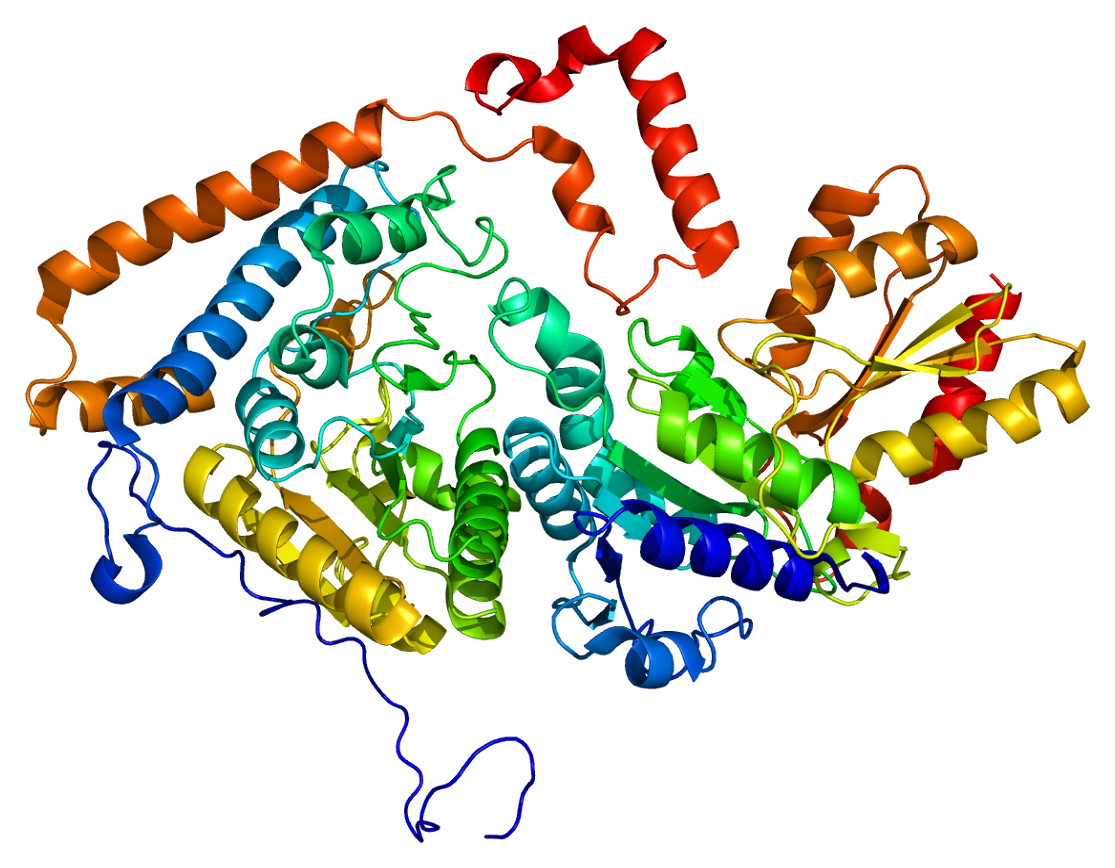
The branched-chain alpha-keto dehydrogenase complex catalyzes the overall conversion of alpha-keto acids to acyl-CoA and CO(2). It contains multiple copies of three enzymatic components: branched-chain alpha-keto acid decarboxylase (E1), lipoamide acyltransferase (E2) and lipoamide dehydrogenase (E3). Within this complex, the catalytic function of this enzyme is to accept, and to transfer to coenzyme A, acyl groups that are generated by the branched-chain alpha-keto acid decarboxylase component
Mitochondrion matrix
Together with BCKDHA forms the heterotetrameric E1 subunit of the mitochondrial branched-chain alpha-ketoacid dehydrogenase (BCKD) complex. The BCKD complex catalyzes the multi-step oxidative decarboxylation of alpha-ketoacids derived from the branched-chain amino-acids valine, leucine and isoleucine producing CO2 and acyl-CoA which is subsequently utilized to produce energy. The E1 subunit catalyzes the first step with the decarboxylation of the alpha-ketoacid forming an enzyme-product intermed
Mitochondrion matrix
Maple syrup urine disease 1B
A form of maple syrup urine disease, an autosomal recessive metabolic disorder due to an enzyme defect in the catabolic pathway of the branched-chain amino acids leucine, isoleucine, and valine. Accumulation of these 3 amino acids and their corresponding keto acids leads to encephalopathy and progressive neurodegeneration. Clinical features include mental and physical retardation, feeding problems, and a maple syrup odor to the urine. The keto acids of the branched-chain amino acids are present in the urine. If untreated, maple syrup urine disease can lead to seizures, coma, and death. The disease is often classified by its pattern of signs and symptoms. The most common and severe form of the disease is the classic type, which becomes apparent soon after birth. Variant forms of the disorder become apparent later in infancy or childhood and are typically milder, but they still involve developmental delay and other medical problems if not treated.
Together with BCKDHB forms the heterotetrameric E1 subunit of the mitochondrial branched-chain alpha-ketoacid dehydrogenase (BCKD) complex. The BCKD complex catalyzes the multi-step oxidative decarboxylation of alpha-ketoacids derived from the branched-chain amino-acids valine, leucine and isoleucine producing CO2 and acyl-CoA which is subsequently utilized to produce energy. The E1 subunit catalyzes the first step with the decarboxylation of the alpha-ketoacid forming an enzyme-product intermed
Mitochondrion matrix
Maple syrup urine disease 1A
A form of maple syrup urine disease, an autosomal recessive metabolic disorder due to an enzyme defect in the catabolic pathway of the branched-chain amino acids leucine, isoleucine, and valine. Accumulation of these 3 amino acids and their corresponding keto acids leads to encephalopathy and progressive neurodegeneration. Clinical features include mental and physical retardation, feeding problems, and a maple syrup odor to the urine. The keto acids of the branched-chain amino acids are present in the urine. If untreated, maple syrup urine disease can lead to seizures, coma, and death. The disease is often classified by its pattern of signs and symptoms. The most common and severe form of the disease is the classic type, which becomes apparent soon after birth. Variant forms of the disorder become apparent later in infancy or childhood and are typically milder, but they still involve developmental delay and other medical problems if not treated.
Serine/threonine-protein phosphatase component of macronutrients metabolism. Forms a functional kinase and phosphatase pair with BCKDK, serving as a metabolic regulatory node that coordinates branched-chain amino acids (BCAAs) with glucose and lipid metabolism via two distinct phosphoprotein targets: mitochondrial BCKDHA subunit of the branched-chain alpha-ketoacid dehydrogenase (BCKDH) complex and cytosolic ACLY, a lipogenic enzyme of Krebs cycle (PubMed:17336929, PubMed:17374715, PubMed:194117
Mitochondrion matrix
Maple syrup urine disease, mild variant
A mild form of maple syrup urine disease, a metabolic disorder due to an enzyme defect in the catabolic pathway of the branched-chain amino acids leucine, isoleucine, and valine. Accumulation of these 3 amino acids and their corresponding keto acids leads to encephalopathy and progressive neurodegeneration. Clinical features include mental and physical retardation, feeding problems, and a maple syrup odor to the urine. The keto acids of the branched-chain amino acids are present in the urine. If untreated, maple syrup urine disease can lead to seizures, coma, and death. The disease is often classified by its pattern of signs and symptoms. The most common and severe form of the disease is the classic type, which becomes apparent soon after birth. Variant forms of the disorder become apparent later in infancy or childhood and are typically milder, but they still involve developmental delay and other medical problems if not treated. MSUDMV is characterized by increased plasma levels of branched-chain amino acids (BCAA) apparent at birth. Treatment with a low-protein diet free of BCAA can result in normal psychomotor development and lack of metabolic episodes.
Variantes genéticas (ClinVar)
535 variantes patogênicas registradas no ClinVar.
Vias biológicas (Reactome)
10 vias biológicas associadas aos genes desta condição.
Diagnóstico
Os sinais que médicos procuram e os exames que confirmam
Tratamento e manejo
Remédios, cuidados de apoio e o que precisa acompanhar
Onde tratar no SUS
Hospitais de referência no Brasil e o protocolo oficial do SUS (PCDT)
🇧🇷 Atendimento SUS — Doença da urina xarope de bordo intermediária
Selecione um estado ou use sua localização para ver resultados.
Dados de DATASUS/CNES, SBGM, ABNeuro e Ministério da Saúde. Sempre confirme a disponibilidade diretamente com o estabelecimento.
Pesquisa ativa
Ensaios clínicos abertos e novidades científicas recentes
Pesquisa e ensaios clínicos
Nenhum ensaio clínico registrado para esta condição.
Publicações mais relevantes
Two Novel Mutations in the BCKDHB Gene Cause Intermediate Maple Syrup Urine Disease.
Challenges in Diagnosing Intermediate Maple Syrup Urine Disease by Newborn Screening and Functional Validation of Genomic Results Imperative for Reproductive Family Planning.
Maple syrup urine disease is caused by a deficiency of branched-chain alpha-ketoacid dehydrogenase, responsible for degradation of leucine, isoleucine, and valine. Biallelic pathogenic variants in BCKDHA, BCKDHB, or DBT genes result in enzyme deficiency. We report the case of a female infant who presented with mild gross motor delay at 4 months, and seizures with hypoglycaemia at 5 months. Newborn screening returned total leucine/isoleucine at the 99.5th centile of the population; however, as second-tier testing reported minimal alloisoleucine, the results were considered inconsistent with MSUD. Plasma amino acid and urine organic acid analyses at 5 months were, however, consistent with a diagnosis of MSUD. A brain MRI showed bilateral symmetrical T2 hyperintense signal abnormalities involving white matter, globus pallidus, thalamus, brainstem, and dentate nuclei with restricted diffusion. A repeat MRI 10 months post-dietary-intervention showed the resolution of these changes and progression in myelination. Her clinical phenotype, including protein tolerance, correlated with intermediate MSUD. Molecular analysis of all three genes identified two variants of uncertain significance, c.434-15_434-4del and c.365A>G (p. Tyr122Cys) in the DBT gene. The rate of leucine decarboxylation in fibroblasts was reduced, but not to the extent observed in classical MSUD patients, supporting an intermediate form of MSUD. Previously reported mRNA splicing studies supported a deleterious effect of the c.434-15_434-4del variant. This functional evidence and confirmation that the variants were in trans, permitted their reclassification as pathogenic and likely pathogenic, respectively, facilitating subsequent prenatal testing. This report highlights the challenges in identifying intermediate MSUD by newborn screening, reinforcing the importance of functional studies to confirm variant pathogenicity in this era of molecular diagnostics.
Publicações recentes
Two Novel Mutations in the BCKDHB Gene Cause Intermediate Maple Syrup Urine Disease.
Challenges in Diagnosing Intermediate Maple Syrup Urine Disease by Newborn Screening and Functional Validation of Genomic Results Imperative for Reproductive Family Planning.
Improved amino acid, bioenergetic metabolite and neurotransmitter profiles following human amnion epithelial cell transplant in intermediate maple syrup urine disease mice.
Placental stem cell correction of murine intermediate maple syrup urine disease.
Hepatocyte transplantation (HTx) corrects selected neurometabolic abnormalities in murine intermediate maple syrup urine disease (iMSUD).
📚 EuropePMC10 artigos no totalmostrando 2
Two Novel Mutations in the BCKDHB Gene Cause Intermediate Maple Syrup Urine Disease.
Annals of Indian Academy of NeurologyChallenges in Diagnosing Intermediate Maple Syrup Urine Disease by Newborn Screening and Functional Validation of Genomic Results Imperative for Reproductive Family Planning.
International journal of neonatal screeningAssociações
Organizações que acompanham esta doença — pra ter apoio e orientação
Ainda não temos associações cadastradas para Doença da urina xarope de bordo intermediária.
É de uma associação que acompanha esta doença? Fale com a gente →
Comunidades
Grupos ativos de quem convive com esta doença aqui no Raras
Ainda não existe comunidade no Raras para Doença da urina xarope de bordo intermediária
Pacientes, familiares e cuidadores se organizam em comunidades pra compartilhar experiências, fazer perguntas e se apoiar. Você pode ser o primeiro.
Tire suas dúvidas
Perguntas, dicas e experiências compartilhadas aqui na página
Participe da discussão
Faça login para postar dúvidas, compartilhar experiências e interagir com especialistas.
Fazer loginDoenças relacionadas
Doenças com sintomas parecidos — ajudam quem ainda está buscando diagnóstico
Ainda não achamos doenças com sintomas parecidos o suficiente.
Referências e fontes
Bases de dados externas citadas neste artigo
Publicações científicas
Artigos indexados no PubMed ligados a esta doença no grafo RarasNet — título, periódico e PMID direto da fonte, sem intermediação de IA.
- Two Novel Mutations in the BCKDHB Gene Cause Intermediate Maple Syrup Urine Disease.
- Challenges in Diagnosing Intermediate Maple Syrup Urine Disease by Newborn Screening and Functional Validation of Genomic Results Imperative for Reproductive Family Planning.
- Improved amino acid, bioenergetic metabolite and neurotransmitter profiles following human amnion epithelial cell transplant in intermediate maple syrup urine disease mice.
- Placental stem cell correction of murine intermediate maple syrup urine disease.
- Hepatocyte transplantation (HTx) corrects selected neurometabolic abnormalities in murine intermediate maple syrup urine disease (iMSUD).
Bases de dados e fontes oficiais
Identificadores e referências canônicas usadas para montar este verbete.
- ORPHA:268162(Orphanet)
- MONDO:0017052(MONDO)
- GARD:17264(GARD (NIH))
- Variantes catalogadas(ClinVar)
- Busca completa no PubMed(PubMed)
- Q56013922(Wikidata)
Dados compilados pelo RarasNet a partir de fontes abertas (Orphanet, OMIM, MONDO, PubMed/EuropePMC, ClinicalTrials.gov, DATASUS, PCDT/MS). Este conteúdo é informativo e não substitui avaliação médica.
Conteúdo mantido por Agente Raras · Médicos e pesquisadores podem colaborar
Doença da urina xarope de bordo intermediária
📋 Origem dos dados
Esta página agrega dados de fontes públicas e oficiais. Dados sobre cobertura no SUS (PCDT, CEAF) são verificados ativamente por agente proativo (ver badge no infobox). Demais dados têm atribuição de fonte + data da última sincronização — clique para abrir o original.
- Doença rara (ontologia)
- fonte: Orphanet
- Identificador unificado
- fonte: MONDO
- Codificação WHO/SUS
- fonte: WHO ICD-10 / DATASUS
- CID-11 (futuro)
- fonte: WHO ICD-11
- NIH/GARD
- fonte: GARD (NIH)
- Dado público estruturado
- fonte: Wikidata