
É uma forma de demência frontotemporal caracterizada pela degeneração progressiva do lobo temporal direito. Manifesta-se tipicamente com dificuldades de linguagem, comportamento social alterado e problemas de memória.
Introdução
O que você precisa saber de cara
Visão geral
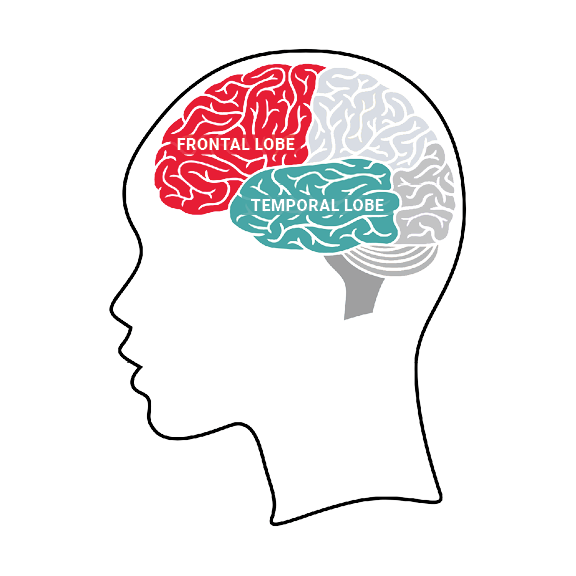
A atrofia lobar temporal direita (ATLD) é uma variante anatômica da demência frontotemporal (DFT), caracterizada por alterações comportamentais, mudanças de personalidade, perda de memória episódica e prosopagnosia (dificuldade em reconhecer rostos). Essa condição é atribuída a uma atrofia assimétrica, predominantemente do lado direito, das regiões frontal e temporal do cérebro.[1]
Sinais e sintomas
Os principais sintomas incluem disfunção comportamental, alterações de personalidade, perda de memória episódica e prosopagnosia. Esses sinais decorrem da degeneração predominantemente direita dos lobos frontal e temporal.[1]
Causas genéticas
Até o momento, não há genes específicos identificados como causa direta da atrofia lobar temporal direita. A condição é descrita como uma variante anatômica da demência frontotemporal, e estudos genéticos mais amplos sobre a DFT podem ser relevantes, mas não há dados genéticos específicos para esta variante.[1][3]
Diagnóstico
O diagnóstico é baseado em avaliação clínica, história do paciente e exames de neuroimagem (como ressonância magnética) que demonstram atrofia assimétrica predominante no lobo temporal direito. Não há testes genéticos específicos disponíveis para esta condição, e o diagnóstico diferencial inclui outras formas de demência frontotemporal.[1][3]
Tratamento e manejo
Não há tratamento curativo específico para a atrofia lobar temporal direita. O manejo é sintomático e multidisciplinar, envolvendo neurologistas, psiquiatras, terapeutas ocupacionais e fonoaudiólogos. Estratégias não farmacológicas, como terapia comportamental e suporte psicossocial, são fundamentais. Medicamentos podem ser usados para controlar sintomas comportamentais, mas não há medicamentos aprovados especificamente para esta condição. Consulte sempre um médico especialista para orientação individualizada.[1]
Tratamentos citados na literatura
Não há fármacos específicos listados na literatura científica como tratamento para a atrofia lobar temporal direita. As informações disponíveis referem-se ao manejo geral da demência frontotemporal, sem dados de ensaios clínicos ou publicações específicas para esta variante.[1]
Prognóstico e qualidade de vida
O prognóstico é variável, mas geralmente a condição é progressiva, com declínio gradual das funções cognitivas e comportamentais. O suporte familiar e o acompanhamento multidisciplinar são essenciais para manter a qualidade de vida pelo maior tempo possível. Não há dados específicos sobre sobrevida para esta variante.[1]
Conteúdo informativo gerado e mantido automaticamente a partir de fontes oficiais (Orphanet, HPO, OMIM, SUS). Não substitui avaliação médica.
É uma forma de demência frontotemporal caracterizada pela degeneração progressiva do lobo temporal direito. Manifesta-se tipicamente com dificuldades de linguagem, comportamento social alterado e problemas de memória.
Encontrou um erro ou informação desatualizada? Sugira uma correção →
Entender a doença
Do básico ao detalhe, leia no seu ritmo
Preparando trilha educativa...
Sinais e sintomas
O que aparece no corpo e com que frequência cada sintoma acontece
Visão geral
A atrofia lobar temporal direita (ATLD) é uma variante anatômica da demência frontotemporal (DFT), caracterizada por alterações comportamentais, mudanças de personalidade, perda de memória episódica e prosopagnosia (dificuldade em reconhecer rostos). Essa condição é atribuída a uma atrofia assimétrica, predominantemente do lado direito, das regiões frontal e temporal do cérebro.[1]
Sinais e sintomas
Os principais sintomas incluem disfunção comportamental, alterações de personalidade, perda de memória episódica e prosopagnosia. Esses sinais decorrem da degeneração predominantemente direita dos lobos frontal e temporal.[1]
Causas genéticas
Até o momento, não há genes específicos identificados como causa direta da atrofia lobar temporal direita. A condição é descrita como uma variante anatômica da demência frontotemporal, e estudos genéticos mais amplos sobre a DFT podem ser relevantes, mas não há dados genéticos específicos para esta variante.[1][3]
Diagnóstico
O diagnóstico é baseado em avaliação clínica, história do paciente e exames de neuroimagem (como ressonância magnética) que demonstram atrofia assimétrica predominante no lobo temporal direito. Não há testes genéticos específicos disponíveis para esta condição, e o diagnóstico diferencial inclui outras formas de demência frontotemporal.[1][3]
Tratamento e manejo
Não há tratamento curativo específico para a atrofia lobar temporal direita. O manejo é sintomático e multidisciplinar, envolvendo neurologistas, psiquiatras, terapeutas ocupacionais e fonoaudiólogos. Estratégias não farmacológicas, como terapia comportamental e suporte psicossocial, são fundamentais. Medicamentos podem ser usados para controlar sintomas comportamentais, mas não há medicamentos aprovados especificamente para esta condição. Consulte sempre um médico especialista para orientação individualizada.[1]
Tratamentos citados na literatura
Não há fármacos específicos listados na literatura científica como tratamento para a atrofia lobar temporal direita. As informações disponíveis referem-se ao manejo geral da demência frontotemporal, sem dados de ensaios clínicos ou publicações específicas para esta variante.[1]
Prognóstico e qualidade de vida
O prognóstico é variável, mas geralmente a condição é progressiva, com declínio gradual das funções cognitivas e comportamentais. O suporte familiar e o acompanhamento multidisciplinar são essenciais para manter a qualidade de vida pelo maior tempo possível. Não há dados específicos sobre sobrevida para esta variante.[1]
Conteúdo informativo gerado e mantido automaticamente a partir de fontes oficiais (Orphanet, HPO, OMIM, SUS). Não substitui avaliação médica.
Linha do tempo da pesquisa
Encontrou um erro ou informação desatualizada? Sugira uma correção →
Genética e causas
O que está alterado no DNA e como passa nas famílias
Nenhum gene associado encontrado
Os dados genéticos desta condição ainda estão sendo catalogados.
Diagnóstico
Os sinais que médicos procuram e os exames que confirmam
Tratamento e manejo
Remédios, cuidados de apoio e o que precisa acompanhar
Onde tratar no SUS
Hospitais de referência no Brasil e o protocolo oficial do SUS (PCDT)
🇧🇷 Atendimento SUS — Atrofia lobar temporal direita
Selecione um estado ou use sua localização para ver resultados.
Dados de DATASUS/CNES, SBGM, ABNeuro e Ministério da Saúde. Sempre confirme a disponibilidade diretamente com o estabelecimento.
Pesquisa ativa
Ensaios clínicos abertos e novidades científicas recentes
Pesquisa e ensaios clínicos
Nenhum ensaio clínico registrado para esta condição.
Publicações mais relevantes
Multimodal semantic knowledge of emotion concepts in frontotemporal dementia.
Recent work has delineated the semantic behavioral variant of frontotemporal dementia (sbvFTD; or right temporal variant of FTD, which is thought to preferentially impair semantic knowledge for emotional concepts. However, this proposed core feature has not yet been empirically validated, and no clinical tool exists to assess it. Establishing reliable markers is essential to clinically differentiate sbvFTD from behavioral variant FTD (bvFTD), which is critical given their overlapping behavioral symptoms but divergent underlying pathologies. Furthermore, contrasting sbvFTD with semantic variant primary progressive aphasia (svPPA) can advance our understanding of semantic memory, revealing how the right and left anterior temporal lobes (ATLs) support emotion- versus tool-related knowledge, highlighting the graded, lateralized organization of the semantic system. We studied 15 patients with sbvFTD, 15 with svPPA, 18 with bvFTD, and 37 healthy controls. A novel multimodal semantic battery, the Fear and Spider Test (FST), which assesses tool- and emotion-related concepts across word-based semantic associations, picture-based semantic associations, and sound-to-picture matching, was administered. Stimuli were matched on psycholinguistic and perceptual features, and emotional items were drawn from multicultural facial expressions validated with the Facial Action Coding System. Neural correlates of semantic performance were investigated using voxel-based morphometry. As expected, patients with both sbvFTD and svPPA showed greater deficits in all semantic tasks compared to controls and bvFTD, and bilateral anterior temporal lobe (ATL) volumes were broadly associated with performance across all semantic tasks. Interactions between modality and categories were necessary for the emergence of differences between sbvFTD and svPPA and right and left ATL atrophy: performance on the Words-Tools condition was more impaired in svPPA and correlated with left ATL volume, while performance on the Pictures-Emotions condition was more impaired in sbvFTD and correlated with right ATL volume. The FST provides the first clear dissociation of sbvFTD from bvFTD, a distinction of critical clinical importance given their divergent pathological substrates and the absence of frontotemporal lobar degeneration specific biomarkers. The study also refines our understanding of semantic memory: contrasting sbvFTD with svPPA reveals complementary roles of the right and left ATLs in supporting emotion and tool knowledge, underscoring the graded, lateralized organization of the semantic system.
TBK1-Associated Primary Lateral Sclerosis Followed by Right Temporal Variant Frontotemporal Dementia.
We report a 58-year-old woman with a novel splice-site variant in the TANK-binding kinase 1 (TBK1:c.993-2A>C p.Ala332TyrfsTer39) who sequentially developed primary lateral sclerosis (PLS) followed by right temporal variant frontotemporal dementia (rtvFTD). Neuroimaging demonstrated right anterior temporal atrophy before cognitive symptoms, and prosopagnosia represented the earliest manifestation of rtvFTD. Molecular analysis revealed reduced levels of correctly spliced TBK1 transcripts, consistent with haploinsufficiency. Given the shared involvement of TDP-43 pathology in both PLS and rtvFTD, this case indicates TBK1 dysfunction as a fundamental genetic factor underlying the coexistence of these phenotypes, underscoring the clinical value of early neuroimaging and genetic evaluation.
Fixel-based analysis reveals detailed white matter changes in semantic dementia.
Accurately characterizing white matter (WM) microstructure is critical for understanding neurodegenerative diseases such as semantic dementia (SD). Regionally constrained techniques like tract-based spatial statistics (TBSS) rely on diffusion-tensor imaging (DTI) and assume a single fiber population per voxel, limiting their sensitivity to complex architecture. Fixel-based analysis (FBA) overcomes these constraints by resolving multiple fiber populations (fixels) within a single voxel, enabling more anatomically specific assessment of WM organization. Multi-shell diffusion MRI from 16 semantic-variant PPA (svPPA) and 15 semantic-behavioral fronto-temporal dementia (sbvFTD) cases—with imaging-confirmed left- and right-predominant temporal atrophy, respectively—and 44 neurologically healthy controls were analyzed using both TBSS-DTI and whole-brain FBA. Fiber-specific metrics of fiber density and cross-section were evaluated alongside conventional DTI measures. Both methods confirmed damage to the anterior temporal lobe (ATL) connected tracts—the uncinate fasciculus, inferior longitudinal fasciculus, inferior fronto-occipital fasciculus, and temporal projections of the arcuate fasciculus. FBA further detected involvement of juxtacortical and other pathways that were not captured by TBSS, including the tapetum and anterior commissure, projections to the parahippocampal gyrus and amygdala, and longer-range parietal connections. By capturing multiple fiber populations within each voxel, FBA provides greater anatomical precision and sensitivity to micro- and macro-structural changes than TBSS. This fiber-specific framework enables a more comprehensive mapping of WM degeneration in SD and helps delineate early alterations in commissural and mesial-temporal pathways that may underlie disease spread and cognitive decline. The online version contains supplementary material available at 10.1007/s00429-025-03064-7.
Expressive prosody in behavioral variant frontotemporal degeneration and late-onset psychiatric disorders.
Neuropsychological assessment of social cognition has traditionally focused on mentalizing and emotions recognition. Recently developed digital measures allow clinicians to capture direct markers of abnormal social interactions, but they have not yet been used to distinguish neurological from psychiatric populations. This study examined prosodic alterations and explored structural neural correlates in behavioral variant frontotemporal degeneration (bvFTD) versus late-onset or atypical psychiatric disorders (LOAPD) and healthy controls (HCs). We analyzed audio recordings from 31 patients with bvFTD, 15 patients with LOAPD, and 39 HCs across two speech samples: an anamnestic interview and a narrative task. Fundamental frequency (f₀) metrics were extracted to assess between-group differences and to identify voxel-based morphometry correlates of prosodic alteration. Compared with HCs, patients with bvFTD showed a reduced f₀ range in both the anamnestic interview (p = .025, η² = .09, 95% CI [-23.83, -1.04]) and the narrative task (p = .002, η² = .14, 95% CI [-36.21, -4.74]). In the anamnestic interview, both bvFTD (p = .010, 95% CI [-36.59, -6.23]) and LOAPD (p = .012, 95% CI [-46.30, -8.81]) groups exhibited lower f₀ variability than HCs; no differences were observed during the narrative task. In bvFTD, reduced prosodic measures correlated with atrophy in the left superior frontal gyrus and the right middle and inferior temporal gyri (p < .05, family-wise error corrected). Patients with bvFTD demonstrate a narrowed pitch span and reduced intonational variability, linked to disruptions in frontotemporal networks integrating emotional and semantic cues into speech. These findings highlight the relevance of prosodic alterations as a target for further research in bvFTD and assessment. (PsycInfo Database Record (c) 2026 APA, all rights reserved).
Regional CSF volume quantification using deep learning for comparative analysis of brain atrophy in frontotemporal dementia subtypes.
Frontotemporal dementia (FTD) encompasses heterogeneous clinical syndromes, and distinguishing its subtypes using imaging remains challenging. We developed a deep learning model to quantify brain atrophy by measuring cerebrospinal fluid (CSF) volumes in key regions of interest (RoIs) on standard MRI scans. In a retrospective study, we analyzed 3D T1-weighted MRI data from 1,854 individuals, including cognitively unimpaired (CU) controls, patients with dementia of the Alzheimer type (DAT), and FTD subtypes: behavioral variant FTD (bvFTD), nonfluent variant primary progressive aphasia (nfvPPA), and semantic variant PPA (svPPA). The model quantified CSF volumes in 14 clinically relevant RoIs and generated age- and sex-adjusted W-scores to express regional atrophy. Each FTD subtype exhibited a distinct, lateralized atrophy pattern: bvFTD showed widespread bilateral frontal and right-predominant parietal and temporal atrophy; nfvPPA showed left-predominant frontal and parietal atrophy; and svPPA exhibited marked left-lateralized temporal and hippocampal atrophy. All FTD subtypes demonstrated significantly greater CSF expansion in these characteristic regions compared to DAT and CU. This deep learning approach provides a simple, interpretable measure of brain atrophy that differentiates FTD subtypes, requiring only standard MRI with minimal preprocessing, and offers clinical utility.
Publicações recentes
Clinical Manifestations and Neural Basis of Semantic Dementia: Converging Evidences From Brain Imaging Studies.
A Case of Late-Onset Semantic Dementia With Right-Predominant Temporal Lobe Atrophy due to Primary Tauopathy.
Distinctive Progression Patterns of Brain Structural Damage Aid Classification of Frontotemporal Dementia Variants.
Partial volume effect correction impairs the diagnostic utility of [(18)F]-THK-5351 PET in nonfluent-agrammatic variant primary progressive aphasia.
Disease-modifying effects of TMEM106B in genetic frontotemporal dementia: a longitudinal GENFI study.
📚 EuropePMCmostrando 114
Multimodal semantic knowledge of emotion concepts in frontotemporal dementia.
medRxiv : the preprint server for health sciencesTBK1-Associated Primary Lateral Sclerosis Followed by Right Temporal Variant Frontotemporal Dementia.
Annals of clinical and translational neurologyFixel-based analysis reveals detailed white matter changes in semantic dementia.
Brain structure & functionExpressive prosody in behavioral variant frontotemporal degeneration and late-onset psychiatric disorders.
NeuropsychologyRegional CSF volume quantification using deep learning for comparative analysis of brain atrophy in frontotemporal dementia subtypes.
Frontiers in aging neuroscienceOptineurin mutation-associated language variant frontotemporal dementia.
BMJ case reportsThe presymptomatic and early manifestations of semantic dementia.
Brain : a journal of neurologyA Case of Late-Onset Semantic Dementia With Right-Predominant Temporal Lobe Atrophy due to Primary Tauopathy.
Psychogeriatrics : the official journal of the Japanese Psychogeriatric SocietyDistinctive Progression Patterns of Brain Structural Damage Aid Classification of Frontotemporal Dementia Variants.
European journal of neurologyBehavioral variant frontotemporal dementia as a model for understanding the cognitive and cerebral determinants of verbal creativity.
Behavioral and brain functions : BBFNetwork changes associated with right anterior temporal lobe atrophy: insight into unique symptoms.
Brain communicationsPartial volume effect correction impairs the diagnostic utility of [18F]-THK-5351 PET in nonfluent-agrammatic variant primary progressive aphasia.
NeuroImage. ClinicalDisease-modifying effects of TMEM106B in genetic frontotemporal dementia: a longitudinal GENFI study.
Brain : a journal of neurologyPredominant right temporal and frontal brain atrophy and progressive behavioral dementia. A case of prion gene mutation (PRNP).
NeurocaseAutomated Speech Analysis to Differentiate Frontal and Right Anterior Temporal Lobe Atrophy in Frontotemporal Dementia.
NeurologyA progranulin gene deletion in frontotemporal lobar degeneration with corticobasal syndrome in a TREDEM case report.
Journal of Alzheimer's disease reportsModelling pathological spread through the structural connectome in the frontotemporal dementia clinical spectrum.
Brain : a journal of neurologySocial-semantic knowledge in frontotemporal dementia and after anterior temporal lobe resection.
Brain communicationsPerceptual and semantic deficits in face recognition in semantic dementia.
NeuropsychologiaFrequency and Longitudinal Course of Behavioral and Neuropsychiatric Symptoms in Participants With Genetic Frontotemporal Dementia.
NeurologyDiagnostic utility of brain MRI volumetry in comparing traumatic brain injury, Alzheimer disease and behavioral variant frontotemporal dementia.
BMC neurologyDigital language markers distinguish frontal from right anterior temporal lobe atrophy in frontotemporal dementia.
medRxiv : the preprint server for health sciencesSocioemotional Dysfunction From Temporal Lobe Involvement in Frontotemporal Dementia: A Preliminary Report.
The Journal of neuropsychiatry and clinical neurosciencesHemispheric asymmetries in hippocampal volume related to memory in left and right temporal variants of frontotemporal degeneration.
Frontiers in neurologyRight versus left temporal lobe semiology in dementia: Lessons from two cases with focal frontotemporal dementia syndromes.
Journal of neuropsychologyClinical and neuroanatomical characterization of the semantic behavioral variant of frontotemporal dementia in a multicenter Italian cohort.
Journal of neurologyAtrophy network mapping of clinical subtypes and main symptoms in frontotemporal dementia.
Brain : a journal of neurologyPhenotypically concordant distribution of pick bodies in aphasic versus behavioral dementias.
Acta neuropathologica communicationsClinical and cortical trajectories in non-fluent primary progressive aphasia and Alzheimer's disease: A role for emotion processing.
Brain researchNeuroanatomical and cellular degeneration associated with a social disorder characterized by new ritualistic belief systems in a TDP-C patient vs. a Pick patient.
Frontiers in neurologyDiminished baseline autonomic outflow in semantic dementia relates to left-lateralized insula atrophy.
NeuroImage. ClinicalFrontotemporal Dementia-Parkinsonism Due to MAPT Gene Variant Presenting with Rest and Action Tremor.
Tremor and other hyperkinetic movements (New York, N.Y.)Neuropsychiatric symptoms and imbalance of atrophy in behavioral variant frontotemporal dementia.
Human brain mappingThe architecture of abnormal reward behaviour in dementia: multimodal hedonic phenotypes and brain substrate.
Brain communicationsThe problematic syndrome of right temporal lobe atrophy: Unweaving the phenotypic rainbow.
Frontiers in neurologyProsopagnosia, Other Specific Cognitive Deficits, and Behavioral Symptoms: Comparison between Right Temporal and Behavioral Variant of Frontotemporal Dementia.
Vision (Basel, Switzerland)Clinicopathological diversity of semantic dementia: Comparisons of patients with early-onset versus late-onset, left-sided versus right-sided temporal atrophy, and TDP-type A versus type C pathology.
Neuropathology : official journal of the Japanese Society of NeuropathologyBrain Metabolic Profile in Presymptomatic GRN Carriers Throughout a 5-Year Follow-up.
NeurologyClinical, radiologic, and pathologic features of the globular glial tauopathy subtype of frontotemporal lobar degeneration in right temporal variant frontotemporal dementia with salient features of Geschwind syndrome.
NeurocaseComparing Medial Temporal Atrophy Between Early-Onset Semantic Dementia and Early-Onset Alzheimer's Disease Using Voxel-Based Morphometry: A Multicenter MRI Study.
Current Alzheimer researchFrontotemporal dementia: A unique window on the functional role of the temporal lobes.
Handbook of clinical neurologyRight Temporal Lobe Variant of Frontotemporal Dementia: Systematic Review.
Alzheimer disease and associated disordersAn autopsy case of progressive supranuclear palsy. Pallido-nigro-luysian type with argyrophilic grains clinically presenting with personality and behavioral changes.
Neuropathology : official journal of the Japanese Society of NeuropathologyRight temporal degeneration and socioemotional semantics: semantic behavioural variant frontotemporal dementia.
Brain : a journal of neurologyAn ecological approach to identify distinct neural correlates of disinhibition in frontotemporal dementia.
NeuroImage. ClinicalRight uncinate fasciculus supports socioemotional sensitivity in health and neurodegenerative disease.
NeuroImage. ClinicalNeuropathological fingerprints of survival, atrophy and language in primary progressive aphasia.
Brain : a journal of neurologyA Novel TBK1 Variant (Lys694del) Presenting With Corticobasal Syndrome in a Family With FTD-ALS Spectrum Diseases: Case Report.
Frontiers in neurologyA presumptive association between obsessive compulsions and asymmetric temporal lobe atrophy: a case report.
Journal of medical case reportsProton magnetic resonance spectroscopy in frontotemporal lobar degeneration-related syndromes.
Neurobiology of agingMultimodal Neurocognitive Markers of Naturalistic Discourse Typify Diverse Neurodegenerative Diseases.
Cerebral cortex (New York, N.Y. : 1991)Tackling clinical heterogeneity across the amyotrophic lateral sclerosis-frontotemporal dementia spectrum using a transdiagnostic approach.
Brain communicationsCharacteristics of behavioral symptoms in right-sided predominant semantic dementia and their impact on caregiver burden: a cross-sectional study.
Alzheimer's research & therapyRight temporal variant frontotemporal dementia is pathologically heterogeneous: a case-series and a systematic review.
Acta neuropathologica communicationsA case of developmental pedophilia unmasked by frontotemporal dementia.
NeurocaseSocial and leisure activity are associated with attenuated cortical loss in behavioral variant frontotemporal degeneration.
NeuroImage. ClinicalTumor necrosis factor superfamily molecules are increased in behavioral variant frontotemporal dementia and correlate with cortical atrophy: An exploratory investigation.
Journal of neuroimmunology[A case suspected of Alzheimer type dementia showing multimodal (face and voice) person recognition disorder from face and voice].
Rinsho shinkeigaku = Clinical neurologyDifferent patterns of gray matter atrophy in behavioral variant frontotemporal dementia with and without episodic memory impairment.
International journal of geriatric psychiatryRates of Brain Atrophy Across Disease Stages in Familial Frontotemporal Dementia Associated With MAPT, GRN, and C9orf72 Pathogenic Variants.
JAMA network openVerbal Semantics and the Left Dorsolateral Anterior Temporal Lobe: A Longitudinal Case of Bilateral Temporal Degeneration.
AphasiologyIncreased Neurofilament Light Chain and YKL-40 CSF Levels in One Japanese IBMPFD Patient With VCP R155C Mutation: A Clinical Case Report With CSF Biomarker Analyses.
Frontiers in neurologyA clinical-radiological framework of the right temporal variant of frontotemporal dementia.
Brain : a journal of neurologyRegional and hemispheric susceptibility of the temporal lobe to FTLD-TDP type C pathology.
NeuroImage. ClinicalPapez Circuit Gray Matter and Episodic Memory in Amyotrophic Lateral Sclerosis and Behavioural Variant Frontotemporal Dementia.
Brain imaging and behaviorLongitudinal structural and metabolic changes in frontotemporal dementia.
NeurologyDifferential Diagnosis of Behavioral Variant and Semantic Variant of Frontotemporal Dementia Using Visual Rating Scales.
Current medical imagingIn vivo staging of frontotemporal lobar degeneration TDP-43 type C pathology.
Alzheimer's research & therapyTemporal variant of frontotemporal dementia in C9orf72 repeat expansion carriers: two case studies.
Brain imaging and behaviorComparison of Gray Matter Atrophy in Behavioral Variant Frontal Temporal Dementia and Amyotrophic Lateral Sclerosis: A Coordinate-Based Meta-Analysis.
Frontiers in aging neuroscienceProgressive supranuclear palsy presenting with hyperkinetic movement disorder and hemiplegic dystonia: a case report.
The International journal of neuroscienceSpeech and Language Presentations of FTLD-TDP Type B Neuropathology.
Journal of neuropathology and experimental neurologyFrontal variant of Alzheimer's disease with asymmetric presentation mimicking frontotemporal dementia: Case report and literature review.
Brain and behaviorThe Landscape Montage Technique for diagnosing frontotemporal dementia starting as primary progressive aphasia: a case report.
Journal of medical case reportsScene construction impairments in frontotemporal dementia: Evidence for a primary hippocampal contribution.
NeuropsychologiaTwo pathologically confirmed cases of novel mutations in the MAPT gene causing frontotemporal dementia.
Neurobiology of agingHoarding and obsessive-compulsive behaviours in frontotemporal dementia: Clinical and neuroanatomic associations.
Cortex; a journal devoted to the study of the nervous system and behaviorSegmentation of medial temporal subregions reveals early right-sided involvement in semantic variant PPA.
Alzheimer's research & therapyMachine learning based hierarchical classification of frontotemporal dementia and Alzheimer's disease.
NeuroImage. ClinicalLongitudinal Changes in Semantic Concreteness in Semantic Variant Primary Progressive Aphasia (svPPA).
eNeuroFacial expressiveness and physiological arousal in frontotemporal dementia: Phenotypic clinical profiles and neural correlates.
Cognitive, affective & behavioral neuroscienceNetwork Architecture Underlying Basal Autonomic Outflow: Evidence from Frontotemporal Dementia.
The Journal of neuroscience : the official journal of the Society for NeuroscienceNeuroanatomy of Shared Conversational Laughter in Neurodegenerative Disease.
Frontiers in neurologyCardiac responses to viewing facial emotion differentiate frontotemporal dementias.
Annals of clinical and translational neurologyThalamic atrophy in frontotemporal dementia - Not just a C9orf72 problem.
NeuroImage. ClinicalTau PET imaging predicts cognition in atypical variants of Alzheimer's disease.
Human brain mappingFrontotemporal lobar degeneration due to P301L tau mutation showing apathy and severe frontal atrophy but lacking other behavioral changes: A case report and literature review.
Neuropathology : official journal of the Japanese Society of NeuropathologyClinicopathological correlations in behavioural variant frontotemporal dementia.
Brain : a journal of neurologyCorrelations between clinical characteristics and neuroimaging in Chinese patients with subtypes of frontotemporal lobe degeneration.
MedicineGeschwind Syndrome in frontotemporal lobar degeneration: Neuroanatomical and neuropsychological features over 9 years.
Cortex; a journal devoted to the study of the nervous system and behaviorBehavioral-variant frontotemporal dementia: Distinct phenotypes with unique functional profiles.
NeurologyA neural network underlying intentional emotional facial expression in neurodegenerative disease.
NeuroImage. ClinicalEvolution of autobiographical memory impairments in Alzheimer's disease and frontotemporal dementia - A longitudinal neuroimaging study.
NeuropsychologiaThe clinical, neuroanatomical, and neuropathologic phenotype of TBK1-associated frontotemporal dementia: A longitudinal case report.
Alzheimer's & dementia (Amsterdam, Netherlands)Brain structural correlates of executive and social cognition profiles in behavioral variant frontotemporal dementia and elderly bipolar disorder.
NeuropsychologiaDifferential Hemispheric Predilection of Microstructural White Matter and Functional Connectivity Abnormalities between Respectively Semantic and Behavioral Variant Frontotemporal Dementia.
Journal of Alzheimer's disease : JADShared neural correlates of limb apraxia in early stages of Alzheimer's dementia and behavioural variant frontotemporal dementia.
Cortex; a journal devoted to the study of the nervous system and behaviorPsychotic-Like Speech in Frontotemporal Dementia.
The Journal of neuropsychiatry and clinical neurosciencesAnatomical Correlates of Non-Verbal Perception in Dementia Patients.
Frontiers in aging neuroscienceFirst Symptoms and Neurocognitive Correlates of Behavioral Variant Frontotemporal Dementia.
Journal of Alzheimer's disease : JADHealthy brain connectivity predicts atrophy progression in non-fluent variant of primary progressive aphasia.
Brain : a journal of neurologyProsopagnosia as unusual presentation of semantic dementia: a case study.
Acta clinica BelgicaUncovering the Neural Bases of Cognitive and Affective Empathy Deficits in Alzheimer's Disease and the Behavioral-Variant of Frontotemporal Dementia.
Journal of Alzheimer's disease : JADStructural and functional brain abnormalities place phenocopy frontotemporal dementia (FTD) in the FTD spectrum.
NeuroImage. ClinicalNeuroimaging Correlates of Frontotemporal Dementia Associated with SQSTM1 Mutations.
Journal of Alzheimer's disease : JADMapping brain morphological and functional conversion patterns in predementia late-onset bvFTD.
European journal of nuclear medicine and molecular imagingRight Temporal Lobe Atrophy: A Case That Initially Presented as Excessive Piety.
The Clinical neuropsychologistPain and temperature processing in dementia: a clinical and neuroanatomical analysis.
Brain : a journal of neurologyNeural basis of motivational approach and withdrawal behaviors in neurodegenerative disease.
Brain and behaviorRelearning knowledge for people in a case of right variant frontotemporal dementia.
NeurocaseTemporal Variant Frontotemporal Dementia is Associated with Globular Glial Tauopathy.
Cognitive and behavioral neurology : official journal of the Society for Behavioral and Cognitive NeurologyImproving response inhibition systems in frontotemporal dementia with citalopram.
Brain : a journal of neurologyRight temporal lobe variant of frontotemporal dementia.
Journal of clinical neuroscience : official journal of the Neurosurgical Society of AustralasiaBrain atrophy over time in genetic and sporadic frontotemporal dementia: a study of 198 serial magnetic resonance images.
European journal of neurologyAssociações
Organizações que acompanham esta doença — pra ter apoio e orientação
Ainda não temos associações cadastradas para Atrofia lobar temporal direita.
É de uma associação que acompanha esta doença? Fale com a gente →
Comunidades
Grupos ativos de quem convive com esta doença aqui no Raras
Ainda não existe comunidade no Raras para Atrofia lobar temporal direita
Pacientes, familiares e cuidadores se organizam em comunidades pra compartilhar experiências, fazer perguntas e se apoiar. Você pode ser o primeiro.
Tire suas dúvidas
Perguntas, dicas e experiências compartilhadas aqui na página
Participe da discussão
Faça login para postar dúvidas, compartilhar experiências e interagir com especialistas.
Fazer loginDoenças relacionadas
Doenças com sintomas parecidos — ajudam quem ainda está buscando diagnóstico
Ainda não achamos doenças com sintomas parecidos o suficiente.
Referências e fontes
Bases de dados externas citadas neste artigo
Publicações científicas
Artigos indexados no PubMed ligados a esta doença no grafo RarasNet — título, periódico e PMID direto da fonte, sem intermediação de IA.
- Multimodal semantic knowledge of emotion concepts in frontotemporal dementia.
- TBK1-Associated Primary Lateral Sclerosis Followed by Right Temporal Variant Frontotemporal Dementia.
- Fixel-based analysis reveals detailed white matter changes in semantic dementia.
- Expressive prosody in behavioral variant frontotemporal degeneration and late-onset psychiatric disorders.
- Regional CSF volume quantification using deep learning for comparative analysis of brain atrophy in frontotemporal dementia subtypes.
- Clinical Manifestations and Neural Basis of Semantic Dementia: Converging Evidences From Brain Imaging Studies.
- A Case of Late-Onset Semantic Dementia With Right-Predominant Temporal Lobe Atrophy due to Primary Tauopathy.
- Distinctive Progression Patterns of Brain Structural Damage Aid Classification of Frontotemporal Dementia Variants.
- Partial volume effect correction impairs the diagnostic utility of [(18)F]-THK-5351 PET in nonfluent-agrammatic variant primary progressive aphasia.
- Disease-modifying effects of TMEM106B in genetic frontotemporal dementia: a longitudinal GENFI study.
Bases de dados e fontes oficiais
Identificadores e referências canônicas usadas para montar este verbete.
- ORPHA:293848(Orphanet)
- MONDO:0017399(MONDO)
- Busca completa no PubMed(PubMed)
- Q55345996(Wikidata)
Dados compilados pelo RarasNet a partir de fontes abertas (Orphanet, OMIM, MONDO, PubMed/EuropePMC, ClinicalTrials.gov, DATASUS, PCDT/MS). Este conteúdo é informativo e não substitui avaliação médica.
Conteúdo mantido por Agente Raras · Médicos e pesquisadores podem colaborar
Atrofia lobar temporal direita
📋 Origem dos dados
Esta página agrega dados de fontes públicas e oficiais. Dados sobre cobertura no SUS (PCDT, CEAF) são verificados ativamente por agente proativo (ver badge no infobox). Demais dados têm atribuição de fonte + data da última sincronização — clique para abrir o original.
- Doença rara (ontologia)
- fonte: Orphanet
- Identificador unificado
- fonte: MONDO
- Dado público estruturado
- fonte: Wikidata