
Luxação congênita isolada da cabeça do rádio é uma condição rara onde a cabeça do rádio se desloca permanentemente de sua articulação com o úmero desde o nascimento. Geralmente assintomática, pode causar dor, limitação de movimento e deformidade no cotovelo.
Introdução
O que você precisa saber de cara
Visão geral
A luxação congênita do cotovelo, também conhecida como luxação congênita isolada da cabeça do rádio, é uma condição rara presente desde o nascimento, na qual a cabeça do rádio (um dos ossos do antebraço) está deslocada de sua posição normal na articulação do cotovelo. Esta condição é considerada uma anomalia congênita do membro superior e pode ocorrer de forma isolada ou associada a outras síndromes genéticas.[1]
Sinais e sintomas
Os principais sinais e sintomas da luxação congênita do cotovelo incluem limitação dos movimentos do braço afetado, especialmente a rotação do antebraço (movimento de virar a palma da mão para cima e para baixo). Pode haver também encurtamento aparente do antebraço e uma proeminência óssea perceptível na região do cotovelo. Em muitos casos, a condição é indolor, mas pode levar a dificuldades funcionais nas atividades diárias.[1]
Causas genéticas
A luxação congênita do cotovelo pode ocorrer como uma alteração isolada ou como parte de síndromes genéticas mais amplas. Até o momento, não há um gene específico identificado como causa direta desta condição isolada. A herança genética não está claramente estabelecida para a forma isolada, podendo ocorrer de forma esporádica ou, em alguns casos, seguir padrão familiar.[1][3]
Diagnóstico
O diagnóstico da luxação congênita do cotovelo é baseado principalmente no exame clínico e em exames de imagem, como radiografias do cotovelo, que confirmam o deslocamento da cabeça do rádio. Exames genéticos podem ser solicitados para investigar possíveis síndromes associadas. No Brasil, o Sistema Único de Saúde (SUS) oferece cobertura mínima para procedimentos diagnósticos como cariótipo, pesquisa de microdeleções/microduplicações por FISH, sequenciamento completo do exoma (WES) e dosagem de alfa-fetoproteína, além de atendimento em reabilitação para doenças raras.[1]
Tratamento e manejo
O tratamento da luxação congênita do cotovelo é individualizado e pode incluir abordagens não cirúrgicas, como fisioterapia para melhorar a amplitude de movimento e a função do braço. Em alguns casos, procedimentos cirúrgicos podem ser considerados para reposicionar a cabeça do rádio ou melhorar a funcionalidade do cotovelo. O acompanhamento com ortopedista pediátrico e equipe multidisciplinar é fundamental para definir a melhor estratégia para cada paciente.[1]
Prognóstico e qualidade de vida
O prognóstico para pessoas com luxação congênita do cotovelo é geralmente bom, especialmente quando o diagnóstico é precoce e o manejo adequado é instituído. Muitos pacientes conseguem realizar atividades diárias com pouca ou nenhuma limitação funcional significativa. A qualidade de vida pode ser mantida com acompanhamento regular e suporte de reabilitação quando necessário.[1]
Conteúdo informativo gerado e mantido automaticamente a partir de fontes oficiais (Orphanet, HPO, OMIM, SUS). Não substitui avaliação médica.
Luxação congênita isolada da cabeça do rádio é uma condição rara onde a cabeça do rádio se desloca permanentemente de sua articulação com o úmero desde o nascimento. Geralmente assintomática, pode causar dor, limitação de movimento e deformidade no cotovelo.
Encontrou um erro ou informação desatualizada? Sugira uma correção →
Entender a doença
Do básico ao detalhe, leia no seu ritmo
Preparando trilha educativa...
Sinais e sintomas
O que aparece no corpo e com que frequência cada sintoma acontece
Visão geral
A luxação congênita do cotovelo, também conhecida como luxação congênita isolada da cabeça do rádio, é uma condição rara presente desde o nascimento, na qual a cabeça do rádio (um dos ossos do antebraço) está deslocada de sua posição normal na articulação do cotovelo. Esta condição é considerada uma anomalia congênita do membro superior e pode ocorrer de forma isolada ou associada a outras síndromes genéticas.[1]
Sinais e sintomas
Os principais sinais e sintomas da luxação congênita do cotovelo incluem limitação dos movimentos do braço afetado, especialmente a rotação do antebraço (movimento de virar a palma da mão para cima e para baixo). Pode haver também encurtamento aparente do antebraço e uma proeminência óssea perceptível na região do cotovelo. Em muitos casos, a condição é indolor, mas pode levar a dificuldades funcionais nas atividades diárias.[1]
Causas genéticas
A luxação congênita do cotovelo pode ocorrer como uma alteração isolada ou como parte de síndromes genéticas mais amplas. Até o momento, não há um gene específico identificado como causa direta desta condição isolada. A herança genética não está claramente estabelecida para a forma isolada, podendo ocorrer de forma esporádica ou, em alguns casos, seguir padrão familiar.[1][3]
Diagnóstico
O diagnóstico da luxação congênita do cotovelo é baseado principalmente no exame clínico e em exames de imagem, como radiografias do cotovelo, que confirmam o deslocamento da cabeça do rádio. Exames genéticos podem ser solicitados para investigar possíveis síndromes associadas. No Brasil, o Sistema Único de Saúde (SUS) oferece cobertura mínima para procedimentos diagnósticos como cariótipo, pesquisa de microdeleções/microduplicações por FISH, sequenciamento completo do exoma (WES) e dosagem de alfa-fetoproteína, além de atendimento em reabilitação para doenças raras.[1]
Tratamento e manejo
O tratamento da luxação congênita do cotovelo é individualizado e pode incluir abordagens não cirúrgicas, como fisioterapia para melhorar a amplitude de movimento e a função do braço. Em alguns casos, procedimentos cirúrgicos podem ser considerados para reposicionar a cabeça do rádio ou melhorar a funcionalidade do cotovelo. O acompanhamento com ortopedista pediátrico e equipe multidisciplinar é fundamental para definir a melhor estratégia para cada paciente.[1]
Prognóstico e qualidade de vida
O prognóstico para pessoas com luxação congênita do cotovelo é geralmente bom, especialmente quando o diagnóstico é precoce e o manejo adequado é instituído. Muitos pacientes conseguem realizar atividades diárias com pouca ou nenhuma limitação funcional significativa. A qualidade de vida pode ser mantida com acompanhamento regular e suporte de reabilitação quando necessário.[1]
Conteúdo informativo gerado e mantido automaticamente a partir de fontes oficiais (Orphanet, HPO, OMIM, SUS). Não substitui avaliação médica.
Linha do tempo da pesquisa
Encontrou um erro ou informação desatualizada? Sugira uma correção →
Genética e causas
O que está alterado no DNA e como passa nas famílias
Nenhum gene associado encontrado
Os dados genéticos desta condição ainda estão sendo catalogados.
Diagnóstico
Os sinais que médicos procuram e os exames que confirmam
Tratamento e manejo
Remédios, cuidados de apoio e o que precisa acompanhar
Onde tratar no SUS
Hospitais de referência no Brasil e o protocolo oficial do SUS (PCDT)
🇧🇷 Atendimento SUS — Luxação congênita do cotovelo
Centros de Referência SUS
24 centros habilitados pelo SUS para Luxação congênita do cotovelo
Centros para Luxação congênita do cotovelo
Detalhes dos centros
Hospital Universitário Prof. Edgard Santos (HUPES)
R. Dr. Augusto Viana, s/n - Canela, Salvador - BA, 40110-060 · CNES 0003808
Serviço de Referência
Hospital Infantil Albert Sabin
R. Tertuliano Sales, 544 - Vila União, Fortaleza - CE, 60410-794 · CNES 2407876
Serviço de Referência
Hospital de Apoio de Brasília (HAB)
AENW 3 Lote A Setor Noroeste - Plano Piloto, Brasília - DF, 70684-831 · CNES 0010456
Serviço de Referência
Hospital Estadual Infantil e Maternidade Alzir Bernardino Alves (HIABA)
Av. Min. Salgado Filho, 918 - Soteco, Vila Velha - ES, 29106-010 · CNES 6631207
Serviço de Referência
Hospital das Clínicas da UFG
Rua 235 QD. 68 Lote Área, Nº 285, s/nº - Setor Leste Universitário, Goiânia - GO, 74605-050 · CNES 2338424
Serviço de Referência
Hospital Universitário da UFJF
R. Catulo Breviglieri, Bairro - s/n - Santa Catarina, Juiz de Fora - MG, 36036-110 · CNES 2297442
Atenção Especializada
Hospital das Clínicas da UFMG
Av. Prof. Alfredo Balena, 110 - Santa Efigênia, Belo Horizonte - MG, 30130-100 · CNES 2280167
Serviço de Referência
Hospital Universitário Julio Müller (HUJM)
R. Luis Philippe Pereira Leite, s/n - Alvorada, Cuiabá - MT, 78048-902 · CNES 2726092
Atenção Especializada
Hospital Universitário João de Barros Barreto
R. dos Mundurucus, 4487 - Guamá, Belém - PA, 66073-000 · CNES 2337878
Serviço de Referência
Hospital Universitário Lauro Wanderley (HULW)
R. Tabeliao Estanislau Eloy, 585 - Castelo Branco, João Pessoa - PB, 58050-585 · CNES 0002470
Atenção Especializada
Instituto de Medicina Integral Prof. Fernando Figueira (IMIP)
R. dos Coelhos, 300 - Boa Vista, Recife - PE, 50070-902 · CNES 0000647
Serviço de Referência
Hospital Pequeno Príncipe
R. Des. Motta, 1070 - Água Verde, Curitiba - PR, 80250-060 · CNES 3143805
Serviço de Referência
Hospital Universitário Regional de Maringá (HUM)
Av. Mandacaru, 1590 - Parque das Laranjeiras, Maringá - PR, 87083-240 · CNES 2216108
Atenção Especializada
Hospital de Clínicas da UFPR
R. Gen. Carneiro, 181 - Alto da Glória, Curitiba - PR, 80060-900 · CNES 2364980
Serviço de Referência
Hospital Universitário Pedro Ernesto (HUPE-UERJ)
Blvd. 28 de Setembro, 77 - Vila Isabel, Rio de Janeiro - RJ, 20551-030 · CNES 2280221
Serviço de Referência
Instituto Nacional de Saúde da Mulher, da Criança e do Adolescente Fernandes Figueira (IFF/Fiocruz)
Av. Rui Barbosa, 716 - Flamengo, Rio de Janeiro - RJ, 22250-020 · CNES 2269988
Serviço de Referência
Hospital São Lucas da PUCRS
Av. Ipiranga, 6690 - Jardim Botânico, Porto Alegre - RS, 90610-000 · CNES 2232928
Serviço de Referência
Hospital de Clínicas de Porto Alegre (HCPA)
Rua Ramiro Barcelos, 2350 Bloco A - Av. Protásio Alves, 211 - Bloco B e C - Santa Cecília, Porto Alegre - RS, 90035-903 · CNES 2237601
Serviço de Referência
Hospital Universitário da UFSC (HU-UFSC)
R. Profa. Maria Flora Pausewang - Trindade, Florianópolis - SC, 88036-800 · CNES 2560356
Serviço de Referência
Hospital das Clínicas da FMUSP
R. Dr. Ovídio Pires de Campos, 225 - Cerqueira César, São Paulo - SP, 05403-010 · CNES 2077485
Serviço de Referência
Hospital de Base de São José do Rio Preto
Av. Brg. Faria Lima, 5544 - Vila Sao Jose, São José do Rio Preto - SP, 15090-000 · CNES 2079798
Atenção Especializada
Hospital de Clínicas da UNICAMP
R. Vital Brasil, 251 - Cidade Universitária, Campinas - SP, 13083-888 · CNES 2748223
Serviço de Referência
Hospital de Clínicas de Ribeirão Preto (HCRP-USP)
R. Ten. Catão Roxo, 3900 - Vila Monte Alegre, Ribeirão Preto - SP, 14015-010 · CNES 2082187
Serviço de Referência
UNIFESP / Hospital São Paulo
R. Napoleão de Barros, 715 - Vila Clementino, São Paulo - SP, 04024-002 · CNES 2688689
Serviço de Referência
Dados de DATASUS/CNES, SBGM, ABNeuro e Ministério da Saúde. Sempre confirme a disponibilidade diretamente com o estabelecimento.
Pesquisa ativa
Ensaios clínicos abertos e novidades científicas recentes
Pesquisa e ensaios clínicos
Nenhum ensaio clínico registrado para esta condição.
Publicações mais relevantes
Horns, nails, and leaky kidneys: A rare case of congenital nephrotic syndrome.
Nail-patella syndrome (NPS) is an uncommon autosomal dominant condition marked by nail dysplasia, skeletal abnormalities, and variable renal manifestations, resulting from mutations in the LMX1B gene. We report a rare case of a 23-year-old male presenting with nephrotic-range proteinuria, characteristic skeletal manifestations of NPS, and a family history of renal failure. Genetic testing identified a previously unreported heterozygous missense variant in the homeodomain of LMX1B (c.791A>C; p.Gln264Pro), supporting its pathogenicity. The absence of patellar hypoplasia in our patient highlights the phenotypic variability of NPS. This case reinforces the importance of detailed physical examination and targeted genetic testing in diagnosing nephrotic syndromes.
Congenital Versus Isolated Traumatic Radial Head Dislocation in Adults: A Diagnostic Dilemma With an Algorithmic Approach.
Congenital radial head dislocation (CRHD) is a rare elbow condition that often remains undiagnosed until adulthood due to its asymptomatic nature. In contrast, isolated traumatic radial head dislocation (TRHD) is another uncommon entity that results from an elbow injury. Given their rarity and overlapping clinical features, distinguishing CRHD from isolated TRHD, particularly in adults with a history of trauma, poses a significant diagnostic dilemma. This review aims to enhance awareness about both conditions, and it is the first to address an in-depth comparison. A novel dual-algorithm approach is proposed as well to overcome the diagnostic challenges and guide clinicians' decisions. PubMed and Scopus were searched to identify reported cases of CRHD and isolated TRHD in adults. Key aspects, including epidemiology, clinical presentation, diagnostic modalities, and treatment strategies, were analyzed. Two diagnostic algorithms were developed based on clinical and radiographic parameters. CRHD is often asymptomatic until adulthood, typically lacks a history of trauma, shows bilateral involvement, and is frequently associated with congenital abnormalities. Conversely, isolated TRHD presents acutely with pain and a restricted range of motion (ROM) post-trauma. Imaging findings are crucial to differentiate the former two entities. Treatment differs significantly; CRHD is typically managed conservatively unless symptomatic, while isolated TRHD often requires closed reduction, with surgery reserved for irreducible cases or instability. CRHD and isolated TRHD in adults are exceptionally rare, and differentiation is crucial for proper management. This review highlights the diagnostic challenges of CRHD first identified in adulthood and emphasizes the value of clinical suspicion, imaging, and individualized treatment planning. Finally, the dual-algorithm approach provides the first structured diagnostic model to assist differential diagnosis of CRHD and isolated TRHD in adults, offering a cost-effective pathway and a more comprehensive option when initial evaluation is inconclusive.
A Rare Case of Bilateral Congenital Radial Head Dislocation: A Case Report.
Congenital radial head dislocation (CRHD) is a rare deformity of the upper extremity that may be sporadic or genetic in origin. While most of the cases are unilateral and asymptomatic, bilateral involvement is very rare. This condition may be related to genetic syndromes such as Ehlers-Danlos and Turner syndromes, or it may appear as an isolated anomaly. The current pathology is the deterioration of the anatomical relationship between the humerus and the head of the radius due to a developmental anomaly. In our study, we present a 71-year-old male patient who experienced elbow pain during daily activities for about 2 years. Our patient has no history of trauma. He has been able to move functionally independently throughout his life. Physical examination revealed flexion, supination, and pronation limitations in the range of motion of the elbow joint. Plain radiograph (X-ray) and three-dimensional-computed tomography imaging revealed bilateral anterior radius head dislocation, capitellum hypoplasia, ovoid radial head, long radial neck, and shallow trochlear incisura. This case shows that bilateral CRHD, which is extremely rare, can be managed with minimal symptoms and can be successfully managed with conservative treatment. Reporting similar cases will contribute to a better understanding of the natural history of this rare condition and the most appropriate treatment strategies.
Isolated lateral radial head dislocation in a child: A case report and literature review.
Radial head dislocations in children can result from congenital anomalies, traumatic events, or as part of more complex injuries like Monteggia fractures. These dislocations are rare and may be overlooked unless considered in differential diagnoses. We describe a unique instance of a post-traumatic isolated lateral radial head dislocation in a 5-year-old boy with no previous medical concerns. The child presented with persistent pain and limited mobility in the left elbow following an unwitnessed fall at home. Diagnosis was confirmed via radiographs showing the dislocation without associated fractures. Closed reduction under anesthesia was successfully performed. This case underscores the importance of a high index of suspicion and thorough imaging in diagnosing pediatric radial head dislocations. Our discussion includes a review of the literature and the clinical approach for managing such injuries, highlighting the specifics of the closed reduction technique used. Isolated lateral radial head dislocations, although rare, can occur and are amenable to closed reduction. This case contributes to the limited reports of such dislocations in pediatric patients, emphasizing the need for awareness and precise management strategies to prevent long-term complications.
Surgical Management of Missed Pediatric Monteggia Fractures: A Systematic Review and Meta-Analysis.
To review surgical management and outcomes of missed pediatric Monteggia fractures. A systematic review was conducted using PubMed, Medical Literature Analysis and Retrieval System Online (MEDLINE), Cumulative Index to Nursing and Allied Health Literature (CINAHL), and the Cochrane Library from inception through March 2, 2020. The keywords were "Monteggia fracture," "missed Monteggia," "neglected Monteggia," "chronic Monteggia," and "chronic radial head dislocation." All original human studies on missed pediatric Monteggia fractures were included. Congenital Monteggia fractures and isolated radial head dislocations were excluded. The revised Methodological Index for Nonrandomised Studies tool was used to assess the quality of studies. Each patient's data were retrieved individually. The χ2 test and Fisher exact test were used to analyze the difference in outcomes for different surgical managements. Multivariate analysis was performed for variables that were significant on univariate analysis. Thirty studies with 600 patients were included. Proximal ulnar osteotomies (P = 0.016) and the absence of transcapitellar pinning (P = 0.001) were the most significant predictors for eventual reduction of radial head. Other surgical management variables were not significant predictors. These include open or closed reduction approach of radial head reduction; presence or absence of ulnar osteotomy; presence or absence of lengthening, angular correction, overcorrection, or bone grafting of ulnar osteotomy; type of fixation for ulnar osteotomy; presence or absence of radial osteotomy; presence or absence of annular ligament repair or reconstruction; and repair or reconstruction of annular ligament. Therapeutic Level IV. See Instructions for Authors for a complete description of levels of evidence.
Publicações recentes
Mast cell mediators in hereditary angioedema.
Prenatal Molecular Diagnosis of COL2A1-Associated Stickler Syndrome: Genotype-Phenotype Correlation in a Resource-Limited Healthcare Setting.
Platelet gene signatures detecting pulmonary artery stenosis in patients with pulmonary hypertension.
The global impact of imiglucerase therapy in children with Gaucher disease types 1 and 3: a real-world analysis from the International Collaborative Gaucher Group Gaucher Registry.
Monogenic lupus with SLC7A7 mutations: a retrospective study from a Chinese center.
📚 EuropePMCmostrando 7
Horns, nails, and leaky kidneys: A rare case of congenital nephrotic syndrome.
Clinical nephrology. Case studiesCongenital Versus Isolated Traumatic Radial Head Dislocation in Adults: A Diagnostic Dilemma With an Algorithmic Approach.
CureusA Rare Case of Bilateral Congenital Radial Head Dislocation: A Case Report.
Journal of orthopaedic case reportsIsolated lateral radial head dislocation in a child: A case report and literature review.
International journal of surgery case reportsSurgical Management of Missed Pediatric Monteggia Fractures: A Systematic Review and Meta-Analysis.
Journal of orthopaedic trauma[Elbow Luxation at Birth? - Differential Diagnosis of Elbow Disorders presenting at Birth].
Zeitschrift fur Geburtshilfe und NeonatologieUlnar hemimelia: a report of four cases.
Skeletal radiologyAssociações
Organizações que acompanham esta doença — pra ter apoio e orientação
Ainda não temos associações cadastradas para Luxação congênita do cotovelo.
É de uma associação que acompanha esta doença? Fale com a gente →
Comunidades
Grupos ativos de quem convive com esta doença aqui no Raras
Ainda não existe comunidade no Raras para Luxação congênita do cotovelo
Pacientes, familiares e cuidadores se organizam em comunidades pra compartilhar experiências, fazer perguntas e se apoiar. Você pode ser o primeiro.
Tire suas dúvidas
Perguntas, dicas e experiências compartilhadas aqui na página
Participe da discussão
Faça login para postar dúvidas, compartilhar experiências e interagir com especialistas.
Fazer loginDoenças relacionadas
Doenças com sintomas parecidos — ajudam quem ainda está buscando diagnóstico
Ainda não achamos doenças com sintomas parecidos o suficiente.
Referências e fontes
Bases de dados externas citadas neste artigo
Publicações científicas
Artigos indexados no PubMed ligados a esta doença no grafo RarasNet — título, periódico e PMID direto da fonte, sem intermediação de IA.
- Horns, nails, and leaky kidneys: A rare case of congenital nephrotic syndrome.
- Congenital Versus Isolated Traumatic Radial Head Dislocation in Adults: A Diagnostic Dilemma With an Algorithmic Approach.
- A Rare Case of Bilateral Congenital Radial Head Dislocation: A Case Report.
- Isolated lateral radial head dislocation in a child: A case report and literature review.
- Surgical Management of Missed Pediatric Monteggia Fractures: A Systematic Review and Meta-Analysis.
- Mast cell mediators in hereditary angioedema.
- Prenatal Molecular Diagnosis of COL2A1-Associated Stickler Syndrome: Genotype-Phenotype Correlation in a Resource-Limited Healthcare Setting.
- Platelet gene signatures detecting pulmonary artery stenosis in patients with pulmonary hypertension.
- The global impact of imiglucerase therapy in children with Gaucher disease types 1 and 3: a real-world analysis from the International Collaborative Gaucher Group Gaucher Registry.
- Monogenic lupus with SLC7A7 mutations: a retrospective study from a Chinese center.
Bases de dados e fontes oficiais
Identificadores e referências canônicas usadas para montar este verbete.
- ORPHA:295032(Orphanet)
- MONDO:0017469(MONDO)
- GARD:21210(GARD (NIH))
- Busca completa no PubMed(PubMed)
- Q29982051(Wikidata)
Dados compilados pelo RarasNet a partir de fontes abertas (Orphanet, OMIM, MONDO, PubMed/EuropePMC, ClinicalTrials.gov, DATASUS, PCDT/MS). Este conteúdo é informativo e não substitui avaliação médica.
Conteúdo mantido por Agente Raras · Médicos e pesquisadores podem colaborar
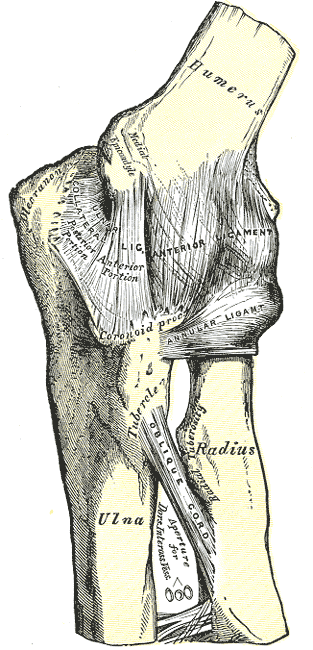
Luxação congênita do cotovelo
📋 Origem dos dados
Esta página agrega dados de fontes públicas e oficiais. Dados sobre cobertura no SUS (PCDT, CEAF) são verificados ativamente por agente proativo (ver badge no infobox). Demais dados têm atribuição de fonte + data da última sincronização — clique para abrir o original.
- Doença rara (ontologia)
- fonte: Orphanet
- Identificador unificado
- fonte: MONDO
- Codificação WHO/SUS
- fonte: WHO ICD-10 / DATASUS
- CID-11 (futuro)
- fonte: WHO ICD-11
- NIH/GARD
- fonte: GARD (NIH)
- Dado público estruturado
- fonte: Wikidata