
A acidemia glutárica tipo 2 é um distúrbio metabólico autossômico recessivo caracterizado por defeitos na capacidade do corpo de utilizar proteínas e gorduras para obter energia. Proteínas e gorduras processadas incompletamente podem se acumular, levando a um desequilíbrio químico perigoso chamado acidose. É uma miopatia metabólica, categorizada como um distúrbio do metabolismo de ácidos graxos, uma vez que esse é o sistema bioenergético que ela mais afeta. Também afeta o metabolismo da colina.
Introdução
O que você precisa saber de cara
Visão geral
A deficiência de acil-CoA desidrogenase múltipla, tipo neonatal grave, é uma doença metabólica hereditária rara que se manifesta nos primeiros dias ou semanas de vida (período neonatal). Ela faz parte de um grupo de condições conhecidas como erros inatos do metabolismo, que afetam a capacidade do organismo de converter alimentos em energia. A forma neonatal grave é a apresentação mais severa da doença.[1]
Sinais e sintomas
Os sintomas da deficiência de acil-CoA desidrogenase múltipla, tipo neonatal grave, geralmente aparecem logo após o nascimento (início neonatal) ou durante a infância. Como não há uma lista de fenótipos disponível nos dados oficiais, recomenda-se consultar um médico geneticista ou especialista em doenças metabólicas para obter informações detalhadas sobre os sinais clínicos específicos.[1]
Causas genéticas
Esta condição é causada por alterações (mutações) em genes que fornecem instruções para a produção de proteínas essenciais para o metabolismo energético. Os genes associados são: ETFA (subunidade alfa da flavoproteína de transferência de elétrons mitocondrial), ETFB (subunidade beta da flavoproteína de transferência de elétrons), ETFDH (flavoproteína de transferência de elétrons-ubiquinona oxidoredutase mitocondrial) e FLAD1 (difosfatase/sintase de FAD bifuncional). Mutações nesses genes prejudicam a capacidade das células de quebrar gorduras e proteínas para obter energia.[1][3]
Diagnóstico
O diagnóstico é baseado em exames laboratoriais e genéticos. No Brasil, o Sistema Único de Saúde (SUS) oferece cobertura mínima para o diagnóstico, incluindo: dosagem de aminoácidos (para erros inatos do metabolismo), dosagem de ácidos orgânicos na urina, teste de triagem para erros inatos do metabolismo, sequenciamento completo do exoma (WES), teste do pezinho (triagem neonatal), atendimento em reabilitação para doenças raras e fórmula metabólica para erros inatos. Atualmente, existem 88 testes genéticos disponíveis e 615 variantes registradas no ClinVar para esta condição.[1][3]
Tratamento e manejo
O manejo da deficiência de acil-CoA desidrogenase múltipla, tipo neonatal grave, é complexo e deve ser coordenado por uma equipe multidisciplinar especializada em doenças metabólicas. O SUS oferece cobertura mínima para procedimentos como atendimento em reabilitação para doenças raras e fornecimento de fórmula metabólica para erros inatos do metabolismo. Não há informações sobre medicamentos específicos aprovados ou tratamentos padronizados nos dados oficiais disponíveis. O tratamento é geralmente individualizado e pode incluir dietas especiais e suporte metabólico de emergência.[1]
Prognóstico e qualidade de vida
O prognóstico para a forma neonatal grave é geralmente reservado, devido à gravidade dos sintomas e ao início precoce. A qualidade de vida depende do diagnóstico precoce, do acesso a tratamento especializado e do suporte multidisciplinar contínuo. Não há dados oficiais sobre a prevalência ou a história natural da doença nos fatos fornecidos.[1]
Conteúdo informativo gerado e mantido automaticamente a partir de fontes oficiais (Orphanet, HPO, OMIM, SUS). Não substitui avaliação médica.
A acidemia glutárica tipo 2 é um distúrbio metabólico autossômico recessivo caracterizado por defeitos na capacidade do corpo de utilizar proteínas e gorduras para obter energia. Proteínas e gorduras processadas incompletamente podem se acumular, levando a um desequilíbrio químico perigoso chamado acidose. É uma miopatia metabólica, categorizada como um distúrbio do metabolismo de ácidos graxos, uma vez que esse é o sistema bioenergético que ela mais afeta. Também afeta o metabolismo da colina.
Encontrou um erro ou informação desatualizada? Sugira uma correção →
Entender a doença
Do básico ao detalhe, leia no seu ritmo
Preparando trilha educativa...
Sinais e sintomas
O que aparece no corpo e com que frequência cada sintoma acontece
Visão geral
A deficiência de acil-CoA desidrogenase múltipla, tipo neonatal grave, é uma doença metabólica hereditária rara que se manifesta nos primeiros dias ou semanas de vida (período neonatal). Ela faz parte de um grupo de condições conhecidas como erros inatos do metabolismo, que afetam a capacidade do organismo de converter alimentos em energia. A forma neonatal grave é a apresentação mais severa da doença.[1]
Sinais e sintomas
Os sintomas da deficiência de acil-CoA desidrogenase múltipla, tipo neonatal grave, geralmente aparecem logo após o nascimento (início neonatal) ou durante a infância. Como não há uma lista de fenótipos disponível nos dados oficiais, recomenda-se consultar um médico geneticista ou especialista em doenças metabólicas para obter informações detalhadas sobre os sinais clínicos específicos.[1]
Causas genéticas
Esta condição é causada por alterações (mutações) em genes que fornecem instruções para a produção de proteínas essenciais para o metabolismo energético. Os genes associados são: ETFA (subunidade alfa da flavoproteína de transferência de elétrons mitocondrial), ETFB (subunidade beta da flavoproteína de transferência de elétrons), ETFDH (flavoproteína de transferência de elétrons-ubiquinona oxidoredutase mitocondrial) e FLAD1 (difosfatase/sintase de FAD bifuncional). Mutações nesses genes prejudicam a capacidade das células de quebrar gorduras e proteínas para obter energia.[1][3]
Diagnóstico
O diagnóstico é baseado em exames laboratoriais e genéticos. No Brasil, o Sistema Único de Saúde (SUS) oferece cobertura mínima para o diagnóstico, incluindo: dosagem de aminoácidos (para erros inatos do metabolismo), dosagem de ácidos orgânicos na urina, teste de triagem para erros inatos do metabolismo, sequenciamento completo do exoma (WES), teste do pezinho (triagem neonatal), atendimento em reabilitação para doenças raras e fórmula metabólica para erros inatos. Atualmente, existem 88 testes genéticos disponíveis e 615 variantes registradas no ClinVar para esta condição.[1][3]
Tratamento e manejo
O manejo da deficiência de acil-CoA desidrogenase múltipla, tipo neonatal grave, é complexo e deve ser coordenado por uma equipe multidisciplinar especializada em doenças metabólicas. O SUS oferece cobertura mínima para procedimentos como atendimento em reabilitação para doenças raras e fornecimento de fórmula metabólica para erros inatos do metabolismo. Não há informações sobre medicamentos específicos aprovados ou tratamentos padronizados nos dados oficiais disponíveis. O tratamento é geralmente individualizado e pode incluir dietas especiais e suporte metabólico de emergência.[1]
Prognóstico e qualidade de vida
O prognóstico para a forma neonatal grave é geralmente reservado, devido à gravidade dos sintomas e ao início precoce. A qualidade de vida depende do diagnóstico precoce, do acesso a tratamento especializado e do suporte multidisciplinar contínuo. Não há dados oficiais sobre a prevalência ou a história natural da doença nos fatos fornecidos.[1]
Conteúdo informativo gerado e mantido automaticamente a partir de fontes oficiais (Orphanet, HPO, OMIM, SUS). Não substitui avaliação médica.
Linha do tempo da pesquisa
Encontrou um erro ou informação desatualizada? Sugira uma correção →
Genética e causas
O que está alterado no DNA e como passa nas famílias
Genes associados
4 genes identificados com associação a esta condição.
Heterodimeric electron transfer flavoprotein that accepts electrons from several mitochondrial dehydrogenases, including acyl-CoA dehydrogenases, glutaryl-CoA and sarcosine dehydrogenase (PubMed:15159392, PubMed:15975918, PubMed:25416781). It transfers the electrons to the main mitochondrial respiratory chain via ETF-ubiquinone oxidoreductase (Probable). Required for normal mitochondrial fatty acid oxidation and normal amino acid metabolism (PubMed:12815589, PubMed:7912128). ETFB binds an AMP mo
Mitochondrion matrix
Glutaric aciduria 2B
An autosomal recessively inherited disorder of fatty acid, amino acid, and choline metabolism. It is characterized by multiple acyl-CoA dehydrogenase deficiencies resulting in large excretion not only of glutaric acid, but also of lactic, ethylmalonic, butyric, isobutyric, 2-methyl-butyric, and isovaleric acids.
Heterodimeric electron transfer flavoprotein that accepts electrons from several mitochondrial dehydrogenases, including acyl-CoA dehydrogenases, glutaryl-CoA and sarcosine dehydrogenase (PubMed:10356313, PubMed:15159392, PubMed:15975918, PubMed:27499296, PubMed:9334218). It transfers the electrons to the main mitochondrial respiratory chain via ETF-ubiquinone oxidoreductase (ETF dehydrogenase) (PubMed:9334218). Required for normal mitochondrial fatty acid oxidation and normal amino acid metabol
Mitochondrion matrix
Glutaric aciduria 2A
An autosomal recessively inherited disorder of fatty acid, amino acid, and choline metabolism. It is characterized by multiple acyl-CoA dehydrogenase deficiencies resulting in large excretion not only of glutaric acid, but also of lactic, ethylmalonic, butyric, isobutyric, 2-methyl-butyric, and isovaleric acids.
Accepts electrons from ETF and reduces ubiquinone
Mitochondrion inner membrane
Glutaric aciduria 2C
An autosomal recessively inherited disorder of fatty acid, amino acid, and choline metabolism. It is characterized by multiple acyl-CoA dehydrogenase deficiencies resulting in large excretion not only of glutaric acid, but also of lactic, ethylmalonic, butyric, isobutyric, 2-methyl-butyric, and isovaleric acids.
This enzyme has two activities: FAD diphosphatase activity and FAD synthase activity (PubMed:16643857, PubMed:21924249, PubMed:21951714, PubMed:23443125, PubMed:25135855, PubMed:26277395, PubMed:27259049, PubMed:31351152, PubMed:38688286). FAD diphosphatase acts on FAD and NADH to produce FMN and NMNH(2-), respectively (PubMed:26277395, PubMed:31351152, PubMed:38688286). FAD synthase catalyzes the adenylation of flavin mononucleotide (FMN) to form flavin adenine dinucleotide (FAD) coenzyme (PubM
NucleusMitochondrion matrixCytoplasm, cytosol
Lipid storage myopathy due to flavin adenine dinucleotide synthetase deficiency
An autosomal recessive, inborn error of metabolism characterized by variable mitochondrial dysfunction. Clinical features range from severe cardiac and respiratory insufficiency with onset in infancy and resulting in early death, to mild muscle weakness with onset in adulthood. Some patients show significant improvement with riboflavin treatment. Analysis of skeletal muscle show multiple mitochondrial respiratory chain deficiency and a lipid storage myopathy in most patients.
Variantes genéticas (ClinVar)
615 variantes patogênicas registradas no ClinVar.
Classificação de variantes (ClinVar)
Distribuição de 1 variantes classificadas pelo ClinVar.
Vias biológicas (Reactome)
3 vias biológicas associadas aos genes desta condição.
Diagnóstico
Os sinais que médicos procuram e os exames que confirmam
Tratamento e manejo
Remédios, cuidados de apoio e o que precisa acompanhar
Onde tratar no SUS
Hospitais de referência no Brasil e o protocolo oficial do SUS (PCDT)
🇧🇷 Atendimento SUS — Deficiência de acil-CoA desidrogenase múltipla, tipo neonatal grave
Selecione um estado ou use sua localização para ver resultados.
Dados de DATASUS/CNES, SBGM, ABNeuro e Ministério da Saúde. Sempre confirme a disponibilidade diretamente com o estabelecimento.
Pesquisa ativa
Ensaios clínicos abertos e novidades científicas recentes
Ensaios em destaque
🟢 Recrutando agora
1 pesquisa recrutando participantes. Converse com seu médico sobre a possibilidade de participar.
Outros ensaios clínicos
0 ensaios clínicos encontrados.
Publicações mais relevantes
First report of neonatal-onset glutaric aciduria type II in the Iranian population caused by a novel deleterious ETFA variant.
Glutaric acidemia type II (GA2), also known as multiple acyl-CoA dehydrogenase deficiency (MADD), is a rare inherited error of amino acid and fatty acid metabolism. Its clinical manifestations can vary from severe events that threaten the life of a newborn to milder and late manifestations. Here, we examined an Iranian couple for pre-pregnancy counseling who had a history of the death of two children suspected of metabolic disorder. Whole exome sequencing (WES) was performed to determine possible pathogenic genes in the parents of two deceased neonates. Sanger sequencing was then used to confirm the variant found. Subsequently, the possible impact of the identified variant on the ETFA protein was evaluated using bioinformatics tools. WES identified a novel heterozygous in-frame variant c.485_493del: p.E162_T164del in exon 6 of the ETFA gene, which co-segregated with the autosomal recessive GA2 disorder in the family studied. Sanger sequencing confirmed the variant found in the parents and their healthy family members and in silico approaches showed disease-causing nature of the identified mutation. Following the confirmation of the identified variant in the fetus, a legal abortion permit was issued, and the fetus was terminated with the parents' consent. This is the first reported case of GA2 caused by a variant in the ETFA gene in Iran and shows the importance of genetic diagnosis and management of rare clinical manifestations and conditions that can help predict prognosis and provide more accurate diagnostic information for patients and families with GA2.
Neonatal necrotizing enterocolitis complicated by glutaric acidemia type II: a case report.
Glutaric acidemia type II (GAII) is an autosomal recessive genetic metabolic disorder associated with mitochondrial dysfunction, characterized by multiple acyl-CoA dehydrogenase deficiency that affects fatty acid metabolism. Necrotizing enterocolitis (NEC) represents a severe inflammatory condition affecting premature neonates. This report describes a case involving a male preterm infant born at a gestation of 30 + 1 weeks who developed NEC complicated by GAII. On the eighth day of life, the patient exhibited abdominal distension and vomiting. Diagnostic imaging, including abdominal B-ultrasound and x-ray, revealed thickened bowel walls, multiple intestinal pneumatosis, and partial intestinal dilation, consistent with NEC. Subsequent recurrent episodes of acidosis, hyperlactacidemia, and hypoglycemia were observed. Diagnosis of GAII was confirmed through tandem mass spectrometry analysis of a blood sample. Genetic metabolic diseases may complicate or mimic common infections, leading to potential misdiagnosis. A differential diagnosis of GAII should be considered when active anti-infective treatments fail.
Fatal multiple acyl-CoA dehydrogenase deficiency caused by ETFDH gene mutation: A case report.
Multiple acyl-CoA dehydrogenase deficiency (MADD) is a disease of rare autosomal recessive disorder. There are three types of MADD. Type I is a neonatal-onset form with congenital anomalies. Type II is a neonatal-onset form without congenital anomalies. Type III is considered to a milder form and usually responds to riboflavin. However, late-onset form could also be fatal and not responsive to treatments. We report a severe case of a young man with onset type III MADD induced by drugs and strenuous exercise characterized by rhabdomyolysis and liver dysfunction. Urine analysis indicated 12 out of 70 kinds of organic acids like glutaric acid-2 were detected. Serum analysis in genetic metabolic diseases revealed 24 out of 43 tested items were abnormal, revealing the elevation of several acylcarnitines and the reduction of carnitine in the patient. By next generation sequencing technology for gene sequencing related to fatty acid oxidation and carnitine cycle defects, a rare ETFDH gene variant was identified: NM_004453:4:C.1448C>T(p.Pro483 Leu). The patient was diagnosed with late-onset GAII. He was not responsive to riboflavin and progressively worsened into multiple organ failure that finally led to death. Type III MADD can also be fatal and not responsive to treatments.
The presence of white cell Jordan's anomaly in multiple Acyl-CoA dehydrogenase deficiency: A case report and implications for clinical practice.
Multiple Acyl-CoA Dehydrogenase Deficiency (MADD), also known as Glutaric Aciduria Type II, is an exceptionally rare autosomal recessive genetic disorder that disrupts the metabolism of fatty acids, amino acids, and choline. It presents with a wide range of clinical manifestations, from severe neonatal-onset forms to milder late-onset cases, with symptoms including metabolic disturbances and muscle weakness. Jordan's anomaly is a distinctive morphological feature found in peripheral blood white cells and is typically associated with Neutral Lipid Storage Disease (NLSD). In our case report, the patient initially presented with symptoms of vomiting, abdominal pain, and altered consciousness. The presence of white cell Jordan's anomaly was detected in the blood smear. Subsequent serum tests revealed elevated levels of transaminases, creatine kinase, uric acid, and multiple acylcarnitines, while blood glucose and free carnitine levels were notably reduced. High-throughput sequencing confirmed heterozygous pathogenic variants in the electron-transferring flavoprotein dehydrogenase (ETFDH) gene, leading to the conclusive diagnosis of MADD. Following a three-month treatment regimen involving high-dose vitamin B2, coenzyme Q10, and other supportive interventions, the patient exhibited significant clinical improvement, ultimately resulting in discharge. The identification of Jordan's anomaly in a pediatric patient with late-onset MADD sheds light on its broader implications within the realm of lipid storage myopathies. The significance of this finding extends beyond its conventional association with NLSD, challenging the notion of its exclusivity. This novel observation serves as a compelling reminder of the diagnostic significance this morphological abnormality holds, potentially revolutionizing diagnostic practices within the field.
"Liver Failure in an Infant of Late-Onset Glutaric Aciduria Type II": Case Report.
Glutaric aciduria type II, also known as Multiple acyl-CoA Dehydrogenase Deficiency, results from a defect in the mitochondrial electron transport chain resulting in an inability to break down fatty-acids and amino acids. There are three phenotypes- type 1 and 2 are of neonatal onset and severe form, with and without congenital anomalies, respectively, and presents with acidosis, severe hypotonia, cardiomyopathy, hepatomegaly, and non-ketotic hypoglycemia. Type 3 or late-onset Multiple acyl-CoA Dehydrogenase Deficiency usually presents in the adolescent or adult age group with phenotype ranging from mild forms of myopathy and exercise intolerance to severe forms of acute metabolic decompensation on its chronic course. Type 3 Multiple acyl-CoA Dehydrogenase Deficiency rarely presents in infancy and in liver failure. We present a five-month-old developmentally normal female child with acute encephalopathy, hypotonia, non-ketotic hypoglycemia, metabolic acidosis, and liver failure, with a history of sibling death of suspected inborn error of metabolism. The blood acyl-carnitine levels in Tandem Mass Spectrometry and urinary organic acid analysis through Gas Chromatography-Mass Spectrometry were unremarkable. The patient initially responded to riboflavin, CoQ, and supportive management but ultimately succumbed to sepsis with shock and multi-organ dysfunction. The clinical exome sequencing reported a homozygous missense variation in exon 11 of the ETFDH gene (chr4:g.158706270C > T) that resulted in the amino acid substitution of Leucine for Proline at codon 456 (p.Pro456Leu) suggestive of Glutaric aciduria type IIc (OMIM#231,680).
Publicações recentes
Mast cell mediators in hereditary angioedema.
Prenatal Molecular Diagnosis of COL2A1-Associated Stickler Syndrome: Genotype-Phenotype Correlation in a Resource-Limited Healthcare Setting.
🥉 Relato de casoPlatelet gene signatures detecting pulmonary artery stenosis in patients with pulmonary hypertension.
The global impact of imiglucerase therapy in children with Gaucher disease types 1 and 3: a real-world analysis from the International Collaborative Gaucher Group Gaucher Registry.
Monogenic lupus with SLC7A7 mutations: a retrospective study from a Chinese center.
📚 EuropePMCmostrando 14
First report of neonatal-onset glutaric aciduria type II in the Iranian population caused by a novel deleterious ETFA variant.
Orphanet journal of rare diseasesNeonatal necrotizing enterocolitis complicated by glutaric acidemia type II: a case report.
Frontiers in pediatricsFatal multiple acyl-CoA dehydrogenase deficiency caused by ETFDH gene mutation: A case report.
World journal of clinical casesThe presence of white cell Jordan's anomaly in multiple Acyl-CoA dehydrogenase deficiency: A case report and implications for clinical practice.
Clinical biochemistry"Liver Failure in an Infant of Late-Onset Glutaric Aciduria Type II": Case Report.
Indian journal of clinical biochemistry : IJCBDetection of FLAD1 mutations and lipid storage myopathy in a 5-year-old boy: a case report study.
Annals of medicine and surgery (2012)A fatal case of neonatal onset multiple acyl-CoA dehydrogenase deficiency caused by novel mutation of ETFDH gene: case report.
Italian journal of pediatricsMultiple acyl-COA dehydrogenase deficiency in elderly carriers.
Journal of neurologyMolecular and Clinical Investigations on Portuguese Patients with Multiple acyl-CoA Dehydrogenase Deficiency.
Current molecular medicineFlavin adenine dinucleotide synthase deficiency due to FLAD1 mutation presenting as multiple acyl-CoA dehydrogenation deficiency-like disease: A case report.
Brain & developmentFollow-up of fatty acid β-oxidation disorders in expanded newborn screening era.
European journal of pediatricsA Novel Truncating FLAD1 Variant, Causing Multiple Acyl-CoA Dehydrogenase Deficiency (MADD) in an 8-Year-Old Boy.
JIMD reportsA novel mutation in ETFDH manifesting as severe neonatal-onset multiple acyl-CoA dehydrogenase deficiency.
Journal of the neurological sciencesEfficacy of bezafibrate on fibroblasts of glutaric acidemia type II patients evaluated using an in vitro probe acylcarnitine assay.
Brain & developmentAssociações
Organizações que acompanham esta doença — pra ter apoio e orientação
Ainda não temos associações cadastradas para Deficiência de acil-CoA desidrogenase múltipla, tipo neonatal grave.
É de uma associação que acompanha esta doença? Fale com a gente →
Comunidades
Grupos ativos de quem convive com esta doença aqui no Raras
Ainda não existe comunidade no Raras para Deficiência de acil-CoA desidrogenase múltipla, tipo neonatal grave
Pacientes, familiares e cuidadores se organizam em comunidades pra compartilhar experiências, fazer perguntas e se apoiar. Você pode ser o primeiro.
Tire suas dúvidas
Perguntas, dicas e experiências compartilhadas aqui na página
Participe da discussão
Faça login para postar dúvidas, compartilhar experiências e interagir com especialistas.
Fazer loginDoenças relacionadas
Doenças com sintomas parecidos — ajudam quem ainda está buscando diagnóstico
Ainda não achamos doenças com sintomas parecidos o suficiente.
Referências e fontes
Bases de dados externas citadas neste artigo
Publicações científicas
Artigos indexados no PubMed ligados a esta doença no grafo RarasNet — título, periódico e PMID direto da fonte, sem intermediação de IA.
- First report of neonatal-onset glutaric aciduria type II in the Iranian population caused by a novel deleterious ETFA variant.
- Neonatal necrotizing enterocolitis complicated by glutaric acidemia type II: a case report.
- Fatal multiple acyl-CoA dehydrogenase deficiency caused by ETFDH gene mutation: A case report.
- The presence of white cell Jordan's anomaly in multiple Acyl-CoA dehydrogenase deficiency: A case report and implications for clinical practice.
- "Liver Failure in an Infant of Late-Onset Glutaric Aciduria Type II": Case Report.
- Mast cell mediators in hereditary angioedema.
- Prenatal Molecular Diagnosis of COL2A1-Associated Stickler Syndrome: Genotype-Phenotype Correlation in a Resource-Limited Healthcare Setting.
- Platelet gene signatures detecting pulmonary artery stenosis in patients with pulmonary hypertension.
- The global impact of imiglucerase therapy in children with Gaucher disease types 1 and 3: a real-world analysis from the International Collaborative Gaucher Group Gaucher Registry.
- Monogenic lupus with SLC7A7 mutations: a retrospective study from a Chinese center.
Bases de dados e fontes oficiais
Identificadores e referências canônicas usadas para montar este verbete.
- ORPHA:394529(Orphanet)
- MONDO:0018332(MONDO)
- GARD:17626(GARD (NIH))
- Variantes catalogadas(ClinVar)
- Busca completa no PubMed(PubMed)
- Q55787961(Wikidata)
Dados compilados pelo RarasNet a partir de fontes abertas (Orphanet, OMIM, MONDO, PubMed/EuropePMC, ClinicalTrials.gov, DATASUS, PCDT/MS). Este conteúdo é informativo e não substitui avaliação médica.
Conteúdo mantido por Agente Raras · Médicos e pesquisadores podem colaborar
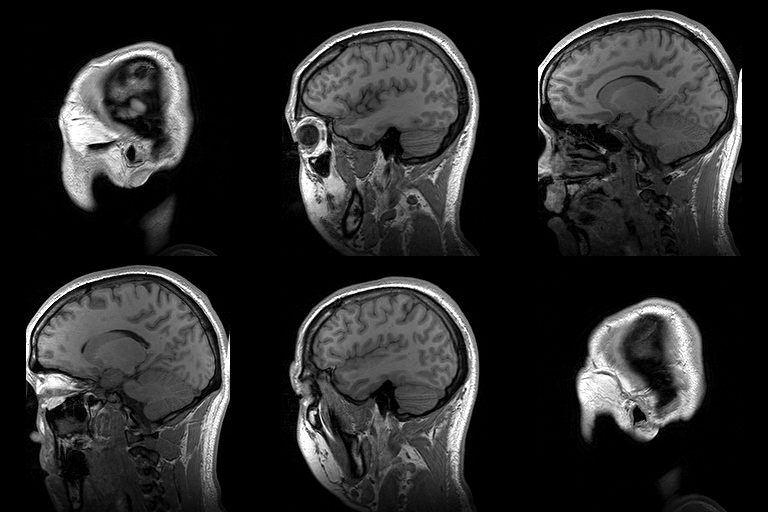
Deficiência de acil-CoA desidrogenase múltipla, tipo neonatal grave
📋 Origem dos dados
Esta página agrega dados de fontes públicas e oficiais. Dados sobre cobertura no SUS (PCDT, CEAF) são verificados ativamente por agente proativo (ver badge no infobox). Demais dados têm atribuição de fonte + data da última sincronização — clique para abrir o original.
- Doença rara (ontologia)
- fonte: Orphanet
- Identificador unificado
- fonte: MONDO
- Codificação WHO/SUS
- fonte: WHO ICD-10 / DATASUS
- CID-11 (futuro)
- fonte: WHO ICD-11
- NIH/GARD
- fonte: GARD (NIH)
- Dado público estruturado
- fonte: Wikidata