
Câncer maligno que se origina nas células escamosas da superfície da língua. Frequentemente associado a fatores de risco como tabagismo e consumo de álcool, pode apresentar-se como ferida persistente ou nódulo.
Introdução
O que você precisa saber de cara
Visão geral
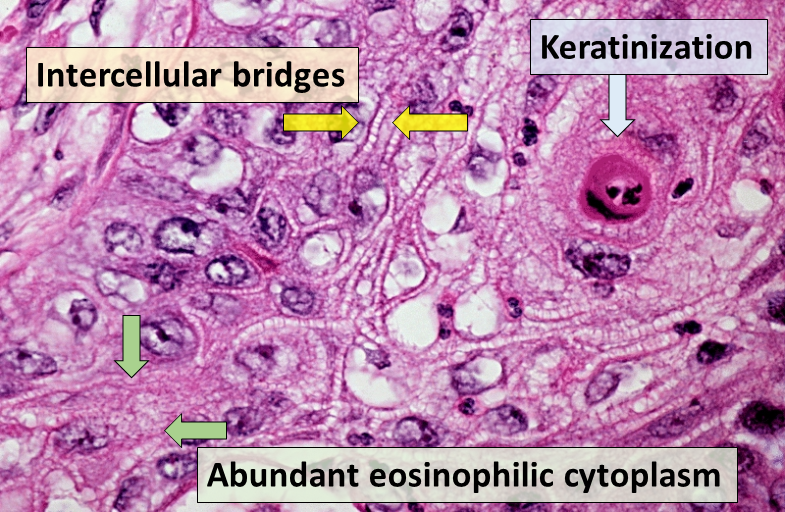
O carcinoma de células escamosas da língua é um tipo de câncer que se origina nas células escamosas (células finas e planas) que revestem a superfície da língua. Esta doença é classificada como uma neoplasia maligna e faz parte de um grupo maior de tumores de cabeça e pescoço. A condição é identificada pelo código MONDO:0018708.[1][2]
Sinais e sintomas
As informações sobre os sinais e sintomas específicos do carcinoma de células escamosas da língua não estão disponíveis nas fontes oficiais consultadas. Recomenda-se que qualquer alteração na língua, como feridas que não cicatrizam, dor ou nódulos, seja avaliada por um médico.[1]
Causas genéticas
Até o momento, não há genes específicos identificados como causa direta do carcinoma de células escamosas da língua nas bases de dados oficiais consultadas. A hereditariedade da doença também não foi estabelecida. A ausência de informações genéticas não exclui a possibilidade de fatores genéticos estarem envolvidos, mas indica que ainda não foram confirmados.[1][3]
Diagnóstico
O diagnóstico do carcinoma de células escamosas da língua é geralmente realizado por meio de exame clínico e biópsia da lesão suspeita. Não há testes genéticos específicos ou variantes no ClinVar disponíveis para esta condição nas fontes consultadas. O diagnóstico diferencial é importante para descartar outras doenças da cavidade oral.[1][3][4]
Tratamento e manejo
As opções de tratamento para o carcinoma de células escamosas da língua podem incluir cirurgia, radioterapia e quimioterapia. A escolha do tratamento depende do estágio da doença, da localização do tumor e das condições gerais de saúde do paciente. É fundamental que o plano de tratamento seja discutido com uma equipe médica especializada em oncologia de cabeça e pescoço.[1][4]
No Brasil, o nível de cobertura pelo Sistema Único de Saúde (SUS) para esta condição é classificado como 'Sem cobertura SUS', o que significa que não há procedimentos específicos listados para esta doença no âmbito do SUS. Pacientes devem buscar orientação sobre acesso a tratamentos por meio de planos de saúde ou da rede privada.[1]
Tratamentos citados na literatura
A literatura científica menciona diversos fármacos associados ao tratamento do carcinoma de células escamosas da língua. É importante destacar que estas são associações mineradas de publicações científicas e não representam recomendações de tratamento. Os medicamentos mais citados incluem: Cisplatin (2406 publicações), Cetuximab (1156), Fluorouracil (759), Platinum (518), Docetaxel (430), Paclitaxel (395), Carboplatin (327), Nivolumab (312), Pembrolizumab (306) e Fluorodeoxyglucose F18 (233). Além disso, o fármaco bleomicina também é mencionado em estudos de reaproveitamento de medicamentos.[4]
Prognóstico e qualidade de vida
As informações sobre o prognóstico específico e a qualidade de vida para pacientes com carcinoma de células escamosas da língua não estão disponíveis nas fontes oficiais consultadas. O prognóstico pode variar amplamente dependendo do estágio do diagnóstico, da resposta ao tratamento e de fatores individuais do paciente. O acompanhamento regular com a equipe médica é essencial para monitorar a evolução da doença.[1]
Conteúdo informativo gerado e mantido automaticamente a partir de fontes oficiais (Orphanet, HPO, OMIM, SUS). Não substitui avaliação médica.
Câncer maligno que se origina nas células escamosas da superfície da língua. Frequentemente associado a fatores de risco como tabagismo e consumo de álcool, pode apresentar-se como ferida persistente ou nódulo.
Encontrou um erro ou informação desatualizada? Sugira uma correção →
Entender a doença
Do básico ao detalhe, leia no seu ritmo
Preparando trilha educativa...
Sinais e sintomas
O que aparece no corpo e com que frequência cada sintoma acontece
Visão geral
O carcinoma de células escamosas da língua é um tipo de câncer que se origina nas células escamosas (células finas e planas) que revestem a superfície da língua. Esta doença é classificada como uma neoplasia maligna e faz parte de um grupo maior de tumores de cabeça e pescoço. A condição é identificada pelo código MONDO:0018708.[1][2]
Sinais e sintomas
As informações sobre os sinais e sintomas específicos do carcinoma de células escamosas da língua não estão disponíveis nas fontes oficiais consultadas. Recomenda-se que qualquer alteração na língua, como feridas que não cicatrizam, dor ou nódulos, seja avaliada por um médico.[1]
Causas genéticas
Até o momento, não há genes específicos identificados como causa direta do carcinoma de células escamosas da língua nas bases de dados oficiais consultadas. A hereditariedade da doença também não foi estabelecida. A ausência de informações genéticas não exclui a possibilidade de fatores genéticos estarem envolvidos, mas indica que ainda não foram confirmados.[1][3]
Diagnóstico
O diagnóstico do carcinoma de células escamosas da língua é geralmente realizado por meio de exame clínico e biópsia da lesão suspeita. Não há testes genéticos específicos ou variantes no ClinVar disponíveis para esta condição nas fontes consultadas. O diagnóstico diferencial é importante para descartar outras doenças da cavidade oral.[1][3][4]
Tratamento e manejo
As opções de tratamento para o carcinoma de células escamosas da língua podem incluir cirurgia, radioterapia e quimioterapia. A escolha do tratamento depende do estágio da doença, da localização do tumor e das condições gerais de saúde do paciente. É fundamental que o plano de tratamento seja discutido com uma equipe médica especializada em oncologia de cabeça e pescoço.[1][4]
No Brasil, o nível de cobertura pelo Sistema Único de Saúde (SUS) para esta condição é classificado como 'Sem cobertura SUS', o que significa que não há procedimentos específicos listados para esta doença no âmbito do SUS. Pacientes devem buscar orientação sobre acesso a tratamentos por meio de planos de saúde ou da rede privada.[1]
Tratamentos citados na literatura
A literatura científica menciona diversos fármacos associados ao tratamento do carcinoma de células escamosas da língua. É importante destacar que estas são associações mineradas de publicações científicas e não representam recomendações de tratamento. Os medicamentos mais citados incluem: Cisplatin (2406 publicações), Cetuximab (1156), Fluorouracil (759), Platinum (518), Docetaxel (430), Paclitaxel (395), Carboplatin (327), Nivolumab (312), Pembrolizumab (306) e Fluorodeoxyglucose F18 (233). Além disso, o fármaco bleomicina também é mencionado em estudos de reaproveitamento de medicamentos.[4]
Prognóstico e qualidade de vida
As informações sobre o prognóstico específico e a qualidade de vida para pacientes com carcinoma de células escamosas da língua não estão disponíveis nas fontes oficiais consultadas. O prognóstico pode variar amplamente dependendo do estágio do diagnóstico, da resposta ao tratamento e de fatores individuais do paciente. O acompanhamento regular com a equipe médica é essencial para monitorar a evolução da doença.[1]
Conteúdo informativo gerado e mantido automaticamente a partir de fontes oficiais (Orphanet, HPO, OMIM, SUS). Não substitui avaliação médica.
Linha do tempo da pesquisa
Encontrou um erro ou informação desatualizada? Sugira uma correção →
Genética e causas
O que está alterado no DNA e como passa nas famílias
Nenhum gene associado encontrado
Os dados genéticos desta condição ainda estão sendo catalogados.
Diagnóstico
Os sinais que médicos procuram e os exames que confirmam
Tratamento e manejo
Remédios, cuidados de apoio e o que precisa acompanhar
Onde tratar no SUS
Hospitais de referência no Brasil e o protocolo oficial do SUS (PCDT)
🇧🇷 Atendimento SUS — Carcinoma de células escamosas da língua
Selecione um estado ou use sua localização para ver resultados.
Dados de DATASUS/CNES, SBGM, ABNeuro e Ministério da Saúde. Sempre confirme a disponibilidade diretamente com o estabelecimento.
Pesquisa ativa
Ensaios clínicos abertos e novidades científicas recentes
Ensaios em destaque
🟢 Recrutando agora
2 pesquisas recrutando participantes. Converse com seu médico sobre a possibilidade de participar.
Outros ensaios clínicos
0 ensaios clínicos encontrados.
Publicações mais relevantes
Impact of the surgery to radiotherapy interval on oncological outcomes in squamous cell carcinoma of the oral tongue.
This study aimed to explore the relationship between the timing of radiotherapy (RT) initiation after surgery and long-term outcomes in patients with tongue squamous cell carcinoma (TSCC). We retrospectively analyzed TSCC Patients who underwent external beam radiotherapy (≥ 60 Gy) following surgical resection without evidence of distant metastasis. Patients were categorized according to tumor stage and the interval between surgery and start of RT. The primary outcomes assessed were loco-regional control (LRC), disease-free survival (DFS), and overall survival (OS). A total of 108 patients were included. Among early-stage TSCC patients, delaying RT beyond 47 days post-surgery showed no statistically significant difference in DFS. For patients with locally advanced-stage disease, a longer interval between surgery and RT was associated with a significant trend toward improved DFS. OS did not significantly differ based on RT timing across stages. Our findings suggest that modest delays in initiating postoperative RT may not adversely affect DFS or OS in early-stage TSCC, and longer intervals may not clearly determine poorer outcomes in advanced-stage disease. However, these observations are preliminary and should be interpreted with caution given the small sample size, limited number of events, and retrospective design. Larger prospective studies are required to test this hypothesis and clarify optimal timing of postoperative RT in TSCC.
A Unique Plasma Protein Signature Characterizes Squamous Cell Carcinoma of the Oral Tongue in Young Adults.
The incidence of squamous cell carcinoma of the oral tongue (SCCOT) among young adults is increasing in several regions of the world. Age-dependent differences in the biology of SCCOT have been suspected. We used the Olink Explore 3072 high-throughput platform to comprehensively quantify plasma proteins in 24 young (≤ 40 years of age) and 50 old (> 50 years of age) individuals. Eight young and 20 old individuals were diagnosed with SCCOT, four young and nine old individuals with SCC at other oral subsites (SCCOO), and the remaining 12 young and 21 old individuals were healthy controls. Dimension reduction analysis, differential expression analysis, and functional enrichment analysis were performed to characterize young patient-specific biological signatures. Plasma levels of 2923 proteins were obtained. Principal component analysis indicated age-related expression patterns. Comparing young patients to young controls/old patients/old controls, differential abundance analysis showed that increases in protein levels of Peroxiredoxin 2 (PRDX2) and C-C motif chemokine ligand 26 (CCL26) and a decrease in Kallikrein related peptidase 4 (KLK4) were young patient-specific. Reactome pathway enrichment analysis identified "Cellular response to chemical stress," "Detoxification of reactive oxygen species" and "Cellular responses to stimuli" as the top altered pathways in young patients with SCCOT. Abnormal cellular stress and aberrant immune regulation could thus be linked to cancer development in young patients. The unique plasma proteomic signature observed in young patients with SCCOT suggests that they constitute a specific group with distinct underlying pathophysiological processes.
Automated tumor-stroma ratio estimation for improved prognostic stratification of squamous cell carcinoma of the oral tongue.
Squamous cell carcinoma of the oral tongue (SCCOT) represents an aggressive malignancy characterized by high metastatic potential and significant heterogeneity in its tumor microenvironment. The tumor-stroma ratio (TSR) has emerged as a prognostic biomarker, with higher stromal content frequently correlating with worse survival outcomes. Traditional approaches using the standard 50% TSR cutoff may not be optimal for SCCOT, and visual TSR estimation introduces variability during TSR region annotation. This study aimed to develop and validate a dedicated TSR estimation model for SCCOT by incorporating representative TSR regions from the invasive tumor front of whole slide images and to determine the optimal TSR threshold for prognostic stratification. Using hematoxylin and eosin-stained images from The Cancer Genome Atlas as a discovery cohort and whole slide images from Norrland's University Hospital Umea, Sweden (NUS) as a validation cohort, we developed a computational model to estimate TSR. The model demonstrated a high correlation with pathologist-based TSR estimation in both discovery (R = 0.848, p < 0.01) and validation (R = 0.783, p < 0.01) cohorts. The optimal 55% cutoff identified by the model improved prognostic accuracy over the traditional 50% threshold, with patients having high stroma within the tumor invasive front showing worse overall (log-rank p = 0.006) and disease-specific (log-rank p = 0.016) survival. Our computational TSR model for SCCOT demonstrates that automated TSR estimation enhances prognostic accuracy at an optimal cutoff of 55%, contributing to more precise risk stratification and potentially enabling personalized treatment strategies in SCCOT management.
Prognostic Effect of Patterns of Local Extension and Satellitosis in cT3 Squamous Cell Carcinoma of the Oral Tongue: A Prospective Observational Study.
The anatomy of the tongue is three-dimensionally complex and is thought to play a central role in the local growth of oral tongue squamous cell carcinoma (OTSCC). Understanding patterns of tumor extension could improve a multimodal therapeutic approach. Thus, the main aim of this study was to provide a histological and microanatomical analysis of surgical specimens after compartmental surgery for OTSCC. The present prospective observational study included primary cT3 OTSCC (according to the eighth edition of the TNM classification) treated in an academic tertiary referral center with curative compartmental surgery, from July 2016 to July 2019. Analysis of histologic macrosections allowed assessment of standard pathologic parameters as well as a detailed analysis of the position of OTSCC cells from microanatomic and topographic standpoints. Of the 28 patients included, 71.4% were males, with a mean age of 64.9 years. Nine (32.1%) patients presented satellitosis, which was always located within the T-N tract. OTSCCs displaying satellitosis had a significantly higher median pathologic depth of invasion (DOI). A radiologic and pathological DOI > 15 mm significantly predicted the presence of satellites. There was a significant relationship between the presence of satellites and both positive lymph nodes and distant metastases. Approximately one-third of cases of intermediate-to-advanced OTSCC are characterized by tumor satellites located in the T-N tract. DOI exceeding 15 mm and the presence of clinically appreciable nodal metastases best predict the presence of satellitosis. Satellite-bearing OTSCC behave more aggressively, with an increased risk of distant metastasis and reduced survival.
Upregulation of Apoptosis Related Genes in Clinically Normal Tongue Contralateral to Squamous Cell Carcinoma of the Oral Tongue, an Effort to Maintain Tissue Homeostasis.
The field cancerization concept indicates the presence of pre-cancerous changes in clinically normal tissue surrounding the tumor. In squamous cell carcinoma of the oral tongue (SCCOT) which is infrequently linked to human papillomavirus infection, we have previously reported that clinically normal tongue contralateral to tumor (NTCT) is molecularly abnormal. Here, combining our transcriptomic and genomic data, we aimed to investigate the contribution of molecular changes in NTCT to cancer development. Microarray gene expression data of 14 healthy controls, 23 NTCT and 29 SCCOT samples were investigated to characterize transcriptional profiles in NTCT. Whole exome sequencing and RNA-sequencing data of paired NTCT and tumor samples from 15 SCCOT patients were used to study correlation between copy number variation and differential gene expression. Using supervised multivariate partial least squares discriminant analysis, a total of 61 mRNAs that distinguish NTCT from healthy tongue were selected. Functional enrichment analysis of the 22 upregulated genes showed increased "positive regulation of nitrogen compound metabolic process" in NTCT. All 12 genes involved in this process have roles in apoptosis (anti- and/or pro-apoptotic). Compared to healthy controls, Zinc Finger Protein 395 (ZNF395), a pro-apoptotic tumor suppressor located on chromosome 8p, was the only gene showing increased mRNA level in NTCT whereas decreased in SCCOT. Given the frequent loss of chromosome 8p in SCCOT, the impact of ZNF395 copy number variation on gene expression was further examined, revealing a positive correlation between copy number and mRNA level (correlation coefficient = 0.572, p < 0.001). NTCT is susceptible to malignant transformation, where tissue homeostasis is maintained at least partly through regulation of apoptosis. Loss of the pro-apoptotic gene ZNF395 could thus initiate cancer development.
Publicações recentes
Impact of the surgery to radiotherapy interval on oncological outcomes in squamous cell carcinoma of the oral tongue.
A Unique Plasma Protein Signature Characterizes Squamous Cell Carcinoma of the Oral Tongue in Young Adults.
Automated tumor-stroma ratio estimation for improved prognostic stratification of squamous cell carcinoma of the oral tongue.
Prognostic Effect of Patterns of Local Extension and Satellitosis in cT3 Squamous Cell Carcinoma of the Oral Tongue: A Prospective Observational Study.
Upregulation of Apoptosis Related Genes in Clinically Normal Tongue Contralateral to Squamous Cell Carcinoma of the Oral Tongue, an Effort to Maintain Tissue Homeostasis.
📚 EuropePMC106 artigos no totalmostrando 67
Impact of the surgery to radiotherapy interval on oncological outcomes in squamous cell carcinoma of the oral tongue.
Discover oncologyA Unique Plasma Protein Signature Characterizes Squamous Cell Carcinoma of the Oral Tongue in Young Adults.
Journal of oral pathology & medicine : official publication of the International Association of Oral Pathologists and the American Academy of Oral PathologyAutomated tumor-stroma ratio estimation for improved prognostic stratification of squamous cell carcinoma of the oral tongue.
The journal of pathology. Clinical researchPrognostic Effect of Patterns of Local Extension and Satellitosis in cT3 Squamous Cell Carcinoma of the Oral Tongue: A Prospective Observational Study.
Head & neckUpregulation of Apoptosis Related Genes in Clinically Normal Tongue Contralateral to Squamous Cell Carcinoma of the Oral Tongue, an Effort to Maintain Tissue Homeostasis.
Head and neck pathologyPatients with oral tongue squamous cell carcinoma and co‑existing diabetes exhibit lower recurrence rates and improved survival: Implications for treatment.
Oncology lettersPredicting nodal metastases in squamous cell carcinoma of the oral tongue using artificial intelligence.
American journal of otolaryngologyComplete response with pembrolizumab in recurrent squamous cell carcinoma of the oral tongue: A case report.
Oral oncologyEarly detection of squamous cell carcinoma of the oral tongue using multidimensional plasma protein analysis and interpretable machine learning.
Journal of oral pathology & medicine : official publication of the International Association of Oral Pathologists and the American Academy of Oral PathologyDesign, synthesis and evaluation the bioactivities of novel 1,3-dimethyl-6-amino-1H-indazole derivatives as anticancer agents.
Bioorganic & medicinal chemistryDosimetric Comparison of Intensity-Modulated Radiation Therapy (IMRT) and Intensity-Modulated Proton Therapy (IMPT) for a Novel Oral Tongue Avoidance Concept in Low-Risk Squamous Cell Carcinoma of the Oral Tongue.
International journal of particle therapyDoes lymphovascular invasion predict survival in oral cancer? A population-based analysis.
Oral oncologyStage migration and treatment outcome in carcinoma tongue - A comparison of seventh and eighth AJCC pathological staging systems.
Indian journal of cancerMatrix for Mucosal Regeneration in Transoral Glossectomy for Squamous Cell Carcinoma: Objective and Subjective Functional Evaluation.
Current oncology (Toronto, Ont.)Pre-resection Intraoperative Core Biopsies in Oral Tongue Cancer-A Pilot Study.
The LaryngoscopeUltrasound-assisted resection of oral tongue cancer.
Acta oto-laryngologicaEvidence for etiologic field changes in tongue distant from tumor in patients with squamous cell carcinoma of the oral tongue.
The Journal of pathologyAntigen peptide transporters are upregulated in squamous cell carcinoma of the oral tongue and show sex-specific associations with survival.
Oncology lettersUltrasound accurately assesses depth of invasion in T1-T2 oral tongue cancer.
Laryngoscope investigative otolaryngologyHigh Failure Rates in Young Nonsmoker Nondrinkers With Squamous Cell Carcinoma of the Oral Tongue.
The LaryngoscopeDepth of Invasion as an Independent Predictor of Survival in Patients of Stage III Squamous Cell Carcinoma of the Oral Tongue.
The LaryngoscopeVariation in Plasma Levels of TRAF2 Protein During Development of Squamous Cell Carcinoma of the Oral Tongue.
Frontiers in oncologyLow potential of circulating interleukin 1 receptor antagonist as a prediction marker for squamous cell carcinoma of the head and neck.
Journal of oral pathology & medicine : official publication of the International Association of Oral Pathologists and the American Academy of Oral PathologyTransfer-RNA-Derived Fragments Are Potential Prognostic Factors in Patients with Squamous Cell Carcinoma of the Head and Neck.
GenesOptimum surgical margins in squamous cell carcinoma of the oral tongue: Does shrinkage matters?
Oral oncologyThe immune phenotype of tongue squamous cell carcinoma predicts early relapse and poor prognosis.
Cancer medicineTranscriptomic and Immunophenotypic Characterization of Tumor Immune Microenvironment in Squamous Cell Carcinoma of the Oral Tongue.
Head and neck pathologyDownregulation of TAP1 in Tumor-Free Tongue Contralateral to Squamous Cell Carcinoma of the Oral Tongue, an Indicator of Better Survival.
International journal of molecular sciencesOptimum surgical margins in squamous cell carcinoma of the oral tongue: Is the current definition adequate?
Oral oncologyLevels of MUC1 in tumours and serum of patients with different sub-types of squamous cell carcinoma of the head and neck.
Oncology lettersThe incidence of squamous cell carcinoma of the oral tongue is rising in young non-smoking women: An international multi-institutional analysis.
Oral oncologyComparison of Intraoperative Sonography and Histopathologic Evaluation of Tumor Thickness and Depth of Invasion in Oral Tongue Cancer: A Pilot Study.
AJNR. American journal of neuroradiologyRadiomics of apparent diffusion coefficient maps to predict histologic grade in squamous cell carcinoma of the oral tongue and floor of mouth: a preliminary study.
Acta radiologica (Stockholm, Sweden : 1987)Squamous Cell Carcinoma of the Oral Tongue in Young Patients: Outcomes and Implications for Treatment.
Indian journal of surgical oncologyPD-L1 in squamous cell carcinoma of the oral tongue shows gender-specific association with prognosis.
Oral diseasesAre Oral Pain and Otalgia Predictive of Perineural Invasion in Squamous Cell Carcinoma of the Oral Tongue?
Journal of oral and maxillofacial surgery : official journal of the American Association of Oral and Maxillofacial SurgeonsSquamous cell carcinoma of the oral tongue: Distinct epidemiological profile disease.
Head & neckFunctional Outcomes Regarding Facial Artery Musculomucosal Flap for Reconstruction of Partial Glossectomy Defects.
Annals of plastic surgerySMARCD1 is a transcriptional target of specific non-hotspot mutant p53 forms.
Journal of cellular physiologyAltered mRNA Expression of Genes Involved in Endocannabinoid Signalling in Squamous Cell Carcinoma of the Oral Tongue.
Cancer investigationHigh immune cytolytic activity in tumor-free tongue tissue confers better prognosis in patients with squamous cell carcinoma of the oral tongue.
The journal of pathology. Clinical researchEarly squamous cell carcinoma of the oral tongue with histologically benign lymph nodes: A model predicting local control and vetting of the eighth edition of the American Joint Committee on Cancer pathologic T stage.
CancerChallenging the Requirement to Treat the Contralateral Neck in Cases With >4 mm Tumor Thickness in Patients Receiving Postoperative Radiation Therapy for Squamous Cell Carcinoma of the Oral Tongue or Floor of Mouth.
American journal of clinical oncologySquamous cell carcinoma of the tongue in a patient with dyskeratosis congenita: a rare entity.
The British journal of oral & maxillofacial surgeryEthnicity based variation in expression of E-cadherin in patients with squamous cell carcinoma of the oral tongue.
Oncology lettersCopy number variation: A prognostic marker for young patients with squamous cell carcinoma of the oral tongue.
Journal of oral pathology & medicine : official publication of the International Association of Oral Pathologists and the American Academy of Oral PathologyExpression of urokinase-type plasminogen activator and its receptor in squamous cell carcinoma of the oral tongue.
Brazilian oral researchPre-treatment Neutrophil-to-Lymphocyte Ratio as a predictor for occult cervical metastasis in early stage (T1-T2 cN0) squamous cell carcinoma of the oral tongue.
Surgical oncologyAssociation of Squamous Cell Carcinoma of the Tongue with Cigarette and Alcohol Exposure: A Retrospective Clinicopathological Study.
West African journal of medicineComparison of tumor volume, thickness, and T classification as predictors of outcomes in surgically treated squamous cell carcinoma of the oral tongue.
Head & neckMeasuring Depth of Invasion in Early Squamous Cell Carcinoma of the Oral Tongue: Positive Deep Margin, Extratumoral Perineural Invasion, and Other Challenges.
Head and neck pathologyHigh KIF2A expression promotes proliferation, migration and predicts poor prognosis in lung adenocarcinoma.
Biochemical and biophysical research communicationsAnalysis of the outcome of young age tongue squamous cell carcinoma.
Maxillofacial plastic and reconstructive surgeryFour PTEN-targeting co-expressed miRNAs and ACTN4- targeting miR-548b are independent prognostic biomarkers in human squamous cell carcinoma of the oral tongue.
International journal of cancerThe effectiveness of elective neck dissection on early (stage I, II) squamous cell carcinoma of the oral tongue.
Journal of the Korean Association of Oral and Maxillofacial SurgeonsHypothyroidism in Carcinoma of the Tongue with Adjuvant Treatment.
Rambam Maimonides medical journalA Proposal to Redefine Close Surgical Margins in Squamous Cell Carcinoma of the Oral Tongue.
JAMA otolaryngology-- head & neck surgeryOutcomes and prognostic factors for squamous cell carcinoma of the oral tongue in young adults: a single-institution case-matched analysis.
European archives of oto-rhino-laryngology : official journal of the European Federation of Oto-Rhino-Laryngological Societies (EUFOS) : affiliated with the German Society for Oto-Rhino-Laryngology - Head and Neck SurgeryWhite adipose tissue inflammation and cancer-specific survival in patients with squamous cell carcinoma of the oral tongue.
CancerElective Neck Dissection vs Observation in Early-Stage Squamous Cell Carcinoma of the Oral Tongue With No Clinically Apparent Lymph Node Metastasis in the Neck: A Systematic Review and Meta-analysis.
JAMA otolaryngology-- head & neck surgeryAdenovirus expressing IFN-λ (Ad/hIFN-λ) produced anti-tumor effects through inducing apoptosis in human tongue squamous cell carcinoma cell.
International journal of clinical and experimental medicineThe epidemiology of head and neck squamous cell carcinoma in The Netherlands during the era of HPV-related oropharyngeal squamous cell carcinoma. Is there really evidence for a change?
Oral oncologySquamous cell carcinoma of the oral tongue: histopathological parameters associated with outcome.
International journal of oral and maxillofacial surgeryTumour depth of invasion of pT1 squamous cell carcinoma of the oral tongue and risk of pathologically detected neck metastases.
Head & neckRacial disparities in squamous cell carcinoma of the oral tongue among women: a SEER data analysis.
Oral oncologyCD147 and Ki-67 overexpression confers poor prognosis in squamous cell carcinoma of oral tongue: a tissue microarray study.
Oral surgery, oral medicine, oral pathology and oral radiologyA role for panendoscopy? Second primary tumour in early stage squamous cell carcinoma of the oral tongue.
The Journal of laryngology and otologyAssociações
Organizações que acompanham esta doença — pra ter apoio e orientação
Ainda não temos associações cadastradas para Carcinoma de células escamosas da língua.
É de uma associação que acompanha esta doença? Fale com a gente →
Comunidades
Grupos ativos de quem convive com esta doença aqui no Raras
Ainda não existe comunidade no Raras para Carcinoma de células escamosas da língua
Pacientes, familiares e cuidadores se organizam em comunidades pra compartilhar experiências, fazer perguntas e se apoiar. Você pode ser o primeiro.
Tire suas dúvidas
Perguntas, dicas e experiências compartilhadas aqui na página
Participe da discussão
Faça login para postar dúvidas, compartilhar experiências e interagir com especialistas.
Fazer loginDoenças relacionadas
Doenças com sintomas parecidos — ajudam quem ainda está buscando diagnóstico
Ainda não achamos doenças com sintomas parecidos o suficiente.
Referências e fontes
Bases de dados externas citadas neste artigo
Publicações científicas
Artigos indexados no PubMed ligados a esta doença no grafo RarasNet — título, periódico e PMID direto da fonte, sem intermediação de IA.
- Impact of the surgery to radiotherapy interval on oncological outcomes in squamous cell carcinoma of the oral tongue.
- A Unique Plasma Protein Signature Characterizes Squamous Cell Carcinoma of the Oral Tongue in Young Adults.Journal of oral pathology & medicine : official publication of the International Association of Oral Pathologists and the American Academy of Oral Pathology· 2025· PMID 40765509mais citado
- Automated tumor-stroma ratio estimation for improved prognostic stratification of squamous cell carcinoma of the oral tongue.
- Prognostic Effect of Patterns of Local Extension and Satellitosis in cT3 Squamous Cell Carcinoma of the Oral Tongue: A Prospective Observational Study.
- Upregulation of Apoptosis Related Genes in Clinically Normal Tongue Contralateral to Squamous Cell Carcinoma of the Oral Tongue, an Effort to Maintain Tissue Homeostasis.
Bases de dados e fontes oficiais
Identificadores e referências canônicas usadas para montar este verbete.
- ORPHA:457252(Orphanet)
- MONDO:0018708(MONDO)
- Busca completa no PubMed(PubMed)
- Q55788269(Wikidata)
Dados compilados pelo RarasNet a partir de fontes abertas (Orphanet, OMIM, MONDO, PubMed/EuropePMC, ClinicalTrials.gov, DATASUS, PCDT/MS). Este conteúdo é informativo e não substitui avaliação médica.
Conteúdo mantido por Agente Raras · Médicos e pesquisadores podem colaborar
Carcinoma de células escamosas da língua
📋 Origem dos dados
Esta página agrega dados de fontes públicas e oficiais. Dados sobre cobertura no SUS (PCDT, CEAF) são verificados ativamente por agente proativo (ver badge no infobox). Demais dados têm atribuição de fonte + data da última sincronização — clique para abrir o original.
- Doença rara (ontologia)
- fonte: Orphanet
- Identificador unificado
- fonte: MONDO
- Dado público estruturado
- fonte: Wikidata
- Medicamentos aprovados FDA
- fonte: FDA OpenFDA
- Reposicionamento
- fonte: Drug Repurposing Hub