
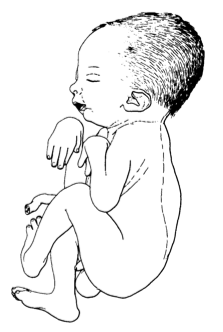
A amioplasia congênita é uma condição rara caracterizada pela ausência ou subdesenvolvimento de múltiplos músculos esqueléticos desde o nascimento. Isso resulta em articulações fixas e enrijecidas, com membros deformados e limitados em sua mobilidade.
Introdução
O que você precisa saber de cara
Visão geral
A Amioplasia Congênita é uma condição rara caracterizada por múltiplas contraturas articulares presentes ao nascimento (artrogripose). A palavra 'amioplasia' significa 'falta de desenvolvimento muscular', e a condição envolve a substituição do tecido muscular por tecido fibroso e adiposo, resultando em rigidez articular e limitação de movimentos. Esta página foi criada para fornecer informações claras e acolhedoras sobre esta condição.[1]
Sinais e sintomas
Os principais sinais da Amioplasia Congênita são as contraturas articulares múltiplas, que afetam principalmente braços e pernas. As articulações podem estar fixas em posição de flexão ou extensão. A condição é geralmente simétrica, afetando ambos os lados do corpo de forma semelhante. A gravidade pode variar de leve a grave, e a condição não costuma piorar com o tempo.[1]
Causas genéticas
A causa genética específica da Amioplasia Congênita ainda não foi completamente estabelecida. Não há um gene específico identificado como responsável pela condição, e o padrão de herança não está definido. A condição é classificada como uma forma de artrogripose, e o diagnóstico é baseado nas características clínicas.[1][3]
Diagnóstico
O diagnóstico da Amioplasia Congênita é essencialmente clínico, baseado na presença de múltiplas contraturas articulares ao nascimento. Exames de imagem, como ultrassonografia pré-natal, podem sugerir o diagnóstico. Exames genéticos podem ser realizados para descartar outras condições que causam artrogripose. No Brasil, o Sistema Único de Saúde (SUS) oferece cobertura para procedimentos como cariótipo, pesquisa de microdeleções/microduplicações por FISH, sequenciamento completo do exoma (WES) e dosagem de alfa-fetoproteína, além de atendimento em reabilitação para doenças raras.[1][3][4]
Tratamento e manejo
O manejo da Amioplasia Congênita é multidisciplinar e focado em melhorar a função e a qualidade de vida. O tratamento inclui fisioterapia para alongar os músculos e melhorar a amplitude de movimento, terapia ocupacional para auxiliar nas atividades diárias e, em alguns casos, cirurgias ortopédicas para corrigir contraturas graves. O acompanhamento com uma equipe de especialistas (ortopedistas, fisioterapeutas, terapeutas ocupacionais) é fundamental.[1][4]
Tratamentos citados na literatura
A literatura científica (fonte: PubTator3) menciona associações entre a Amioplasia Congênita e alguns fármacos, mas é importante destacar que estas são correlações observadas em publicações e NÃO representam recomendações de tratamento. As substâncias citadas incluem: Cisplatin (13 publicações), Doxorubicin (5), Lipids (3), Vitamin A (3), Cyclophosphamide (3), Ethambutol (3), Rifampin (3), Thiotepa (3), Iron (2) e Isoproterenol (2). Consulte sempre seu médico antes de considerar qualquer intervenção.[4]
Prognóstico e qualidade de vida
O prognóstico da Amioplasia Congênita varia conforme a gravidade das contraturas. Muitas pessoas com a condição levam uma vida ativa e produtiva com o suporte adequado de reabilitação e adaptações. A condição não é progressiva, ou seja, não piora com o tempo. O suporte emocional e a inclusão social são aspectos importantes para a qualidade de vida.[1]
Conteúdo informativo gerado e mantido automaticamente a partir de fontes oficiais (Orphanet, HPO, OMIM, SUS). Não substitui avaliação médica.
A amioplasia congênita é uma condição rara caracterizada pela ausência ou subdesenvolvimento de múltiplos músculos esqueléticos desde o nascimento. Isso resulta em articulações fixas e enrijecidas, com membros deformados e limitados em sua mobilidade.
Encontrou um erro ou informação desatualizada? Sugira uma correção →
Entender a doença
Do básico ao detalhe, leia no seu ritmo
Preparando trilha educativa...
Sinais e sintomas
O que aparece no corpo e com que frequência cada sintoma acontece
Visão geral
A Amioplasia Congênita é uma condição rara caracterizada por múltiplas contraturas articulares presentes ao nascimento (artrogripose). A palavra 'amioplasia' significa 'falta de desenvolvimento muscular', e a condição envolve a substituição do tecido muscular por tecido fibroso e adiposo, resultando em rigidez articular e limitação de movimentos. Esta página foi criada para fornecer informações claras e acolhedoras sobre esta condição.[1]
Sinais e sintomas
Os principais sinais da Amioplasia Congênita são as contraturas articulares múltiplas, que afetam principalmente braços e pernas. As articulações podem estar fixas em posição de flexão ou extensão. A condição é geralmente simétrica, afetando ambos os lados do corpo de forma semelhante. A gravidade pode variar de leve a grave, e a condição não costuma piorar com o tempo.[1]
Causas genéticas
A causa genética específica da Amioplasia Congênita ainda não foi completamente estabelecida. Não há um gene específico identificado como responsável pela condição, e o padrão de herança não está definido. A condição é classificada como uma forma de artrogripose, e o diagnóstico é baseado nas características clínicas.[1][3]
Diagnóstico
O diagnóstico da Amioplasia Congênita é essencialmente clínico, baseado na presença de múltiplas contraturas articulares ao nascimento. Exames de imagem, como ultrassonografia pré-natal, podem sugerir o diagnóstico. Exames genéticos podem ser realizados para descartar outras condições que causam artrogripose. No Brasil, o Sistema Único de Saúde (SUS) oferece cobertura para procedimentos como cariótipo, pesquisa de microdeleções/microduplicações por FISH, sequenciamento completo do exoma (WES) e dosagem de alfa-fetoproteína, além de atendimento em reabilitação para doenças raras.[1][3][4]
Tratamento e manejo
O manejo da Amioplasia Congênita é multidisciplinar e focado em melhorar a função e a qualidade de vida. O tratamento inclui fisioterapia para alongar os músculos e melhorar a amplitude de movimento, terapia ocupacional para auxiliar nas atividades diárias e, em alguns casos, cirurgias ortopédicas para corrigir contraturas graves. O acompanhamento com uma equipe de especialistas (ortopedistas, fisioterapeutas, terapeutas ocupacionais) é fundamental.[1][4]
Tratamentos citados na literatura
A literatura científica (fonte: PubTator3) menciona associações entre a Amioplasia Congênita e alguns fármacos, mas é importante destacar que estas são correlações observadas em publicações e NÃO representam recomendações de tratamento. As substâncias citadas incluem: Cisplatin (13 publicações), Doxorubicin (5), Lipids (3), Vitamin A (3), Cyclophosphamide (3), Ethambutol (3), Rifampin (3), Thiotepa (3), Iron (2) e Isoproterenol (2). Consulte sempre seu médico antes de considerar qualquer intervenção.[4]
Prognóstico e qualidade de vida
O prognóstico da Amioplasia Congênita varia conforme a gravidade das contraturas. Muitas pessoas com a condição levam uma vida ativa e produtiva com o suporte adequado de reabilitação e adaptações. A condição não é progressiva, ou seja, não piora com o tempo. O suporte emocional e a inclusão social são aspectos importantes para a qualidade de vida.[1]
Conteúdo informativo gerado e mantido automaticamente a partir de fontes oficiais (Orphanet, HPO, OMIM, SUS). Não substitui avaliação médica.
Linha do tempo da pesquisa
Encontrou um erro ou informação desatualizada? Sugira uma correção →
Genética e causas
O que está alterado no DNA e como passa nas famílias
Nenhum gene associado encontrado
Os dados genéticos desta condição ainda estão sendo catalogados.
Diagnóstico
Os sinais que médicos procuram e os exames que confirmam
Tratamento e manejo
Remédios, cuidados de apoio e o que precisa acompanhar
Onde tratar no SUS
Hospitais de referência no Brasil e o protocolo oficial do SUS (PCDT)
🇧🇷 Atendimento SUS — Amioplasia congênita
Centros de Referência SUS
24 centros habilitados pelo SUS para Amioplasia congênita
Centros para Amioplasia congênita
Detalhes dos centros
Hospital Universitário Prof. Edgard Santos (HUPES)
R. Dr. Augusto Viana, s/n - Canela, Salvador - BA, 40110-060 · CNES 0003808
Serviço de Referência
Hospital Infantil Albert Sabin
R. Tertuliano Sales, 544 - Vila União, Fortaleza - CE, 60410-794 · CNES 2407876
Serviço de Referência
Hospital de Apoio de Brasília (HAB)
AENW 3 Lote A Setor Noroeste - Plano Piloto, Brasília - DF, 70684-831 · CNES 0010456
Serviço de Referência
Hospital Estadual Infantil e Maternidade Alzir Bernardino Alves (HIABA)
Av. Min. Salgado Filho, 918 - Soteco, Vila Velha - ES, 29106-010 · CNES 6631207
Serviço de Referência
Hospital das Clínicas da UFG
Rua 235 QD. 68 Lote Área, Nº 285, s/nº - Setor Leste Universitário, Goiânia - GO, 74605-050 · CNES 2338424
Serviço de Referência
Hospital Universitário da UFJF
R. Catulo Breviglieri, Bairro - s/n - Santa Catarina, Juiz de Fora - MG, 36036-110 · CNES 2297442
Atenção Especializada
Hospital das Clínicas da UFMG
Av. Prof. Alfredo Balena, 110 - Santa Efigênia, Belo Horizonte - MG, 30130-100 · CNES 2280167
Serviço de Referência
Hospital Universitário Julio Müller (HUJM)
R. Luis Philippe Pereira Leite, s/n - Alvorada, Cuiabá - MT, 78048-902 · CNES 2726092
Atenção Especializada
Hospital Universitário João de Barros Barreto
R. dos Mundurucus, 4487 - Guamá, Belém - PA, 66073-000 · CNES 2337878
Serviço de Referência
Hospital Universitário Lauro Wanderley (HULW)
R. Tabeliao Estanislau Eloy, 585 - Castelo Branco, João Pessoa - PB, 58050-585 · CNES 0002470
Atenção Especializada
Instituto de Medicina Integral Prof. Fernando Figueira (IMIP)
R. dos Coelhos, 300 - Boa Vista, Recife - PE, 50070-902 · CNES 0000647
Serviço de Referência
Hospital Pequeno Príncipe
R. Des. Motta, 1070 - Água Verde, Curitiba - PR, 80250-060 · CNES 3143805
Serviço de Referência
Hospital Universitário Regional de Maringá (HUM)
Av. Mandacaru, 1590 - Parque das Laranjeiras, Maringá - PR, 87083-240 · CNES 2216108
Atenção Especializada
Hospital de Clínicas da UFPR
R. Gen. Carneiro, 181 - Alto da Glória, Curitiba - PR, 80060-900 · CNES 2364980
Serviço de Referência
Hospital Universitário Pedro Ernesto (HUPE-UERJ)
Blvd. 28 de Setembro, 77 - Vila Isabel, Rio de Janeiro - RJ, 20551-030 · CNES 2280221
Serviço de Referência
Instituto Nacional de Saúde da Mulher, da Criança e do Adolescente Fernandes Figueira (IFF/Fiocruz)
Av. Rui Barbosa, 716 - Flamengo, Rio de Janeiro - RJ, 22250-020 · CNES 2269988
Serviço de Referência
Hospital São Lucas da PUCRS
Av. Ipiranga, 6690 - Jardim Botânico, Porto Alegre - RS, 90610-000 · CNES 2232928
Serviço de Referência
Hospital de Clínicas de Porto Alegre (HCPA)
Rua Ramiro Barcelos, 2350 Bloco A - Av. Protásio Alves, 211 - Bloco B e C - Santa Cecília, Porto Alegre - RS, 90035-903 · CNES 2237601
Serviço de Referência
Hospital Universitário da UFSC (HU-UFSC)
R. Profa. Maria Flora Pausewang - Trindade, Florianópolis - SC, 88036-800 · CNES 2560356
Serviço de Referência
Hospital das Clínicas da FMUSP
R. Dr. Ovídio Pires de Campos, 225 - Cerqueira César, São Paulo - SP, 05403-010 · CNES 2077485
Serviço de Referência
Hospital de Base de São José do Rio Preto
Av. Brg. Faria Lima, 5544 - Vila Sao Jose, São José do Rio Preto - SP, 15090-000 · CNES 2079798
Atenção Especializada
Hospital de Clínicas da UNICAMP
R. Vital Brasil, 251 - Cidade Universitária, Campinas - SP, 13083-888 · CNES 2748223
Serviço de Referência
Hospital de Clínicas de Ribeirão Preto (HCRP-USP)
R. Ten. Catão Roxo, 3900 - Vila Monte Alegre, Ribeirão Preto - SP, 14015-010 · CNES 2082187
Serviço de Referência
UNIFESP / Hospital São Paulo
R. Napoleão de Barros, 715 - Vila Clementino, São Paulo - SP, 04024-002 · CNES 2688689
Serviço de Referência
Dados de DATASUS/CNES, SBGM, ABNeuro e Ministério da Saúde. Sempre confirme a disponibilidade diretamente com o estabelecimento.
Pesquisa ativa
Ensaios clínicos abertos e novidades científicas recentes
Ensaios em destaque
Pesquisa e ensaios clínicos
0 ensaios clínicos encontrados.
Publicações mais relevantes
The evolving genetic landscape of neuromuscular fetal akinesias.
Fetal akinesia is a broad term used to describe absent (or reduced, fetal hypokinesia) fetal movements, and it can be detected as early as the first trimester. Depending on the developmental age of onset, anything that interferes or limits the normal in utero movement results in a range of deformations affecting multiple organs and organ systems. Arthrogryposis, also termed arthrogryposis multiplex congenita (AMC), is a definitive terminology for multiple congenital contractures, with two major subgroups; amyoplasia and distal arthrogryposis (DA). The spectrum includes fetal akinesia deformation sequence (FADS), lethal congenital contracture syndrome (LCCS), and multiple pterygium syndrome (MPS). Variants in more than >400 genes are known to cause AMC, and it is increasingly recognized that variants in genes encoding critical components (including ventral horn cell, peripheral nerve, neuromuscular junction, skeletal muscle) of the extended motor unit underlie ∼40% of presentations. With unbiased screening approaches, including sequencing of comprehensive disease gene panels, exomes and genomes, novel genes and phenotypic expansions associated with known human disease genes have been uncovered in the setting of fetal akinesia. Autosomal-recessive titinopathy is the most frequent genetic cause of AMC. Accurate genetic diagnosis is critical to genetic counseling and informing family planning. Around 50% remain undiagnosed following comprehensive prenatal, diagnostic or research screening. Comprehensive phenotyping and periodic reanalysis with appropriate genomic tools are valuable strategies when faced with initial inconclusive results. There are likely many novel causative genes still to identify, which will inform our understanding of the molecular pathways underlying early human development and in utero movement.
Transcriptional Changes Associated with Amyoplasia.
Arthrogryposis, which represents a group of congenital disorders, includes various forms. One such form is amyoplasia, which most commonly presents in a sporadic form in addition to distal forms, among which hereditary cases may occur. This condition is characterized by limited joint mobility and muscle weakness, leading to limb deformities and various clinical manifestations. At present, the pathogenesis of this disease is not clearly understood, and its diagnosis is often complicated due to significant phenotypic diversity, which can result in delayed detection and, consequently, limited options for symptomatic treatment. In this study, a transcriptomic analysis of the affected muscles from patients diagnosed with amyoplasia was performed, and more than 2000 differentially expressed genes (DEGs) were identified. A functional analysis revealed disrupted biological processes, such as vacuole organization, cellular and aerobic respiration, regulation of mitochondrion organization, cellular adhesion, ATP synthesis, and others. The search for key nodes (hubs) in protein-protein interaction networks allowed for the identification of genes involved in mitochondrial processes.
Outcomes of Ponseti Method for the Treatment of Clubfeet in Children With Arthrogryposis.
The Ponseti serial casting method is the method of choice in treating children with congenital clubfeet. The arthrogrypotic clubfoot has traditionally been considered challenging to treat, with higher rates of recurrence and the need for more corrective surgeries. However, initial reports have found promising results in using the Ponseti method to treat arthrogrypotic feet. This study aims to compare the outcomes of idiopathic versus arthrogrypotic clubfeet following initial treatment with the Ponseti serial casting method. A retrospective review of medical records from a single institution was conducted. Data was collected from children ages 0 to 18 with idiopathic or arthrogrypotic clubfoot treated from 2002 to 2022 with Ponseti-style serial casting with a minimum 2-year follow-up. Recurrence was defined as the need for additional casting or subsequent surgeries following initial correction. Data was collected on relevant patient demographics, previous treatment, casting records, Achilles tenotomies, and surgical treatments. A total of 352 patients (546 feet) met inclusion criteria. In all, 334 idiopathic and 18 arthrogrypotic patients were analyzed with an average follow-up duration of 3.4 and 4.2 years, respectively. Twelve patients had distal arthrogryposis, and 6 had amyoplasia. In all, 93.4% of idiopathic and 72.2% of arthrogrypotic patients successfully achieved correction with Ponseti casting and Achilles tenotomy. Recurrence rates were significantly higher in the arthrogrypotic group at 83.3% compared with 44.6% in the idiopathic group ( P =0.001). A posterior or posterior medial release was performed in 35.0% of idiopathic and 66.7% arthrogrypotic feet. We report the largest series of arthrogrypotic clubfeet treated by Ponseti casting to the best of our knowledge. In contrast to earlier reports, our investigation underscores that while the Ponseti method may be able to secure initial correction in arthrogrypotic clubfeet, on average, at a 3-year follow-up, the prognosis is less favorable. These patients exhibit higher recurrence and often require operative treatment. Notably, a posterior medial release may eventually be needed in up to 6 of 10 patients. Level III-therapeutic studies-investigating the results of treatment.
Fetuses and infants with Amyoplasia congenita in congenital Zika syndrome: The evidence of a viral cause. A narrative review of 144 cases.
Amyoplasia congenita is the most frequent type of arthrogryposis causing fetal hypokinesia, leading to congenital contractures at birth. The pathogenesis is thought to be impaired blood circulation to the fetus early in pregnancy, with hypotension and hypoxia damaging the anterior horn cells. In animal studies however a prenatal infection with a poliomyelitis-like viral agent was demonstrated. Congenital Zika virus syndrome (CZVS) has recently been described in infants with severe microcephaly, and in 10-25% of cases arthrogryposis. A search in PubMed for CZVS yielded 124 studies. After a selection for arthrogryposis, 35 papers were included, describing 144 cases. The studies were divided into two categories. 1) Those (87 cases) focussing on imaging or histological data of congenital brain defects, contained insufficient information to link arthrogryposis specifically to lesions of the brain or spinal motor neuron. 2) In the other 57 cases detailed clinical data could be linked to neurophysiological, imaging or histological data. In category 1 the most frequent brain abnormalities in imaging studies were ventriculomegaly, calcifications (subcortical, basal ganglia, cerebellum), hypoplasia of the brainstem and cerebellum, atrophy of the cerebral cortex, migration disorders and corpus callosum anomalies. In category 2, in 38 of 57 cases clinical data were indicative of Amyoplasia congenita. This diagnosis was confirmed by electromyographic findings (13 cases), by MRI (37 cases) or histology (12 cases) of the spinal cord. The latter showed small or absent lateral corticospinal tracts, and cell loss and degeneration of motor neuron cells. Zika virus-proteins and flavivirus-like particles were detected in cytoplasm of spinal neurons. The phenotype of arthrogryposis in CZVS is consistent with Amyoplasia congenita. These findings warrant search for an intrauterine infection with any neurotropic viral agent with affinity to spinal motor neurons in neonates with Amyoplasia.
The range of publications on arthrogryposis multiplex congenita from 1995 to 2022-A scoping review.
Arthrogryposis multiplex congenita (AMC) is defined as "a group of congenital conditions characterized by joint contractures in two or more body areas." Given its heterogeneity, the definition of AMC has changed multiple times. This scoping review provides an overview of how AMC is defined in scientific publications, on existing knowledge and trends regarding the concept of AMC. Our review illuminates possible knowledge gaps and provides directions for future research. A scoping review was conducted in accordance with the Preferred Reporting Items for Systematic reviews and Meta-Analyses extension for Scoping Reviews guidelines. Quantitative studies on AMC from 1995 to date were included. We summarized information about definitions/descriptions of AMC, study objectives, study designs, methods, funding, and involvement of patient organizations. A total of 2729 references were screened, and 141 articles fulfilled our inclusion criteria. Our scoping revealed that the majority of publications were cross-sectional or retrospective studies of children and young people, commonly about orthopedic management. Explicit or good definitions of AMC were provided in 86% of the cases. Recent publications on AMC mostly used consensus-based definitions. The research gaps were primarily related to adults, aging, etiology, and new medical treatment, in addition to implications on daily life.
Publicações recentes
Ver todas no PubMed📚 EuropePMC4 artigos no totalmostrando 30
The evolving genetic landscape of neuromuscular fetal akinesias.
Journal of neuromuscular diseasesTranscriptional Changes Associated with Amyoplasia.
International journal of molecular sciencesOutcomes of Ponseti Method for the Treatment of Clubfeet in Children With Arthrogryposis.
Journal of pediatric orthopedicsThe range of publications on arthrogryposis multiplex congenita from 1995 to 2022-A scoping review.
American journal of medical genetics. Part AFetuses and infants with Amyoplasia congenita in congenital Zika syndrome: The evidence of a viral cause. A narrative review of 144 cases.
European journal of paediatric neurology : EJPN : official journal of the European Paediatric Neurology SocietyLethal respiratory course and additional features expand the phenotypic spectrum of PIEZO2-related distal arthrogryposis type 5.
American journal of medical genetics. Part ACase Report: Prenatal Diagnosis of Nemaline Myopathy.
Frontiers in pediatricsThe Hand in Distal Arthrogryposis.
The Journal of hand surgeryClinical and Genetic Findings in a Series of Eight Families with Arthrogryposis.
GenesDiagnostic workup in children with arthrogryposis: description of practices from a single reference centre, comparison with literature and suggestion of recommendations.
Journal of medical geneticsPatient-Reported Outcome Measurement Information System (PROMIS) Scores in Pediatric Patients With Arthrogryposis.
Journal of pediatric orthopedicsA Genomic Approach to Delineating the Occurrence of Scoliosis in Arthrogryposis Multiplex Congenita.
GenesA New Intronic Variant in ECEL1 in Two Patients with Distal Arthrogryposis Type 5D.
International journal of molecular sciencesPanorama of the distal myopathies.
Acta myologica : myopathies and cardiomyopathies : official journal of the Mediterranean Society of MyologyAmyoplasia and distal arthrogryposis.
Orthopaedics & traumatology, surgery & research : OTSRTalectomy by Medial Surgical Approach for Congenital Vertical Talus in Arthrogryposis Multiplex Congenita.
OrthopedicsMutations in MYLPF Cause a Novel Segmental Amyoplasia that Manifests as Distal Arthrogryposis.
American journal of human geneticsPatient-reported Outcomes in Arthrogryposis.
Journal of pediatric orthopedicsCompound heterozygous CACNA1H mutations associated with severe congenital amyotrophy.
Channels (Austin, Tex.)Difficult airway management in children and young adults with arthrogryposis.
World journal of otorhinolaryngology - head and neck surgeryArthrogryposis and pterygia as lethal end manifestations of genetically defined congenital myopathies.
American journal of medical genetics. Part ALower Extremity Deformity Management in Amyoplasia: When and How.
Journal of pediatric orthopedicsInterbrachial Pinch by Trapezius Transfer in Amyoplasia Congenita: A Case Report.
Plastic and reconstructive surgery. Global openGenetics and Classifications.
Journal of pediatric orthopedicsSegmental Humeral Reconstruction with a Pedicled Radius Bone Flap in Congenital Amyoplasia.
Plastic and reconstructive surgery. Global openMolecular etiology of arthrogryposis in multiple families of mostly Turkish origin.
The Journal of clinical investigationAMC: amyoplasia and distal arthrogryposis.
Journal of children's orthopaedicsClinical presentation and survival in a population-based cohort of infants with gastroschisis in Utah, 1997-2011.
American journal of medical genetics. Part ACharacterization of a group unrelated patients with arthrogryposis multiplex congenita.
Jornal de pediatriaThe clubfoot painted by Jusepe de Ribera: a controversial diagnosis.
The journal of maternal-fetal & neonatal medicine : the official journal of the European Association of Perinatal Medicine, the Federation of Asia and Oceania Perinatal Societies, the International Society of Perinatal ObstetriciansAssociações
Organizações que acompanham esta doença — pra ter apoio e orientação
Ainda não temos associações cadastradas para Amioplasia congênita.
É de uma associação que acompanha esta doença? Fale com a gente →
Comunidades
Grupos ativos de quem convive com esta doença aqui no Raras
Ainda não existe comunidade no Raras para Amioplasia congênita
Pacientes, familiares e cuidadores se organizam em comunidades pra compartilhar experiências, fazer perguntas e se apoiar. Você pode ser o primeiro.
Tire suas dúvidas
Perguntas, dicas e experiências compartilhadas aqui na página
Participe da discussão
Faça login para postar dúvidas, compartilhar experiências e interagir com especialistas.
Fazer loginDoenças relacionadas
Doenças com sintomas parecidos — ajudam quem ainda está buscando diagnóstico
Ainda não achamos doenças com sintomas parecidos o suficiente.
Referências e fontes
Bases de dados externas citadas neste artigo
Publicações científicas
Artigos indexados no PubMed ligados a esta doença no grafo RarasNet — título, periódico e PMID direto da fonte, sem intermediação de IA.
- The evolving genetic landscape of neuromuscular fetal akinesias.
- Transcriptional Changes Associated with Amyoplasia.
- Outcomes of Ponseti Method for the Treatment of Clubfeet in Children With Arthrogryposis.
- Fetuses and infants with Amyoplasia congenita in congenital Zika syndrome: The evidence of a viral cause. A narrative review of 144 cases.European journal of paediatric neurology : EJPN : official journal of the European Paediatric Neurology Society· 2023· PMID 36442412mais citado
- The range of publications on arthrogryposis multiplex congenita from 1995 to 2022-A scoping review.
- Characterization of a group unrelated patients with arthrogryposis multiplex congenita.
Bases de dados e fontes oficiais
Identificadores e referências canônicas usadas para montar este verbete.
- ORPHA:488586(Orphanet)
- MONDO:0044629(MONDO)
- GARD:22002(GARD (NIH))
- Busca completa no PubMed(PubMed)
- Q4749575(Wikidata)
Dados compilados pelo RarasNet a partir de fontes abertas (Orphanet, OMIM, MONDO, PubMed/EuropePMC, ClinicalTrials.gov, DATASUS, PCDT/MS). Este conteúdo é informativo e não substitui avaliação médica.
Conteúdo mantido por Agente Raras · Médicos e pesquisadores podem colaborar
Amioplasia congênita
📋 Origem dos dados
Esta página agrega dados de fontes públicas e oficiais. Dados sobre cobertura no SUS (PCDT, CEAF) são verificados ativamente por agente proativo (ver badge no infobox). Demais dados têm atribuição de fonte + data da última sincronização — clique para abrir o original.
- Doença rara (ontologia)
- fonte: Orphanet
- Identificador unificado
- fonte: MONDO
- Codificação WHO/SUS
- fonte: WHO ICD-10 / DATASUS
- CID-11 (futuro)
- fonte: WHO ICD-11
- NIH/GARD
- fonte: GARD (NIH)
- Dado público estruturado
- fonte: Wikidata