
Um glioma é um tipo de tumor maligno que se origina nas células gliais do cérebro ou da medula espinhal. Os gliomas compreendem cerca de 30% de todos os tumores cerebrais e do sistema nervoso central e 80% de todos os tumores cerebrais malignos. Subtipos comuns incluem astrocitoma, glioblastoma, oligodendroglioma e ependimoma.
Introdução
O que você precisa saber de cara
Visão geral
O glioma hemisférico do tipo infantil (Infant-type hemispheric glioma) é um tumor cerebral maligno que se origina nos astrócitos (células de suporte do sistema nervoso) e ocorre nos hemisférios cerebrais. Esta doença é caracterizada por fusões específicas em genes de receptores tirosina quinase, como os genes NTRK, ROS1, ALK ou MET, e surge tipicamente na primeira infância.[1]
Sinais e sintomas
Os sintomas podem variar conforme a localização e o tamanho do tumor, mas geralmente incluem sinais de aumento da pressão intracraniana, como dor de cabeça, vômitos, irritabilidade e alterações no comportamento. Como o tumor afeta os hemisférios cerebrais, podem ocorrer convulsões, fraqueza em um lado do corpo ou alterações na visão. O início dos sintomas costuma ser na primeira infância.[1]
Causas genéticas
O glioma hemisférico do tipo infantil é causado por alterações genéticas específicas conhecidas como fusões de genes de receptores tirosina quinase. As fusões mais comuns envolvem os genes NTRK (NTRK1, NTRK2, NTRK3), ROS1, ALK e MET. Essas fusões resultam em proteínas anormais que promovem o crescimento descontrolado das células tumorais.[1][3]
Diagnóstico
O diagnóstico é baseado em exames de imagem, como ressonância magnética (RM) do crânio, e confirmado por análise histopatológica (biópsia) do tumor. Testes genéticos moleculares são essenciais para identificar as fusões nos genes NTRK, ROS1, ALK ou MET, que são características desta doença. A classificação CID-10 para este tumor é C71.0 (neoplasia maligna do cérebro, exceto lobos).[1][3]
Tratamento e manejo
O tratamento do glioma hemisférico do tipo infantil geralmente envolve uma abordagem multidisciplinar, incluindo neurocirurgia para ressecção máxima segura do tumor, quimioterapia e, em alguns casos, radioterapia. Devido às fusões genéticas específicas, terapias-alvo dirigidas (como inibidores de TRK, ROS1, ALK ou MET) podem ser consideradas em centros especializados. O manejo deve ser individualizado e discutido com uma equipe de neuro-oncologia pediátrica.[1]
Tratamentos citados na literatura
Na literatura científica, o ácido 5-aminolevulínico (5-ALA) é mencionado como uma substância utilizada em contexto cirúrgico para auxiliar na visualização do tumor durante a ressecção. Esta é uma associação minerada da literatura (1 publicação) e não constitui uma recomendação de tratamento. Consulte sempre seu médico para decisões terapêuticas.[1]
Prognóstico e qualidade de vida
O prognóstico do glioma hemisférico do tipo infantil varia conforme fatores como a extensão da ressecção cirúrgica, a presença de fusões genéticas específicas e a resposta ao tratamento. O acompanhamento multidisciplinar é fundamental para monitorar a evolução da doença e gerenciar possíveis efeitos colaterais do tratamento, visando a melhor qualidade de vida possível para a criança e sua família.[1]
Conteúdo informativo gerado e mantido automaticamente a partir de fontes oficiais (Orphanet, HPO, OMIM, SUS). Não substitui avaliação médica.
Um glioma é um tipo de tumor maligno que se origina nas células gliais do cérebro ou da medula espinhal. Os gliomas compreendem cerca de 30% de todos os tumores cerebrais e do sistema nervoso central e 80% de todos os tumores cerebrais malignos. Subtipos comuns incluem astrocitoma, glioblastoma, oligodendroglioma e ependimoma.
Encontrou um erro ou informação desatualizada? Sugira uma correção →
Entender a doença
Do básico ao detalhe, leia no seu ritmo
Preparando trilha educativa...
Sinais e sintomas
O que aparece no corpo e com que frequência cada sintoma acontece
Visão geral
O glioma hemisférico do tipo infantil (Infant-type hemispheric glioma) é um tumor cerebral maligno que se origina nos astrócitos (células de suporte do sistema nervoso) e ocorre nos hemisférios cerebrais. Esta doença é caracterizada por fusões específicas em genes de receptores tirosina quinase, como os genes NTRK, ROS1, ALK ou MET, e surge tipicamente na primeira infância.[1]
Sinais e sintomas
Os sintomas podem variar conforme a localização e o tamanho do tumor, mas geralmente incluem sinais de aumento da pressão intracraniana, como dor de cabeça, vômitos, irritabilidade e alterações no comportamento. Como o tumor afeta os hemisférios cerebrais, podem ocorrer convulsões, fraqueza em um lado do corpo ou alterações na visão. O início dos sintomas costuma ser na primeira infância.[1]
Causas genéticas
O glioma hemisférico do tipo infantil é causado por alterações genéticas específicas conhecidas como fusões de genes de receptores tirosina quinase. As fusões mais comuns envolvem os genes NTRK (NTRK1, NTRK2, NTRK3), ROS1, ALK e MET. Essas fusões resultam em proteínas anormais que promovem o crescimento descontrolado das células tumorais.[1][3]
Diagnóstico
O diagnóstico é baseado em exames de imagem, como ressonância magnética (RM) do crânio, e confirmado por análise histopatológica (biópsia) do tumor. Testes genéticos moleculares são essenciais para identificar as fusões nos genes NTRK, ROS1, ALK ou MET, que são características desta doença. A classificação CID-10 para este tumor é C71.0 (neoplasia maligna do cérebro, exceto lobos).[1][3]
Tratamento e manejo
O tratamento do glioma hemisférico do tipo infantil geralmente envolve uma abordagem multidisciplinar, incluindo neurocirurgia para ressecção máxima segura do tumor, quimioterapia e, em alguns casos, radioterapia. Devido às fusões genéticas específicas, terapias-alvo dirigidas (como inibidores de TRK, ROS1, ALK ou MET) podem ser consideradas em centros especializados. O manejo deve ser individualizado e discutido com uma equipe de neuro-oncologia pediátrica.[1]
Tratamentos citados na literatura
Na literatura científica, o ácido 5-aminolevulínico (5-ALA) é mencionado como uma substância utilizada em contexto cirúrgico para auxiliar na visualização do tumor durante a ressecção. Esta é uma associação minerada da literatura (1 publicação) e não constitui uma recomendação de tratamento. Consulte sempre seu médico para decisões terapêuticas.[1]
Prognóstico e qualidade de vida
O prognóstico do glioma hemisférico do tipo infantil varia conforme fatores como a extensão da ressecção cirúrgica, a presença de fusões genéticas específicas e a resposta ao tratamento. O acompanhamento multidisciplinar é fundamental para monitorar a evolução da doença e gerenciar possíveis efeitos colaterais do tratamento, visando a melhor qualidade de vida possível para a criança e sua família.[1]
Conteúdo informativo gerado e mantido automaticamente a partir de fontes oficiais (Orphanet, HPO, OMIM, SUS). Não substitui avaliação médica.
Linha do tempo da pesquisa
Encontrou um erro ou informação desatualizada? Sugira uma correção →
Genética e causas
O que está alterado no DNA e como passa nas famílias
Nenhum gene associado encontrado
Os dados genéticos desta condição ainda estão sendo catalogados.
Diagnóstico
Os sinais que médicos procuram e os exames que confirmam
Tratamento e manejo
Remédios, cuidados de apoio e o que precisa acompanhar
Onde tratar no SUS
Hospitais de referência no Brasil e o protocolo oficial do SUS (PCDT)
🇧🇷 Atendimento SUS — Infant-type hemispheric glioma
Selecione um estado ou use sua localização para ver resultados.
Dados de DATASUS/CNES, SBGM, ABNeuro e Ministério da Saúde. Sempre confirme a disponibilidade diretamente com o estabelecimento.
Pesquisa ativa
Ensaios clínicos abertos e novidades científicas recentes
Ensaios em destaque
🟢 Recrutando agora
1 pesquisa recrutando participantes. Converse com seu médico sobre a possibilidade de participar.
Outros ensaios clínicos
Publicações mais relevantes
Metabolic dependencies and neural progenitor dysregulation: driving forces in paediatric high-grade glioma development.
Paediatric high-grade gliomas (pHGGs) are the most lethal brain tumours in children, characterised by profound epigenetic dysregulation and limited treatment options. The 2021 WHO Classification has established a molecular framework that distinguishes pHGGs as biologically distinct from adult glioblastoma, recognising four major subtypes: H3K27-altered diffuse midline glioma, H3G34-mutant diffuse hemispheric glioma, infant-type hemispheric glioma, and the rare IDH-mutant gliomas. Each subtype exhibits unique epigenetic landscapes, metabolic dependencies, and therapeutic vulnerabilities, necessitating subtype-specific treatment strategies. This review explores the molecular classification of pHGGs and examines the critical role of the tumour microenvironment in disease progression. We focus on glioma stem cells as central drivers of tumour initiation, maintenance, and therapeutic resistance, highlighting their remarkable cellular plasticity and ability to dynamically transition between different states. Particular attention is given to metabolic reprogramming in pHGGs, including alterations in glucose and lipid metabolism, and the exceptional metabolic flexibility of glioma stem cells that enables adaptation to microenvironmental pressures. Importantly, we discuss the intimate crosstalk between metabolism and epigenetic regulation, whereby metabolites serve as essential cofactors for chromatin-modifying enzymes-exemplified by α-ketoglutarate maintaining low H3K27me3 in H3K27M tumours and 2-hydroxyglutarate driving hypermethylation in IDH-mutant gliomas. We review preclinical models that have advanced pHGG research and discuss emerging immunotherapeutic approaches, including CAR T-cell therapies and oncolytic viruses. By synthesising current understanding of pHGG biology, this review aims to identify promising therapeutic avenues that exploit the unique metabolic and epigenetic vulnerabilities of each molecular subtype.
Novel activating SNRNP70-ALK fusion in congenital infant-type hemispheric glioma displays clinical response to lorlatinib: a case-report.
We report a child with an antenatally detected brain tumor that progressed over three years' time despite surgery, chemo- and proton therapy. Retrospective whole-genome and transcriptome sequencing with methylation analysis of primary tumor tissue led to the molecular diagnosis infant-type hemispheric glioma, and identified a novel SNRNP70::ALK fusion, providing a therapeutic target for compassionate-use precision treatment with the ALK tyrosine kinase inhibitor lorlatinib. Functional studies confirmed the fusion protein to be expressed and active in the patient's tumor. After two years of therapy, the child has sustained partial tumor regression on MRI and no new neurological symptoms. We conclude that comprehensive multi-omics analyses are required for correct molecular diagnosis in childhood CNS tumors and can radically impact patient outcome by identifying molecular targets for precision treatment.
Pediatric NTRK-rearranged gliomas: A clinicopathological and molecular analysis of six cases.
Neurotrophic tyrosine receptor kinase (NTRK) gene fusions, although present in fewer than 2 % of gliomas, are recognized oncogenic drivers. With the approval of NTRK-targeted therapies, increasing attention has focused on these tumors, as targeted treatments may substantially enhance outcomes. This study aimed to characterize the pathological features and molecular diversity of pediatric NTRK-rearranged gliomas to inform targeted therapeutic strategies. We analyzed six pediatric gliomas harboring NTRK fusions, identified through next-generation DNA sequencing (n = 5) and fluorescence in situ hybridization (n = 6). All tumors were supratentorial, involving the cerebral hemispheres (n = 3), thalamus (n = 2), and pineal region (n = 1). All infantile cases (n = 3) demonstrated high-grade histology and predominantly involved NTRK1, with one NTRK3 fusion. The three low-grade gliomas included two with NTRK1 and one with NTRK2 rearrangement. Dual gene fusions were identified in one case with intrachromosomal BCAN exon 14-NTRK1 exon 11 and NTRK1 exon 8-ARHGEF11 exon 2 rearrangements. One case harbored triple gene fusions, including interchromosomal ETV6-NTRK3 and PHYH-ETV6 fusions and an intrachromosomal NTRK3 rearrangement. Additional genetic alterations were detected in three cases, involving CDKN2A/B, TP53, ROS1, ABL1, MSH2, ARID4A, and CHEK1. DNA methylation profiling showed no collective methylation class and low-confidence matches to established methylation families. This study expands the clinicopathological and molecular spectrum of pediatric NTRK-rearranged gliomas, including rare entities and complex fusion patterns, and supports routine NTRK testing in pediatric gliomas irrespective of histological grade.
Desmoplastic infantile ganglioglioma/astrocytoma: Expanding the molecular and morphological spectrum with a novel BRAF fusion.
Desmoplastic infantile ganglioglioma/astrocytoma (DIG/DIA) is a rare, low-grade tumor of infants. They are usually composed of a mixed astrocytic and neuronal component with desmoplastic stroma and embryonal-looking areas. Despite some recent reports, clinical, morphological and molecular features of DIG/DIAs are still not well characterized. Here, we present a series of 8 DIG/DIA cases. Hacettepe University and Koc University Hospital, Departments of Pathology, databases were screened for DIG/DIA. Eight patients were identified. All the slides were reevaluated, and patients' clinical data were obtained. All cases were tested for BRAF V600 mutation and 3 BRAF V600 wild-type cases were sequenced. Median age at the diagnosis was 5.5 months (4-30 months). The female to male ratio was 6:2. Two cases recurred. Four cases showed BRAF p. V600 mutation. Of those BRAF p. V600 wild-type cases, one harbored TMEM106B::BRAF fusion, described for the first time in a DIG/DIA case. DIG/DIA is a low-grade tumor seen in early childhood and characterized by an indolent clinical course. The most common molecular signature of these tumors is BRAF alterations, including rearrangements. The primary differential diagnosis is infant-type hemispheric glioma and given the similarities, pathologists must remain careful to ensure accurate diagnosis.
A congenital infant-type hemispheric glioma case with EML4::ALK fusion.
Infant-type hemispheric glioma is a high-grade cellular astrocytoma that arises in the cerebral hemispheres in early childhood. It is characterized by receptor tyrosine kinase fusions, typically involving genes such as the NTRK family, ROS1, ALK, or MET. This tumor type represents a distinct diagnostic category in the fifth edition of the WHO Classification of Tumors of the Central Nervous System. Here, we present a congenital brain tumor case that developed in the left lateral ventricle with EML4::ALK fusion, and was classified as an infant-type hemispheric glioma. The patient was found to have hydrocephalus and a brain tumor in utero. Central pathologists made a diagnosis of high-grade anaplastic astrocytoma with EML4::ALK fusion. The patient underwent radical tumor resection and a combination of chemotherapies. She is now 7 years old and doing well with no recurrence. To our knowledge, this is the first report of a congenital intraventricular tumor with EML4::ALK fusion.
Publicações recentes
Role of Surrogate Immunohistochemistry Markers in CNS Tumors in the Era of Molecular Diagnostics With Recent Updates.
📖 RevisãoMetabolic dependencies and neural progenitor dysregulation: driving forces in paediatric high-grade glioma development.
Novel activating SNRNP70-ALK fusion in congenital infant-type hemispheric glioma displays clinical response to lorlatinib: a case-report.
Pediatric NTRK-rearranged gliomas: A clinicopathological and molecular analysis of six cases.
Desmoplastic infantile ganglioglioma/astrocytoma: Expanding the molecular and morphological spectrum with a novel BRAF fusion.
🥉 Relato de caso📚 EuropePMC25 artigos no totalmostrando 37
Metabolic dependencies and neural progenitor dysregulation: driving forces in paediatric high-grade glioma development.
Cancer metastasis reviewsNovel activating SNRNP70-ALK fusion in congenital infant-type hemispheric glioma displays clinical response to lorlatinib: a case-report.
NPJ precision oncologyPediatric NTRK-rearranged gliomas: A clinicopathological and molecular analysis of six cases.
Pathology, research and practiceDesmoplastic infantile ganglioglioma/astrocytoma: Expanding the molecular and morphological spectrum with a novel BRAF fusion.
Neuro-oncology advancesA congenital infant-type hemispheric glioma case with EML4::ALK fusion.
Child's nervous system : ChNS : official journal of the International Society for Pediatric NeurosurgerySpinal and Leptomeningeal Infantile Glioma With Raf1 Fusion: Diagnostic Challenges for a Potentially Novel Tumour Type.
Neuropathology and applied neurobiologyDiffuse Pediatric High Grade Gliomas.
Neuroimaging clinics of North AmericaA Systematic Study of Molecular Diagnosis, Treatment and Prognosis in Infant-Type Hemispheric Glioma): An Individual Patient Data Meta-analysis of 164 patients.
Neuro-oncologyRevisiting pediatric HGGs and PNETs according to the WHO CNS5 criteria: A clinical and genomic retrospective analysis.
Neuro-oncology advancesIlluminating radiogenomic signatures in pediatric-type diffuse gliomas: insights into molecular, clinical, and imaging correlations. Part I: high-grade group.
La Radiologia medicaA Rare Case of Giant Congenital/Infant-type Hemispheric Glioma Harboring Concomitant ALK and EGFR Alteration.
NMC case report journalAll-in-one bimodal DNA and RNA next-generation sequencing panel for integrative diagnosis of glioma.
Pathology, research and practiceA multi-institutional series of a novel, recurrent TRIM24::MET fusion-driven infant-type hemispheric glioma reveals significant clinico-pathological heterogeneity.
Acta neuropathologica communicationsCapmatinib is an effective treatment for MET-fusion driven pediatric high-grade glioma and synergizes with radiotherapy.
Molecular cancerAn Infant-Type Hemispheric Glioma With SOX5::ALK: A Novel Fusion.
Journal of the National Comprehensive Cancer Network : JNCCNA Case Report of Infant-Type Hemispheric Glioma with a Novel GAB1-ABL2 Kinase Fusion Treated with Dasatinib.
Pediatric neurosurgery[Pediatric-Type Diffuse High-Grade Gliomas].
No shinkei geka. Neurological surgeryInfant-type hemispheric glioma occurring at the cervicomedullary region in a 5-month-old infant: A case report with a special emphasis on molecular classification.
Surgical neurology international[Tyrosine kinase receptor gene fusion: A series of four cases of infantile-type hemispheric glioma].
Annales de pathologieROS1 Alterations as a Potential Driver of Gliomas in Infant, Pediatric, and Adult Patients.
Modern pathology : an official journal of the United States and Canadian Academy of Pathology, IncHigh-grade glioma in infants and young children is histologically, molecularly, and clinically diverse: Results from the SJYC07 trial and institutional experience.
Neuro-oncologyA comprehensive analysis of infantile central nervous system tumors to improve distinctive criteria for infant-type hemispheric glioma versus desmoplastic infantile ganglioglioma/astrocytoma.
Brain pathology (Zurich, Switzerland)Lorlatinib for ALK-fused, infant-type hemispheric glioma with lung metastasis: a case report.
Annals of clinical and translational neurologyClinical and Molecular Evolution of an ALK-Driven Infant-Type Hemispheric Glioma Treated Sequentially With Second- and Third-Generation Anaplastic Lymphoma Kinase Inhibitors.
JCO precision oncology[Infant-type hemispheric glioma with EEF1G-ROS1 fusion: report of a case].
Zhonghua bing li xue za zhi = Chinese journal of pathology2021 updates to the World Health Organization classification of adult-type and pediatric-type diffuse gliomas: a clinical practice review.
Chinese clinical oncologyCase report: ATIC-ALK fusion in infant-type hemispheric glioma and response to lorlatinib.
Frontiers in oncologyGenomic and epigenomic re-categorization of congenital glioblastoma and desmoplastic infantile ganglioglioma.
Child's nervous system : ChNS : official journal of the International Society for Pediatric NeurosurgeryA Case of Infant-Type Hemispheric Glioma with NTRK1 Fusion.
Child neurology openPaediatric-type diffuse high-grade gliomas in the 5th CNS WHO Classification.
PathologicaNovel TPR::ROS1 Fusion Gene Activates MAPK, PI3K and JAK/STAT Signaling in an Infant-type Pediatric Glioma.
Cancer genomics & proteomicsLorlatinib for the Treatment of ALK Fusion-Positive Infant-Type Hemispheric Glioma: A Case Report.
JCO precision oncologyInfant-Type Hemispheric Glioma in a Chinese Girl: A Newly Defined Entity.
Fetal and pediatric pathologyA Unique Case Report of Infant-Type Hemispheric Glioma (Gliosarcoma Subtype) with TPR-NTRK1 Fusion Treated with Larotrectinib.
Pathobiology : journal of immunopathology, molecular and cellular biologyActivating NTRK2 and ALK receptor tyrosine kinase fusions extend the molecular spectrum of pleomorphic xanthoastrocytomas of early childhood: a diagnostic overlap with infant-type hemispheric glioma.
Acta neuropathologicaAdvanced Magnetic Resonance Imaging in Pediatric Glioblastomas.
Frontiers in neurologyGliomas in children and adolescents: investigation of molecular alterations with a potential prognostic and therapeutic impact.
Journal of cancer research and clinical oncologyAssociações
Organizações que acompanham esta doença — pra ter apoio e orientação
Ainda não temos associações cadastradas para Infant-type hemispheric glioma.
É de uma associação que acompanha esta doença? Fale com a gente →
Comunidades
Grupos ativos de quem convive com esta doença aqui no Raras
Ainda não existe comunidade no Raras para Infant-type hemispheric glioma
Pacientes, familiares e cuidadores se organizam em comunidades pra compartilhar experiências, fazer perguntas e se apoiar. Você pode ser o primeiro.
Tire suas dúvidas
Perguntas, dicas e experiências compartilhadas aqui na página
Participe da discussão
Faça login para postar dúvidas, compartilhar experiências e interagir com especialistas.
Fazer loginDoenças relacionadas
Doenças com sintomas parecidos — ajudam quem ainda está buscando diagnóstico
Ainda não achamos doenças com sintomas parecidos o suficiente.
Referências e fontes
Bases de dados externas citadas neste artigo
Publicações científicas
Artigos indexados no PubMed ligados a esta doença no grafo RarasNet — título, periódico e PMID direto da fonte, sem intermediação de IA.
- Metabolic dependencies and neural progenitor dysregulation: driving forces in paediatric high-grade glioma development.
- Novel activating SNRNP70-ALK fusion in congenital infant-type hemispheric glioma displays clinical response to lorlatinib: a case-report.
- Pediatric NTRK-rearranged gliomas: A clinicopathological and molecular analysis of six cases.
- Desmoplastic infantile ganglioglioma/astrocytoma: Expanding the molecular and morphological spectrum with a novel BRAF fusion.
- A congenital infant-type hemispheric glioma case with EML4::ALK fusion.Child's nervous system : ChNS : official journal of the International Society for Pediatric Neurosurgery· 2026· PMID 41483402mais citado
- Role of Surrogate Immunohistochemistry Markers in CNS Tumors in the Era of Molecular Diagnostics With Recent Updates.
Bases de dados e fontes oficiais
Identificadores e referências canônicas usadas para montar este verbete.
- ORPHA:695136(Orphanet)
- MONDO:0858940(MONDO)
- Busca completa no PubMed(PubMed)
Dados compilados pelo RarasNet a partir de fontes abertas (Orphanet, OMIM, MONDO, PubMed/EuropePMC, ClinicalTrials.gov, DATASUS, PCDT/MS). Este conteúdo é informativo e não substitui avaliação médica.
Conteúdo mantido por Agente Raras · Médicos e pesquisadores podem colaborar
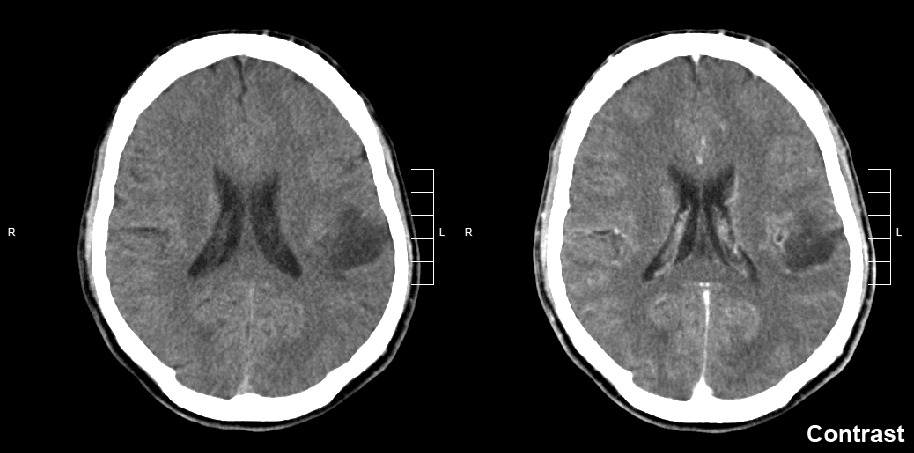
Infant-type hemispheric glioma
📋 Origem dos dados
Esta página agrega dados de fontes públicas e oficiais. Dados sobre cobertura no SUS (PCDT, CEAF) são verificados ativamente por agente proativo (ver badge no infobox). Demais dados têm atribuição de fonte + data da última sincronização — clique para abrir o original.
- Doença rara (ontologia)
- fonte: Orphanet
- Identificador unificado
- fonte: MONDO
- Codificação WHO/SUS
- fonte: WHO ICD-10 / DATASUS
- CID-11 (futuro)
- fonte: WHO ICD-11
- Reposicionamento
- fonte: Drug Repurposing Hub
- Ensaios clínicos
- fonte: ClinicalTrials.gov