
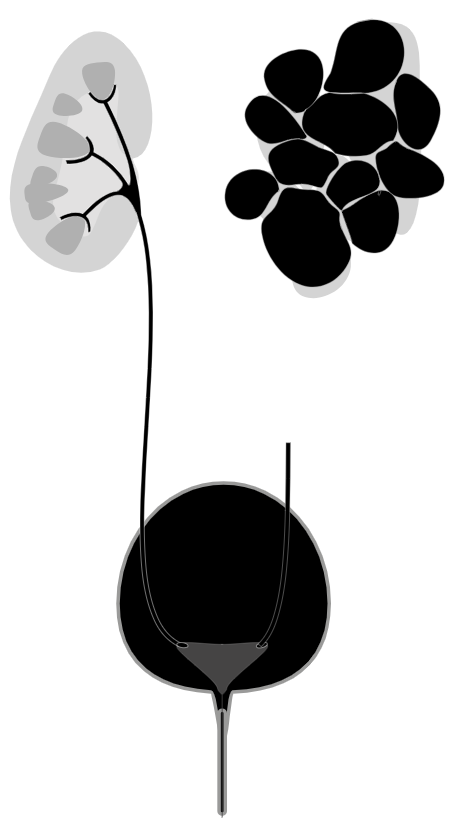
A displasia renal bilateral é uma forma de displasia renal (DR), uma malformação do trato renal na qual o desenvolvimento de ambos os rins é anormal e incompleto. O RD bilateral pode ser segmentar e de gravidade variável, com aplasia renal correspondendo ao RD extremo.
Introdução
O que você precisa saber de cara
A displasia renal bilateral é uma forma de displasia renal (DR), uma malformação do trato renal na qual o desenvolvimento de ambos os rins é anormal e incompleto. O RD bilateral pode ser segmentar e de gravidade variável, com aplasia renal correspondendo ao RD extremo.
Escala de raridade
<1/50kMuito rara
1/20kRara
1/10kPouco freq.
1/5kIncomum
1/2k
Encontrou um erro ou informação desatualizada? Sugira uma correção →
Entender a doença
Do básico ao detalhe, leia no seu ritmo
Preparando trilha educativa...
Sinais e sintomas
O que aparece no corpo e com que frequência cada sintoma acontece
Linha do tempo da pesquisa
Encontrou um erro ou informação desatualizada? Sugira uma correção →
Genética e causas
O que está alterado no DNA e como passa nas famílias
Genes associados
1 gene identificado com associação a esta condição. Padrão de herança: Autosomal dominant, Not applicable.
Transcription factor that binds to the inverted palindrome 5'-GTTAATNATTAAC-3' (PubMed:17924661, PubMed:7900999). Binds to the FPC element in the cAMP regulatory unit of the PLAU gene (By similarity). Transcriptional activity is increased by coactivator PCBD1 (PubMed:24204001)
Nucleus
Renal cysts and diabetes syndrome
An autosomal dominant disorder comprising non-diabetic renal disease resulting from abnormal renal development, and diabetes, which in some cases occurs earlier than age 25 years and is thus consistent with a diagnosis of maturity-onset diabetes of the young (MODY5). The renal disease is highly variable and includes renal cysts, glomerular tufts, aberrant nephrogenesis, primitive tubules, irregular collecting systems, oligomeganephronia, enlarged renal pelves, abnormal calyces, small kidney, single kidney, horseshoe kidney, and hyperuricemic nephropathy. Affected individuals may also have abnormalities of the genital tract.
Variantes genéticas (ClinVar)
534 variantes patogênicas registradas no ClinVar.
Vias biológicas (Reactome)
6 vias biológicas associadas aos genes desta condição.
Diagnóstico
Os sinais que médicos procuram e os exames que confirmam
Tratamento e manejo
Remédios, cuidados de apoio e o que precisa acompanhar
Onde tratar no SUS
Hospitais de referência no Brasil e o protocolo oficial do SUS (PCDT)
🇧🇷 Atendimento SUS — Displasia renal, bilateral
Selecione um estado ou use sua localização para ver resultados.
Dados de DATASUS/CNES, SBGM, ABNeuro e Ministério da Saúde. Sempre confirme a disponibilidade diretamente com o estabelecimento.
Pesquisa ativa
Ensaios clínicos abertos e novidades científicas recentes
Ensaios em destaque
🟢 Recrutando agora
1 pesquisa recrutando participantes. Converse com seu médico sobre a possibilidade de participar.
Outros ensaios clínicos
23 ensaios clínicos encontrados, 2 ativos.
Publicações mais relevantes
Recurrent pelvi-ureteric junction obstruction due to eosinophilic pelvi-ureteritis.
Eosinophilic pelvi-ureteritis is an uncommon inflammatory condition characterised by eosinophil infiltration in the urinary tract, which can lead to varied clinical presentations ranging from urinary obstruction to reflux. Here, we report the case of a boy in early childhood initially diagnosed with right-sided pelvi-ureteric junction (PUJ) obstruction (PUJO) presenting as an abdominal lump with gross hydronephrosis. The patient underwent laparoscopic pyeloplasty over a double-J stent. Postoperatively, the patient exhibited features of recurrent PUJO after stent removal. The patient was taken up for redo-laparoscopic pyeloplasty, and intraoperatively, a polypoidal growth was identified obstructing the PUJ, which, on histopathological analysis, revealed eosinophilic infiltration. Laboratory evaluation showed peripheral eosinophilia. Medical management with corticosteroids, antihistamines and antihelminthics was initiated. At 1-year follow-up, the patient was asymptomatic with preserved renal function. This case highlights eosinophilic pelvi-ureteritis as a rare cause of recurrent PUJO and underscores the importance of a combined surgical and medical approach for effective management.
Retroperitoneoscopic Vascular Hitch Procedure for Pelvi-Ureteric Junction Obstruction in Children-The Southampton Experience.
Purpose: There has been a longstanding debate regarding whether lower pole renal crossing vessels on the pelvi-ureteric junction preclude the need for a dismembered pyeloplasty. A retroperitoneoscopic technique for a transposition of these vessels has not yet been described in the literature. We report our early experience of the retroperitoneoscopic vascular hitch procedure for transposition of lower pole renal crossing vessels, including technique and outcomes. Methods: Single-center retrospective review of all children who had a retroperitoneoscopic vascular hitch procedure for pelvi-ureteric junction obstruction from March 2022 to April 2024. Data on symptom resolution, change in sonographic anterior-posterior diameter (APD), MAG-3 (mercaptoacetyltriglycine) renogram curves, postoperative length of stay, complications, and further surgical interventions were collected. Results are reported as median and interquartile range. Results: Ten patients (70% male, median age 11.7 years, range 8-13 years) with preoperative APD of 34 mm (23-40) over the 2-year period were included. One patient received an on-table diuretic stress test. Seven out of 10 patients had day-case surgery, and 3 patients had an overnight stay. The follow-up period was 343 days (122-456). Postoperative APD was 13 mm (6-23), and the change in APD was -18 mm (-25 to -10). No loss of function or uptake areas on MAG-3 scans were observed. Two patients received antibiotics for a presumed urinary tract infection in the postoperative period. Symptom resolution was achieved in 90% of patients, and 1 patient underwent robotic-assisted dismembered pyeloplasty 10 months later. Conclusion: Retroperitoneoscopic vascular hitch for lower pole renal crossing vessels is an acceptable alternative to dismembered pyeloplasty in selected pediatric cases.
Research Progress on Risk Factors or Prediction Models for Ureteropelvic Junction Obstruction in Children.
Ureteropelvic junction obstruction (UPJO), characterised by prenatal or postnatal renal pelvis dilation, represents the primary cause of congenital paediatric hydronephrosis. UPJO may lead to impaired renal function in paediatric patients. Its pathogenesis includes genetic predisposition and anatomical abnormalities. While spontaneous resolution may occur in some infants, progressive hydronephrosis can lead to renal impairment without intervention. The assessment of the degree of hydronephrosis, renal dysfunction and surgical indications in paediatric patients before surgery is beneficial for providing doctors with surgical decisions. Pyeloplasty remains the gold-standard surgical intervention. Surgical approach selection, such as minimally invasive or open surgery and drainage method during surgery, directly affects outcomes. Many factors can affect postoperative complications and reoperation. Postoperative prognostic evaluation and renal function prediction remain key clinical focuses. Long-term follow-up data can provide significant clinical value. The application of neural network prediction models in this field still needs to be explored. This review aims to explore the update progress on risk prediction models of UPJO for children mainly over the past decade. We analysed various risk factors before, during and after surgery, intending to construct risk prediction models that cover the entire disease cycle in diagnosis and treatment. This review could provide a practical basis for surgeons to make clinical decisions.
Development and face validity testing of pyeloplasty surgical training models.
There are few realistic and accessible laparoscopic pyeloplasty training models. The aim of this study is to develop a functional training model through user-centered design that depicts the pathological features of pelvicoureteric junction obstruction (PUJO). Realistic patient-matched anatomical models of the kidney, renal pelvis, and ureter were created based on segmentations of computed tomography (CT) scans of a paediatric patient with PUJO who underwent laparoscopic pyeloplasty. Three training model versions (polyjet, resin, and silicone) were produced, tested, and published. Training model testing was conducted by consultant surgeons (n = 14), training surgeons (n = 5), and medical students (n = 8). Face validity testing was conducted to assess realism and usefulness of training models on a 10-point Likert-type scale. Training model accessibility was assessed using equipment availability and cost to set-up and produce as proxy measures. Participants significantly preferred polyjet and silicone models over resin models for overall rating (6.9 ± 2.3, 7.9 ± 1.1, and 5.0 ± 1.8) respectively; and usefulness in trainees (7.6 ± 2.1, 8.6 ± 0.9, and 5.0 ± 3.1) respectively. While both the polyjet and silicone models were found to be realistic and useful, the silicone model is considered more accessible due to the ready availability of the manufacturing equipment and materials and around 300-fold reduction in cost compared to polyjet. A surgeon-assessed realistic and useful pyeloplasty surgical training model was developed here which enables surgical practice on challenging small anatomical features. The comparatively low cost and accessibility of the silicone model can enable trainees to practice the procedure depicting the realistic pathological features in environments with limited resources.
Assessment of ureteric jets as a supportive diagnostic modality for unilateral pelvi-ureteric junction obstruction and its utility in follow-up: A pilot study.
Pelvi-Ureteric Junction Obstruction (PUJO) is a common cause of hydronephrosis (HDN) in children. While ultrasonography (USG) is useful for initial assessment and grading of hydronephrosis, it cannot differentiate obstructive from non-obstructive cases. Renal Dynamic Scintigraphy (RDS) confirms the diagnosis but involves ionizing radiation exposure. Ureteric jets using colour Doppler USG have been proposed for diagnosing obstructive HDN. Our study aimed to evaluate Ureteric Jet Frequency (UJF) and Relative Jet Frequency (RJF) in unilateral PUJO before and after furosemide (Lasix) administration, assessing their diagnostic and post-operative utility. Children (<14 years) with unilateral HDN underwent USG and RDS for PUJO diagnosis. Pyeloplasty was performed based on standard criteria. UJF and RJF were assessed before and after furosemide administration (0.5 mg/kg) by colour Doppler USG. The non-obstructed side was taken as the control. Follow-up included repeat RDS and ureteric jet assessment. Fifty-two cases were included. UJF (pre- and post-Lasix) was significantly lower in the obstructed side compared to the non-obstructed side at baseline and post-pyeloplasty (p < 0.0001). However, the baseline UJF difference between cases and controls was not significant (p > 0.05). UJF and RJF (pre- and post-Lasix) increased postoperatively. The UJF difference decreased postoperatively (p < 0.05). (attached Table) CONCLUSION: UJF and RJF are useful for diagnosing and monitoring unilateral PUJO. The effect of furosemide on UJF needs to be assessed using additional studies with larger sample sizes to understand if it can affect UJF in a way similar to that noted in diuretic scintigraphy.
Publicações recentes
Transient neonatal diabetes mellitus as an early diagnostic clue to HNF1B-related disease - two case reports and a literature review.
🥉 Relato de casoMayer-Rokitansky-Küster-Hauser Syndrome Associated With Diabetes Mellitus and Renal Anomalies in an Adolescent Girl: A Rare Case Report.
🥉 Relato de casoAdult Diagnosis of Solitary Kidney and Renal Dysplasia in a Male Born Prematurely as a Twin: A Case Report.
Meckel-Gruber syndrome: a rare and fatal congenital disorder (case report).
Aorto-Renal Dysplasia in Childhood: The Overlap of Neurofibromatosis Type 1 and Pediatric Renovascular Hypertension.
🥉 Relato de caso📚 EuropePMCmostrando 70
Retroperitoneoscopic Vascular Hitch Procedure for Pelvi-Ureteric Junction Obstruction in Children-The Southampton Experience.
Journal of laparoendoscopic & advanced surgical techniques. Part AResearch Progress on Risk Factors or Prediction Models for Ureteropelvic Junction Obstruction in Children.
Archivos espanoles de urologiaRecurrent pelvi-ureteric junction obstruction due to eosinophilic pelvi-ureteritis.
BMJ case reportsDevelopment and face validity testing of pyeloplasty surgical training models.
ANZ journal of surgeryAssessment of ureteric jets as a supportive diagnostic modality for unilateral pelvi-ureteric junction obstruction and its utility in follow-up: A pilot study.
Journal of pediatric urologyAnalysis of the Efficacy of Elastography in Comparison with Dynamic Renal Nuclear Scintigraphy in the Evaluation of Unilateral Pelvi-Ureteric Junction Obstruction.
Journal of pediatric surgeryCajal-like cell morphometry is not associated with pelvi-ureteric junction obstruction in adults.
BJU internationalPilot Study on the Molecular Pathogenesis of Pyeloureteral Junction Obstruction: Underdevelopment or Fibrosis?
Medicina (Kaunas, Lithuania)Morphometric variations of Cajal-like cells are associated with pelviureteric junction obstruction in children.
BJU internationalMcrD binds asymmetrically to methyl-coenzyme M reductase improving active-site accessibility during assembly.
Proceedings of the National Academy of Sciences of the United States of AmericaLaparoscopic versus open pyeloplasty in paediatric pelvi-ureteric junction obstruction.
Journal of paediatrics and child healthManagement dilemma in pelvi-ureteric junction obstruction: is transit time the answer?
Pediatric surgery internationalManagement of non-functioning kidney due to pelvi-ureteric junction obstruction in pediatric age group: an observational study.
Pediatric surgery internationalRadiological and surgical correlation of pelviureteric junction obstruction in positional anomalies of the kidney in children.
Pediatric radiologyLaparoscopic and robot-assisted ureterocalicostomy for treatment of primary and recurrent pelvi-ureteric junction obstruction in children: a multicenter comparative study with laparoscopic and robot-assisted Anderson-Hynes pyeloplasty.
International urology and nephrologyGiant renal parapelvic cyst with pelvi-ureteric junction obstruction in an infant: challenges in diagnosis and laparoscopic management.
BMJ case reportsContemporary diagnosis and management of pelvi-ureteric junction obstruction.
BJU internationalThe obstructive index in antenatal unilateral pelviureteric junction obstruction: A novel predictor of the failure of conservative management.
Pediatrics international : official journal of the Japan Pediatric SocietyHybrid Retroperitoneoscopic Pyeloplasty for Congenital Ureteropelvic Junction Obstruction in Infants Weighing Less than 10 kg.
Journal of laparoendoscopic & advanced surgical techniques. Part ACrossed unfused renal ectopia with pelviureteric junction obstruction associated with nephrolithiasis: a rare troublesome triad managed by robotic surgery.
BMJ case reportsVascular hitch for paediatric pelvi-ureteric junction obstruction with crossing vessels: institutional analysis and systematic review with meta-analysis.
BJU internationalA comparison between short- and long-term D-J stent in Anderson-Hynes pyeloplasty for pelvi-ureteric junction obstruction.
Pediatric surgery internationalOur experience with laparoscopic Anderson-Hynes ureteropyeloplasty.
Cirugia pediatrica : organo oficial de la Sociedad Espanola de Cirugia PediatricaRobot-assisted laparoscopic pyeloplasty (RALP) in children with complex pelvi-ureteric junction obstruction (PUJO): results of a multicenter European report.
World journal of urologyCortical transit time: understanding utility and pitfalls in children with pelviureteric junction obstruction.
Journal of pediatric urologyLate occurrence of pelvi-ureteric junction obstruction in renal allograft and live-related kidney donor.
Saudi journal of kidney diseases and transplantation : an official publication of the Saudi Center for Organ Transplantation, Saudi Arabia[Pelviureteric junction obstruction and crossing vessels: pro "vascular hitch"].
Aktuelle UrologieLaparoscopic transposition of lower pole crossing vessels in children with extrinsic pelvi-ureteric junction obstruction: a worthy alternative to dismembered pyeloplasty.
Journal of biological regulators and homeostatic agents[Upper urinary tract tumor and hydronephrosis to pelviureteric junction obstruction: a rare association].
The Pan African medical journalImmunohistochemistry and morphometric analysis of pelviureteric junction complexes in children with hydronephrosis.
Indian journal of pathology & microbiologyRare case with plethora of upper urinary tract anomalies associated with pelviureteric junction obstruction: a surgical challenge managed with robot assistance.
BMJ case reportsComparison of the renal dynamic scan performed with 99mTc-L,L-EC and 99mTc-MAG3 in children with pelviureteric junction obstruction.
Nuclear medicine communicationsBilateral simultaneous "Santosh Post-graduate Institute tubularized flap pyelovesicostomy" in a case of bilateral pelvi-ureteric junction obstruction with bilateral giant hydronephrosis.
Journal of robotic surgeryContinuous erector spinae plane block for an open pyeloplasty in an infant.
Journal of clinical anesthesiaHydronephrosis and crossing vessels in children: Optimization of diagnostic-therapeutic pathway and analysis of color Doppler ultrasound and magnetic resonance urography diagnostic accuracy.
Journal of pediatric urologyUrinary carbohydrate antigen 19-9/creatinine ratio: A non-invasive marker for follow-up of unilateral ureteropelvic junction obstruction in children.
Journal of pediatric urologyEarly Detection of Ureteropelvic Junction Obstruction Using Signal Analysis and Machine Learning: A Dynamic Solution to a Dynamic Problem.
The Journal of urologyPredictive value of cortical transit time on MAG3 for surgery in antenatally detected unilateral hydronephrosis caused by ureteropelvic junction stenosis.
Journal of pediatric urologyNeuronal defects an etiological factor in congenital pelviureteric junction obstruction?
Journal of pediatric urologyCommentary to "Neuronal defects an etiological factor in congenital pelviureteric junction obstruction?".
Journal of pediatric urologyIs it Always Necessary to Treat an Asymptomatic Hydronephrosis Due to Ureteropelvic Junction Obstruction?
Indian journal of pediatricsLaser Endopyelotomy in the Management of Pelviureteric Junction Obstruction in Adults: A Systematic Review of the Literature.
UrologyThe molecular biology of pelvi-ureteric junction obstruction.
Pediatric nephrology (Berlin, Germany)Forming a stone in pelviureteric junction obstruction: Cause or effect?
International braz j urol : official journal of the Brazilian Society of UrologyDouble trouble: pelvi-ureteric junction obstruction and renal cell carcinoma in right to left crossed fused ectopia.
BMJ case reportsLaparoscopic pyeloplasty: Initial experience with 3D vision laparoscopy and articulating shears.
Journal of pediatric urologyAre there any predictors of pyonephrosis in patients with renal calculus disease?
UrolithiasisLaparoscopic pyeloplasty versus open pyeloplasty for recurrent ureteropelvic junction obstruction in children.
Journal of pediatric urologyReoperative robotic pyeloplasty in children.
Journal of pediatric urologyUreterocalycostomy - final resort in the management of secondary pelvi-ureteric junction obstruction: our experience.
International braz j urol : official journal of the Brazilian Society of Urology[Computed tomography imaging in ureteropelvic junction obstruction--case report].
Przeglad lekarskiRobotic-assisted Laparoscopic Pyeloplasty: Analysis of Symptomatic Patients With Equivocal Renal Scans.
UrologyOutcomes of Pyeloplasty in Very Poorly Functioning Kidneys: Examining the Myths.
UrologyFunctional Results of Laparoscopic Pyeloplasty in Children: Single Institute Experience in Long Term.
Urologia internationalisOutcomes of endopyelotomy for pelviureteric junction obstruction in the paediatric population: A systematic review.
Journal of pediatric urologyIsolated Renal Sinus Lymphangiectasia-Close Mimic of Pelviureteric Junction Obstruction and Hydronephrosis.
UrologyLaparoscopic Pyeloplasty for Ureteropelvic Junction Obstruction Following Open Pyeloplasty in Children.
Journal of laparoendoscopic & advanced surgical techniques. Part A[Efficiency evaluation of diuretic renography in the operative or conservative treatments of unilateral ureteropelvic junction obstruction patients].
Beijing da xue xue bao. Yi xue ban = Journal of Peking University. Health sciences[Percutaneous "sandwich" endopyeloplasty technique: a new endourological measure for ureteropelvic junction obstruction].
Beijing da xue xue bao. Yi xue ban = Journal of Peking University. Health sciencesLaparoscopic treatment of ureteropelvic junction obstruction in five pediatric cases of pelvic kidneys.
Journal of pediatric urologyURETERIC ANGIOMYOLIPOMA CAUSING UNILATERAL PELVI-URETERIC JUNCTION OBSTRUCTION.
Journal of Ayub Medical College, Abbottabad : JAMCLaparoscopic Transposition of Lower Pole Crossing Vessels (Vascular Hitch) in Children with Pelviureteric Junction Obstruction: How to Be Sure of the Success of the Procedure?
Journal of laparoendoscopic & advanced surgical techniques. Part AAnderson-Hynes pyeloplasty: are we all really on the same page?
ANZ journal of surgeryNational Trends in Followup Imaging after Pyeloplasty in Children in the United States.
The Journal of urologyA 7-year-old girl with periodic flank discomfort.
Pediatric annalsLearning curve evaluation using cumulative summation analysis-a clinical example of pediatric robot-assisted laparoscopic pyeloplasty.
Journal of pediatric surgeryLaparoscopic stepwise-cut double initial stay suture pyeloplasty: our novel surgical technique.
Journal of laparoendoscopic & advanced surgical techniques. Part APercutaneous Endopyelotomy over High Pressure Balloon for Recurrent Ureteropelvic Junction Obstruction in Children.
The Journal of urology[Comparison of three dimensional and two dimentional laparoscopic pyeloplasty for ureteropelvic junction obstruction].
Zhonghua wai ke za zhi [Chinese journal of surgery][Laparoscopic transposition of lower polar vessels for pyelo-ureteral junction obstruction: preliminary experience].
Progres en urologie : journal de l'Association francaise d'urologie et de la Societe francaise d'urologieAssociações
Organizações que acompanham esta doença — pra ter apoio e orientação
Ainda não temos associações cadastradas para Displasia renal, bilateral.
É de uma associação que acompanha esta doença? Fale com a gente →
Comunidades
Grupos ativos de quem convive com esta doença aqui no Raras
Ainda não existe comunidade no Raras para Displasia renal, bilateral
Pacientes, familiares e cuidadores se organizam em comunidades pra compartilhar experiências, fazer perguntas e se apoiar. Você pode ser o primeiro.
Tire suas dúvidas
Perguntas, dicas e experiências compartilhadas aqui na página
Participe da discussão
Faça login para postar dúvidas, compartilhar experiências e interagir com especialistas.
Fazer loginDoenças relacionadas
Doenças com sintomas parecidos — ajudam quem ainda está buscando diagnóstico
Ainda não achamos doenças com sintomas parecidos o suficiente.
Referências e fontes
Bases de dados externas citadas neste artigo
Publicações científicas
Artigos indexados no PubMed ligados a esta doença no grafo RarasNet — título, periódico e PMID direto da fonte, sem intermediação de IA.
- Recurrent pelvi-ureteric junction obstruction due to eosinophilic pelvi-ureteritis.
- Retroperitoneoscopic Vascular Hitch Procedure for Pelvi-Ureteric Junction Obstruction in Children-The Southampton Experience.Journal of laparoendoscopic & advanced surgical techniques. Part A· 2025· PMID 41043946mais citado
- Research Progress on Risk Factors or Prediction Models for Ureteropelvic Junction Obstruction in Children.
- Development and face validity testing of pyeloplasty surgical training models.
- Assessment of ureteric jets as a supportive diagnostic modality for unilateral pelvi-ureteric junction obstruction and its utility in follow-up: A pilot study.
- Transient neonatal diabetes mellitus as an early diagnostic clue to HNF1B-related disease - two case reports and a literature review.
- Mayer-Rokitansky-Küster-Hauser Syndrome Associated With Diabetes Mellitus and Renal Anomalies in an Adolescent Girl: A Rare Case Report.
- Adult Diagnosis of Solitary Kidney and Renal Dysplasia in a Male Born Prematurely as a Twin: A Case Report.
- Meckel-Gruber syndrome: a rare and fatal congenital disorder (case report).
- Aorto-Renal Dysplasia in Childhood: The Overlap of Neurofibromatosis Type 1 and Pediatric Renovascular Hypertension.
Bases de dados e fontes oficiais
Identificadores e referências canônicas usadas para montar este verbete.
- ORPHA:93173(Orphanet)
- MONDO:0019645(MONDO)
- GARD:19178(GARD (NIH))
- Variantes catalogadas(ClinVar)
- Busca completa no PubMed(PubMed)
- Q55788767(Wikidata)
Dados compilados pelo RarasNet a partir de fontes abertas (Orphanet, OMIM, MONDO, PubMed/EuropePMC, ClinicalTrials.gov, DATASUS, PCDT/MS). Este conteúdo é informativo e não substitui avaliação médica.
Conteúdo mantido por Agente Raras · Médicos e pesquisadores podem colaborar
Displasia renal, bilateral
📋 Origem dos dados
Esta página agrega dados de fontes públicas e oficiais. Dados sobre cobertura no SUS (PCDT, CEAF) são verificados ativamente por agente proativo (ver badge no infobox). Demais dados têm atribuição de fonte + data da última sincronização — clique para abrir o original.
- Doença rara (ontologia)
- fonte: Orphanet
- Identificador unificado
- fonte: MONDO
- Codificação WHO/SUS
- fonte: WHO ICD-10 / DATASUS
- CID-11 (futuro)
- fonte: WHO ICD-11
- NIH/GARD
- fonte: GARD (NIH)
- Dado público estruturado
- fonte: Wikidata
- Ensaios clínicos
- fonte: ClinicalTrials.gov