Artropatia hereditária crônica caracterizada por condrocalcinose (CC; ou seja, calcificação da cartilagem), frequentemente associada a artrite aguda recorrente por cristais de pirofosfato de cálcio (CPP) e osteoartrite poliarticular (OA).
Introdução
O que você precisa saber de cara
A deposição de pirofosfato de cálcio familiar, também conhecida como pseudogota, é uma condição genética rara que atinge as articulações na idade adulta. Ela se caracteriza pelo acúmulo de cristais de pirofosfato na cartilagem, causando inchaço, rigidez e episódios repetidos de dor intensa nas juntas. Com o passar do tempo, as alterações podem provocar desgaste articular precoce e limitar a movimentação dos membros afetados. No Brasil, a doença não conta com um protocolo clínico específico (PCDT) nem medicamentos dedicados na lista do Ministério da Saúde, sendo acompanhada pela rede de saúde.
Artropatia hereditária crônica caracterizada por condrocalcinose (CC; ou seja, calcificação da cartilagem), frequentemente associada a artrite aguda recorrente por cristais de pirofosfato de cálcio (CPP) e osteoartrite poliarticular (OA).
Escala de raridade
<1/50kMuito rara
1/20kRara
1/10kPouco freq.
1/5kIncomum
1/2k
Encontrou um erro ou informação desatualizada? Sugira uma correção →
Entender a doença
Do básico ao detalhe, leia no seu ritmo
Preparando trilha educativa...
Sinais e sintomas
O que aparece no corpo e com que frequência cada sintoma acontece
Partes do corpo afetadas
+ 12 sintomas em outras categorias
Características mais comuns
Os sintomas variam de pessoa para pessoa. Abaixo estão as 21 características clínicas mais associadas, ordenadas por frequência.
Linha do tempo da pesquisa
Encontrou um erro ou informação desatualizada? Sugira uma correção →
Genética e causas
O que está alterado no DNA e como passa nas famílias
Genes associados
2 genes identificados com associação a esta condição. Padrão de herança: Autosomal dominant, Not applicable.
Curadoria gene-doença
fontes oficiaisChondrocalcinosis 2
Chondrocalcinosis is a common cause of joint pain and arthritis caused by calcium deposition in articular cartilage and the presence of calcium hypophosphate crystals in synovial fluid, cartilage and periarticular soft tissue. CCAL2 inheritance is autosomal dominant.
Paget disease of bone 5, juvenile-onset
An autosomal recessive, juvenile-onset form of Paget disease, a disorder of bone remodeling characterized by increased bone turnover affecting one or more sites throughout the skeleton, primarily the axial skeleton. Osteoclastic overactivity followed by compensatory osteoblastic activity leads to a structurally disorganized mosaic of bone (woven bone), which is mechanically weaker, larger, less compact, more vascular, and more susceptible to fracture than normal adult lamellar bone. PDB5 clinical manifestations include short stature, progressive long bone deformities, fractures, vertebral collapse, skull enlargement, and hyperostosis with progressive deafness.
Variantes genéticas (ClinVar)
218 variantes patogênicas registradas no ClinVar.
Vias biológicas (Reactome)
2 vias biológicas associadas aos genes desta condição.
Diagnóstico
Os sinais que médicos procuram e os exames que confirmam
Tratamento e manejo
Remédios, cuidados de apoio e o que precisa acompanhar
Onde tratar no SUS
Hospitais de referência no Brasil e o protocolo oficial do SUS (PCDT)
🇧🇷 Atendimento SUS — Deposição de pirofosfato de cálcio familiar
Selecione um estado ou use sua localização para ver resultados.
Dados de DATASUS/CNES, SBGM, ABNeuro e Ministério da Saúde. Sempre confirme a disponibilidade diretamente com o estabelecimento.
Pesquisa ativa
Ensaios clínicos abertos e novidades científicas recentes
Ensaios em destaque
Com ensaio aberto em 4 países. O ponto verde marca onde há vaga agora.
🟢 Recrutando agora
4 pesquisas recrutando participantes. Converse com seu médico sobre a possibilidade de participar.
Outros ensaios clínicos
15 ensaios clínicos encontrados, 7 ativos.
Publicações mais relevantes
Effects of the TNFRSF11B Mutation Associated With Calcium Pyrophosphate Deposition Disease in Osteoclastogenesis in a Murine Model.
The gene TNFRSF11B encodes for osteoprotegerin (OPG) and was recently identified as the CCAL1 locus associated with familial calcium pyrophosphate deposition disease (CPDD). While the CCAL1 OPG mutation (OPG-XL) was originally believed to be a gain-of-function mutation, loss of OPG activity causes arthritis-associated osteolysis in mice, which is likely related to excess subchondral osteoclast formation and/or activity. The purpose of the present study was to further explore the effect of OPG-XL in osteoclastogenesis. The effects of recombinant OPG-XL and wild-type (WT) OPG were determined in monoculture and coculture models of RANKL-induced osteoclastogenesis. The effects of OPG-XL on osteoclast survival as well as on TRAIL-induced apoptosis were determined using standard in vitro assays and compared to WT OPG. The ability of OPG-XL and WT OPG to bind to osteoblasts was measured with enzyme-linked immunosorbent assay and flow cytometry using the osteoblastic MC3T3-E1 cell line. OPG-XL was less effective than WT OPG at blocking RANKL-induced osteoclastogenesis in monoculture and coculture models. Osteoclast survival and inhibition of TRAIL-induced apoptosis were similar in the presence of OPG-XL and WT OPG. Compared to WT OPG, considerably less OPG-XL bound to cells. These findings indicate that OPG-XL is a loss-of-function mutation as it relates to RANKL-mediated osteoclastogenesis, and thus may permit increased osteoclast numbers and heightened bone turnover. Further studies are necessary to demonstrate how this mutation contributes to arthritis in individuals carrying this mutation.
The role of ANKH in pathologic mineralization of cartilage.
ANKH is the human homolog of a gene whose dysfunction in a mutant mouse strain results in progressive ankylosis of the spine as well as soft tissue mineralization. ANKH mutations have been reported in inherited human disorders such as familial calcium pyrophosphate deposition disease (CPPD) and cranial metaphyseal dysplasia; however, research into the function of the ANKH protein has been more challenging. Progress has recently been made to understand the role of ANKH in the regulation of physiological and pathological mineralization. ANKH expression is regulated by intracellular levels of oxygen, phosphate and calcium as well as by the growth factor TGF-β. In addition, ANKH expression affects chondrogenesis, osteoblastogenesis and osteoclastogenesis. ANKH appears to interact with several cellular proteins, including the phosphate transporter PiT-1, and with proteins involved in NF-kappa β signaling, suggesting that ANKH may play an important non-PPi transporter role. ANKH has also been shown to regulate ATP efflux from chondrocytes. ANKH expression, as well as its potential non-PPi transporter functions, plays a variety of roles in the regulation of cellular events that surround differentiation and mineralization in bone and cartilage. Additional studies are warranted to further elucidate the contributions of ANKH to human health and disease, and to determine if ANKH deserves targeting for the treatment of diseases such as CPPD.
Publicações recentes
Effects of the TNFRSF11B Mutation Associated With Calcium Pyrophosphate Deposition Disease in Osteoclastogenesis in a Murine Model.
The role of ANKH in pathologic mineralization of cartilage.
Crystal-induced arthropathies: recent investigative advances.
Associações
Organizações que acompanham esta doença — pra ter apoio e orientação
Ainda não temos associações cadastradas para Deposição de pirofosfato de cálcio familiar.
É de uma associação que acompanha esta doença? Fale com a gente →
Doença com base genética
Um médico geneticista pode ajudar no diagnóstico de Deposição de pirofosfato de cálcio familiar e no aconselhamento genético da família.
Doenças relacionadas
Doenças com sintomas parecidos — ajudam quem ainda está buscando diagnóstico
Perguntas frequentes
O que as famílias mais perguntam sobre esta doença — cada resposta com a fonte de onde saiu
Trata-se de uma artropatia hereditária caracterizada pelo acúmulo de cristais de pirofosfato de cálcio nas cartilagens articulares. O quadro costuma manifestar-se por crises inflamatórias repetidas e desgaste das juntas conhecido como osteoartrite.
Referências
Fontes citadas no texto, publicações do grafo e bases de dados usadas neste verbete
3 publicações do grafo RarasNet (PubMed) · 8 bases de dados. Títulos, periódicos e PMIDs vêm direto da fonte, sem intermediação de IA.
Dados compilados pelo RarasNet a partir de fontes abertas (Orphanet, OMIM, MONDO, PubMed/EuropePMC, ClinicalTrials.gov, DATASUS, PCDT/MS). Este conteúdo é informativo e não substitui avaliação médica.
Citar este verbete
Raras. (s.d.). Deposição de pirofosfato de cálcio familiar. Em Raras — Enciclopédia de Doenças Raras do Brasil. https://raras.org/doenca/deposicao-de-pirofosfato-de-calcio-familiar
Formato APA. Conteúdo sob CC BY 4.0 — reuso livre com atribuição.
Conteúdo mantido por Agente Raras · Médicos e pesquisadores podem colaborar
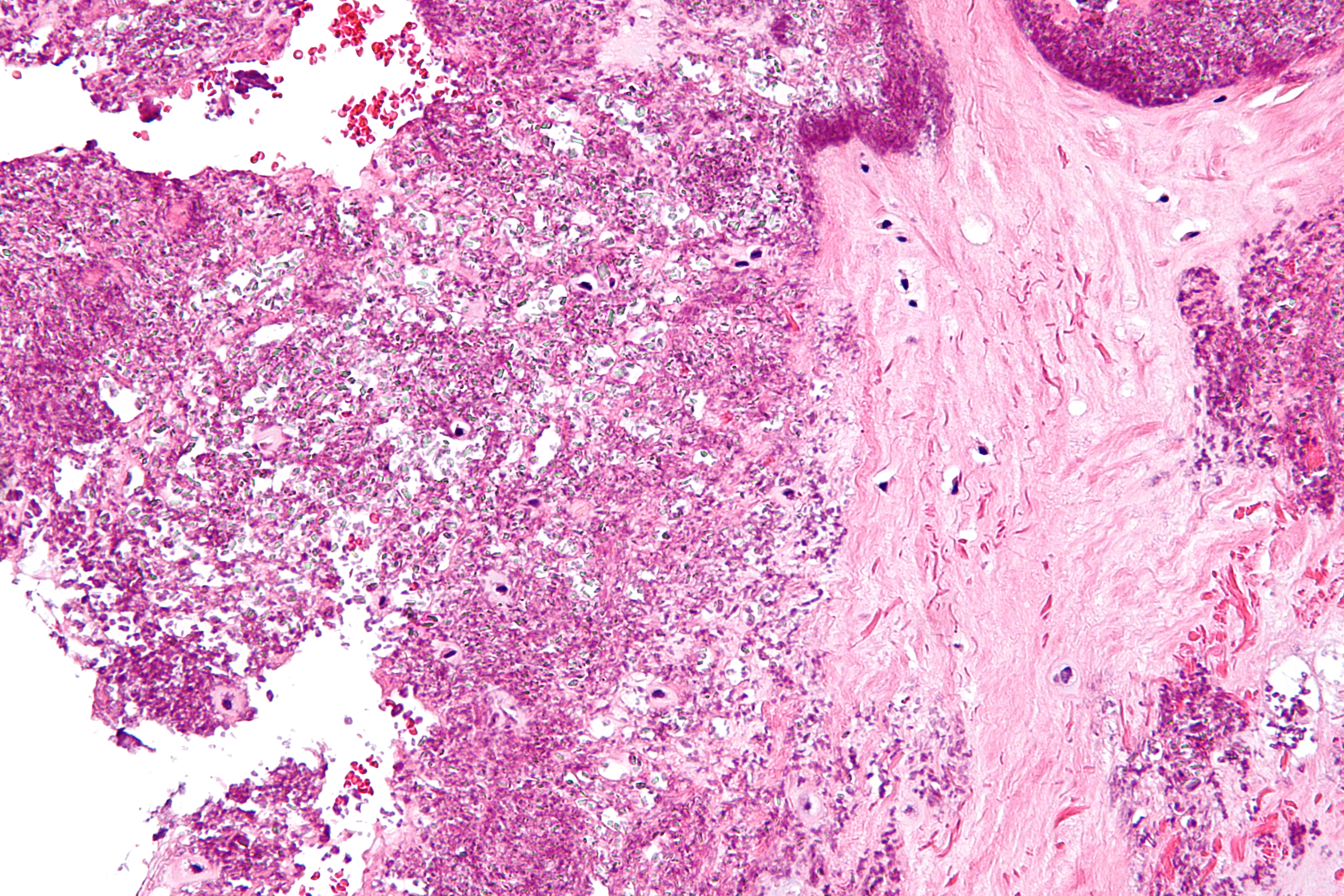
Deposição de pirofosfato de cálcio familiar
📋 Origem dos dados
Esta página agrega dados de fontes públicas e oficiais. Dados sobre cobertura no SUS (PCDT, CEAF) são verificados ativamente por agente proativo (ver badge no infobox). Demais dados têm atribuição de fonte + data da última sincronização — clique para abrir o original.
- Doença rara (ontologia)
- fonte: Orphanet
- Identificador unificado
- fonte: MONDO
- Genética mendeliana
- fonte: OMIM
- Codificação WHO/SUS
- fonte: WHO ICD-10 / DATASUS
- CID-11 (futuro)
- fonte: WHO ICD-11
- NIH/GARD
- fonte: GARD (NIH)
- Indexação biomédica
- fonte: MeSH (NLM)
- Dado público estruturado
- fonte: Wikidata
- Ensaios clínicos
- fonte: ClinicalTrials.gov

