O hemangioma cavernoso retiniano é um hamartoma vascular retiniano raro, benigno, geralmente unilateral, que na maioria dos casos é assintomático, mas em alguns pacientes pode apresentar visão turva ou moscas volantes e é caracterizado pela presença de vacúolos semelhantes a uvas.
Introdução
O que você precisa saber de cara
A malformação capilar da retina, ou hemangioma cavernoso da retina, é uma alteração benigna e rara nos vasos sanguíneos dentro do olho. Muitas pessoas não sentem nada, mas algumas podem notar visão turva ou pequenos pontos escuros se movendo, conhecidos como moscas volantes. O exame nos olhos costuma mostrar pequenas bolsinhas de sangue parecidas com cachos de uva na retina. A condição não tem um protocolo clínico próprio de tratamento pelo Ministério da Saúde, sendo acompanhada por médicos oftalmologistas na rede de saúde.
O hemangioma cavernoso retiniano é um hamartoma vascular retiniano raro, benigno, geralmente unilateral, que na maioria dos casos é assintomático, mas em alguns pacientes pode apresentar visão turva ou moscas volantes e é caracterizado pela presença de vacúolos semelhantes a uvas.
Escala de raridade
<1/50kMuito rara
1/20kRara
1/10kPouco freq.
1/5kIncomum
1/2k
Encontrou um erro ou informação desatualizada? Sugira uma correção →
Entender a doença
Do básico ao detalhe, leia no seu ritmo
Preparando trilha educativa...
Sinais e sintomas
O que aparece no corpo e com que frequência cada sintoma acontece
Características mais comuns
Os sintomas variam de pessoa para pessoa. Abaixo estão as 20 características clínicas mais associadas, ordenadas por frequência.
Linha do tempo da pesquisa
Encontrou um erro ou informação desatualizada? Sugira uma correção →
Genética e causas
O que está alterado no DNA e como passa nas famílias
Nenhum gene associado encontrado
Os dados genéticos desta condição ainda estão sendo catalogados.
Diagnóstico
Os sinais que médicos procuram e os exames que confirmam
Tratamento e manejo
Remédios, cuidados de apoio e o que precisa acompanhar
Onde tratar no SUS
Hospitais de referência no Brasil e o protocolo oficial do SUS (PCDT)
🇧🇷 Atendimento SUS — Malformação capilar da retina
Centros de Referência SUS
24 centros habilitados pelo SUS para Malformação capilar da retina
Centros para Malformação capilar da retina
Detalhes dos centros
Hospital Universitário Prof. Edgard Santos (HUPES)
R. Dr. Augusto Viana, s/n - Canela, Salvador - BA, 40110-060 · CNES 0003808
Serviço de Referência
Hospital Infantil Albert Sabin
R. Tertuliano Sales, 544 - Vila União, Fortaleza - CE, 60410-794 · CNES 2407876
Serviço de Referência
Hospital de Apoio de Brasília (HAB)
AENW 3 Lote A Setor Noroeste - Plano Piloto, Brasília - DF, 70684-831 · CNES 0010456
Serviço de Referência
Hospital Estadual Infantil e Maternidade Alzir Bernardino Alves (HIABA)
Av. Min. Salgado Filho, 918 - Soteco, Vila Velha - ES, 29106-010 · CNES 6631207
Serviço de Referência
Hospital das Clínicas da UFG
Rua 235 QD. 68 Lote Área, Nº 285, s/nº - Setor Leste Universitário, Goiânia - GO, 74605-050 · CNES 2338424
Serviço de Referência
Hospital Universitário da UFJF
R. Catulo Breviglieri, Bairro - s/n - Santa Catarina, Juiz de Fora - MG, 36036-110 · CNES 2297442
Atenção Especializada
Hospital das Clínicas da UFMG
Av. Prof. Alfredo Balena, 110 - Santa Efigênia, Belo Horizonte - MG, 30130-100 · CNES 2280167
Serviço de Referência
Hospital Universitário Julio Müller (HUJM)
R. Luis Philippe Pereira Leite, s/n - Alvorada, Cuiabá - MT, 78048-902 · CNES 2726092
Atenção Especializada
Hospital Universitário João de Barros Barreto
R. dos Mundurucus, 4487 - Guamá, Belém - PA, 66073-000 · CNES 2337878
Serviço de Referência
Hospital Universitário Lauro Wanderley (HULW)
R. Tabeliao Estanislau Eloy, 585 - Castelo Branco, João Pessoa - PB, 58050-585 · CNES 0002470
Atenção Especializada
Instituto de Medicina Integral Prof. Fernando Figueira (IMIP)
R. dos Coelhos, 300 - Boa Vista, Recife - PE, 50070-902 · CNES 0000647
Serviço de Referência
Hospital Pequeno Príncipe
R. Des. Motta, 1070 - Água Verde, Curitiba - PR, 80250-060 · CNES 3143805
Serviço de Referência
Hospital Universitário Regional de Maringá (HUM)
Av. Mandacaru, 1590 - Parque das Laranjeiras, Maringá - PR, 87083-240 · CNES 2216108
Atenção Especializada
Hospital de Clínicas da UFPR
R. Gen. Carneiro, 181 - Alto da Glória, Curitiba - PR, 80060-900 · CNES 2364980
Serviço de Referência
Hospital Universitário Pedro Ernesto (HUPE-UERJ)
Blvd. 28 de Setembro, 77 - Vila Isabel, Rio de Janeiro - RJ, 20551-030 · CNES 2280221
Serviço de Referência
Instituto Nacional de Saúde da Mulher, da Criança e do Adolescente Fernandes Figueira (IFF/Fiocruz)
Av. Rui Barbosa, 716 - Flamengo, Rio de Janeiro - RJ, 22250-020 · CNES 2269988
Serviço de Referência
Hospital São Lucas da PUCRS
Av. Ipiranga, 6690 - Jardim Botânico, Porto Alegre - RS, 90610-000 · CNES 2232928
Serviço de Referência
Hospital de Clínicas de Porto Alegre (HCPA)
Rua Ramiro Barcelos, 2350 Bloco A - Av. Protásio Alves, 211 - Bloco B e C - Santa Cecília, Porto Alegre - RS, 90035-903 · CNES 2237601
Serviço de Referência
Hospital Universitário da UFSC (HU-UFSC)
R. Profa. Maria Flora Pausewang - Trindade, Florianópolis - SC, 88036-800 · CNES 2560356
Serviço de Referência
Hospital das Clínicas da FMUSP
R. Dr. Ovídio Pires de Campos, 225 - Cerqueira César, São Paulo - SP, 05403-010 · CNES 2077485
Serviço de Referência
Hospital de Base de São José do Rio Preto
Av. Brg. Faria Lima, 5544 - Vila Sao Jose, São José do Rio Preto - SP, 15090-000 · CNES 2079798
Atenção Especializada
Hospital de Clínicas da UNICAMP
R. Vital Brasil, 251 - Cidade Universitária, Campinas - SP, 13083-888 · CNES 2748223
Serviço de Referência
Hospital de Clínicas de Ribeirão Preto (HCRP-USP)
R. Ten. Catão Roxo, 3900 - Vila Monte Alegre, Ribeirão Preto - SP, 14015-010 · CNES 2082187
Serviço de Referência
UNIFESP / Hospital São Paulo
R. Napoleão de Barros, 715 - Vila Clementino, São Paulo - SP, 04024-002 · CNES 2688689
Serviço de Referência
Dados de DATASUS/CNES, SBGM, ABNeuro e Ministério da Saúde. Sempre confirme a disponibilidade diretamente com o estabelecimento.
Pesquisa ativa
Ensaios clínicos abertos e novidades científicas recentes
Pesquisa e ensaios clínicos
Nenhum ensaio clínico registrado para esta condição.
Publicações mais relevantes
Mostrando amostra de 8 publicações de um total de 39
Retrospective study of photodynamic therapy for the GNA-Related Capillary Malformation spectrum of pediatric patients.
Vascular malformations caused by GNAQ/GNA11 somatic mutations are related to capillary malformations (CM), which include port-wine stains (PWS), and also include capillary malformation-related syndromes, such as Sturge-Weber syndrome (SWS), capillary malformation with overgrowth (CMO), diffuse capillary malformation with overgrowth (DCMO), and phakomatosis pigmentovascularis (PPV). These disorders are known as the GNA-Related Capillary malformation spectrum (GNARCMs). This spectrum presents a therapeutic challenge. This study aimed to evaluate the efficacy and safety of photodynamic therapy (PDT) for treating the GNARCMs of pediatric patients. The clinical manifestations of the pediatric GNARCMs patients were retrospectively analyzed, and the treatment data were assessed after undergoing PDT mediated with a combination of Hemoporfin and 532-nm light. For evaluation of improvement, photographs taken before and after photodynamic therapy were evaluated by three independent assessors blindly. Patient satisfaction was also used as a factor in the efficacy evaluation. Adverse events were recorded after treatment. We identified 25 pediatric patients in the study, including 11 patients of SWS, 8 patients of PPV, 5 patients of CMO, and 1 patient of DCMO. After an average of 1.64 sessions of PDT, based on the overall visual assessment, 72% of patients responded to treatment (with >25% color blanching), 48% of patients showed excellent or good levels of improvement (with >50% color blanching). Most adverse events were transient and self-limiting, except one patient of SWS, on the third day after PDT, the visual acuity of the eye on the non-treated side suddenly decreased, and the patient was diagnosed with retinal detachment, which was considered to be related to primary glaucoma rather than PDT. Focusing on the various clinical manifestations of the GNARCMs, after except contraindications, PDT can be selected for treatment of pediatric patients, and its effectiveness and safety are worthy of affirmation.
Expanding the Phenotype of STAMBP-Related Microcephaly-Capillary Malformation Syndrome.
Biallelic variants in the STAMBP gene are known to cause Microcephaly-capillary malformation syndrome (MICCAP syndrome). Here we report an 18-month-old female with a novel splice site variant, c.376-1G>A in intron-4, with the phenotype of a patient who presented to us with fetal onset growth retardation, developmental delay, drug-resistant seizures, multiple capillary malformations, dysmorphism, tone abnormalities, and distal skeletal and nail abnormalities. Functional studies by RNA analysis and quantitative polymerase chain reaction (qPCR) showed that the variant leads to loss of function. The clinical features noted in this child strongly overlapped with the phenotypes reported in the literature, except for absent dentition and retinal dystrophy-like findings on fundus examination. A total of 22 cases have been reported in the literature. We present a detailed description of an Indian child, expanding the clinical and molecular spectrum of STAMBP-related disease.
Subclinical Retinal Capillary Abnormalities in Juvenile Systemic Lupus Erythematosus without Ocular Involvement.
This study aimed to evaluate subclinical retinal microvascular changes with OCTA in juvenile systemic lupus erythematosus (JSLE) patients without ocular involvement. Ten eyes of 10 JSLE and 13 eyes of 13 age and sex-matched healthy controls (HCs) were enrolled. The superficial (SCP) and deep capillary plexus (DCP), FAZ parameters, the flow area of the outer retina, and choriocapillaris were evaluated using OCTA. All vessel density (VD) parameters in DCP were significantly lower in JSLE group compared to HCs. There was no significant difference between the groups in VD parameters of both SCP and ONH, FAZ, outer retina and choriocapillaris flow area. All DCP VD parameters showed a good ability to differentiate JSLE from HCs. OCTA could detect retinal vascular impairment in the deep macular region in JSLE patients with normal ocular examination. Furthermore, all DCP VD parameters have a good ability to discriminate JSLE from HCs.
Progressive retinal vessel malformation in a premature infant with Sturge-Weber syndrome: a case report and a literature review of ocular manifestations in Sturge-Weber syndrome.
Sturge-Weber syndrome is a disorder marked by a distinctive facial capillary malformation, neurological abnormalities, and ocular abnormalities such as glaucoma and choroidal hemangioma. We report a case of progressively formed retinal vessel malformation in a premature male infant with Sturge-Weber syndrome and retinopathy of prematurity, after treatment with intravitreal anti-vascular endothelial growth factor (VEGF). The baby was born at 30 weeks gestation with a nevus flammeus involving his left eyelids and maxillary area. On postmenstrual age week 39, he received intravitreal anti-VEGF. Diffuse choroidal hemangioma became evident at 40 weeks, with the classic "tomato catsup fundus" appearance. These clinical findings characterized Sturge-weber syndrome. He presented with posterior retinal vessel tortuosity and vein-to-vein anastomoses at 44 weeks. This is a rare case of documented progression of retinal vessel malformations in a patient with Sturge-Weber syndrome and retinopathy of prematurity.
Vascular findings in primarily affected and fellow eyes of middle-aged patients with Coats' disease using multimodal imaging.
To investigate the retinal vascular structure and capillary anomalies of affected and fellow eyes of patients with unilateral Coats' disease using multimodal imaging. Clinical investigation of both eyes of each patient with diagnosed Coats' disease using ultra-widefield (UWF) fundus imaging, including UWF fluorescein angiography (UWFFA), spectral domain optical coherence tomography (OCT) and optical coherence tomography angiography (OCT-A). We analysed 38 eyes of 19 patients with unilateral Coats' disease and found that all fellow eyes (19/19; 100%) revealed vascular alterations, detected by UWFFA, predominantly located in the temporal periphery. Thereby, 89% of the fellow eyes (17/19) presented capillary bed abnormalities, that did not exceed the capillary level; 58% (11/19) presented tortuous abnormalities and 26% (5/19) presented microaneurysmatic abnormalities, exceeding the capillary level. If primarily affected eyes presented central Coats' specific vascular abnormalities, fellow eyes revealed tortuous vascular abnormalities twice as often (78% (7/9) vs 40% (4/10); P=0.096). In primarily affected eyes, a tendency towards larger foveal avascular zones was revealed, compared to fellow eyes (0.28±0.16 mm2 vs 0.20±0.10 mm2; P=0.123). The use of modern multimodal imaging allows the detection of even subtle vascular changes in fellow eyes of patients with Coats' disease. Coats' disease appears to be a bilateral ocular disease with a predominant manifestation in one eye of the affected patients.
Publicações recentes
Ocular microvascular alterations in epileptic patients.
Optic disc and peripapillary tumors.
Association of Remnant Cholesterol With the Retinal Capillary Plexus.
Retinal Microvascular Features Assessed by Optical Coherence Tomography Angiography in Attention Deficit Hyperactivity Disorder.
Associations between retinal microvasculature and cognition in middle-aged adults with type 1 diabetes without overt neurological symptoms.
📚 EuropePMCmostrando 8
Retrospective study of photodynamic therapy for the GNA-Related Capillary Malformation spectrum of pediatric patients.
Photodiagnosis and photodynamic therapyExpanding the Phenotype of STAMBP-Related Microcephaly-Capillary Malformation Syndrome.
American journal of medical genetics. Part ASubclinical Retinal Capillary Abnormalities in Juvenile Systemic Lupus Erythematosus without Ocular Involvement.
Ocular immunology and inflammationProgressive retinal vessel malformation in a premature infant with Sturge-Weber syndrome: a case report and a literature review of ocular manifestations in Sturge-Weber syndrome.
BMC ophthalmologyVascular findings in primarily affected and fellow eyes of middle-aged patients with Coats' disease using multimodal imaging.
The British journal of ophthalmologyIntroduction to phacomatoses (neurocutaneous disorders) in childhood.
Child's nervous system : ChNS : official journal of the International Society for Pediatric NeurosurgeryTorpedo maculopathy: A primary choroidal capillary abnormality?
Indian journal of ophthalmologyRETINAL VASCULAR DEVELOPMENT WITH 0.312 MG INTRAVITREAL BEVACIZUMAB TO TREAT SEVERE POSTERIOR RETINOPATHY OF PREMATURITY: A Longitudinal Fluorescein Angiographic Study.
Retina (Philadelphia, Pa.)Associações
Organizações que acompanham esta doença — pra ter apoio e orientação
Ainda não temos associações cadastradas para Malformação capilar da retina.
É de uma associação que acompanha esta doença? Fale com a gente →
Doença com base genética
Um médico geneticista pode ajudar no diagnóstico de Malformação capilar da retina e no aconselhamento genético da família.
Doenças relacionadas
Doenças com sintomas parecidos — ajudam quem ainda está buscando diagnóstico
Perguntas frequentes
O que as famílias mais perguntam sobre esta doença — cada resposta com a fonte de onde saiu
A condição é um hamartoma vascular benigno que muitas vezes permanece estável e sem necessidade de intervenção. Não há tratamento curativo definitivo registrado na literatura médica oficial, priorizando-se o acompanhamento oftalmológico.
Referências
Fontes citadas no texto, publicações do grafo e bases de dados usadas neste verbete
10 publicações do grafo RarasNet (PubMed) · 5 bases de dados. Títulos, periódicos e PMIDs vêm direto da fonte, sem intermediação de IA.
Dados compilados pelo RarasNet a partir de fontes abertas (Orphanet, OMIM, MONDO, PubMed/EuropePMC, ClinicalTrials.gov, DATASUS, PCDT/MS). Este conteúdo é informativo e não substitui avaliação médica.
Citar este verbete
Raras. (s.d.). Malformação capilar da retina. Em Raras — Enciclopédia de Doenças Raras do Brasil. https://raras.org/doenca/malformacao-capilar-da-retina
Formato APA. Conteúdo sob CC BY 4.0 — reuso livre com atribuição.
Conteúdo mantido por Agente Raras · Médicos e pesquisadores podem colaborar
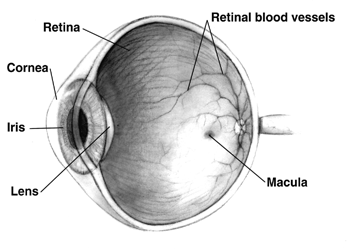
Malformação capilar da retina
📋 Origem dos dados
Esta página agrega dados de fontes públicas e oficiais. Dados sobre cobertura no SUS (PCDT, CEAF) são verificados ativamente por agente proativo (ver badge no infobox). Demais dados têm atribuição de fonte + data da última sincronização — clique para abrir o original.
- Doença rara (ontologia)
- fonte: Orphanet
- Identificador unificado
- fonte: MONDO
- Codificação WHO/SUS
- fonte: WHO ICD-10 / DATASUS
- CID-11 (futuro)
- fonte: WHO ICD-11
- NIH/GARD
- fonte: GARD (NIH)
- Dado público estruturado
- fonte: Wikidata

