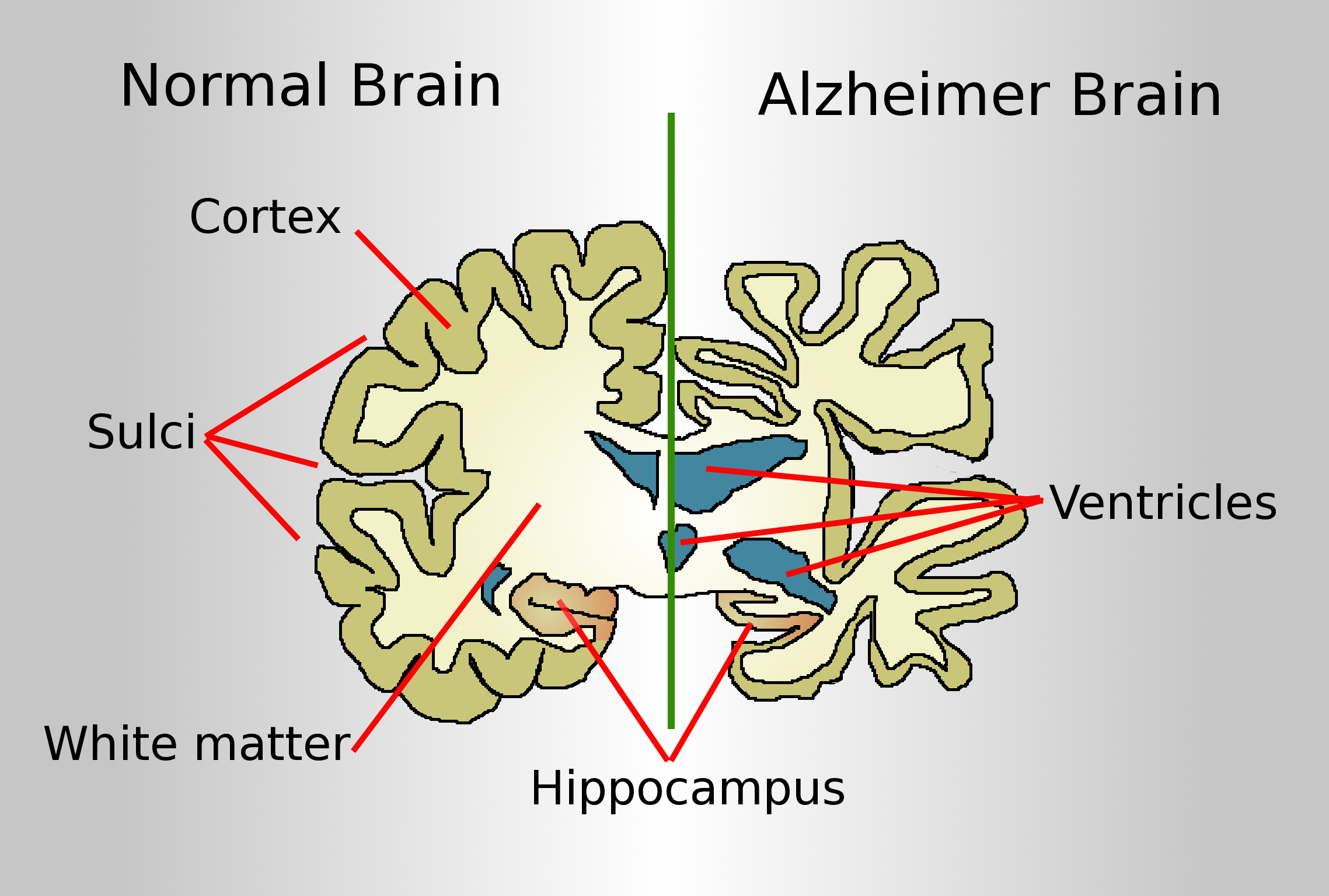
É uma doença cerebral que piora com o tempo (progressiva) e que se caracteriza pela degeneração (morte e perda de função) das células nervosas, os neurônios, em várias partes do cérebro. Isso resulta na perda de habilidades mentais, como a memória e a linguagem.
Introdução
O que você precisa saber de cara
É uma doença cerebral que piora com o tempo (progressiva) e que se caracteriza pela degeneração (morte e perda de função) das células nervosas, os neurônios, em várias partes do cérebro. Isso resulta na perda de habilidades mentais, como a memória e a linguagem.
Tem tratamento?
Encontrou um erro ou informação desatualizada? Sugira uma correção →
Entender a doença
Do básico ao detalhe, leia no seu ritmo
Preparando trilha educativa...
Sinais e sintomas
O que aparece no corpo e com que frequência cada sintoma acontece
Partes do corpo afetadas
+ 27 sintomas em outras categorias
Características mais comuns
Os sintomas variam de pessoa para pessoa. Abaixo estão as 53 características clínicas mais associadas, ordenadas por frequência.
Linha do tempo da pesquisa
Encontrou um erro ou informação desatualizada? Sugira uma correção →
Genética e causas
O que está alterado no DNA e como passa nas famílias
Genes associados
10 genes identificados com associação a esta condição.
Catalytic subunit of the gamma-secretase complex, an endoprotease complex that catalyzes the intramembrane cleavage of integral membrane proteins such as Notch receptors and APP (amyloid-beta precursor protein) (PubMed:10206644, PubMed:10545183, PubMed:10593990, PubMed:10811883, PubMed:10899933, PubMed:12679784, PubMed:12740439, PubMed:15274632, PubMed:20460383, PubMed:25043039, PubMed:26280335, PubMed:28269784, PubMed:30598546, PubMed:30630874). Requires the presence of the other members of the
Endoplasmic reticulumEndoplasmic reticulum membraneGolgi apparatus membraneCytoplasmic granuleCell membraneCell projection, growth coneEarly endosomeEarly endosome membraneCell projection, neuron projectionCell projection, axonSynapse
Alzheimer disease 3
A familial early-onset form of Alzheimer disease. Alzheimer disease is a neurodegenerative disorder characterized by progressive dementia, loss of cognitive abilities, and deposition of fibrillar amyloid proteins as intraneuronal neurofibrillary tangles, extracellular amyloid plaques and vascular amyloid deposits. The major constituents of these plaques are neurotoxic amyloid-beta protein 40 and amyloid-beta protein 42, that are produced by the proteolysis of the transmembrane APP protein. The cytotoxic C-terminal fragments (CTFs) and the caspase-cleaved products, such as C31, are also implicated in neuronal death.
Transmembrane metalloprotease which mediates the ectodomain shedding of a myriad of transmembrane proteins, including adhesion proteins, growth factor precursors and cytokines being essential for development and tissue homeostasis (PubMed:11786905, PubMed:12475894, PubMed:20592283, PubMed:24990881, PubMed:26686862, PubMed:28600292, PubMed:31792032). Associates with six members of the tetraspanin superfamily TspanC8 which regulate its exit from the endoplasmic reticulum and its substrate selectiv
Cell membraneGolgi apparatus membraneCytoplasmic vesicle, clathrin-coated vesicleCell projection, axonCell projection, dendriteCell junction, adherens junctionCytoplasm
Reticulate acropigmentation of Kitamura
A rare cutaneous pigmentation disorder characterized by reticulate, slightly depressed, sharply demarcated brown macules without hypopigmentation, affecting the dorsa of the hands and feet and appearing in the first or second decade of life. The macules gradually darken and extend to the proximal regions of the extremities. The manifestations tend to progress until middle age, after which progression of the eruptions stops. The pigmentary augmentation is found on the flexor aspects of the wrists, neck, patella and olecranon. Other features include breaks in the epidermal ridges on the palms and fingers, palmoplantar pits, occasionally plantar keratoderma, and partial alopecia.
Specifically cleaves the zymogen plasminogen to form the active enzyme plasmin
Secreted
Quebec platelet disorder
An autosomal dominant bleeding disorder due to a gain-of-function defect in fibrinolysis. Although affected individuals do not exhibit systemic fibrinolysis, they show delayed onset bleeding after challenge, such as surgery. The hallmark of the disorder is markedly increased PLAU levels within platelets, which causes intraplatelet plasmin generation and secondary degradation of alpha-granule proteins.
Part of the host defense system of polymorphonuclear leukocytes. It is responsible for microbicidal activity against a wide range of organisms. In the stimulated PMN, MPO catalyzes the production of hypohalous acids, primarily hypochlorous acid in physiologic situations, and other toxic intermediates that greatly enhance PMN microbicidal activity (PubMed:9922160). Mediates the proteolytic cleavage of alpha-1-microglobulin to form t-alpha-1-microglobulin, which potently inhibits oxidation of low-
Lysosome
Myeloperoxidase deficiency
A disorder characterized by decreased myeloperoxidase activity in neutrophils and monocytes that results in disseminated candidiasis.
Forms a receptor signaling complex with TYROBP which mediates signaling and cell activation following ligand binding (PubMed:10799849). Acts as a receptor for amyloid-beta protein 42, a cleavage product of the amyloid-beta precursor protein APP, and mediates its uptake and degradation by microglia (PubMed:27477018, PubMed:29518356). Binding to amyloid-beta 42 mediates microglial activation, proliferation, migration, apoptosis and expression of pro-inflammatory cytokines, such as IL6R and CCL3, a
Cell membraneSecreted
Polycystic lipomembranous osteodysplasia with sclerosing leukoencephalopathy 2
An autosomal recessive disease characterized by presenile frontal dementia with leukoencephalopathy and basal ganglia calcification. In most cases the disorder first manifests in early adulthood as pain and swelling in ankles and feet, followed by bone fractures. Neurologic symptoms manifest in the fourth decade of life as a frontal lobe syndrome with loss of judgment, euphoria, and disinhibition. Progressive decline in other cognitive domains begins to develop at about the same time. The disorder culminates in a profound dementia and death by age 50 years.
Channel-forming protein that forms part of the translocase of the outer mitochondrial membrane (TOM) complex essential for the recognition and translocation of cytosolically synthesized mitochondrial preproteins (PubMed:15644312, PubMed:31206022, PubMed:40080546). The TOM complex associates with the ion channel VDAC2 and PINK1 kinase at depolarized mitochondria, this interaction stabilizes PINK1 at the outer mitochondrial membrane and triggers downstream mitophagy by the recruitment of the E3 ub
Mitochondrion outer membrane
Sorting receptor that directs several proteins to their correct location within the cell (Probable). Along with AP-1 complex, involved Golgi apparatus - endosome sorting (PubMed:17646382). Sorting receptor for APP, regulating its intracellular trafficking and processing into amyloidogenic-beta peptides. Retains APP in the trans-Golgi network, hence preventing its transit through late endosomes where amyloid beta peptides Abeta40 and Abeta42 are generated (PubMed:16174740, PubMed:16407538, PubMed
Golgi apparatus membraneGolgi apparatus, trans-Golgi network membraneEndosome membraneEarly endosome membraneRecycling endosome membraneEndoplasmic reticulum membraneEndosome, multivesicular body membraneCell membraneCytoplasmic vesicle, secretory vesicle membraneSecreted
Alzheimer disease
Alzheimer disease is a neurodegenerative disorder characterized by progressive dementia, loss of cognitive abilities, and deposition of fibrillar amyloid proteins as intraneuronal neurofibrillary tangles, extracellular amyloid plaques and vascular amyloid deposits. The major constituents of these plaques are neurotoxic amyloid-beta protein 40 and amyloid-beta protein 42, that are produced by the proteolysis of the transmembrane APP protein. The cytotoxic C-terminal fragments (CTFs) and the caspase-cleaved products, such as C31, are also implicated in neuronal death.
Functions as a cell surface receptor and performs physiological functions on the surface of neurons relevant to neurite growth, neuronal adhesion and axonogenesis. Interaction between APP molecules on neighboring cells promotes synaptogenesis (PubMed:25122912). Involved in cell mobility and transcription regulation through protein-protein interactions. Can promote transcription activation through binding to APBB1-KAT5 and inhibits Notch signaling through interaction with Numb. Couples to apoptos
Cell membraneMembranePerikaryonCell projection, growth coneMembrane, clathrin-coated pitEarly endosomeCytoplasmic vesicleEndoplasmic reticulumGolgi apparatusSecretedCell surfaceNucleusCytoplasm
Alzheimer disease 1
A form of Alzheimer disease, a neurodegenerative disorder characterized by progressive dementia, loss of cognitive abilities, and deposition of fibrillar amyloid proteins as intraneuronal neurofibrillary tangles, extracellular amyloid plaques and vascular amyloid deposits. The major constituents of these plaques are neurotoxic amyloid-beta protein 40 and amyloid-beta protein 42, that are produced by the proteolysis of the transmembrane APP protein. The cytotoxic C-terminal fragments (CTFs) and the caspase-cleaved products, such as C31, are also implicated in neuronal death. It can be associated with cerebral amyloid angiopathy. Alzheimer disease can be associated with cerebral amyloid angiopathy.
Catalytic subunit of the gamma-secretase complex, an endoprotease complex that catalyzes the intramembrane cleavage of integral membrane proteins such as Notch receptors and APP (amyloid-beta precursor protein) (PubMed:10497236, PubMed:10652302, PubMed:16752394, PubMed:27293189, PubMed:36272978). Selectively cleaves late endosomal/lysosomal localized substrates and generates the prominent pool of intracellular amyloid beta that contains longer amyloid beta (PubMed:27293189). The holoprotein func
Endoplasmic reticulum membraneGolgi apparatus membraneLate endosome membraneLysosome membrane
Alzheimer disease 4
A familial early-onset form of Alzheimer disease. Alzheimer disease is a neurodegenerative disorder characterized by progressive dementia, loss of cognitive abilities, and deposition of fibrillar amyloid proteins as intraneuronal neurofibrillary tangles, extracellular amyloid plaques and vascular amyloid deposits. The major constituents of these plaques are neurotoxic amyloid-beta protein 40 and amyloid-beta protein 42, that are produced by the proteolysis of the transmembrane APP protein. The cytotoxic C-terminal fragments (CTFs) and the caspase-cleaved products, such as C31, are also implicated in neuronal death.
APOE is an apolipoprotein, a protein associating with lipid particles, that mainly functions in lipoprotein-mediated lipid transport between organs via the plasma and interstitial fluids (PubMed:14754908, PubMed:1911868, PubMed:6860692). APOE is a core component of plasma lipoproteins and is involved in their production, conversion and clearance (PubMed:14754908, PubMed:1911868, PubMed:1917954, PubMed:23620513, PubMed:2762297, PubMed:6860692, PubMed:9395455). Apolipoproteins are amphipathic mole
SecretedSecreted, extracellular spaceSecreted, extracellular space, extracellular matrixExtracellular vesicleEndosome, multivesicular body
Hyperlipoproteinemia 3
A disorder characterized by the accumulation of intermediate-density lipoprotein particles (IDL or broad-beta-lipoprotein) rich in cholesterol. Clinical features include xanthomas, yellowish lipid deposits in the palmar crease, or less specific on tendons and on elbows. The disorder rarely manifests before the third decade in men. In women, it is usually expressed only after the menopause.
Medicamentos e terapias
Mecanismo: Acetylcholinesterase inhibitor
Mecanismo: Acetylcholinesterase inhibitor
Mecanismo: Glutamate [NMDA] receptor negative allosteric modulator
Mecanismo: Amyloid-beta A4 protein inhibitor
Mecanismo: Cholinesterases; ACHE & BCHE inhibitor
Variantes genéticas (ClinVar)
243 variantes patogênicas registradas no ClinVar.
Vias biológicas (Reactome)
51 vias biológicas associadas aos genes desta condição.
Diagnóstico
Os sinais que médicos procuram e os exames que confirmam
Tratamento e manejo
Remédios, cuidados de apoio e o que precisa acompanhar
Onde tratar no SUS
Hospitais de referência no Brasil e o protocolo oficial do SUS (PCDT)
🇧🇷 Atendimento SUS — NÃO RARA NA EUROPA: Doença de Alzheimer
Selecione um estado ou use sua localização para ver resultados.
Dados de DATASUS/CNES, SBGM, ABNeuro e Ministério da Saúde. Sempre confirme a disponibilidade diretamente com o estabelecimento.
Pesquisa ativa
Ensaios clínicos abertos e novidades científicas recentes
Pesquisa e ensaios clínicos
Nenhum ensaio clínico registrado para esta condição.
Publicações mais relevantes
Cross-sectional and longitudinal associations between testosterone and cognitive performance in older people: results of the Berlin Aging Study II (BASE-II).
Age-related declines in gonadal and cognitive function are commonly observed, but their relationship is still not completely understood. 615 men and 607 women from the Berlin Aging Study II aged ≥60 years were analyzed at baseline, of which 308 men and 297 women were re-assessed on average 7.2 years later. Total testosterone (TT) was measured, and free testosterone was estimated using the Vermeulen (FTV), Sartorius (FTS), and Free Androgen Index (FAI) equations. Cognitive performance was assessed using the Digit Symbol Substitution Test (DSST) and latent factor scores established from the Consortium to Establish a Registry for Alzheimer's Disease (CERAD)-Plus test battery representing 4 cognitive domains (verbal memory, visuo-construction, executive functions and processing speed, and verbal fluency). Associations between testosterone measures and cognitive function were analyzed using linear regression. Cross-sectional analyses showed negative associations in women between visuo-construction and TT (β = -.215, p = .010) and FTS (β = -.013, p = .03) as well as between verbal fluency and TT (β = -.189, p = .006), FAI (β = -.062, p = .03), FTS (β = -.013, p = .008), and FTV (β = -.012, p = .01). In men, FAI was positively associated with DSST performance (β = .103, p = .003). Longitudinally, higher FAI and FTV at baseline were associated with a less steep decline in DSST performance in men (β = .066 and .007, both p = .03). In women, declines in FAI and DSST scores were positively associated (β = 1.794, p = .03). Our findings suggest sex-specific associations between testosterone levels and cognitive function in older adults. Higher testosterone levels were predominantly associated with better DSST performance in men, but with poorer visuo-construction and verbal fluency in women.
Global burden of lower respiratory infections and aetiologies, 1990-2023: a systematic analysis for the Global Burden of Disease Study 2023.
Lower respiratory infections (LRIs) remain the world's leading infectious cause of death. This analysis from the Global Burden of Diseases, Injuries, and Risk Factors Study (GBD) 2023 provides global, regional, and national estimates of LRI incidence, mortality, and disability-adjusted life-years (DALYs), with attribution to 26 pathogens, including 11 newly modelled pathogens, across 204 countries and territories from 1990 to 2023. With new data and revised modelling techniques, these estimates serve as an update and expansion to GBD 2021. Through these estimates, we also aimed to assess progress towards the 2025 Global Action Plan for the Prevention and Control of Pneumonia and Diarrhoea (GAPPD) target for pneumonia mortality in children younger than 5 years. Mortality from LRIs, defined as physician-diagnosed pneumonia or bronchiolitis, was estimated using the Cause of Death Ensemble model with data from vital registration, verbal autopsy, surveillance, and minimally invasive tissue sampling. The Bayesian meta-regression tool DisMod-MR 2.1 was used to model overall morbidity due to LRIs. DALYs were calculated as the sum of years of life lost (YLLs) and years lived with disability (YLDs) for all locations, years, age groups, and sexes. We modelled pathogen-specific case-fatality ratios (CFRs) for each age group and location using splined binomial regression to create internally consistent estimates of incidence and mortality proportions attributable to viral, fungal, parasitic, and bacterial pathogens. Progress was assessed towards the GAPPD target of less than three deaths from pneumonia per 1000 livebirths, which is roughly equivalent to a mortality rate of less than 60 deaths per 100 000 children younger than 5 years. In 2023, LRIs were responsible for 2·50 million (95% uncertainty interval [UI] 2·24-2·81) deaths and 98·7 million (87·7-112) DALYs, with children younger than 5 years and adults aged 70 years and older carrying the highest burden. LRI mortality in children younger than 5 years fell by 33·4% (10·4-47·4) since 2010, with a global mortality rate of 94·8 (75·6-116·4) per 100 000 person-years in 2023. Among adults aged 70 years and older, the burden remained substantial with only marginal declines since 2010. A mortality rate of less than 60 deaths per 100 000 for children younger than 5 years was met by 129 of the 204 modelled countries in 2023. At a super-regional level, sub-Saharan Africa had an aggregate mortality rate in children younger than 5 years (hereafter referred to as under-5 mortality rate) furthest from the GAPPD target. Streptococcus pneumoniae continued to account for the largest number of LRI deaths globally (634 000 [95% UI 565 000-721 000] deaths or 25·3% [24·5-26·1] of all LRI deaths), followed by Staphylococcus aureus (271 000 [243 000-298 000] deaths or 10·9% [10·3-11·3]), and Klebsiella pneumoniae (228 000 [204 000-261 000] deaths or 9·1% [8·8-9·5]). Among pathogens newly modelled in this study, non-tuberculous mycobacteria (responsible for 177 000 [95% UI 155 000-201 000] deaths) and Aspergillus spp (responsible for 67 800 [59 900-75 900] deaths) emerged as important contributors. Altogether, the 11 newly modelled pathogens accounted for approximately 22% of LRI deaths. This comprehensive analysis underscores both the gains achieved through vaccination and the challenges that remain in controlling the LRI burden globally. Furthermore, it demonstrates persistent disparities in disease burden, with the highest mortality rates concentrated in countries in sub-Saharan Africa. Globally, as well as in these high-burden locations, the under-5 LRI mortality rate remains well above the GAPPD target. Progress towards this target requires equitable access to vaccines and preventive therapies-including newer interventions such as respiratory syncytial virus monoclonal antibodies-and health systems capable of early diagnosis and treatment. Expanding surveillance of emerging pathogens, strengthening adult immunisation programmes, and combating vaccine hesitancy are also crucial. As the global population ages, the dual challenge of sustaining gains in child survival while addressing the rising vulnerability in older adults will shape future pneumonia control strategies. Gates Foundation.
Deep Learning Modeling to Differentiate Multiple Sclerosis From MOG Antibody-Associated Disease.
Multiple sclerosis (MS) is common in adults while myelin oligodendrocyte glycoprotein antibody-associated disease (MOGAD) is rare. Our previous machine-learning algorithm, using clinical variables, ≤6 brain lesions, and no Dawson fingers, achieved 79% accuracy, 78% sensitivity, and 80% specificity in distinguishing MOGAD from MS but lacked validation. The aim of this study was to (1) evaluate the clinical/MRI algorithm for distinguishing MS from MOGAD, (2) develop a deep learning (DL) model, (3) assess the benefit of combining both, and (4) identify key differentiators using probability attention maps (PAMs). This multicenter, retrospective, cross-sectional MAGNIMS study included scans from 19 centers. Inclusion criteria were as follows: adults with non-acute MS and MOGAD, with high-quality T2-fluid-attenuated inversion recovery and T1-weighted scans. Brain scans were scored by 2 readers to assess the performance of the clinical/MRI algorithm on the validation data set. A DL-based classifier using a ResNet-10 convolutional neural network was developed and tested on an independent validation data set. PAMs were generated by averaging correctly classified attention maps from both groups, identifying key differentiating regions. We included 406 MRI scans (218 with relapsing remitting MS [RRMS], mean age: 39 years ±11, 69% F; 188 with MOGAD, age: 41 years ±14, 61% F), split into 2 data sets: a training/testing set (n = 265: 150 with RRMS, age: 39 years ±10, 72% F; 115 with MOGAD, age: 42 years ±13, 61% F) and an independent validation set (n = 141: 68 with RRMS, age: 40 years ±14, 65% F; 73 with MOGAD, age: 40 years ±15, 63% F). The clinical/MRI algorithm predicted RRMS over MOGAD with 75% accuracy (95% CI 67-82), 96% sensitivity (95% CI 88-99), and specificity 56% (95% CI 44-68) in the validation cohort. The DL model achieved 77% accuracy (95% CI 64-89), 73% sensitivity (95% CI 57-89), and 83% specificity (95% CI 65-96) in the training/testing cohort, and 70% accuracy (95% CI 63-77), 67% sensitivity (95% CI 55-79), and 73% specificity (95% CI 61-83) in the validation cohort without retraining. When combined, the classifiers reached 86% accuracy (95% CI 81-92), 84% sensitivity (95% CI 75-92), and 89% specificity (95% CI 81-96). PAMs identified key region volumes: corpus callosum (1872 mm3), left precentral gyrus (341 mm3), right thalamus (193 mm3), and right cingulate cortex (186 mm3) for identifying RRMS and brainstem (629 mm3), hippocampus (234 mm3), and parahippocampal gyrus (147 mm3) for identifying MOGAD. Both classifiers effectively distinguished RRMS from MOGAD. The clinical/MRI model showed higher sensitivity while the DL model offered higher specificity, suggesting complementary roles. Their combination improved diagnostic accuracy, and PAMs revealed distinct damage patterns. Future prospective studies should validate these models in diverse, real-world settings. This study provides Class III evidence that both a clinical/MRI algorithm and an MRI-based DL model accurately distinguish RRMS from MOGAD.
Characterising acute and chronic care needs: insights from the Global Burden of Disease Study 2019.
Chronic care manages long-term, progressive conditions, while acute care addresses short-term conditions. Chronic conditions increasingly strain health systems, which are often unprepared for these demands. This study examines the burden of conditions requiring acute versus chronic care, including sequelae. Conditions and sequelae from the Global Burden of Diseases Study 2019 were classified into acute or chronic care categories. Data were analysed by age, sex, and socio-demographic index, presenting total numbers and contributions to burden metrics such as Disability-Adjusted Life Years (DALYs), Years Lived with Disability (YLD), and Years of Life Lost (YLL). Approximately 68% of DALYs were attributed to chronic care, while 27% were due to acute care. Chronic care needs increased with age, representing 86% of YLDs and 71% of YLLs, and accounting for 93% of YLDs from sequelae. These findings highlight that chronic care needs far exceed acute care needs globally, necessitating health systems to adapt accordingly.
Advancing Personalized Medicine in Alzheimer's Disease: Liquid Biopsy Epigenomics Unveil APOE ε4-Linked Methylation Signatures.
Recent studies show that patients with Alzheimer's disease (AD) harbor specific methylation marks in the brain that, if accessible, could be used as epigenetic biomarkers. Liquid biopsy enables the study of circulating cell-free DNA (cfDNA) fragments originated from dead cells, including neurons affected by neurodegenerative processes. Here, we isolated and epigenetically characterized plasma cfDNA from 35 patients with AD and 35 cognitively healthy controls by using the Infinium® MethylationEPIC BeadChip array. Bioinformatics analysis was performed to identify differential methylation positions (DMPs) and regions (DMRs), including APOE ε4 genotype stratified analysis. Plasma pTau181 (Simoa) and cerebrospinal fluid (CSF) core biomarkers (Fujirebio) were also measured and correlated with differential methylation marks. Validation was performed with bisulfite pyrosequencing and bisulfite cloning sequencing. Epigenome-wide cfDNA analysis identified 102 DMPs associated with AD status. Most DMPs correlated with clinical cognitive and functional tests including 60% for Mini-Mental State Examination (MMSE) and 80% for Global Deterioration Scale (GDS), and with AD blood and CSF biomarkers. In silico functional analysis connected 30 DMPs to neurological processes, identifying key regulators such as SPTBN4 and APOE genes. Several DMRs were annotated to genes previously reported to harbor epigenetic brain changes in AD (HKR1, ZNF154, HOXA5, TRIM40, ATG16L2, ADAMST2) and were linked to APOE ε4 genotypes. Notably, a DMR in the HKR1 gene, previously shown to be hypermethylated in the AD hippocampus, was validated in cfDNA from an orthogonal perspective. These results support the feasibility of studying cfDNA to identify potential epigenetic biomarkers in AD. Thus, liquid biopsy could improve non-invasive AD diagnosis and aid personalized medicine by detecting epigenetic brain markers in blood.
Publicações recentes
[Anesthesia and Alzheimer disease - Current perceptions].
📖 RevisãoClinical and autonomic profile of patients with Alzheimer's disease and mixed dementia patients.
📚 EuropePMCmostrando 88
Cross-sectional and longitudinal associations between testosterone and cognitive performance in older people: results of the Berlin Aging Study II (BASE-II).
The journals of gerontology. Series A, Biological sciences and medical sciencesGlobal burden of lower respiratory infections and aetiologies, 1990-2023: a systematic analysis for the Global Burden of Disease Study 2023.
The Lancet. Infectious diseasesEtiological diagnosis of late-onset epilepsy: A key priority for Italian epileptologists - Insights from a LICE survey.
Epilepsia openDeep Learning Modeling to Differentiate Multiple Sclerosis From MOG Antibody-Associated Disease.
NeurologyThe Down Alzheimer Barcelona Neuroimaging Initiative (DABNI) and its contributions to understanding Alzheimer's disease in Down syndrome: A decade of discovery.
Alzheimer's & dementia : the journal of the Alzheimer's AssociationVortioxetine in the routine management of major depressive disorder: an analysis of European automated healthcare databases.
Current medical research and opinionCharacterising acute and chronic care needs: insights from the Global Burden of Disease Study 2019.
Nature communicationsAdvancing Personalized Medicine in Alzheimer's Disease: Liquid Biopsy Epigenomics Unveil APOE ε4-Linked Methylation Signatures.
International journal of molecular sciencesExome sequencing of a Portuguese cohort of early-onset Alzheimer's disease implicates the X-linked lysosomal gene GLA.
Scientific reportsIdentification of GGC Repeat Expansions in ZFHX3 Among Chilean Movement Disorder Patients.
medRxiv : the preprint server for health sciencesComprehensive analysis of SLC17A5 variants in large European cohorts reveals no association with Parkinson's disease risk.
Parkinsonism & related disordersApplying machine learning to high-dimensional proteomics datasets for the identification of Alzheimer's disease biomarkers.
Fluids and barriers of the CNSReliable change indices for the Italian version of the Montreal Cognitive Assessment (MoCA) in non-demented Parkinson's disease patients.
BMC neurologyCancer incidence following non-neoplastic medical conditions: a prospective population-based cohort study.
Acta oncologica (Stockholm, Sweden)Clinical usefulness of the Verbal Fluency Index (VFI) in amyotrophic lateral sclerosis.
Neurological sciences : official journal of the Italian Neurological Society and of the Italian Society of Clinical NeurophysiologyNovel risk loci for COVID-19 hospitalization among admixed American populations.
eLifeAssociations of sugar intake, high-sugar dietary pattern, and the risk of dementia: a prospective cohort study of 210,832 participants.
BMC medicineAir pollution exposure and mortality from neurodegenerative diseases in the Netherlands: A population-based cohort study.
Environmental researchExtended genome-wide association study employing the African genome resources panel identifies novel susceptibility loci for Alzheimer's disease in individuals of African ancestry.
Alzheimer's & dementia : the journal of the Alzheimer's AssociationAssociation between household size and risk of incident dementia in the UK Biobank study.
Scientific reportsThe impact of maternal smoking during pregnancy and the age of smoking initiation on incident dementia: A prospective cohort study.
Alzheimer's & dementia : the journal of the Alzheimer's AssociationClinical validity of the Italian adaptation of the Uniform Data Set Neuropsychological Test Battery (I-UDSNB) in Mild Cognitive Impairment and Alzheimer's Disease.
Alzheimer's research & therapyCortical microinfarcts in adults with Down syndrome assessed with 3T-MRI.
Alzheimer's & dementia : the journal of the Alzheimer's AssociationMAPT H2 haplotype and risk of Pick's disease in the Pick's disease International Consortium: a genetic association study.
The Lancet. NeurologyGlobal burden of 288 causes of death and life expectancy decomposition in 204 countries and territories and 811 subnational locations, 1990-2021: a systematic analysis for the Global Burden of Disease Study 2021.
Lancet (London, England)A systematic review of progranulin concentrations in biofluids in over 7,000 people-assessing the pathogenicity of GRN mutations and other influencing factors.
Alzheimer's research & therapyCharacterization of APOE Christchurch carriers in 455,306 UK Biobank participants.
Molecular neurodegenerationComprehensive genetic screening of early-onset dementia patients in an Austrian cohort-suggesting new disease-contributing genes.
Human genomicsA global view of the genetic basis of Alzheimer disease.
Nature reviews. NeurologyTREM2 R47H variant and risk for Alzheimer's disease: assessment in a Greek population and updated meta-analysis.
The International journal of neuroscienceEffect of RNS60 in amyotrophic lateral sclerosis: a phase II multicentre, randomized, double-blind, placebo-controlled trial.
European journal of neurologyTREM2 coding variants in Slovak Alzheimer's disease patients.
Journal of integrative neuroscienceUsing machine learning to predict COVID-19 infection and severity risk among 4510 aged adults: a UK Biobank cohort study.
Scientific reportsDiagnostic Accuracy of Magnetic Resonance Imaging Measures of Brain Atrophy Across the Spectrum of Progressive Supranuclear Palsy and Corticobasal Degeneration.
JAMA network openThe Swedish dilemma - the almost exclusive use of APPswe-based mouse models impedes adequate evaluation of alternative β-secretases.
Biochimica et biophysica acta. Molecular cell researchRIC3 variants are not associated with Parkinson's disease in large European, Latin American, or East Asian cohorts.
Neurobiology of agingWorld regional differences in outcomes for patients with peripheral artery disease: Insights from the EUCLID trial.
Vascular medicine (London, England)FRONTotemporal dementia Incidence European Research Study-FRONTIERS: Rationale and design.
Alzheimer's & dementia : the journal of the Alzheimer's AssociationFamily-based exome sequencing identifies RBM45 as a possible candidate gene for frontotemporal dementia and amyotrophic lateral sclerosis.
Neurobiology of diseaseNovel Rare SORL1 Variants in Early-Onset Dementia.
Journal of Alzheimer's disease : JADAn expanded set of genome-wide association studies of brain imaging phenotypes in UK Biobank.
Nature neuroscienceA Particular SORL1 Micro-haplotype May Prevent Severe Liver Disease in a French Cohort of Alpha 1-Antitrypsin-deficient Children.
Journal of pediatric gastroenterology and nutritionCurrent Clinical Applications of In Vivo Gene Therapy with AAVs.
Molecular therapy : the journal of the American Society of Gene TherapyEpigenetic profiling of Italian patients identified methylation sites associated with hereditary transthyretin amyloidosis.
Clinical epigeneticsServices for people with young onset dementia: The 'Angela' project national UK survey of service use and satisfaction.
International journal of geriatric psychiatryAPOE and dementia - resequencing and genotyping in 105,597 individuals.
Alzheimer's & dementia : the journal of the Alzheimer's AssociationChromobacterium violaceum bacteraemia: a new entity in Switzerland.
Swiss medical weeklyScreening of dementia genes by whole-exome sequencing in Spanish patients with early-onset dementia: likely pathogenic, uncertain significance and risk variants.
Neurobiology of agingPLCG2 protective variant p.P522R modulates tau pathology and disease progression in patients with mild cognitive impairment.
Acta neuropathologicaTreatment Patterns of Patients with All-Cause Dementia in Russia.
Journal of Alzheimer's disease reportsHow many patients are eligible for disease-modifying treatment in Alzheimer's disease? A French national observational study over 5 years.
BMJ openLRP10 variants in Parkinson's disease and dementia with Lewy bodies in the South-West of the Netherlands.
Parkinsonism & related disordersPrevalence and determinants of subjective cognitive decline in a representative Greek elderly population.
International journal of geriatric psychiatryMeta-analysis of up to 622,409 individuals identifies 40 novel smoking behaviour associated genetic loci.
Molecular psychiatryEIF2AK3 variants in Dutch patients with Alzheimer's disease.
Neurobiology of agingExome sequencing in an Italian family with Alzheimer's disease points to a role for seizure-related gene 6 (SEZ6) rare variant R615H.
Alzheimer's research & therapyThree VCP Mutations in Patients with Frontotemporal Dementia.
Journal of Alzheimer's disease : JADA rare loss-of-function variant of ADAM17 is associated with late-onset familial Alzheimer disease.
Molecular psychiatryThe diagnosis, burden and prognosis of dementia: A record-linkage cohort study in England.
PloS oneLRP10 genetic variants in familial Parkinson's disease and dementia with Lewy bodies: a genome-wide linkage and sequencing study.
The Lancet. NeurologyGenetic screening in early-onset dementia patients with unclear phenotype: relevance for clinical diagnosis.
Neurobiology of agingPotential genetic modifiers of disease risk and age at onset in patients with frontotemporal lobar degeneration and GRN mutations: a genome-wide association study.
The Lancet. NeurologyOlfactory Function is Associated with Cognitive Performance: Results of the Heinz Nixdorf Recall Study.
Journal of Alzheimer's disease : JADRare nonsynonymous variants in SORT1 are associated with increased risk for frontotemporal dementia.
Neurobiology of agingIdentification of seven novel loci associated with amino acid levels using single-variant and gene-based tests in 8545 Finnish men from the METSIM study.
Human molecular geneticsSORL1 Variants in Familial Alzheimer's Disease.
Journal of Alzheimer's disease : JADCommon and rare TBK1 variants in early-onset Alzheimer disease in a European cohort.
Neurobiology of agingThe Report of p.Val717Phe Mutation in the APP Gene in a Hungarian Family With Alzheimer Disease: A Phenomenological Study.
Alzheimer disease and associated disordersAdditive Role of a Potentially Reversible Cognitive Frailty Model and Inflammatory State on the Risk of Disability: The Italian Longitudinal Study on Aging.
The American journal of geriatric psychiatry : official journal of the American Association for Geriatric PsychiatryAmygdala α-Synuclein Pathology in the Population-Based Vantaa 85+ Study.
Journal of Alzheimer's disease : JADInvestigating the role of ALS genes CHCHD10 and TUBA4A in Belgian FTD-ALS spectrum patients.
Neurobiology of agingNeurological manifestations of autosomal dominant familial Alzheimer's disease: a comparison of the published literature with the Dominantly Inherited Alzheimer Network observational study (DIAN-OBS).
The Lancet. NeurologyA Novel Splice-Acceptor Site Mutation in GRN (c.709-2 A>T) Causes Frontotemporal Dementia Spectrum in a Large Family from Southern Italy.
Journal of Alzheimer's disease : JADFactors associated with caregiver burden: comparative study between Brazilian and Spanish caregivers of patients with Alzheimer's disease (AD).
International psychogeriatrics267 Spanish Exomes Reveal Population-Specific Differences in Disease-Related Genetic Variation.
Molecular biology and evolutionA Longitudinal Study of Transitions Between Informal and Formal Care in Alzheimer Disease Using Multistate Models in the European ICTUS Cohort.
Journal of the American Medical Directors AssociationInvestigating the role of filamin C in Belgian patients with frontotemporal dementia linked to GRN deficiency in FTLD-TDP brains.
Acta neuropathologica communicationsPilot whole-exome sequencing of a German early-onset Alzheimer's disease cohort reveals a substantial frequency of PSEN2 variants.
Neurobiology of agingMAPT H1 Haplotype is Associated with Late-Onset Alzheimer's Disease Risk in APOEɛ4 Noncarriers: Results from the Dementia Genetics Spanish Consortium.
Journal of Alzheimer's disease : JADRare Variants in PLD3 Do Not Affect Risk for Early-Onset Alzheimer Disease in a European Consortium Cohort.
Human mutationConvergent Genetic and Expression Datasets Highlight TREM2 in Parkinson's Disease Susceptibility.
Molecular neurobiologySORL1 rare variants: a major risk factor for familial early-onset Alzheimer's disease.
Molecular psychiatryReduced secreted clusterin as a mechanism for Alzheimer-associated CLU mutations.
Molecular neurodegenerationAnalysis of the CHCHD10 gene in patients with frontotemporal dementia and amyotrophic lateral sclerosis from Spain.
Brain : a journal of neurologyMutations in ABCA7 in a Belgian cohort of Alzheimer's disease patients: a targeted resequencing study.
The Lancet. NeurologyLoss-of-function variants in ABCA7 confer risk of Alzheimer's disease.
Nature geneticsGenetic variability in SQSTM1 and risk of early-onset Alzheimer dementia: a European early-onset dementia consortium study.
Neurobiology of agingTREM2 R47H variant and risk of essential tremor: a cross-sectional international multicenter study.
Parkinsonism & related disordersAssociações
Organizações que acompanham esta doença — pra ter apoio e orientação
Ainda não temos associações cadastradas para NÃO RARA NA EUROPA: Doença de Alzheimer.
É de uma associação que acompanha esta doença? Fale com a gente →
Comunidades
Grupos ativos de quem convive com esta doença aqui no Raras
Ainda não existe comunidade no Raras para NÃO RARA NA EUROPA: Doença de Alzheimer
Pacientes, familiares e cuidadores se organizam em comunidades pra compartilhar experiências, fazer perguntas e se apoiar. Você pode ser o primeiro.
Tire suas dúvidas
Perguntas, dicas e experiências compartilhadas aqui na página
Participe da discussão
Faça login para postar dúvidas, compartilhar experiências e interagir com especialistas.
Fazer loginDoenças relacionadas
Doenças com sintomas parecidos — ajudam quem ainda está buscando diagnóstico
Referências e fontes
Bases de dados externas citadas neste artigo
Publicações científicas
Artigos indexados no PubMed ligados a esta doença no grafo RarasNet — título, periódico e PMID direto da fonte, sem intermediação de IA.
- Cross-sectional and longitudinal associations between testosterone and cognitive performance in older people: results of the Berlin Aging Study II (BASE-II).The journals of gerontology. Series A, Biological sciences and medical sciences· 2026· PMID 41460177mais citado
- Global burden of lower respiratory infections and aetiologies, 1990-2023: a systematic analysis for the Global Burden of Disease Study 2023.
- Deep Learning Modeling to Differentiate Multiple Sclerosis From MOG Antibody-Associated Disease.
- Characterising acute and chronic care needs: insights from the Global Burden of Disease Study 2019.
- Advancing Personalized Medicine in Alzheimer's Disease: Liquid Biopsy Epigenomics Unveil APOE ε4-Linked Methylation Signatures.
- [Anesthesia and Alzheimer disease - Current perceptions].
- Clinical and autonomic profile of patients with Alzheimer's disease and mixed dementia patients.
Bases de dados e fontes oficiais
Identificadores e referências canônicas usadas para montar este verbete.
- ORPHA:238616(Orphanet)
- MONDO:0004975(MONDO)
- Variantes catalogadas(ClinVar)
- Busca completa no PubMed(PubMed)
- Artigo Wikipedia(Wikipedia)
Dados compilados pelo RarasNet a partir de fontes abertas (Orphanet, OMIM, MONDO, PubMed/EuropePMC, ClinicalTrials.gov, DATASUS, PCDT/MS). Este conteúdo é informativo e não substitui avaliação médica.
Conteúdo mantido por Agente Raras · Médicos e pesquisadores podem colaborar