
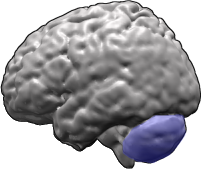
A Ataxia Espinocerebelar com Neuropatia Axonal Tipo 1 é uma doença neurológica genética rara. Ela geralmente surge no final da infância e é marcada por uma perda de coordenação que piora lentamente, chamada ataxia cerebelar. Os primeiros sinais incluem fraqueza e diminuição dos músculos das mãos e pés, ausência de reflexos e perda da sensibilidade à dor, vibração e toque nos braços e pernas. À medida que a doença avança, surgem também movimentos involuntários dos olhos ao fixar o olhar (nistagmo), dificuldade na fala (disartria cerebelar), danos nos nervos periféricos, um jeito de andar levantando muito os joelhos e pé cavo (com o arco do pé muito alto). A diminuição do cerebelo (especialmente de uma parte chamada vermis) é observada em todas as pessoas com a doença. Outros problemas que podem surgir incluem convulsões, diminuição leve do cérebro, colesterol levemente elevado e níveis de albumina no sangue um pouco abaixo do normal.
Introdução
O que você precisa saber de cara
A Ataxia Espinocerebelar com Neuropatia Axonal Tipo 1 é uma doença neurológica genética rara. Ela geralmente surge no final da infância e é marcada por uma perda de coordenação que piora lentamente, chamada ataxia cerebelar. Os primeiros sinais incluem fraqueza e diminuição dos músculos das mãos e pés, ausência de reflexos e perda da sensibilidade à dor, vibração e toque nos braços e pernas. À medida que a doença avança, surgem também movimentos involuntários dos olhos ao fixar o olhar (nistagmo), dificuldade na fala (disartria cerebelar), danos nos nervos periféricos, um jeito de andar levantando muito os joelhos e pé cavo (com o arco do pé muito alto). A diminuição do cerebelo (especialmente de uma parte chamada vermis) é observada em todas as pessoas com a doença. Outros problemas que podem surgir incluem convulsões, diminuição leve do cérebro, colesterol levemente elevado e níveis de albumina no sangue um pouco abaixo do normal.
Escala de raridade
<1/50kMuito rara
1/20kRara
1/10kPouco freq.
1/5kIncomum
1/2k
Encontrou um erro ou informação desatualizada? Sugira uma correção →
Entender a doença
Do básico ao detalhe, leia no seu ritmo
Preparando trilha educativa...
Sinais e sintomas
O que aparece no corpo e com que frequência cada sintoma acontece
Partes do corpo afetadas
+ 14 sintomas em outras categorias
Características mais comuns
Os sintomas variam de pessoa para pessoa. Abaixo estão as 31 características clínicas mais associadas, ordenadas por frequência.
Linha do tempo da pesquisa
Encontrou um erro ou informação desatualizada? Sugira uma correção →
Genética e causas
O que está alterado no DNA e como passa nas famílias
Genes associados
1 gene identificado com associação a esta condição. Padrão de herança: Autosomal recessive.
Curadoria gene-doença
fontes oficiaisDNA repair enzyme that can remove a variety of covalent adducts from DNA through hydrolysis of a 3'-phosphodiester bond, giving rise to DNA with a free 3' phosphate. Catalyzes the hydrolysis of dead-end complexes between DNA and the topoisomerase I active site tyrosine residue. Hydrolyzes 3'-phosphoglycolates on protruding 3' ends on DNA double-strand breaks due to DNA damage by radiation and free radicals. Acts on blunt-ended double-strand DNA breaks and on single-stranded DNA. Has low 3'exonuc
NucleusCytoplasm
Spinocerebellar ataxia, autosomal recessive, with axonal neuropathy 1
A form of spinocerebellar ataxia, a clinically and genetically heterogeneous group of cerebellar disorders. Patients show progressive incoordination of gait and often poor coordination of hands, speech and eye movements, due to degeneration of the cerebellum with variable involvement of the brainstem and spinal cord. SCAN1 is an autosomal recessive cerebellar ataxia (ARCA) associated with peripheral axonal motor and sensory neuropathy, distal muscular atrophy, pes cavus and steppage gait as seen in Charcot-Marie-Tooth neuropathy. All affected individuals have normal intelligence.
Variantes genéticas (ClinVar)
38 variantes patogênicas registradas no ClinVar.
Vias biológicas (Reactome)
1 via biológica associada aos genes desta condição.
Diagnóstico
Os sinais que médicos procuram e os exames que confirmam
Tratamento e manejo
Remédios, cuidados de apoio e o que precisa acompanhar
Onde tratar no SUS
Hospitais de referência no Brasil e o protocolo oficial do SUS (PCDT)
🇧🇷 Atendimento SUS — Ataxia espinocerebelar com neuropatia axonal tipo 1
Selecione um estado ou use sua localização para ver resultados.
Dados de DATASUS/CNES, SBGM, ABNeuro e Ministério da Saúde. Sempre confirme a disponibilidade diretamente com o estabelecimento.
Pesquisa ativa
Ensaios clínicos abertos e novidades científicas recentes
Ensaios em destaque
🟢 Recrutando agora
1 pesquisa recrutando participantes. Converse com seu médico sobre a possibilidade de participar.
Outros ensaios clínicos
Publicações mais relevantes
Report of a novel missense TDP1 variant in a Pakistani family affected with an extremely rare disorder congenital spinocerebellar ataxia with axonal neuropathy type 1 (SCAN1).
Spinocerebellar ataxia with axonal neuropathy type 1 (OMIM: 607250) is an extremely rare autosomal recessive disorder caused by a mutation in the tyrosyl-DNA phosphodiesterase 1 (TDP1) gene. Only a single missense variant (p.His493Arg) in this gene has been reported. This variant was found in three Arab families with a possible common founder effect. We report a female patient born to a consanguineous Pakistani family segregating autosomal recessive spinocerebellar ataxia with axonal neuropathy type 1. The patient presents additional clinical features distinct from previously reported Arab families including congenital onset of the disease. We performed whole exome sequencing with the patient's DNA and identified a novel missense variant (NC_000014.9:g.89991982C > T; p.His478Tyr) in exon 13 of the TDP1 gene. Sanger sequencing was performed to verify the autosomal recessive segregation of the p.His478Tyr variant in the family. The current study expands both the clinical and mutation spectrum of the TDP1 associated spinocerebellar ataxia with axonal neuropathy type 1 and increases the body of evidence that supports the pathogenic role of TDP1 in cerebellar ataxias with peripheral neuropathy. Spinocerebellar ataxia with axonal neuropathy type 1 (SCAN1) is characterized by late-childhood-onset slowly progressive cerebellar ataxia and distal sensorimotor axonal neuropathy. Gaze nystagmus and dysarthria usually develop after the onset of ataxic gait. As the disease advances, pain and touch sensation in the hands and feet become impaired; vibration sense is lost in hands and lower thighs. Individuals with advanced disease develop a steppage gait and pes cavus and eventually become wheelchair dependent. Cognitive dysfunction – present in some – manifests as mild intellectual disability and poor executive function. To date only seven affected individuals have been described from three apparently unrelated consanguineous families (one from Saudi Arabia and two from Oman); therefore, it is likely that the full phenotypic spectrum of this disorder is not yet known. The diagnosis of SCAN1 is established in a proband with suggestive findings and biallelic pathogenic (or likely pathogenic) variants in TDP1 identified by molecular genetic testing. Treatment of manifestations: Supportive care provided by specialists in neurology, rehabilitation medicine, occupational therapy, physical therapy, speech-language pathology, and clinical genetics. Surveillance: Routine follow up as determined by treating specialists to monitor the response to supportive care and to assess for changes in existing manifestations and/or emergence of new manifestations. Agents/circumstances to avoid: Because TDP1 codes for a DNA repair enzyme, genotoxic anti-cancer drugs such as camptothecins (e.g., irinotecan and topotecan) and bleomycin are likely to be extremely harmful and possibly fatal; exposure to radiation is also likely to be extremely harmful and possibly fatal. SCAN1 is inherited in an autosomal recessive manner. If both parents are known to be heterozygous for a TDP1 pathogenic variant, each sib of an affected individual has at conception a 25% chance of being affected, a 50% chance of being an asymptomatic carrier, and a 25% chance of inheriting neither of the familial pathogenic variants. Once the TDP1 pathogenic variants have been identified in an affected family member, carrier testing for at-risk relatives and prenatal and preimplantation genetic testing are possible.
Human Tyrosyl-DNA Phosphodiesterase 1 Possesses Transphosphooligonucleotidation Activity With Primary Alcohols.
Human tyrosyl-DNA phosphodiesterase 1 (TDP1) belongs to the phospholipase D superfamily, whose members contain paired catalytic histidine and lysine residues within two conserved motifs and hydrolyze phosphodiester bonds. TDP1 is a DNA repair enzyme that processes 3' DNA end blocking lesions and a wide range of synthetic DNA adducts as a substrate. TDP1 hydrolyzes DNA-adducts via two coordinated SN2 nucleophilic attacks mediated by the action of two histidine residues and leads to the formation of the covalent intermediate. Hydrolysis of this intermediate is proposed to be carried out by a water molecule that is activated by the His493 residue acting as a general base. It was known that phospholipase D enzymes are able to catalyze not only hydrolysis but also a transphosphatidylation reaction in the presence of primary alcohols in which they transfer the substrate to the alcohol instead of water. Here, we first demonstrated that TDP1 is able to undergo a "transphosphooligonucleotidation" reaction, transferring the substrate residue to the alcohol, thus inducing the formation of covalent DNA adducts with different primary alcohol residues. Such adducts can be accumulated in the conditions of high concentration of alcohol. We demonstrated that glycerol residue was efficiently cleaved from the 3'-end by TDP1 but not by its mutant form associated with the disease spinocerebellar ataxia with axonal neuropathy. Therefore, the second reaction step can be carried out not only by a water molecule but also by the other small nucleophilic molecules, e.g., glycerol and ethanol. Thus, in some cases, TDP1 can be regarded not only as a repair enzyme but also as a source of DNA damage especially in the case of mutation. Such damages can make a negative contribution to the stability of cell vitality.
Publicações recentes
Report of a novel missense TDP1 variant in a Pakistani family affected with an extremely rare disorder congenital spinocerebellar ataxia with axonal neuropathy type 1 (SCAN1).
Spinocerebellar Ataxia with Axonal Neuropathy Type 1.
Human Tyrosyl-DNA Phosphodiesterase 1 Possesses Transphosphooligonucleotidation Activity With Primary Alcohols.
📚 EuropePMC12 artigos no totalmostrando 2
Report of a novel missense TDP1 variant in a Pakistani family affected with an extremely rare disorder congenital spinocerebellar ataxia with axonal neuropathy type 1 (SCAN1).
Molecular biology reportsHuman Tyrosyl-DNA Phosphodiesterase 1 Possesses Transphosphooligonucleotidation Activity With Primary Alcohols.
Frontiers in cell and developmental biologyAssociações
Organizações que acompanham esta doença — pra ter apoio e orientação
Ainda não temos associações cadastradas para Ataxia espinocerebelar com neuropatia axonal tipo 1.
É de uma associação que acompanha esta doença? Fale com a gente →
Comunidades
Grupos ativos de quem convive com esta doença aqui no Raras
Ainda não existe comunidade no Raras para Ataxia espinocerebelar com neuropatia axonal tipo 1
Pacientes, familiares e cuidadores se organizam em comunidades pra compartilhar experiências, fazer perguntas e se apoiar. Você pode ser o primeiro.
Tire suas dúvidas
Perguntas, dicas e experiências compartilhadas aqui na página
Participe da discussão
Faça login para postar dúvidas, compartilhar experiências e interagir com especialistas.
Fazer loginDoenças relacionadas
Doenças com sintomas parecidos — ajudam quem ainda está buscando diagnóstico
Referências e fontes
Bases de dados externas citadas neste artigo
Publicações científicas
Artigos indexados no PubMed ligados a esta doença no grafo RarasNet — título, periódico e PMID direto da fonte, sem intermediação de IA.
- Report of a novel missense TDP1 variant in a Pakistani family affected with an extremely rare disorder congenital spinocerebellar ataxia with axonal neuropathy type 1 (SCAN1).
- Human Tyrosyl-DNA Phosphodiesterase 1 Possesses Transphosphooligonucleotidation Activity With Primary Alcohols.
- Spinocerebellar Ataxia with Axonal Neuropathy Type 1.
Bases de dados e fontes oficiais
Identificadores e referências canônicas usadas para montar este verbete.
- ORPHA:94124(Orphanet)
- OMIM OMIM:607250(OMIM)
- MONDO:0011801(MONDO)
- GARD:10000(GARD (NIH))
- Variantes catalogadas(ClinVar)
- Busca completa no PubMed(PubMed)
- Q30989322(Wikidata)
Dados compilados pelo RarasNet a partir de fontes abertas (Orphanet, OMIM, MONDO, PubMed/EuropePMC, ClinicalTrials.gov, DATASUS, PCDT/MS). Este conteúdo é informativo e não substitui avaliação médica.
Conteúdo mantido por Agente Raras · Médicos e pesquisadores podem colaborar
Ataxia espinocerebelar com neuropatia axonal tipo 1
📋 Origem dos dados
Esta página agrega dados de fontes públicas e oficiais. Dados sobre cobertura no SUS (PCDT, CEAF) são verificados ativamente por agente proativo (ver badge no infobox). Demais dados têm atribuição de fonte + data da última sincronização — clique para abrir o original.
- Doença rara (ontologia)
- fonte: Orphanet
- Identificador unificado
- fonte: MONDO
- Genética mendeliana
- fonte: OMIM
- Codificação WHO/SUS
- fonte: WHO ICD-10 / DATASUS
- NIH/GARD
- fonte: GARD (NIH)
- Indexação biomédica
- fonte: MeSH (NLM)
- Dado público estruturado
- fonte: Wikidata
- Reposicionamento
- fonte: Drug Repurposing Hub