
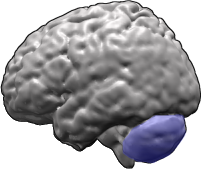
A Ataxia Espinocerebelar Tipo 18 (SCA18) é um subtipo muito raro de uma condição genética chamada ataxia cerebelar autossômica dominante tipo I (ADCA tipo I). Ela se manifesta por problemas nos nervos que afetam a sensibilidade (neuropatia sensorial) e falta de coordenação motora causada por alterações no cerebelo (ataxia cerebelar).
Introdução
O que você precisa saber de cara
A Ataxia Espinocerebelar Tipo 18 (SCA18) é um subtipo muito raro de uma condição genética chamada ataxia cerebelar autossômica dominante tipo I (ADCA tipo I). Ela se manifesta por problemas nos nervos que afetam a sensibilidade (neuropatia sensorial) e falta de coordenação motora causada por alterações no cerebelo (ataxia cerebelar).
Escala de raridade
<1/50kMuito rara
1/20kRara
1/10kPouco freq.
1/5kIncomum
1/2k
Encontrou um erro ou informação desatualizada? Sugira uma correção →
Entender a doença
Do básico ao detalhe, leia no seu ritmo
Preparando trilha educativa...
Sinais e sintomas
O que aparece no corpo e com que frequência cada sintoma acontece
Partes do corpo afetadas
+ 10 sintomas em outras categorias
Características mais comuns
Os sintomas variam de pessoa para pessoa. Abaixo estão as 27 características clínicas mais associadas, ordenadas por frequência.
Linha do tempo da pesquisa
Encontrou um erro ou informação desatualizada? Sugira uma correção →
Genética e causas
O que está alterado no DNA e como passa nas famílias
Genes associados
1 gene identificado com associação a esta condição. Padrão de herança: Autosomal dominant.
Could play a role in regulating gene activity in the proliferative and/or differentiative pathways induced by NGF. May be an autocrine factor that attenuates or amplifies the initial ligand-induced signal (By similarity)
Variantes genéticas (ClinVar)
21 variantes patogênicas registradas no ClinVar.
Classificação de variantes (ClinVar)
Distribuição de 5.215 variantes classificadas pelo ClinVar.
Diagnóstico
Os sinais que médicos procuram e os exames que confirmam
Tratamento e manejo
Remédios, cuidados de apoio e o que precisa acompanhar
Onde tratar no SUS
Hospitais de referência no Brasil e o protocolo oficial do SUS (PCDT)
🇧🇷 Atendimento SUS — Ataxia espinocerebelar tipo 18
Selecione um estado ou use sua localização para ver resultados.
Dados de DATASUS/CNES, SBGM, ABNeuro e Ministério da Saúde. Sempre confirme a disponibilidade diretamente com o estabelecimento.
Pesquisa ativa
Ensaios clínicos abertos e novidades científicas recentes
Ensaios em destaque
🟢 Recrutando agora
1 pesquisa recrutando participantes. Converse com seu médico sobre a possibilidade de participar.
Outros ensaios clínicos
Publicações mais relevantes
Potential Benefits of a Noninvasive Neuromodulation Protocol in Autism Spectrum Disorder with Multiple Comorbidities: A Case Report.
This case report describes a patient (male, 10 years old) with Autism Spectrum Disorder (ASD) and multiple comorbidities, including epilepsy, gastrointestinal and sleep disturbances, and obesity. Whole-exome sequencing (WES) identified two variants of uncertain significance (VUS) in the GRID2 gene. Mutations in this gene are associated with spinocerebellar ataxia type 18 (SCA18). However, this finding did not correlate with the clinical presentation of the patient. This study evaluates the effects of Radio Electric Asymmetric Conveyer (REAC) stimulation on the cognitive-behavioral dysfunctions of a child with severe ASD and multiple comorbidities. Two stimulation protocols-Neuro Postural Optimization (NPO) and Neuro Psychophysical Optimization (NPPO)-and REAC were performed sequentially. After five weeks of treatment, a 34.9% reduction in total scores on the Autism Treatment Evaluation Checklist (ATEC) and an 8.2% on the Autism Behavior Checklist (ABC) were observed. Assessment of the severity of ASD symptoms using the Childhood Autism Rating Scale (CARS) tool showed less pronounced improvement. The REAC intervention yielded a reduction in Social Relating impairment and an improvement in Sensory/Cognitive Awareness. Further research in this area should employ extended REAC protocols to replicate and amplify clinical responses among individuals with ASD.
GRID2 Mutation-Related Spinocerebellar Ataxia Type 18: A New Report and Literature Review.
Spinocerebellar ataxias (SCAs) are heterogeneous disorders with multiple genetic etiology. Mutations in the GRID2 gene are associated with spinocerebellar ataxia type 18 (SCA-18). We report the first Indian case of SCA-18. The proband is a 7-year-old boy with motor delay, cerebellar signs, and cerebellar atrophy. Whole exome and direct sequencing identified compound heterozygous mutations of the coding and noncoding regions of the GRID2 gene. A literature review of the published cases with pathogenic GRID2 variants was performed. Beside our patients, 32 cases were identified. The majority of reported cases were males, of consanguineous kindreds, with autosomal recessive inheritance. However, a proportion of cases (39%) had autosomal dominant/semidominant inheritance with heterozygous variants. In addition to childhood-onset cerebellar ataxia, other reported features were: early-onset dementia, complicated spastic paraparesis, retinal dystrophy, hearing loss, lower motor neuron signs, and severe global developmental delay in some homozygous cases. Cerebellar atrophy was the commonest neuroimaging finding, with few cases demonstrating brain stem, supratentorial, and white matter abnormalities. Although SCA-18 should be suspected in patients with early-onset cerebellar ataxia, eye movement abnormalities, and motor delay, clinicians should be aware of late-onset, variable presentations with pyramidal signs, dementia, and hearing loss. In suspected cases, if mutations were not detected by whole-exome sequencing, direct sequencing of noncoding regions and chromosomal microarray should be considered.
Autosomal recessive spinocerebellar ataxia 18 caused by homozygous exon 14 duplication in GRID2 and review of the literature.
Autosomal recessive cerebellar ataxias (ARCA) are characterized by the abnormal structure of the cerebellum and spinal cord. Spinocerebellar ataxia type 18 (MIM 616204), one of the ARCA, is caused by the loss-of-function mutations of the GRID2 gene due to deletions. Missense mutations in the GRID2 cause ataxia with the gain-of-function mechanism. We report a homozygous GRID2 duplication in childhood-onset ataxia in two siblings. The clinical exome sequencing was performed on one of the siblings. No disease-causing mutations were reported as a result of the clinical exome test. Chromosomal microarray analysis was performed on the entire family using Affymetrix Optima® chips. Chromosomal microarray analysis showed a ~ 121-kb homozygous duplication of GRID2 (arr[GRCh37]4q22.2(94426536_94613158) × 4), including exon 14, in both siblings. Previously, GRID2 has been associated with an autosomal recessive (loss-of-function) and autosomal semi-dominant (gain-of-function) forms of ataxia. To the best of our knowledge, this is the first study to identify a homozygous duplication of GRID2 causing loss of function of the GluRD2 protein. These findings provide us with the conclusion that copy number variation analyses should be in the diagnostic process of autosomal recessive ataxia types.
Long-term follow-up in infantile-onset SCAR18: A case report.
Autosomal recessive spinocerebellar ataxia type 18 (SCAR18) is caused by pathogenic variants in the Glutamate Receptor, Ionotropic, Delta-2 (GRID2) gene. We describe the long-term follow-up from 1 to 31 years of an Italian patient with congenital SCAR18 who is compound heterozygous for a maternally-inherited nonsense variant and a de novo microdeletion. To date, this is the longest follow-up in congenital SCAR18.
A case of severe autosomal recessive spinocerebellar ataxia type 18 with a novel nonsense variant in GRID2.
Autosomal-recessive spinocerebellar ataxia type 18 (SCAR18) is a rare neurologic disorder. It is caused by bi-allelic aberrations in the GRID2 gene, encoding an ionotropic glutamate receptor. In total, 20 affected individuals with mainly homozygous/compound heterozygous intragenic deletions/duplications, two different missense variants and one nonsense variant in GRID2 have been reported, so far. SCAR18 is characterized by delayed psychomotor development, intellectual disability, severely impaired gait due to cerebellar ataxia, ocular movement abnormalities, and cerebellar atrophy in brain imaging. By trio exome sequencing, we now identified a novel homozygous nonsense variant (c.568C > T; p.Gln190*) in GRID2 in a four year old female from a consanguineous family who presented with a particularly severe manifestation of SCAR18. The girl was born after an uneventful pregnancy and showed early-onset, profoundly delayed psychomotor development with no achieved psychomotor milestones at age 4 years. Additionally, she presented with severe muscular hypotonia, progressive truncal and appendicular ataxia, binocular vertical nystagmus, central hearing loss and incomplete loss of sight. She was dystrophic, interacted only very little and had behavioral anomalies such as eating hair and bruxism. Brain imaging showed cerebellar hypoplasia, extended cerebrospinal fluid spaces and beginning reduction of cerebral volume. Our findings further delineate the mutational and clinical spectrum of GRID2-associated spinocerebellar ataxia type 18 and indicate that homozygous nonsense variants are possibly associated with the severe end of the SCAR18 phenotypic spectrum.
Publicações recentes
Potential Benefits of a Noninvasive Neuromodulation Protocol in Autism Spectrum Disorder with Multiple Comorbidities: A Case Report.
GRID2 Mutation-Related Spinocerebellar Ataxia Type 18: A New Report and Literature Review.
A case of severe autosomal recessive spinocerebellar ataxia type 18 with a novel nonsense variant in GRID2.
Long-term follow-up in infantile-onset SCAR18: A case report.
Autosomal recessive spinocerebellar ataxia 18 caused by homozygous exon 14 duplication in GRID2 and review of the literature.
📚 EuropePMC3.032 artigos no totalmostrando 5
Potential Benefits of a Noninvasive Neuromodulation Protocol in Autism Spectrum Disorder with Multiple Comorbidities: A Case Report.
Pediatric reportsGRID2 Mutation-Related Spinocerebellar Ataxia Type 18: A New Report and Literature Review.
Journal of pediatric geneticsA case of severe autosomal recessive spinocerebellar ataxia type 18 with a novel nonsense variant in GRID2.
European journal of medical geneticsLong-term follow-up in infantile-onset SCAR18: A case report.
Journal of clinical neuroscience : official journal of the Neurosurgical Society of AustralasiaAutosomal recessive spinocerebellar ataxia 18 caused by homozygous exon 14 duplication in GRID2 and review of the literature.
Acta neurologica BelgicaAssociações
Organizações que acompanham esta doença — pra ter apoio e orientação
Ainda não temos associações cadastradas para Ataxia espinocerebelar tipo 18.
É de uma associação que acompanha esta doença? Fale com a gente →
Comunidades
Grupos ativos de quem convive com esta doença aqui no Raras
Ainda não existe comunidade no Raras para Ataxia espinocerebelar tipo 18
Pacientes, familiares e cuidadores se organizam em comunidades pra compartilhar experiências, fazer perguntas e se apoiar. Você pode ser o primeiro.
Tire suas dúvidas
Perguntas, dicas e experiências compartilhadas aqui na página
Participe da discussão
Faça login para postar dúvidas, compartilhar experiências e interagir com especialistas.
Fazer loginDoenças relacionadas
Doenças com sintomas parecidos — ajudam quem ainda está buscando diagnóstico
Referências e fontes
Bases de dados externas citadas neste artigo
Publicações científicas
Artigos indexados no PubMed ligados a esta doença no grafo RarasNet — título, periódico e PMID direto da fonte, sem intermediação de IA.
- Potential Benefits of a Noninvasive Neuromodulation Protocol in Autism Spectrum Disorder with Multiple Comorbidities: A Case Report.
- GRID2 Mutation-Related Spinocerebellar Ataxia Type 18: A New Report and Literature Review.
- Autosomal recessive spinocerebellar ataxia 18 caused by homozygous exon 14 duplication in GRID2 and review of the literature.
- Long-term follow-up in infantile-onset SCAR18: A case report.Journal of clinical neuroscience : official journal of the Neurosurgical Society of Australasia· 2020· PMID 32387255mais citado
- A case of severe autosomal recessive spinocerebellar ataxia type 18 with a novel nonsense variant in GRID2.
Bases de dados e fontes oficiais
Identificadores e referências canônicas usadas para montar este verbete.
- ORPHA:98771(Orphanet)
- OMIM OMIM:607458(OMIM)
- MONDO:0011834(MONDO)
- GARD:9976(GARD (NIH))
- Variantes catalogadas(ClinVar)
- Busca completa no PubMed(PubMed)
- Q21097766(Wikidata)
Dados compilados pelo RarasNet a partir de fontes abertas (Orphanet, OMIM, MONDO, PubMed/EuropePMC, ClinicalTrials.gov, DATASUS, PCDT/MS). Este conteúdo é informativo e não substitui avaliação médica.
Conteúdo mantido por Agente Raras · Médicos e pesquisadores podem colaborar
Ataxia espinocerebelar tipo 18
📋 Origem dos dados
Esta página agrega dados de fontes públicas e oficiais. Dados sobre cobertura no SUS (PCDT, CEAF) são verificados ativamente por agente proativo (ver badge no infobox). Demais dados têm atribuição de fonte + data da última sincronização — clique para abrir o original.
- Doença rara (ontologia)
- fonte: Orphanet
- Identificador unificado
- fonte: MONDO
- Genética mendeliana
- fonte: OMIM
- Codificação WHO/SUS
- fonte: WHO ICD-10 / DATASUS
- CID-11 (futuro)
- fonte: WHO ICD-11
- NIH/GARD
- fonte: GARD (NIH)
- Indexação biomédica
- fonte: MeSH (NLM)
- Dado público estruturado
- fonte: Wikidata
- Reposicionamento
- fonte: Drug Repurposing Hub
- Ensaios clínicos
- fonte: ClinicalTrials.gov