
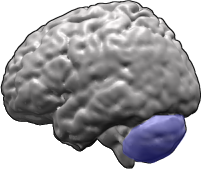
A ataxia espinocerebelar tipo 12 (SCA12) é um subtipo muito raro de ataxia cerebelar autossômica dominante tipo I (ADCA tipo I). É caracterizada pela presença de tremor de ação associado à ataxia cerebelar relativamente leve. Foram relatados sinais piramidais e extrapiramidais associados e demência.
Introdução
O que você precisa saber de cara
A ataxia espinocerebelar tipo 12 (SCA12) é um subtipo muito raro de ataxia cerebelar autossômica dominante tipo I (ADCA tipo I). É caracterizada pela presença de tremor de ação associado à ataxia cerebelar relativamente leve. Foram relatados sinais piramidais e extrapiramidais associados e demência.
Escala de raridade
<1/50kMuito rara
1/20kRara
1/10kPouco freq.
1/5kIncomum
1/2k
Encontrou um erro ou informação desatualizada? Sugira uma correção →
Entender a doença
Do básico ao detalhe, leia no seu ritmo
Preparando trilha educativa...
Sinais e sintomas
O que aparece no corpo e com que frequência cada sintoma acontece
Partes do corpo afetadas
+ 12 sintomas em outras categorias
Características mais comuns
Os sintomas variam de pessoa para pessoa. Abaixo estão as 34 características clínicas mais associadas, ordenadas por frequência.
Linha do tempo da pesquisa
Encontrou um erro ou informação desatualizada? Sugira uma correção →
Genética e causas
O que está alterado no DNA e como passa nas famílias
Genes associados
1 gene identificado com associação a esta condição. Padrão de herança: Autosomal dominant.
Curadoria gene-doença
fontes oficiaisThe B regulatory subunit might modulate substrate selectivity and catalytic activity, and might also direct the localization of the catalytic enzyme to a particular subcellular compartment. Within the PP2A holoenzyme complex, isoform 2 is required to promote proapoptotic activity (By similarity). Isoform 2 regulates neuronal survival through the mitochondrial fission and fusion balance (By similarity)
CytoplasmCytoplasm, cytoskeletonMembraneMitochondrionMitochondrion outer membrane
Spinocerebellar ataxia 12
Spinocerebellar ataxia is a clinically and genetically heterogeneous group of cerebellar disorders. Patients show progressive incoordination of gait and often poor coordination of hands, speech and eye movements, due to degeneration of the cerebellum with variable involvement of the brainstem and spinal cord. SCA12 is an autosomal dominant cerebellar ataxia (ADCA).
Variantes genéticas (ClinVar)
31 variantes patogênicas registradas no ClinVar.
Classificação de variantes (ClinVar)
Distribuição de 5.215 variantes classificadas pelo ClinVar.
Diagnóstico
Os sinais que médicos procuram e os exames que confirmam
Tratamento e manejo
Remédios, cuidados de apoio e o que precisa acompanhar
Onde tratar no SUS
Hospitais de referência no Brasil e o protocolo oficial do SUS (PCDT)
🇧🇷 Atendimento SUS — Ataxia espinocerebelar tipo 12
Selecione um estado ou use sua localização para ver resultados.
Dados de DATASUS/CNES, SBGM, ABNeuro e Ministério da Saúde. Sempre confirme a disponibilidade diretamente com o estabelecimento.
Pesquisa ativa
Ensaios clínicos abertos e novidades científicas recentes
Ensaios em destaque
🟢 Recrutando agora
1 pesquisa recrutando participantes. Converse com seu médico sobre a possibilidade de participar.
Outros ensaios clínicos
Publicações mais relevantes
Precision Diagnosis of Wilson Disease Using a MultiGene Panel: Insights From a Prospective Cohort Study.
Wilson disease (WD) is an autosomal recessive disorder of copper metabolism. Conventional genetic diagnostics are low-throughput and may miss intronic, structural, or phenocopy variants, leading to delayed or missed diagnoses. In this study, we evaluate the utility of a custom next-generation sequencing (NGS) panel targeting the full-length ATP7B gene and 10 additional copper metabolism-related genes in patients with clinically suspected WD. We conducted a prospective cohort study of 144 individuals at our neurogenetic center. Variants identified by NGS were filtered and annotated with in silico tools and classified according to American College of Medical Genetics and Genomics guidelines. Confirmatory Sanger sequencing, multiplex ligation-dependent probe amplification, and reverse transcription PCR assays were performed as needed. Genetic confirmation of WD was achieved in 129 of 144 patients (90%), including 80 typical (Leipzig score ≥4) and 49 atypical (score <4) cases. Ten novel ATP7B variants, including deep intronic, noncanonical splice, and copy number variants, were identified using this panel. Among 15 genetically unresolved cases, 6 harbored variants in other copper metabolism-related genes but no pathogenic ATP7B variants. Notably, 1 patient with a Leipzig score of 4 had been clinically diagnosed with WD for years but was reclassified as spinocerebellar ataxia type 12 after panel testing revealed only a heterozygous CP variant and a CAG repeat expansion in PPP2R2B. Our comprehensive multigene NGS panel enables precise diagnosis of WD by detecting both classical and unconventional pathogenic variants, as well as distinguishing phenocopies. This improved diagnostic accuracy underscores the value of early genetic testing to guide timely intervention, especially in atypical or early-stage cases.
Mitochondrial quality control gene expression in peripheral blood mononuclear cells of SCA12 patients.
Spinocerebellar ataxia type 12 (SCA12) is a late-onset, autosomal dominant neurodegenerative disorder linked to a CAG repeat expansion mutation in the PPP2R2B gene and prevalent in Indian Agarwal ancestry. The pathophysiology of SCA12 and its clinical relevance need further elucidation. Dysregulation of mitochondrial quality control (mitochondrial QC), a critical determinant of neurodegeneration, could play a central role in SCA12 pathogenesis. In this study, 20 candidate genes regulating mitochondrial biogenesis, dynamics, mitophagy, mitochondrial transport, and protein folding were studied for their expression in SCA12 patient-derived peripheral blood mononuclear cells (PBMCs). Twenty-four genetically confirmed SCA12 patients and healthy controls were recruited in the study. The patients were assessed for motor severity using the International Cooperative Ataxia Rating Scale (ICARS). PBMCs were isolated from the peripheral blood. Total RNA was extracted from the PBMCs, which were reverse transcribed to make cDNA. The relative mRNA expression was estimated using quantitative Real-time PCR. Among the 20 candidate genes, a total of 5 genes, i.e., DNM1L, PPARGC1A, OPA1, NFE2L2, and BECN1, demonstrated a significantly reduced expression in SCA12 compared to healthy controls. There was no difference in the expression of other genes between groups. This study suggests dysregulation of mitochondrial biogenesis, mitophagy, dynamics, and antioxidant system converging towards a compromised mitochondrial QC system in SCA12 patients.
Metabolic and Structural Insights of Cerebellar Dysfunction in Spinocerebellar Ataxia Type 12.
Spinocerebellar ataxia 12 (SCA12) is a progressive degenerative neurological disorder, primarily characterized by impaired coordination and balance. To investigate the correlation between proton (1H) magnetic resonance spectroscopy (MRS) and structural imaging indices in patients with SCA12. T1-weighted MRI, DTI, and single voxel MRS point resolved spectroscopy (PRESS) in the left hemispheric cerebellum were acquired using a 3-T MR scanner in 40 SCA12 patients and 25 healthy controls. Correlations between metabolites, gray and white matter volume of lobules, fractional anisotropy (FA), and clinical, nonclinical, and genetic data were examined. Three machine learning algorithms (KNN, LDA, and SVM) were used to analyze the metabolic feature differences between SCA12 and HC groups. Significant decreases in choline (Cho [GPC (glycerophosphocholine) + PCh (phosphocholine)]) and N-acetyl aspartate (NAA) levels, along with increases in myo-inositol ratios to creatine, FA, and white matter volume values (p < 0.05), were observed in the cerebellum of the SCA12 group compared to healthy controls. Positive correlations were observed between NAA levels and cerebellar lobule volume, the SPM IQ score with the right crus II in the SCA12 group. The International Cooperative Ataxia Rating Scale (ICARS) score showed a negative correlation with white matter and specific cerebellar lobules. Disease duration and cytosine, adenine, and guanine (CAG) repeat length were negatively correlated with right lobule VIIIB, lobule IX, and left lobule X. Machine learning algorithms achieved an accuracy of over 95% in MRS data, and 88.89% in volumetric data. MRS, VBM, and DTI techniques reveal neuronal degeneration in SCA12 compared to healthy individuals.
Propranolol for Tremors in Spinocerebellar Ataxia Type 12: A Randomized Clinical Trial.
Spinocerebellar ataxia type 12 (SCA12) is a neurodegenerative disorder with prominent upper limb tremors. No trials have evaluated tremor-targeted therapies in this population. We evaluated long-acting propranolol for efficacy and safety in reducing tremors and improving ataxia and quality of life in SCA12. In this single-center, randomized, double-blind, placebo-controlled trial, 60 genetically confirmed SCA12 patients (aged 18-65 years; TETRAS PS [The Essential Tremor Rating Assessment Scale Performance Subscale] upper limb component ≥2) were randomized 1:1 to receive extended-release propranolol or placebo. Propranolol was escalated by 40 mg/week (placebo by one tablet/week) up to 240 mg/day, limiting side effects or ≥30% reduction in TETRAS PS/ADL (Activities-of-Daily-Living Subscale) + PS. The stable dose was continued for 8 weeks (maintenance phase). Primary outcomes were changes from baseline in TETRAS PS and ADL + PS at maintenance weeks 4 and 8. Secondary outcomes included changes in the Scale for the Assessment and Rating of Ataxia (SARA), RAND 36-Item Short-Form Health Survey (SF-36) domains, and accelerometric tremor parameters. Propranolol significantly reduced TETRAS PS (LSM ± SE: -4.4 ± 0.3 at week 4; -4.42 ± 0.4 at week 8) and ADL + PS (-5.5 ± 0.63 at week 4; -5.56 ± 0.62 at week 8; P < 0.001 vs. placebo). Significant improvements were also noted in SARA and five of nine SF-36 domains at both time points. Accelerometry confirmed reductions in tremor peak frequency and power in all positions except rest. Fatigue and headache were the commonest adverse effects, with no discontinuations due to adverse events. Propranolol effectively reduced tremors and improved quality of life in SCA12, with good tolerability. © 2025 International Parkinson and Movement Disorder Society.
Spinocerebellar ataxia type 12 in a 52-year-old female.
Publicações recentes
Precision Diagnosis of Wilson Disease Using a MultiGene Panel: Insights From a Prospective Cohort Study.
Spinocerebellar ataxia type 12 in a 52-year-old female.
Mitochondrial quality control gene expression in peripheral blood mononuclear cells of SCA12 patients.
Metabolic and Structural Insights of Cerebellar Dysfunction in Spinocerebellar Ataxia Type 12.
Propranolol for Tremors in Spinocerebellar Ataxia Type 12: A Randomized Clinical Trial.
📚 EuropePMC42 artigos no totalmostrando 44
Precision Diagnosis of Wilson Disease Using a MultiGene Panel: Insights From a Prospective Cohort Study.
Neurology. GeneticsSpinocerebellar ataxia type 12 in a 52-year-old female.
The New Zealand medical journalMitochondrial quality control gene expression in peripheral blood mononuclear cells of SCA12 patients.
Parkinsonism & related disordersMetabolic and Structural Insights of Cerebellar Dysfunction in Spinocerebellar Ataxia Type 12.
Magnetic resonance in chemistry : MRCPropranolol for Tremors in Spinocerebellar Ataxia Type 12: A Randomized Clinical Trial.
Movement disorders : official journal of the Movement Disorder SocietyPPP2/PP2A-mediated dephosphorylation of LC3B links PINK1-PRKN/Parkin-mediated mitophagy to SCA12 pathogenesis.
AutophagyCAG Repeat Instability and Region-Specific Gene Expression Changes in the SCA12 Brain.
Cerebellum (London, England)Posterior Subthalamic Area Deep Brain Stimulation Combined with Spinal Cord Stimulation in a Patient with Spinocerebellar Ataxia Type 12.
Movement disorders clinical practiceDe novo missense variants in the PP2A regulatory subunit PPP2R2B in a neurodevelopmental syndrome: potential links to mitochondrial dynamics and spinocerebellar ataxias.
Human molecular geneticsNon-motor symptoms in patients with Spinocerebellar ataxia type 12.
Frontiers in neurologyBilateral Deep Brain Stimulation of Posterior Subthalamic Area in Patient with Spinocerebellar Ataxia Type 12.
Movement disorders clinical practiceCareful Phenotypic Characterization of Tremor Phenomenology in a Patient with Spinocerebellar Ataxia Type 12-Tremor Features Do Not Match Those of Essential Tremor.
Tremor and other hyperkinetic movements (New York, N.Y.)Role of Bβ1 overexpression in the pathogenesis of SCA12.
Movement disorders : official journal of the Movement Disorder SocietyGeneration of a human induced pluripotent stem cell line JHUi004-A with heterozygous mutation for spinocerebellar ataxia type 12 using genome editing.
Stem cell researchMolecular clues unveiling spinocerebellar ataxia type-12 pathogenesis.
iScienceIntegration of graph network with kernel SVM and logistic regression for identification of biomarkers in SCA12 and its diagnosis.
Cerebral cortex (New York, N.Y. : 1991)Generation of an Induced pluripotent stem cell (iPSC) line (IGIBi011-A) from a Spinocerebellar ataxia type 12 gait dominant patient.
Stem cell researchAbnormal cortical excitability in patients with spinocerebellar ataxia type 12.
Parkinsonism & related disordersBidirectional Transcription at the PPP2R2B Gene Locus in Spinocerebellar Ataxia Type 12.
Movement disorders : official journal of the Movement Disorder SocietyClinical and Preclinical Neuroimaging Changes in Spinocerebellar Ataxia Type 12: A Study of Three Chinese Pedigrees.
European neurologyStudy of 2D Feature Extraction Techniques for Classification of Spinocerebellar Ataxia Type 12 (SCA12).
Studies in health technology and informaticsClinical, Radiological, and Genetic Profile of Spinocerebellar Ataxia 12: A Hospital-Based Cohort Analysis.
Tremor and other hyperkinetic movements (New York, N.Y.)Magnetic Resonance Imaging-Guided Focused Ultrasound Thalamotomy in Spinocerebellar Ataxia Type 12.
Movement disorders : official journal of the Movement Disorder SocietyA longitudinal quantitative analysis of gait in patients with SCA-12.
Clinical parkinsonism & related disordersSpinocerebellar Ataxia Type 12 with an Atypical Ethnicity: A Report of 2 Families.
Annals of Indian Academy of NeurologyCommentary: Monochorea of the Upper Limb in a Patient with Spinocerebellar Ataxia Type 12.
Movement disorders clinical practiceMonochorea of the Upper Limb in a Patient with Spinocerebellar Ataxia Type 12.
Movement disorders clinical practiceGeneration of a human induced pluripotent stem cell line JHUi003-A with homozygous mutation for spinocerebellar ataxia type 12 using genome editing.
Stem cell researchUse of single guided Cas9 nickase to facilitate precise and efficient genome editing in human iPSCs.
Scientific reportsCognitive impairment in spinocerebellar ataxia type 12.
Parkinsonism & related disordersWWOX Loss of Function in Neurodevelopmental and Neurodegenerative Disorders.
International journal of molecular sciencesNovel compound heterozygous mutations in the WWOX gene cause early infantile epileptic encephalopathy.
International journal of developmental neuroscience : the official journal of the International Society for Developmental NeuroscienceSpasmodic dysphonia as a presenting symptom of spinocerebellar ataxia type 12.
NeurogeneticsClinical Characterization of Genetically Diagnosed Cases of Spinocerebellar Ataxia Type 12 from India.
Movement disorders clinical practiceGeneration of three spinocerebellar ataxia type-12 patients derived induced pluripotent stem cell lines (IGIBi002-A, IGIBi003-A and IGIBi004-A).
Stem cell researchWWOX-associated encephalopathies: identification of the phenotypic spectrum and the resulting genotype-phenotype correlation.
Neurological sciences : official journal of the Italian Neurological Society and of the Italian Society of Clinical NeurophysiologyClinical behaviour of spinocerebellar ataxia type 12 and intermediate length abnormal CAG repeats in PPP2R2B.
Brain : a journal of neurologySpinocerebellar ataxia type 12: clues to pathogenesis.
Current opinion in neurologyHuntington's disease-like presentation in Spinocerebellar ataxia type 12.
Movement disorders : official journal of the Movement Disorder SocietyUnusual tremor syndromes: know in order to recognise.
Journal of neurology, neurosurgery, and psychiatryNeuropathology and Cellular Pathogenesis of Spinocerebellar Ataxia Type 12.
Movement disorders : official journal of the Movement Disorder SocietyWWOX and severe autosomal recessive epileptic encephalopathy: first case in the prenatal period.
Journal of human geneticsIdentification of 46 CAG repeats within PPP2R2B as probably the shortest pathogenic allele for SCA12.
Parkinsonism & related disordersUnusual cerebral white matter change in a Chinese family with Spinocerebellar ataxia type 12.
Journal of the neurological sciencesAssociações
Organizações que acompanham esta doença — pra ter apoio e orientação
Ainda não temos associações cadastradas para Ataxia espinocerebelar tipo 12.
É de uma associação que acompanha esta doença? Fale com a gente →
Comunidades
Grupos ativos de quem convive com esta doença aqui no Raras
Ainda não existe comunidade no Raras para Ataxia espinocerebelar tipo 12
Pacientes, familiares e cuidadores se organizam em comunidades pra compartilhar experiências, fazer perguntas e se apoiar. Você pode ser o primeiro.
Tire suas dúvidas
Perguntas, dicas e experiências compartilhadas aqui na página
Participe da discussão
Faça login para postar dúvidas, compartilhar experiências e interagir com especialistas.
Fazer loginDoenças relacionadas
Doenças com sintomas parecidos — ajudam quem ainda está buscando diagnóstico
Referências e fontes
Bases de dados externas citadas neste artigo
Publicações científicas
Artigos indexados no PubMed ligados a esta doença no grafo RarasNet — título, periódico e PMID direto da fonte, sem intermediação de IA.
- Precision Diagnosis of Wilson Disease Using a MultiGene Panel: Insights From a Prospective Cohort Study.
- Mitochondrial quality control gene expression in peripheral blood mononuclear cells of SCA12 patients.
- Metabolic and Structural Insights of Cerebellar Dysfunction in Spinocerebellar Ataxia Type 12.
- Propranolol for Tremors in Spinocerebellar Ataxia Type 12: A Randomized Clinical Trial.Movement disorders : official journal of the Movement Disorder Society· 2026· PMID 41261874mais citado
- Spinocerebellar ataxia type 12 in a 52-year-old female.
Bases de dados e fontes oficiais
Identificadores e referências canônicas usadas para montar este verbete.
- ORPHA:98762(Orphanet)
- OMIM OMIM:604326(OMIM)
- MONDO:0011439(MONDO)
- GARD:10476(GARD (NIH))
- Variantes catalogadas(ClinVar)
- Busca completa no PubMed(PubMed)
- Q21097860(Wikidata)
Dados compilados pelo RarasNet a partir de fontes abertas (Orphanet, OMIM, MONDO, PubMed/EuropePMC, ClinicalTrials.gov, DATASUS, PCDT/MS). Este conteúdo é informativo e não substitui avaliação médica.
Conteúdo mantido por Agente Raras · Médicos e pesquisadores podem colaborar
Ataxia espinocerebelar tipo 12
📋 Origem dos dados
Esta página agrega dados de fontes públicas e oficiais. Dados sobre cobertura no SUS (PCDT, CEAF) são verificados ativamente por agente proativo (ver badge no infobox). Demais dados têm atribuição de fonte + data da última sincronização — clique para abrir o original.
- Doença rara (ontologia)
- fonte: Orphanet
- Identificador unificado
- fonte: MONDO
- Genética mendeliana
- fonte: OMIM
- Codificação WHO/SUS
- fonte: WHO ICD-10 / DATASUS
- CID-11 (futuro)
- fonte: WHO ICD-11
- NIH/GARD
- fonte: GARD (NIH)
- Indexação biomédica
- fonte: MeSH (NLM)
- Dado público estruturado
- fonte: Wikidata
- Reposicionamento
- fonte: Drug Repurposing Hub
- Ensaios clínicos
- fonte: ClinicalTrials.gov