
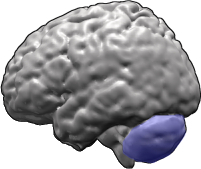
A Ataxia Espinocerebelar tipo 20 (SCA20) é um subtipo muito raro de ataxia cerebelar autossômica dominante tipo I (ADCA tipo I). Ela se caracteriza pela dificuldade na fala (disartria), que é causada por problemas no cerebelo, como o primeiro sintoma que geralmente aparece.
Introdução
O que você precisa saber de cara
A Ataxia Espinocerebelar tipo 20 (SCA20) é um subtipo muito raro de ataxia cerebelar autossômica dominante tipo I (ADCA tipo I). Ela se caracteriza pela dificuldade na fala (disartria), que é causada por problemas no cerebelo, como o primeiro sintoma que geralmente aparece.
Escala de raridade
<1/50kMuito rara
1/20kRara
1/10kPouco freq.
1/5kIncomum
1/2k
Encontrou um erro ou informação desatualizada? Sugira uma correção →
Entender a doença
Do básico ao detalhe, leia no seu ritmo
Preparando trilha educativa...
Sinais e sintomas
O que aparece no corpo e com que frequência cada sintoma acontece
Partes do corpo afetadas
+ 10 sintomas em outras categorias
Características mais comuns
Os sintomas variam de pessoa para pessoa. Abaixo estão as 28 características clínicas mais associadas, ordenadas por frequência.
Linha do tempo da pesquisa
Encontrou um erro ou informação desatualizada? Sugira uma correção →
Genética e causas
O que está alterado no DNA e como passa nas famílias
Genes associados
1 gene identificado com associação a esta condição. Padrão de herança: Autosomal dominant.
Classificação de variantes (ClinVar)
Distribuição de 5.215 variantes classificadas pelo ClinVar.
Diagnóstico
Os sinais que médicos procuram e os exames que confirmam
Tratamento e manejo
Remédios, cuidados de apoio e o que precisa acompanhar
Onde tratar no SUS
Hospitais de referência no Brasil e o protocolo oficial do SUS (PCDT)
🇧🇷 Atendimento SUS — Ataxia espinocerebelar tipo 20
Selecione um estado ou use sua localização para ver resultados.
Dados de DATASUS/CNES, SBGM, ABNeuro e Ministério da Saúde. Sempre confirme a disponibilidade diretamente com o estabelecimento.
Pesquisa ativa
Ensaios clínicos abertos e novidades científicas recentes
Ensaios em destaque
🟢 Recrutando agora
1 pesquisa recrutando participantes. Converse com seu médico sobre a possibilidade de participar.
Outros ensaios clínicos
Publicações mais relevantes
Exploring the Genetic Variations Underlying SNX14-Linked Autosomal Recessive Spinocerebellar Ataxia Type 20: A Case Series of 17 Patients From a Single Center in the Omani Population and Review of Literature.
Autosomal recessive spinocerebellar ataxia type 20 (SCAR20) is a rare neurodevelopmental disorder caused by biallelic variants in the SNX14 gene and characterized by developmental delay, hypotonia, cerebellar atrophy, and hearing loss. This study aimed to characterize the clinical, radiological, and genetic presentation of affected individuals in a consanguineous Omani population. We conducted a retrospective and partly prospective case series involving 17 patients from seven consanguineous families seen at the Royal Hospital, Oman. Data were collected between September and November 2024, with historical assessments extending over the past decade. Clinical data were extracted from electronic records, and neuroimaging was reviewed. Whole exome sequencing of seven probands was performed, and familial segregation was confirmed through targeted Sanger sequencing. Variants were classified according to American College of Medical Genetics and Genomics (ACMG) guidelines. The most common variant was SNX14 c.647_648del (p.Glu216Valfs24), identified in seven patients. Four patients carried the c.1132C>T (p.Arg378) variant, while two had a novel splice-site mutation, c.613-1G>A. One case involved a contiguous gene deletion affecting NT5E. Patient ages ranged from 1 month to 21 years. This report expands the mutational and clinical spectrum of SCAR20 in the Middle East and highlights the importance of early genetic testing, diagnostic vigilance, and multidisciplinary care in consanguineous populations.
Homozygous deep intronic variant in SNX14 cause autosomal recessive Spinocerebellar ataxia 20: a case report.
Autosomal recessive spinocerebellar ataxia type 20, SCAR20 (MIM: 616354) is a rare syndromic form of hereditary ataxias. It characterized by the presence of progressive ataxia, intellectual developmental disorder, autism and dysmorphic features. The disease caused by biallelic variants in SNX14 gene that lead to loss of protein function. Typically, these variants result in the formation of a premature stop codon, a shift in the reading frame or a variant in canonical splicing sites, as well as gross rearrangements. Here we present the first case of a deep intronic variant c.462-589A>G in SNX14 identified in two sisters with SCAR20 from a consanguineous family. This variant resulted in the inclusion of a pseudo-exon 82 nucleotides long and the formation of a premature stop codon, leading to the production of a truncated protein (NP_722523.1:p.Asp155Valfs*8). Following an extensive diagnostic search, the diagnosis was confirmed using trio whole genome sequencing. This case contributes to expanding the spectrum of potential genetic variants associated with SCAR20. Spinocerebellar ataxia type 20 (SCA20) is characterized by a slowly progressive ataxia and dysarthria. Approximately two thirds of those affected also display palatal tremor ("myoclonus") and/or abnormal phonation clinically resembling spasmodic adductor dysphonia. Dysarthria, which may be abrupt in onset, precedes the onset of ataxia in about two thirds of affected individuals, sometimes by a number of years. Hypermetric horizontal saccades (without nystagmus or disturbance of vestibulo-ocular reflex gain) are seen in about half of affected persons. Although minor pyramidal signs (brisk knee jerks, crossed adductor spread) may be seen, spasticity and extensor plantar responses are not. Cognition is normal. Clinical information is based on the findings in 16 personally examined affected members of a single Australian family of Anglo-Celtic descent. The diagnosis of SCA20 is based on clinical findings and neuroimaging. Within five years of disease onset CT scan shows pronounced dentate calcification, typically without concomitant pallidal calcification. In addition to evidence of dentate calcification, MRI shows mild-to-moderate pan cerebellar atrophy and normal cerebrum and brain stem (except for increased inferior olivary T2 signal in those with palatal tremor). The locus for SCA20 lies within the pericentromeric region of chromosome 11; the gene is unknown. A 260-kb duplication of 11q12.2-11q12.3 has been proposed as the probable cause of SCA20 in the index family. Treatment of manifestations: Physical and occupational therapy; guidance from a speech pathologist expert in the management of neurogenic dysphagia. Prevention of secondary complications: Prevention of falls by using appropriate gait aids and home modifications; personal alarm system. SCA20 is inherited in an autosomal dominant manner. Each child of an affected individual has a 50% chance of inheriting the pathogenic variant.
Hypertrophic Olivary Degeneration and Palatal or Oculopalatal Tremor.
Hypertrophic degeneration of the inferior olive is mainly observed in patients developing palatal tremor (PT) or oculopalatal tremor (OPT). This syndrome manifests as a synchronous tremor of the palate (PT) and/or eyes (OPT) that may also involve other muscles from the branchial arches. It is associated with hypertrophic inferior olivary degeneration that is characterized by enlarged and vacuolated neurons, increased number and size of astrocytes, severe fibrillary gliosis, and demyelination. It appears on MRI as an increased T2/FLAIR signal intensity and enlargement of the inferior olive. There are two main conditions in which hypertrophic degeneration of the inferior olive occurs. The most frequent, studied, and reported condition is the development of PT/OPT and hypertrophic degeneration of the inferior olive in the weeks or months following a structural brainstem or cerebellar lesion. This "symptomatic" condition requires a destructive lesion in the Guillain-Mollaret pathway, which spans from the contralateral dentate nucleus via the brachium conjunctivum and the ipsilateral central tegmental tract innervating the inferior olive. The most frequent etiologies of destructive lesion are stroke (hemorrhagic more often than ischemic), brain trauma, brainstem tumors, and surgical or gamma knife treatment of brainstem cavernoma. The most accepted explanation for this symptomatic PT/OPT is that denervated olivary neurons released from inhibitory inputs enlarge and develop sustained synchronized oscillations. The cerebellum then modulates/accentuates this signal resulting in abnormal motor output in the branchial arches. In a second condition, PT/OPT and progressive cerebellar ataxia occurs in patients without structural brainstem or cerebellar lesion, other than cerebellar atrophy. This syndrome of progressive ataxia and palatal tremor may be sporadic or familial. In the familial form, where hypertrophic degeneration of the inferior olive may not occur (or not reported), the main reported etiologies are Alexander disease, polymerase gamma mutation, and spinocerebellar ataxia type 20. Whether or not these are associated with specific degeneration of the dentato-olivary pathway remain to be determined. The most symptomatic consequence of OPT is eye oscillations. Therapeutic trials suggest gabapentin or memantine as valuable drugs to treat eye oscillations in OPT.
Publicações recentes
Exploring the Genetic Variations Underlying SNX14-Linked Autosomal Recessive Spinocerebellar Ataxia Type 20: A Case Series of 17 Patients From a Single Center in the Omani Population and Review of Literature.
Homozygous deep intronic variant in SNX14 cause autosomal recessive Spinocerebellar ataxia 20: a case report.
Spinocerebellar Ataxia Type 20.
Hypertrophic Olivary Degeneration and Palatal or Oculopalatal Tremor.
Spinocerebellar ataxia type 20.
📚 EuropePMC3.032 artigos no totalmostrando 3
Exploring the Genetic Variations Underlying SNX14-Linked Autosomal Recessive Spinocerebellar Ataxia Type 20: A Case Series of 17 Patients From a Single Center in the Omani Population and Review of Literature.
American journal of medical genetics. Part AHomozygous deep intronic variant in SNX14 cause autosomal recessive Spinocerebellar ataxia 20: a case report.
Frontiers in geneticsHypertrophic Olivary Degeneration and Palatal or Oculopalatal Tremor.
Frontiers in neurologyAssociações
Organizações que acompanham esta doença — pra ter apoio e orientação
Ainda não temos associações cadastradas para Ataxia espinocerebelar tipo 20.
É de uma associação que acompanha esta doença? Fale com a gente →
Comunidades
Grupos ativos de quem convive com esta doença aqui no Raras
Ainda não existe comunidade no Raras para Ataxia espinocerebelar tipo 20
Pacientes, familiares e cuidadores se organizam em comunidades pra compartilhar experiências, fazer perguntas e se apoiar. Você pode ser o primeiro.
Tire suas dúvidas
Perguntas, dicas e experiências compartilhadas aqui na página
Participe da discussão
Faça login para postar dúvidas, compartilhar experiências e interagir com especialistas.
Fazer loginDoenças relacionadas
Doenças com sintomas parecidos — ajudam quem ainda está buscando diagnóstico
Referências e fontes
Bases de dados externas citadas neste artigo
Publicações científicas
Artigos indexados no PubMed ligados a esta doença no grafo RarasNet — título, periódico e PMID direto da fonte, sem intermediação de IA.
- Exploring the Genetic Variations Underlying SNX14-Linked Autosomal Recessive Spinocerebellar Ataxia Type 20: A Case Series of 17 Patients From a Single Center in the Omani Population and Review of Literature.
- Homozygous deep intronic variant in SNX14 cause autosomal recessive Spinocerebellar ataxia 20: a case report.
- Hypertrophic Olivary Degeneration and Palatal or Oculopalatal Tremor.
- Spinocerebellar Ataxia Type 20.
- Spinocerebellar ataxia type 20.
Bases de dados e fontes oficiais
Identificadores e referências canônicas usadas para montar este verbete.
- ORPHA:101110(Orphanet)
- OMIM OMIM:608687(OMIM)
- MONDO:0012098(MONDO)
- GARD:9997(GARD (NIH))
- Busca completa no PubMed(PubMed)
- Q21097768(Wikidata)
Dados compilados pelo RarasNet a partir de fontes abertas (Orphanet, OMIM, MONDO, PubMed/EuropePMC, ClinicalTrials.gov, DATASUS, PCDT/MS). Este conteúdo é informativo e não substitui avaliação médica.
Conteúdo mantido por Agente Raras · Médicos e pesquisadores podem colaborar
Ataxia espinocerebelar tipo 20
📋 Origem dos dados
Esta página agrega dados de fontes públicas e oficiais. Dados sobre cobertura no SUS (PCDT, CEAF) são verificados ativamente por agente proativo (ver badge no infobox). Demais dados têm atribuição de fonte + data da última sincronização — clique para abrir o original.
- Doença rara (ontologia)
- fonte: Orphanet
- Identificador unificado
- fonte: MONDO
- Genética mendeliana
- fonte: OMIM
- Codificação WHO/SUS
- fonte: WHO ICD-10 / DATASUS
- CID-11 (futuro)
- fonte: WHO ICD-11
- NIH/GARD
- fonte: GARD (NIH)
- Indexação biomédica
- fonte: MeSH (NLM)
- Dado público estruturado
- fonte: Wikidata
- Reposicionamento
- fonte: Drug Repurposing Hub
- Ensaios clínicos
- fonte: ClinicalTrials.gov