Infecção na córnea causada pela acanthamoeba; geralmente está associada ao uso de lentes de contato gelatinosas, principalmente quando usadas para dormir.
Introdução
O que você precisa saber de cara
A **ceratite por Acanthamoeba** é uma infecção grave na córnea causada por um protozoário e frequentemente ligada ao uso de lentes de contato para dormir. A pessoa afetada costuma sentir **dor ocular** forte, sensibilidade intensa à luz e feridas na superfície dos olhos. A doença não é herdada geneticamente e pode acometer indivíduos de todas as faixas de idade. Não existe um Protocolo Clínico e Diretrizes Terapêuticas (PCDT) próprio nem remédios catalogados com entrega regular pelo SUS para a condição.
Infecção na córnea causada pela acanthamoeba; geralmente está associada ao uso de lentes de contato gelatinosas, principalmente quando usadas para dormir.
Escala de raridade
<1/50kMuito rara
1/20kRara
1/10kPouco freq.
1/5kIncomum
1/2k
Encontrou um erro ou informação desatualizada? Sugira uma correção →
Entender a doença
Do básico ao detalhe, leia no seu ritmo
Preparando trilha educativa...
Sinais e sintomas
O que aparece no corpo e com que frequência cada sintoma acontece
Características mais comuns
Os sintomas variam de pessoa para pessoa. Abaixo estão as 15 características clínicas mais associadas, ordenadas por frequência.
Linha do tempo da pesquisa
Encontrou um erro ou informação desatualizada? Sugira uma correção →
Genética e causas
O que está alterado no DNA e como passa nas famílias
Nenhum gene associado encontrado
Os dados genéticos desta condição ainda estão sendo catalogados.
Diagnóstico
Os sinais que médicos procuram e os exames que confirmam
Tratamento e manejo
Remédios, cuidados de apoio e o que precisa acompanhar
Onde tratar no SUS
Hospitais de referência no Brasil e o protocolo oficial do SUS (PCDT)
🇧🇷 Atendimento SUS — Ceratite por Acanthamoeba
Selecione um estado ou use sua localização para ver resultados.
Dados de DATASUS/CNES, SBGM, ABNeuro e Ministério da Saúde. Sempre confirme a disponibilidade diretamente com o estabelecimento.
Pesquisa ativa
Ensaios clínicos abertos e novidades científicas recentes
Ensaios em destaque
Com ensaio aberto em 5 países. O ponto verde marca onde há vaga agora.
🟢 Recrutando agora
1 pesquisa recrutando participantes. Converse com seu médico sobre a possibilidade de participar.
Outros ensaios clínicos
10 ensaios clínicos encontrados, 1 ativos.
Publicações mais relevantes
Detection of free-living amoebae and Stenotrophomonas maltophilia in two drinking water networks in eastern Pennsylvania.
The presence of free-living amoebae (FLA) in drinking water systems, along with the pathogens they harbor, is a global concern. Free-living amoebae are ubiquitous microorganisms found in both natural and man-made environments. Some FLA can cause fatal infections such as primary amoebic meningoencephalitis (PAM) and amoebic keratitis (AK). Additionally, certain FLA may harbor pathogenic bacteria and play a role in their fate and transport. In this study, we investigated the presence of FLA and the endosymbiotic opportunistic pathogen Stenotrophomonas maltophilia in drinking water delivery networks. Known for its multi-drug resistance, S. maltophilia has been associated with infections in immunocompromised people, especially those in hospitals. From January 2022 to December 2023, raw and finished water samples were collected approximately monthly from two Pennsylvania water utilities. Free-living amoebae were detected by filtration and plating. Results showed 74 % (56/76) of all raw water samples, and 22 % (15/69) and 14 % (12/83) of finished water samples from the two utilities, respectively, were positive for FLA by microscopy. Confirmatory testing using DNA extraction, PCR, and Sanger sequencing showed that 47 % (36/76) of all raw water samples, and 20 % (14/69) and 14 % (12/83) of finished water samples from the two utilities, respectively, were positive for at least one of the targeted FLA. Vermamoeba vermiformis was the most frequently recovered FLA, followed by Acanthamoeba spp. Potentially endosymbiotic S. maltophilia was recovered at various locations throughout the water treatment plants and the distribution system, demonstrating that FLA can serve as vectors that transport bacteria through conventional water treatment processes.
The Role of in Vivo Confocal Microscopy in Diagnosing and Managing Infectious Keratitis in Deployed French Military Personnel: A Case Series.
Fungal and amoebic keratitis are rare but serious infections that can lead to significant vision loss and are often difficult to diagnose promptly, particularly in resource-limited environments. Although conventional cultures and PCR have notable diagnostic limitations, in vivo confocal microscopy (IVCM) offers rapid and accurate pathogen detection. This retrospective case series examines four cases of infectious keratitis in deployed military personnel, highlighting the diagnostic and clinical utility of IVCM. All patients were young males, with a mean age of 29.75 years. Half had a history of improper contact lens use, although the others sustained ocular trauma from plant material. Corneal cultures performed in the field were uniformly negative, underscoring the limitations of traditional diagnostics in austere settings. In contrast, IVCM performed after the patients were repatriated enabled timely identification of filamentous fungi and amoebic cysts, allowing for targeted antimicrobial therapy. Patients experienced prolonged hospitalizations (mean: 2 months) and extended treatment courses (up to 9 months), with three undergoing amniotic membrane transplantation. Early diagnosis using IVCM contributed to the prevention of severe complications such as corneal perforation and endophthalmitis. These findings support the role of IVCM as a critical diagnostic modality in managing complex corneal infections when conventional microbiological tools are unavailable or insufficient.
Genotyping of Acanthamoeba From Different Wards of Gonabad Bohlool Hospital, Northeastern Iran.
Background: Acanthamoeba is a free-living amoeba that is widely found in nature in different environments such as soil, water, and dust. This parasite is the cause of amoebic keratitis and granulomatous amoebic encephalitis. This study is aimed at investigating the prevalence and genotypes of Acanthamoeba in different wards of Gonabad Bohlool Hospital, northeastern Iran. Methods: One hundred and eighty-three samples were collected from equipment in various wards of Gonabad hospital in 2023; swabs were cultured in nonnutrient agar (NNA) medium with the addition of killed Escherichia coli. In positive samples containing stellate cysts, PCR molecular testing was performed using JDP1 and JDP2 primers. To confirm Acanthamoeba, genotyping and sequencing were also done. Results: Acanthamoeba sp. was observed in 114 out of 183 samples (62.30%). The highest percentage of Acanthamoeba contamination was in the emergency ward with 81.82%, and the lowest percentage was in the operating and imaging room with 50%. Moreover, the highest percentage of Acanthamoeba contamination was in staff areas and equipment with 66.67%, and the lowest percentage was 56.14% on medical equipment. Also, in this research, the Genotypes T4 (n = 10, 43.5%), T3 (n = 4, 17.4%), T5 (n = 4, 17.4%), T11 (n = 3, 13%), and T2 (n = 2, 8.7%) were determined. Conclusions: The findings of this study showed that Acanthamoeba is more common in the emergency ward and on the surfaces and equipment of the staff areas. Considering the dangerous complications caused by this amoeba, health education to increase awareness in the field of transmission as well as health measures to prevent contamination, including disinfection, is recommended.
Evaluation of the potential for diagnosis of fungal keratitis using a Fusarium-specific antibody.
The increasing number of contact lens users correlates with a rise in the incidence of fungal keratitis. Fungal keratitis can lead to blindness if not treated promptly, and its early symptoms are similar to those of bacterial and amoebic keratitis, making rapid diagnosis challenging. This study aimed to assess the potential of using a peptide antibody against the fungal-specific protein ERG24, which encodes sterol C-14 reductase, to differentiate fungal keratitis from other forms of keratitis. The specificity of the ERG24 antibody was assessed through Western blot and enzyme-linked immunosorbent assay (ELISA). Immunocytochemistry (ICC) was performed by co-culturing two types of fungi, Acanthamoeba, and two bacterial strains with human corneal epithelial (HCE) cells. Additionally, to evaluate the diagnostic potential of the ERG24 antibody, animal models of fungal, amoebic, and bacterial keratitis were developed, and ELISA was conducted on tear and ocular lysates from these models. The results demonstrated that the antibody specifically reacted with Fusarium solani in Western blot, and both ELISA and ICC confirmed that the ERG24 antibody did not react with HCE cells, Acanthamoeba, or bacteria, but was specific to the two fungal species. In vivo experiments further showed that the ERG24 antibody significantly detected F. solani in tear-wash samples and eyeball lysates from the fungal keratitis model, without reacting with samples from amoebic and bacterial keratitis models. This study suggests that the ERG24 peptide antibody could provide valuable information for developing differential diagnostic methods for fungal keratitis compared to other forms of keratitis.
Encystment and Excystment Processes in Acanthamoeba castellanii: An Emphasis on Cellulose Involvement.
The free-living amoeba Acanthamoeba castellanii is a unicellular eukaryote distributed in a wide range of soil or aquatic environments, either natural or human-made, such as rivers, lakes, drinking water, or swimming pools. Besides its capacity to transport potential pathogens, such as bacteria or viruses, Acanthamoeba spp. can have intrinsic pathogenic properties by causing severe infections at the ocular and cerebral level, named granulomatous amoebic encephalitis and amoebic keratitis, respectively. During its life cycle, A. castellanii alternates between a vegetative and mobile form, named the trophozoite, and a resistant, latent, and non-mobile form, named the cyst. The cyst wall of Acanthamoeba is double-layered, with an inner endocyst and an outer ectocyst, and is mainly composed of cellulose and proteins. The resistance of cysts to many environmental stresses and disinfection treatments has been assigned to the presence of cellulose. The current review aims to present the importance of this glycopolymer in Acanthamoeba cysts and to further report the pathways involved in encystment and excystment.
Publicações recentes
Targeted Identification of Acanthamoeba in Clinical Corneal Specimens Using a Monoclonal Antibody: Proof of Concept for a New Diagnostic Tool.
Detection of free-living amoebae and Stenotrophomonas maltophilia in two drinking water networks in eastern Pennsylvania.
The Role of in Vivo Confocal Microscopy in Diagnosing and Managing Infectious Keratitis in Deployed French Military Personnel: A Case Series.
Genotyping of Acanthamoeba From Different Wards of Gonabad Bohlool Hospital, Northeastern Iran.
Evaluation of the potential for diagnosis of fungal keratitis using a Fusarium-specific antibody.
📚 EuropePMC27 artigos no totalmostrando 81
Detection of free-living amoebae and Stenotrophomonas maltophilia in two drinking water networks in eastern Pennsylvania.
International journal of hygiene and environmental healthThe Role of in Vivo Confocal Microscopy in Diagnosing and Managing Infectious Keratitis in Deployed French Military Personnel: A Case Series.
Military medicineGenotyping of Acanthamoeba From Different Wards of Gonabad Bohlool Hospital, Northeastern Iran.
International journal of microbiologyEvaluation of the potential for diagnosis of fungal keratitis using a Fusarium-specific antibody.
Scientific reportsEncystment and Excystment Processes in Acanthamoeba castellanii: An Emphasis on Cellulose Involvement.
Pathogens (Basel, Switzerland)Detection and co-occurrence of Acanthamoeba and Klebsiella pneumoniae in freshwater river systems of Taichung, Taiwan.
BMC microbiologyEstablishing a Cre/loxP-based genetic manipulation system for Acanthamoeba: Targeted genome editing and stable reporter expression.
Parasites, hosts and diseasesCombating the causative agent of amoebic keratitis, Acanthamoeba castellanii, using Padina pavonica alcoholic extract: toxicokinetic and molecular docking approaches.
Scientific reportsDevelopment of ophthalmic nanoemulsions of β-caryophyllene for the treatment of Acanthamoeba keratitis.
International journal of pharmaceuticsAnti-Acanthamoeba metallopharmaceuticals: Amoebicidal activity and synergistic effect of copper(II) coordination compound.
Biometals : an international journal on the role of metal ions in biology, biochemistry, and medicinePhylogenomic, structural, and cell biological analyses reveal that Stenotrophomonas maltophilia replicates in acidified Rab7A-positive vacuoles of Acanthamoeba castellanii.
Microbiology spectrum[Investigation of the Inhibition Effect of Acanthamoeba Cell-Free Supernatants Against Pseudomonas aeruginosa].
Mikrobiyoloji bulteniA. castellanii and P. aeruginosa mutually exacerbate damage to corneal cells during coinfection.
Microbiology spectrumAcanthamoeba castellanii trophozoites that survive multipurpose solutions are able to adhere to cosmetic contact lenses, increasing the risk of infection.
HeliyonTaurine, a Component of the Tear Film, Exacerbates the Pathogenic Mechanisms of Acanthamoeba castellanii in the Ex Vivo Amoebic Keratitis Model.
Pathogens (Basel, Switzerland)Synthesis, anti-amoebic activity and molecular docking simulation of eugenol derivatives against Acanthamoeba sp.
Saudi pharmaceutical journal : SPJ : the official publication of the Saudi Pharmaceutical SocietyIdentification and quantification of Acanthamoeba spp. within seawater at four coastal lagoons on the east coast of Australia.
The Science of the total environmentEffectiveness of Polyclonal Antibody Immunoconjugate Treatment with Propamidine Isethionate for Amoebic Keratitis in Golden Hamsters.
Journal of parasitology researchMolecular evidence for a new lineage within the Acanthamoeba T4 genotype.
Parasitology researchAcanthamoeba castellanii Genotype T4: Inhibition of Proteases Activity and Cytopathic Effect by Bovine Apo-Lactoferrin.
MicroorganismsIn Vitro Cytopathogenic Activities of Acanthamoeba T3 and T4 Genotypes on HeLa Cell Monolayer.
Pathogens (Basel, Switzerland)Molecular detection and genotype identification of Acanthamoeba species from bronchoalveolar lavage of patients with pulmonary symptoms suspected of cancer.
Journal of parasitic diseases : official organ of the Indian Society for ParasitologyHomology Modeling, Molecular Docking, Molecular Dynamic Simulation, and Drug-Likeness of the Modified Alpha-Mangostin against the β-Tubulin Protein of Acanthamoeba Keratitis.
Molecules (Basel, Switzerland)Surveillance of Amoebic Keratitis-Causing Acanthamoebae for Potential Bacterial Endosymbionts in Ontario, Canada.
Pathogens (Basel, Switzerland)[Etiological analysis of infectious keratitis in children from 2007 to 2016].
[Zhonghua yan ke za zhi] Chinese journal of ophthalmologyAnaerobic ATP synthesis pathways and inorganic phosphate transport and their possible roles in encystment in Acanthamoeba castellanii.
Cell biology internationalElucidation of iron homeostasis in Acanthamoeba castellanii.
International journal for parasitologyDiagnostic Considerations for Non-Acanthamoeba Amoebic Keratitis and Clinical Outcomes.
Pathogens (Basel, Switzerland)Acanthamoeba Keratitis: A Single-Institution Series of Four Cases With Literature Review.
CureusCytochrome P450 monooxygenase of Acanthamoeba castellanii participates in resistance to polyhexamethylene biguanide treatment.
Parasite (Paris, France)Isolation and molecular identification of Acanthamoeba spp. from hospital dust and soil of Khomein, Iran, as reservoir for nosocomial infection.
Parasite epidemiology and controlSuper aggregated amphotericin B with a thermoreversible in situ gelling ophthalmic system for amoebic keratitis treatment.
Acta tropicaAnti-Acanthamoeba synergistic effect of chlorhexidine and Garcinia mangostana extract or α-mangostin against Acanthamoeba triangularis trophozoite and cyst forms.
Scientific reportsDiagnosis of Acanthamoeba keratitis in Mashhad, Northeastern Iran: A Gene-Based PCR Assay.
Iranian journal of parasitologyDifferential expression of Acanthamoeba castellanii proteins during amoebic keratitis in rats.
Experimental parasitologyAcanthamoeba spp. monoclonal antibody against a CPA2 transporter: a promising molecular tool for acanthamoebiasis diagnosis and encystment study.
ParasitologyCase Report: Suspected Donor Transmission of Acanthamoeba Keratitis After Deep Anterior Lamellar Keratoplasty.
CorneaIsolation and identification of free-living amoeba from the hot springs and beaches of the Caspian Sea.
Parasite epidemiology and controlGenotyping and phylogenic study of Acanthamoeba isolates from human keratitis and swimming pool water samples in Iran.
Parasite epidemiology and controlDevelopment and Assessment of a Simulator for in Vivo Confocal Microscopy in Fungal and Acanthamoeba Keratitis.
Current eye researchAcanthamoeba castellanii phosphate transporter (AcPHS) is important to maintain inorganic phosphate influx and is related to trophozoite metabolic processes.
Journal of bioenergetics and biomembranesMolecular detection of free-living amoebae from Namhangang (southern Han River) in Korea.
Scientific reportsAcanthamoeba mauritaniensis genotype T4D: An environmental isolate displays pathogenic behavior.
Parasitology internationalOral miltefosine for refractory Acanthamoeba keratitis.
American journal of ophthalmology case reportsAcanthamoeba in Southeast Asia - Overview and Challenges.
The Korean journal of parasitologyEvaluation of in vitro effect of selected contact lens solutions conjugated with nanoparticles in terms of preventive approach to public health risk generated by Acanthamoeba strains.
Annals of agricultural and environmental medicine : AAEMEvaluation of the sensitivity to chlorhexidine, voriconazole and itraconazole of T4 genotype Acanthamoeba isolated from Mexico.
Experimental parasitologyIsolation and genotyping of Acanthamoeba strains from water sources of Kermanshah, Iran.
Annals of parasitologyComparison of chlorhexidine disinfectant in vitro effect on environmental and ocular Acanthamoeba strains, the amoebic agents of human keratitis − an emerging sight-threatening corneal disease in Poland.
Annals of parasitologyIsolation and molecular identification of Acanthamoeba spp. from hot springs in Mazandaran province, northern Iran.
Journal of water and health[Corneal collagen cross-linking to treat infectious keratitis].
Journal francais d'ophtalmologieTHE USE OF EXTRACTS FROM PASSIFLORA SPP. IN HELPING THE TREATMENT OF ACANTHAMOEBIASIS.
Acta poloniae pharmaceuticaIn vivo confocal microscopy and in vitro culture techniques as tools for evaluation of severe Acanthamoeba keratitis incidents.
Annals of parasitologyA comparative study of risk factors for corneal infection in diabetic and non-diabetic patients.
International journal of ophthalmologyProtein profiling of Acanthamoeba species using MALDI-TOF MS for specific identification of Acanthamoeba genotype.
Parasitology researchChemical composition and anti-Acanthamoeba activity of Melaleuca styphelioides essential oil.
Experimental parasitologyAmmoides pusilla (Apiaceae) essential oil: Activity against Acanthamoeba castellanii Neff.
Experimental parasitologyIn vitro evaluation of antimicrobial agents on Acanthamoeba sp. and evidence of a natural resilience to amphotericin B.
International journal for parasitology. Drugs and drug resistanceAcanthamoebicidal activity of periglaucine A and betulinic acid from Pericampylus glaucus (Lam.) Merr. in vitro.
Experimental parasitologyIsolation and molecular characterization of Acanthamoeba from patients with keratitis in Spain.
European journal of protistologyDevelopment and validation of a real-time PCR assay for the detection of clinical acanthamoebae.
BMC research notesFree-Living Amoebae Keratitis.
CorneaFree-living amoebae isolated in the Central African Republic: epidemiological and molecular aspects.
The Pan African medical journalIdentification of Acanthamoeba Genotypes in Pools and Stagnant Water in Ponds in Sistan Region in Southeast Iran.
Turkiye parazitolojii dergisiAcanthamoeba culbertsoni: Electron-Dense Granules in a Highly Virulent Clinical Isolate.
The Journal of eukaryotic microbiologyIsolation and Genotyping of Acanthamoeba spp. as Neglected Parasites in North of Iran.
The Korean journal of parasitologyAzithromycin and Doxycycline Attenuation of Acanthamoeba Virulence in a Human Corneal Tissue Model.
The Journal of infectious diseasesIsolation and genotyping of Acanthamoeba strains (T4, T9, and T11) from amoebic keratitis patients in Iran.
Parasitology researchCross-linking for microbial keratitis.
Current opinion in ophthalmologyCharacterisation and expression analysis of trophozoite and cyst proteins of Acanthamoeba spp. isolated from Acanthamoeba keratitis (AK) patient.
Molecular and biochemical parasitologyGenotyping of Acanthamoeba spp. and characterization of the prevalent T4 type along with T10 and unassigned genotypes from amoebic keratitis patients in India.
Journal of medical microbiologyGenotypic, physiological, and biochemical characterization of potentially pathogenic Acanthamoeba isolated from the environment in Cairo, Egypt.
Parasitology researchPathogenic Free-Living Amoebae Isolated From Contact Lenses of Keratitis Patients.
Iranian journal of parasitologyAcanthamoeba genotypes T3 and T4 as causative agents of amoebic keratitis in Mexico.
Parasitology researchAmebicidal activity of the essential oils of Lippia spp. (Verbenaceae) against Acanthamoeba polyphaga trophozoites.
Parasitology researchCurrent Status of Acanthamoeba in Iran: A Narrative Review Article.
Iranian journal of parasitologyReevaluation of an Acanthamoeba Molecular Diagnostic Algorithm following an Atypical Case of Amoebic Keratitis.
Journal of clinical microbiologyMolecular Characterization of Pathogenic Acanthamoeba Isolated from Drinking and Recreational water in East Azerbaijan, Northwest Iran.
Environmental health insightsDetection and Molecular Characterization of Potentially Pathogenic Free-living Amoebae from Water Sources in Kish Island, Southern Iran.
Microbiology insightsAcanthamoeba castellanii Proteases are Capable of Degrading Iron-Binding Proteins as a Possible Mechanism of Pathogenicity.
The Journal of eukaryotic microbiologyTigecycline inhibits proliferation of Acanthamoeba castellanii.
Parasitology researchAssociações
Organizações que acompanham esta doença — pra ter apoio e orientação
Ainda não temos associações cadastradas para Ceratite por Acanthamoeba.
É de uma associação que acompanha esta doença? Fale com a gente →
Doença com base genética
Um médico geneticista pode ajudar no diagnóstico de Ceratite por Acanthamoeba e no aconselhamento genético da família.
Doenças relacionadas
Doenças com sintomas parecidos — ajudam quem ainda está buscando diagnóstico
Perguntas frequentes
O que as famílias mais perguntam sobre esta doença — cada resposta com a fonte de onde saiu
A ceratite por Acanthamoeba é uma infecção corneana causada por um parasita e seu padrão de herança é classificado como não aplicável. Ela não é transmitida de pais para filhos por genes, decorrendo geralmente de fatores como o uso de lentes de contato gelatinosas para dormir.
Referências
Fontes citadas no texto, publicações do grafo e bases de dados usadas neste verbete
6 publicações do grafo RarasNet (PubMed) · 5 bases de dados. Títulos, periódicos e PMIDs vêm direto da fonte, sem intermediação de IA.
Dados compilados pelo RarasNet a partir de fontes abertas (Orphanet, OMIM, MONDO, PubMed/EuropePMC, ClinicalTrials.gov, DATASUS, PCDT/MS). Este conteúdo é informativo e não substitui avaliação médica.
Citar este verbete
Raras. (s.d.). Ceratite por Acanthamoeba. Em Raras — Enciclopédia de Doenças Raras do Brasil. https://raras.org/doenca/ceratite-por-acanthamoeba
Formato APA. Conteúdo sob CC BY 4.0 — reuso livre com atribuição.
Conteúdo mantido por Agente Raras · Médicos e pesquisadores podem colaborar
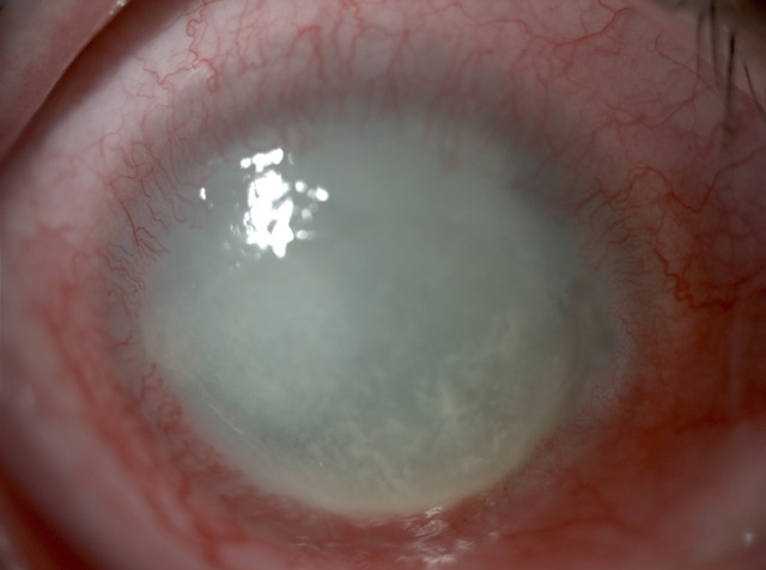
Ceratite por Acanthamoeba
📋 Origem dos dados
Esta página agrega dados de fontes públicas e oficiais. Dados sobre cobertura no SUS (PCDT, CEAF) são verificados ativamente por agente proativo (ver badge no infobox). Demais dados têm atribuição de fonte + data da última sincronização — clique para abrir o original.
- Doença rara (ontologia)
- fonte: Orphanet
- Identificador unificado
- fonte: MONDO
- Codificação WHO/SUS
- fonte: WHO ICD-10 / DATASUS
- CID-11 (futuro)
- fonte: WHO ICD-11
- NIH/GARD
- fonte: GARD (NIH)
- Indexação biomédica
- fonte: MeSH (NLM)
- Dado público estruturado
- fonte: Wikidata
- Ensaios clínicos
- fonte: ClinicalTrials.gov

