
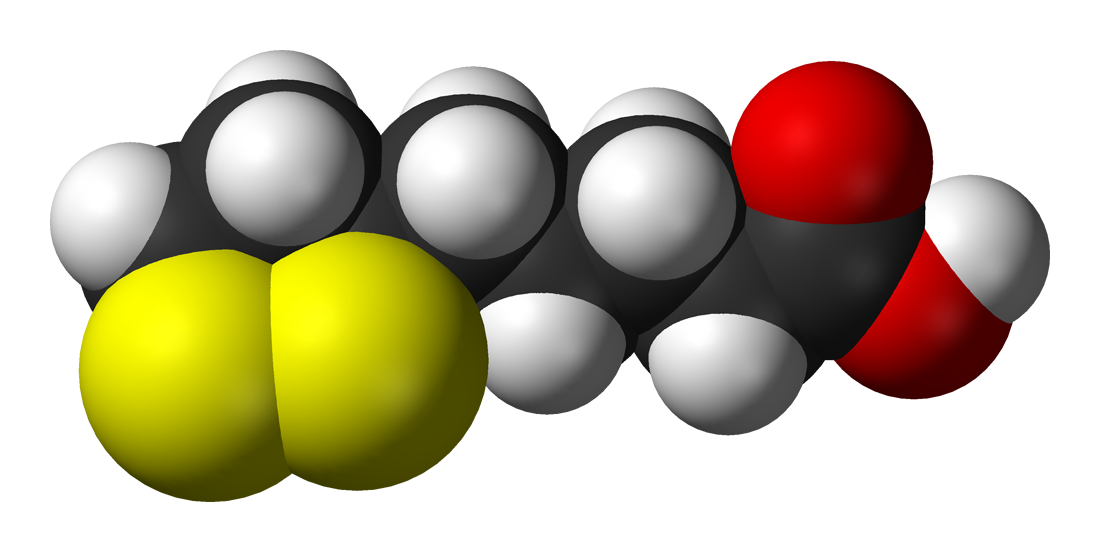
O ácido lipoico (AL), também conhecido como ácido alfa-lipoico (AAL) e ácido tióctico, é um composto organossulfurado derivado do ácido caprílico (ácido octanoico). O AAL, que é produzido normalmente em animais, é essencial para o metabolismo aeróbico. Também está disponível como suplemento alimentar ou medicamento farmacêutico em alguns países. O lipoato é a base conjugada do ácido lipoico e a forma mais prevalente de AL sob condições fisiológicas. Apenas o enantiômero (R)-(+)- (RAL) existe na natureza. O RAL é um cofator essencial de muitos processos.
Introdução
O que você precisa saber de cara
Visão geral
O Déficit de lipoil transferase 2 é uma doença genética rara que afeta o metabolismo energético das células. A condição é caracterizada por problemas neurológicos graves, como atraso no desenvolvimento, convulsões e dificuldades motoras. Ainda não há dados documentados sobre sua prevalência na população.[1][4]
Sinais e sintomas
Os sinais e sintomas descritos na literatura incluem: atraso global do desenvolvimento (frequentemente profundo), hipotonia (tônus muscular baixo), hipotonia axial, convulsões, distonia, microcefalia, fala ausente, alteração da marcha e tetraparesia espástica. Também são observadas dificuldades alimentares, insuficiência respiratória e acidose láctica. Exames de imagem podem mostrar mielinização atrasada do sistema nervoso central, ventriculomegalia, dilatação dos ventrículos laterais, atrofia cortical cerebral, padrão giratório simplificado e cistos periventriculares. Exames laboratoriais frequentemente revelam hiperglicinemia, hiperalaninemia, aumento do piruvato sérico, nível elevado de lactato circulante e aumento do lactato cerebral por espectroscopia de ressonância magnética. A atividade da enzima alfa-cetoglutarato desidrogenase em fibroblastos cultivados encontra-se diminuída.[1][4]
Causas genéticas
A doença está associada a alterações no gene responsável pela produção da enzima lipoil transferase 2, essencial para o funcionamento de complexos enzimáticos mitocondriais. No entanto, até o momento, não há dados disponíveis sobre o símbolo ou a função específica do gene envolvido. O padrão de herança também não foi documentado.[1][2][5]
Diagnóstico
O diagnóstico é baseado na combinação dos sinais clínicos, exames laboratoriais (como dosagem de lactato, piruvato, aminoácidos e atividade enzimática em fibroblastos) e exames de imagem do sistema nervoso central. Testes genéticos estão disponíveis para confirmar a suspeita clínica — atualmente, há 12 testes genéticos registrados para essa condição. Não há informações sobre variantes específicas no ClinVar.[1][2][5]
Tratamento e manejo
Não há tratamento curativo específico para o Déficit de lipoil transferase 2. O manejo é sintomático e de suporte, envolvendo uma equipe multidisciplinar para lidar com as dificuldades alimentares, respiratórias, neurológicas e motoras. Não existem medicamentos aprovados ou protocolos padronizados para a doença. No Brasil, a condição não possui cobertura pelo SUS para procedimentos específicos.[1][2]
Prognóstico e qualidade de vida
O prognóstico é reservado, dado o comprometimento neurológico grave e a ausência de terapias modificadoras da doença. A qualidade de vida depende do suporte multidisciplinar e do manejo das complicações, como insuficiência respiratória e convulsões. Não há dados disponíveis sobre a idade de início ou a expectativa de vida.[1][4]
Conteúdo informativo gerado e mantido automaticamente a partir de fontes oficiais (Orphanet, HPO, OMIM, SUS). Não substitui avaliação médica.
O ácido lipoico (AL), também conhecido como ácido alfa-lipoico (AAL) e ácido tióctico, é um composto organossulfurado derivado do ácido caprílico (ácido octanoico). O AAL, que é produzido normalmente em animais, é essencial para o metabolismo aeróbico. Também está disponível como suplemento alimentar ou medicamento farmacêutico em alguns países. O lipoato é a base conjugada do ácido lipoico e a forma mais prevalente de AL sob condições fisiológicas. Apenas o enantiômero (R)-(+)- (RAL) existe na natureza. O RAL é um cofator essencial de muitos processos.
Escala de raridade
<1/50kMuito rara
1/20kRara
1/10kPouco freq.
1/5kIncomum
1/2k
Encontrou um erro ou informação desatualizada? Sugira uma correção →
Entender a doença
Do básico ao detalhe, leia no seu ritmo
Preparando trilha educativa...
Sinais e sintomas
O que aparece no corpo e com que frequência cada sintoma acontece
Visão geral
O Déficit de lipoil transferase 2 é uma doença genética rara que afeta o metabolismo energético das células. A condição é caracterizada por problemas neurológicos graves, como atraso no desenvolvimento, convulsões e dificuldades motoras. Ainda não há dados documentados sobre sua prevalência na população.[1][4]
Sinais e sintomas
Os sinais e sintomas descritos na literatura incluem: atraso global do desenvolvimento (frequentemente profundo), hipotonia (tônus muscular baixo), hipotonia axial, convulsões, distonia, microcefalia, fala ausente, alteração da marcha e tetraparesia espástica. Também são observadas dificuldades alimentares, insuficiência respiratória e acidose láctica. Exames de imagem podem mostrar mielinização atrasada do sistema nervoso central, ventriculomegalia, dilatação dos ventrículos laterais, atrofia cortical cerebral, padrão giratório simplificado e cistos periventriculares. Exames laboratoriais frequentemente revelam hiperglicinemia, hiperalaninemia, aumento do piruvato sérico, nível elevado de lactato circulante e aumento do lactato cerebral por espectroscopia de ressonância magnética. A atividade da enzima alfa-cetoglutarato desidrogenase em fibroblastos cultivados encontra-se diminuída.[1][4]
Causas genéticas
A doença está associada a alterações no gene responsável pela produção da enzima lipoil transferase 2, essencial para o funcionamento de complexos enzimáticos mitocondriais. No entanto, até o momento, não há dados disponíveis sobre o símbolo ou a função específica do gene envolvido. O padrão de herança também não foi documentado.[1][2][5]
Diagnóstico
O diagnóstico é baseado na combinação dos sinais clínicos, exames laboratoriais (como dosagem de lactato, piruvato, aminoácidos e atividade enzimática em fibroblastos) e exames de imagem do sistema nervoso central. Testes genéticos estão disponíveis para confirmar a suspeita clínica — atualmente, há 12 testes genéticos registrados para essa condição. Não há informações sobre variantes específicas no ClinVar.[1][2][5]
Tratamento e manejo
Não há tratamento curativo específico para o Déficit de lipoil transferase 2. O manejo é sintomático e de suporte, envolvendo uma equipe multidisciplinar para lidar com as dificuldades alimentares, respiratórias, neurológicas e motoras. Não existem medicamentos aprovados ou protocolos padronizados para a doença. No Brasil, a condição não possui cobertura pelo SUS para procedimentos específicos.[1][2]
Prognóstico e qualidade de vida
O prognóstico é reservado, dado o comprometimento neurológico grave e a ausência de terapias modificadoras da doença. A qualidade de vida depende do suporte multidisciplinar e do manejo das complicações, como insuficiência respiratória e convulsões. Não há dados disponíveis sobre a idade de início ou a expectativa de vida.[1][4]
Conteúdo informativo gerado e mantido automaticamente a partir de fontes oficiais (Orphanet, HPO, OMIM, SUS). Não substitui avaliação médica.
Partes do corpo afetadas
+ 12 sintomas em outras categorias
Características mais comuns
Os sintomas variam de pessoa para pessoa. Abaixo estão as 27 características clínicas mais associadas, ordenadas por frequência.
Linha do tempo da pesquisa
Encontrou um erro ou informação desatualizada? Sugira uma correção →
Genética e causas
O que está alterado no DNA e como passa nas famílias
Nenhum gene associado encontrado
Os dados genéticos desta condição ainda estão sendo catalogados.
Diagnóstico
Os sinais que médicos procuram e os exames que confirmam
Tratamento e manejo
Remédios, cuidados de apoio e o que precisa acompanhar
Onde tratar no SUS
Hospitais de referência no Brasil e o protocolo oficial do SUS (PCDT)
🇧🇷 Atendimento SUS — Déficit de lipoil transferase 2
Selecione um estado ou use sua localização para ver resultados.
Dados de DATASUS/CNES, SBGM, ABNeuro e Ministério da Saúde. Sempre confirme a disponibilidade diretamente com o estabelecimento.
Pesquisa ativa
Ensaios clínicos abertos e novidades científicas recentes
Pesquisa e ensaios clínicos
Nenhum ensaio clínico registrado para esta condição.
Publicações mais relevantes
Inhibition of DHHC9-mediated CD36 palmitoylation lessens high-fat diet (HFD)-induced impairment of pubertal mammary gland development through the JNK-ERK pathway.
CD36, a vital fatty acid translocase, has been reported to participate in multiple physiological functions through palmitoylation mediated by zinc finger Asp-His-His-Cys-type palmitoyltransferases (DHHCs). This study aimed to investigate the possible involvement of DHHC-mediated CD36 palmitoylation in high-fat diet (HFD)-induced impairment of pubertal mammary gland development and explore the underlying mechanisms involved. Palmitic acid (PA)-treated HC11 cells were used as the in vitro high-fat model, and the cell proliferation was examined by 5-Ethynyl-2'-deoxyuridine (EdU) incorporation assay. The palmitoylation of CD36 was determined by the acyl-biotin exchange (ABE) method. The expression of CD36, proliferative genes, and signaling molecules was detected by immunoblotting. The cellular localization of CD36 was determined by immunofluorescence. The bindings of CD36 with zinc finger DHHC-type palmitoyltransferases 9 (DHHC9) or Fyn/Lyn were detected by co-immunoprecipitation (Co-IP). The palmitoylation inhibitor 2-bromopalmitate (2BP), DHHC9 knockdown, and point mutation of CD36 cysteine residues were applied to construct a CD36 palmitoylation deficiency model in vitro to investigate the effects of CD36 palmitoylation on HC11 proliferation. In vivo, the pubertal mice were treated with HFD and/or 2BP. Mammary gland morphology was determined by whole mount staining, and the underlying mechanisms were verified by the methods used in the in vitro system. In vitro, the palmitoylation inhibitor 2BP eliminated PA-inhibited HC11 proliferation and inhibited CD36 palmitoylation and localization on the plasma membrane. Meanwhile, the binding of DHHC9 and CD36 in PA-treated HC11 cells was repressed by 2BP. In addition, both knockdown of DHHC9 and point mutation of CD36 cysteine residues suppressed the membrane palmitoylation and localization of CD36 and stimulated the proliferation of PA-treated HC11 cells. Furthermore, in PA-treated HC11 cells, the inhibition of CD36 palmitoylation, the knockdown of DHHC9, and the mutation of CD36 cysteine residues resulted in decreased formation of the CD36/Fyn/Lyn complex. Correspondingly, the downstream c-jun n-terminal kinase 1 (JNK1) pathway was inhibited, and the extracellular signal-regulated kinase 1/2 (ERK1/2) pathway was activated. Moreover, inhibition of the JNK pathway with SP600125 promoted the proliferation of PA-treated HC11 cells via activation of the ERK1/2 pathway. In vivo, the palmitoylation inhibitor 2BP ameliorated HFD-induced impairment of mammary gland development in pubertal female mice, which was associated with a decrease in DHHC9-mediated CD36 palmitoylation in the plasma membrane, a reduction in the CD36/Fyn/Lyn complex, inhibition of the JNK1 pathway, and activation of the ERK1/2 pathway. This study revealed that inhibition of DHHC9-mediated CD36 palmitoylation mitigated HFD-induced impairment of pubertal mammary gland development via the JNK1-ERK1/2 pathway.
Modulation of Autism-Associated Serotonin Transporters by Palmitoylation: Insights into the Molecular Pathogenesis and Targeted Therapies for Autism Spectrum Disorder.
Autism spectrum disorder (ASD) is a developmental disorder of the nervous system characterized by a deficiency in interpersonal communication skills, a pathologic tendency for repetitive behaviors, and highly restrictive interests. The spectrum is a gradient-based construct used to categorize the widely varying degrees of ASD phenotypes, and has been linked to a genetic etiology in 25% of cases. Prior studies have revealed that 30% of ASD patients exhibit hyperserotonemia, or severely elevated whole blood serotonin (5HT), implicating the serotonergic system in the pathogenesis of ASD. Likewise, escitalopram, a selective-serotonin reuptake inhibitor (SSRI), has been demonstrated to effectively improve core ASD symptoms potentially by modulating abnormal brain activation in ASD patients. Molecular studies have uncovered proband patients with rare mutations in the serotonin transporter (SERT) that manifest enhanced surface expression and 5HT transport capacity, suggesting that abnormal enhancement of SERT function may be involved in the pathogenesis of ASD. Here, we reveal that palmitoylation is enhanced in the ASD SERT F465L and L550V coding variants, and confirm prior reports of enhanced kinetic activity and surface expression of F465L. Furthermore, treatment of F465L with the irreversible palmitoyl acyl-transferase inhibitor, 2-bromopalmitate (2BP), or escitalopram, rectified enhanced F465L palmitoylation, surface expression, and transport capacity to basal WT levels. Overall, our results implicate disordered SERT palmitoylation in the pathogenic mechanism of ASD, with basal recovery of these processes following escitalopram treatment providing insight into its molecular utility as an ASD therapeutic.
Mitochondrial NADPH fuels mitochondrial fatty acid synthesis and lipoylation to power oxidative metabolism.
Nicotinamide adenine dinucleotide phosphate (NADPH) is a vital electron donor essential for macromolecular biosynthesis and protection against oxidative stress. Although NADPH is compartmentalized within the cytosol and mitochondria, the specific functions of mitochondrial NADPH remain largely unexplored. Here we demonstrate that NAD+ kinase 2 (NADK2), the principal enzyme responsible for mitochondrial NADPH production, is critical for maintaining protein lipoylation, a conserved lipid modification necessary for the optimal activity of multiple mitochondrial enzyme complexes, including the pyruvate dehydrogenase complex. The mitochondrial fatty acid synthesis (mtFAS) pathway utilizes NADPH for generating protein-bound acyl groups, including lipoic acid. By developing a mass-spectrometry-based method to assess mammalian mtFAS, we reveal that NADK2 is crucial for mtFAS activity. NADK2 deficiency impairs mtFAS-associated processes, leading to reduced cellular respiration and mitochondrial translation. Our findings support a model in which mitochondrial NADPH fuels the mtFAS pathway, thereby sustaining protein lipoylation and mitochondrial oxidative metabolism.
Ears of the Lynx Sign in Lipoyl Transferase-2 (LIPT2) Deficiency.
Zdhhc1 deficiency mitigates foam cell formation and atherosclerosis by inhibiting PI3K-Akt-mTOR signaling pathway through facilitating the nuclear translocation of p110α.
Monocyte-to-macrophage differentiation and subsequent foam cell formation are key processes that contribute to plaque build-up during the progression of atherosclerotic lesions. Palmitoylation enzymes are known to play pivotal roles in the development and progression of inflammatory diseases. However, their specific impact on atherosclerosis development remains unclear. In this study, we discovered that the knockout of zDHHC1 in THP-1 cells, as well as Zdhhc1 in mice, markedly reduces the uptake of oxidized low-density lipoprotein (ox-LDL) by macrophages, thereby inhibiting foam cell formation. Moreover, the absence of Zdhhc1 in ApoE-/- mice significantly suppresses atherosclerotic plaque formation. Mass spectrometry coupled with bioinformatic analysis revealed an enrichment of the PI3K-Akt-mTOR signaling pathway. Consistent with this, we observed that knockout of zDHHC1 significantly decreases the palmitoylation levels of p110α, a crucial subunit of PI3K. Notably, the deletion of Zdhhc1 facilitates the nuclear translocation of p110α in macrophages, leading to a significant reduction in the downstream phosphorylation of Akt at Ser473 and mTOR at Ser2448. This cascade results in a decreased number of macrophages within plaques and ultimately mitigates the severity of atherosclerosis. These findings unveil a novel role for zDHHC1 in regulating foam cell formation and the progression of atherosclerosis, suggesting it as a promising target for clinical intervention in atherosclerosis therapy.
Publicações recentes
Ears of the Lynx Sign in Lipoyl Transferase-2 (LIPT2) Deficiency.
Biallelic Variants in LIPT2 as a Cause of Infantile-Onset Dystonia: Expanding the Clinical and Molecular Spectrum.
📚 EuropePMCmostrando 33
Inhibition of DHHC9-mediated CD36 palmitoylation lessens high-fat diet (HFD)-induced impairment of pubertal mammary gland development through the JNK-ERK pathway.
Cellular & molecular biology lettersModulation of Autism-Associated Serotonin Transporters by Palmitoylation: Insights into the Molecular Pathogenesis and Targeted Therapies for Autism Spectrum Disorder.
ACS chemical neuroscienceEars of the Lynx Sign in Lipoyl Transferase-2 (LIPT2) Deficiency.
Neurology IndiaMitochondrial NADPH fuels mitochondrial fatty acid synthesis and lipoylation to power oxidative metabolism.
Nature cell biologyZdhhc1 deficiency mitigates foam cell formation and atherosclerosis by inhibiting PI3K-Akt-mTOR signaling pathway through facilitating the nuclear translocation of p110α.
Biochimica et biophysica acta. Molecular basis of diseaseConsecutive palmitoylation and phosphorylation orchestrates NLRP3 membrane trafficking and inflammasome activation.
Molecular cellZDHHC7-mediated S-palmitoylation of ATG16L1 facilitates LC3 lipidation and autophagosome formation.
AutophagyCaveolin-2 palmitoylation turnover facilitates insulin receptor substrate-1-directed lipid metabolism by insulin receptor tyrosine kinase.
Biochimica et biophysica acta. Molecular basis of diseaseReduction of DHHC5-mediated beclin 1 S-palmitoylation underlies autophagy decline in aging.
Nature structural & molecular biologyAlpha-lipoic acid supplementation corrects pathological alterations in cellular models of pantothenate kinase-associated neurodegeneration with residual PANK2 expression levels.
Orphanet journal of rare diseasesInvolvement of ZDHHC9 in lung adenocarcinoma: regulation of PD-L1 stability via palmitoylation.
In vitro cellular & developmental biology. AnimalPalmitoylation prevents sustained inflammation by limiting NLRP3 inflammasome activation through chaperone-mediated autophagy.
Molecular cellDHHC21 deficiency attenuates renal dysfunction during septic injury.
Scientific reportsStructure of the dihydrolipoamide succinyltransferase (E2) component of the human alpha-ketoglutarate dehydrogenase complex (hKGDHc) revealed by cryo-EM and cross-linking mass spectrometry: Implications for the overall hKGDHc structure.
Biochimica et biophysica acta. General subjectsGenetic dissection of the mitochondrial lipoylation pathway in yeast.
BMC biologyA STAT3 palmitoylation cycle promotes TH17 differentiation and colitis.
NatureFatty acids and cancer-amplified ZDHHC19 promote STAT3 activation through S-palmitoylation.
NatureCell contact and Nf2/Merlin-dependent regulation of TEAD palmitoylation and activity.
Proceedings of the National Academy of Sciences of the United States of AmericaFunctional Assessment of Lipoyltransferase-1 Deficiency in Cells, Mice, and Humans.
Cell reportsThe dual roles of RPE65 S-palmitoylation in membrane association and visual cycle function.
Scientific reportsReduction of mitochondrial 3-oxoacyl-ACP synthase (OXSM) by hyperglycemia is associated with deficiency of α-lipoic acid synthetic pathway in kidney of diabetic mice.
Biochemical and biophysical research communicationsAKAP150 Palmitoylation Regulates Synaptic Incorporation of Ca2+-Permeable AMPA Receptors to Control LTP.
Cell reportsPyruvate dehydrogenase complex deficiency is linked to regulatory loop disorder in the αV138M variant of human pyruvate dehydrogenase.
The Journal of biological chemistryPoldip2 is an oxygen-sensitive protein that controls PDH and αKGDH lipoylation and activation to support metabolic adaptation in hypoxia and cancer.
Proceedings of the National Academy of Sciences of the United States of AmericaZdhhc13-dependent Drp1 S-palmitoylation impacts brain bioenergetics, anxiety, coordination and motor skills.
Scientific reportsTargeting palmitoyl acyltransferase ZDHHC21 improves gut epithelial barrier dysfunction resulting from burn-induced systemic inflammation.
American journal of physiology. Gastrointestinal and liver physiologyBiallelic Mutations in LIPT2 Cause a Mitochondrial Lipoylation Defect Associated with Severe Neonatal Encephalopathy.
American journal of human geneticsDiscovery and Characterization of the 3-Hydroxyacyl-ACP Dehydratase Component of the Plant Mitochondrial Fatty Acid Synthase System.
Plant physiologyProtein Palmitoylation by ZDHHC13 Protects Skin against Microbial-Driven Dermatitis.
The Journal of investigative dermatologyPalmitoyl acyltransferase Aph2 in cardiac function and the development of cardiomyopathy.
Proceedings of the National Academy of Sciences of the United States of AmericaEssential role of flotillin-1 palmitoylation in the intracellular localization and signaling function of IGF-1 receptor.
Journal of cell scienceFatty acylated caveolin-2 is a substrate of insulin receptor tyrosine kinase for insulin receptor substrate-1-directed signaling activation.
Biochimica et biophysica actaThe palmitoyl acyltransferase DHHC2 regulates recycling endosome exocytosis and synaptic potentiation through palmitoylation of AKAP79/150.
The Journal of neuroscience : the official journal of the Society for NeuroscienceAssociações
Organizações que acompanham esta doença — pra ter apoio e orientação
Ainda não temos associações cadastradas para Déficit de lipoil transferase 2.
É de uma associação que acompanha esta doença? Fale com a gente →
Comunidades
Grupos ativos de quem convive com esta doença aqui no Raras
Ainda não existe comunidade no Raras para Déficit de lipoil transferase 2
Pacientes, familiares e cuidadores se organizam em comunidades pra compartilhar experiências, fazer perguntas e se apoiar. Você pode ser o primeiro.
Tire suas dúvidas
Perguntas, dicas e experiências compartilhadas aqui na página
Participe da discussão
Faça login para postar dúvidas, compartilhar experiências e interagir com especialistas.
Fazer loginDoenças relacionadas
Doenças com sintomas parecidos — ajudam quem ainda está buscando diagnóstico
Referências e fontes
Bases de dados externas citadas neste artigo
Publicações científicas
Artigos indexados no PubMed ligados a esta doença no grafo RarasNet — título, periódico e PMID direto da fonte, sem intermediação de IA.
- Inhibition of DHHC9-mediated CD36 palmitoylation lessens high-fat diet (HFD)-induced impairment of pubertal mammary gland development through the JNK-ERK pathway.
- Modulation of Autism-Associated Serotonin Transporters by Palmitoylation: Insights into the Molecular Pathogenesis and Targeted Therapies for Autism Spectrum Disorder.
- Mitochondrial NADPH fuels mitochondrial fatty acid synthesis and lipoylation to power oxidative metabolism.
- Ears of the Lynx Sign in Lipoyl Transferase-2 (LIPT2) Deficiency.
- Zdhhc1 deficiency mitigates foam cell formation and atherosclerosis by inhibiting PI3K-Akt-mTOR signaling pathway through facilitating the nuclear translocation of p110α.
- Biallelic Variants in LIPT2 as a Cause of Infantile-Onset Dystonia: Expanding the Clinical and Molecular Spectrum.
Bases de dados e fontes oficiais
Identificadores e referências canônicas usadas para montar este verbete.
- ORPHA:447795(Orphanet)
- MONDO:0060562(MONDO)
- Busca completa no PubMed(PubMed)
- Q55788240(Wikidata)
Dados compilados pelo RarasNet a partir de fontes abertas (Orphanet, OMIM, MONDO, PubMed/EuropePMC, ClinicalTrials.gov, DATASUS, PCDT/MS). Este conteúdo é informativo e não substitui avaliação médica.
Conteúdo mantido por Agente Raras · Médicos e pesquisadores podem colaborar
Déficit de lipoil transferase 2
📋 Origem dos dados
Esta página agrega dados de fontes públicas e oficiais. Dados sobre cobertura no SUS (PCDT, CEAF) são verificados ativamente por agente proativo (ver badge no infobox). Demais dados têm atribuição de fonte + data da última sincronização — clique para abrir o original.
- Doença rara (ontologia)
- fonte: Orphanet
- Identificador unificado
- fonte: MONDO
- Genética mendeliana
- fonte: OMIM
- Codificação WHO/SUS
- fonte: WHO ICD-10 / DATASUS
- Dado público estruturado
- fonte: Wikidata