Qualquer sinpolidactilia não sindrômica em que a causa da doença é uma mutação no gene HOXD13.
Introdução
O que você precisa saber de cara
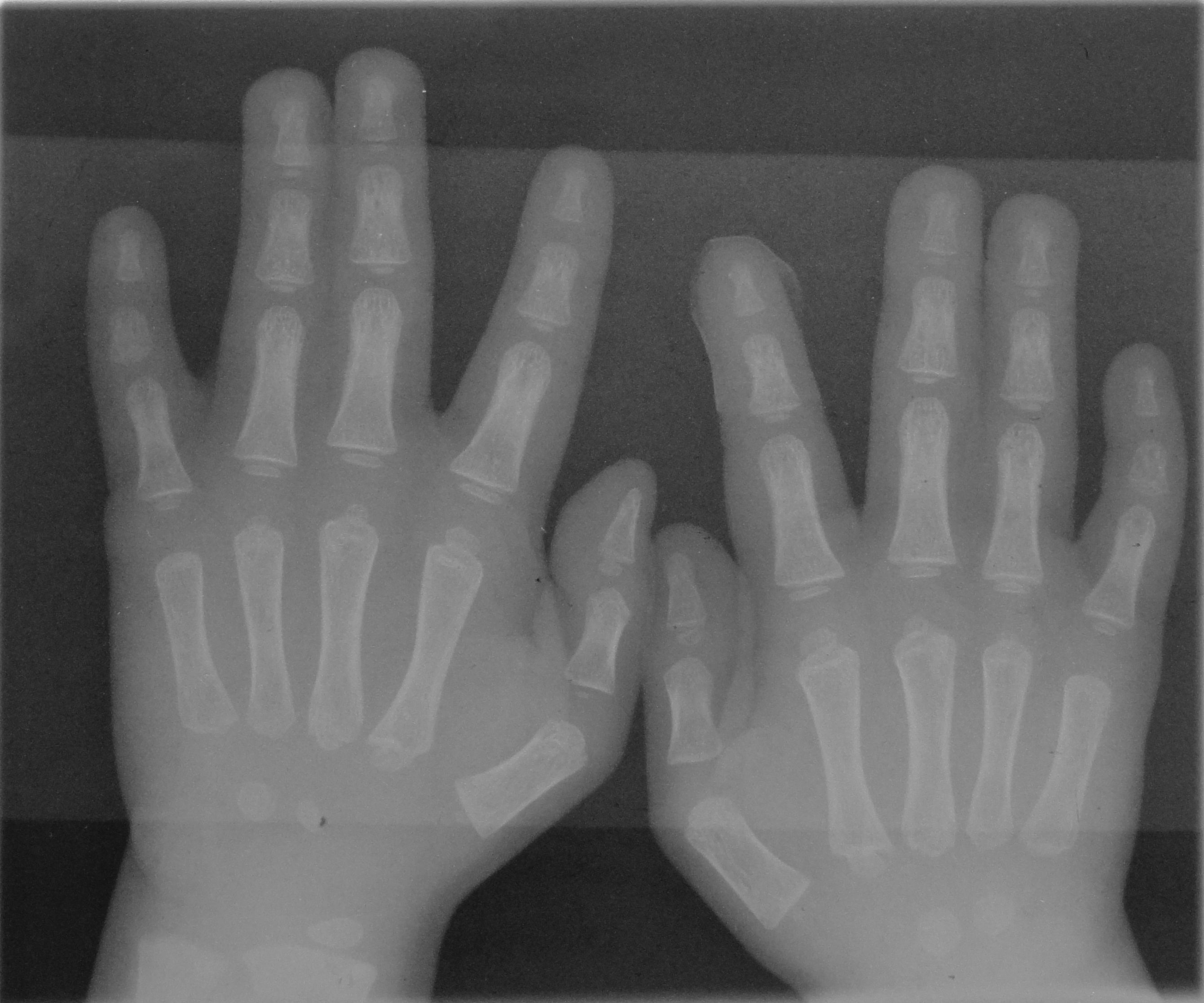
A simpolidactilia tipo 1 é uma condição genética rara que afeta o desenvolvimento dos dedos das mãos e dos pés desde o nascimento. Ela é provocada por mutações no gene HOXD13, o que frequentemente faz com que a pessoa apresente dedos a mais ou dedos unidos pela pele. Embora a condição não conste em um protocolo clínico com medicamentos dispensados pelo SUS, a rede pública prevê suporte por meio de exames genéticos e atendimento em reabilitação.
Qualquer sinpolidactilia não sindrômica em que a causa da doença é uma mutação no gene HOXD13.
Encontrou um erro ou informação desatualizada? Sugira uma correção →
Entender a doença
Do básico ao detalhe, leia no seu ritmo
Preparando trilha educativa...
Sinais e sintomas
O que aparece no corpo e com que frequência cada sintoma acontece
Partes do corpo afetadas
+ 5 sintomas em outras categorias
Características mais comuns
Os sintomas variam de pessoa para pessoa. Abaixo estão as 15 características clínicas mais associadas, ordenadas por frequência.
Linha do tempo da pesquisa
Encontrou um erro ou informação desatualizada? Sugira uma correção →
Genética e causas
O que está alterado no DNA e como passa nas famílias
Genes associados
1 gene identificado com associação a esta condição.
Curadoria gene-doença
fontes oficiaisSynpolydactyly 1
Limb malformation that shows a characteristic manifestation in both hands and feet. This condition is inherited as an autosomal dominant trait with reduced penetrance.
Variantes genéticas (ClinVar)
87 variantes patogênicas registradas no ClinVar.
Classificação de variantes (ClinVar)
Distribuição de 29 variantes classificadas pelo ClinVar.
Diagnóstico
Os sinais que médicos procuram e os exames que confirmam
Tratamento e manejo
Remédios, cuidados de apoio e o que precisa acompanhar
Onde tratar no SUS
Hospitais de referência no Brasil e o protocolo oficial do SUS (PCDT)
🇧🇷 Atendimento SUS — Simpolidactilia tipo 1
Selecione um estado ou use sua localização para ver resultados.
Dados de DATASUS/CNES, SBGM, ABNeuro e Ministério da Saúde. Sempre confirme a disponibilidade diretamente com o estabelecimento.
Pesquisa ativa
Ensaios clínicos abertos e novidades científicas recentes
Pesquisa e ensaios clínicos
Nenhum ensaio clínico registrado para esta condição.
Publicações mais relevantes
HOXD13-associated synpolydactyly: Extending and validating the genotypic and phenotypic spectrum with 38 new and 49 published families.
HOXD13 is an important regulator of limb development. Pathogenic variants in HOXD13 cause synpolydactyly type 1 (SPD1). How different types and positions of HOXD13 variants contribute to genotype-phenotype correlations, penetrance, and expressivity of SPD1 remains elusive. Here, we present a novel cohort and a literature review to elucidate HOXD13 phenotype-genotype correlations. Patients with limb anomalies suggestive of SPD1 were selected for analysis of HOXD13 by Sanger sequencing, repeat length analysis, and next-generation sequencing. Literature was reviewed for HOXD13 heterozygotes. Variants were annotated for phenotypic data. Severity was calculated, and cluster and decision-tree analyses were performed. We identified 98 affected members of 38 families featuring 11 different (likely) causative variants and 4 variants of uncertain significance. The most frequent (25/38) were alanine repeat expansions. Phenotypes ranged from unaffected heterozygotes to severe osseous synpolydactyly, with intra- and inter-familial heterogeneity and asymmetry. A literature review provided 160 evaluable affected members of 49 families with SPD1. Computer-aided analysis only corroborated a positive correlation between alanine repeat length and phenotype severity. Our findings support that HOXD13-protein condensation in addition to haploinsufficiency is the molecular pathomechanism of SPD1. Our data may, also, facilitate the interpretation of synpolydactyly radiographs by future automated tools.
A Review of the Phenotype of Synpolydactyly Type 1 in Homozygous Patients: Defining the Relatively Long and Medially Deviated Big Toe with/without Cupping of the Forefoot as a Pathognomonic Feature in the Phenotype.
Synpolydactyly type 1 (SPD1, OMIM 186000) is inherited as autosomal dominant and is caused by HOXD13 mutations. The condition is rare and is known for its phenotypic heterogeneity. In the homozygous state, the phenotype is generally more severe and is characterized by three main features: a more severe degree of syndactyly, a more severe degree of brachydactyly, and the frequent loss of the normal tubular shape of the metacarpals/metatarsals. Due to the phenotypic heterogeneity and the phenotypic overlap with other types of syndactyly, no pathognomonic feature has been described for the homozygous phenotype of SPD1. In the current communication, the author reviews the literature on the phenotypes of SPD1 in homozygous patients. The review documents that not all homozygous patients show a severe hand phenotype. The review also defines the "relatively long and medially deviated big toe with/without cupping of the forefoot" as a pathognomonic feature in the phenotype. Illustration of this feature is done through a demonstrative clinical report in a multigeneration family with SPD1 and HOXD13 polyalanine repeat expansion. Finally, the pathogenesis of the clinical features is reviewed.
A heterozygous duplication variant of the HOXD13 gene caused synpolydactyly type 1 with variable expressivity in a Chinese family.
Synpolydactyly type 1 (SPD1), also known as syndactyly type II, is an autosomal dominant limb deformity generally results in webbing of 3rd and 4th fingers, duplication of 4th or 5th toes. It is most commonly caused by mutation in HOXD13 gene. In this study, a five-generation Chinese family affected with SPD1 disease were collected. We tried to identify the pathogenic variations associated with SPD1 involved in the family. We used the whole genome sequencing (WGS) to identify the pathogenic variant in this family which was later confirmed by PCR-Sanger sequencing. The genetic variation were evaluated with the frequencies in the 1000 Genome Project and Exome Aggregation Consortium (ExAC) dataset. The significance of variants were assessed using different mutation predictor softwares like Mutation Taster, PROVEAN and SIFT. The classification of variants was assessed according to American College of Medical Genetics and Genomics (ACMG) guidelines. Our results showed the mutation of 24-base pair duplication (c.183_206dupAGCGGCGGCTGCGGCGGCGGCGGC) in exon one of HOXD13 in heterozygous form which was predicted to result in eight extra alanine (A) residues in N-terminal domain of HOXD13 protein. The mutation was detected in all affected members of the family. Based on our mutation analysis of variant c.183_206dupAGCGGCGGCTGCGGCGGCGGCGGC in HOXD13 and its cosegregation in all affected family members, we found this variant as likely pathogenic to this SPD1 family. Our study highlights variable expressivity of HOXD13 mutation. Our results also widen the spectrum of HOXD13 mutation responsible for SPD1.
Publicações recentes
HOXD13-associated synpolydactyly: Extending and validating the genotypic and phenotypic spectrum with 38 new and 49 published families.
A Review of the Phenotype of Synpolydactyly Type 1 in Homozygous Patients: Defining the Relatively Long and Medially Deviated Big Toe with/without Cupping of the Forefoot as a Pathognomonic Feature in the Phenotype.
A heterozygous duplication variant of the HOXD13 gene caused synpolydactyly type 1 with variable expressivity in a Chinese family.
📚 EuropePMC88 artigos no totalmostrando 3
HOXD13-associated synpolydactyly: Extending and validating the genotypic and phenotypic spectrum with 38 new and 49 published families.
Genetics in medicine : official journal of the American College of Medical GeneticsA Review of the Phenotype of Synpolydactyly Type 1 in Homozygous Patients: Defining the Relatively Long and Medially Deviated Big Toe with/without Cupping of the Forefoot as a Pathognomonic Feature in the Phenotype.
BioMed research internationalA heterozygous duplication variant of the HOXD13 gene caused synpolydactyly type 1 with variable expressivity in a Chinese family.
BMC medical geneticsAssociações
Organizações que acompanham esta doença — pra ter apoio e orientação
Ainda não temos associações cadastradas para Simpolidactilia tipo 1.
É de uma associação que acompanha esta doença? Fale com a gente →
Doença com base genética
Um médico geneticista pode ajudar no diagnóstico de Simpolidactilia tipo 1 e no aconselhamento genético da família.
Doenças relacionadas
Doenças com sintomas parecidos — ajudam quem ainda está buscando diagnóstico
Perguntas frequentes
O que as famílias mais perguntam sobre esta doença — cada resposta com a fonte de onde saiu
A doença é causada por alterações e mutações no gene HOXD13, essencial para o desenvolvimento normal dos membros. Essas mutações afetam a formação das extremidades ósseas e dos tecidos moles durante a gestação.
Referências
Fontes citadas no texto, publicações do grafo e bases de dados usadas neste verbete
3 publicações do grafo RarasNet (PubMed) · 7 bases de dados. Títulos, periódicos e PMIDs vêm direto da fonte, sem intermediação de IA.
Dados compilados pelo RarasNet a partir de fontes abertas (Orphanet, OMIM, MONDO, PubMed/EuropePMC, ClinicalTrials.gov, DATASUS, PCDT/MS). Este conteúdo é informativo e não substitui avaliação médica.
Citar este verbete
Raras. (s.d.). Simpolidactilia tipo 1. Em Raras — Enciclopédia de Doenças Raras do Brasil. https://raras.org/doenca/simpolidactilia-tipo-1
Formato APA. Conteúdo sob CC BY 4.0 — reuso livre com atribuição.
Conteúdo mantido por Agente Raras · Médicos e pesquisadores podem colaborar
Simpolidactilia tipo 1
📋 Origem dos dados
Esta página agrega dados de fontes públicas e oficiais. Dados sobre cobertura no SUS (PCDT, CEAF) são verificados ativamente por agente proativo (ver badge no infobox). Demais dados têm atribuição de fonte + data da última sincronização — clique para abrir o original.
- Doença rara (ontologia)
- fonte: Orphanet
- Identificador unificado
- fonte: MONDO
- Genética mendeliana
- fonte: OMIM
- Codificação WHO/SUS
- fonte: WHO ICD-10 / DATASUS
- CID-11 (futuro)
- fonte: WHO ICD-11
- NIH/GARD
- fonte: GARD (NIH)
- Indexação biomédica
- fonte: MeSH (NLM)
- Dado público estruturado
- fonte: Wikidata

