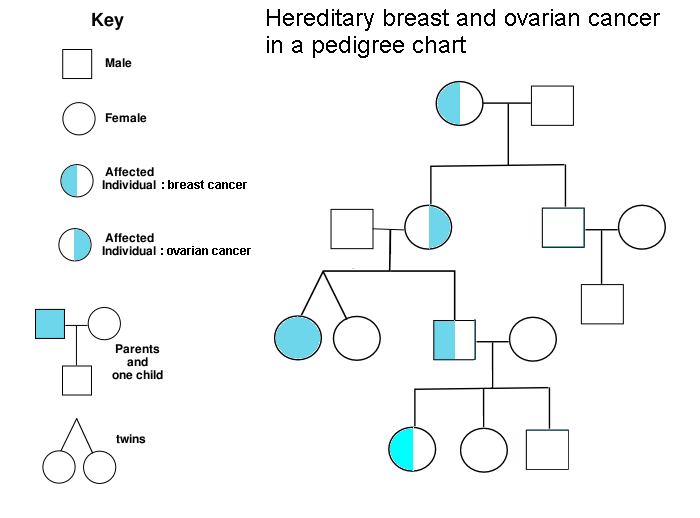
É uma síndrome genética que se transmite de pais para filhos, bastando que a pessoa herde um único gene alterado de um dos pais. Ela é causada por alterações nos genes BRCA1 ou BRCA2. Pessoas com essa síndrome têm um alto risco de desenvolver câncer de mama, principalmente antes dos 50 anos, e também de ter um segundo câncer de mama. Além disso, há um alto risco de desenvolver tanto câncer de mama quanto de ovário.
Introdução
O que você precisa saber de cara
A Síndrome de câncer de mama e/ou ovário hereditário é uma condição genética transmitida de pais para filhos que aumenta significativamente a chance de ter câncer de mama e de ovário. As pessoas com a síndrome costumam apresentar tumores mais precocemente, com frequência antes dos 50 anos de idade, e podem manifestar novos tumores ao longo da vida. As causas principais estão ligadas a alterações herdadas nos genes BRCA1 ou BRCA2, além de outros genes de reparo celular. No Brasil, o SUS oferece medicamentos e esquemas quimioterápicos para o tratamento do câncer de mama por meio de protocolo clínico específico.
É uma síndrome genética que se transmite de pais para filhos, bastando que a pessoa herde um único gene alterado de um dos pais. Ela é causada por alterações nos genes BRCA1 ou BRCA2. Pessoas com essa síndrome têm um alto risco de desenvolver câncer de mama, principalmente antes dos 50 anos, e também de ter um segundo câncer de mama. Além disso, há um alto risco de desenvolver tanto câncer de mama quanto de ovário.
Tem tratamento?
Escala de raridade
<1/50kMuito rara
1/20kRara
1/10kPouco freq.
1/5kIncomum
1/2k
Encontrou um erro ou informação desatualizada? Sugira uma correção →
Entender a doença
Do básico ao detalhe, leia no seu ritmo
Preparando trilha educativa...
Sinais e sintomas
O que aparece no corpo e com que frequência cada sintoma acontece
Partes do corpo afetadas
+ 5 sintomas em outras categorias
Características mais comuns
Os sintomas variam de pessoa para pessoa. Abaixo estão as 7 características clínicas mais associadas, ordenadas por frequência.
Linha do tempo da pesquisa
Encontrou um erro ou informação desatualizada? Sugira uma correção →
Genética e causas
O que está alterado no DNA e como passa nas famílias
Genes associados
15 genes identificados com associação a esta condição. Padrão de herança: Autosomal dominant.
Ataxia-telangiectasia-like disorder 1
A rare disorder characterized by progressive cerebellar ataxia, dysarthria, abnormal eye movements, and absence of telangiectasia. ATLD patients show normal levels of total IgG, IgA and IgM, although there may be reduced levels of specific functional antibodies. At the cellular level, ATLD exhibits hypersensitivity to ionizing radiation and radioresistant DNA synthesis.
Breast cancer
A common malignancy originating from breast epithelial tissue. Breast neoplasms can be distinguished by their histologic pattern. Invasive ductal carcinoma is by far the most common type. Breast cancer is etiologically and genetically heterogeneous. Important genetic factors have been indicated by familial occurrence and bilateral involvement. Mutations at more than one locus can be involved in different families or even in the same case.
Breast cancer
A common malignancy originating from breast epithelial tissue. Breast neoplasms can be distinguished by their histologic pattern. Invasive ductal carcinoma is by far the most common type. Breast cancer is etiologically and genetically heterogeneous. Important genetic factors have been indicated by familial occurrence and bilateral involvement. Mutations at more than one locus can be involved in different families or even in the same case.
Breast cancer
A common malignancy originating from breast epithelial tissue. Breast neoplasms can be distinguished by their histologic pattern. Invasive ductal carcinoma is by far the most common type. Breast cancer is etiologically and genetically heterogeneous. Important genetic factors have been indicated by familial occurrence and bilateral involvement. Mutations at more than one locus can be involved in different families or even in the same case.
Fanconi anemia complementation group O
A disorder affecting all bone marrow elements and resulting in anemia, leukopenia and thrombopenia. It is associated with cardiac, renal and limb malformations, dermal pigmentary changes, and a predisposition to the development of malignancies. At the cellular level it is associated with hypersensitivity to DNA-damaging agents, chromosomal instability (increased chromosome breakage) and defective DNA repair.
Tumor predisposition syndrome 4
A disorder characterized by an increased risk for developing various types of benign and/or malignant neoplasms that arise at an accelerated rate and in different organs.
Breast cancer
A common malignancy originating from breast epithelial tissue. Breast neoplasms can be distinguished by their histologic pattern. Invasive ductal carcinoma is by far the most common type. Breast cancer is etiologically and genetically heterogeneous. Important genetic factors have been indicated by familial occurrence and bilateral involvement. Mutations at more than one locus can be involved in different families or even in the same case.
Nijmegen breakage syndrome
A disorder characterized by chromosomal instability, radiation sensitivity, microcephaly, growth retardation, immunodeficiency and predisposition to cancer, particularly to lymphoid malignancies.
Nijmegen breakage syndrome-like disorder
A disorder similar to Nijmegen breakage syndrome and characterized by chromosomal instability, radiation sensitivity, microcephaly, growth retardation, short stature and bird-like face. Immunodeficiency is absent.
Cowden syndrome 1
An autosomal dominant hamartomatous polyposis syndrome with age-related penetrance. Cowden syndrome is characterized by hamartomatous lesions affecting derivatives of ectodermal, mesodermal and endodermal layers, macrocephaly, facial trichilemmomas (benign tumors of the hair follicle infundibulum), acral keratoses, papillomatous papules, and elevated risk for development of several types of malignancy, particularly breast carcinoma in women and thyroid carcinoma in both men and women. Colon cancer and renal cell carcinoma have also been reported. Hamartomas can be found in virtually every organ, but most commonly in the skin, gastrointestinal tract, breast and thyroid.
Breast-ovarian cancer, familial, 4
A condition associated with familial predisposition to cancer of the breast and ovaries. Characteristic features in affected families are an early age of onset of breast cancer (often before age 50), increased chance of bilateral cancers (cancer that develop in both breasts, or both ovaries, independently), frequent occurrence of breast cancer among men, increased incidence of tumors of other specific organs, such as the prostate.
Breast cancer
A common malignancy originating from breast epithelial tissue. Breast neoplasms can be distinguished by their histologic pattern. Invasive ductal carcinoma is by far the most common type. Breast cancer is etiologically and genetically heterogeneous. Important genetic factors have been indicated by familial occurrence and bilateral involvement. Mutations at more than one locus can be involved in different families or even in the same case.
Ataxia telangiectasia
A rare recessive disorder characterized by progressive cerebellar ataxia, dilation of the blood vessels in the conjunctiva and eyeballs, immunodeficiency, growth retardation and sexual immaturity. Patients have a strong predisposition to cancer; about 30% of patients develop tumors, particularly lymphomas and leukemias. Cells from affected individuals are highly sensitive to damage by ionizing radiation and resistant to inhibition of DNA synthesis following irradiation.
Variantes genéticas (ClinVar)
16.179 variantes patogênicas registradas no ClinVar.
Vias biológicas (Reactome)
77 vias biológicas associadas aos genes desta condição.
Diagnóstico
Os sinais que médicos procuram e os exames que confirmam
Tratamento e manejo
Remédios, cuidados de apoio e o que precisa acompanhar
Onde tratar no SUS
Hospitais de referência no Brasil e o protocolo oficial do SUS (PCDT)
🇧🇷 Atendimento SUS — Síndrome de câncer de mama e/ou ovário hereditário
Selecione um estado ou use sua localização para ver resultados.
Dados de DATASUS/CNES, SBGM, ABNeuro e Ministério da Saúde. Sempre confirme a disponibilidade diretamente com o estabelecimento.
Pesquisa ativa
Ensaios clínicos abertos e novidades científicas recentes
Ensaios em destaque
Com ensaio aberto em 7 países. O ponto verde marca onde há vaga agora.
🟢 Recrutando agora
9 pesquisas recrutando participantes. Converse com seu médico sobre a possibilidade de participar.
Outros ensaios clínicos
59 ensaios clínicos encontrados, 17 ativos.
Publicações mais relevantes
Publicações recentes
Ver todas no PubMedAssociações
Organizações que acompanham esta doença — pra ter apoio e orientação
Ainda não temos associações cadastradas para Síndrome de câncer de mama e/ou ovário hereditário.
É de uma associação que acompanha esta doença? Fale com a gente →
Doença com base genética
Um médico geneticista pode ajudar no diagnóstico de Síndrome de câncer de mama e/ou ovário hereditário e no aconselhamento genético da família.
Doenças relacionadas
Doenças com sintomas parecidos — ajudam quem ainda está buscando diagnóstico
Perguntas frequentes
O que as famílias mais perguntam sobre esta doença — cada resposta com a fonte de onde saiu
A síndrome decorre de mutações com herança autossômica dominante, bastando herdar uma alteração de um dos pais. As alterações ocorrem principalmente nos genes BRCA1 e BRCA2, além de outros genes como PALB2 e CHEK2.
Referências
Fontes citadas no texto, publicações do grafo e bases de dados usadas neste verbete
1 publicação do grafo RarasNet (PubMed) · 7 bases de dados. Títulos, periódicos e PMIDs vêm direto da fonte, sem intermediação de IA.
Dados compilados pelo RarasNet a partir de fontes abertas (Orphanet, OMIM, MONDO, PubMed/EuropePMC, ClinicalTrials.gov, DATASUS, PCDT/MS). Este conteúdo é informativo e não substitui avaliação médica.
Citar este verbete
Raras. (s.d.). Síndrome de câncer de mama e/ou ovário hereditário. Em Raras — Enciclopédia de Doenças Raras do Brasil. https://raras.org/doenca/sindrome-de-cancer-de-mama-eou-ovario-hereditario
Formato APA. Conteúdo sob CC BY 4.0 — reuso livre com atribuição.
Conteúdo mantido por Agente Raras · Médicos e pesquisadores podem colaborar
Síndrome de câncer de mama e/ou ovário hereditário
📋 Origem dos dados
Esta página agrega dados de fontes públicas e oficiais. Dados sobre cobertura no SUS (PCDT, CEAF) são verificados ativamente por agente proativo (ver badge no infobox). Demais dados têm atribuição de fonte + data da última sincronização — clique para abrir o original.
- Doença rara (ontologia)
- fonte: Orphanet
- Identificador unificado
- fonte: MONDO
- Codificação WHO/SUS
- fonte: WHO ICD-10 / DATASUS
- CID-11 (futuro)
- fonte: WHO ICD-11
- NIH/GARD
- fonte: GARD (NIH)
- Indexação biomédica
- fonte: MeSH (NLM)
- Dado público estruturado
- fonte: Wikidata
- Reposicionamento
- fonte: Drug Repurposing Hub
- Ensaios clínicos
- fonte: ClinicalTrials.gov

