
A deficiência de Cernunnos-XLF é uma forma rara de imunodeficiência combinada caracterizada por microcefalia, retardo de crescimento e linfopenia de células T e B.
Introdução
O que você precisa saber de cara
A deficiência de Cernunnos-XLF é uma forma rara de imunodeficiência combinada caracterizada por microcefalia, retardo de crescimento e linfopenia de células T e B.
Escala de raridade
<1/50kMuito rara
1/20kRara
1/10kPouco freq.
1/5kIncomum
1/2k
Encontrou um erro ou informação desatualizada? Sugira uma correção →
Entender a doença
Do básico ao detalhe, leia no seu ritmo
Preparando trilha educativa...
Sinais e sintomas
O que aparece no corpo e com que frequência cada sintoma acontece
Partes do corpo afetadas
+ 35 sintomas em outras categorias
Características mais comuns
Os sintomas variam de pessoa para pessoa. Abaixo estão as 76 características clínicas mais associadas, ordenadas por frequência.
Linha do tempo da pesquisa
Triagem neonatal (Teste do Pezinho)
A triagem neonatal permite diagnóstico precoce e início imediato do tratamento.
Encontrou um erro ou informação desatualizada? Sugira uma correção →
Genética e causas
O que está alterado no DNA e como passa nas famílias
Genes associados
1 gene identificado com associação a esta condição. Padrão de herança: Autosomal recessive.
Curadoria gene-doença
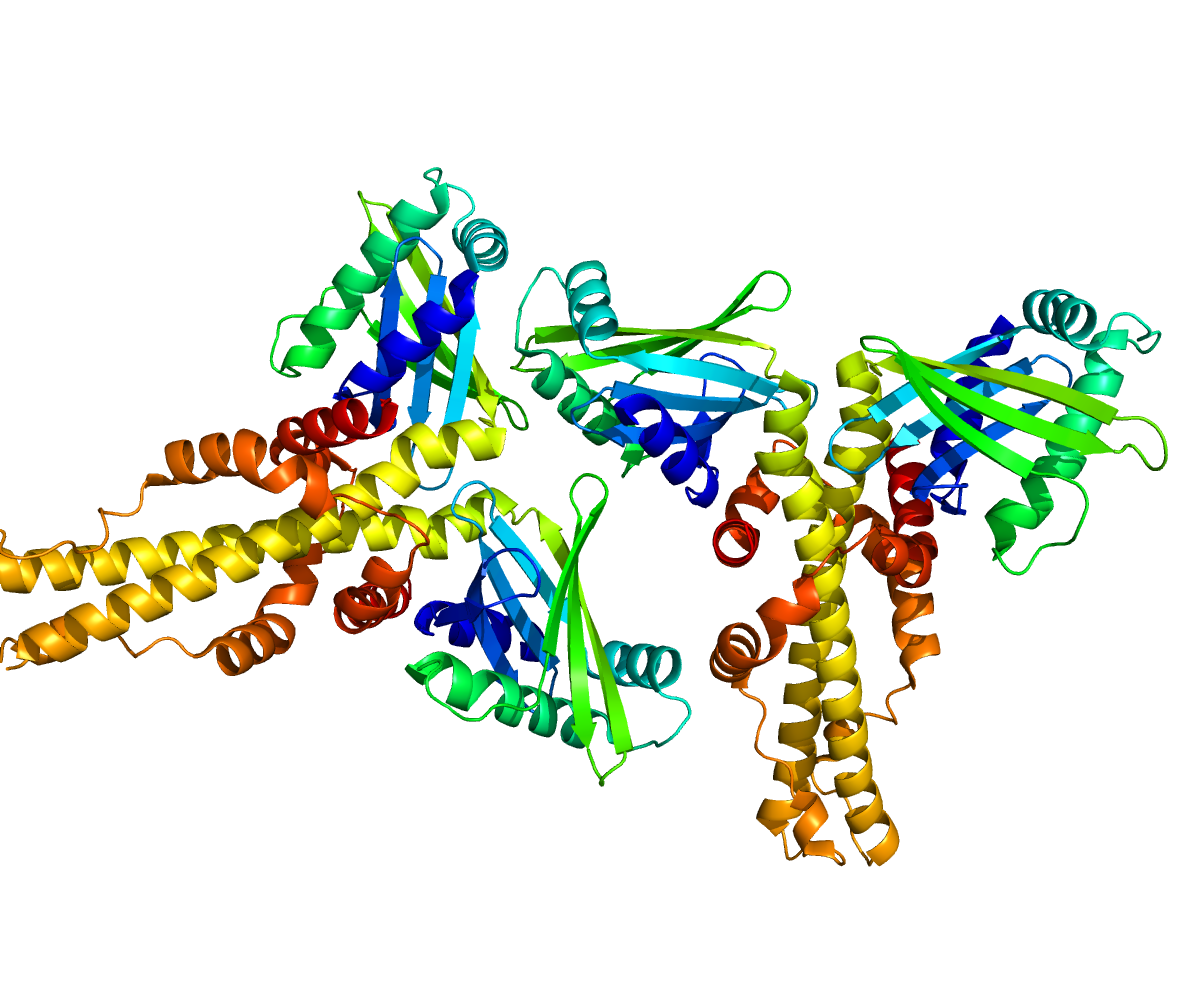
fontes oficiaisDNA repair protein involved in DNA non-homologous end joining (NHEJ); it is required for double-strand break (DSB) repair and V(D)J recombination and is also involved in telomere maintenance (PubMed:16439204, PubMed:16439205, PubMed:17317666, PubMed:17470781, PubMed:17717001, PubMed:18158905, PubMed:18644470, PubMed:20558749, PubMed:26100018, PubMed:28369633). Plays a key role in NHEJ by promoting the ligation of various mismatched and non-cohesive ends (PubMed:17470781, PubMed:17717001, PubMed:
NucleusChromosome
Immunodeficiency 124, severe combined
A form of severe combined immunodeficiency (SCID), a genetically and clinically heterogeneous group of rare congenital disorders characterized by impairment of both humoral and cell-mediated immunity, leukopenia and low or absent antibody levels. Patients with SCID present in infancy with recurrent, persistent infections by opportunistic organisms. The common characteristic of all types of SCID is absence of T-cell-mediated cellular immunity due to a defect in T- cell development. IMD124 is characterized by a profound T- and B- lymphocytopenia associated with increased cellular sensitivity to ionizing radiation, shortened telomeres and premature senescence of hematopoietic stem cells, microcephaly and growth retardation. Some patients may manifest SCID with sensitivity to ionizing radiation without microcephaly and mild growth retardation, probably due to hypomorphic NHEJ1 variants.
Variantes genéticas (ClinVar)
72 variantes patogênicas registradas no ClinVar.
Classificação de variantes (ClinVar)
Distribuição de 206 variantes classificadas pelo ClinVar.
Vias biológicas (Reactome)
1 via biológica associada aos genes desta condição.
Diagnóstico
Os sinais que médicos procuram e os exames que confirmam
Tratamento e manejo
Remédios, cuidados de apoio e o que precisa acompanhar
Onde tratar no SUS
Hospitais de referência no Brasil e o protocolo oficial do SUS (PCDT)
🇧🇷 Atendimento SUS — Imunodeficiência combinada grave - microcefalia - atraso de crescimento - sensibilidade às radiações ionizantes
Selecione um estado ou use sua localização para ver resultados.
Dados de DATASUS/CNES, SBGM, ABNeuro e Ministério da Saúde. Sempre confirme a disponibilidade diretamente com o estabelecimento.
Pesquisa ativa
Ensaios clínicos abertos e novidades científicas recentes
Pesquisa e ensaios clínicos
Nenhum ensaio clínico registrado para esta condição.
Publicações mais relevantes
Expanding the clinical spectrum of Cernunnos/XLF deficiency: a literature review of a rare cause of severe combined immunodeficiency including a novel case.
Severe combined immunodeficiency (SCID) is a congenital immunodeficiency characterized by significant numerical or functional defects in T lymphocytes and is often accompanied by B lymphocyte dysfunction. It presents early in life with severe, recurrent opportunistic infections. Early diagnosis and hematopoietic stem cell transplantation (HSCT) are vital for patient survival. Cernunnos/XLF deficiency is an autosomal recessive form of SCID caused by mutations in the NHEJ1 gene, which plays a critical role in repairing DNA double-strand breaks. First described in 2006, this condition remains exceedingly rare, with only about 55 cases reported to date. This study aimed to describe a novel infant with Cernunnos/XLF deficiency and to review previously reported patients carrying the same variant, thereby expanding the clinical spectrum of this rare disease. With written informed consent, we retrospectively evaluated a pediatric patient with Cernunnos/XLF deficiency followed at our clinic. Demographic, clinical, laboratory, and radiological findings were reviewed. The diagnosis was based on clinical and immunological features and confirmed via clinical exome sequencing. A literature review was conducted to compare the genotype-phenotype correlations of previously reported patients carrying the same NHEJ1 variant. We report an infant who was hospitalized at 6.5 months of age with a preliminary diagnosis of meningitis and was subsequently diagnosed with Cernunnos/XLF deficiency. The patient exhibited microcephaly, growth retardation, recurrent infections, prolonged SARS-CoV-2 PCR positivity, and localized BCGitis following live Bacillus Calmette-Guérin (BCG) vaccination. Immunological evaluation revealed T- and B-cell lymphopenia and hypogammaglobulinemia. Genetic testing confirmed a homozygous nonsense mutation in NHEJ1. HSCT from a matched sibling donor was performed. This study describes a rare case of Cernunnos/XLF deficiency diagnosed in early infancy, underscoring the value of early recognition and the critical role of genetic testing and HSCT. It also expands the clinical spectrum of the disease and provides a comparative perspective with previously reported patients carrying the same mutation. In infants presenting with unexplained infections or complications related to live vaccines, inborn errors of immunity should be considered. Our findings emphasize the importance of timely diagnosis and comprehensive, multidisciplinary follow-up, particularly in patients with additional complications.
Severe immunodeficiency spectrum associated with NHEJ1 gene mutation: Cernunnos/XLF deficiency.
Cernunnos/XLF deficiency is a rare, severe combined immunodeficiency, inherited in an autosomal recessive pattern (OMIM number: 611290), related to the NHEJ1 gene. This gene participates in the DNA non-homologous end-joining pathway, repairing double-strand breaks in the DNA of mammalian cells. The clinical features include growth retardation, microcephaly, triangle-shaped face, recurrent infections, fibroblast's excessive sensitivity to gamma-ionizing radiation, and hypogammaglobulinemia; also, low counts of subpopulations of B and T lymphocytes, with normal values of natural-killer cells. This manuscript aims to present an extremely rare case of combined immunodeficiency in a twenty-years-old man with non-consanguineous parents and a homozygote variant of the NHEJ1 gene. This case is the fiftieth reported in the literature and the first in Colombia, given the low prevalence of NHEJ1-related immunodeficiency and its difficult diagnosis due to scarce knowledge. La deficiencia de Cernunnos XLF es una inmunodeficiencia combinada grave y poco frecuente, heredada de forma autosómica recesiva (número OMIM: 611290), relacionada con el gen NHEJ. Este gen participa en la vía de unión de extremos no homólogos reparando rupturas del ADN de doble cadena en las células de mamíferos. Las características clínicas de la deficiencia de Cernunnos XLF incluyen retraso del crecimiento, microcefalia, cara en forma de triángulo, infecciones recurrentes, sensibilidad excesiva de los fibroblastos a la radiación ionizante gamma, hipogammaglobulinemia y recuentos bajos de subpoblaciones de linfocitos B y T, pero valores normales de células natural killer. El objetivo de este manuscrito es presentar un caso extremadamente raro de inmunodeficiencia combinada en un hombre de veinte años, hijo de padres no consanguíneos, que tiene una variante homocigota del gen NHEJ1. Este es el caso número 50 reportado en la literatura y el primero en Colombia, dada la baja prevalencia de la inmunodeficiencia y las dificultades en su diagnóstico por desconocimiento de la enfermedad. La deficiencia de Cernunnos XLF es una inmunodeficiencia combinada grave y poco frecuente, heredada de forma autosómica recesiva (número OMIM: 611290), relacionada con el gen NHEJ. Este gen participa en la vía de unión de extremos no homólogos reparando rupturas del ADN de doble cadena en las células de mamíferos. Las características clínicas de la deficiencia de Cernunnos XLF incluyen retraso del crecimiento, microcefalia, cara en forma de triángulo, infecciones recurrentes, sensibilidad excesiva de los fibroblastos a la radiación ionizante gamma, hipogammaglobulinemia y recuentos bajos de subpoblaciones de linfocitos B y T, pero valores normales de células natural killer. El objetivo de este manuscrito es presentar un caso extremadamente raro de inmunodeficiencia combinada en un hombre de veinte años, hijo de padres no consanguíneos, que tiene una variante homocigota del gen NHEJ1. Este es el caso número 50 reportado en la literatura y el primero en Colombia, dada la baja prevalencia de la inmunodeficiencia y las dificultades en su diagnóstico por desconocimiento de la enfermedad.
HSCT in a Patient with Cernunnos/XLF Deficiency and Omenn Syndrome.
Hematopoietic Stem Cell Transplantation for DNA Double Strand Breakage Repair Disorders.
The ubiquitous presence of enzymes required for repair of DNA double strand breaks renders patients with defects in these pathways susceptible to immunodeficiency, an increased risk of infection, autoimmunity, bone marrow failure and malignancies, which are commonly associated with Epstein Barr virus (EBV) infection. Treatment of malignancies is particularly difficult, as the nature of the systemic defect means that patients are sensitive to chemotherapy and radiotherapy. Increasing numbers of patients with Nijmegen Breakage syndrome, Ligase 4 deficiency and Cernunnos-XLF deficiency have been successfully transplanted. Best results are obtained with the use of reduced intensity conditioning. Patients with ataxia-telangiectasia have particularly poor outcomes and the best treatment approach for these patients is still to be determined.
Cernunnos/Xlf Deficiency Results in Suboptimal V(D)J Recombination and Impaired Lymphoid Development in Mice.
Xlf/Cernunnos is unique among the core factors of the non-homologous end joining (NHEJ) DNA double strand breaks (DSBs) repair pathway, in the sense that it is not essential for V(D)J recombination in vivo and in vitro. Unlike other NHEJ deficient mice showing a SCID phenotype, Xlf-/- mice present a unique immune phenotype with a moderate B- and T-cell lymphopenia, a decreased cellularity in the thymus, and a characteristic TCRα repertoire bias associated with the P53-dependent apoptosis of CD4+CD8+ DP thymocytes. Here, we thoroughly analyzed Xlf-/- mice immune phenotype and showed that it is specifically related to the DP stage but independent of the MHC-driven antigen presentation and T-cell activation during positive selection. Instead, we show that V(D)J recombination is subefficient in Xlf-/- mice in vivo, exemplified by the presence of unrepaired DSBs in the thymus. This results in a moderate developmental delay of both B- and T-lymphocytes at key V(D)J recombination dependent stages. Furthermore, subefficient V(D)J recombination waves are accumulating during TCRα rearrangement, causing the typical TCRα repertoire bias with loss of distal Vα and Jα rearrangements.
Publicações recentes
Expanding the clinical spectrum of Cernunnos/XLF deficiency: a literature review of a rare cause of severe combined immunodeficiency including a novel case.
Severe immunodeficiency spectrum associated with NHEJ1 gene mutation: Cernunnos/XLF deficiency.
HSCT in a Patient with Cernunnos/XLF Deficiency and Omenn Syndrome.
Hematopoietic Stem Cell Transplantation for DNA Double Strand Breakage Repair Disorders.
Cernunnos/Xlf Deficiency Results in Suboptimal V(D)J Recombination and Impaired Lymphoid Development in Mice.
📚 EuropePMC7 artigos no totalmostrando 8
Expanding the clinical spectrum of Cernunnos/XLF deficiency: a literature review of a rare cause of severe combined immunodeficiency including a novel case.
BMC immunologySevere immunodeficiency spectrum associated with NHEJ1 gene mutation: Cernunnos/XLF deficiency.
Biomedica : revista del Instituto Nacional de SaludHSCT in a Patient with Cernunnos/XLF Deficiency and Omenn Syndrome.
Journal of clinical immunologyHematopoietic Stem Cell Transplantation for DNA Double Strand Breakage Repair Disorders.
Frontiers in pediatricsCernunnos/Xlf Deficiency Results in Suboptimal V(D)J Recombination and Impaired Lymphoid Development in Mice.
Frontiers in immunologyExtreme Phenotypes With Identical Mutations: Two Patients With Same Non-sense NHEJ1 Homozygous Mutation.
Frontiers in immunologyLoss of NHEJ1 Protein Due to a Novel Splice Site Mutation in a Family Presenting with Combined Immunodeficiency, Microcephaly, and Growth Retardation and Literature Review.
Journal of clinical immunologyOutcome of hematopoietic cell transplantation for DNA double-strand break repair disorders.
The Journal of allergy and clinical immunologyAssociações
Organizações que acompanham esta doença — pra ter apoio e orientação
Ainda não temos associações cadastradas para Imunodeficiência combinada grave - microcefalia - atraso de crescimento - sensibilidade às radiações ionizantes.
É de uma associação que acompanha esta doença? Fale com a gente →
Comunidades
Grupos ativos de quem convive com esta doença aqui no Raras
Ainda não existe comunidade no Raras para Imunodeficiência combinada grave - microcefalia - atraso de crescimento - sensibilidade às radiações ionizantes
Pacientes, familiares e cuidadores se organizam em comunidades pra compartilhar experiências, fazer perguntas e se apoiar. Você pode ser o primeiro.
Tire suas dúvidas
Perguntas, dicas e experiências compartilhadas aqui na página
Participe da discussão
Faça login para postar dúvidas, compartilhar experiências e interagir com especialistas.
Fazer loginDoenças relacionadas
Doenças com sintomas parecidos — ajudam quem ainda está buscando diagnóstico
Referências e fontes
Bases de dados externas citadas neste artigo
Publicações científicas
Artigos indexados no PubMed ligados a esta doença no grafo RarasNet — título, periódico e PMID direto da fonte, sem intermediação de IA.
- Expanding the clinical spectrum of Cernunnos/XLF deficiency: a literature review of a rare cause of severe combined immunodeficiency including a novel case.
- Severe immunodeficiency spectrum associated with NHEJ1 gene mutation: Cernunnos/XLF deficiency.
- HSCT in a Patient with Cernunnos/XLF Deficiency and Omenn Syndrome.
- Hematopoietic Stem Cell Transplantation for DNA Double Strand Breakage Repair Disorders.
- Cernunnos/Xlf Deficiency Results in Suboptimal V(D)J Recombination and Impaired Lymphoid Development in Mice.
Bases de dados e fontes oficiais
Identificadores e referências canônicas usadas para montar este verbete.
- ORPHA:169079(Orphanet)
- OMIM OMIM:611291(OMIM)
- MONDO:0012650(MONDO)
- GARD:17045(GARD (NIH))
- Variantes catalogadas(ClinVar)
- Busca completa no PubMed(PubMed)
- Q5064568(Wikidata)
Dados compilados pelo RarasNet a partir de fontes abertas (Orphanet, OMIM, MONDO, PubMed/EuropePMC, ClinicalTrials.gov, DATASUS, PCDT/MS). Este conteúdo é informativo e não substitui avaliação médica.
Conteúdo mantido por Agente Raras · Médicos e pesquisadores podem colaborar
Imunodeficiência combinada grave - microcefalia - atraso de crescimento - sensibilidade às radiações ionizantes
📋 Origem dos dados
Esta página agrega dados de fontes públicas e oficiais. Dados sobre cobertura no SUS (PCDT, CEAF) são verificados ativamente por agente proativo (ver badge no infobox). Demais dados têm atribuição de fonte + data da última sincronização — clique para abrir o original.
- Doença rara (ontologia)
- fonte: Orphanet
- Identificador unificado
- fonte: MONDO
- Genética mendeliana
- fonte: OMIM
- Codificação WHO/SUS
- fonte: WHO ICD-10 / DATASUS
- CID-11 (futuro)
- fonte: WHO ICD-11
- NIH/GARD
- fonte: GARD (NIH)
- Indexação biomédica
- fonte: MeSH (NLM)
- Dado público estruturado
- fonte: Wikidata