
A deficiência da piruvato desidrogenase E1-beta é uma forma extremamente rara da deficiência da piruvato desidrogenase (DPDH), caracterizada por acidose láctica grave (acúmulo excessivo de ácido lático no sangue), atraso no desenvolvimento e hipotonia (fraqueza muscular).
Introdução
O que você precisa saber de cara
A deficiência da piruvato desidrogenase E1-beta é uma forma extremamente rara da deficiência da piruvato desidrogenase (DPDH), caracterizada por acidose láctica grave (acúmulo excessivo de ácido lático no sangue), atraso no desenvolvimento e hipotonia (fraqueza muscular).
Escala de raridade
<1/50kMuito rara
1/20kRara
1/10kPouco freq.
1/5kIncomum
1/2k
Encontrou um erro ou informação desatualizada? Sugira uma correção →
Entender a doença
Do básico ao detalhe, leia no seu ritmo
Preparando trilha educativa...
Sinais e sintomas
O que aparece no corpo e com que frequência cada sintoma acontece
Partes do corpo afetadas
+ 13 sintomas em outras categorias
Características mais comuns
Os sintomas variam de pessoa para pessoa. Abaixo estão as 28 características clínicas mais associadas, ordenadas por frequência.
Linha do tempo da pesquisa
Encontrou um erro ou informação desatualizada? Sugira uma correção →
Genética e causas
O que está alterado no DNA e como passa nas famílias
Genes associados
1 gene identificado com associação a esta condição. Padrão de herança: Autosomal recessive.
Curadoria gene-doença
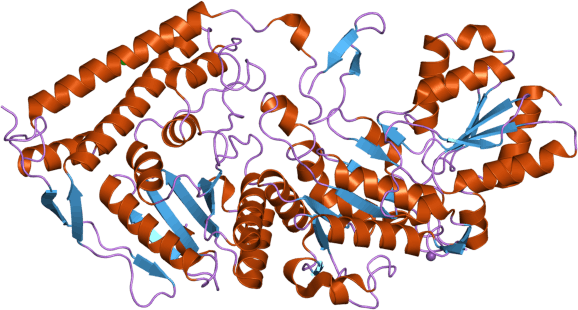
fontes oficiaisTogether with PDHA1 forms the heterotetrameric E1 subunit of the pyruvate dehydrogenase (PDH) complex (PubMed:17474719, PubMed:19081061). The PDH complex catalyzes the overall conversion of pyruvate to acetyl-CoA and CO(2), and thereby links cytoplasmic glycolysis and the mitochondrial tricarboxylic acid (TCA) cycle (Probable). It contains multiple copies of three enzymatic components: pyruvate dehydrogenase (E1), dihydrolipoamide acetyltransferase (E2) and dihydrolipoamide dehydrogenase (E3) (P
Mitochondrion matrix
Pyruvate dehydrogenase E1-beta deficiency
An enzymatic defect causing primary lactic acidosis in children. It is associated with a broad clinical spectrum ranging from fatal lactic acidosis in the newborn to chronic neurologic dysfunction with structural abnormalities in the central nervous system without systemic acidosis.
Variantes genéticas (ClinVar)
62 variantes patogênicas registradas no ClinVar.
Classificação de variantes (ClinVar)
Distribuição de 360 variantes classificadas pelo ClinVar.
Vias biológicas (Reactome)
4 vias biológicas associadas aos genes desta condição.
Diagnóstico
Os sinais que médicos procuram e os exames que confirmam
Tratamento e manejo
Remédios, cuidados de apoio e o que precisa acompanhar
Onde tratar no SUS
Hospitais de referência no Brasil e o protocolo oficial do SUS (PCDT)
🇧🇷 Atendimento SUS — Deficiência da subunidade beta do componente E1 do complexo piruvato desidrogenase
Selecione um estado ou use sua localização para ver resultados.
Dados de DATASUS/CNES, SBGM, ABNeuro e Ministério da Saúde. Sempre confirme a disponibilidade diretamente com o estabelecimento.
Pesquisa ativa
Ensaios clínicos abertos e novidades científicas recentes
Pesquisa e ensaios clínicos
1 ensaios clínicos encontrados.
Publicações mais relevantes
A missense mutation in PDHB gene: identification of the patient with pyruvate dehydrogenase deficiency and demonstration of pathogenicity in vitro.
Pyruvate dehydrogenase (PDH) deficiency is an uncommon condition responsible for primary refractory lactic acidosis, and PDH E1β (PDHB) subunit gene mutation rarely causes of PDH deficiency. We described a missense mutation of PDHB gene in a neonate with PDH deficiency, and verified the mutation damages PDH activity in vitro. Whole exome sequencing (WES) was used to discover the missense mutation. We constructed the recombinant eukaryotic recombinant expression vector, the phage-PDHB-wt/mut, containing human full-length wild-type (NM_000925.4) or mutant (c.575G > T) PDHB gene, and transfected vector into 293T cells. Western blot was performed to assess PDH protein stability, PDH activity was measured. A 37-week-gestation male infant was noted to have refractory lactic acidosis, growth retardation, and neurodevelopmental anomalies with abnormal brain magnetic resonance (MR) findings, starting with convulsive seizures at 3 months of age. WES analysis revealed the homozygous missense mutations in the PDHB gene, which was c.575G > T (p.Arg192Leu) in exon 6. This missense mutation of PDHB was predicted to be harmful by bioinformatics software including Sorting Intolerant From Tolerant (SIFT), Polyphen2, LRT, and Mutation Taster. Western blot showed that normal PDH protein expression was significantly decreased in the phage -PDHB-mut transfected cells than that in the phage -PDHB-wt transfected cells (P < 0.001). PDH activities analysis revealed that PDH activity was significantly decreased in the phage -PDHB-mut transfected cells than that in the phage -PDHB-wt transfected cells (P < 0.001). c.575G > T (p.Arg192Leu) in PDHB gene is a pathogenic missense mutation, which causes PDH deficiency in autosomal recessive inheritance mode.
Case Report: A novel hemizygous missense PDHA1 variant in a Vietnamese boy with pyruvate dehydrogenase E1-alpha deficiency.
A pyruvate dehydrogenase complex deficiency causes a reduction in adenosine triphosphate production and energy insufficiency, leading to neurological disorders. An abnormal E1-alpha protein originating from the PDHA1 gene with pathogenic variants is unable to communicate with E1-beta for the formation of the E1 enzyme, decreasing pyruvate dehydrogenase complex activity. In this study, we report a Vietnamese boy with lethargy, severe metabolic acidosis, increased serum lactate, hyperalaninemia, lactic acidosis, and globus pallidus lesions. Whole-exome sequencing and variant filtering identified a hemizygous missense variant NM000284.4 (PDHA1): c.479T>G (p.Phe160Cys) in the patient. The variant c.479T>G caused a single nucleotide substitution on exon 5 and was predicted to be a disease-causing variant in the in silico analyses. We present the first report with a genetic analysis of a Vietnamese patient with pyruvate dehydrogenase E1-alpha deficiency (PDHAD). Sanger sequencing demonstrated that the patient inherited the variant from his mother who harbored the variant in a heterozygous state, but no PDHAD symptoms were observed in her. In addition, a prenatal test of the patient's mother revealed a fetus with a normal genotype. Furthermore, the patient's father and sister both carried a normal allele. Based on the American College of Medical Genetics criteria, the variant c.479T>G was predicted to be a likely pathogenic variant. Using the combination of the patient's genotype and phenotype, he was definitively diagnosed with pyruvate dehydrogenase E1-alpha deficiency. Our findings expand the mutational spectrum of neurological disorders and provide the scientific basis for genetic counseling for the patient's family.
Neuron-specific knockdown of Drosophila PDHB induces reduction of lifespan, deficient locomotive ability, abnormal morphology of motor neuron terminals and photoreceptor axon targeting.
Pyruvate dehydrogenase complex deficiency (PDCD) is a common primary cause of defects in mitochondrial function and also can lead to peripheral neuropathy. Pyruvate dehydrogenase E1 component subunit beta (PDHB) is a subunit of pyruvate dehydrogenase E1, which is a well-known component of PDC. In Drosophila melanogaster, the CG11876 (dPDHB) gene is a homolog of human PDHB. In this study, we established a Drosophila model with neuron-specific knockdown of dPDHB to investigate its role in neuropathy pathogenesis. Knockdown of dPDHB in pan-neurons induced locomotor defects in both larval and adult stages, which were consistent with abnormal morphology of the motor neuron terminals at neuromuscular junctions and mitochondrial fragmentation in brains. Moreover, neuron-specific knockdown of dPDHB also shortened the lifespan of adult flies. In addition, flies with knockdown of dPDHB manifested a rough eye phenotype and aberrant photoreceptor axon targeting. These results with the Drosophila model suggest the involvement of PDHB in peripheral neuropathy.
Elevated (Pro)renin Receptor Expression Contributes to Maintaining Aerobic Metabolism in Growth Hormone Deficiency.
Growth hormone deficiency (GHD) leads to obesity and may induce tissue hypoxia. As (pro)renin receptor [(P)RR] is reported to contribute to the aerobic metabolism by stabilizing pyruvate dehydrogenase (PDH), it may play a substantial role in GHD. We aimed to investigate serum soluble (P)RR [s(P)RR] concentration, the origin of s(P)RR, and significance of (P)RR in GHD. Serum s(P)RR concentration was examined in 72 patients with pituitary diseases, including 32 patients with severe GHD (SGHD) and after GH replacement in 16 SGHD patients. Leptin-deficient ob/ob obese mice were treated with pegvisomant, a GH receptor antagonist, to explore the source of elevated serum s(P)RR in GHD. Adipocytes were cultured with 5% O2 to examine the effects of hypoxia. Serum s(P)RR concentration was higher in patients with SGHD than in those without SGHD. Obesity was the important determinant of s(P)RR concentration. Serum s(P)RR concentration significantly decreased after GH replacement in SGHD patients. (P)RR mRNA expression was increased specifically in the adipose tissue (AT) of pegvisomant-treated obese mice compared with that of control obese mice. Hypoxia in cultured adipocytes increased (P)RR expression without affecting the PDH E1 β subunit (PDHB) expression; however, with (P)RR knockdown by small interfering RNA, hypoxia significantly decreased the expression of PDHB. GHD patients showed increased serum s(P)RR concentration, possibly caused by obesity and hypoxia. (P)RR expression in AT of GHD patients may be elevated to help maintain aerobic metabolism under hypoxia. Thus, the elevated serum s(P)RR level may reflect hypoxia in ATs.
Publicações recentes
miR-1343-3p regulating OGDHL/PDHB-pyruvate glucose metabolic reprogramming against gastric cancer cell proliferation.
Investigating hub genes in the relationship between septic cardiomyopathy and cuproptosis and potential Chinese herbal drug candidates with bioinformatic tools.
Soluble (pro)renin receptor increased by hypoxia maintains oxidative metabolism in trophoblasts.
Potentially Critical Roles of NDUFB5, TIMMDC1, and VDAC3 in the Progression of Septic Cardiomyopathy Through Integrated Bioinformatics Analysis.
Proteomics reveals key proteins participating in growth difference between fall dormant and non-dormant alfalfa in terminal buds.
📚 EuropePMCmostrando 4
A missense mutation in PDHB gene: identification of the patient with pyruvate dehydrogenase deficiency and demonstration of pathogenicity in vitro.
Italian journal of pediatricsCase Report: A novel hemizygous missense PDHA1 variant in a Vietnamese boy with pyruvate dehydrogenase E1-alpha deficiency.
Frontiers in pediatricsElevated (Pro)renin Receptor Expression Contributes to Maintaining Aerobic Metabolism in Growth Hormone Deficiency.
Journal of the Endocrine SocietyNeuron-specific knockdown of Drosophila PDHB induces reduction of lifespan, deficient locomotive ability, abnormal morphology of motor neuron terminals and photoreceptor axon targeting.
Experimental cell researchAssociações
Organizações que acompanham esta doença — pra ter apoio e orientação
Ainda não temos associações cadastradas para Deficiência da subunidade beta do componente E1 do complexo piruvato desidrogenase.
É de uma associação que acompanha esta doença? Fale com a gente →
Comunidades
Grupos ativos de quem convive com esta doença aqui no Raras
Ainda não existe comunidade no Raras para Deficiência da subunidade beta do componente E1 do complexo piruvato desidrogenase
Pacientes, familiares e cuidadores se organizam em comunidades pra compartilhar experiências, fazer perguntas e se apoiar. Você pode ser o primeiro.
Tire suas dúvidas
Perguntas, dicas e experiências compartilhadas aqui na página
Participe da discussão
Faça login para postar dúvidas, compartilhar experiências e interagir com especialistas.
Fazer loginDoenças relacionadas
Doenças com sintomas parecidos — ajudam quem ainda está buscando diagnóstico
Referências e fontes
Bases de dados externas citadas neste artigo
Publicações científicas
Artigos indexados no PubMed ligados a esta doença no grafo RarasNet — título, periódico e PMID direto da fonte, sem intermediação de IA.
- A missense mutation in PDHB gene: identification of the patient with pyruvate dehydrogenase deficiency and demonstration of pathogenicity in vitro.
- Case Report: A novel hemizygous missense PDHA1 variant in a Vietnamese boy with pyruvate dehydrogenase E1-alpha deficiency.
- Neuron-specific knockdown of Drosophila PDHB induces reduction of lifespan, deficient locomotive ability, abnormal morphology of motor neuron terminals and photoreceptor axon targeting.
- Elevated (Pro)renin Receptor Expression Contributes to Maintaining Aerobic Metabolism in Growth Hormone Deficiency.
- miR-1343-3p regulating OGDHL/PDHB-pyruvate glucose metabolic reprogramming against gastric cancer cell proliferation.
- Investigating hub genes in the relationship between septic cardiomyopathy and cuproptosis and potential Chinese herbal drug candidates with bioinformatic tools.
- Soluble (pro)renin receptor increased by hypoxia maintains oxidative metabolism in trophoblasts.
- Potentially Critical Roles of NDUFB5, TIMMDC1, and VDAC3 in the Progression of Septic Cardiomyopathy Through Integrated Bioinformatics Analysis.
- Proteomics reveals key proteins participating in growth difference between fall dormant and non-dormant alfalfa in terminal buds.
Bases de dados e fontes oficiais
Identificadores e referências canônicas usadas para montar este verbete.
- ORPHA:255138(Orphanet)
- OMIM OMIM:614111(OMIM)
- MONDO:0013580(MONDO)
- GARD:17236(GARD (NIH))
- Variantes catalogadas(ClinVar)
- Busca completa no PubMed(PubMed)
- Q106303124(Wikidata)
Dados compilados pelo RarasNet a partir de fontes abertas (Orphanet, OMIM, MONDO, PubMed/EuropePMC, ClinicalTrials.gov, DATASUS, PCDT/MS). Este conteúdo é informativo e não substitui avaliação médica.
Conteúdo mantido por Agente Raras · Médicos e pesquisadores podem colaborar
Deficiência da subunidade beta do componente E1 do complexo piruvato desidrogenase
📋 Origem dos dados
Esta página agrega dados de fontes públicas e oficiais. Dados sobre cobertura no SUS (PCDT, CEAF) são verificados ativamente por agente proativo (ver badge no infobox). Demais dados têm atribuição de fonte + data da última sincronização — clique para abrir o original.
- Doença rara (ontologia)
- fonte: Orphanet
- Identificador unificado
- fonte: MONDO
- Genética mendeliana
- fonte: OMIM
- Codificação WHO/SUS
- fonte: WHO ICD-10 / DATASUS
- CID-11 (futuro)
- fonte: WHO ICD-11
- NIH/GARD
- fonte: GARD (NIH)
- Indexação biomédica
- fonte: MeSH (NLM)
- Dado público estruturado
- fonte: Wikidata