
É uma doença genética que é passada dos pais para os filhos. Para que a doença se manifeste, a pessoa precisa herdar um gene alterado da mãe e um do pai, e essa herança não está ligada ao sexo. A doença é causada por uma mudança no gene PNLIP, que tem a função de produzir a lipase pancreática, uma enzima que ajuda a digerir as gorduras. Quem tem essa condição apresenta pouca ou nenhuma lipase pancreática.
Introdução
O que você precisa saber de cara
É uma doença genética que é passada dos pais para os filhos. Para que a doença se manifeste, a pessoa precisa herdar um gene alterado da mãe e um do pai, e essa herança não está ligada ao sexo. A doença é causada por uma mudança no gene PNLIP, que tem a função de produzir a lipase pancreática, uma enzima que ajuda a digerir as gorduras. Quem tem essa condição apresenta pouca ou nenhuma lipase pancreática.
Escala de raridade
<1/50kMuito rara
1/20kRara
1/10kPouco freq.
1/5kIncomum
1/2k
Encontrou um erro ou informação desatualizada? Sugira uma correção →
Entender a doença
Do básico ao detalhe, leia no seu ritmo
Preparando trilha educativa...
Sinais e sintomas
O que aparece no corpo e com que frequência cada sintoma acontece
Partes do corpo afetadas
+ 17 sintomas em outras categorias
Características mais comuns
Os sintomas variam de pessoa para pessoa. Abaixo estão as 29 características clínicas mais associadas, ordenadas por frequência.
Linha do tempo da pesquisa
Encontrou um erro ou informação desatualizada? Sugira uma correção →
Genética e causas
O que está alterado no DNA e como passa nas famílias
Genes associados
1 gene identificado com associação a esta condição. Padrão de herança: Not applicable.
Curadoria gene-doença
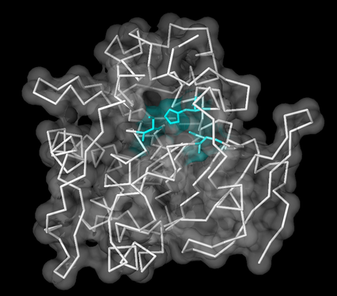
fontes oficiaisPlays an important role in fat metabolism. It preferentially splits the esters of long-chain fatty acids at positions 1 and 3, producing mainly 2-monoacylglycerol and free fatty acids, and shows considerably higher activity against insoluble emulsified substrates than against soluble ones
Secreted
Pancreatic lipase deficiency
An autosomal recessive disorder characterized by exocrine pancreatic failure. Clinical findings include oily/greasy stools from infancy or early childhood, absence of discernible pancreatic disease, and significantly decreased pancreatic lipolytic activity.
Variantes genéticas (ClinVar)
51 variantes patogênicas registradas no ClinVar.
Classificação de variantes (ClinVar)
Distribuição de 4 variantes classificadas pelo ClinVar.
Vias biológicas (Reactome)
3 vias biológicas associadas aos genes desta condição.
Diagnóstico
Os sinais que médicos procuram e os exames que confirmam
Tratamento e manejo
Remédios, cuidados de apoio e o que precisa acompanhar
Onde tratar no SUS
Hospitais de referência no Brasil e o protocolo oficial do SUS (PCDT)
🇧🇷 Atendimento SUS — Déficit da triacilglicerol lipase pancreática
Selecione um estado ou use sua localização para ver resultados.
Dados de DATASUS/CNES, SBGM, ABNeuro e Ministério da Saúde. Sempre confirme a disponibilidade diretamente com o estabelecimento.
Pesquisa ativa
Ensaios clínicos abertos e novidades científicas recentes
Ensaios em destaque
🟢 Recrutando agora
1 pesquisa recrutando participantes. Converse com seu médico sobre a possibilidade de participar.
Outros ensaios clínicos
0 ensaios clínicos encontrados.
Publicações mais relevantes
Characterization of a PNLIP variant identified in Amish pediatric patients with congenital pancreatic lipase deficiency.
Congenital pancreatic lipase deficiency (CPLD, OMIM #614338) is a rare exocrine pancreatic disorder presenting in late infancy with steatorrhea, fat-soluble vitamin deficiency, and low pancreatic lipase activity. Variants of the pancreatic triglyceride lipase (PNLIP) gene have been linked to CPLD. Six children from four Amish families exhibited CPLD symptoms, and two had decreased fecal elastase levels when tested. A novel homozygous PNLIP variant, c.869G>A (p.S290N), was identified in these children. This study aimed to characterize the PNLIP variant to understand its mechanism underlying CPLD. The variant impact was first evaluated using computational modeling. Functional analyses included activity assays, cellular PNLIP partition assessments, and endoplasmic reticulum (ER) stress evaluation in transfected cells. Computational modeling showed that p.Ser290 is highly conserved across species and the variant causes steric hindrance, resulting in protein misfolding. Functional assays revealed that the PNLIP variant had a complete loss of activity compared to the wild type (WT), with defects in catalytic function and secretion. Immunoblotting showed reduced PNLIP variant in the medium and increased accumulation in the detergent-insoluble fraction, consistent with protein misfolding. Variant-expressing cells had elevated levels of BiP, an ER stress marker, and increased Xbp1 mRNA splicing, suggesting an elevated ER stress and unfolded protein response (UPR). In conclusion, the PNLIP p.S290N variant causes CPLD through a loss-of-function mechanism, characterized by loss of enzymatic activity and defective secretion due to protein misfolding. Further studies are needed to determine whether the misfolding variant protein induces proteotoxicity, potentially increasing the risk of pancreatic injury, including chronic pancreatitis.
Characterization of novel PNLIP variants in congenital pancreatic lipase deficiency.
Studies of a rare homozygous missense mutation identified in two brothers diagnosed with congenital pancreatic lipase deficiency (CPLD) provided the first definitive evidence linking CPLD with missense mutations in the gene of PNLIP. Herein, we investigated the molecular basis for the loss-of-function in the three novel PNLIP variants (c.305G > A, p.(W102∗); c.562C > T, p.(R188C); and c.1257G > A, p.(W419∗)) associated with CPLD. We characterized three novel PNLIP variants in transfected cells by assessing their secretion, intracellular distribution, and markers of endoplasmic reticulum (ER) stress. All three variants had secretion defects. Notably, the p.R188C and p.W419∗ variants induced misfolding of PNLIP and accumulated as detergent-insoluble aggregates resulting in elevated BiP at both protein and mRNA levels indicating increased ER stress. All three novel PNLIP variants cause a loss-of-function through impaired secretion. Additionally, the p.R188C and p.W419∗ variants may induce proteotoxicity through misfolding and potentially increase the risk for pancreatic acinar cell injury.
A novel mutation in PNLIP causes pancreatic triglyceride lipase deficiency through protein misfolding.
Congenital pancreatic triglyceride lipase (PNLIP) deficiency is a rare disorder with uncertain genetic background as most cases were described before gene sequencing was readily available. Recently, two brothers with PNLIP deficiency were found to carry a homozygous missense mutation, c.662C>T (p.T221M) in the PNLIP gene (J. Lipid Res. 2014. 55:307-312). Molecular modeling suggested the substitution would change the orientation of residues in the catalytic site and disrupt the function of p.T221M PNLIP. To test the effect of the p.T221M mutation on PNLIP function, we expressed wild-type and p.T221M PNLIP in human embryonic kidney (HEK) 293A cells and dexamethasone-differentiated AR42J rat acinar cells. In both cellular models, wild-type PNLIP was secreted into the conditioned medium where it was readily detectable by protein staining, immunoblot or lipase activity assays. In contrast, mutant p.T221M was not secreted into the medium, but it was present in cell lysates where it accumulated in the insoluble fraction. Intracellular retention of mutant p.T221M resulted in endoplasmic reticulum (ER) stress as measured by elevated XBP1 splicing and increased levels of ER chaperones. Our results demonstrate that the presence of methionine at position 221 in the PNLIP protein sequence causes misfolding and aggregation of the p.T221M mutant inside the cell. The consequent loss of enzyme secretion adequately explains the clinical phenotype of PNLIP deficiency reported for homozygous carriers of p.T221M. Furthermore, the ability of mutant p.T221M to induce ER stress suggests that this form of PNLIP deficiency might cause acinar cell damage as well.
Publicações recentes
Toosendanin inhibits the growth of Spodoptera litura by inducing metabolic dysfunction in the midgut.
Arecoline inhibits the growth of Spodoptera litura by inducing intestinal metabolic dysfunction.
Exploring the midgut physiology of the non-haematophagous mosquito Toxorhynchites theobaldi.
Comparative transcriptome reveals the potential modulation mechanisms of estradiol affecting ovarian development of female Portunus trituberculatus.
Expression Profile of the Digestive Enzymes of Manis javanica Reveals Its Adaptation to Diet Specialization.
📚 EuropePMCmostrando 3
Characterization of a PNLIP variant identified in Amish pediatric patients with congenital pancreatic lipase deficiency.
Journal of lipid researchCharacterization of novel PNLIP variants in congenital pancreatic lipase deficiency.
Pancreatology : official journal of the International Association of Pancreatology (IAP) ... [et al.]A novel mutation in PNLIP causes pancreatic triglyceride lipase deficiency through protein misfolding.
Biochimica et biophysica actaAssociações
Organizações que acompanham esta doença — pra ter apoio e orientação
Ainda não temos associações cadastradas para Déficit da triacilglicerol lipase pancreática.
É de uma associação que acompanha esta doença? Fale com a gente →
Comunidades
Grupos ativos de quem convive com esta doença aqui no Raras
Ainda não existe comunidade no Raras para Déficit da triacilglicerol lipase pancreática
Pacientes, familiares e cuidadores se organizam em comunidades pra compartilhar experiências, fazer perguntas e se apoiar. Você pode ser o primeiro.
Tire suas dúvidas
Perguntas, dicas e experiências compartilhadas aqui na página
Participe da discussão
Faça login para postar dúvidas, compartilhar experiências e interagir com especialistas.
Fazer loginDoenças relacionadas
Doenças com sintomas parecidos — ajudam quem ainda está buscando diagnóstico
Referências e fontes
Bases de dados externas citadas neste artigo
Publicações científicas
Artigos indexados no PubMed ligados a esta doença no grafo RarasNet — título, periódico e PMID direto da fonte, sem intermediação de IA.
- Characterization of a PNLIP variant identified in Amish pediatric patients with congenital pancreatic lipase deficiency.
- Characterization of novel PNLIP variants in congenital pancreatic lipase deficiency.Pancreatology : official journal of the International Association of Pancreatology (IAP) ... [et al.]· 2023· PMID 37926600mais citado
- A novel mutation in PNLIP causes pancreatic triglyceride lipase deficiency through protein misfolding.
- Toosendanin inhibits the growth of Spodoptera litura by inducing metabolic dysfunction in the midgut.
- Arecoline inhibits the growth of Spodoptera litura by inducing intestinal metabolic dysfunction.
- Exploring the midgut physiology of the non-haematophagous mosquito Toxorhynchites theobaldi.
- Comparative transcriptome reveals the potential modulation mechanisms of estradiol affecting ovarian development of female Portunus trituberculatus.
- Expression Profile of the Digestive Enzymes of Manis javanica Reveals Its Adaptation to Diet Specialization.
Bases de dados e fontes oficiais
Identificadores e referências canônicas usadas para montar este verbete.
- ORPHA:309031(Orphanet)
- OMIM OMIM:614338(OMIM)
- MONDO:0013700(MONDO)
- GARD:17401(GARD (NIH))
- Variantes catalogadas(ClinVar)
- Busca completa no PubMed(PubMed)
- Q55784308(Wikidata)
Dados compilados pelo RarasNet a partir de fontes abertas (Orphanet, OMIM, MONDO, PubMed/EuropePMC, ClinicalTrials.gov, DATASUS, PCDT/MS). Este conteúdo é informativo e não substitui avaliação médica.
Conteúdo mantido por Agente Raras · Médicos e pesquisadores podem colaborar
Déficit da triacilglicerol lipase pancreática
📋 Origem dos dados
Esta página agrega dados de fontes públicas e oficiais. Dados sobre cobertura no SUS (PCDT, CEAF) são verificados ativamente por agente proativo (ver badge no infobox). Demais dados têm atribuição de fonte + data da última sincronização — clique para abrir o original.
- Doença rara (ontologia)
- fonte: Orphanet
- Identificador unificado
- fonte: MONDO
- Genética mendeliana
- fonte: OMIM
- Codificação WHO/SUS
- fonte: WHO ICD-10 / DATASUS
- CID-11 (futuro)
- fonte: WHO ICD-11
- NIH/GARD
- fonte: GARD (NIH)
- Dado público estruturado
- fonte: Wikidata