
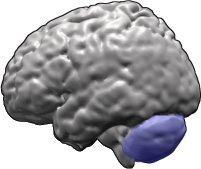
Uma doença genética rara que afeta o cerebelo (a parte do cérebro que controla o equilíbrio e a coordenação), chamada ataxia cerebelar autossômica recessiva (ARCA). Ela causa uma piora gradual na falta de coordenação e equilíbrio. Para que a pessoa tenha a doença, é preciso herdar um gene alterado de cada um dos pais. Essa condição também está associada frequentemente a dificuldade em controlar os movimentos dos olhos, problemas graves nos nervos e um nível alto de uma proteína chamada alfa-fetoproteína (AFP) no sangue.
Introdução
O que você precisa saber de cara
Uma doença genética rara que afeta o cerebelo (a parte do cérebro que controla o equilíbrio e a coordenação), chamada ataxia cerebelar autossômica recessiva (ARCA). Ela causa uma piora gradual na falta de coordenação e equilíbrio. Para que a pessoa tenha a doença, é preciso herdar um gene alterado de cada um dos pais. Essa condição também está associada frequentemente a dificuldade em controlar os movimentos dos olhos, problemas graves nos nervos e um nível alto de uma proteína chamada alfa-fetoproteína (AFP) no sangue.
Escala de raridade
<1/50kMuito rara
1/20kRara
1/10kPouco freq.
1/5kIncomum
1/2k
Encontrou um erro ou informação desatualizada? Sugira uma correção →
Entender a doença
Do básico ao detalhe, leia no seu ritmo
Preparando trilha educativa...
Sinais e sintomas
O que aparece no corpo e com que frequência cada sintoma acontece
Partes do corpo afetadas
+ 25 sintomas em outras categorias
Características mais comuns
Os sintomas variam de pessoa para pessoa. Abaixo estão as 49 características clínicas mais associadas, ordenadas por frequência.
Linha do tempo da pesquisa
Encontrou um erro ou informação desatualizada? Sugira uma correção →
Genética e causas
O que está alterado no DNA e como passa nas famílias
Genes associados
2 genes identificados com associação a esta condição. Padrão de herança: Autosomal recessive.
Curadoria gene-doença
fontes oficiaisATP-dependent 5'->3' DNA/RNA helicase that preferentially unwinds RNA substrates over DNA, playing a crucial role in resolving R-loops and promoting transcription termination (PubMed:36864660). Plays a role in transcription regulation by its ability to modulate RNA Polymerase II (Pol II) binding to chromatin and through its interaction with proteins involved in transcription (PubMed:19515850, PubMed:21700224). Contributes to the mRNA splicing efficiency and splice site selection (PubMed:19515850
NucleusNucleus, nucleoplasmNucleus, nucleolusCytoplasmChromosomeChromosome, telomereCell projection, axonCell projection, growth cone
Spinocerebellar ataxia, autosomal recessive, with axonal neuropathy 2
A form of spinocerebellar ataxia, a clinically and genetically heterogeneous group of cerebellar disorders. Patients show progressive incoordination of gait and often poor coordination of hands, speech and eye movements, due to degeneration of the cerebellum with variable involvement of the brainstem and spinal cord. SCAN2 is an autosomal recessive form associated with peripheral neuropathy and elevated serum alpha-fetoprotein, immunoglobulins and, less commonly, creatine kinase levels. Some SCAN2 patients manifest oculomotor apraxia.
Regulatory subunit of the PI3K gamma complex. Required for recruitment of the catalytic subunit to the plasma membrane via interaction with beta-gamma G protein dimers. Required for G protein-mediated activation of PIK3CG (By similarity)
NucleusCytoplasmCell membrane
Ataxia-oculomotor apraxia 3
An autosomal recessive disease characterized by cerebellar ataxia, oculomotor apraxia, areflexia and peripheral neuropathy.
Variantes genéticas (ClinVar)
388 variantes patogênicas registradas no ClinVar.
Vias biológicas (Reactome)
9 vias biológicas associadas aos genes desta condição.
Diagnóstico
Os sinais que médicos procuram e os exames que confirmam
Tratamento e manejo
Remédios, cuidados de apoio e o que precisa acompanhar
Onde tratar no SUS
Hospitais de referência no Brasil e o protocolo oficial do SUS (PCDT)
🇧🇷 Atendimento SUS — Ataxia espinocerebelar com neuropatia axonal tipo 2
Selecione um estado ou use sua localização para ver resultados.
Dados de DATASUS/CNES, SBGM, ABNeuro e Ministério da Saúde. Sempre confirme a disponibilidade diretamente com o estabelecimento.
Pesquisa ativa
Ensaios clínicos abertos e novidades científicas recentes
Ensaios em destaque
🟢 Recrutando agora
1 pesquisa recrutando participantes. Converse com seu médico sobre a possibilidade de participar.
Outros ensaios clínicos
7 ensaios clínicos encontrados, 1 ativos.
Publicações mais relevantes
Transcranial Alternating Current Stimulation in a Patient with Ataxia-Ocular Apraxia 2: a Case Report.
Ataxia-ocular apraxia 2 (AOA2) is a rare neurodegenerative autosomal recessive disorder with no effective treatment. In this study, we present the case of a patient diagnosed with AOA2, who experienced walking instability and uncoordinated movement. The patient underwent transcranial alternating current stimulation (tACS) treatment for 4 weeks with follow-up after 1 month. The effectiveness of the treatment was evaluated using the International Cooperative Ataxia Rating Scale (ICARS), the Scale for the Assessment and Rating of Ataxia (SARA), the 9-Hole Peg Test (9HPT), and functional near-infrared spectroscopy (fNIRS). Following treatment, the patient's ataxia symptoms showed significant improvement and continued to be alleviated during the follow-up period, suggesting a lasting effect of tACS treatment. Our findings from this case study provide compelling evidence for the potential of tACS as a treatment option for AOA2.
Unique Ataxia-Oculomotor Apraxia 2 (AOA2) in Israel with Novel Variants, Atypical Late Presentation, and Possible Identification of a Poison Exon.
AOA2 is a rare progressive adolescent-onset disease characterised by cerebellar vermis atrophy, peripheral neuropathy and elevated serum alpha-fetoprotein (AFP) caused by pathogenic bi-allelic variants in SETX, encoding senataxin, involved in DNA repair and RNA maturation. Sanger sequencing of genomic DNA, co-segregation and oxidative stress functional studies were performed in Family 1. Trio whole-exome sequencing (WES), followed by SETX RNA and qRT-PCR analysis, were performed in Family 2. Sanger sequencing in Family 1 revealed two novel in-frame SETX deletion and duplication variants in trans (c.7009_7011del; p.Val2337del and c.7369_7371dup; p.His2457dup). Patients had increased induced chromosomal aberrations at baseline and following exposure to higher mitomycin-C concentration and increased sensitivity to oxidative stress at the lower mitomycin-C concentration in cell viability test. Trio WES in Family 2 revealed two novel SETX variants in trans, a nonsense variant (c.568C > T; p.Gln190*), and a deep intronic variant (c.5549-107A > G). Intronic variant analysis and SETX mRNA expression revealed activation of a cryptic exon introducing a premature stop codon (p.Met1850Lysfs*18) and resulting in aberrant splicing, as shown by qRT-PCR analysis, thus leading to higher levels of cryptic exon activation. Along with a second deleterious allele, this variant leads to low levels of SETX mRNA and disease manifestations. Our report expands the phenotypic spectrum of AOA2. Results provide initial support for the hypomorphic nature of the novel in-frame deletion and duplication variants in Family 1. Deep-intronic variant analysis of Family 2 variants potentially reveals a previously undescribed poison exon in the SETX gene, which may contribute to tailored therapy development.
Integrated genome and transcriptome analyses reveal the mechanism of genome instability in ataxia with oculomotor apraxia 2.
Mutations in the SETX gene, which encodes Senataxin, are associated with the progressive neurodegenerative diseases ataxia with oculomotor apraxia 2 (AOA2) and amyotrophic lateral sclerosis 4 (ALS4). To identify the causal defect in AOA2, patient-derived cells and SETX knockouts (human and mouse) were analyzed using integrated genomic and transcriptomic approaches. A genome-wide increase in chromosome instability (gains and losses) within genes and at chromosome fragile sites was observed, resulting in changes to gene-expression profiles. Transcription stress near promoters correlated with high GCskew and the accumulation of R-loops at promoter-proximal regions, which localized with chromosomal regions where gains and losses were observed. In the absence of Senataxin, the Cockayne syndrome protein CSB was required for the recruitment of the transcription-coupled repair endonucleases (XPG and XPF) and RAD52 recombination protein to target and resolve transcription bubbles containing R-loops, leading to genomic instability. These results show that transcription stress is an important contributor to SETX mutation-associated chromosome fragility and AOA2.
Heterozygous deletion in exon 6 of STEX gene causing ataxia with oculomotor apraxia type 2 (AOA-2) with ovarian failure.
Ataxia with oculomotor apraxia type 2 (AOA2), recently renamed as ATX-SETX, is an autosomal recessive, progressive neurodegenerative disorder belonging to inherited cerebellar ataxias. The pathogenic variants of the SETX gene have been implicated in ATX-SETX. We report the case of a 21-year-old woman presenting with ataxia, oculomotor apraxia and dystonia. She had elevated serum α-fetoprotein (AFP), follicle stimulating hormone (FSH) and luteinising hormone (LH) levels and moderate cerebellar atrophy. On further evaluation, she was found to have premature ovarian failure as well. Multiplex ligation-dependent probe amplification detected a heterozygous deletion in exon 6 of the SETX gene. A combination of cerebellar ataxia, oculomotor apraxia with elevated AFP and cerebellar atrophy are highly suggestive of ATX-SETX. In rare instances, it may be associated with premature ovarian failure with elevated FSH and LH levels, necessitating hormonal survey and fertility evaluation in all patients with ATX-SETX.
Ataxia with oculomotor apraxia type 2 (AOA2): an eye movement study of two siblings.
Publicações recentes
H263A and SCAN1/H493R mutant TDP1 block TOP1-induced double-strand break repair during gene transcription in quiescent cells and promote cell death.
Ataxia and oculomotor apraxia caused by a large-scale deletion in the senataxin gene.
Genetic Homogeneity of a TDP1 Variant, c.1478A>G, as the Main Disease-Causing Variant of Spinocerebellar Ataxia With Axonal Neuropathy 1 (SCAN1) in the Middle East: A Systematic Review.
Report of a novel missense TDP1 variant in a Pakistani family affected with an extremely rare disorder congenital spinocerebellar ataxia with axonal neuropathy type 1 (SCAN1).
Dystonia and Parkinsonism in COA7-related disorders: expanding the phenotypic spectrum.
📚 EuropePMC12 artigos no totalmostrando 24
Transcranial Alternating Current Stimulation in a Patient with Ataxia-Ocular Apraxia 2: a Case Report.
Cerebellum (London, England)Unique Ataxia-Oculomotor Apraxia 2 (AOA2) in Israel with Novel Variants, Atypical Late Presentation, and Possible Identification of a Poison Exon.
Journal of molecular neuroscience : MNIntegrated genome and transcriptome analyses reveal the mechanism of genome instability in ataxia with oculomotor apraxia 2.
Proceedings of the National Academy of Sciences of the United States of AmericaHeterozygous deletion in exon 6 of STEX gene causing ataxia with oculomotor apraxia type 2 (AOA-2) with ovarian failure.
BMJ case reportsAtaxia with oculomotor apraxia type 2 (AOA2): an eye movement study of two siblings.
Neurological sciences : official journal of the Italian Neurological Society and of the Italian Society of Clinical NeurophysiologySome pathogenic SETX variants are partially conserved during evolution.
GeneThe Phenotypic Spectrum of PNKP-Associated Disease and the Absence of Immunodeficiency and Cancer Predisposition in a Dutch Cohort.
Pediatric neurologyGeneration and characterization of induced pluripotent stem cell (iPSC) line (JUCTCi002-A) from a patient with ataxia with oculomotor apraxia type 1 (AOA1) harboring a homozygous mutation in the APTX gene.
Stem cell researchDiminished OPA1 expression and impaired mitochondrial morphology and homeostasis in Aprataxin-deficient cells.
Nucleic acids researchDisruption of Spermatogenesis and Infertility in Ataxia with Oculomotor Apraxia Type 2 (AOA2).
Cerebellum (London, England)A new MRI marker of ataxia with oculomotor apraxia.
European journal of radiologyA Novel Homozygous Variant of SETX Causes Ataxia with Oculomotor Apraxia Type 2.
Journal of clinical neurology (Seoul, Korea)Novel PNKP mutation in siblings with ataxia-oculomotor apraxia type 4.
Journal of neurogeneticsAtaxia with oculomotor apraxia is associated with the DNA damage repair pathway.
Movement disorders : official journal of the Movement Disorder SocietyAltered translational repression of an RNA-binding protein, Elav by AOA2-causative Senataxin mutation.
Synapse (New York, N.Y.)Polynucleotide kinase-phosphatase (PNKP) mutations and neurologic disease.
Mechanisms of ageing and developmentHot topic: PNKP mutations cause ataxia with oculomotor apraxia type 4.
Movement disorders : official journal of the Movement Disorder SocietyA novel SETX gene mutation producing ataxia with oculomotor apraxia type 2.
Acta neurologica BelgicaComplete APTX deletion in a patient with ataxia with oculomotor apraxia type 1.
BMC medical geneticsA new model to study neurodegeneration in ataxia oculomotor apraxia type 2.
Human molecular geneticsIncreased oxidative stress in AOA3 cells disturbs ATM-dependent DNA damage responses.
Mutation research. Genetic toxicology and environmental mutagenesisSenataxin suppresses the antiviral transcriptional response and controls viral biogenesis.
Nature immunologyMutations in PNKP cause recessive ataxia with oculomotor apraxia type 4.
American journal of human geneticsMolecular underpinnings of Aprataxin RNA/DNA deadenylase function and dysfunction in neurological disease.
Progress in biophysics and molecular biologyAssociações
Organizações que acompanham esta doença — pra ter apoio e orientação
Ainda não temos associações cadastradas para Ataxia espinocerebelar com neuropatia axonal tipo 2.
É de uma associação que acompanha esta doença? Fale com a gente →
Comunidades
Grupos ativos de quem convive com esta doença aqui no Raras
Ainda não existe comunidade no Raras para Ataxia espinocerebelar com neuropatia axonal tipo 2
Pacientes, familiares e cuidadores se organizam em comunidades pra compartilhar experiências, fazer perguntas e se apoiar. Você pode ser o primeiro.
Tire suas dúvidas
Perguntas, dicas e experiências compartilhadas aqui na página
Participe da discussão
Faça login para postar dúvidas, compartilhar experiências e interagir com especialistas.
Fazer loginDoenças relacionadas
Doenças com sintomas parecidos — ajudam quem ainda está buscando diagnóstico
Referências e fontes
Bases de dados externas citadas neste artigo
Publicações científicas
Artigos indexados no PubMed ligados a esta doença no grafo RarasNet — título, periódico e PMID direto da fonte, sem intermediação de IA.
- Transcranial Alternating Current Stimulation in a Patient with Ataxia-Ocular Apraxia 2: a Case Report.
- Unique Ataxia-Oculomotor Apraxia 2 (AOA2) in Israel with Novel Variants, Atypical Late Presentation, and Possible Identification of a Poison Exon.
- Integrated genome and transcriptome analyses reveal the mechanism of genome instability in ataxia with oculomotor apraxia 2.Proceedings of the National Academy of Sciences of the United States of America· 2022· PMID 35042798mais citado
- Heterozygous deletion in exon 6 of STEX gene causing ataxia with oculomotor apraxia type 2 (AOA-2) with ovarian failure.
- Ataxia with oculomotor apraxia type 2 (AOA2): an eye movement study of two siblings.Neurological sciences : official journal of the Italian Neurological Society and of the Italian Society of Clinical Neurophysiology· 2021· PMID 33770309mais citado
- H263A and SCAN1/H493R mutant TDP1 block TOP1-induced double-strand break repair during gene transcription in quiescent cells and promote cell death.
- Ataxia and oculomotor apraxia caused by a large-scale deletion in the senataxin gene.
- Genetic Homogeneity of a TDP1 Variant, c.1478A>G, as the Main Disease-Causing Variant of Spinocerebellar Ataxia With Axonal Neuropathy 1 (SCAN1) in the Middle East: A Systematic Review.
- Report of a novel missense TDP1 variant in a Pakistani family affected with an extremely rare disorder congenital spinocerebellar ataxia with axonal neuropathy type 1 (SCAN1).
- Dystonia and Parkinsonism in COA7-related disorders: expanding the phenotypic spectrum.
Bases de dados e fontes oficiais
Identificadores e referências canônicas usadas para montar este verbete.
- ORPHA:64753(Orphanet)
- OMIM OMIM:606002(OMIM)
- MONDO:0018996(MONDO)
- GARD:12860(GARD (NIH))
- Variantes catalogadas(ClinVar)
- Busca completa no PubMed(PubMed)
- Q18553453(Wikidata)
Dados compilados pelo RarasNet a partir de fontes abertas (Orphanet, OMIM, MONDO, PubMed/EuropePMC, ClinicalTrials.gov, DATASUS, PCDT/MS). Este conteúdo é informativo e não substitui avaliação médica.
Conteúdo mantido por Agente Raras · Médicos e pesquisadores podem colaborar
Ataxia espinocerebelar com neuropatia axonal tipo 2
📋 Origem dos dados
Esta página agrega dados de fontes públicas e oficiais. Dados sobre cobertura no SUS (PCDT, CEAF) são verificados ativamente por agente proativo (ver badge no infobox). Demais dados têm atribuição de fonte + data da última sincronização — clique para abrir o original.
- Doença rara (ontologia)
- fonte: Orphanet
- Identificador unificado
- fonte: MONDO
- Genética mendeliana
- fonte: OMIM
- Codificação WHO/SUS
- fonte: WHO ICD-10 / DATASUS
- CID-11 (futuro)
- fonte: WHO ICD-11
- NIH/GARD
- fonte: GARD (NIH)
- Indexação biomédica
- fonte: MeSH (NLM)
- Dado público estruturado
- fonte: Wikidata
- Reposicionamento
- fonte: Drug Repurposing Hub
- Ensaios clínicos
- fonte: ClinicalTrials.gov