
Síndrome rara caracterizada por espasmos epilépticos na infância, frequentemente associada a regressão do desenvolvimento, anormalidades neurológicas e hipsarritmia. Pode apresentar morfologia cutânea alterada e mioclonias, com causas genéticas diversas.
Introdução
O que você precisa saber de cara
Visão geral
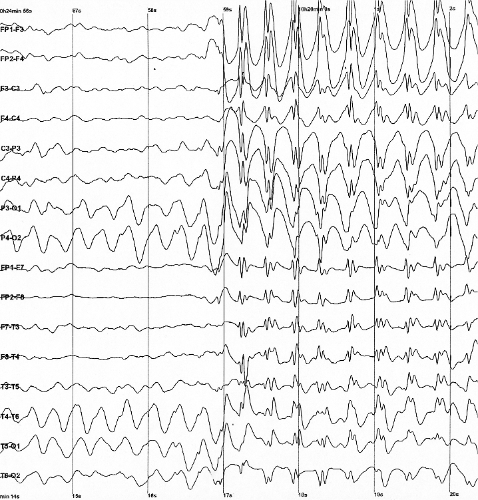
A Síndrome de Espasmos Epilépticos Infantis (Infantile epileptic spasms syndrome) é uma epilepsia rara que se inicia tipicamente entre os 2 e os 12 meses de idade, podendo, em alguns casos, manifestar-se até os 24 meses. A tríade clássica da doença — espasmos epilépticos, hipsarritmia (um padrão anormal no eletroencefalograma) e estagnação ou regressão do desenvolvimento — é historicamente conhecida como Síndrome de West. Bebês podem não ter histórico anterior de problemas, ou podem apresentar um histórico que reflita a causa subjacente da síndrome.[1][4]
Sinais e sintomas
Os principais sinais e sintomas incluem espasmos infantis (movimentos súbitos e breves do corpo), apneia (pausas na respiração), crises paroxísticas de riso, torção estereotipada das mãos, bruxismo (ranger os dentes), distúrbio do ciclo sono-vigília e tônus muscular anormal. Também podem ocorrer alterações no desenvolvimento motor grosso, atraso global do desenvolvimento moderado, descargas epileptiformes multifocais no eletroencefalograma e sensação de dor prejudicada.[1][4]
Outros achados físicos incluem cifose (curvatura anormal da coluna), hálux valgo (desvio do dedão do pé), sinofris (sobrancelhas unidas), exotropia e esotropia (desvios oculares), testa alta ou estreita, borda do vermelhão espessa (lábios grossos), filtro labial profundo (sulco entre nariz e lábio superior), falanges proximais largas da mão e hipersensibilidade tátil. Algumas crianças podem apresentar infecções recorrentes do trato respiratório inferior, frieza (intolerância ao frio) e necessidade de alimentação por gastrostomia na infância.[1][4]
Causas genéticas
A síndrome pode ser causada por variantes (mutações) em diversos genes. Entre os genes associados estão: ARX, SPTAN1, CNPY3, GRIN2B, GUF1, SCN2A, CDKL5, SIK1, PHACTR1, PLCB1, WDR45 e PIGA. Cada um desses genes desempenha funções importantes no desenvolvimento e funcionamento do sistema nervoso.[1][2][5]
Diagnóstico
O diagnóstico é baseado na avaliação clínica dos espasmos, no padrão de hipsarritmia no eletroencefalograma e na observação do atraso ou regressão do desenvolvimento. Exames genéticos, como o sequenciamento completo do exoma (WES), podem auxiliar na identificação da causa subjacente. Atualmente, há 18 testes genéticos disponíveis para a condição e 816 variantes registradas no ClinVar, um banco de dados internacional de variantes genéticas.[1][2][5][6]
Tratamento e manejo
O manejo da síndrome envolve uma abordagem multidisciplinar. No Brasil, o Sistema Único de Saúde (SUS) oferece cobertura mínima para a doença, incluindo o sequenciamento completo do exoma (WES) e atendimento em reabilitação para doenças raras. O tratamento deve ser individualizado e acompanhado por uma equipe médica especializada. Não há informações sobre medicamentos específicos aprovados para a síndrome nos dados disponíveis.[1][2][6]
Tratamentos citados na literatura
A literatura científica menciona associações entre a síndrome e diversos fármacos, com base em publicações mineradas (fonte: PubTator3). Estas são associações observadas em estudos, e não recomendações de tratamento. Os fármacos e o número de publicações associadas são: Serotonina (6), Polialanina (4), Levetiracetam (4), Fenobarbital (4), Vigabatrina (4), Fenitoína (3), Fosfato de Piridoxal (3), Acetilcolina (2), Ácidos Indolacéticos (2) e Espécies Reativas de Oxigênio (2).[6]
Prognóstico e qualidade de vida
Conteúdo informativo gerado e mantido automaticamente a partir de fontes oficiais (Orphanet, HPO, OMIM, SUS). Não substitui avaliação médica.
Síndrome rara caracterizada por espasmos epilépticos na infância, frequentemente associada a regressão do desenvolvimento, anormalidades neurológicas e hipsarritmia. Pode apresentar morfologia cutânea alterada e mioclonias, com causas genéticas diversas.
Tem tratamento?
Encontrou um erro ou informação desatualizada? Sugira uma correção →
Entender a doença
Do básico ao detalhe, leia no seu ritmo
Preparando trilha educativa...
Sinais e sintomas
O que aparece no corpo e com que frequência cada sintoma acontece
Visão geral
A Síndrome de Espasmos Epilépticos Infantis (Infantile epileptic spasms syndrome) é uma epilepsia rara que se inicia tipicamente entre os 2 e os 12 meses de idade, podendo, em alguns casos, manifestar-se até os 24 meses. A tríade clássica da doença — espasmos epilépticos, hipsarritmia (um padrão anormal no eletroencefalograma) e estagnação ou regressão do desenvolvimento — é historicamente conhecida como Síndrome de West. Bebês podem não ter histórico anterior de problemas, ou podem apresentar um histórico que reflita a causa subjacente da síndrome.[1][4]
Sinais e sintomas
Os principais sinais e sintomas incluem espasmos infantis (movimentos súbitos e breves do corpo), apneia (pausas na respiração), crises paroxísticas de riso, torção estereotipada das mãos, bruxismo (ranger os dentes), distúrbio do ciclo sono-vigília e tônus muscular anormal. Também podem ocorrer alterações no desenvolvimento motor grosso, atraso global do desenvolvimento moderado, descargas epileptiformes multifocais no eletroencefalograma e sensação de dor prejudicada.[1][4]
Outros achados físicos incluem cifose (curvatura anormal da coluna), hálux valgo (desvio do dedão do pé), sinofris (sobrancelhas unidas), exotropia e esotropia (desvios oculares), testa alta ou estreita, borda do vermelhão espessa (lábios grossos), filtro labial profundo (sulco entre nariz e lábio superior), falanges proximais largas da mão e hipersensibilidade tátil. Algumas crianças podem apresentar infecções recorrentes do trato respiratório inferior, frieza (intolerância ao frio) e necessidade de alimentação por gastrostomia na infância.[1][4]
Causas genéticas
A síndrome pode ser causada por variantes (mutações) em diversos genes. Entre os genes associados estão: ARX, SPTAN1, CNPY3, GRIN2B, GUF1, SCN2A, CDKL5, SIK1, PHACTR1, PLCB1, WDR45 e PIGA. Cada um desses genes desempenha funções importantes no desenvolvimento e funcionamento do sistema nervoso.[1][2][5]
Diagnóstico
O diagnóstico é baseado na avaliação clínica dos espasmos, no padrão de hipsarritmia no eletroencefalograma e na observação do atraso ou regressão do desenvolvimento. Exames genéticos, como o sequenciamento completo do exoma (WES), podem auxiliar na identificação da causa subjacente. Atualmente, há 18 testes genéticos disponíveis para a condição e 816 variantes registradas no ClinVar, um banco de dados internacional de variantes genéticas.[1][2][5][6]
Tratamento e manejo
O manejo da síndrome envolve uma abordagem multidisciplinar. No Brasil, o Sistema Único de Saúde (SUS) oferece cobertura mínima para a doença, incluindo o sequenciamento completo do exoma (WES) e atendimento em reabilitação para doenças raras. O tratamento deve ser individualizado e acompanhado por uma equipe médica especializada. Não há informações sobre medicamentos específicos aprovados para a síndrome nos dados disponíveis.[1][2][6]
Tratamentos citados na literatura
A literatura científica menciona associações entre a síndrome e diversos fármacos, com base em publicações mineradas (fonte: PubTator3). Estas são associações observadas em estudos, e não recomendações de tratamento. Os fármacos e o número de publicações associadas são: Serotonina (6), Polialanina (4), Levetiracetam (4), Fenobarbital (4), Vigabatrina (4), Fenitoína (3), Fosfato de Piridoxal (3), Acetilcolina (2), Ácidos Indolacéticos (2) e Espécies Reativas de Oxigênio (2).[6]
Prognóstico e qualidade de vida
Conteúdo informativo gerado e mantido automaticamente a partir de fontes oficiais (Orphanet, HPO, OMIM, SUS). Não substitui avaliação médica.
Partes do corpo afetadas
+ 43 sintomas em outras categorias
Características mais comuns
Os sintomas variam de pessoa para pessoa. Abaixo estão as 118 características clínicas mais associadas, ordenadas por frequência.
Linha do tempo da pesquisa
Encontrou um erro ou informação desatualizada? Sugira uma correção →
Genética e causas
O que está alterado no DNA e como passa nas famílias
Genes associados
13 genes identificados com associação a esta condição.
Transcription factor (PubMed:22194193, PubMed:31691806). Binds to specific sequence motif 5'-TAATTA-3' in regulatory elements of target genes, such as histone demethylase KDM5C (PubMed:22194193, PubMed:31691806). Positively modulates transcription of KDM5C (PubMed:31691806). Activates expression of KDM5C synergistically with histone lysine demethylase PHF8 and perhaps in competition with transcription regulator ZNF711; synergy may be related to enrichment of histone H3K4me3 in regulatory element
Nucleus
Lissencephaly, X-linked 2
A classic type lissencephaly associated with abnormal genitalia. Patients have severe congenital or postnatal microcephaly, lissencephaly, agenesis of the corpus callosum, neonatal-onset intractable epilepsy, poor temperature regulation, chronic diarrhea, and ambiguous or underdeveloped genitalia.
Fodrin, which seems to be involved in secretion, interacts with calmodulin in a calcium-dependent manner and is thus candidate for the calcium-dependent movement of the cytoskeleton at the membrane
Cytoplasm, cytoskeletonCytoplasm, cell cortex
Developmental and epileptic encephalopathy 5
A disorder characterized by seizures associated with hypsarrhythmia, profound intellectual disability with lack of visual attention and speech development, as well as spastic quadriplegia.
Toll-like receptor (TLR)-specific co-chaperone for HSP90B1. Required for proper TLR folding, except that of TLR3, and hence controls TLR exit from the endoplasmic reticulum. Consequently, required for both innate and adaptive immune responses (By similarity)
Endoplasmic reticulum
Developmental and epileptic encephalopathy 60
A form of epileptic encephalopathy, a heterogeneous group of severe early-onset epilepsies characterized by refractory seizures, neurodevelopmental impairment, and poor prognosis. Development is normal prior to seizure onset, after which cognitive and motor delays become apparent. DEE60 is an autosomal recessive condition characterized by onset of seizures in the first months of life.
Component of N-methyl-D-aspartate (NMDA) receptors (NMDARs) that function as heterotetrameric, ligand-gated cation channels with high calcium permeability and voltage-dependent block by Mg(2+) (PubMed:24272827, PubMed:24863970, PubMed:26875626, PubMed:26919761, PubMed:27839871, PubMed:28095420, PubMed:28126851, PubMed:38538865, PubMed:8768735). Participates in synaptic plasticity for learning and memory formation by contributing to the long-term depression (LTD) of hippocampus membrane currents
Cell membranePostsynaptic cell membraneCell projection, dendriteLate endosomeLysosomeCytoplasm, cytoskeleton
Intellectual developmental disorder, autosomal dominant 6, with or without seizures
A disorder characterized by significantly below average general intellectual functioning associated with impairments in adaptive behavior and manifested during the developmental period. MRD6 additional features may include seizures, hypotonia, abnormal movements, such as dystonia, and autistic features.
Promotes mitochondrial protein synthesis. May act as a fidelity factor of the translation reaction, by catalyzing a one-codon backward translocation of tRNAs on improperly translocated ribosomes. Binds to mitochondrial ribosomes in a GTP-dependent manner
Mitochondrion inner membrane
Developmental and epileptic encephalopathy 40
A form of epileptic encephalopathy, a heterogeneous group of severe early-onset epilepsies characterized by refractory seizures, neurodevelopmental impairment, and poor prognosis. Development is normal prior to seizure onset, after which cognitive and motor delays become apparent. DEE40 inheritance is autosomal recessive.
Mediates the voltage-dependent sodium ion permeability of excitable membranes. Assuming opened or closed conformations in response to the voltage difference across the membrane, the protein forms a sodium-selective channel through which Na(+) ions may pass in accordance with their electrochemical gradient (PubMed:1325650, PubMed:17021166, PubMed:28256214, PubMed:29844171). Implicated in the regulation of hippocampal replay occurring within sharp wave ripples (SPW-R) important for memory (By simi
Cell membrane
Seizures, benign familial infantile, 3
A form of benign familial infantile epilepsy, a neurologic disorder characterized by afebrile seizures occurring in clusters during the first year of life, without neurologic sequelae. BFIS3 inheritance is autosomal dominant.
Mediates phosphorylation of MECP2 (PubMed:15917271, PubMed:16935860). May regulate ciliogenesis (PubMed:29420175)
NucleusCytoplasm, cytoskeleton, cilium basal bodyCytoplasm, cytoskeleton, microtubule organizing center, centrosome
Serine/threonine-protein kinase involved in various processes such as cell cycle regulation, gluconeogenesis and lipogenesis regulation, muscle growth and differentiation and tumor suppression. Phosphorylates HDAC4, HDAC5, PPME1, SREBF1, CRTC1/TORC1. Inhibits CREB activity by phosphorylating and inhibiting activity of TORCs, the CREB-specific coactivators, like CRTC2/TORC2 and CRTC3/TORC3 in response to cAMP signaling (PubMed:29211348). Acts as a tumor suppressor and plays a key role in p53/TP53
CytoplasmNucleus
Developmental and epileptic encephalopathy 30
A form of epileptic encephalopathy, a heterogeneous group of severe early-onset epilepsies characterized by refractory seizures, neurodevelopmental impairment, and poor prognosis. Development is normal prior to seizure onset, after which cognitive and motor delays become apparent.
Binds actin monomers (G actin) and plays a role in multiple processes including the regulation of actin cytoskeleton dynamics, actin stress fibers formation, cell motility and survival, formation of tubules by endothelial cells, and regulation of PPP1CA activity (PubMed:21798305, PubMed:21939755). Involved in the regulation of cortical neuron migration and dendrite arborization (By similarity)
CytoplasmSynapseNucleus
Developmental and epileptic encephalopathy 70
A form of epileptic encephalopathy, a heterogeneous group of severe early-onset epilepsies characterized by refractory seizures, neurodevelopmental impairment, and poor prognosis. Development is normal prior to seizure onset, after which cognitive and motor delays become apparent. DEE70 is an autosomal dominant form with onset in first months of life and variable severity.
Catalyzes the hydrolysis of 1-phosphatidylinositol 4,5-bisphosphate into diacylglycerol (DAG) and inositol 1,4,5-trisphosphate (IP3) and mediates intracellular signaling downstream of G protein-coupled receptors (PubMed:9188725). Regulates the function of the endothelial barrier
Nucleus membraneCytoplasm
Developmental and epileptic encephalopathy 12
A form of epilepsy characterized by frequent tonic seizures or spasms beginning in infancy with a specific EEG finding of suppression-burst patterns, characterized by high-voltage bursts alternating with almost flat suppression phases. Patients may progress to West syndrome, which is characterized by tonic spasms with clustering, arrest of psychomotor development, and hypsarrhythmia on EEG.
Component of the autophagy machinery that controls the major intracellular degradation process by which cytoplasmic materials are packaged into autophagosomes and delivered to lysosomes for degradation (PubMed:23435086, PubMed:28561066). Binds phosphatidylinositol 3-phosphate (PtdIns3P) (PubMed:28561066). Activated by the STK11/AMPK signaling pathway upon starvation, WDR45 is involved in autophagosome assembly downstream of WIPI2, regulating the size of forming autophagosomes (PubMed:28561066).
Preautophagosomal structureCytoplasm
Neurodegeneration with brain iron accumulation 5
A neurodegenerative disorder associated with iron accumulation in the brain, primarily in the basal ganglia. NBIA5 is characterized by global developmental delay in early childhood that is essentially static, with slow motor and cognitive gains until adolescence or early adulthood. In young adulthood, affected individuals develop progressive dystonia, parkinsonism, extrapyramidal signs, and dementia resulting in severe disability.
Catalytic subunit of the glycosylphosphatidylinositol-N-acetylglucosaminyltransferase (GPI-GnT) complex that catalyzes the transfer of N-acetylglucosamine from UDP-N-acetylglucosamine to phosphatidylinositol and participates in the first step of GPI biosynthesis
Rough endoplasmic reticulum membrane
Paroxysmal nocturnal hemoglobinuria 1
A disorder characterized by hemolytic anemia with hemoglobinuria, thromboses in large vessels, and a deficiency in hematopoiesis. Red blood cell breakdown with release of hemoglobin into the urine is manifested most prominently by dark-colored urine in the morning.
Receptor tyrosine kinase involved in the development and the maturation of the central and the peripheral nervous systems through regulation of neuron survival, proliferation, migration, differentiation, and synapse formation and plasticity (By similarity). Receptor for BDNF/brain-derived neurotrophic factor and NTF4/neurotrophin-4. Alternatively can also bind NTF3/neurotrophin-3 which is less efficient in activating the receptor but regulates neuron survival through NTRK2 (PubMed:15494731, PubM
Cell membraneEndosome membraneEarly endosome membraneCell projection, axonCell projection, dendriteCytoplasm, perinuclear regionPostsynaptic density
Developmental and epileptic encephalopathy 58
A form of epileptic encephalopathy, a heterogeneous group of severe early-onset epilepsies characterized by refractory seizures, neurodevelopmental impairment, and poor prognosis. Development is normal prior to seizure onset, after which cognitive and motor delays become apparent. DEE58 is an autosomal dominant condition characterized by onset of refractory seizures in the first days or months of life.
Medicamentos e terapias
Mecanismo: GABA-A receptor; anion channel positive allosteric modulator
Mecanismo: Melanocortin receptor 2 agonist
Mecanismo: Gamma-amino-N-butyrate transaminase inhibitor
Mecanismo: Glucocorticoid receptor agonist
Mecanismo: Cannabinoid CB1 receptor negative allosteric modulator
Mecanismo: Glutamate NMDA receptor; GRIN1/GRIN2B antagonist
Variantes genéticas (ClinVar)
816 variantes patogênicas registradas no ClinVar.
Vias biológicas (Reactome)
53 vias biológicas associadas aos genes desta condição.
Diagnóstico
Os sinais que médicos procuram e os exames que confirmam
Tratamento e manejo
Remédios, cuidados de apoio e o que precisa acompanhar
Onde tratar no SUS
Hospitais de referência no Brasil e o protocolo oficial do SUS (PCDT)
🇧🇷 Atendimento SUS — Infantile epileptic spasms syndrome
Selecione um estado ou use sua localização para ver resultados.
Dados de DATASUS/CNES, SBGM, ABNeuro e Ministério da Saúde. Sempre confirme a disponibilidade diretamente com o estabelecimento.
Pesquisa ativa
Ensaios clínicos abertos e novidades científicas recentes
Ensaios em destaque
🟢 Recrutando agora
1 pesquisa recrutando participantes. Converse com seu médico sobre a possibilidade de participar.
Outros ensaios clínicos
Publicações mais relevantes
Effectiveness, tolerability, and retention of the ketogenic diet for infantile epileptic spasms syndrome: a single-center cohort study.
This study aimed to investigate the effectiveness, tolerability, and retention of the ketogenic diet (KD) in patients with infantile epileptic spasms syndrome (IESS). In this single-center prospective cohort study, baseline data were collected from the Children's Hospital Affiliated to Shandong University. Follow-up assessments were conducted at 3, 6, and 12 months after initiating KD. Outcomes included seizure frequency, adverse reactions, and retention rates. Survival analysis was performed to examine the association between retention rates and follow-up duration. A total of 74 patients with IESS were admitted. The seizure response rates were 56.8% (42/74), 41.9% (31/74), and 25.7% (19/74) at 3, 6, and 12 months, respectively. The corresponding seizure-free rates were 13.5% (10/74), 13.5% (10/74), and 8.1% (8/74), respectively. Retention rates at 3, 6, and 12 months were 70.2% (52/74), 43.2% (32/74), and 25.7% (19/74), respectively. Survival analysis indicated that retention rates decreased over time, most markedly within the first 3 months. Responders to the KD exhibited significantly higher retention rates than non-responders throughout the 12 months (HR = 0.35, 95% CI: 0.19-0.64; p < 0.001). Adverse reactions were reported in 20.3% of patients, with gastrointestinal symptoms being the most common (16.2%), including constipation (6.8%), diarrhea (5.4%), and vomiting (4.0%). The KD demonstrated favorable effectiveness and an acceptable safety profile in patients with IESS, particularly in those who did not respond to first-line antiseizure medications (ASMs). The higher retention rates among responders supports its utility in children with IESS. Therefore, early initiation of the KD should be considered for IESS patients who do not respond to first-line ASMs.
Deep learning-based real-time seizure detection and multi-seizure classification on pediatric EEG.
To develop a reliable and accurate seizure detection method using deep learning models capable of detecting and classifying multiple seizure types in real time. We retrospectively collected electroencephalography (EEG) recordings, which were acquired as part of routine diagnostic tests for patients aged 3 months to ≤18 years of age with childhood absence epilepsy, infantile epileptic spasms syndrome, other generalized epilepsy, and focal epilepsy, between January 2018 and December 2022 at Severance Children's Hospital. We used EEG recordings from both seizure and non-seizure patients, which were downsampled to 200 Hz for real-time seizure detection and multi-classification. Of the 199 patients (620 seizures), 49 (297 seizures) belonged to the childhood absence epilepsy group, 16 (200 seizures) to the infantile epileptic spasms syndrome group, 14 (76 seizures) to other generalized epilepsy group, 19 (47 seizures) to focal epilepsy group, and 101 to the normal group. The results showed the best overall performance of AUROC 0.98 and APROC of 0.73 with ResNet with Long-Short Term Network and a 12 s sliding window on real-time seizure detection task. Furthermore, ResNet50 without the frequency bands feature extractor showed the best overall weighted performance for multi-class seizure detection with 0.99 AUROC and 0.99 APPRC. Our approach proposes robust methods which include EEG preprocessing strategy with real-time detection/classification of multiple seizures, which helps monitor pediatric seizure. The result shows that real-time seizure detection can be effectively applied to real-world clinical datasets from a pediatric epilepsy unit with realistic performance and speed.
Analysis of treatment outcome variations in infantile epileptic spasms syndrome.
To explore the key factors influencing outcomes in children with infantile epileptic spasms syndrome (IESS) and to elucidate their interrelationships to provide insights for optimizing clinical practice. This is a retrospective, single-center design study, included children diagnosed with IESS at West China Second Hospital of Sichuan University from April 2019 to April 2024. Descriptive analyses were performed to evaluate genetic and non-genetic etiological subgroups, categorized as structural and unknown causes. Genetic testing results were compared across groups. Pearson correlation and logistic regression analyses were employed to examine differences in treatment efficacy and identify associated risk factors. In this study, 128 children diagnosed with IESS were enrolled and evenly divided into gene-positive and gene-negative groups. The gene-positive group exhibited earlier seizure onset, with a higher prevalence of hypotonia and developmental regression compared to the gene-negative group. Within the gene-negative group, children were further categorized into structural abnormality and unknown causes subgroups, among which EEG hypsarrhythmia was more frequently observed in the structural abnormality subgroup. The gene-positive group showed significantly poorer responses to ACTH, vigabatrin, and other ASMs. ACTH combined with vigabatrin therapy improved outcomes in some of the children. The non-ACTH treatment group demonstrated superior EEG improvement outcomes when compared with the ACTH-treated group (p = 0.028). The overall therapeutic response rate was satisfactory, with 75% in the gene-positive group and 100% in the gene-negative group. In the gene-negative group, frequent seizures and developmental regression emerged as significant risk factors for poor treatment response. The prognosis for IESS remains challenging, with treatment responses closely tied to etiology. Children with genetic etiologies demonstrate poorer responses to ACTH and other ASMs. However, ACTH combination with vigabatrin may improve treatment outcomes in some cases. Our findings suggest that ACTH treatment may not exert a substantial influence on long-term EEG outcomes in children with IESS.
Long-term outcome in children with infantile epileptic spasms syndrome: a multicenter retrospective study in Korea.
Infantile epileptic spasms syndrome (IESS) is a severe form of infantile epilepsy with a high lifetime morbidity burden. We aimed to assess the long-term epilepsy and neurodevelopmental outcomes based on how children with IESS have been managed over the past few decades. This retrospective multicenter study included children diagnosed with IESS between 1994 and 2021 with a minimum follow-up period of 2 years. Data on demographics, clinical features, medical history, diagnostic evaluations, and treatments used to control spasms were collected. Epilepsy and neurodevelopmental outcomes were assessed at final follow-up. A total of 378 infants with IESS were included. The mean age at onset of spasms was 7.3 (range, 1-24) months and mean follow-up duration was 7.9 (range, 2-28) years. Etiologies were identified in 65.1% of cases, with acquired structural etiologies being the most prevalent (29.9%). Among the genetic and genetic-structural etiologies, tuberous sclerosis complex (n=35), Down syndrome (n=8), Miller-Dieker syndrome (n=3), and 15q duplication syndrome (n=3) were the most common. Vigabatrin was prescribed to 93.9% of the patients, suggesting that it was the mainstay of treatment. At the last follow-up, 77.8% of the children remained on antiseizure medications and 29.1% had drug-resistant epilepsy. Approximately 90% had intellectual disabilities, and half of the eligible individuals had received special education. The IESS imposes a substantial burden on affected children and their families and often leads to chronic epilepsy and impaired cognitive function. Consensus diagnostic and treatment guidelines tailored to the Korean clinical practice are necessary to ensure early diagnosis and timely treatment.
Does First-Line Treatment Impact Outcomes in Trisomy 21-Associated Infantile Epileptic Spasms Syndrome? A Multicenter North American Analysis.
This study aimed to evaluate electroclinical remission and long-term outcomes in children with infantile epileptic spasms syndrome (IESS) associated with trisomy 21 (T21). We hypothesized that initial treatment with hormone therapy would result in higher remission rates compared to treatment with vigabatrin. A retrospective study of T21 and IESS patients was conducted across six North American tertiary pediatric centers. A total of 114 children with IESS were identified. Electroclinical remission without relapse occurred in 31.5% (17/54) of patients receiving hormone therapy as first-line treatment compared with 16.7% (6/36) treated with vigabatrin monotherapy (P = 0.114). Median time to remission was shorter with hormone therapy (41 days) than with vigabatrin (142 days; P < 0.001). Median age at last follow-up was 33 months (IQR 18-83) with a median follow-up duration of 25 months (IQR 11-74). At last follow-up, ongoing epilepsy was present in 30.7% (35/114) and autism spectrum disorder (ASD) in 25.4% (29/114), with similar rates across first-line treatment groups (ongoing epilepsy: hormonal 28.6% vs vigabatrin 30.6%; ASD: 21.4% vs 33.3%; all P > 0.05). Children with T21-associated IESS were approximately two times more likely to achieve electroclinical remission with hormone therapy as first treatment compared to vigabatrin, although this difference did not reach statistical significance. The median time to remission was significantly shorter in children who received hormone therapy as their first treatment compared to those treated with vigabatrin. The initial treatment did not impact long-term clinical outcomes, such as ongoing epilepsy or ASD.
Publicações recentes
Elevated Serum Concentrations of Lacosamide and Perampanel in a Pediatric Patient Following Coadministration of Clarithromycin for Mycoplasma pneumoniae Pneumonia.
AFG2A-related encephalopathy, expanding the neurodevelopmental and epileptic spectrum.
DTaP-induced infantile epileptic spasms syndrome high-risk window: Insights from school-age children.
A randomized controlled double-blind study on the brain protection of infantile patients with epileptic spasm syndrome through atomized inhalation of hydrogen-oxygen gas.
KCNJ11-associated infantile epileptic spasms syndrome and neonatal diabetes.
🥉 Relato de caso📚 EuropePMC150 artigos no totalmostrando 196
KCNJ11-associated infantile epileptic spasms syndrome and neonatal diabetes.
Epileptic disorders : international epilepsy journal with videotapeRethinking Corticosteroid Therapy in Pediatric Neurology.
Journal of inflammation researchPrediction of treatment response in infantile epileptic spasms syndrome using EEG phase-amplitude coupling.
Epilepsia openEffectiveness, tolerability, and retention of the ketogenic diet for infantile epileptic spasms syndrome: a single-center cohort study.
Frontiers in neurologyDeep learning-based real-time seizure detection and multi-seizure classification on pediatric EEG.
Frontiers in neurologyCase report: A systematic approach for the forensic evaluation of child abuse: lessons from a complex case.
Frontiers in psychiatryEfficacy and tolerability of early assessment of epileptic spasms to guide sequential treatment in children with infantile epileptic spasms syndrome:A nested case-control Study.
SeizureAnalysis of treatment outcome variations in infantile epileptic spasms syndrome.
Frontiers in neurologyEtiological Analysis and Classification of 108 Patients with Infantile Epileptic Spasms Syndrome Based on the 2017 International League Against Epilepsy Classification.
Noro psikiyatri arsiviLandscaping evidence on first-line therapies for infantile epileptic spasms syndrome: An umbrella review.
Epilepsy researchLong-term outcome in children with infantile epileptic spasms syndrome: a multicenter retrospective study in Korea.
Clinical and experimental pediatricsA case of maple syrup urine disease with infantile epileptic spasms syndrome: Challenges in a resource-limited setting.
Pediatrics international : official journal of the Japan Pediatric SocietyDoes First-Line Treatment Impact Outcomes in Trisomy 21-Associated Infantile Epileptic Spasms Syndrome? A Multicenter North American Analysis.
Pediatric neurologySpindle density relates to cognitive outcomes in infantile epileptic spasms syndrome with unknown etiology: A retrospective cohort study.
EpilepsiaAutomatic recognition of epileptic spasm via large-scale visual AI model.
SeizureClinical features of Infantile Epileptic Spasms Syndrome: a systematic review.
Orphanet journal of rare diseasesTargeting CRHR1 Signaling in Experimental Infantile Epileptic Spasms Syndrome: Evidence for Route-Dependent Efficacy.
Children (Basel, Switzerland)IESS-FusionNet: Physiologically Inspired EEG-EMG Fusion with Linear Recurrent Attention for Infantile Epileptic Spasms Syndrome Detection.
Bioengineering (Basel, Switzerland)The global research hotspots and future trends of infantile epileptic spasms syndrome: A bibliometric analysis of trends and themes.
Brain & developmentEtiology of Infantile Epileptic Spasms Syndrome and Clinical Response With Vigabatrin as the First Treatment.
Pediatric neurologyCerebral Cavernous Malformations Presenting With Epileptic Spasms in Children.
Pediatric neurologyPrediction of Long-term Prognosis in Infantile Epileptic Spasms Syndrome of Unknown Etiology based on Hypsarrhythmia by Self-Attention Autoencoder.
IEEE journal of biomedical and health informaticsInfantile epileptic spasms syndrome: Mechanisms and therapeutic approaches.
Neurotherapeutics : the journal of the American Society for Experimental NeuroTherapeuticsDistinctive genetic architecture of infantile epileptic spasms syndrome compared to self-limited infantile epilepsy by trios whole-exome sequencing.
Epilepsia openThe acid-base balance homeostasis reflected by urine pH in children with infantile epileptic spasm syndrome may be associated with response to adrenocorticotropic hormone treatment: a retrospective cohort study.
Translational pediatricsGenetic Etiology of Infantile Spasms in Peruvian Children: A Multicenter Study.
Journal of child neurologyThe Enigma of West Syndrome: A Case of Infantile Spasms Without Genetic Clues.
Case reports in pediatricsPrevalence and incidence of infantile epileptic spasms syndrome in India: A systematic review and meta-analysis.
Epilepsia openInfantile epileptic spasms syndrome associated with a PTEN variant.
Acta neurologica BelgicaEEG functional connectivity as a marker of evolution from infantile epileptic spasms syndrome to Lennox-Gastaut syndrome.
EpilepsiaLong-term administration of EQU-001 (ivermectin) suppresses spasms in a rat model of infantile epileptic spasms syndrome.
Epilepsy researchCardiac safety of low-dose ACTH therapy in infantile spasms: Evidence from electrocardiography and advanced echocardiography.
Seizure[Genetic and clinical characteristics in epilepsy patients with ATP6V1A gene variants].
Zhonghua er ke za zhi = Chinese journal of pediatrics"Time to Feed the Baby": Should There Be a Paradigm Change in the Treatment of Infantile Epileptic Spasms Syndrome?
Epilepsy currentsInfantile Spasms in Inborn Errors of Metabolism: Diagnostic and Therapeutic Considerations.
Journal of child neurologyAltered Neuronal Networks in Infantile Epileptic Spasms Syndrome: Investigation of Cross-Channel Interactions and Relapse.
IEEE transactions on neural systems and rehabilitation engineering : a publication of the IEEE Engineering in Medicine and Biology SocietyGenotypic and phenotypic analysis of epilepsy associated with NPRL2/NPRL3 genes.
SeizureUnderstanding the neurobiology of infantile epileptic spasms syndrome (IESS): A comprehensive review.
SeizureTreatment Practices for Infantile Epileptic Spasms Syndrome: Consensus and Variation in Major Pediatric Epilepsy Centers.
Pediatric neurologyKetogenic diet for infantile epileptic spasms.
Epilepsia openOne Size Does Not Fit All: Novel Individualized Use of Dexamethasone in Infantile Epileptic Spasms Syndrome.
Neurology and therapySevere nonketotic hyperglycinaemia due to a synonymous variant.
Molecular genetics and metabolism reportsEfficacy and safety of vigabatrin as preventive therapy for children with tuberous sclerosis complex: A systematic review and meta-analysis.
SeizureNovel PAK1 variants related to a variable phenotypic spectrum ranging from mild developmental delay to infantile epileptic spasms syndrome.
SeizureSynchronized Hypsarrhythmia as a Potential EEG Signature in Genetic Infantile Epileptic Spasms Syndrome: Is there a Gene Network Association?
Indian journal of pediatricsA Proof-of-Concept Study on Effectiveness of Nitrazepam in Resistant Infantile Epileptic Spasms Syndrome (NitRIS Trial).
Pediatric neurologySerum matrix metallopeptidase-9 levels in patients with infantile epileptic spasms syndrome before and after the initiation of vigabatrin therapy.
Brain & developmentGenetics of infantile epileptic spasms syndrome in China.
Developmental medicine and child neurologyConsanguinity and treatment strategy determine seizure outcome and mortality in infantile epileptic spasms syndrome in Azerbaijan.
Seizure[Clinical and genetic characteristics analysis of 18 children with infantile epileptic spasms syndrome associated with mitochondrial gene variants].
Zhonghua er ke za zhi = Chinese journal of pediatricsEpileptic drop attacks: More than just atonic seizures.
Epilepsia openDistinct T Cell Dysregulation Reflects Disease Severity and Progression in Infantile Epileptic Spasms Syndrome and Lennox-Gastaut Syndrome.
Immune networkDose optimization of NMDA for rat model of infantile spasms: Approach using EEG, behavior (Seizure) and histopathology.
Behavioural brain researchEEG Scoring Systems in Developmental Epileptic Encephalopathies With and Without Epileptic Spasms: A Comparative Analysis of Reliability and Diagnostic Clarity.
Pediatric neurologyGenetic etiologies of the infantile epileptic spasms syndrome: What do we know so far?
Developmental medicine and child neurologyA Case of Infantile Epileptic Spasms Syndrome with the SPTBN1 Mutation and Review of βII-Spectrin Variants.
GenesRapid Electroclinical Evolution in HECW2-Related Developmental and Epileptic Encephalopathy: Report of a Likely Splicing Variant With Familial Transmission.
International journal of developmental neuroscience : the official journal of the International Society for Developmental NeuroscienceGut Microbiota Composition and Modulation in Developmental and Epileptic Encephalopathies.
The European journal of neuroscienceUpward eye deviation as a precursor to epileptic spasms: A case successfully treated with early corpus callosotomy without adrenocorticotropic hormone therapy.
Epilepsy & behavior reportsAn interpretable machine learning approach for predicting drug-resistant epilepsy in children with tuberous sclerosis complex.
Frontiers in neurologyA model-based cost-effectiveness estimates of hormonal therapy in Indian children with infantile epileptic spasms syndrome.
Epilepsia openThe Clinical and Genetic Landscape of a French Multicenter Cohort of 2563 Epilepsy Patients Referred for Genetic Diagnosis.
European journal of neurologyHippocampal proteomic signatures of the ketogenic diet in a model of infantile epileptic spasms syndrome.
Biochimica et biophysica acta. Molecular basis of diseaseAlpha-ERSP as a prognostic biomarker in infantile epileptic spasms syndrome: Insights from quantitative EEG analysis.
SeizureVigabatrin Versus Adrenocorticotropic Hormone After High-Dose Prednisolone Failure for the Treatment of Epileptic Spasms.
Journal of child neurologyBeyond Myoclonus-Seizures, Epilepsy Syndromes and Atypical Electroencephalographic (EEG) Findings in Children With Subacute Sclerosing Panencephalitis.
Journal of child neurologyTUBA1A-related tubulinopathy associated with the infantile epileptic spasms syndrome and atypical absence seizures.
Epileptic disorders : international epilepsy journal with videotapeAFG2A-related encephalopathy: Effectiveness of ketogenic diet in epilepsy and mitochondrial dynamics modulation.
European journal of paediatric neurology : EJPN : official journal of the European Paediatric Neurology SocietyBrain tumours as an unrecognized etiology of infantile epileptic spasms syndrome (IESS): The role of resective epilepsy surgery.
Epilepsy & behavior reportsEfficacy and tolerability of magnesium sulfate in children with infantile epileptic spasms syndrome: A systematic review and meta-analysis.
Epilepsy researchInfantile epileptic spasms syndrome as a new phenotype in TOP2B deficiency caused by a de novo variant: a case report and literature review.
Frontiers in pediatricsRole of the Ketogenic Diet Therapy and ACTH as Second Treatments in Drug-Resistant Infantile Epileptic Spasms Syndrome.
NutrientsElectroencephalogram (EEG) Spike Metrics Discriminate Impending Epileptic Spasms From Other Seizures in Children With Tuberous Sclerosis Complex: A Pilot Study.
Journal of child neurologyA Novel Gene (UFSP2) Associated with Infantile Epileptic Spasms Syndrome.
Indian journal of pediatricsSafety, Efficacy, and Tolerability of Ketogenic Diet Versus Adrenocorticotropic Hormone in Infantile Epileptic Spasms Syndrome: A Randomized Controlled Trial.
Pediatric neurologyNew variants and genotype-phenotype correlation of PPP3CA-related developmental and epileptic encephalopathy.
Frontiers in neuroscienceComparative effectiveness of second-line treatments for epileptic spasms.
EpilepsiaDiffusion MRI biomarkers for predicting treatment outcomes in infantile epileptic spasms syndrome with non-lesional MRI.
SeizureEndocrinological study of low-dose adrenocorticotropic hormone therapy without tapering in infantile epileptic spasms syndrome.
Brain & developmentA novel pathogenic variant causing POU3F3-related neurodevelopmental disorder in a child presenting with infantile epileptic spasms syndrome: Expanding the epileptic phenotype.
SeizureAssociation Between Scalp High-Frequency Oscillations and Burden of Amplitudes and Epileptiform Discharges (BASED) Scores in Infantile Epileptic Spasms Syndrome.
BiomoleculesAssociation of serum insulin-like growth factor-1 and adrenocorticotropic hormone therapeutic response in patients with infantile epileptic spasms syndrome.
Frontiers in pharmacologyGenetic etiologies with a large NGS panel in a monocentric cohort of 1000 patients with pediatric onset epilepsies.
Epilepsia openNew insights into epileptic spasm generation and treatment from the TTX animal model.
Epilepsia openPredictive model for initial response to first-line treatment in children with infantile epileptic spasms syndrome.
Italian journal of pediatricsSurgical outcomes of drug-refractory infantile epileptic spasms syndrome and related prognostic factors: a retrospective study.
Acta epileptologicaSPOUT1 variants associated with autosomal-recessive developmental and epileptic encephalopathy.
Acta epileptologicaInfantile Epileptic Spasms Syndrome Due to Neonatal Hypoglycemic Brain Injury: A Retrospective Audit.
Indian pediatricsCOVID-19 infection and vaccination in children with Dravet syndrome or infantile epileptic spasms syndrome: An internet survey in Japan.
Brain & developmentClinical Features and Predictors of Unfavorable Outcomes in Infantile Epileptic Spasms Syndrome: Results from a Multiancestry Cohort.
Journal of child neurologyCombination Therapy With Vigabatrin and Prednisolone Versus Vigabatrin Alone for Infantile Spasms.
Annals of clinical and translational neurologyAetiopathogenesis of infantile epileptic spasms syndrome and mechanisms of action of adACTH/corticosteroids in children: A scoping review.
Developmental medicine and child neurologyIdentification of topological alterations using microstate dynamics in patients with infantile epileptic spasms syndrome.
Scientific reportsRelationship between the time course of Burden of Amplitudes and Epileptiform Discharges scores and relapse in children with infantile epileptic spasms syndrome.
EpilepsiaModeling epilepsy by loss-of-function of the CUG-binding protein Elav-like family member 2 in zebrafish with multi-omics analysis.
Chinese medical journalFactors Influencing the Response of Patients with Infantile Epileptic Spasms Syndrome to ACTH as Repeated First-Line Therapy.
Neurology and therapyEvidence of thalamocortical network activation during epileptic spasms: A thalamic stereotactic EEG study.
EpilepsiaContribution of Cross-Phase-Amplitude Coupling to Relapse in Infantile Epileptic Spasms Syndrome.
Annual International Conference of the IEEE Engineering in Medicine and Biology Society. IEEE Engineering in Medicine and Biology Society. Annual International ConferenceLong-short term memory autoencoder using delta with beta bands of EEG enables highly accurate prediction of seizure outcome in Infantile Epileptic Spasms Syndrome of unknown etiology.
Annual International Conference of the IEEE Engineering in Medicine and Biology Society. IEEE Engineering in Medicine and Biology Society. Annual International ConferenceAetiopathogenesis of infantile epileptic spasms syndrome and mechanisms of action of adrenocorticotrophin hormone/corticosteroids in children: A scoping review.
Developmental medicine and child neurologyTreatment efficacy for infantile epileptic spasms syndrome in children with trisomy 21.
Frontiers in pediatricsA Multicenter Training and Interrater Reliability Study of the BASED Score for Infantile Epileptic Spasms Syndrome.
Journal of clinical neurophysiology : official publication of the American Electroencephalographic SocietyDisparities in the utilization of genetic testing for non-acquired infantile epileptic spasms syndrome in a single healthcare center in North Carolina.
Epilepsia openEvaluating the effectiveness of medical therapy in infantile epileptic spasms syndrome due to surgically-remediable lesions.
EpilepsiaInfantile Epileptic Spasms Syndrome: Unveiling clinical and genetic variability in a case series from Argentina.
SeizureThe genetic landscape and classification of infantile epileptic spasms syndrome requiring surgery due to suspected focal brain malformations.
Brain communicationsIntegrated analysis of proteomics and metabolomics in infantile epileptic spasms syndrome.
Scientific reportsAdrenocorticotropic Hormone versus Prednisolone for Infantile Epileptic Spasms Syndrome: A Systematic Review and Economic Evaluation.
NeuropediatricsInfantile epileptic spasms syndrome: an etiologic study of 361 patients with infantile epileptic spasms syndrome.
Frontiers in pediatricsFavorable response to ketogenic diet therapy in a patient with DYNC1H1-related epilepsy.
Epilepsy & behavior reportsVentricular tachycardia induced by adrenocorticotropic hormone therapy in infantile epileptic spasms syndrome: A case report.
SeizureOutcomes following resective and disconnective strategies in the treatment of epileptic spasms: a systematic review of the literature and individual patient data meta-analysis.
Frontiers in neurologyShort-Term Effectiveness and Tolerability of Vigabatrin Therapy in Infantile Epileptic Spasms Syndrome.
Indian journal of pediatricsQuantitative analysis of 123I-iomazenil single-photon emission computed tomography findings from patients with infantile epileptic spasm syndrome.
Brain & developmentElementary school enrollment after ACTH therapy for patients with infantile epileptic spasms syndrome.
SeizureAbnormalities in brain magnetic resonance imaging associated with vigabatrin therapy in an infant with infantile epileptic spasms syndrome.
Clinical toxicology (Philadelphia, Pa.)A Multicenter Retrospective Observational Cohort Study of Seizure Freedom before Lennox-Gastaut Syndrome (the "Gap"). Opportunities for Prevention.
medRxiv : the preprint server for health sciencesKetogenic diet therapy for the treatment of pediatric epilepsy.
Epileptic disorders : international epilepsy journal with videotapeEvaluating the patient needs and tolerability of Clobazam liquid formulation (Likozam® 1 mg/mL): A French patient and care-givers' centered survey.
Epilepsy & behavior : E&BInfantile epileptic spasms syndrome: When spasms come out of the blue.
Epilepsy & behavior : E&BOptimal lead time for treatment of infantile epileptic spasms syndrome-a secondary data analysis.
Translational pediatricsDiagnostic yields of genetic testing and related benefits in infantile epileptic spasms syndrome: A systematic review and meta-analysis.
SeizureCorpus callosotomy for refractory epileptic spasms: Systematic review and meta-analysis.
SeizureSymptomatic vigabatrin-associated MRI toxicity is associated with simultaneous hormonal therapy among patients with infantile spasms.
Epilepsia openMean global field power is reduced in infantile epileptic spasms syndrome after response to vigabatrin.
Frontiers in neurologyIGF-1 impacts neocortical interneuron connectivity in epileptic spasm generation and resolution.
Neurotherapeutics : the journal of the American Society for Experimental NeuroTherapeuticsFirst-choice hormonal therapies for children with infantile epileptic spasms syndrome in South Asia: A network meta-analysis of randomized controlled trials.
Epilepsia openTwo familial cases of infantile epileptic spasms syndrome associated with UDP-glucose-6-dehydrogenase deficiency.
Epileptic disorders : international epilepsy journal with videotapeCharacteristics of overnight video-EEG monitoring in infantile epileptic spasms syndrome at 2-week follow-up.
EpilepsiaImpact of Bacille Calmette-Guérin vaccination on the therapeutic schedule of infantile epileptic spasms syndrome: A 25-year Japanese single-center survey.
Vaccine: XVitamin B12 responsive developmental and epileptic encephalopathy due to a novel mutation in the FUT2 gene: a case report.
BMC pediatricsSerum matrix metallopeptidase-9 levels in infantile epileptic spasms syndrome of unknown etiology.
Epilepsy researchFactors influencing efficacy and relapse of adrenocorticotropic hormone in infantile epileptic spasms syndrome.
Epilepsy & behavior : E&BPredictive modeling based on functional connectivity of interictal scalp EEG for infantile epileptic spasms syndrome.
Clinical neurophysiology : official journal of the International Federation of Clinical NeurophysiologyCharacterization of the Epileptogenic Phenotype and Response to Antiseizure Medications in Lissencephaly Patients.
NeuropediatricsEpilepsy surgery in developmental and epileptic encephalopathies.
Epilepsy & behavior : E&BAdrenocorticotropic hormone therapy alters Q-albumin ratios in patients with infantile epileptic spasms syndrome of unknown etiology.
Journal of the neurological sciencesMitigating treatment lag for infantile epileptic spasms syndrome in low- and middle-income countries: Key recommendations from the South Asia allied IESS Research Group.
EpilepsiaGenotypic and phenotypic analysis of Korean patients with tuberous sclerosis complex.
NeurogeneticsHave epilepsy outcomes changed for children with tuberous sclerosis complex in Queensland, Australia?
EpilepsiaClinical features and genotype-phenotype correlations in epilepsy patients with de novo DYNC1H1 variants.
EpilepsiaA retrospective study of the yield of next-generation sequencing in the diagnosis of developmental and epileptic encephalopathies and epileptic encephalopathies in 0-12 years aged children at a single tertiary care hospital in South India.
Epileptic disorders : international epilepsy journal with videotapeElectroclinical Features of Infantile Epileptic Spasms Syndrome.
Annals of Indian Academy of NeurologyThe Utility of Genetic Testing in Infantile Epileptic Spasms Syndrome: A Step-Based Approach in the Next-Generation Sequencing Era.
Pediatric neurologyInfantile Epileptic Spasms Syndrome Complicated by Leigh Syndrome and Leigh-Like Syndrome: A Retrospective, Nationwide, Multicenter Case Series.
Pediatric neurologyRisk of autism spectrum disorder in children with infantile epileptic spasms syndrome: a retrospective study in a single center in Brazil.
Jornal de pediatriaIdentification and treatment of surgically-remediable causes of infantile epileptic spasms syndrome.
Expert review of neurotherapeuticsEarly Response, Long-Term Seizure Outcome, and Very-Low-Dose Adrenocorticotrophic Hormone Therapy for Infantile Epileptic Spasms Syndrome With Down Syndrome.
Pediatric neurologyPopulation-based study of rare epilepsy incidence in a US urban population.
EpilepsiaEpilepsies with onset during the first year of life: A prospective study on syndromes, etiologies, and outcomes.
Epilepsia openTotal Corpus Callosotomy via Posterior Approach with Endoscopic-Alone Technique.
World neurosurgeryInfantile epileptic spasms syndrome in a child with lissencephaly associated with de novo PAFAH1B1 variant and coincidental CMV infection.
Epilepsy & behavior reportsEpileptic spasms relapse is associated with response latency but not conventional attributes of post-treatment EEG.
Epilepsia openElectrographic screening for infantile epileptic spasms syndrome in a single sleep-wake cycle.
EpilepsiaNovel copy number variations and phenotypes of infantile epileptic spasms syndrome.
Clinical geneticsGenetic Advancements in Infantile Epileptic Spasms Syndrome and Opportunities for Precision Medicine.
GenesDiagnosis and management of infantile epileptic spasms syndrome (IESS) in Gulf Cooperation Council (GCC) countries: Expert consensus statement.
SeizureReal-life data comparing the efficacy of vigabatrin and oral steroids given sequentially or combined for infantile epileptic spasms syndrome.
European journal of paediatric neurology : EJPN : official journal of the European Paediatric Neurology SocietyEfficacy and safety of corticosteroids and ACTH in epileptic syndromes beyond Infantile Epileptic Spasms Syndrome (IESS): A systematic review and meta-analysis.
EpilepsiaSevere Hemolytic Anemia: Atypical Presentation of Cobalamin Deficiency.
Journal of pediatric hematology/oncologyA Potential Mechanism of Neurological Impairment in Children With Infantile Spasm: Based on Microanatomic Structure Analysis Employing Voxel-Based Morphometry and Surface-Based Morphometry.
Pediatric neurologyTiming the clinical onset of epileptic spasms in infantile epileptic spasms syndrome: A tertiary health center's experience.
EpilepsiaElectroclinical Landscape of Infantile Epileptic Spasms Syndrome.
Indian journal of pediatricsGenotype and phenotype correlation of PHACTR1-related neurological disorders.
Journal of medical geneticsPurified cannabidiol as add-on therapy in children with treatment-resistant infantile epileptic spasms syndrome.
SeizureInitial combination versus early sequential standard therapies for Infantile Epileptic Spasms Syndrome-Feedback from stakeholders.
Epilepsia openSocietal costs of illness for infantile epileptic spasms syndrome and evolutionary cost prediction in the era of WHO's IGAP.
Epilepsy researchSuper-Refractory Status Epilepticus Progressing to Infantile Epileptic Spasms Syndrome Secondary to Very Long Chain Acyl-CoA Dehydrogenase Deficiency.
Indian journal of pediatricsDoes the absence or presence of sleep spindles on EEG have prognostic value for cognitive outcome in children with infantile epileptic spasms syndrome? A systematic literature review.
Epileptic disorders : international epilepsy journal with videotapeAdrenocorticotropic hormone combined with magnesium sulfate therapy for infantile epileptic spasms syndrome: a real-world study.
World journal of pediatrics : WJPInfantile epileptic spasms syndrome: a cohort study of 88 children.
Italian journal of pediatricsMechanisms of infantile epileptic spasms syndrome: What have we learned from animal models?
EpilepsiaDelays to care in infantile epileptic spasms syndrome: Racial and ethnic inequities.
EpilepsiaClinical and electroencephalographic characteristics of 34 infant with onset of epileptic spasms before three months of age.
Epilepsy & behavior : E&BCrucial involvement of fast waves and Delta band in the brain network attributes of infantile epileptic spasms syndrome.
Frontiers in pediatricsCase report: De novo variant of SETD1A causes infantile epileptic spasms syndrome.
Frontiers in neurologyThe Response of Synthetic Adrenocorticotropic Hormone (ACTH) Treatment in Pediatric Drug-Resistant Epilepsy Other Than Infantile Epileptic Spasms Syndrome: A Retrospective Observational Study.
CureusSafety and efficacy of melatonin supplementation as an add-on treatment for infantile epileptic spasms syndrome: A randomized, placebo-controlled, double-blind trial.
Journal of pineal researchFifteen years of real-world data on the use of vigabatrin in individuals with infantile epileptic spasms syndrome.
EpilepsiaBrazilian experts' consensus on the treatment of infantile epileptic spasm syndrome in infants.
Arquivos de neuro-psiquiatriaClinical phenotype and genotype of NPRL2-related epilepsy: Four cases reports and literature review.
SeizureLong-term survival and factors associated with mortality among children with infantile epileptic spasms syndrome - A retrospective cohort study.
SeizureA case of infantile epileptic spasms syndrome and autism spectrum disorder with an RFX3 mutation.
SeizureAicardi Syndrome Is a Genetically Heterogeneous Disorder.
GenesLandscape of genetic infantile epileptic spasms syndrome-A multicenter cohort of 124 children from India.
Epilepsia openPrediction model for long-term seizure and developmental outcomes among children with infantile epileptic spasms syndrome.
Frontiers in neurologyIdentifying risk factors for adverse events of pyridoxal phosphate in infantile epileptic spasms syndrome.
Epilepsy & behavior : E&BCare of Children with Infantile Epileptic Spasms Syndrome and Applicability of Telemedicine Amidst the COVID-19 Pandemic.
Indian journal of pediatricsA case-control evaluation of Spasm control and Tolerability of the Modified Atkins diet versus classic ketogenic diet in Chinese Children with infantile epileptic spasms syndrome.
SeizureThe landscape of infantile epileptic spasms syndrome in South Asia: peculiarities, challenges, and way forward.
The Lancet regional health. Southeast AsiaWhat Should be the Next Choice After Failure of Hormonal and Vigabatrin Therapy in Infantile Epileptic Spasms Syndrome?
Indian journal of pediatricsNutritional vitamin B12 deficiency-associated Infantile epileptic spasms syndrome: Clinico-neurophysiological presentation, response to treatment, and neurodevelopmental outcome.
SeizureLong-term analysis of adrenocorticotropic hormone monotherapy for infantile epileptic spasms syndrome with periventricular leukomalacia.
SeizureThe epileptology of Wiedemann-Steiner syndrome: Electroclinical findings in five patients with KMT2A pathogenic variants.
European journal of paediatric neurology : EJPN : official journal of the European Paediatric Neurology SocietyThe epilepsy phenotype of ST3GAL3-related developmental and epileptic encephalopathy.
Epilepsia openMutations in plasticity-related-gene-1 (PRG-1) protein contribute to hippocampal seizure susceptibility and modify epileptic phenotype.
Cerebral cortex (New York, N.Y. : 1991)Associações
Organizações que acompanham esta doença — pra ter apoio e orientação
Ainda não temos associações cadastradas para Infantile epileptic spasms syndrome.
É de uma associação que acompanha esta doença? Fale com a gente →
Comunidades
Grupos ativos de quem convive com esta doença aqui no Raras
Ainda não existe comunidade no Raras para Infantile epileptic spasms syndrome
Pacientes, familiares e cuidadores se organizam em comunidades pra compartilhar experiências, fazer perguntas e se apoiar. Você pode ser o primeiro.
Tire suas dúvidas
Perguntas, dicas e experiências compartilhadas aqui na página
Participe da discussão
Faça login para postar dúvidas, compartilhar experiências e interagir com especialistas.
Fazer loginDoenças relacionadas
Doenças com sintomas parecidos — ajudam quem ainda está buscando diagnóstico
Referências e fontes
Bases de dados externas citadas neste artigo
Publicações científicas
Artigos indexados no PubMed ligados a esta doença no grafo RarasNet — título, periódico e PMID direto da fonte, sem intermediação de IA.
- Effectiveness, tolerability, and retention of the ketogenic diet for infantile epileptic spasms syndrome: a single-center cohort study.
- Deep learning-based real-time seizure detection and multi-seizure classification on pediatric EEG.
- Analysis of treatment outcome variations in infantile epileptic spasms syndrome.
- Long-term outcome in children with infantile epileptic spasms syndrome: a multicenter retrospective study in Korea.
- Does First-Line Treatment Impact Outcomes in Trisomy 21-Associated Infantile Epileptic Spasms Syndrome? A Multicenter North American Analysis.
- Elevated Serum Concentrations of Lacosamide and Perampanel in a Pediatric Patient Following Coadministration of Clarithromycin for Mycoplasma pneumoniae Pneumonia.
- AFG2A-related encephalopathy, expanding the neurodevelopmental and epileptic spectrum.
- DTaP-induced infantile epileptic spasms syndrome high-risk window: Insights from school-age children.
- A randomized controlled double-blind study on the brain protection of infantile patients with epileptic spasm syndrome through atomized inhalation of hydrogen-oxygen gas.
- KCNJ11-associated infantile epileptic spasms syndrome and neonatal diabetes.
Bases de dados e fontes oficiais
Identificadores e referências canônicas usadas para montar este verbete.
- ORPHA:697160(Orphanet)
- MONDO:0018097(MONDO)
- GARD:7887(GARD (NIH))
- Variantes catalogadas(ClinVar)
- Busca completa no PubMed(PubMed)
- Artigo Wikipedia(Wikipedia)
Dados compilados pelo RarasNet a partir de fontes abertas (Orphanet, OMIM, MONDO, PubMed/EuropePMC, ClinicalTrials.gov, DATASUS, PCDT/MS). Este conteúdo é informativo e não substitui avaliação médica.
Conteúdo mantido por Agente Raras · Médicos e pesquisadores podem colaborar
Infantile epileptic spasms syndrome
📋 Origem dos dados
Esta página agrega dados de fontes públicas e oficiais. Dados sobre cobertura no SUS (PCDT, CEAF) são verificados ativamente por agente proativo (ver badge no infobox). Demais dados têm atribuição de fonte + data da última sincronização — clique para abrir o original.
- Doença rara (ontologia)
- fonte: Orphanet
- Identificador unificado
- fonte: MONDO
- Genética mendeliana
- fonte: OMIM
- Codificação WHO/SUS
- fonte: WHO ICD-10 / DATASUS
- CID-11 (futuro)
- fonte: WHO ICD-11
- NIH/GARD
- fonte: GARD (NIH)
- Medicamentos (literatura)
- fonte: Orphanet
- Reposicionamento
- fonte: Drug Repurposing Hub
- Ensaios clínicos
- fonte: ClinicalTrials.gov