
Doença neurodegenerativa rara ligada ao cromossomo X, caracterizada por ataxia cerebelar progressiva, nistagmo, atraso motor e fraqueza muscular, com sinais como Babinski e hiperreflexia. Afeta principalmente homens, com início na infância ou adolescência.
Introdução
O que você precisa saber de cara
Visão geral
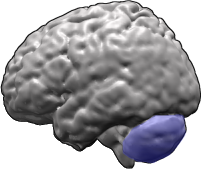
A ataxia cerebelar progressiva ligada ao X é uma doença genética rara que afeta principalmente o cerebelo, a parte do cérebro responsável pelo equilíbrio e pela coordenação dos movimentos. Ela se manifesta desde a infância e piora gradualmente ao longo do tempo. Por ser ligada ao cromossomo X, a condição é herdada de forma recessiva, afetando mais frequentemente homens, enquanto mulheres podem ser portadoras assintomáticas ou apresentar sintomas leves. A prevalência exata é desconhecida.[1][4]
Sinais e sintomas
Os principais sintomas incluem ataxia cerebelar progressiva (dificuldade crescente para coordenar movimentos), marcha instável, quedas frequentes, incoordenação motora (disdiadococinesia, dismetria), nistagmo (movimentos oculares involuntários) e disartria espástica (fala arrastada). Também podem ocorrer fraqueza dos dorsiflexores do pé, amiotrofia distal dos membros inferiores, pé cavo, escoliose, hiperreflexia dos membros inferiores, reflexos do tornozelo diminuídos ou ausentes, sinal de Babinski e neuropatia sensorimotora. Exames como eletromiografia (EMG) podem mostrar alterações neuropáticas, e a ressonância magnética pode revelar atrofia do vermis cerebelar.[1][4]
Causas genéticas
A doença é causada por variantes patogênicas nos genes GJB1 (que codifica a proteína gap junction beta-1) e ATP2B3 (que codifica a ATPase 3 de transporte de cálcio da membrana plasmática). Esses genes estão localizados no cromossomo X. A herança é recessiva ligada ao X, o que significa que uma cópia alterada do gene em homens é suficiente para causar a doença, enquanto mulheres geralmente precisam de duas cópias alteradas ou de uma alteração que inative o cromossomo X saudável.[1][2][5]
Diagnóstico
O diagnóstico é baseado na avaliação clínica dos sintomas neurológicos, história familiar e exames complementares. O teste genético é fundamental para confirmar a doença, sendo o sequenciamento completo do exoma (WES) um dos procedimentos disponíveis. Atualmente, há 720 variantes descritas no ClinVar associadas à condição. O diagnóstico diferencial inclui outras ataxias hereditárias e adquiridas.[1][2][5]
Tratamento e manejo
Não há cura para a ataxia cerebelar progressiva ligada ao X, e o tratamento é focado no manejo dos sintomas e na reabilitação. O atendimento em reabilitação para doenças raras é um dos procedimentos cobertos pelo SUS. O acompanhamento multidisciplinar pode incluir fisioterapia, terapia ocupacional, fonoaudiologia e suporte ortopédico para complicações como escoliose e pé cavo. Não há medicamentos específicos aprovados para a doença.[1][2]
Prognóstico e qualidade de vida
A doença é progressiva, e a maioria dos pacientes apresenta piora gradual da ataxia e da mobilidade ao longo dos anos. O prognóstico varia conforme a gravidade dos sintomas e a presença de complicações como quedas frequentes e neuropatia. O suporte reabilitador e o acompanhamento médico regular podem ajudar a manter a qualidade de vida e a funcionalidade pelo maior tempo possível.[1][4]
Conteúdo informativo gerado e mantido automaticamente a partir de fontes oficiais (Orphanet, HPO, OMIM, SUS). Não substitui avaliação médica.
Doença neurodegenerativa rara ligada ao cromossomo X, caracterizada por ataxia cerebelar progressiva, nistagmo, atraso motor e fraqueza muscular, com sinais como Babinski e hiperreflexia. Afeta principalmente homens, com início na infância ou adolescência.
Escala de raridade
<1/50kMuito rara
1/20kRara
1/10kPouco freq.
1/5kIncomum
1/2k
Encontrou um erro ou informação desatualizada? Sugira uma correção →
Entender a doença
Do básico ao detalhe, leia no seu ritmo
Preparando trilha educativa...
Sinais e sintomas
O que aparece no corpo e com que frequência cada sintoma acontece
Visão geral
A ataxia cerebelar progressiva ligada ao X é uma doença genética rara que afeta principalmente o cerebelo, a parte do cérebro responsável pelo equilíbrio e pela coordenação dos movimentos. Ela se manifesta desde a infância e piora gradualmente ao longo do tempo. Por ser ligada ao cromossomo X, a condição é herdada de forma recessiva, afetando mais frequentemente homens, enquanto mulheres podem ser portadoras assintomáticas ou apresentar sintomas leves. A prevalência exata é desconhecida.[1][4]
Sinais e sintomas
Os principais sintomas incluem ataxia cerebelar progressiva (dificuldade crescente para coordenar movimentos), marcha instável, quedas frequentes, incoordenação motora (disdiadococinesia, dismetria), nistagmo (movimentos oculares involuntários) e disartria espástica (fala arrastada). Também podem ocorrer fraqueza dos dorsiflexores do pé, amiotrofia distal dos membros inferiores, pé cavo, escoliose, hiperreflexia dos membros inferiores, reflexos do tornozelo diminuídos ou ausentes, sinal de Babinski e neuropatia sensorimotora. Exames como eletromiografia (EMG) podem mostrar alterações neuropáticas, e a ressonância magnética pode revelar atrofia do vermis cerebelar.[1][4]
Causas genéticas
A doença é causada por variantes patogênicas nos genes GJB1 (que codifica a proteína gap junction beta-1) e ATP2B3 (que codifica a ATPase 3 de transporte de cálcio da membrana plasmática). Esses genes estão localizados no cromossomo X. A herança é recessiva ligada ao X, o que significa que uma cópia alterada do gene em homens é suficiente para causar a doença, enquanto mulheres geralmente precisam de duas cópias alteradas ou de uma alteração que inative o cromossomo X saudável.[1][2][5]
Diagnóstico
O diagnóstico é baseado na avaliação clínica dos sintomas neurológicos, história familiar e exames complementares. O teste genético é fundamental para confirmar a doença, sendo o sequenciamento completo do exoma (WES) um dos procedimentos disponíveis. Atualmente, há 720 variantes descritas no ClinVar associadas à condição. O diagnóstico diferencial inclui outras ataxias hereditárias e adquiridas.[1][2][5]
Tratamento e manejo
Não há cura para a ataxia cerebelar progressiva ligada ao X, e o tratamento é focado no manejo dos sintomas e na reabilitação. O atendimento em reabilitação para doenças raras é um dos procedimentos cobertos pelo SUS. O acompanhamento multidisciplinar pode incluir fisioterapia, terapia ocupacional, fonoaudiologia e suporte ortopédico para complicações como escoliose e pé cavo. Não há medicamentos específicos aprovados para a doença.[1][2]
Prognóstico e qualidade de vida
A doença é progressiva, e a maioria dos pacientes apresenta piora gradual da ataxia e da mobilidade ao longo dos anos. O prognóstico varia conforme a gravidade dos sintomas e a presença de complicações como quedas frequentes e neuropatia. O suporte reabilitador e o acompanhamento médico regular podem ajudar a manter a qualidade de vida e a funcionalidade pelo maior tempo possível.[1][4]
Conteúdo informativo gerado e mantido automaticamente a partir de fontes oficiais (Orphanet, HPO, OMIM, SUS). Não substitui avaliação médica.
Partes do corpo afetadas
+ 19 sintomas em outras categorias
Características mais comuns
Os sintomas variam de pessoa para pessoa. Abaixo estão as 42 características clínicas mais associadas, ordenadas por frequência.
Linha do tempo da pesquisa
Encontrou um erro ou informação desatualizada? Sugira uma correção →
Genética e causas
O que está alterado no DNA e como passa nas famílias
Genes associados
2 genes identificados com associação a esta condição. Padrão de herança: X-linked recessive.
Curadoria gene-doença
fontes oficiaisOne gap junction consists of a cluster of closely packed pairs of transmembrane channels, the connexons, through which materials of low MW diffuse from one cell to a neighboring cell
Cell membraneCell junction, gap junction
Charcot-Marie-Tooth disease, X-linked dominant, 1
A form of Charcot-Marie-Tooth disease, a disorder of the peripheral nervous system, characterized by progressive weakness and atrophy, initially of the peroneal muscles and later of the distal muscles of the arms. Charcot-Marie-Tooth disease is classified in two main groups on the basis of electrophysiologic properties and histopathology: primary peripheral demyelinating neuropathies characterized by severely reduced motor nerve conduction velocities (NCVs) (less than 38m/s) and segmental demyelination and remyelination, and primary peripheral axonal neuropathies characterized by normal or mildly reduced NCVs and chronic axonal degeneration and regeneration on nerve biopsy. CMTX1 has both demyelinating and axonal features. Central nervous system involvement may occur.
ATP-driven Ca(2+) ion pump involved in the maintenance of basal intracellular Ca(2+) levels at the presynaptic terminals (PubMed:18029012, PubMed:22912398, PubMed:25953895, PubMed:27035656). Uses ATP as an energy source to transport cytosolic Ca(2+) ions across the plasma membrane to the extracellular compartment (PubMed:25953895, PubMed:27035656). May counter-transport protons, but the mechanism and the stoichiometry of this Ca(2+)/H(+) exchange remains to be established (By similarity)
Cell membranePresynaptic cell membrane
Spinocerebellar ataxia, X-linked 1
Spinocerebellar ataxia is a clinically and genetically heterogeneous group of cerebellar disorders. Patients show progressive incoordination of gait and often poor coordination of hands, speech and eye movements, due to degeneration of the cerebellum with variable involvement of the brainstem and spinal cord. SCAX1 is characterized by hypotonia at birth, delayed motor development, gait ataxia, difficulty standing, dysarthria, and slow eye movements. Brain MRI shows cerebellar ataxia.
Variantes genéticas (ClinVar)
720 variantes patogênicas registradas no ClinVar.
Classificação de variantes (ClinVar)
Distribuição de 37 variantes classificadas pelo ClinVar.
Vias biológicas (Reactome)
6 vias biológicas associadas aos genes desta condição.
Diagnóstico
Os sinais que médicos procuram e os exames que confirmam
Tratamento e manejo
Remédios, cuidados de apoio e o que precisa acompanhar
Onde tratar no SUS
Hospitais de referência no Brasil e o protocolo oficial do SUS (PCDT)
🇧🇷 Atendimento SUS — Ataxia cerebelar progressiva ligada ao X
Selecione um estado ou use sua localização para ver resultados.
Dados de DATASUS/CNES, SBGM, ABNeuro e Ministério da Saúde. Sempre confirme a disponibilidade diretamente com o estabelecimento.
Pesquisa ativa
Ensaios clínicos abertos e novidades científicas recentes
Ensaios em destaque
🟢 Recrutando agora
1 pesquisa recrutando participantes. Converse com seu médico sobre a possibilidade de participar.
Outros ensaios clínicos
Publicações mais relevantes
Clinical and radiological characteristics of adult-onset X-linked adrenoleukodystrophy: a Chinese cohort study and review of the literature.
Adrenoleukodystrophy (ALD) is a rare X-linked genetic metabolic disorder characterized by the accumulation of very long chain fatty acids (VLCFA) within the adrenal glands, as well as the central and peripheral nervous systems. Adult-onset ALD is particularly uncommon and easily misdiagnosed. The objective of this study is to facilitate the early diagnosis and treatment of adult-onset ALD. Seven adult-onset ALD patients of Chinese descent were enrolled in the study. Detailed clinical characteristics, laboratory results, imaging findings and genetic testing of the patients were collected and analyzed. All seven patients diagnosed with adult-onset ALD were male, including two with adult cerebral ALD (ACALD), one with adrenomyeloneuropathy (AMN), and four presenting with the spinocerebellar variant. The primary clinical manifestations of the two ACALD patients were progressive cognitive dysfunction and psychiatric symptoms. The AMN patient showed chronic progressive spastic paraplegia and displayed non-specific thoracic spinal cord atrophy on MRI. Symptoms observed in the four patients with spinocerebellar variant included cerebellar ataxia, dysarthria, spastic paraplegia, peripheral neuropathy, sphincter dysfunction, and alopecia. These four patients all demonstrated symmetrical white matter hyperintensity (WMH) in the cerebellum on brain magnetic resonance imaging (MRI). Additionally, two of these patients exhibited abnormal MRI signals in the pyramidal tract. All the patients had an elevation of VLCFAs, which is diagnostic for ALD. One patient exhibited elevated adrenocorticotropic hormone (ACTH) and decreased cortisol levels, while six patients displayed slightly elevated ACTH levels and normal cortisol levels without any clinical signs of adrenal insufficiency. Genetic testing identified four known ABCD1 pathogenic variants as well as two novel pathogenic variants. Progressive cognitive impairment and behavioral abnormalities are common clinical manifestations of ACALD. AMN and the spinocerebellar variant are prevalent phenotypes of adult-onset ALD. Patients with adult-onset ALD may present with isolated WMH in the cerebellum on brain MRI. Routine screening for ALD should be conducted in male patients diagnosed with Addison's disease. Subclinical adrenal cortex insufficiency is a common finding in adult-onset ALD. Elevated levels of VLCFA function as a reliable clinical biomarker for ALD. The identification of novel pathogenic variants in ABCD1 broadens the genetic spectrum of ALD.
An X-Linked Ataxia Syndrome in a Family with Hearing Loss Associated with a Novel Variant in the BCAP31 Gene.
Pathogenic variants in B-cell receptor-associated protein (BCAP31) are associated with X-linked, deafness, dystonia and cerebral hypomyelination (DDCH) syndrome. DDCH is congenital and non-progressive, featuring severe intellectual disability (ID), variable dysmorphism, and sometimes associated with shortened survival. BCAP31 encodes one of the most abundant chaperones, with several functions including acting as a negative regulator of endoplasmic reticulum (ER) calcium ion (Ca2+) concentration. Here, we characterize an X-linked syndrome, its underlying genotype, and a functional evaluation of the identified candidate genetic variant. Evaluation of motor features, neuroimaging studies, neurophysiological, and cognitive tests. Whole exome sequencing (WES) was applied, a plasmid encoding BCAP31 with and without a candidate variant was transfected into SH-SY5Y cells to assess subcellular location and to measure Ca2+ levels in the cytoplasm. Adult-onset ataxia, cognitive impairment, and hearing loss leading to deafness are the predominant features. Reduced penetrance, slow progression with preserved ability to walk in advance age, and universal cerebellar atrophy are other features for this syndrome. This condition is associated with the new variant c.22G>A (V8I) in BCAP31 at Xq28. The subcellular location of the V8I BCAP31 protein was not altered but caused significant elevation of cytosolic Ca2+. Our findings expand the spectrum of variants in BCAP31 from neurodevelopmental syndromes to include a progressive neurodegenerative disease with variable expressivity. This is the first time ataxia is described in association with a BCAP31 variant and functional evidence of pathogenicity is provided. Additional BCAP31 cases featuring ataxia are needed to establish an association. © 2025 The Author(s). Movement Disorders published by Wiley Periodicals LLC on behalf of International Parkinson and Movement Disorder Society.
Novel AIFM1 Variant in 2 Siblings With Sensorineural Hearing Loss and Cerebellar Ataxia.
Apoptosis-inducing factor mitochondria-associated 1 (AIFM1) gene encodes a mitochondrial flavoprotein that mediates caspase-independent programmed cell death. We report a novel AIFM1 variant in 2 siblings with early-onset hearing loss and progressive cerebellar ataxia. We evaluated the clinical features, brain MRI scans, EMG studies, and whole genome sequencing (WGS). Sibling A is a 19-year-old man with auditory neuropathy at age 15 years, who subsequently developed optic atrophy, progressive gait and limb ataxia, peripheral neuropathy, and ambulation with cane by age 17 years. Brain MRI was normal. Sibling B is a 13-year-old boy with auditory neuropathy diagnosed at 7 and gait instability at 13, with rapid development of peripheral neuropathy, cerebellar ataxia, muscle weakness and atrophy needing wheelchair for mobility, and neuromuscular respiratory failure requiring noninvasive ventilation. Brain MRI showed mild cerebellar atrophy. Initial EMGs showed axonal neuropathy in both and diffuse chronic and active anterior horn cell disorder later in Sibling B. WGS revealed an X-linked, maternally inherited novel AIFM1 variant (c.1299C>G p. Ile433Met). AIFM1 variants should be considered in patients with hereditary cerebellar ataxia and auditory neuropathy. We highlight a novel AIFM1 variant and its phenotypic intrafamilial variability expanding the knowledge of the genetic spectrum of AIFM1-related diseases.
Christianson syndrome across the lifespan: genetic mutations and longitudinal study in children, adolescents, and adults.
Mutations in the X-linked endosomal Na+/H+ exchanger 6 (NHE6) cause Christianson syndrome (CS). Here, in the largest study to date, we examine genetic diversity and clinical progression in CS into adulthood. Data were collected as part of the International Christianson Syndrome and NHE6 (SLC9A6) Gene Network Study. 44 individuals with 31 unique NHE6 mutations, age 2-32 years, were followed prospectively, herein reporting baseline, 1 year follow-up and retrospective natural history. We present data on the CS phenotype with regard to physical growth and adaptive and motor regression across the lifespan including information on mortality. Longitudinal data on body weight and height were examined using a linear mixed model. The rate of growth across development was slow and resulted in prominently decreased age-normed height and weight by adulthood. Adaptive functioning was longitudinally examined; a majority of adult participants (18+ years) lost gross and fine motor skills over a 1 year follow-up. Previously defined core diagnostic criteria for CS (present in>85%)-namely non-verbal status, intellectual disability, epilepsy, postnatal microcephaly, ataxia, hyperkinesia-were universally present in age 6-16; however, an additional core feature of high pain tolerance was added (present in 91%). While neurologic examinations were consistent with cerebellar dysfunction, importantly, a majority of individuals (>50% older than 10) also had corticospinal tract abnormalities. Three participants died during the period of the study. In this large and longitudinal study of CS, we begin to define the trajectory of symptoms and the adult phenotype thereby identifying critical targets for treatment.
A female adult-onset X-ALD patient with pure cerebellar symptoms:a case report.
X-linked adrenoleukodystrophy (X-ALD) caused by ATP-binding cassette subfamily D member 1 (ABCD1) gene defects is the most common inherited peroxisomal disorder.The female cerebello-brainstem dominant type in which cerebellum and brainstem are mainly involved is very rare. We report a 40-year-old female who was diagnosed as the rare disorder with magnetic resonance imaging (MRI) and genetic analysis mainly. Her initial symptoms were progressive slurred speech and writing disturbance. Her brain MRI showed obvious atrophy of brainstem and cerebellum. She did not have adrenal insufficiency. Genetic analysis showed a heterozygous missense mutation in exon 4 of the coding region of ABCD1 (c.1252C > T, p.Arg418Trp).This is the first report of this particular mutation being associated with the cerebello-brainstem dominant phenotype of X-ALD, as well as the first description of this X-ALD variant in a (heterozygous) female patient.X-ALD should be considered in young and middle-aged patients with slow-progressing ataxia and dysarthria.
Publicações recentes
Co-existing of craniofacial fibrous dysplasia and cerebrovascular diseases: a series of 22 cases and review of the literature.
Genotype-phenotype correlation of 17 cases of Pompe disease in Spanish patients and identification of 4 novel GAA variants.
📚 EuropePMCmostrando 38
Clinical and radiological characteristics of adult-onset X-linked adrenoleukodystrophy: a Chinese cohort study and review of the literature.
BMC neurologyAn X-Linked Ataxia Syndrome in a Family with Hearing Loss Associated with a Novel Variant in the BCAP31 Gene.
Movement disorders : official journal of the Movement Disorder SocietyNovel AIFM1 Variant in 2 Siblings With Sensorineural Hearing Loss and Cerebellar Ataxia.
Neurology. GeneticsChristianson syndrome across the lifespan: genetic mutations and longitudinal study in children, adolescents, and adults.
Journal of medical geneticsA female adult-onset X-ALD patient with pure cerebellar symptoms:a case report.
HeliyonHarlequin mice exhibit cognitive impairment, severe loss of Purkinje cells and a compromised bioenergetic status due to the absence of Apoptosis Inducing Factor.
Biochimica et biophysica acta. Molecular basis of diseaseAn Update on the Adult-Onset Hereditary Cerebellar Ataxias: Novel Genetic Causes and New Diagnostic Approaches.
Cerebellum (London, England)Christianson Syndrome across the Lifespan: An International Longitudinal Study in Children, Adolescents, and Adults.
medRxiv : the preprint server for health sciencesWhole-exome sequencing detected a novel AIFM1 variant in a Han-Chinese family with Cowchock syndrome.
HereditasDeep Brain Stimulation for the Management of AIFM1-Related Disabling Tremor: A Case Series.
Pediatric neurologyCharcot-Marie-Tooth Disease with a Novel Variant in Gap Junction Protein Beta 1 Presenting with Visual Field Defects.
Internal medicine (Tokyo, Japan)MRI CNS Atrophy Pattern and the Etiologies of Progressive Ataxias.
Tomography (Ann Arbor, Mich.)Investigating ABCD1 mutations in a Taiwanese cohort with hereditary spastic paraplegia phenotype.
Parkinsonism & related disordersThree Adult-Onset Autosomal Recessive Ataxias: What Adult Neurologists Need to Know.
Neurology. Clinical practiceX-linked adrenoleukodystrophy presenting as progressive ataxia and pure cerebellar involvement.
Arquivos de neuro-psiquiatriaZebrafish Models of Autosomal Dominant Ataxias.
CellsDifferential Progression of Motor Dysfunction Between Male and Female Fragile X Premutation Carriers Reveals Novel Aspects of Sex-Specific Neural Involvement.
Frontiers in molecular biosciencesDeubiquitinase USP7 contributes to the pathogenicity of spinal and bulbar muscular atrophy.
The Journal of clinical investigationAutophagy and Polyglutamine Disease.
Advances in experimental medicine and biologyHereditary Ataxia: A Focus on Heme Metabolism and Fe-S Cluster Biogenesis.
International journal of molecular sciencesA Chinese case of fragile X-associated tremor/ataxia syndrome (FXTAS) with orthostatic tremor:case report and literature review on tremor in FXTAS.
BMC neurologyCerebellar ataxias: an update.
Current opinion in neurologyLeukoencephalopathy With Predominant Infratentorial Involvement Caused by a Novel ABCD1 Mutation: Does the Spinocerebellar Variant of Adrenoleukodystrophy Exist?
The neurologistThe Expanding Clinical Universe of Polyglutamine Disease.
The Neuroscientist : a review journal bringing neurobiology, neurology and psychiatryActive caspase-3 upregulation is augmented in at-risk cerebellar Purkinje cells following inferior olive chemoablation in the shaker mutant rat: an immunofluorescence study.
Neurological researchPossible Role of the Polyglutamine Elongation in Evolution of Amyloid-Related Evolvability.
Journal of Huntington's diseaseNonprogressive congenital ataxias.
Handbook of clinical neurologyPathobiology of Christianson syndrome: Linking disrupted endosomal-lysosomal function with intellectual disability and sensory impairments.
Neurobiology of learning and memoryMitochondrial PITRM1 peptidase loss-of-function in childhood cerebellar atrophy.
Journal of medical geneticsA V1143F mutation in the neuronal-enriched isoform 2 of the PMCA pump is linked with ataxia.
Neurobiology of diseaseMutations in AIFM1 cause an X-linked childhood cerebellar ataxia partially responsive to riboflavin.
European journal of paediatric neurology : EJPN : official journal of the European Paediatric Neurology Society[Overview of Hereditary Spinocerebellar Ataxias in Japan].
Brain and nerve = Shinkei kenkyu no shinpoA novel PMCA3 mutation in an ataxic patient with hypomorphic phosphomannomutase 2 (PMM2) heterozygote mutations: Biochemical characterization of the pump defect.
Biochimica et biophysica acta. Molecular basis of diseaseA new family with an SLC9A6 mutation expanding the phenotypic spectrum of Christianson syndrome.
American journal of medical genetics. Part ACurrent concepts in the treatment of hereditary ataxias.
Arquivos de neuro-psiquiatriaSpontaneous shaker rat mutant - a new model for X-linked tremor/ataxia.
Disease models & mechanismsAdult-onset cerebello-brainstem dominant form of X-linked adrenoleukodystrophy presenting as multiple system atrophy: case report and literature review.
Neuropathology : official journal of the Japanese Society of NeuropathologyAnalysis of hedgehog signaling in cerebellar granule cell precursors in a conditional Nsdhl allele demonstrates an essential role for cholesterol in postnatal CNS development.
Human molecular geneticsAssociações
Organizações que acompanham esta doença — pra ter apoio e orientação
Ainda não temos associações cadastradas para Ataxia cerebelar progressiva ligada ao X.
É de uma associação que acompanha esta doença? Fale com a gente →
Comunidades
Grupos ativos de quem convive com esta doença aqui no Raras
Ainda não existe comunidade no Raras para Ataxia cerebelar progressiva ligada ao X
Pacientes, familiares e cuidadores se organizam em comunidades pra compartilhar experiências, fazer perguntas e se apoiar. Você pode ser o primeiro.
Tire suas dúvidas
Perguntas, dicas e experiências compartilhadas aqui na página
Participe da discussão
Faça login para postar dúvidas, compartilhar experiências e interagir com especialistas.
Fazer loginDoenças relacionadas
Doenças com sintomas parecidos — ajudam quem ainda está buscando diagnóstico
Referências e fontes
Bases de dados externas citadas neste artigo
Publicações científicas
Artigos indexados no PubMed ligados a esta doença no grafo RarasNet — título, periódico e PMID direto da fonte, sem intermediação de IA.
- Clinical and radiological characteristics of adult-onset X-linked adrenoleukodystrophy: a Chinese cohort study and review of the literature.
- An X-Linked Ataxia Syndrome in a Family with Hearing Loss Associated with a Novel Variant in the BCAP31 Gene.Movement disorders : official journal of the Movement Disorder Society· 2025· PMID 39831730mais citado
- Novel AIFM1 Variant in 2 Siblings With Sensorineural Hearing Loss and Cerebellar Ataxia.
- Christianson syndrome across the lifespan: genetic mutations and longitudinal study in children, adolescents, and adults.
- A female adult-onset X-ALD patient with pure cerebellar symptoms:a case report.
- Co-existing of craniofacial fibrous dysplasia and cerebrovascular diseases: a series of 22 cases and review of the literature.
- Genotype-phenotype correlation of 17 cases of Pompe disease in Spanish patients and identification of 4 novel GAA variants.
Bases de dados e fontes oficiais
Identificadores e referências canônicas usadas para montar este verbete.
- ORPHA:1175(Orphanet)
- OMIM OMIM:302500(OMIM)
- MONDO:0010547(MONDO)
- GARD:16558(GARD (NIH))
- Variantes catalogadas(ClinVar)
- Busca completa no PubMed(PubMed)
- Q55345743(Wikidata)
Dados compilados pelo RarasNet a partir de fontes abertas (Orphanet, OMIM, MONDO, PubMed/EuropePMC, ClinicalTrials.gov, DATASUS, PCDT/MS). Este conteúdo é informativo e não substitui avaliação médica.
Conteúdo mantido por Agente Raras · Médicos e pesquisadores podem colaborar
Ataxia cerebelar progressiva ligada ao X
📋 Origem dos dados
Esta página agrega dados de fontes públicas e oficiais. Dados sobre cobertura no SUS (PCDT, CEAF) são verificados ativamente por agente proativo (ver badge no infobox). Demais dados têm atribuição de fonte + data da última sincronização — clique para abrir o original.
- Doença rara (ontologia)
- fonte: Orphanet
- Identificador unificado
- fonte: MONDO
- Genética mendeliana
- fonte: OMIM
- Codificação WHO/SUS
- fonte: WHO ICD-10 / DATASUS
- CID-11 (futuro)
- fonte: WHO ICD-11
- NIH/GARD
- fonte: GARD (NIH)
- Indexação biomédica
- fonte: MeSH (NLM)
- Dado público estruturado
- fonte: Wikidata
- Ensaios clínicos
- fonte: ClinicalTrials.gov