A síndrome de Marcus-Gunn é caracterizada por ptose associada à sincinesia maxilopalpebral.
Introdução
O que você precisa saber de cara
A Síndrome de Marcus-Gunn é uma condição congênita rara na qual a pálpebra caída se eleva involuntariamente quando a pessoa movimenta a mandíbula, como ao sugar ou mastigar. Os primeiros sinais costumam ser notados logo após o nascimento, exigindo acompanhamento oftalmológico para proteger o desenvolvimento da visão e evitar o olho preguiçoso. A condição não conta com medicamentos específicos e não possui protocolo clínico oficial no SUS, mas o cuidado médico e opções cirúrgicas são viabilizados pela rede pública de saúde.
A síndrome de Marcus-Gunn é caracterizada por ptose associada à sincinesia maxilopalpebral.
Escala de raridade
<1/50kMuito rara
1/20kRara
1/10kPouco freq.
1/5kIncomum
1/2k
Encontrou um erro ou informação desatualizada? Sugira uma correção →
Entender a doença
Do básico ao detalhe, leia no seu ritmo
Preparando trilha educativa...
Sinais e sintomas
O que aparece no corpo e com que frequência cada sintoma acontece
Partes do corpo afetadas
+ 10 sintomas em outras categorias
Características mais comuns
Os sintomas variam de pessoa para pessoa. Abaixo estão as 23 características clínicas mais associadas, ordenadas por frequência.
Linha do tempo da pesquisa
Encontrou um erro ou informação desatualizada? Sugira uma correção →
Genética e causas
O que está alterado no DNA e como passa nas famílias
Nenhum gene associado encontrado
Os dados genéticos desta condição ainda estão sendo catalogados.
Diagnóstico
Os sinais que médicos procuram e os exames que confirmam
Tratamento e manejo
Remédios, cuidados de apoio e o que precisa acompanhar
Onde tratar no SUS
Hospitais de referência no Brasil e o protocolo oficial do SUS (PCDT)
🇧🇷 Atendimento SUS — Síndrome de Marcus-Gunn
Selecione um estado ou use sua localização para ver resultados.
Dados de DATASUS/CNES, SBGM, ABNeuro e Ministério da Saúde. Sempre confirme a disponibilidade diretamente com o estabelecimento.
Pesquisa ativa
Ensaios clínicos abertos e novidades científicas recentes
Pesquisa e ensaios clínicos
Nenhum ensaio clínico registrado para esta condição.
Publicações mais relevantes
Temperature-related atypical first-bite syndrome: a rare case report.
First bite syndrome (FBS) manifests is characterized by severe parotid pain triggered by the first bite of food, with or without muscle spasms. The pain typically diminishes with subsequent bites. We report a case of 32-year-old male with Marcus-Gunn syndrome (30-year history), no prior head or neck surgery, tumors, infections, or temporomandibular joint disease. Since age of 15, he experiences bilateral parotid pain and spasms exclusively upon consuming ice cream in high ambient temperatures post-summer exercise. Symptoms resolve spontaneously within 30 s and persist despite trials of heat therapy, massage, and physiotherapy. While approximately 42% of FBS cases have identifiable etiology, others implicate aberrant activity in the auriculotemporal, greater auricular, or cervical sympathetic nerves. In this patient, symptoms occur only with cold food ingestion in hot environments, suggesting involvement of the trigeminal nerve's mandibular branch in oral thermosensation. To our knowledge, this is the first reported case linking FBS symptoms to temperature sensation.
sc-MULTI-omics approach in nano-rare diseases: understanding the pathophysiological mechanism of Mulvihill-Smith Syndrome.
Mulvihill-Smith Syndrome (MSS) is a clinically complex and genetically unsolved nano-rare disorder with only 12 patients reported in the literature. Most patients (91%) have immunological impairments, succumb to infection, and might develop cancer later in life. Its pathogenesis remains elusive and therapeutic options are limited. We used single-cell MULTI-omics (sc-MULTI-omics), combining transcriptomics (gene expression, TCR, and BCR repertoire) and proteogenomic (Cellular Indexing of Transcriptomes and Epitopes by Sequencing; CITE-seq), to decipher the pathophysiology of nano-rare disease patient. We report a new patient who is a 16-year-old girl. She had an increased leukocyte counts and typical manifestations of MSS such as short stature, older appearance, multiple pigmented nevi, microcephaly, monolateral keratoconus, Marcus-Gunn syndrome, hearing loss, vitamin D deficiency, mild hypercortisolism, and diabetes mellitus with very high insulin resistance (T3DM). sc-MULTI-omics CITE-seq showed that the MSS patient had increased central memory CD4+ T cells as well as effector memory CD8+ T cells, whilst reduced naïve T cells (both CD4+ and CD8+ T cells). Furthermore, we identified genes and pathways associated with the progeria-like phenotype, inflammation, and cancer progression, which may contribute to the clinical signs of MSS. sc-MUTLI-omics CITE-seq analyses improve our understanding of complex human disease pathophysiology and provides an alternative approach in personalized medicine in nano-rare disease.
Marcus Gunn syndrome: a released phylogenetic old reflex?
Marcus Gunn Syndrome - A Rare Neural Misdirection Phenomenon Case Report.
This case report describes the Marcus Gunn phenomenon (MGP), an infrequent type of congenital unwanted contractions of facial muscles that occurs in 4%-6% of patients with congenital ptosis. The defining characteristic of MGP is the affected eyelid lifting in a manner similar to the opening of the mouth. It addresses a 45-year-old man who was examined in the dental clinic with a severely decayed tooth. He exhibited evidence of normal vision and synchronous movement of his lips and eyelid. The conditions matched those of the autosomal dominant disorder with incomplete penetration, the MGP. The carious tooth was restored without the necessity for any surgical intervention. The patient was given appropriate dental treatment without any surgical intervention for Marcus Gunn Syndrome. After receiving routine fillings to treat dental caries, the patient stopped complaining of pain. This case report reveals insight into a situation that has been speculated to be an example of neural redirection syndrome, in which impulses from the trigeminal nerve's motor unit are naturally redirected into the levator palpebrae superioris muscles of the upper eyelid and the superior pterygoid muscle.
Mesencephalic trigeminal nucleus neurons with collaterals to both eyelid and masseter muscles shown by fluorescent double-labeling, revealing a potential mechanism for Marcus Gunn Syndrome.
Poking palpebral conjunctiva evoked upper-eyelid retraction during ophthalmic surgery. Iatrogenic eyelid ptosis occurred if eyelid branch of lachrymal nerve was sectioned. Mesencephalic trigeminal nucleus (Vme) neurons were labeled when tracer injected into lachrymal nerve innervating eyelid Mueller's muscle. Masseter afferent Vme neurons projecting to oculomotor nucleus (III) was observed in toad and rat, which helps amphibians to stare prey when they open mouth widely to prey. We hypothesized single Vme neurons may have peripheral collaterals to both eyelid and masseter muscles. WGA-594 was injected into upper eyelid, and WGA-488 was simultaneously delivered into ipsilateral masseter muscle in the same rat. Then, double labeled Vme neurons were found under both conventional and confocal microscope. Meanwhile, contact of WGA-594 positive eyelid afferent Vme neurons with WGA-488 labeled masseter afferent ones were observed sometimes. Combined with our previous observation of oculomotor projection Vme neurons, we thought WGA-594/488 double labeled Vme cells, at least some of them, are oculomotor projecting ones. Contact between eyelid and masseter afferent Vme neurons are supposed to be electrotonically coupled, based on a line of previous studies. If exogenous or genetic factors make these Vme neurons misinterpret masseter input as eyelid afferent signals, these Vme neurons might feedforward massages to eyelid retractor motoneurons in the III. Besides, oculomotor projecting Vme neurons might be co-fired by adjacent masseter afferent Vme neurons through electrotonic coupling once the masseter muscle is activated. In these cases, Marcus Gunn Syndrome might occur. This finding leads to a new hypothesis for the Syndrome.
Publicações recentes
Temperature-related atypical first-bite syndrome: a rare case report.
Marcus Gunn syndrome: a released phylogenetic old reflex?
sc-MULTI-omics approach in nano-rare diseases: understanding the pathophysiological mechanism of Mulvihill-Smith Syndrome.
Marcus Gunn Syndrome - A Rare Neural Misdirection Phenomenon Case Report.
Mesencephalic trigeminal nucleus neurons with collaterals to both eyelid and masseter muscles shown by fluorescent double-labeling, revealing a potential mechanism for Marcus Gunn Syndrome.
📚 EuropePMC31 artigos no totalmostrando 15
Temperature-related atypical first-bite syndrome: a rare case report.
Frontiers in oral healthMarcus Gunn syndrome: a released phylogenetic old reflex?
Medicinasc-MULTI-omics approach in nano-rare diseases: understanding the pathophysiological mechanism of Mulvihill-Smith Syndrome.
Functional & integrative genomicsMarcus Gunn Syndrome - A Rare Neural Misdirection Phenomenon Case Report.
Annals of maxillofacial surgeryMesencephalic trigeminal nucleus neurons with collaterals to both eyelid and masseter muscles shown by fluorescent double-labeling, revealing a potential mechanism for Marcus Gunn Syndrome.
PloS oneMarcus Gunn Syndrome in Primary Care: A Case Report.
CureusOculomotor Paresis with Cyclic Spasms in Chinese Populations: A Review of the Chinese Literature and a Case Report.
Pediatric neurosurgeryNeonatal diagnosis of Marcus Gunn jaw-winking syndrome.
Clinical case reportsA reformed "release hypothesis" for Marcus Gunn Syndrome, based on newer clinic observations and experimental evidences.
Medical hypothesesIs there a primitive reflex residue underlying Marcus Gunn Syndrome? Rat electrophysiology.
International journal of ophthalmologyUnilateral Levator Aponeurosis Excision for Marcus Gunn Syndrome and Risk Factors of Residual Jaw Winking.
Journal of ophthalmologyMarcus Gunn Jaw-Winking Syndrome: a Case Report.
Medical archives (Sarajevo, Bosnia and Herzegovina)Marcus Gunn (jaw-winking) phenomenon in pediatric otorhinolaryngology practice.
International journal of pediatric otorhinolaryngologyIs Marcus Gunn jaw winking a primitive reflex? Rat neuroanatomy.
International journal of ophthalmologySurgical Outcomes in Cases of Marcus-Gunn Jaw-Winking Phenomenon.
Kathmandu University medical journal (KUMJ)Associações
Organizações que acompanham esta doença — pra ter apoio e orientação
Ainda não temos associações cadastradas para Síndrome de Marcus-Gunn.
É de uma associação que acompanha esta doença? Fale com a gente →
Doença com base genética
Um médico geneticista pode ajudar no diagnóstico de Síndrome de Marcus-Gunn e no aconselhamento genético da família.
Doenças relacionadas
Doenças com sintomas parecidos — ajudam quem ainda está buscando diagnóstico
Perguntas frequentes
O que as famílias mais perguntam sobre esta doença — cada resposta com a fonte de onde saiu
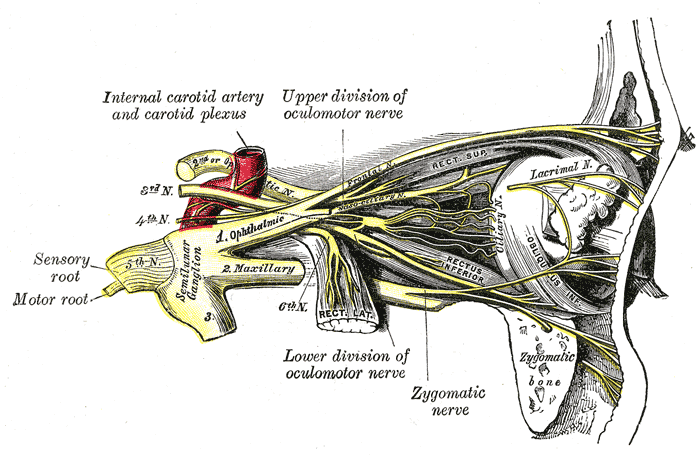
O piscar associado ao movimento da mandíbula decorre de uma conexão neural anômala entre ramos do quinto nervo craniano e do nervo que controla a pálpebra. Essa sincronia involuntária faz a pálpebra subir ao sugar ou mastigar.
Referências
Fontes citadas no texto, publicações do grafo e bases de dados usadas neste verbete
5 publicações do grafo RarasNet (PubMed) · 6 bases de dados. Títulos, periódicos e PMIDs vêm direto da fonte, sem intermediação de IA.
Dados compilados pelo RarasNet a partir de fontes abertas (Orphanet, OMIM, MONDO, PubMed/EuropePMC, ClinicalTrials.gov, DATASUS, PCDT/MS). Este conteúdo é informativo e não substitui avaliação médica.
Citar este verbete
Raras. (s.d.). Síndrome de Marcus-Gunn. Em Raras — Enciclopédia de Doenças Raras do Brasil. https://raras.org/doenca/sindrome-de-marcus-gunn
Formato APA. Conteúdo sob CC BY 4.0 — reuso livre com atribuição.
Conteúdo mantido por Agente Raras · Médicos e pesquisadores podem colaborar
Síndrome de Marcus-Gunn
📋 Origem dos dados
Esta página agrega dados de fontes públicas e oficiais. Dados sobre cobertura no SUS (PCDT, CEAF) são verificados ativamente por agente proativo (ver badge no infobox). Demais dados têm atribuição de fonte + data da última sincronização — clique para abrir o original.
- Doença rara (ontologia)
- fonte: Orphanet
- Identificador unificado
- fonte: MONDO
- Genética mendeliana
- fonte: OMIM
- Codificação WHO/SUS
- fonte: WHO ICD-10 / DATASUS
- CID-11 (futuro)
- fonte: WHO ICD-11
- NIH/GARD
- fonte: GARD (NIH)
- Indexação biomédica
- fonte: MeSH (NLM)
- Dado público estruturado
- fonte: Wikidata

