
A Síndrome Aurículo-Condilar (SAC) se manifesta com malformações nas orelhas externas em ambos os lados (orelhas com formato de ponto de interrogação), desenvolvimento incompleto do côndilo da mandíbula, boca pequena, queixo pequeno, língua pequena e assimetria facial. Outras manifestações incluem músculos flácidos, pálpebras caídas, fenda palatina, bochechas inchadas, atraso no desenvolvimento, problemas de audição e dificuldade para respirar.
Introdução
O que você precisa saber de cara
A Síndrome Aurículo-Condilar (SAC) se manifesta com malformações nas orelhas externas em ambos os lados (orelhas com formato de ponto de interrogação), desenvolvimento incompleto do côndilo da mandíbula, boca pequena, queixo pequeno, língua pequena e assimetria facial. Outras manifestações incluem músculos flácidos, pálpebras caídas, fenda palatina, bochechas inchadas, atraso no desenvolvimento, problemas de audição e dificuldade para respirar.
Escala de raridade
<1/50kMuito rara
1/20kRara
1/10kPouco freq.
1/5kIncomum
1/2k
Encontrou um erro ou informação desatualizada? Sugira uma correção →
Entender a doença
Do básico ao detalhe, leia no seu ritmo
Preparando trilha educativa...
Sinais e sintomas
O que aparece no corpo e com que frequência cada sintoma acontece
Partes do corpo afetadas
+ 21 sintomas em outras categorias
Características mais comuns
Os sintomas variam de pessoa para pessoa. Abaixo estão as 72 características clínicas mais associadas, ordenadas por frequência.
Linha do tempo da pesquisa
Encontrou um erro ou informação desatualizada? Sugira uma correção →
Genética e causas
O que está alterado no DNA e como passa nas famílias
Genes associados
4 genes identificados com associação a esta condição. Padrão de herança: Autosomal dominant, Autosomal recessive.
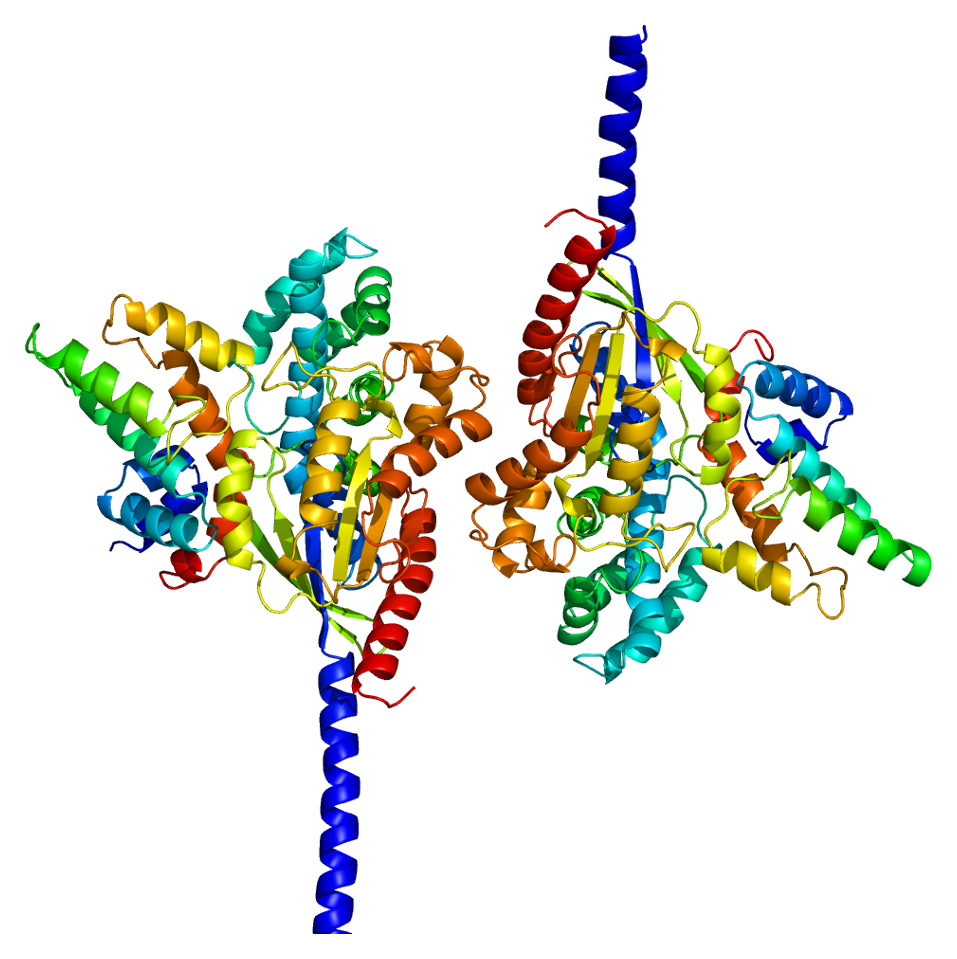
Activated phosphatidylinositol-specific phospholipase C enzymes catalyze the production of the second messenger molecules diacylglycerol (DAG) and inositol 1,4,5-trisphosphate (IP3) involved in G-protein coupled receptor signaling pathways. PLCB4 is a direct effector of the endothelin receptor signaling pathway that plays an essential role in lower jaw and middle ear structures development (PubMed:35284927)
Cell membrane
Auriculocondylar syndrome 2A
An autosomal dominant form of auriculocondylar syndrome, a craniofacial malformation syndrome characterized by variable mandibular anomalies, including mild to severe micrognathia, temporomandibular joint ankylosis, cleft palate, and a characteristic ear malformation that consists of separation of the lobule from the external ear, giving the appearance of a question mark (question-mark ear). Other frequently described features include prominent cheeks, cupped and posteriorly rotated ears, preauricular tags, and microstomia. Glossoptosis, masticatory abnormalities, orthodontic problems, and malocclusion occur in a majority of affected subjects.
Responsible for the deacetylation of lysine residues on the N-terminal part of the core histones (H2A, H2B, H3 and H4). Histone deacetylation gives a tag for epigenetic repression and plays an important role in transcriptional regulation, cell cycle progression and developmental events. Represses MEF2-dependent transcription Isoform 3 lacks active site residues and therefore is catalytically inactive. Represses MEF2-dependent transcription by recruiting HDAC1 and/or HDAC3. Seems to inhibit skele
Nucleus
Auriculocondylar syndrome 4
An autosomal dominant form of auriculocondylar syndrome, a craniofacial malformation syndrome characterized by variable mandibular anomalies, including mild to severe micrognathia, temporomandibular joint ankylosis, cleft palate, and a characteristic ear malformation that consists of separation of the lobule from the external ear, giving the appearance of a question mark (question-mark ear). Other frequently described features include prominent cheeks, cupped and posteriorly rotated ears, preauricular tags, and microstomia. Glossoptosis, masticatory abnormalities, orthodontic problems, and malocclusion occur in a majority of affected subjects.
Heterotrimeric guanine nucleotide-binding proteins (G proteins) function as transducers downstream of G protein-coupled receptors (GPCRs) in numerous signaling cascades. The alpha chain contains the guanine nucleotide binding site and alternates between an active, GTP-bound state and an inactive, GDP-bound state. Signaling by an activated GPCR promotes GDP release and GTP binding. The alpha subunit has a low GTPase activity that converts bound GTP to GDP, thereby terminating the signal (By simil
CytoplasmCell membraneCytoplasm, cytoskeleton, microtubule organizing center, centrosome
Auriculocondylar syndrome 1
An autosomal dominant form of auriculocondylar syndrome, a craniofacial malformation syndrome characterized by variable mandibular anomalies, including mild to severe micrognathia, temporomandibular joint ankylosis, cleft palate, and a characteristic ear malformation that consists of separation of the lobule from the external ear, giving the appearance of a question mark (question-mark ear). Other frequently described features include prominent cheeks, cupped and posteriorly rotated ears, preauricular tags, and microstomia. Glossoptosis, masticatory abnormalities, orthodontic problems, and malocclusion occur in a majority of affected subjects.
Endothelins are endothelium-derived vasoconstrictor peptides (By similarity). Probable ligand for G-protein coupled receptors EDNRA and EDNRB which activates PTK2B, BCAR1, BCAR3 and, GTPases RAP1 and RHOA cascade in glomerular mesangial cells (PubMed:19086031). Also binds the DEAR/FBXW7-AS1 receptor (PubMed:17446437). Promotes mesenteric arterial wall remodeling via activation of ROCK signaling and subsequent colocalization of NFATC3 with F-actin filaments (By similarity). NFATC3 then translocat
Secreted
Question mark ears, isolated
An auricular abnormality characterized by a cleft between the lobule and the lower part of the helix, sometimes accompanied by a prominent or deficient upper part of the helix, shallow skin dimple on the posterior surface of the ear, or transposition of the ear lobe/antitragus.
Variantes genéticas (ClinVar)
176 variantes patogênicas registradas no ClinVar.
Classificação de variantes (ClinVar)
Distribuição de 147 variantes classificadas pelo ClinVar.
Vias biológicas (Reactome)
17 vias biológicas associadas aos genes desta condição.
Diagnóstico
Os sinais que médicos procuram e os exames que confirmam
Tratamento e manejo
Remédios, cuidados de apoio e o que precisa acompanhar
Onde tratar no SUS
Hospitais de referência no Brasil e o protocolo oficial do SUS (PCDT)
🇧🇷 Atendimento SUS — Síndrome Aurículo-condilar
Selecione um estado ou use sua localização para ver resultados.
Dados de DATASUS/CNES, SBGM, ABNeuro e Ministério da Saúde. Sempre confirme a disponibilidade diretamente com o estabelecimento.
Pesquisa ativa
Ensaios clínicos abertos e novidades científicas recentes
Pesquisa e ensaios clínicos
Nenhum ensaio clínico registrado para esta condição.
Publicações mais relevantes
Lateral mandibular ridge: A unique feature of the auriculocondylar syndrome.
Auriculocondylar syndrome (ACS) is a rare craniofacial malformation resulting from pathogenic variants in GNAI3, PLCB4, or EDN1. We evaluated whether a lateral mandibular ridge (LMR)-a bony ridge along the lateral mandibular body-constitutes a specific CT marker of ACS. Ten consecutive individuals (six females and four males with genetically confirmed ACS) underwent high-resolution multidetector CT of the craniofacial skeleton (0.5 mm sections, with multiplanar and 3D bone reconstructions). Two neuroradiologists and one pediatric craniofacial surgeon independently recorded the presence, configuration, and bilaterality of the LMR and associated ear, temporomandibular joint (TMJ), and mandibular anomalies. Blinded comparative review was performed in 100 trauma controls and 27 patients with craniofacial microsomia, Pierre Robin sequence, or Treacher Collins syndrome. Fisher's exact test (α = 0.05) and 95 % confidence intervals (CI) were calculated. An LMR was present in all 10 ACS patients (100 %; 95 % CI 69-100) and in none of the 127 non-ACS individuals (0 %; 0-3). Specificity and positive predictive value were therefore 100 %. TMJ or condylar dysplasia co-occurred in 7/10 (70 %), and auricular clefts in 9/10 (90 %). The LMR is a constant and highly specific CT finding in ACS, absent in other first- and second-branchial arch syndromes and the general population. Recognising this feature can expedite genetic confirmation of ACS, refine differential diagnosis, and guide counselling. Focused craniofacial CT should be considered when ACS is clinically suspected or in relatives of affected individuals.
Two Chinese Patients of Auriculocondylar Syndrome 2: A Novel PLCB4 Splicing Variant and 5-Year Follow-up.
ObjectiveAuriculocondylar syndrome (ARCND) is a set of rare craniofacial malformations characterized by variable micrognathia, ear malformations, and mandibular condyle hypoplasia, and other accompanying features with phenotypic complexity. ARCND2 caused by pathogenic variants in the PLCB4 gene is a very rare disease with less than 50 patients reported and only 36 different variants of the PLCB4 gene recorded in HGMD. This study aims to enrich the patient resources, clinical data and mutational spectrum of ARCND2.DesignCase series study.SettingGuangzhou Women and Children's Medical Center and Guangdong Women and Children Hospital.PatientsTwo Chinese patients with ARCND2.Main Outcome MeasuresClinical, radiological and molecular findings.ResultsBoth the two patients presented with craniofacial and ear malformations, and feeding difficulties. Whole exome sequencing identified two different variants of the PLCB4 gene in these two patients with a heterozygous allele and a de novo mode of inheritance respectively. Patient 1 carried a known pathogenic c.1861C > T(p.Arg621Cys) missense variant, whereas Patient 2 had a novel c.225 + 1G > A splicing variant. Sanger sequencing confirmed the presence of PLCB4 variants in the proband and absence in the unaffected parents. These two PLCB4 variants were suggested as disease-causing candidates for these two patients. During a 5-year follow-up, Patient 2 gradually manifested crowded teeth, underweight, motor delay and intellectual disability.ConclusionsIn this study, we report two Chinese patients with ARCND2, describe their clinical and mutational features, and share a 5-year follow-up of one patient. Our study adds two additional patients to ARCND2, reveals a novel PLCB4 variant, and expands the phenotypic and genotypic spectrum.
Novel GNAI3 mutation in a Chinese family with auriculocondylar syndrome and treatment of severe dentofacial deformities: a 5-year follow-up case report.
Auriculocondylar syndrome (ARCND) is an extremely rare autosomal dominant or recessive condition that typically manifests as question mark ears (QMEs), mandibular condyle hypoplasia, and micrognathia. Severe dental and maxillofacial malformations present considerable challenges in patients' lives and clinical treatment. Currently, only a few ARCND cases have been reported worldwide, but most of them are related to genetic mutations, clinical symptoms, and ear correction; there are few reports concerning the treatment of dentofacial deformities. Here, we report a rare case of ARCND in a Chinese family. A novel insertional mutation in the guanine nucleotide-binding protein alpha-inhibiting activity polypeptide 3 (GNAI3) was identified in the patient and their brother using whole-exome sequencing. After a multidisciplinary consultation and examination, sequential orthodontic treatment and craniofacial surgery, including distraction osteogenesis and orthognathic surgery, were performed using three-dimensional (3D) digital technology to treat the patient's dentofacial deformity. A good prognosis was achieved at the 5-year follow-up, and the patient returned to normal life. ARCND is a monogenic and rare condition that can be diagnosed based on its clinical triad of core features. Molecular diagnosis plays a crucial role in the diagnosis of patients with inconspicuous clinical features. We present a novel insertion variation in GNAI3, which was identified in exon 2 of chromosome 110116384 in a Chinese family. Sequential therapy with preoperative orthodontic treatment combined with distraction osteogenesis and orthognathic surgery guided by 3D digital technology may be a practical and effective method for treating ARCND.
Auriculocondylar syndrome 2 caused by a novel PLCB4 variant in a male Chinese neonate: A case report and review of the literature.
Auriculocondylar syndrome (ARCND) is a rare congenital craniofacial developmental malformation syndrome of the first and second pharyngeal arches with external ear malformation at the junction between the lobe and helix, micromaxillary malformation, and mandibular condylar hypoplasia. Four subtypes of ARCND have been described so far, that is, ARCND1 (OMIM # 602483), ARCND2 (ARCND2A, OMIM # 614669; ARCND2B, OMIM # 620458), ARCND3 (OMIM # 615706), and ARCND4 (OMIM # 620457). This study reports a case of ARCND2 resulting from a novel pathogenic variant in the PLCB4 gene, and summarizes PLCB4 gene mutation sites and phenotypes of ARCND2. The proband, a 5-day-old male neonate, was referred to our hospital for respiratory distress. Micrognathia, microstomia, distinctive question mark ears, as well as mandibular condyle hypoplasia were identified. Trio-based whole-exome sequencing identified a novel missense variant of NM_001377142.1:c.1928C>T (NP_001364071.1:p.Ser643Phe) in the PLCB4 gene, which was predicted to impair the local structural stability with a result that the protein function might be affected. From a review of the literature, only 36 patients with PLCB4 gene mutations were retrieved. As with other studies examining familial cases of ARCND2, incomplete penetrance and variable expressivity were observed within different families' heterozygous mutations in PLCB4 gene. Although, motor and intellectual development are in the normal range in the vast majority of patients with ARCND2, long-term follow-up and assessment are still required.
Endothelin signaling in development.
Since the discovery of endothelin 1 (EDN1) in 1988, the role of endothelin ligands and their receptors in the regulation of blood pressure in normal and disease states has been extensively studied. However, endothelin signaling also plays crucial roles in the development of neural crest cell-derived tissues. Mechanisms of endothelin action during neural crest cell maturation have been deciphered using a variety of in vivo and in vitro approaches, with these studies elucidating the basis of human syndromes involving developmental differences resulting from altered endothelin signaling. In this Review, we describe the endothelin pathway and its functions during the development of neural crest-derived tissues. We also summarize how dysregulated endothelin signaling causes developmental differences and how this knowledge may lead to potential treatments for individuals with gene variants in the endothelin pathway.
Publicações recentes
Lateral mandibular ridge: A unique feature of the auriculocondylar syndrome.
Novel GNAI3 mutation in a Chinese family with auriculocondylar syndrome and treatment of severe dentofacial deformities: a 5-year follow-up case report.
Auriculocondylar syndrome 2 caused by a novel PLCB4 variant in a male Chinese neonate: A case report and review of the literature.
Two Chinese Patients of Auriculocondylar Syndrome 2: A Novel PLCB4 Splicing Variant and 5-Year Follow-up.
Endothelin signaling in development.
📚 EuropePMC26 artigos no totalmostrando 21
Lateral mandibular ridge: A unique feature of the auriculocondylar syndrome.
European journal of radiologyNovel GNAI3 mutation in a Chinese family with auriculocondylar syndrome and treatment of severe dentofacial deformities: a 5-year follow-up case report.
BMC oral healthAuriculocondylar syndrome 2 caused by a novel PLCB4 variant in a male Chinese neonate: A case report and review of the literature.
Molecular genetics & genomic medicineTwo Chinese Patients of Auriculocondylar Syndrome 2: A Novel PLCB4 Splicing Variant and 5-Year Follow-up.
The Cleft palate-craniofacial journal : official publication of the American Cleft Palate-Craniofacial AssociationEndothelin signaling in development.
Development (Cambridge, England)A homozygous missense variant in the PLCB4 gene causes severe phenotype of auriculocondylar syndrome type 2.
American journal of medical genetics. Part AAuriculocondylar syndrome: Pathogenesis, clinical manifestations and surgical therapies.
Journal of the Formosan Medical Association = Taiwan yi zhiAuriculocondylar syndrome 2 results from the dominant-negative action of PLCB4 variants.
Disease models & mechanismsFurther delineation of auriculocondylar syndrome based on 14 novel cases and reassessment of 25 published cases.
Human mutationBilateral choanal stenosis in auriculocondylar syndrome caused by a PLCB4 variant.
American journal of medical genetics. Part APrenatal diagnosis of auriculocondylar syndrome with a novel missense variant of GNAI3: a case report.
BMC pregnancy and childbirthNew locus underlying auriculocondylar syndrome (ARCND): 430 kb duplication involving TWIST1 regulatory elements.
Journal of medical geneticsA novel missense variant of the GNAI3 gene and recognisable morphological characteristics of the mandibula in ARCND1.
Journal of human geneticsFurther phenotypic delineation of the auriculocondylar syndrome type 2 with literature review.
Journal of applied geneticsA familial PLCB4 mutation causing auriculocondylar syndrome 2 with variable severity.
European journal of medical geneticsLoss-of-function of Endothelin receptor type A results in Oro-Oto-Cardiac syndrome.
American journal of medical genetics. Part AThe association of severe encephalopathy and question mark ear is highly suggestive of loss of MEF2C function.
Clinical geneticsTargeted molecular investigation in patients within the clinical spectrum of Auriculocondylar syndrome.
American journal of medical genetics. Part AWdr68 Mediates Dorsal and Ventral Patterning Events for Craniofacial Development.
PloS oneRespiratory and gastrointestinal dysfunctions associated with auriculo-condylar syndrome and a homozygous PLCB4 loss-of-function mutation.
American journal of medical genetics. Part AA mouse splice-site mutant and individuals with atypical chromosome 22q11.2 deletions demonstrate the crucial role for crkl in craniofacial and pharyngeal development.
Molecular syndromologyAssociações
Organizações que acompanham esta doença — pra ter apoio e orientação
Ainda não temos associações cadastradas para Síndrome Aurículo-condilar.
É de uma associação que acompanha esta doença? Fale com a gente →
Comunidades
Grupos ativos de quem convive com esta doença aqui no Raras
Ainda não existe comunidade no Raras para Síndrome Aurículo-condilar
Pacientes, familiares e cuidadores se organizam em comunidades pra compartilhar experiências, fazer perguntas e se apoiar. Você pode ser o primeiro.
Tire suas dúvidas
Perguntas, dicas e experiências compartilhadas aqui na página
Participe da discussão
Faça login para postar dúvidas, compartilhar experiências e interagir com especialistas.
Fazer loginDoenças relacionadas
Doenças com sintomas parecidos — ajudam quem ainda está buscando diagnóstico
Referências e fontes
Bases de dados externas citadas neste artigo
Publicações científicas
Artigos indexados no PubMed ligados a esta doença no grafo RarasNet — título, periódico e PMID direto da fonte, sem intermediação de IA.
- Lateral mandibular ridge: A unique feature of the auriculocondylar syndrome.
- Two Chinese Patients of Auriculocondylar Syndrome 2: A Novel PLCB4 Splicing Variant and 5-Year Follow-up.The Cleft palate-craniofacial journal : official publication of the American Cleft Palate-Craniofacial Association· 2025· PMID 38414442mais citado
- Novel GNAI3 mutation in a Chinese family with auriculocondylar syndrome and treatment of severe dentofacial deformities: a 5-year follow-up case report.
- Auriculocondylar syndrome 2 caused by a novel PLCB4 variant in a male Chinese neonate: A case report and review of the literature.
- Endothelin signaling in development.
Bases de dados e fontes oficiais
Identificadores e referências canônicas usadas para montar este verbete.
- ORPHA:137888(Orphanet)
- MONDO:0000107(MONDO)
- GARD:9798(GARD (NIH))
- Variantes catalogadas(ClinVar)
- Busca completa no PubMed(PubMed)
- Q29014971(Wikidata)
Dados compilados pelo RarasNet a partir de fontes abertas (Orphanet, OMIM, MONDO, PubMed/EuropePMC, ClinicalTrials.gov, DATASUS, PCDT/MS). Este conteúdo é informativo e não substitui avaliação médica.
Conteúdo mantido por Agente Raras · Médicos e pesquisadores podem colaborar
Síndrome Aurículo-condilar
📋 Origem dos dados
Esta página agrega dados de fontes públicas e oficiais. Dados sobre cobertura no SUS (PCDT, CEAF) são verificados ativamente por agente proativo (ver badge no infobox). Demais dados têm atribuição de fonte + data da última sincronização — clique para abrir o original.
- Doença rara (ontologia)
- fonte: Orphanet
- Identificador unificado
- fonte: MONDO
- Codificação WHO/SUS
- fonte: WHO ICD-10 / DATASUS
- CID-11 (futuro)
- fonte: WHO ICD-11
- NIH/GARD
- fonte: GARD (NIH)
- Indexação biomédica
- fonte: MeSH (NLM)
- Dado público estruturado
- fonte: Wikidata