
Introdução
O que você precisa saber de cara
Visão geral
A Deficiência isolada do hormônio de crescimento tipo III é uma condição genética rara que afeta o crescimento e o sistema imunológico. Ela se manifesta desde o período neonatal ou na primeira infância, combinando baixa estatura por falta do hormônio do crescimento com infecções recorrentes causadas por deficiência de anticorpos (pan-hipogamaglobulinemia). A doença é ligada ao cromossomo X e, por isso, afeta principalmente meninos.[1][4]
Sinais e sintomas
Os principais sinais incluem baixa estatura, maturação esquelética atrasada, puberdade atrasada e resposta diminuída ao teste de estímulo do hormônio do crescimento. Além disso, ocorrem infecções bacterianas e virais recorrentes, como pneumonia, otite média, sinusite, infecções do trato urinário, meningite, encefalite, artrite séptica, epididimite, prostatite, conjuntivite e pioedermite. Diarreia e infecções enterovirais (incluindo hepatite e síndrome de dermatomiosite enteroviral) também são frequentes. Pode haver deficiência auditiva e contagem anormal de linfócitos T, com ausência de células B circulantes.[1][4]
Causas genéticas
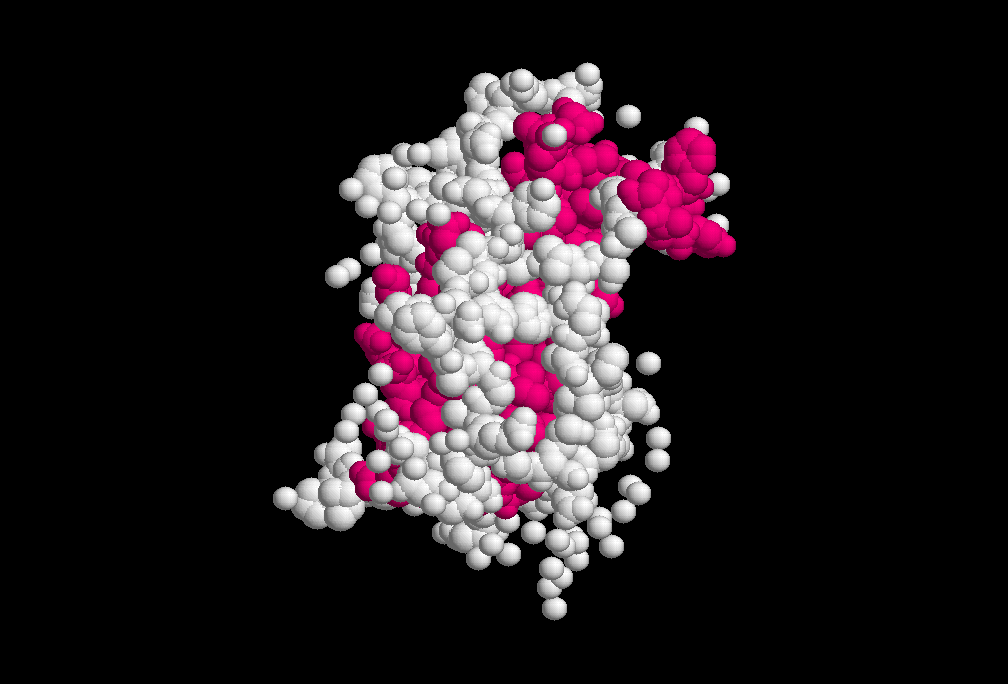
A condição é causada por alterações (mutações) nos genes BTK (que produz a proteína tirosina-quinase BTK) ou ELF4 (que produz o fator de transcrição Elf-4). Esses genes são essenciais para o desenvolvimento de células B do sistema imunológico e para a produção do hormônio do crescimento. A herança é ligada ao cromossomo X, ou seja, o gene alterado está no cromossomo X e a doença se manifesta principalmente em indivíduos do sexo masculino.[1][2][5]
Diagnóstico
O diagnóstico é baseado na avaliação clínica dos sintomas (baixa estatura, infecções recorrentes, deficiência de anticorpos) e confirmado por testes genéticos que identificam mutações nos genes BTK ou ELF4. Existem 87 testes genéticos disponíveis e mais de 750 variantes descritas no ClinVar. Exames laboratoriais mostram pan-hipogamaglobulinemia (níveis baixos de todos os tipos de anticorpos), ausência de células B circulantes e resposta reduzida ao estímulo do hormônio do crescimento.[1][2][5][6]
Tratamento e manejo
O tratamento é multidisciplinar e inclui reposição do hormônio do crescimento para estimular o crescimento linear, além de imunoglobulina intravenosa ou subcutânea para prevenir infecções. Infecções agudas devem ser tratadas com antibióticos ou antivirais conforme necessário. O acompanhamento com endocrinologista e imunologista é essencial. No Brasil, a condição tem cobertura mínima pelo SUS, o que significa que alguns medicamentos e procedimentos podem não ser integralmente fornecidos.[1][2][6]
Tratamentos citados na literatura
Na literatura científica, o fármaco Penicillamine foi associado à doença em 1 publicação (fonte: PubTator3). Essa é uma associação minerada de artigos de pesquisa e não representa uma recomendação de tratamento. Consulte sempre seu médico antes de considerar qualquer medicação.[6]
Prognóstico e qualidade de vida
Com diagnóstico precoce e tratamento adequado (reposição de hormônio do crescimento e imunoglobulina), muitas crianças alcançam uma estatura próxima do normal e têm redução significativa no número de infecções. No entanto, a deficiência imunológica persiste e requer acompanhamento contínuo. Infecções graves, especialmente enterovirais, podem ser fatais se não tratadas. O suporte psicológico e educacional também é importante para lidar com os desafios da doença crônica.[1][2][6]
Conteúdo informativo gerado e mantido automaticamente a partir de fontes oficiais (Orphanet, HPO, OMIM, SUS). Não substitui avaliação médica.
Deficiência isolada do hormônio de crescimento tipo III é uma condição rara associada a mutações nos genes ELF4 ou BTK. Manifesta-se por baixa estatura, maturação esquelética atrasada e suscetibilidade a infecções recorrentes, como hepatite enteroviral, meningite e otite média.
Encontrou um erro ou informação desatualizada? Sugira uma correção →
Entender a doença
Do básico ao detalhe, leia no seu ritmo
Preparando trilha educativa...
Sinais e sintomas
O que aparece no corpo e com que frequência cada sintoma acontece
Visão geral
A Deficiência isolada do hormônio de crescimento tipo III é uma condição genética rara que afeta o crescimento e o sistema imunológico. Ela se manifesta desde o período neonatal ou na primeira infância, combinando baixa estatura por falta do hormônio do crescimento com infecções recorrentes causadas por deficiência de anticorpos (pan-hipogamaglobulinemia). A doença é ligada ao cromossomo X e, por isso, afeta principalmente meninos.[1][4]
Sinais e sintomas
Os principais sinais incluem baixa estatura, maturação esquelética atrasada, puberdade atrasada e resposta diminuída ao teste de estímulo do hormônio do crescimento. Além disso, ocorrem infecções bacterianas e virais recorrentes, como pneumonia, otite média, sinusite, infecções do trato urinário, meningite, encefalite, artrite séptica, epididimite, prostatite, conjuntivite e pioedermite. Diarreia e infecções enterovirais (incluindo hepatite e síndrome de dermatomiosite enteroviral) também são frequentes. Pode haver deficiência auditiva e contagem anormal de linfócitos T, com ausência de células B circulantes.[1][4]
Causas genéticas
A condição é causada por alterações (mutações) nos genes BTK (que produz a proteína tirosina-quinase BTK) ou ELF4 (que produz o fator de transcrição Elf-4). Esses genes são essenciais para o desenvolvimento de células B do sistema imunológico e para a produção do hormônio do crescimento. A herança é ligada ao cromossomo X, ou seja, o gene alterado está no cromossomo X e a doença se manifesta principalmente em indivíduos do sexo masculino.[1][2][5]
Diagnóstico
O diagnóstico é baseado na avaliação clínica dos sintomas (baixa estatura, infecções recorrentes, deficiência de anticorpos) e confirmado por testes genéticos que identificam mutações nos genes BTK ou ELF4. Existem 87 testes genéticos disponíveis e mais de 750 variantes descritas no ClinVar. Exames laboratoriais mostram pan-hipogamaglobulinemia (níveis baixos de todos os tipos de anticorpos), ausência de células B circulantes e resposta reduzida ao estímulo do hormônio do crescimento.[1][2][5][6]
Tratamento e manejo
O tratamento é multidisciplinar e inclui reposição do hormônio do crescimento para estimular o crescimento linear, além de imunoglobulina intravenosa ou subcutânea para prevenir infecções. Infecções agudas devem ser tratadas com antibióticos ou antivirais conforme necessário. O acompanhamento com endocrinologista e imunologista é essencial. No Brasil, a condição tem cobertura mínima pelo SUS, o que significa que alguns medicamentos e procedimentos podem não ser integralmente fornecidos.[1][2][6]
Tratamentos citados na literatura
Na literatura científica, o fármaco Penicillamine foi associado à doença em 1 publicação (fonte: PubTator3). Essa é uma associação minerada de artigos de pesquisa e não representa uma recomendação de tratamento. Consulte sempre seu médico antes de considerar qualquer medicação.[6]
Prognóstico e qualidade de vida
Com diagnóstico precoce e tratamento adequado (reposição de hormônio do crescimento e imunoglobulina), muitas crianças alcançam uma estatura próxima do normal e têm redução significativa no número de infecções. No entanto, a deficiência imunológica persiste e requer acompanhamento contínuo. Infecções graves, especialmente enterovirais, podem ser fatais se não tratadas. O suporte psicológico e educacional também é importante para lidar com os desafios da doença crônica.[1][2][6]
Conteúdo informativo gerado e mantido automaticamente a partir de fontes oficiais (Orphanet, HPO, OMIM, SUS). Não substitui avaliação médica.
Partes do corpo afetadas
+ 11 sintomas em outras categorias
Características mais comuns
Os sintomas variam de pessoa para pessoa. Abaixo estão as 25 características clínicas mais associadas, ordenadas por frequência.
Linha do tempo da pesquisa
Encontrou um erro ou informação desatualizada? Sugira uma correção →
Genética e causas
O que está alterado no DNA e como passa nas famílias
Genes associados
2 genes identificados com associação a esta condição.
Curadoria gene-doença
fontes oficiaisNon-receptor tyrosine kinase indispensable for B lymphocyte development, differentiation and signaling (PubMed:19290921). Binding of antigen to the B-cell antigen receptor (BCR) triggers signaling that ultimately leads to B-cell activation (PubMed:19290921). After BCR engagement and activation at the plasma membrane, phosphorylates PLCG2 at several sites, igniting the downstream signaling pathway through calcium mobilization, followed by activation of the protein kinase C (PKC) family members (P
CytoplasmCell membraneNucleusMembrane raft
X-linked agammaglobulinemia
Humoral immunodeficiency disease which results in developmental defects in the maturation pathway of B-cells. Affected boys have normal levels of pre-B-cells in their bone marrow but virtually no circulating mature B-lymphocytes. This results in a lack of immunoglobulins of all classes and leads to recurrent bacterial infections like otitis, conjunctivitis, dermatitis, sinusitis in the first few years of life, or even some patients present overwhelming sepsis or meningitis, resulting in death in a few hours. Treatment in most cases is by infusion of intravenous immunoglobulin.
Transcriptional activator that binds to DNA sequences containing the consensus 5'-WGGA-3'. Transactivates promoters of the hematopoietic growth factor genes CSF2, IL3, IL8, and of the bovine lysozyme gene. Acts synergistically with RUNX1 to transactivate the IL3 promoter (By similarity). Transactivates the PRF1 promoter in natural killer (NK) cells and CD8+ T cells (PubMed:34326534). Plays a role in the development and function of NK and NK T-cells and in innate immunity. Controls the proliferat
Nucleus, PML body
Variantes genéticas (ClinVar)
756 variantes patogênicas registradas no ClinVar.
Classificação de variantes (ClinVar)
Distribuição de 108 variantes classificadas pelo ClinVar.
Vias biológicas (Reactome)
14 vias biológicas associadas aos genes desta condição.
Diagnóstico
Os sinais que médicos procuram e os exames que confirmam
Tratamento e manejo
Remédios, cuidados de apoio e o que precisa acompanhar
Onde tratar no SUS
Hospitais de referência no Brasil e o protocolo oficial do SUS (PCDT)
🇧🇷 Atendimento SUS — Deficiência isolada do hormônio de crescimento tipo III
Selecione um estado ou use sua localização para ver resultados.
Dados de DATASUS/CNES, SBGM, ABNeuro e Ministério da Saúde. Sempre confirme a disponibilidade diretamente com o estabelecimento.
Pesquisa ativa
Ensaios clínicos abertos e novidades científicas recentes
Pesquisa e ensaios clínicos
Nenhum ensaio clínico registrado para esta condição.
Publicações mais relevantes
Mostrando amostra de 7 publicações de um total de 191
Recommendations for Diagnosis and Treatment of Pseudohypoparathyroidism and Related Disorders: An Updated Practical Tool for Physicians and Patients.
Patients affected by pseudohypoparathyroidism (PHP) or related disorders are characterized by physical findings that may include brachydactyly, a short stature, a stocky build, early-onset obesity, ectopic ossifications, and neurodevelopmental deficits, as well as hormonal resistance most prominently to parathyroid hormone (PTH). In addition to these alterations, patients may develop other hormonal resistances, leading to overt or subclinical hypothyroidism, hypogonadism and growth hormone (GH) deficiency, impaired growth without measurable evidence for hormonal abnormalities, type 2 diabetes, and skeletal issues with potentially severe limitation of mobility. PHP and related disorders are primarily clinical diagnoses. Given the variability of the clinical, radiological, and biochemical presentation, establishment of the molecular diagnosis is of critical importance for patients. It facilitates management, including prevention of complications, screening and treatment of endocrine deficits, supportive measures, and appropriate genetic counselling. Based on the first international consensus statement for these disorders, this article provides an updated and ready-to-use tool to help physicians and patients outlining relevant interventions and their timing. A life-long coordinated and multidisciplinary approach is recommended, starting as far as possible in early infancy and continuing throughout adulthood with an appropriate and timely transition from pediatric to adult care.
AMERICAN ASSOCIATION OF CLINICAL ENDOCRINOLOGISTS AND AMERICAN COLLEGE OF ENDOCRINOLOGY GUIDELINES FOR MANAGEMENT OF GROWTH HORMONE DEFICIENCY IN ADULTS AND PATIENTS TRANSITIONING FROM PEDIATRIC TO ADULT CARE.
Objective: The development of these guidelines is sponsored by the American Association of Clinical Endocrinologists (AACE) Board of Directors and American College of Endocrinology (ACE) Board of Trustees and adheres with published AACE protocols for the standardized production of clinical practice guidelines (CPG). Methods: Recommendations are based on diligent reviews of clinical evidence with transparent incorporation of subjective factors, according to established AACE/ACE guidelines for guidelines protocols. Results: The Executive Summary of this 2019 updated guideline contains 58 numbered recommendations: 12 are Grade A (21%), 19 are Grade B (33%), 21 are Grade C (36%), and 6 are Grade D (10%). These detailed, evidence-based recommendations allow for nuance-based clinical decision-making that addresses multiple aspects of real-world care of patients. The evidence base presented in the subsequent Appendix provides relevant supporting information for the Executive Summary recommendations. This update contains 357 citations of which 51 (14%) are evidence level (EL) 1 (strong), 168 (47%) are EL 2 (intermediate), 61 (17%) are EL 3 (weak), and 77 (22%) are EL 4 (no clinical evidence). Conclusion: This CPG is a practical tool that practicing endocrinologists and regulatory bodies can refer to regarding the identification, diagnosis, and treatment of adults and patients transitioning from pediatric to adult-care services with growth hormone deficiency (GHD). It provides guidelines on assessment, screening, diagnostic testing, and treatment recommendations for a range of individuals with various causes of adult GHD. The recommendations emphasize the importance of considering testing patients with a reasonable level of clinical suspicion of GHD using appropriate growth hormone (GH) cut-points for various GH-stimulation tests to accurately diagnose adult GHD, and to exercise caution interpreting serum GH and insulin-like growth factor-1 (IGF-1) levels, as various GH and IGF-1 assays are used to support treatment decisions. The intention to treat often requires sound clinical judgment and careful assessment of the benefits and risks specific to each individual patient. Unapproved uses of GH, long-term safety, and the current status of long-acting GH preparations are also discussed in this document. LAY ABSTRACT This updated guideline provides evidence-based recommendations regarding the identification, screening, assessment, diagnosis, and treatment for a range of individuals with various causes of adult growth-hormone deficiency (GHD) and patients with childhood-onset GHD transitioning to adult care. The update summarizes the most current knowledge about the accuracy of available GH-stimulation tests, safety of recombinant human GH (rhGH) replacement, unapproved uses of rhGH related to sports and aging, and new developments such as long-acting GH preparations that use a variety of technologies to prolong GH action. Recommendations offer a framework for physicians to manage patients with GHD effectively during transition to adult care and adulthood. Establishing a correct diagnosis is essential before consideration of replacement therapy with rhGH. Since the diagnosis of GHD in adults can be challenging, GH-stimulation tests are recommended based on individual patient circumstances and use of appropriate GH cut-points. Available GH-stimulation tests are discussed regarding variability, accuracy, reproducibility, safety, and contraindications, among other factors. The regimen for starting and maintaining rhGH treatment now uses individualized dose adjustments, which has improved effectiveness and reduced reported side effects, dependent on age, gender, body mass index, and various other individual characteristics. With careful dosing of rhGH replacement, many features of adult GHD are reversible and side effects of therapy can be minimized. Scientific studies have consistently shown rhGH therapy to be beneficial for adults with GHD, including improvements in body composition and quality of life, and have demonstrated the safety of short- and long-term rhGH replacement. Abbreviations: AACE = American Association of Clinical Endocrinologists; ACE = American College of Endocrinology; AHSG = alpha-2-HS-glycoprotein; AO-GHD = adult-onset growth hormone deficiency; ARG = arginine; BEL = best evidence level; BMD = bone mineral density; BMI = body mass index; CI = confidence interval; CO-GHD = childhood-onset growth hormone deficiency; CPG = clinical practice guideline; CRP = C-reactive protein; DM = diabetes mellitus; DXA = dual-energy X-ray absorptiometry; EL = evidence level; FDA = Food and Drug Administration; FD-GST = fixed-dose glucagon stimulation test; GeNeSIS = Genetics and Neuroendocrinology of Short Stature International Study; GH = growth hormone; GHD = growth hormone deficiency; GHRH = growth hormone-releasing hormone; GST = glucagon stimulation test; HDL = high-density lipoprotein; HypoCCS = Hypopituitary Control and Complications Study; IGF-1 = insulin-like growth factor-1; IGFBP = insulin-like growth factor-binding protein; IGHD = isolated growth hormone deficiency; ITT = insulin tolerance test; KIMS = Kabi International Metabolic Surveillance; LAGH = long-acting growth hormone; LDL = low-density lipoprotein; LIF = leukemia inhibitory factor; MPHD = multiple pituitary hormone deficiencies; MRI = magnetic resonance imaging; P-III-NP = procollagen type-III amino-terminal pro-peptide; PHD = pituitary hormone deficiencies; QoL = quality of life; rhGH = recombinant human growth hormone; ROC = receiver operating characteristic; RR = relative risk; SAH = subarachnoid hemorrhage; SDS = standard deviation score; SIR = standardized incidence ratio; SN = secondary neoplasms; T3 = triiodothyronine; TBI = traumatic brain injury; VDBP = vitamin D-binding protein; WADA = World Anti-Doping Agency; WB-GST = weight-based glucagon stimulation test.
A novel CLCNKB mutation in a Chinese girl with classic Bartter syndrome: a case report.
Bartter syndrome (BS) is a rare autosomal recessive disorder of salt reabsorption at the thick ascending limb of the Henle loop, characterized by hypokalemia, salt loss, metabolic alkalosis, hyperreninemic hyperaldosteronism with normal blood pressure. BS type III, often known as classic BS (CBS), is caused by loss-of-function mutations in CLCNKB (chloride voltage-gated channel Kb) encoding basolateral ClC-Kb. We reported a 15-year-old CBS patient with a compound heterozygous mutation of CLCNKB gene. She first presented with vomiting, hypokalemic metabolic alkalosis at the age of 4 months, and was clinically diagnosed as CBS. Indomethacin, spironolactone and oral potassium were started from then. During follow-up, the serum electrolyte levels were generally normal, but the patient showed failure to thrive and growth hormone (GH) deficiency was diagnosed. The recombinant human GH therapy was performed, and the growth velocity was improved. When she was 14, severe proteinuria and chronic kidney disease (CKD) were developed. Renal biopsy showed focal segmental glomerulosclerosis (FSGS) with juxtaglomerular apparatus cell hyperplasia, and genetic testing revealed a point deletion of c.1696delG (p. Glu566fs) and a fragment deletion of exon 2-3 deletions in CLCNKB gene. Apart from the CBS, ostium secundum atrial septal defect (ASD) was diagnosed by echocardiography. This is the first report of this compound heterozygous of CLCNKB gene in BS Children. Our findings contribute to a growing list of CLCNKB mutations associated with CBS. Some recessive mutations can induce CBS in combination with other mutations.
A novel mutation associated with Type III Bartter syndrome: A report of five cases.
The clinical, biochemical and mutation spectra of Chinese patients with Type III Bartter syndrome (type III BS), a rare autosomal recessive disorder, were investigated. A total of five unrelated Chinese patients aged 8 months to 24 years were diagnosed with type III BS via analysis of biochemical markers, including chloride, potassium and calcium, and genetic sequencing. The levels of insulin‑like growth factor‑1 (IGF‑1) were evaluated via ELISA and a mutation study of cultured amniocytes was conducted for prenatal diagnosis. The child patients were admitted for polydipsia, polyuria, myasthenia and developmental delay, whereas the adult patients were hospitalized for limb numbness, polydipsia and polyuria. Nine variants in the chloride voltage‑gated channel Kb (CLCNKB) gene were detected, including eight sequence variants and one whole CLCNKB gene deletion. One sequence variant (c.1967T>C) was novel, whereas the remaining variants (c.595G>T, c.908A>C, c.1004T>C, c.1312C>T, c.1334_1335delCT and c.1718C>A) and the whole gene deletion had been previously reported. The whole gene deletion was frequently observed in patients with early‑onset type III BS in the present study. Two patients showed IGF‑1 deficiency with normal growth hormone level. All patients were treated with potassium supplementation and indometacin. The mother of one patient underwent amniocentesis during her second pregnancy; the fetus was not affected by type III BS based on screening for sequence variants, and normal development and blood electrolyte analysis following birth confirmed the diagnosis. In conclusion, five cases of type III BS in patients from mainland China were reported. Large deletions were frequently detected, particularly in early‑onset patients; isolated IGF‑1 deficiency was found, one novel sequence variant was identified. Prenatal diagnosis was successfully established using genetic analysis of cultured amniocytes, and may facilitate the prevention of congenital defect of type III BS in the next pregnancy.
Modeling mutant/wild-type interactions to ascertain pathogenicity of PROKR2 missense variants in patients with isolated GnRH deficiency.
A major challenge in human genetics is the validation of pathogenicity of heterozygous missense variants. This problem is well-illustrated by PROKR2 variants associated with Isolated GnRH Deficiency (IGD). Homozygous, loss of function variants in PROKR2 was initially implicated in autosomal recessive IGD; however, most IGD-associated PROKR2 variants are heterozygous. Moreover, while IGD patient cohorts are enriched for PROKR2 missense variants similar rare variants are also found in normal individuals. To elucidate the pathogenic mechanisms distinguishing IGD-associated PROKR2 variants from rare variants in controls, we assessed 59 variants using three approaches: (i) in silico prediction, (ii) traditional in vitro functional assays across three signaling pathways with mutant-alone transfections, and (iii) modified in vitro assays with mutant and wild-type expression constructs co-transfected to model in vivo heterozygosity. We found that neither in silico analyses nor traditional in vitro assessments of mutants transfected alone could distinguish IGD variants from control variants. However, in vitro co-transfections revealed that 15/34 IGD variants caused loss-of-function (LoF), including 3 novel dominant-negatives, while only 4/25 control variants caused LoF. Surprisingly, 19 IGD-associated variants were benign or exhibited LoF that could be rescued by WT co-transfection. Overall, variants that were LoF in ≥ 2 signaling assays under co-transfection conditions were more likely to be disease-associated than benign or 'rescuable' variants. Our findings suggest that in vitro modeling of WT/Mutant interactions increases the resolution for identifying causal variants, uncovers novel dominant negative mutations, and provides new insights into the pathogenic mechanisms underlying heterozygous PROKR2 variants.
Publicações recentes
Pituitary Magnetic Resonance Imaging as a Prognostic Factor of Pituitary Insufficiency-The Follow-Up Analysis of a Cohort of Children With Pituitary Stalk Interruption Syndrome.
The relationship between pituitary size and the response to recombinant human growth hormone therapy in children with isolated growth hormone deficiency.
[Genetic analysis of a Chinese pedigree affected with Isolated growth hormone deficiency due to variant of CHRHR gene].
Children born SGA receiving growth hormone have similarly impaired glucose-insulin metabolism as children with obesity.
PPP1R12A Mutation Presenting With Congenital Jejunal Atresia and Short Stature: A Pediatric Endocrinology Case Report.
📚 EuropePMC278 artigos no totalmostrando 7
Recommendations for Diagnosis and Treatment of Pseudohypoparathyroidism and Related Disorders: An Updated Practical Tool for Physicians and Patients.
Hormone research in paediatricsAMERICAN ASSOCIATION OF CLINICAL ENDOCRINOLOGISTS AND AMERICAN COLLEGE OF ENDOCRINOLOGY GUIDELINES FOR MANAGEMENT OF GROWTH HORMONE DEFICIENCY IN ADULTS AND PATIENTS TRANSITIONING FROM PEDIATRIC TO ADULT CARE.
Endocrine practice : official journal of the American College of Endocrinology and the American Association of Clinical EndocrinologistsA novel CLCNKB mutation in a Chinese girl with classic Bartter syndrome: a case report.
BMC medical geneticsA novel mutation associated with Type III Bartter syndrome: A report of five cases.
Molecular medicine reportsModeling mutant/wild-type interactions to ascertain pathogenicity of PROKR2 missense variants in patients with isolated GnRH deficiency.
Human molecular geneticsKLB, encoding β-Klotho, is mutated in patients with congenital hypogonadotropic hypogonadism.
EMBO molecular medicineGH action influences adipogenesis of mouse adipose tissue-derived mesenchymal stem cells.
The Journal of endocrinologyAssociações
Organizações que acompanham esta doença — pra ter apoio e orientação
Ainda não temos associações cadastradas para Deficiência isolada do hormônio de crescimento tipo III.
É de uma associação que acompanha esta doença? Fale com a gente →
Comunidades
Grupos ativos de quem convive com esta doença aqui no Raras
Ainda não existe comunidade no Raras para Deficiência isolada do hormônio de crescimento tipo III
Pacientes, familiares e cuidadores se organizam em comunidades pra compartilhar experiências, fazer perguntas e se apoiar. Você pode ser o primeiro.
Tire suas dúvidas
Perguntas, dicas e experiências compartilhadas aqui na página
Participe da discussão
Faça login para postar dúvidas, compartilhar experiências e interagir com especialistas.
Fazer loginDoenças relacionadas
Doenças com sintomas parecidos — ajudam quem ainda está buscando diagnóstico
Referências e fontes
Bases de dados externas citadas neste artigo
Publicações científicas
Artigos indexados no PubMed ligados a esta doença no grafo RarasNet — título, periódico e PMID direto da fonte, sem intermediação de IA.
- Recommendations for Diagnosis and Treatment of Pseudohypoparathyroidism and Related Disorders: An Updated Practical Tool for Physicians and Patients.
- AMERICAN ASSOCIATION OF CLINICAL ENDOCRINOLOGISTS AND AMERICAN COLLEGE OF ENDOCRINOLOGY GUIDELINES FOR MANAGEMENT OF GROWTH HORMONE DEFICIENCY IN ADULTS AND PATIENTS TRANSITIONING FROM PEDIATRIC TO ADULT CARE.Endocrine practice : official journal of the American College of Endocrinology and the American Association of Clinical Endocrinologists· 2019· PMID 31760824mais citado
- A novel CLCNKB mutation in a Chinese girl with classic Bartter syndrome: a case report.
- A novel mutation associated with Type III Bartter syndrome: A report of five cases.
- Modeling mutant/wild-type interactions to ascertain pathogenicity of PROKR2 missense variants in patients with isolated GnRH deficiency.
- Pituitary Magnetic Resonance Imaging as a Prognostic Factor of Pituitary Insufficiency-The Follow-Up Analysis of a Cohort of Children With Pituitary Stalk Interruption Syndrome.
- The relationship between pituitary size and the response to recombinant human growth hormone therapy in children with isolated growth hormone deficiency.
- [Genetic analysis of a Chinese pedigree affected with Isolated growth hormone deficiency due to variant of CHRHR gene].
- Children born SGA receiving growth hormone have similarly impaired glucose-insulin metabolism as children with obesity.
- PPP1R12A Mutation Presenting With Congenital Jejunal Atresia and Short Stature: A Pediatric Endocrinology Case Report.
Bases de dados e fontes oficiais
Identificadores e referências canônicas usadas para montar este verbete.
- ORPHA:231692(Orphanet)
- OMIM OMIM:307200(OMIM)
- MONDO:0010615(MONDO)
- Deficiência do Hormônio do Crescimento — Hipopituitarismo(PCDT · Ministério da Saúde)
- GARD:3921(GARD (NIH))
- Variantes catalogadas(ClinVar)
- Busca completa no PubMed(PubMed)
- Q32136664(Wikidata)
Dados compilados pelo RarasNet a partir de fontes abertas (Orphanet, OMIM, MONDO, PubMed/EuropePMC, ClinicalTrials.gov, DATASUS, PCDT/MS). Este conteúdo é informativo e não substitui avaliação médica.
Conteúdo mantido por Agente Raras · Médicos e pesquisadores podem colaborar
Deficiência isolada do hormônio de crescimento tipo III
📋 Origem dos dados
Esta página agrega dados de fontes públicas e oficiais. Dados sobre cobertura no SUS (PCDT, CEAF) são verificados ativamente por agente proativo (ver badge no infobox). Demais dados têm atribuição de fonte + data da última sincronização — clique para abrir o original.
- Doença rara (ontologia)
- fonte: Orphanet
- Identificador unificado
- fonte: MONDO
- Genética mendeliana
- fonte: OMIM
- Codificação WHO/SUS
- fonte: WHO ICD-10 / DATASUS
- CID-11 (futuro)
- fonte: WHO ICD-11
- NIH/GARD
- fonte: GARD (NIH)
- Indexação biomédica
- fonte: MeSH (NLM)
- Dado público estruturado
- fonte: Wikidata