
A baixa estatura devido à deficiência de GHSR é uma doença genética rara do crescimento endócrino, resultante da deficiência do receptor secretagogo do hormônio do crescimento (GHSR), caracterizada por atraso no crescimento pós-natal que resulta em baixa estatura (menos de -2 DP). A glândula pituitária normalmente não apresenta alterações morfológicas, embora tenha sido relatada hipoplasia da glândula pituitária anterior.
Introdução
O que você precisa saber de cara
A baixa estatura devido à deficiência de GHSR é uma doença genética rara do crescimento endócrino, resultante da deficiência do receptor secretagogo do hormônio do crescimento (GHSR), caracterizada por atraso no crescimento pós-natal que resulta em baixa estatura (menos de -2 DP). A glândula pituitária normalmente não apresenta alterações morfológicas, embora tenha sido relatada hipoplasia da glândula pituitária anterior.
Escala de raridade
<1/50kMuito rara
1/20kRara
1/10kPouco freq.
1/5kIncomum
1/2k
Encontrou um erro ou informação desatualizada? Sugira uma correção →
Entender a doença
Do básico ao detalhe, leia no seu ritmo
Preparando trilha educativa...
Sinais e sintomas
O que aparece no corpo e com que frequência cada sintoma acontece
Partes do corpo afetadas
+ 3 sintomas em outras categorias
Características mais comuns
Os sintomas variam de pessoa para pessoa. Abaixo estão as 16 características clínicas mais associadas, ordenadas por frequência.
Linha do tempo da pesquisa
Encontrou um erro ou informação desatualizada? Sugira uma correção →
Genética e causas
O que está alterado no DNA e como passa nas famílias
Genes associados
1 gene identificado com associação a esta condição. Padrão de herança: Autosomal dominant, Autosomal recessive.
Curadoria gene-doença
fontes oficiaisG-protein-coupled receptor specific to ghrelin, an appetite-regulating peptide hormone commonly found in stomach (PubMed:35027551, PubMed:39833471). Upon activation, stimulates appetite and promotes growth hormone secretion (PubMed:11322507, PubMed:10604470, PubMed:35027551, PubMed:39833471). Also binds other growth hormone releasing peptides (GHRP) (e.g. Met-enkephalin and GHRP-6) as well as non-peptide, low molecular weight secretagogues (e.g. L-692, 429, MK-0677, adenosine) (PubMed:11322507,
Cell membrane
Growth hormone deficiency, isolated partial
A disorder characterized by partial growth hormone deficiency resulting in growth delay and short stature, sometimes associated with recurrent episodes of abdominal pain, vomiting, ketosis and hypoglycemia.
Medicamentos aprovados (FDA)
1 medicamento encontrado nos registros da FDA americana.
Variantes genéticas (ClinVar)
61 variantes patogênicas registradas no ClinVar.
Vias biológicas (Reactome)
2 vias biológicas associadas aos genes desta condição.
Diagnóstico
Os sinais que médicos procuram e os exames que confirmam
Tratamento e manejo
Remédios, cuidados de apoio e o que precisa acompanhar
Onde tratar no SUS
Hospitais de referência no Brasil e o protocolo oficial do SUS (PCDT)
🇧🇷 Atendimento SUS — Baixa estatura devido à deficiência de GHRS
Selecione um estado ou use sua localização para ver resultados.
Dados de DATASUS/CNES, SBGM, ABNeuro e Ministério da Saúde. Sempre confirme a disponibilidade diretamente com o estabelecimento.
Pesquisa ativa
Ensaios clínicos abertos e novidades científicas recentes
Pesquisa e ensaios clínicos
Nenhum ensaio clínico registrado para esta condição.
Publicações mais relevantes
Growth hormone treatment outcomes in children with genetic isolated growth hormone deficiency.
The aim of this study is to analyze the clinical characteristics of isolated growth hormone deficiency (IGHD) patients with GH1, GHRHR, and GHSR variants and their response to growth hormone (GH) treatment. Growth characteristics were retrospectively analyzed from GH treatment initiation in the Genhypopit cohort with likely pathogenic or pathogenic variants in GH1, GHRHR, or GHSR. Twenty-one patients (GH1: n = 13, GHRHR: n = 4, GHSR: n = 4) were followed up for 8.9 years (0.4; 19.6). GHD was diagnosed earlier in patients with GH1 or GHRHR variants than in those with GHSR variants (mean age at diagnosis: 3.1 and 2.0 years vs. 6.9 years, respectively). Patients with a family history of IGHD tend to have less severe short stature at diagnosis (- 2.2 vs. - 3.2 SDS, p = 0.053). Total height gain was significantly higher in patients with GH1 and GHRHR variants (+ 3.4 and + 3.8 SDS) than in those with GHSR variants (+ 1.8 SDS; p = 0.047). Total height gain was also associated with more severe initial growth delay (p < 0.001), greater difference from target height (p = 0.003), and earlier treatment initiation (p = 0.006). Patients born small for gestational age (SGA) experienced a growth gain similar to patients born eutrophic without the need to increase GH doses. This height gain under GH treatment was higher than reported previously in patients with non-genetic IGHD. Identifying a genetic cause of IGHD, particularly those involving variants in GH1 and GHRHR, is associated with significant height gain under GH treatment, regardless of their SGA status. • Recombinant growth hormone reliably improves growth in children with GHD. • Children with genetic IGHD, have very favorable GH treatment responses, unaffected by SGA status. • There are genotype-specific differences in growth outcomes under treatment.
Design, Biological Characterization, and Discovery of Capromorelin Derivatives as Oral Growth Hormone Secretagogue Receptor Type 1a Agonist for the Treatment of Growth Hormone Deficiency.
Recombinant human growth hormone (rhGH) is a well-established treatment for children with growth deficiencies worldwide. However, its requirement for subcutaneous administration limits convenience compared to that of oral therapies. Starting from capromorelin, we designed, synthesized, and characterized a novel orally active GHSR-1a agonist, compound 4b (hGHSR-1a EC50 = 0.49 nM), which effectively stimulates endogenous GH release in rats at oral doses as low as 0.1 mg/kg─100-fold more potent than ibutamoren (10 mg/kg). Notably, 10 day oral administration of 4b increased body weight and length in 4-week-old rats. To date, comprehensive preclinical studies on oral agents for short stature remain limited, and existing GHSR-1a agonists lack approval for this indication. Compound 4b exhibited superior pharmacokinetic exposure in dogs (oral bioavailability: 43.6%; half-life: 1.2 h) relative to other species. This study details the optimization of 4b, which demonstrates a promising pharmacological profile for clinical translation as a growth hormone replacement therapy.
Growth Hormone Treatment Response: Associated Factors and Stimulated Growth Hormone Secretion Indices in Prepubertal Children with Idiopathic GH Deficiency.
This study aimed to examine the correlation between the growth response in prepubertal children with idiopathic growth hormone (GH) deficiency after 1 year of treatment with GH to the initial clinical and biochemical parameters. Additionally, the secretion dynamics of GH was also studied by analyzing the GH stimulation test profiles in relation to the GH treatment response. This retrospective study included 84 prepubertal children (47 males and 37 females) with a definitive diagnosis of GH deficiency. The GH secretory indexes GHmax, GH secretion rate, and GH secretion volume were analyzed in relation to the response to recombinant human growth hormone (rhGH) treatment as defined by the index of responsiveness (IoR). Correlation and regression models were used to identify the best clinical and biochemical predictors to rhGH treatment. ResultsIoR was negatively correlated with the age (r=-0.607, p<0.01) and positively with the distance of child's height from its midparental height (MPH) r=0.466 (p<0.01) and pretreatment growth velocity (r=0.247, p<0.05). GH secretory indexes were correlated, and the highest association was observed between GHmax and GH secretion volume (r=0.883, p<0.01). Among the GH secretory indexes, GHmax was the best predictor of IoR (β coef. = -0.514, p<0.001) followed by the GH secretion volume (β coef. = -0.47, p<0.001) and GH secretion rate (β coef. = -0.367 p<0.001). The age and the distance of child's height from its MPH are major predictors of GH treatment response in children with idiopathic GH deficiency. The calculation of the other GH secretory indexes GHSR and GHSV are not better predictors of response to GH than GHmax. The combination of clinical and biochemical indexes may improve the pretreatment assessment of response to rhGH treatment.
Genetic Findings in Short Turkish Children Born to Consanguineous Parents.
The diagnostic yield of genetic analysis in the evaluation of children with short stature depends on associated clinical characteristics, but the additional effect of parental consanguinity has not been well documented. This observational case series of 42 short children from 34 consanguineous families was collected by six referral centres of paediatric endocrinology (inclusion criteria: short stature and parental consanguinity). In 18 patients (12 families, group 1), the clinical features suggested a specific genetic defect in the growth hormone (GH) insulin-like growth factor I (IGF-I) axis, and a candidate gene approach was used. In others (group 2), a hypothesis-free approach was chosen (gene panels, microarray analysis, and whole exome sequencing) and further subdivided into 11 patients with severe short stature (height <-3.5 standard deviation score [SDS]) and microcephaly (head circumference <-3.0 SDS) (group 2a), 10 patients with syndromic short stature (group 2b), and 3 patients with nonspecific isolated GH deficiency (group 2c). In all 12 families from group 1, (likely) pathogenic variants were identified in GHR, IGFALS, GH1, and STAT5B. In 9/12 families from group 2a, variants were detected in PCNT, SMARCAL1, SRCAP, WDR4, and GHSR. In 5/9 families from group 2b, variants were found in TTC37, SCUBE3, NSD2, RABGAP1, and 17p13.3 microdeletions. In group 2c, no genetic cause was found. Homozygous, compound heterozygous, and heterozygous variants were found in 21, 1, and 4 patients, respectively. Genetic testing in short children from consanguineous parents has a high diagnostic yield, especially in cases of severe GH deficiency or insensitivity, microcephaly, and syndromic short stature.
The Genetic Landscape of Children Born Small for Gestational Age with Persistent Short Stature.
Among children born small for gestational age, 10-15% fail to catch up and remain short (SGA-SS). The underlying mechanisms are mostly unknown. We aimed to decipher genetic aetiologies of SGA-SS within a large single-centre cohort. Out of 820 patients treated with growth hormone (GH), 256 were classified as SGA-SS (birth length and/or birth weight <-2 SD for gestational age and life-minimum height <-2.5 SD). Those with the DNA triplet available (child and both parents) were included in the study (176/256). Targeted testing (karyotype/FISH/MLPA/specific Sanger sequencing) was performed if a specific genetic disorder was clinically suggestive. All remaining patients underwent MS-MLPA to identify Silver-Russell syndrome, and those with unknown genetic aetiology were subsequently examined using whole-exome sequencing or targeted panel of 398 growth-related genes. Genetic variants were classified using ACMG guidelines. The genetic aetiology was elucidated in 74/176 (42%) children. Of these, 12/74 (16%) had pathogenic or likely pathogenic (P/LP) gene variants affecting pituitary development (LHX4, OTX2, PROKR2, PTCH1, POU1F1), the GH-IGF-1 or IGF-2 axis (GHSR, IGFALS, IGF1R, STAT3, HMGA2), 2/74 (3%) the thyroid axis (TRHR, THRA), 17/74 (23%) the cartilaginous matrix (ACAN, various collagens, FLNB, MATN3), and 7/74 (9%) the paracrine chondrocyte regulation (FGFR3, FGFR2, NPR2). In 12/74 (16%), we revealed P/LP affecting fundamental intracellular/intranuclear processes (CDC42, KMT2D, LMNA, NSD1, PTPN11, SRCAP, SON, SOS1, SOX9, TLK2). SHOX deficiency was found in 7/74 (9%), Silver-Russell syndrome in 12/74 (16%) (11p15, UPD7), and miscellaneous chromosomal aberrations in 5/74 (7%) children. The high diagnostic yield sheds a new light on the genetic landscape of SGA-SS, with a central role for the growth plate with substantial contributions from the GH-IGF-1 and thyroid axes and intracellular regulation and signalling.
Publicações recentes
Mast cell mediators in hereditary angioedema.
Prenatal Molecular Diagnosis of COL2A1-Associated Stickler Syndrome: Genotype-Phenotype Correlation in a Resource-Limited Healthcare Setting.
Platelet gene signatures detecting pulmonary artery stenosis in patients with pulmonary hypertension.
The global impact of imiglucerase therapy in children with Gaucher disease types 1 and 3: a real-world analysis from the International Collaborative Gaucher Group Gaucher Registry.
Monogenic lupus with SLC7A7 mutations: a retrospective study from a Chinese center.
📚 EuropePMCmostrando 10
Growth hormone treatment outcomes in children with genetic isolated growth hormone deficiency.
European journal of pediatricsDesign, Biological Characterization, and Discovery of Capromorelin Derivatives as Oral Growth Hormone Secretagogue Receptor Type 1a Agonist for the Treatment of Growth Hormone Deficiency.
Journal of medicinal chemistryGrowth Hormone Treatment Response: Associated Factors and Stimulated Growth Hormone Secretion Indices in Prepubertal Children with Idiopathic GH Deficiency.
Experimental and clinical endocrinology & diabetes : official journal, German Society of Endocrinology [and] German Diabetes AssociationGenetic Findings in Short Turkish Children Born to Consanguineous Parents.
Hormone research in paediatricsThe Genetic Landscape of Children Born Small for Gestational Age with Persistent Short Stature.
Hormone research in paediatricsIsolated growth hormone deficiency in children with vertically transmitted short stature: What do the genes tell us?
Frontiers in endocrinologyDifferential Diagnosis of the Short IGF-I-Deficient Child with Apparently Normal Growth Hormone Secretion.
Hormone research in paediatricsMetabolic insights from a GHSR-A203E mutant mouse model.
Molecular metabolismHigh Prevalence of Growth Plate Gene Variants in Children With Familial Short Stature Treated With GH.
The Journal of clinical endocrinology and metabolismMECHANISMS IN ENDOCRINOLOGY: Novel genetic causes of short stature.
European journal of endocrinologyAssociações
Organizações que acompanham esta doença — pra ter apoio e orientação
Ainda não temos associações cadastradas para Baixa estatura devido à deficiência de GHRS.
É de uma associação que acompanha esta doença? Fale com a gente →
Comunidades
Grupos ativos de quem convive com esta doença aqui no Raras
Ainda não existe comunidade no Raras para Baixa estatura devido à deficiência de GHRS
Pacientes, familiares e cuidadores se organizam em comunidades pra compartilhar experiências, fazer perguntas e se apoiar. Você pode ser o primeiro.
Tire suas dúvidas
Perguntas, dicas e experiências compartilhadas aqui na página
Participe da discussão
Faça login para postar dúvidas, compartilhar experiências e interagir com especialistas.
Fazer loginDoenças relacionadas
Doenças com sintomas parecidos — ajudam quem ainda está buscando diagnóstico
Referências e fontes
Bases de dados externas citadas neste artigo
Publicações científicas
Artigos indexados no PubMed ligados a esta doença no grafo RarasNet — título, periódico e PMID direto da fonte, sem intermediação de IA.
- Growth hormone treatment outcomes in children with genetic isolated growth hormone deficiency.
- Design, Biological Characterization, and Discovery of Capromorelin Derivatives as Oral Growth Hormone Secretagogue Receptor Type 1a Agonist for the Treatment of Growth Hormone Deficiency.
- Growth Hormone Treatment Response: Associated Factors and Stimulated Growth Hormone Secretion Indices in Prepubertal Children with Idiopathic GH Deficiency.Experimental and clinical endocrinology & diabetes : official journal, German Society of Endocrinology [and] German Diabetes Association· 2025· PMID 39821899mais citado
- Genetic Findings in Short Turkish Children Born to Consanguineous Parents.
- The Genetic Landscape of Children Born Small for Gestational Age with Persistent Short Stature.
- Mast cell mediators in hereditary angioedema.
- Prenatal Molecular Diagnosis of COL2A1-Associated Stickler Syndrome: Genotype-Phenotype Correlation in a Resource-Limited Healthcare Setting.
- Platelet gene signatures detecting pulmonary artery stenosis in patients with pulmonary hypertension.
- The global impact of imiglucerase therapy in children with Gaucher disease types 1 and 3: a real-world analysis from the International Collaborative Gaucher Group Gaucher Registry.
- Monogenic lupus with SLC7A7 mutations: a retrospective study from a Chinese center.
Bases de dados e fontes oficiais
Identificadores e referências canônicas usadas para montar este verbete.
- ORPHA:314811(Orphanet)
- OMIM OMIM:615925(OMIM)
- MONDO:0014403(MONDO)
- GARD:17436(GARD (NIH))
- Variantes catalogadas(ClinVar)
- Busca completa no PubMed(PubMed)
- Q56003377(Wikidata)
Dados compilados pelo RarasNet a partir de fontes abertas (Orphanet, OMIM, MONDO, PubMed/EuropePMC, ClinicalTrials.gov, DATASUS, PCDT/MS). Este conteúdo é informativo e não substitui avaliação médica.
Conteúdo mantido por Agente Raras · Médicos e pesquisadores podem colaborar
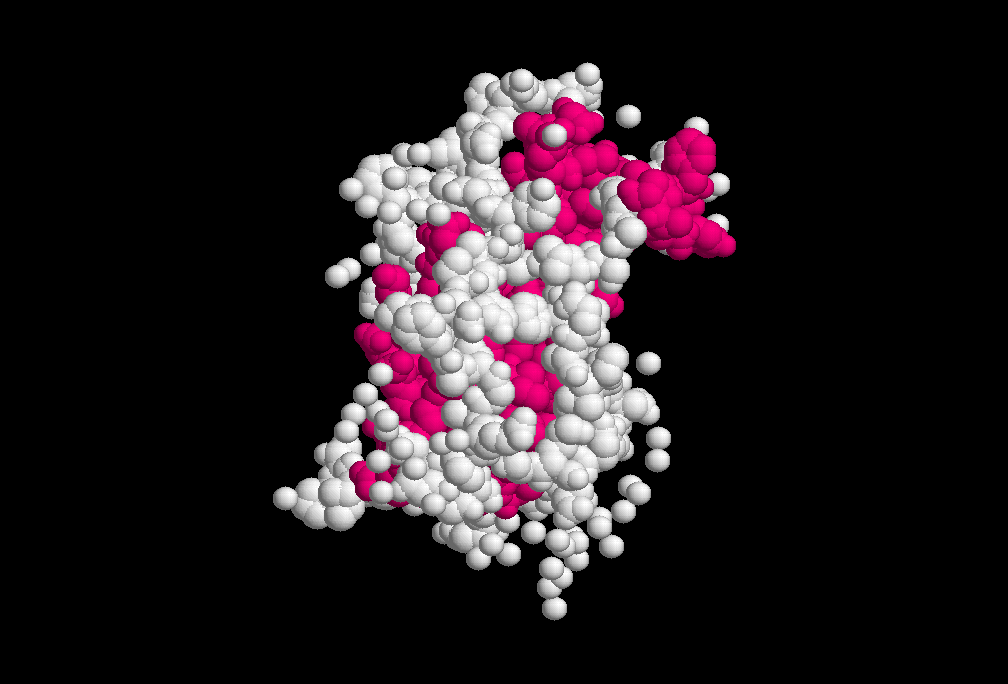
Baixa estatura devido à deficiência de GHRS
📋 Origem dos dados
Esta página agrega dados de fontes públicas e oficiais. Dados sobre cobertura no SUS (PCDT, CEAF) são verificados ativamente por agente proativo (ver badge no infobox). Demais dados têm atribuição de fonte + data da última sincronização — clique para abrir o original.
- Doença rara (ontologia)
- fonte: Orphanet
- Identificador unificado
- fonte: MONDO
- Genética mendeliana
- fonte: OMIM
- Codificação WHO/SUS
- fonte: WHO ICD-10 / DATASUS
- CID-11 (futuro)
- fonte: WHO ICD-11
- NIH/GARD
- fonte: GARD (NIH)
- Dado público estruturado
- fonte: Wikidata
- Medicamentos aprovados FDA
- fonte: FDA OpenFDA