
A Doença de Gaucher tipo 2 é a forma mais grave da Doença de Gaucher (DG), que afeta o cérebro e o sistema nervoso de forma aguda e rápida. Ela se caracteriza por começar cedo, logo após o nascimento, com problemas neurológicos sérios que atingem o tronco cerebral (uma parte importante do cérebro). Além disso, está associada ao aumento de órgãos e, na maioria dos casos, leva à morte antes dos 2 anos de idade.
Introdução
O que você precisa saber de cara
A Doença de Gaucher tipo 2 é a forma mais grave da Doença de Gaucher (DG), que afeta o cérebro e o sistema nervoso de forma aguda e rápida. Ela se caracteriza por começar cedo, logo após o nascimento, com problemas neurológicos sérios que atingem o tronco cerebral (uma parte importante do cérebro). Além disso, está associada ao aumento de órgãos e, na maioria dos casos, leva à morte antes dos 2 anos de idade.
Escala de raridade
<1/50kMuito rara
1/20kRara
1/10kPouco freq.
1/5kIncomum
1/2k
Encontrou um erro ou informação desatualizada? Sugira uma correção →
Entender a doença
Do básico ao detalhe, leia no seu ritmo
Preparando trilha educativa...
Sinais e sintomas
O que aparece no corpo e com que frequência cada sintoma acontece
Partes do corpo afetadas
+ 15 sintomas em outras categorias
Características mais comuns
Os sintomas variam de pessoa para pessoa. Abaixo estão as 54 características clínicas mais associadas, ordenadas por frequência.
Linha do tempo da pesquisa
Triagem neonatal (Teste do Pezinho)
A triagem neonatal permite diagnóstico precoce e início imediato do tratamento.
Encontrou um erro ou informação desatualizada? Sugira uma correção →
Genética e causas
O que está alterado no DNA e como passa nas famílias
Genes associados
1 gene identificado com associação a esta condição. Padrão de herança: Autosomal recessive.
Curadoria gene-doença
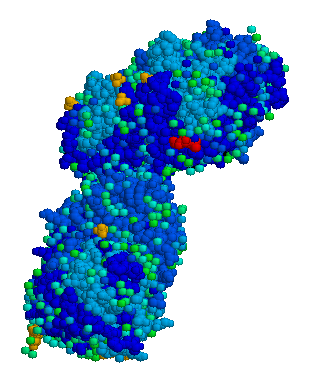
fontes oficiaisGlucosylceramidase that catalyzes, within the lysosomal compartment, the hydrolysis of glucosylceramides/GlcCers (such as beta-D-glucosyl-(1<->1')-N-acylsphing-4-enine) into free ceramides (such as N-acylsphing-4-enine) and glucose (PubMed:15916907, PubMed:24211208, PubMed:32144204, PubMed:39395789, PubMed:9201993). Plays a central role in the degradation of complex lipids and the turnover of cellular membranes (PubMed:27378698). Through the production of ceramides, participates in the PKC-activ
Lysosome membrane
Gaucher disease
An autosomal recessive lysosomal storage disease due to deficient activity of lysosomal beta-glucocerebrosidase, and characterized by accumulation of glucosylceramide in the reticulo-endothelial system. GD is a multisystem disease historically divided into three main subtypes on the basis of the presence of neurologic involvement, age at onset and progression rate: type 1 is the non-neuropathic form, type 2 is the acute neuropathic form with early onset and rapid neurologic deterioration, type 3 is the chronic neuropathic form with slow progression of neurologic features. GD shows a marked phenotypic diversity ranging from adult asymptomatic forms, at the mild end, to perinatal lethal forms at the severe end of the disease spectrum. Formal diagnosis of Gaucher disease is based on the measurement of glucocerebrosidase levels in circulating leukocytes and molecular genetic analysis.
Medicamentos aprovados (FDA)
2 medicamentos encontrados nos registros da FDA americana.
Variantes genéticas (ClinVar)
305 variantes patogênicas registradas no ClinVar.
Classificação de variantes (ClinVar)
Distribuição de 431 variantes classificadas pelo ClinVar.
Vias biológicas (Reactome)
2 vias biológicas associadas aos genes desta condição.
Diagnóstico
Os sinais que médicos procuram e os exames que confirmam
Tratamento e manejo
Remédios, cuidados de apoio e o que precisa acompanhar
Onde tratar no SUS
Hospitais de referência no Brasil e o protocolo oficial do SUS (PCDT)
🇧🇷 Atendimento SUS — Doença de Gaucher tipo 2
Centros de Referência SUS
21 centros habilitados pelo SUS para Doença de Gaucher tipo 2
Centros para Doença de Gaucher tipo 2
Detalhes dos centros
Hospital Universitário Prof. Edgard Santos (HUPES)
R. Dr. Augusto Viana, s/n - Canela, Salvador - BA, 40110-060 · CNES 0003808
Serviço de Referência
Hospital de Apoio de Brasília (HAB)
AENW 3 Lote A Setor Noroeste - Plano Piloto, Brasília - DF, 70684-831 · CNES 0010456
Serviço de Referência
Hospital Estadual Infantil e Maternidade Alzir Bernardino Alves (HIABA)
Av. Min. Salgado Filho, 918 - Soteco, Vila Velha - ES, 29106-010 · CNES 6631207
Serviço de Referência
Hospital das Clínicas da UFG
Rua 235 QD. 68 Lote Área, Nº 285, s/nº - Setor Leste Universitário, Goiânia - GO, 74605-050 · CNES 2338424
Serviço de Referência
Hospital das Clínicas da UFMG
Av. Prof. Alfredo Balena, 110 - Santa Efigênia, Belo Horizonte - MG, 30130-100 · CNES 2280167
Serviço de Referência
NUPAD / Faculdade de Medicina UFMG
Av. Prof. Alfredo Balena, 189 - 5 andar - Centro, Belo Horizonte - MG, 30130-100 · CNES 2183226
Serviço de Referência
Hospital Universitário João de Barros Barreto
R. dos Mundurucus, 4487 - Guamá, Belém - PA, 66073-000 · CNES 2337878
Serviço de Referência
Hospital de Clínicas da Universidade Federal de Pernambuco
Av. Prof. Moraes Rego, 1235 - Cidade Universitária, Recife - PE, 50670-901 · CNES 2561492
Atenção Especializada
Instituto de Medicina Integral Prof. Fernando Figueira (IMIP)
R. dos Coelhos, 300 - Boa Vista, Recife - PE, 50070-902 · CNES 0000647
Serviço de Referência
Hospital de Clínicas da UFPR
R. Gen. Carneiro, 181 - Alto da Glória, Curitiba - PR, 80060-900 · CNES 2364980
Serviço de Referência
Hospital Universitário Pedro Ernesto (HUPE-UERJ)
Blvd. 28 de Setembro, 77 - Vila Isabel, Rio de Janeiro - RJ, 20551-030 · CNES 2280221
Serviço de Referência
Instituto Nacional de Saúde da Mulher, da Criança e do Adolescente Fernandes Figueira (IFF/Fiocruz)
Av. Rui Barbosa, 716 - Flamengo, Rio de Janeiro - RJ, 22250-020 · CNES 2269988
Serviço de Referência
Hospital Universitário Onofre Lopes (HUOL)
Av. Nilo Peçanha, 620 - Petrópolis, Natal - RN, 59012-300 · CNES 2408570
Atenção Especializada
Hospital São Lucas da PUCRS
Av. Ipiranga, 6690 - Jardim Botânico, Porto Alegre - RS, 90610-000 · CNES 2232928
Serviço de Referência
Hospital de Clínicas de Porto Alegre (HCPA)
Rua Ramiro Barcelos, 2350 Bloco A - Av. Protásio Alves, 211 - Bloco B e C - Santa Cecília, Porto Alegre - RS, 90035-903 · CNES 2237601
Serviço de Referência
Hospital Universitário da UFSC (HU-UFSC)
R. Profa. Maria Flora Pausewang - Trindade, Florianópolis - SC, 88036-800 · CNES 2560356
Serviço de Referência
Hospital das Clínicas da FMUSP
R. Dr. Ovídio Pires de Campos, 225 - Cerqueira César, São Paulo - SP, 05403-010 · CNES 2077485
Serviço de Referência
Hospital de Clínicas da UNICAMP
R. Vital Brasil, 251 - Cidade Universitária, Campinas - SP, 13083-888 · CNES 2748223
Serviço de Referência
Hospital de Clínicas de Ribeirão Preto (HCRP-USP)
R. Ten. Catão Roxo, 3900 - Vila Monte Alegre, Ribeirão Preto - SP, 14015-010 · CNES 2082187
Serviço de Referência
Instituto da Criança e do Adolescente (ICr-HCFMUSP)
Av. Dr. Enéas Carvalho de Aguiar, 647 - Cerqueira César, São Paulo - SP, 05403-000 · CNES 2081695
Serviço de Referência
UNIFESP / Hospital São Paulo
R. Napoleão de Barros, 715 - Vila Clementino, São Paulo - SP, 04024-002 · CNES 2688689
Serviço de Referência
Dados de DATASUS/CNES, SBGM, ABNeuro e Ministério da Saúde. Sempre confirme a disponibilidade diretamente com o estabelecimento.
Pesquisa ativa
Ensaios clínicos abertos e novidades científicas recentes
Ensaios em destaque
🟢 Recrutando agora
1 pesquisa recrutando participantes. Converse com seu médico sobre a possibilidade de participar.
Outros ensaios clínicos
85 ensaios clínicos encontrados, 2 ativos.
Publicações mais relevantes
Exploring the long-term use of ambroxol in Gaucher disease type 2: insights from two pediatric cases.
Gaucher disease 2 (GD2) is a rare and rapidly progressive neuropathic lysosomal storage disorder with an average survival of 11-19 months. To date, no approved therapy is available, but the variant-dependent pharmacological chaperone ambroxol (ABX) has emerged as a promising off-label therapy. This long-term observational study encompasses 2 GD2 patients treated with high-dose ABX from the age of 4 and 1 months, respectively, in addition to enzyme replacement therapy (ERT). Previously published data of patient 1 demonstrated a significant increase in β-glucocerebrosidase activity in ABX-treated patient fibroblasts alongside nearly age-appropriate neurocognitive and motor development after 3 years of ABX therapy. Follow-up assessments at the present age of 6.5 years continued to show normal neurocognitive development. Glucosylsphingosine (Lyso-GL1) levels in cerebrospinal fluid (CSF) remained significantly decreased compared to pre-treatment levels. In patient 2, ABX-treated fibroblasts exhibited a slight increase in β-glucocerebrosidase activity. Nevertheless, Lyso-GL1 levels in CSF showed a notable decrease compared to baseline. Neurocognitive and motor function assessments at 40 months of age indicated a moderate to severe developmental delay, yet continuous developmental progress. These interim findings contribute to the mounting evidence supporting ABX as a variant-dependent treatment for GD2 patients.
A natural history study of pediatric patients with early onset of GM1 gangliosidosis, GM2 gangliosidoses, or gaucher disease type 2 (RETRIEVE).
The GM1 and GM2 gangliosidoses and type 2 Gaucher disease (GD2) are inherited lysosomal storage disorders with most cases having symptom onset in infancy and reduced life expectancy. The conditions are rare, and there is therefore a need for accurate and up to date information concerning the disease course and survival to assist in the design of clinical trials. RETRIEVE is a natural history study aiming to: (1) collect data on the survival of patients with early-onset (onset of first neurological manifestation before 24 months of age) GM1, GM2, or GD2; (2) collect data that could constitute a historical control group for future clinical trials; and (3) evaluate whether the conditions can be assessed together in a single interventional clinical trial. Group A included patients who were deceased or with unknown survival status at enrollment and was thus limited to retrospective data. Group B included patients who were alive at enrollment, who were followed prospectively with additional retrospective data collection. Group A included 185 patients (60 with GM1, 78 with GM2, and 47 with GD2), and Group B included 40 patients (18 with GM1, 16 with GM2, and 6 with GD2). Mean and median age at diagnosis and age at onset of first neurological manifestation were youngest in patients with GD2 and oldest in patients with GM2 in both groups. In Group A, median (95% CI) survival was 19.0 (18.0, 22.0), 44.0 (37.0, 51.9) and 14.0 (10.0, 16.0) months in patients with GM1, GM2 and GD2, respectively. In Group B, hypotonia was experienced by most patients with GM1 (17/18, 94.4%), and was less common in patients with GM2 (12/16, 75.0%) and GD2 (4/6, 66.7%). Strabismus and splenomegaly were reported in all six patients with GD2. RETRIEVE is one of the largest natural history studies of GM1, GM2, and GD2. Results were generally consistent with the published literature, with differences potentially due to variation in inclusion criteria. The difference in median survival between patients with early-onset GM1, GM2, and GD2 reported in this study suggests that the three diseases should not be pooled for study in clinical trials.
Upregulation of peroxisome proliferator-activated receptor γ with resorcinol alleviates reactive oxygen species generation and lipid accumulation in neuropathic lysosomal storage diseases.
Neuropathic lysosomal storage diseases (NLSDs), including ceroid lipofuscinosis neuronal 3 (CLN3) disease and Gaucher disease type 2 (GD2), are typically present in adolescents; however, there are no approved therapies. CLN3 disease is the most common of the 13 types of neuronal ceroid lipofuscinosis, and Gaucher disease is the most common type of lysosomal storage disease. These NLSDs share oxidative stress and lysosomal dysfunction with Parkinson's disease. In this study, we used patient-derived cells (PDCs) and resorcinol to develop a therapeutic agent based on peroxisome proliferator-activated receptor γ (PPARγ) activation. PPARγ is a major regulator of autophagy and reactive oxygen species (ROS). Resorcinol, a polyphenolic compound, has been reported to exhibit PPARγ agonistic potential. Protein levels were analyzed by immunoblotting and immunofluorescence microscopy. Changes in cellular metabolism, including ROS levels, lipid droplet content, and lysosomal activity, were measured by flow cytometry. Resorcinol reduced ROS levels by suppressing hypoxia-inducible factor 1α levels in CLN3-PDCs. Resorcinol upregulated autophagy and reduced lipid accumulation in CLN3-PDCs; however, these effects were abolished by autophagy inhibitors. Resorcinol increased nuclear PPARγ levels in CLN3-PDCs, and PPARγ antagonists abolished the therapeutic effects of resorcinol. Moreover, Resorcinol upregulated nuclear PPARγ levels and lysosomal activity in GD2-PDCs, and reduced lipid accumulation and ROS levels. In summary, resorcinol alleviated the shared pathogenesis of CLN3 disease and GD2 through PPARγ upregulation. These findings suggest that resorcinol is a potential therapeutic candidate for alleviating NLSD progression.
Clinical and preclinical insights into high-dose ambroxol therapy for Gaucher disease type 2 and 3: A comprehensive systematic review.
Gaucher disease (GD), an autosomal recessive lysosomal storage disease, results from GBA1 variants causing glucocerebrosidase (GCase) deficiency. While enzyme replacement therapy (ERT) helps with systemic symptoms, neurological complications in GD2 and GD3 persist due to the blood-brain-barrier (BBB) limiting ERT efficacy. Ambroxol, a BBB-permeable chaperone, enhances GCase activity. Our review explores high-dose ambroxol's therapeutic potential, both preclinical and clinical, in GD2 and GD3. PubMed was searched for studies published before March 2023, including clinical, animal, and in vitro studies focusing on the effect of high-dose ambroxol in GD2 and GD3. A narrative synthesis was performed. Nine in vitro, three animal, and eight clinical studies were included, demonstrating varied responses to ambroxol across diverse outcome measures. In vitro and animal studies demonstrated reduced endoplasmatic reticulum stress due to the relocation of GCase from the ER to the lysosomes. In vitro cell lines exhibited varying degrees of increased GCase activity. Clinical trials observed reduced lyso-GL1 levels in plasma (41-89%) and cerebrospinal fluid (CSF) (26-97%), alongside increased GCase activity in GD3 patients. Ambroxol exhibited varying effects on neurological outcomes and development. No severe adverse events were reported. High-dose ambroxol shows promise in managing neurological manifestations in GD3, albeit with uncertainties resulting from genetic heterogeneity and variable response. Further clinical trials, are essential for elucidating dosage-response relationships and refining treatment outcomes and strategies for neuronopathic GD.
Cost-effectiveness of ambroxol in the treatment of Gaucher disease type 2.
Our aim was to compare the costs and efficacy of ambroxol in combination with imiglucerase with the costs and efficacy of imiglucerase only in the treatment of Gaucher disease type 2 (GD2) in the socio-economic settings of the Republic of Serbia, an upper-middle-income European economy. The perspective of the Serbian Republic Health Insurance Fund was chosen for this study, and the time horizon was 6 years. The main outcomes of the study were quality-adjusted life years gained with ambroxol + imiglucerase and comparator, and direct costs of treatment. The study was conducted through the generation and simulation of the Markov chain model. The model results were obtained after Monte Carlo microsimulation of a sample with 1,000 virtual patients. Treatment with ambroxol in combination with imiglucerase was cost-effective when compared with imiglucerase only and was associated with positive values of net monetary benefit regardless of the onset of the disease. Such beneficial result for ambroxol and imiglucerase combination is primarily driven by the low cost of ambroxol and its considerable clinical effectiveness in slowing the progression of neural complications of GD2. If ambroxol and imiglucerase are used in combination for the treatment of GD2, it is more cost-effective than using imiglucerase alone.
Publicações recentes
Exploring the long-term use of ambroxol in Gaucher disease type 2: insights from two pediatric cases.
A natural history study of pediatric patients with early onset of GM1 gangliosidosis, GM2 gangliosidoses, or gaucher disease type 2 (RETRIEVE).
Clinical and preclinical insights into high-dose ambroxol therapy for Gaucher disease type 2 and 3: A comprehensive systematic review.
Upregulation of peroxisome proliferator-activated receptor γ with resorcinol alleviates reactive oxygen species generation and lipid accumulation in neuropathic lysosomal storage diseases.
Cost-effectiveness of ambroxol in the treatment of Gaucher disease type 2.
📚 EuropePMC2.853 artigos no totalmostrando 15
Exploring the long-term use of ambroxol in Gaucher disease type 2: insights from two pediatric cases.
Frontiers in neurologyA natural history study of pediatric patients with early onset of GM1 gangliosidosis, GM2 gangliosidoses, or gaucher disease type 2 (RETRIEVE).
Orphanet journal of rare diseasesClinical and preclinical insights into high-dose ambroxol therapy for Gaucher disease type 2 and 3: A comprehensive systematic review.
Molecular genetics and metabolismUpregulation of peroxisome proliferator-activated receptor γ with resorcinol alleviates reactive oxygen species generation and lipid accumulation in neuropathic lysosomal storage diseases.
The international journal of biochemistry & cell biologyCost-effectiveness of ambroxol in the treatment of Gaucher disease type 2.
Open medicine (Warsaw, Poland)Gaucher Disease Type 2 Manifested as Hemophagocytic Lymphohistiocytosis in a Neonate in the COVID-19 Era.
Journal of pediatric hematology/oncologyA rare cause of hydrops fetalis in two Gaucher disease type 2 patients with a novel mutation.
Metabolic brain diseaseTwo cases of neuronopathic form of Gaucher disease - diagnostic difficulties.
Acta biochimica PolonicaFive-parameter evaluation of dysphagia: A novel prognostic scale for assessing neurological decline in Gaucher disease type 2.
Molecular genetics and metabolismInvestigation of novel pharmacological chaperones for Gaucher Disease.
Journal of molecular graphics & modellingA case of improved hearing with cochlear implantation in Gaucher disease type 1.
Auris, nasus, larynxNeonatal Jaundice with Splenomegaly: Not a Common Pick.
Fetal and pediatric pathologySurgery for gastroesophageal reflux disease with Gaucher disease type 2.
Pediatrics international : official journal of the Japan Pediatric SocietyGaucher Disease Type 2 Presenting with Collodion Membrane and Blueberry Muffin Lesions.
Pediatric dermatologyProperties of neurons derived from induced pluripotent stem cells of Gaucher disease type 2 patient fibroblasts: potential role in neuropathology.
PloS oneAssociações
Organizações que acompanham esta doença — pra ter apoio e orientação
Ainda não temos associações cadastradas para Doença de Gaucher tipo 2.
É de uma associação que acompanha esta doença? Fale com a gente →
Comunidades
Grupos ativos de quem convive com esta doença aqui no Raras
Ainda não existe comunidade no Raras para Doença de Gaucher tipo 2
Pacientes, familiares e cuidadores se organizam em comunidades pra compartilhar experiências, fazer perguntas e se apoiar. Você pode ser o primeiro.
Tire suas dúvidas
Perguntas, dicas e experiências compartilhadas aqui na página
Participe da discussão
Faça login para postar dúvidas, compartilhar experiências e interagir com especialistas.
Fazer loginDoenças relacionadas
Doenças com sintomas parecidos — ajudam quem ainda está buscando diagnóstico
Referências e fontes
Bases de dados externas citadas neste artigo
Publicações científicas
Artigos indexados no PubMed ligados a esta doença no grafo RarasNet — título, periódico e PMID direto da fonte, sem intermediação de IA.
- Exploring the long-term use of ambroxol in Gaucher disease type 2: insights from two pediatric cases.
- A natural history study of pediatric patients with early onset of GM1 gangliosidosis, GM2 gangliosidoses, or gaucher disease type 2 (RETRIEVE).
- Upregulation of peroxisome proliferator-activated receptor γ with resorcinol alleviates reactive oxygen species generation and lipid accumulation in neuropathic lysosomal storage diseases.
- Clinical and preclinical insights into high-dose ambroxol therapy for Gaucher disease type 2 and 3: A comprehensive systematic review.
- Cost-effectiveness of ambroxol in the treatment of Gaucher disease type 2.
Bases de dados e fontes oficiais
Identificadores e referências canônicas usadas para montar este verbete.
- ORPHA:77260(Orphanet)
- OMIM OMIM:230900(OMIM)
- MONDO:0009266(MONDO)
- GARD:2442(GARD (NIH))
- Variantes catalogadas(ClinVar)
- Busca completa no PubMed(PubMed)
- Q32145247(Wikidata)
Dados compilados pelo RarasNet a partir de fontes abertas (Orphanet, OMIM, MONDO, PubMed/EuropePMC, ClinicalTrials.gov, DATASUS, PCDT/MS). Este conteúdo é informativo e não substitui avaliação médica.
Conteúdo mantido por Agente Raras · Médicos e pesquisadores podem colaborar
Doença de Gaucher tipo 2
📋 Origem dos dados
Esta página agrega dados de fontes públicas e oficiais. Dados sobre cobertura no SUS (PCDT, CEAF) são verificados ativamente por agente proativo (ver badge no infobox). Demais dados têm atribuição de fonte + data da última sincronização — clique para abrir o original.
- Doença rara (ontologia)
- fonte: Orphanet
- Identificador unificado
- fonte: MONDO
- Genética mendeliana
- fonte: OMIM
- Codificação WHO/SUS
- fonte: WHO ICD-10 / DATASUS
- CID-11 (futuro)
- fonte: WHO ICD-11
- NIH/GARD
- fonte: GARD (NIH)
- Dado público estruturado
- fonte: Wikidata
- Medicamentos aprovados FDA
- fonte: FDA OpenFDA
- Reposicionamento
- fonte: Drug Repurposing Hub
- Ensaios clínicos
- fonte: ClinicalTrials.gov