
A hiperprolinemia tipo 2 é um distúrbio autossômico recessivo do metabolismo da prolina devido à deficiência de pirolina-5-carboxilato desidrogenase. A condição é frequentemente benigna, mas os sinais clínicos podem incluir convulsões, déficit intelectual e leve atraso no desenvolvimento.
Introdução
O que você precisa saber de cara
A hiperprolinemia tipo 2 é um distúrbio autossômico recessivo do metabolismo da prolina devido à deficiência de pirolina-5-carboxilato desidrogenase. A condição é frequentemente benigna, mas os sinais clínicos podem incluir convulsões, déficit intelectual e leve atraso no desenvolvimento.
Escala de raridade
<1/50kMuito rara
1/20kRara
1/10kPouco freq.
1/5kIncomum
1/2k
Encontrou um erro ou informação desatualizada? Sugira uma correção →
Entender a doença
Do básico ao detalhe, leia no seu ritmo
Preparando trilha educativa...
Sinais e sintomas
O que aparece no corpo e com que frequência cada sintoma acontece
Partes do corpo afetadas
+ 26 sintomas em outras categorias
Características mais comuns
Os sintomas variam de pessoa para pessoa. Abaixo estão as 56 características clínicas mais associadas, ordenadas por frequência.
Linha do tempo da pesquisa
Encontrou um erro ou informação desatualizada? Sugira uma correção →
Genética e causas
O que está alterado no DNA e como passa nas famílias
Genes associados
1 gene identificado com associação a esta condição. Padrão de herança: Autosomal recessive.
Curadoria gene-doença
fontes oficiaisIrreversible conversion of delta-1-pyrroline-5-carboxylate (P5C), derived either from proline or ornithine, to glutamate. This is a necessary step in the pathway interconnecting the urea and tricarboxylic acid cycles. The preferred substrate is glutamic gamma-semialdehyde, other substrates include succinic, glutaric and adipic semialdehydes
Mitochondrion matrix
Hyperprolinemia 2
An inborn error of proline metabolism resulting in elevated plasma levels of proline and delta-1-pyrroline-5-carboxylate (P5C). The condition is considered to be benign, but affected individuals can exhibit neurological manifestations that vary in severity. Clinical signs include seizures, intellectual deficit and mild developmental delay.
Variantes genéticas (ClinVar)
61 variantes patogênicas registradas no ClinVar.
Classificação de variantes (ClinVar)
Distribuição de 321 variantes classificadas pelo ClinVar.
Vias biológicas (Reactome)
2 vias biológicas associadas aos genes desta condição.
Diagnóstico
Os sinais que médicos procuram e os exames que confirmam
Tratamento e manejo
Remédios, cuidados de apoio e o que precisa acompanhar
Onde tratar no SUS
Hospitais de referência no Brasil e o protocolo oficial do SUS (PCDT)
🇧🇷 Atendimento SUS — Hiperprolinemia tipo II
Selecione um estado ou use sua localização para ver resultados.
Dados de DATASUS/CNES, SBGM, ABNeuro e Ministério da Saúde. Sempre confirme a disponibilidade diretamente com o estabelecimento.
Pesquisa ativa
Ensaios clínicos abertos e novidades científicas recentes
Pesquisa e ensaios clínicos
Nenhum ensaio clínico registrado para esta condição.
Publicações mais relevantes
Pyrroline-5-carboxylate reductase 2 (PYCR2) deficiency causes hereditary spastic paraplaegia in late childhood.
PYCR2 gene variants are extremely rare condition which is associated with hypomyelinating leukodystrophy type 10 with microcephaly (HLD10). The aim of the present study is to report the clinical findings of patients having novel PYCR2 gene variant that manifest Hereditary Spastic Paraplegia (HSP) is the only symptom without hypomyelinating leukodystrophy. This is the first study that report the PYCR2 gene variants as a cause of HSP in late childhood. We believe it can contribute to expanding the spectrum of the phenotypes associated with PYCR2. It is a retrospective study. Of the patients with similar clinical features from two related families, "patient 1" was designated as the index case, and was analyzed using Whole Exome Squence analysis (WES). The detected variation was investigated in the index case's parents, relatives, and sibling with a similar phenotype. Clinical, brain magnetic resonance (MR) images and MR spectroscopic findings of the patients were reported. A novel homozygous missense (NM_013328: c.383T > C, p.V128A) variant in the PYCR2 gene is detected in 5 patient from 2 related families. All the patients were male, their ages ranges from 6 to 26 years (15.58 ± 8,33 yrs). Developmantal milestones were normal without dysmorphic features. 4 (%80) patients exhibit mild intention tremor started at the age of approximately 6 years of age. 4 (%80) patients had gait difficulty and progressive lower limb spasticity started at the age of 8-12 years. White matter myelination was normal in all patients. Glycine peakes were detected on the MR spectroscopy in all patients. Some variants of PYCR2 gene are responsible for causing clinical features of HSP without hypomyelinating leukodystrophy in the pediatric patients.
Identification of Δ-1-pyrroline-5-carboxylate derived biomarkers for hyperprolinemia type II.
Hyperprolinemia type II (HPII) is an inborn error of metabolism due to genetic variants in ALDH4A1, leading to a deficiency in Δ-1-pyrroline-5-carboxylate (P5C) dehydrogenase. This leads to an accumulation of toxic levels of P5C, an intermediate in proline catabolism. The accumulating P5C spontaneously reacts with, and inactivates, pyridoxal 5'-phosphate, a crucial cofactor for many enzymatic processes, which is thought to be the pathophysiological mechanism for HPII. Here, we describe the use of a combination of LC-QTOF untargeted metabolomics, NMR spectroscopy and infrared ion spectroscopy (IRIS) to identify and characterize biomarkers for HPII that result of the spontaneous reaction of P5C with malonic acid and acetoacetic acid. We show that these biomarkers can differentiate between HPI, caused by a deficiency of proline oxidase activity, and HPII. The elucidation of their molecular structures yields insights into the disease pathophysiology of HPII.
Metabolic epilepsy in hyperprolinemia type II due to a novel nonsense ALDH4A1 gene variant.
Hyperprolinemia type II (HPII) is a rare autosomal recessive disorder of proline degradation pathway due to deficiency of delta-1-pyrroline-5-carboxylate dehydrogenase. Pathogenic variants in the ALDH4A1 gene are responsible for this disorder. We here describe an 11-month-old infant with recurrent seizures refractory to multiple antiepileptic drugs. She was hospitalized in view of acute-onset encephalopathy, exacerbation of generalized seizures following an upper respiratory infection. Laboratory investigation revealed significantly elevated proline levels in dried blood spots. DNA sample of the child was subjected to a targeted next-generation sequencing gene panel for hyperprolinemias. We detected a novel nonsense homozygous variant in the ALDH4A1 gene in the child and the heterozygous variant of the same in both the parents. Based on the location of the variant i.e. in the last exon, truncated protein is expected to be expressed by skipping nonsense-mediated decay and such point-nonsense variants could be an ideal target for readthrough drugs to correct genetic defects.
Novel variants in a patient with late-onset hyperprolinemia type II: diagnostic key for status epilepticus and lactic acidosis.
Hyperprolinemia type 2 (HPII) is a rare autosomal recessive disorder of the proline metabolism, that affects the ALDH4A1 gene. So far only four different pathogenic mutations are known. The manifestation is mostly in neonatal age, in early infancy or early childhood. The 64-years female patient had a long history of abdominal pain, and episode of an acute neuritis. Ten years later she was admitted into the neurological intensive-care-unit with acute abdominal pain, multiple generalized epileptic seizures, a vertical gaze palsy accompanied by extensive lactic acidosis in serum 26.0 mmol/l (reference: 0.55-2.2 mmol/l) and CSF 12.01 mmol/l (reference: 1.12-2.47 mmol/l). Due to repeated epileptic seizures and secondary complications a long-term sedation with a ventilation therapy over 20 days was administered. A diagnostic work-up revealed up to 400-times increased prolin-level in urine CSF and blood. Furthermore, a low vitamin-B6 serum value was found, consistent with a HPII causing secondary pyridoxine deficiency and seizures. The ALDH4A1 gene sequencing confirmed two previously unknown compound heterozygous variants (ALDH4A1 gene (NM_003748.3) Intron 1: c.62 + 1G > A - heterozygous and ALDH4A1 gene (NM_003748.3) Exon 5 c.349G > C, p.(Asp117His) - heterozygous). Under high-dose vitamin-B6 therapy no further seizures occurred. We describe two novel ALDH4A1-variants in an adult patient with hyperprolinemia type II causing secondary pyridoxine deficiency and seizures. Severe and potentially life-threatening course of this treatable disease emphasizes the importance of diagnostic vigilance and thorough laboratory work-up including gene analysis even in cases with atypical late manifestation.
Structure, function, and mechanism of proline utilization A (PutA).
Proline has important roles in multiple biological processes such as cellular bioenergetics, cell growth, oxidative and osmotic stress response, protein folding and stability, and redox signaling. The proline catabolic pathway, which forms glutamate, enables organisms to utilize proline as a carbon, nitrogen, and energy source. FAD-dependent proline dehydrogenase (PRODH) and NAD+-dependent glutamate semialdehyde dehydrogenase (GSALDH) convert proline to glutamate in two sequential oxidative steps. Depletion of PRODH and GSALDH in humans leads to hyperprolinemia, which is associated with mental disorders such as schizophrenia. Also, some pathogens require proline catabolism for virulence. A unique aspect of proline catabolism is the multifunctional proline utilization A (PutA) enzyme found in Gram-negative bacteria. PutA is a large (>1000 residues) bifunctional enzyme that combines PRODH and GSALDH activities into one polypeptide chain. In addition, some PutAs function as a DNA-binding transcriptional repressor of proline utilization genes. This review describes several attributes of PutA that make it a remarkable flavoenzyme: (1) diversity of oligomeric state and quaternary structure; (2) substrate channeling and enzyme hysteresis; (3) DNA-binding activity and transcriptional repressor function; and (4) flavin redox dependent changes in subcellular location and function in response to proline (functional switching).
Publicações recentes
Novel variants in a patient with late-onset hyperprolinemia type II: diagnostic key for status epilepticus and lactic acidosis.
Vitamin B6 related epilepsy during childhood.
📚 EuropePMC85 artigos no totalmostrando 5
Pyrroline-5-carboxylate reductase 2 (PYCR2) deficiency causes hereditary spastic paraplaegia in late childhood.
European journal of paediatric neurology : EJPN : official journal of the European Paediatric Neurology SocietyIdentification of Δ-1-pyrroline-5-carboxylate derived biomarkers for hyperprolinemia type II.
Communications biologyMetabolic epilepsy in hyperprolinemia type II due to a novel nonsense ALDH4A1 gene variant.
Metabolic brain diseaseNovel variants in a patient with late-onset hyperprolinemia type II: diagnostic key for status epilepticus and lactic acidosis.
BMC neurologyStructure, function, and mechanism of proline utilization A (PutA).
Archives of biochemistry and biophysicsAssociações
Organizações que acompanham esta doença — pra ter apoio e orientação
Ainda não temos associações cadastradas para Hiperprolinemia tipo II.
É de uma associação que acompanha esta doença? Fale com a gente →
Comunidades
Grupos ativos de quem convive com esta doença aqui no Raras
Ainda não existe comunidade no Raras para Hiperprolinemia tipo II
Pacientes, familiares e cuidadores se organizam em comunidades pra compartilhar experiências, fazer perguntas e se apoiar. Você pode ser o primeiro.
Tire suas dúvidas
Perguntas, dicas e experiências compartilhadas aqui na página
Participe da discussão
Faça login para postar dúvidas, compartilhar experiências e interagir com especialistas.
Fazer loginDoenças relacionadas
Doenças com sintomas parecidos — ajudam quem ainda está buscando diagnóstico
Referências e fontes
Bases de dados externas citadas neste artigo
Publicações científicas
Artigos indexados no PubMed ligados a esta doença no grafo RarasNet — título, periódico e PMID direto da fonte, sem intermediação de IA.
- Pyrroline-5-carboxylate reductase 2 (PYCR2) deficiency causes hereditary spastic paraplaegia in late childhood.European journal of paediatric neurology : EJPN : official journal of the European Paediatric Neurology Society· 2023· PMID 37141741mais citado
- Identification of Δ-1-pyrroline-5-carboxylate derived biomarkers for hyperprolinemia type II.
- Metabolic epilepsy in hyperprolinemia type II due to a novel nonsense ALDH4A1 gene variant.
- Novel variants in a patient with late-onset hyperprolinemia type II: diagnostic key for status epilepticus and lactic acidosis.
- Structure, function, and mechanism of proline utilization A (PutA).
- Vitamin B6 related epilepsy during childhood.
Bases de dados e fontes oficiais
Identificadores e referências canônicas usadas para montar este verbete.
- ORPHA:79101(Orphanet)
- OMIM OMIM:239510(OMIM)
- MONDO:0009401(MONDO)
- GARD:6710(GARD (NIH))
- Variantes catalogadas(ClinVar)
- Busca completa no PubMed(PubMed)
- Q66084704(Wikidata)
Dados compilados pelo RarasNet a partir de fontes abertas (Orphanet, OMIM, MONDO, PubMed/EuropePMC, ClinicalTrials.gov, DATASUS, PCDT/MS). Este conteúdo é informativo e não substitui avaliação médica.
Conteúdo mantido por Agente Raras · Médicos e pesquisadores podem colaborar
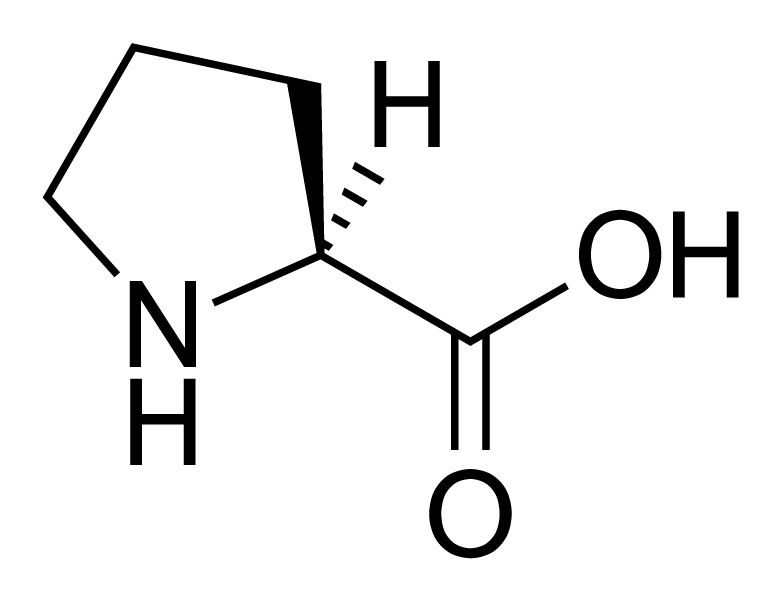
Hiperprolinemia tipo II
📋 Origem dos dados
Esta página agrega dados de fontes públicas e oficiais. Dados sobre cobertura no SUS (PCDT, CEAF) são verificados ativamente por agente proativo (ver badge no infobox). Demais dados têm atribuição de fonte + data da última sincronização — clique para abrir o original.
- Doença rara (ontologia)
- fonte: Orphanet
- Identificador unificado
- fonte: MONDO
- Genética mendeliana
- fonte: OMIM
- Codificação WHO/SUS
- fonte: WHO ICD-10 / DATASUS
- CID-11 (futuro)
- fonte: WHO ICD-11
- NIH/GARD
- fonte: GARD (NIH)
- Indexação biomédica
- fonte: MeSH (NLM)
- Dado público estruturado
- fonte: Wikidata