
A Síndrome de Kostmann é uma doença rara e grave de neutropenia congênita, caracterizada pela falta de neutrófilos maduros (um tipo de glóbulo branco importante para combater infecções), com a contagem absoluta de neutrófilos abaixo de 500 células por milímetro cúbico. Esta condição está associada a infecções bacterianas frequentes e recorrentes, como otite, pneumonia, sinusite, infecções urinárias e abscessos na pele e/ou no fígado, além de um aumento de promielócitos (células brancas imaturas) na medula óssea. Doença periodontal, assim como sintomas neurológicos como dificuldades cognitivas, neurodegeneração grave e epilepsia, foram relatados em alguns pacientes.
Introdução
O que você precisa saber de cara
A Síndrome de Kostmann é uma doença rara e grave de neutropenia congênita, caracterizada pela falta de neutrófilos maduros (um tipo de glóbulo branco importante para combater infecções), com a contagem absoluta de neutrófilos abaixo de 500 células por milímetro cúbico. Esta condição está associada a infecções bacterianas frequentes e recorrentes, como otite, pneumonia, sinusite, infecções urinárias e abscessos na pele e/ou no fígado, além de um aumento de promielócitos (células brancas imaturas) na medula óssea. Doença periodontal, assim como sintomas neurológicos como dificuldades cognitivas, neurodegeneração grave e epilepsia, foram relatados em alguns pacientes.
Escala de raridade
<1/50kMuito rara
1/20kRara
1/10kPouco freq.
1/5kIncomum
1/2k
Encontrou um erro ou informação desatualizada? Sugira uma correção →
Entender a doença
Do básico ao detalhe, leia no seu ritmo
Preparando trilha educativa...
Sinais e sintomas
O que aparece no corpo e com que frequência cada sintoma acontece
Partes do corpo afetadas
+ 5 sintomas em outras categorias
Características mais comuns
Os sintomas variam de pessoa para pessoa. Abaixo estão as 14 características clínicas mais associadas, ordenadas por frequência.
Linha do tempo da pesquisa
Encontrou um erro ou informação desatualizada? Sugira uma correção →
Genética e causas
O que está alterado no DNA e como passa nas famílias
Genes associados
1 gene identificado com associação a esta condição. Padrão de herança: Autosomal recessive.
Curadoria gene-doença
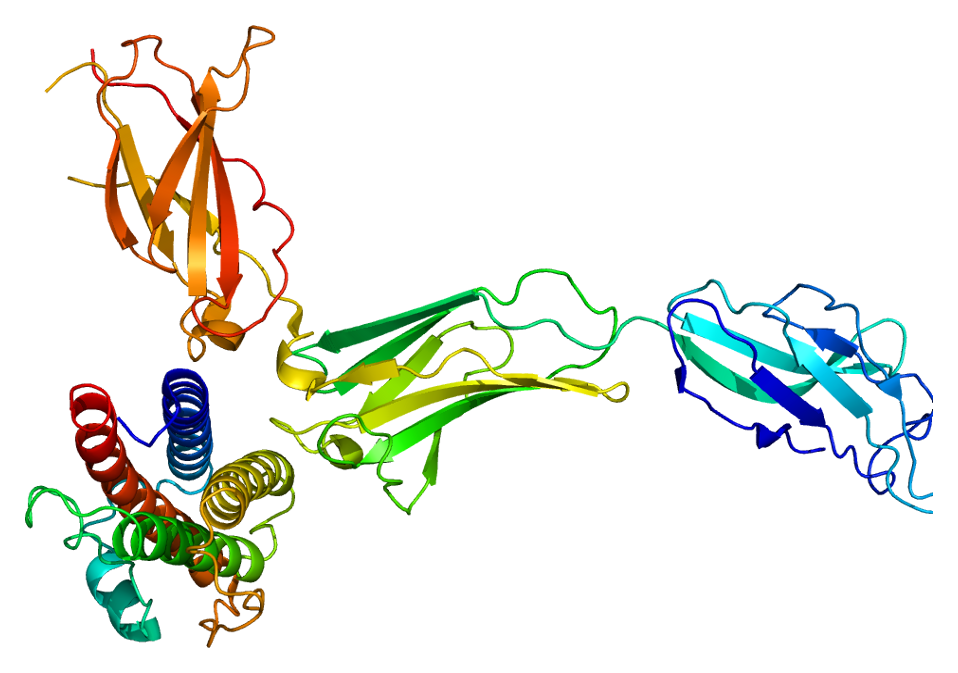
fontes oficiaisRecruits the Arp2/3 complex to the cell cortex and regulates reorganization of the cortical actin cytoskeleton via its interaction with KCNC3 and the Arp2/3 complex (PubMed:26997484). Slows down the rate of inactivation of KCNC3 channels (PubMed:26997484). Promotes GNA13-mediated cell migration. Involved in the clathrin-mediated endocytosis pathway. May be involved in internalization of ABC transporters such as ABCB11. May inhibit CASP9 and CASP3. Promotes cell survival. May regulate intracellul
Mitochondrion matrixEndoplasmic reticulumNucleus membraneCytoplasmic vesicleCytoplasm, cell cortexCell membraneSarcoplasmic reticulumCytoplasm, P-bodyCytoplasmNucleus
Neutropenia, severe congenital 3, autosomal recessive
A disorder of hematopoiesis characterized by maturation arrest of granulopoiesis at the level of promyelocytes with peripheral blood absolute neutrophil counts below 0.5 x 10(9)/l and early onset of severe bacterial infections. Some patients affected by severe congenital neutropenia type 3 have neurological manifestations such as psychomotor retardation and seizures.
Variantes genéticas (ClinVar)
89 variantes patogênicas registradas no ClinVar.
Classificação de variantes (ClinVar)
Distribuição de 428 variantes classificadas pelo ClinVar.
Vias biológicas (Reactome)
2 vias biológicas associadas aos genes desta condição.
Diagnóstico
Os sinais que médicos procuram e os exames que confirmam
Tratamento e manejo
Remédios, cuidados de apoio e o que precisa acompanhar
Onde tratar no SUS
Hospitais de referência no Brasil e o protocolo oficial do SUS (PCDT)
🇧🇷 Atendimento SUS — Síndrome de Kostmann
Selecione um estado ou use sua localização para ver resultados.
Dados de DATASUS/CNES, SBGM, ABNeuro e Ministério da Saúde. Sempre confirme a disponibilidade diretamente com o estabelecimento.
Pesquisa ativa
Ensaios clínicos abertos e novidades científicas recentes
Ensaios em destaque
Pesquisa e ensaios clínicos
2 ensaios clínicos encontrados.
Publicações mais relevantes
Severe Congenital Neutropenia With Negative Whole-Exome Sequencing Managed With Hematopoietic Stem Cell Transplantation: A Case Report.
Kostmann syndrome, also known as severe congenital neutropenia, is a congenital disorder characterized by genetic mutations that prevent the progression of myeloid differentiation in the bone marrow. Most cases are associated with specific genetic mutations, including those in HAX1 and ELANE. Treatment with antibiotics and granulocyte colony-stimulating factor (G-CSF) is primarily prophylactic. We report a pediatric case of severe congenital neutropenia present since birth, with negative whole-exome sequencing (WES), complicated by multiple hospital admissions for recurrent infections and subsequent progression to myelodysplastic syndrome with excess blasts associated with monosomy 7, for which the patient ultimately underwent hematopoietic stem cell transplantation (HSCT). This case highlights that many patients with Kostmann syndrome can present with negative genetic testing and draws attention to the importance of surveillance for malignant transformation.
HAX1, gene responsible for Kostmann syndrome, regulates gingival epithelial barrier function via intracellular trafficking of JAM1.
Kostmann syndrome is an autosomal recessive disorder caused by a mutation of the hematopoietic cell-specific Lyn substrate 1 associated protein X-1 (HAX1) gene, and characterized by low number of neutrophils and increased susceptibility to infections. Additionally, Kostmann syndrome is known to be complicated by periodontitis, though the etiological molecular basis remains unclear. We previously reported findings showing that junctional adhesion molecule 1 (JAM1), a tight junction-associated protein, has an important role to maintain epithelial barrier function in gingival tissues, which prevents penetration of bacterial virulence factors, such as lipopolysaccharide (LPS) and peptidoglycan (PGN). In the present study, the effects of HAX1 on gingival barrier function were investigated. Examinations of immortalized human gingival epithelial (IHGE) cells showed HAX1 localization in mitochondria. In HAX1-knockdown IHGE cells, significantly decreased levels of JAM1 were found. Additionally, cisplatin, a chemotherapeutic agent reported to inhibit HAX1, also led to decreased expression of both HAX1 and JAM1. Furthermore, JAM1 was scarcely detected in HAX1-knockout cells, while administration of bafilomycin A1, a lysosomal inhibitor, restored JAM1 expression in those cells. Finally, using a three-dimensional multilayered gingival epithelial tissue model, HAX1 knockout along with cisplatin administration was also found to increase permeability to LPS and PGN, which was dependent on JAM1 expression. These results indicate that periodontal diseases complicated with Kostmann syndrome are induced by reduced JAM1 expression, caused by JAM1 being missorted into lysosomes by HAX1 dysfunction.
A Rare Case of Kostmann Syndrome Presenting Difficult Airway Challenges and Patient Preparedness for Anesthesiologists.
Severe congenital neutropenia (SCN), commonly known as the Kostmann syndrome, is a rare and complex set of disorders defined by a lack of neutrophil maturation in the bone marrow, leading to life-threatening complications. This case report discusses a young adult patient scheduled for elective laparoscopic cholecystectomy. The patient presented with skin lesions which are a common scenario of Kostmann syndrome, but along with that, our patient posed challenges of short neck, limited neck extension, and gynecomastia. These additional conditions dramatically increased the challenges for anesthesiologists to address the anticipated difficult airway. The anticipated difficult airway challenges were handled by following the protocols of difficult airway guidelines 2022.
Kostmann Syndrome With Neurological Abnormalities: A Case Report and Literature Review.
Background: Severe congenital neutropenia (SCN), also known as Kostmann syndrome, is a rare heterogeneous group of diseases characterized by arrested neutrophil maturation in the bone marrow. Case Presentation: We report a case of Kostmann syndrome and review previously reported SCN cases with neurological abnormalities. A 10-year-old boy had a history of recurrent, once a month, infection starting at 6 months of age. He had neutropenia for more than 9 years, as well as intellectual disability. He was homozygous for the exon 3 c.430dupG mutation of the HAX1 gene NM-006118. After treatment of antibiotics and G-CSF, his symtoms were relieved and was 3 months free of infection. The search revealed 29 articles related to Kostmann syndrome caused by HAX1 gene mutation; they were screened, and the main clinical features of 13 cases of Kostmann syndrome with neurological abnormalities were summarized and analyzed. Conclusions: Kostmann syndrome has three main characteristics: severe neutropenia (<0.2 × 10⁹/L), maturation arrest of granulopoiesis at the promyelocyte stage, and death due to infections. HAX1 gene mutations affecting both isoforms A and B are associated with additional neurological symptoms. G-CSF can improve and maintain neutrophil counts, and improve prognosis and quality of life. At present, hematopoietic stem cell transplantation is the only cure.
Coexistence of Gaucher Disease and severe congenital neutropenia.
Gaucher Disease (GD) is the most common lysosomal storage disorder has traditionally been classified into three clinical phenotypes. Type 3 GD is characterized by neurological involvement but neurological symptoms generally appear later in life than in type 2 disease. Neutropenia is much rarer than other hematological manifestations in GD and has not been scrutinized adequately. Severe congenital neutropenia (SCN) is a rare disease entity which is characterized by a paucity of peripherally circulating neutrophils with arrest of neutrophil maturation at the promyelocyte stage and consequent increased susceptibility to severe and recurrent infections. We report a patient who presented in the first year of life with visceral involvement and severe neutropenia in whom the propositus had a unique coexistence of Gaucher Disease and severe congenital neutropenia associated with a mutation in HAX1. In contrast to his expired siblings he had experienced no severe infections. These clinical observations suggest that enzyme replacement therapy may display a modulating factor with respect to the clinical course of SCN. SYNOPSIS: Our patient is the only report of the combination of Gaucher Disease and Kostmann Syndrome in the literature. The clinical course of our patient is not severe when comparing with exitus siblings and other Kostmann Syndrome patients. But when considering the patient's only clinical difference is ERT, this case is very important to emphasise the role of enzyme replacement therapy in bone marrow.
Publicações recentes
Severe Congenital Neutropenia With Negative Whole-Exome Sequencing Managed With Hematopoietic Stem Cell Transplantation: A Case Report.
HAX1, gene responsible for Kostmann syndrome, regulates gingival epithelial barrier function via intracellular trafficking of JAM1.
A Rare Case of Kostmann Syndrome Presenting Difficult Airway Challenges and Patient Preparedness for Anesthesiologists.
Kostmann Syndrome With Neurological Abnormalities: A Case Report and Literature Review.
A Case of Papillary Thyroid Carcinoma and Kostmann Syndrome: A Genomic Theranostic Approach for Comprehensive Treatment.
📚 EuropePMC35 artigos no totalmostrando 13
Severe Congenital Neutropenia With Negative Whole-Exome Sequencing Managed With Hematopoietic Stem Cell Transplantation: A Case Report.
CureusHAX1, gene responsible for Kostmann syndrome, regulates gingival epithelial barrier function via intracellular trafficking of JAM1.
Frontiers in cell and developmental biologyA Rare Case of Kostmann Syndrome Presenting Difficult Airway Challenges and Patient Preparedness for Anesthesiologists.
CureusKostmann Syndrome With Neurological Abnormalities: A Case Report and Literature Review.
Frontiers in pediatricsA Case of Papillary Thyroid Carcinoma and Kostmann Syndrome: A Genomic Theranostic Approach for Comprehensive Treatment.
The American journal of case reportsOral microbial dysbiosis in patients with Kostmann syndrome.
Journal of medical microbiologyCoexistence of Gaucher Disease and severe congenital neutropenia.
Blood cells, molecules & diseasesIcons in paediatrics: Rolf Kostmann (1909-1982).
Acta paediatrica (Oslo, Norway : 1992)HAX1 mutation positive children presenting with haemophagocytic lymphohistiocytosis.
British journal of haematologyKostmann syndrome: oral aspects and 10-year follow-up case report.
Special care in dentistry : official publication of the American Association of Hospital Dentists, the Academy of Dentistry for the Handicapped, and the American Society for Geriatric DentistryClinical Challenges Q&A. 18. Oral Ulceration. Diagnosis. Congenital agranulocytosis (Kostmann syndrome).
Dental updateEpilepsy in Kostmann syndrome: report of a case and review of the literature.
Acta neurologica BelgicaImmunoblotting validation of research antibodies generated against HS1-associated protein X-1 in the human neutrophil model cell line PLB-985.
F1000ResearchAssociações
Organizações que acompanham esta doença — pra ter apoio e orientação
Ainda não temos associações cadastradas para Síndrome de Kostmann.
É de uma associação que acompanha esta doença? Fale com a gente →
Comunidades
Grupos ativos de quem convive com esta doença aqui no Raras
Ainda não existe comunidade no Raras para Síndrome de Kostmann
Pacientes, familiares e cuidadores se organizam em comunidades pra compartilhar experiências, fazer perguntas e se apoiar. Você pode ser o primeiro.
Tire suas dúvidas
Perguntas, dicas e experiências compartilhadas aqui na página
Participe da discussão
Faça login para postar dúvidas, compartilhar experiências e interagir com especialistas.
Fazer loginDoenças relacionadas
Doenças com sintomas parecidos — ajudam quem ainda está buscando diagnóstico
Referências e fontes
Bases de dados externas citadas neste artigo
Publicações científicas
Artigos indexados no PubMed ligados a esta doença no grafo RarasNet — título, periódico e PMID direto da fonte, sem intermediação de IA.
- Severe Congenital Neutropenia With Negative Whole-Exome Sequencing Managed With Hematopoietic Stem Cell Transplantation: A Case Report.
- HAX1, gene responsible for Kostmann syndrome, regulates gingival epithelial barrier function via intracellular trafficking of JAM1.
- A Rare Case of Kostmann Syndrome Presenting Difficult Airway Challenges and Patient Preparedness for Anesthesiologists.
- Kostmann Syndrome With Neurological Abnormalities: A Case Report and Literature Review.
- Coexistence of Gaucher Disease and severe congenital neutropenia.
- A Case of Papillary Thyroid Carcinoma and Kostmann Syndrome: A Genomic Theranostic Approach for Comprehensive Treatment.
Bases de dados e fontes oficiais
Identificadores e referências canônicas usadas para montar este verbete.
- ORPHA:99749(Orphanet)
- OMIM OMIM:610738(OMIM)
- MONDO:0012548(MONDO)
- GARD:302(GARD (NIH))
- Variantes catalogadas(ClinVar)
- Busca completa no PubMed(PubMed)
- Q1337441(Wikidata)
Dados compilados pelo RarasNet a partir de fontes abertas (Orphanet, OMIM, MONDO, PubMed/EuropePMC, ClinicalTrials.gov, DATASUS, PCDT/MS). Este conteúdo é informativo e não substitui avaliação médica.
Conteúdo mantido por Agente Raras · Médicos e pesquisadores podem colaborar
Síndrome de Kostmann
📋 Origem dos dados
Esta página agrega dados de fontes públicas e oficiais. Dados sobre cobertura no SUS (PCDT, CEAF) são verificados ativamente por agente proativo (ver badge no infobox). Demais dados têm atribuição de fonte + data da última sincronização — clique para abrir o original.
- Doença rara (ontologia)
- fonte: Orphanet
- Identificador unificado
- fonte: MONDO
- Genética mendeliana
- fonte: OMIM
- Codificação WHO/SUS
- fonte: WHO ICD-10 / DATASUS
- CID-11 (futuro)
- fonte: WHO ICD-11
- NIH/GARD
- fonte: GARD (NIH)
- Indexação biomédica
- fonte: MeSH (NLM)
- Dado público estruturado
- fonte: Wikidata