Aumento da colapsabilidade da laringe.
Introdução
O que você precisa saber de cara
A Laringomalacia congênita é uma alteração anatômica caracterizada pelo aumento da flexibilidade e colapso da laringe em bebês. A família costuma perceber ruídos característicos ao respirar, conhecidos como estridor congênito, além de episódios de desconforto respiratório. A condição também pode estar associada a anormalidades na voz e fissuras no palato ou no lábio. A doença não possui Protocolo Clínico e Diretrizes Terapêuticas (PCDT) próprio no SUS, mas o sistema público oferece procedimentos de investigação genética e atendimento em reabilitação.
Aumento da colapsabilidade da laringe.
Escala de raridade
<1/50kMuito rara
1/20kRara
1/10kPouco freq.
1/5kIncomum
1/2k
Encontrou um erro ou informação desatualizada? Sugira uma correção →
Entender a doença
Do básico ao detalhe, leia no seu ritmo
Preparando trilha educativa...
Sinais e sintomas
O que aparece no corpo e com que frequência cada sintoma acontece
Partes do corpo afetadas
+ 5 sintomas em outras categorias
Características mais comuns
Os sintomas variam de pessoa para pessoa. Abaixo estão as 8 características clínicas mais associadas, ordenadas por frequência.
Linha do tempo da pesquisa
Encontrou um erro ou informação desatualizada? Sugira uma correção →
Genética e causas
O que está alterado no DNA e como passa nas famílias
Nenhum gene associado encontrado
Os dados genéticos desta condição ainda estão sendo catalogados.
Onde tratar no SUS
Hospitais de referência no Brasil e o protocolo oficial do SUS (PCDT)
🇧🇷 Atendimento SUS — Laringomalacia congênita
Centros de Referência SUS
24 centros habilitados pelo SUS para Laringomalacia congênita
Centros para Laringomalacia congênita
Detalhes dos centros
Hospital Universitário Prof. Edgard Santos (HUPES)
R. Dr. Augusto Viana, s/n - Canela, Salvador - BA, 40110-060 · CNES 0003808
Serviço de Referência
Hospital Infantil Albert Sabin
R. Tertuliano Sales, 544 - Vila União, Fortaleza - CE, 60410-794 · CNES 2407876
Serviço de Referência
Hospital de Apoio de Brasília (HAB)
AENW 3 Lote A Setor Noroeste - Plano Piloto, Brasília - DF, 70684-831 · CNES 0010456
Serviço de Referência
Hospital Estadual Infantil e Maternidade Alzir Bernardino Alves (HIABA)
Av. Min. Salgado Filho, 918 - Soteco, Vila Velha - ES, 29106-010 · CNES 6631207
Serviço de Referência
Hospital das Clínicas da UFG
Rua 235 QD. 68 Lote Área, Nº 285, s/nº - Setor Leste Universitário, Goiânia - GO, 74605-050 · CNES 2338424
Serviço de Referência
Hospital Universitário da UFJF
R. Catulo Breviglieri, Bairro - s/n - Santa Catarina, Juiz de Fora - MG, 36036-110 · CNES 2297442
Atenção Especializada
Hospital das Clínicas da UFMG
Av. Prof. Alfredo Balena, 110 - Santa Efigênia, Belo Horizonte - MG, 30130-100 · CNES 2280167
Serviço de Referência
Hospital Universitário Julio Müller (HUJM)
R. Luis Philippe Pereira Leite, s/n - Alvorada, Cuiabá - MT, 78048-902 · CNES 2726092
Atenção Especializada
Hospital Universitário João de Barros Barreto
R. dos Mundurucus, 4487 - Guamá, Belém - PA, 66073-000 · CNES 2337878
Serviço de Referência
Hospital Universitário Lauro Wanderley (HULW)
R. Tabeliao Estanislau Eloy, 585 - Castelo Branco, João Pessoa - PB, 58050-585 · CNES 0002470
Atenção Especializada
Instituto de Medicina Integral Prof. Fernando Figueira (IMIP)
R. dos Coelhos, 300 - Boa Vista, Recife - PE, 50070-902 · CNES 0000647
Serviço de Referência
Hospital Pequeno Príncipe
R. Des. Motta, 1070 - Água Verde, Curitiba - PR, 80250-060 · CNES 3143805
Serviço de Referência
Hospital Universitário Regional de Maringá (HUM)
Av. Mandacaru, 1590 - Parque das Laranjeiras, Maringá - PR, 87083-240 · CNES 2216108
Atenção Especializada
Hospital de Clínicas da UFPR
R. Gen. Carneiro, 181 - Alto da Glória, Curitiba - PR, 80060-900 · CNES 2364980
Serviço de Referência
Hospital Universitário Pedro Ernesto (HUPE-UERJ)
Blvd. 28 de Setembro, 77 - Vila Isabel, Rio de Janeiro - RJ, 20551-030 · CNES 2280221
Serviço de Referência
Instituto Nacional de Saúde da Mulher, da Criança e do Adolescente Fernandes Figueira (IFF/Fiocruz)
Av. Rui Barbosa, 716 - Flamengo, Rio de Janeiro - RJ, 22250-020 · CNES 2269988
Serviço de Referência
Hospital São Lucas da PUCRS
Av. Ipiranga, 6690 - Jardim Botânico, Porto Alegre - RS, 90610-000 · CNES 2232928
Serviço de Referência
Hospital de Clínicas de Porto Alegre (HCPA)
Rua Ramiro Barcelos, 2350 Bloco A - Av. Protásio Alves, 211 - Bloco B e C - Santa Cecília, Porto Alegre - RS, 90035-903 · CNES 2237601
Serviço de Referência
Hospital Universitário da UFSC (HU-UFSC)
R. Profa. Maria Flora Pausewang - Trindade, Florianópolis - SC, 88036-800 · CNES 2560356
Serviço de Referência
Hospital das Clínicas da FMUSP
R. Dr. Ovídio Pires de Campos, 225 - Cerqueira César, São Paulo - SP, 05403-010 · CNES 2077485
Serviço de Referência
Hospital de Base de São José do Rio Preto
Av. Brg. Faria Lima, 5544 - Vila Sao Jose, São José do Rio Preto - SP, 15090-000 · CNES 2079798
Atenção Especializada
Hospital de Clínicas da UNICAMP
R. Vital Brasil, 251 - Cidade Universitária, Campinas - SP, 13083-888 · CNES 2748223
Serviço de Referência
Hospital de Clínicas de Ribeirão Preto (HCRP-USP)
R. Ten. Catão Roxo, 3900 - Vila Monte Alegre, Ribeirão Preto - SP, 14015-010 · CNES 2082187
Serviço de Referência
UNIFESP / Hospital São Paulo
R. Napoleão de Barros, 715 - Vila Clementino, São Paulo - SP, 04024-002 · CNES 2688689
Serviço de Referência
Dados de DATASUS/CNES, SBGM, ABNeuro e Ministério da Saúde. Sempre confirme a disponibilidade diretamente com o estabelecimento.
Pesquisa ativa
Ensaios clínicos abertos e novidades científicas recentes
Ensaios em destaque
Com ensaio aberto em 2 países. O ponto verde marca onde há vaga agora.
🟢 Recrutando agora
2 pesquisas recrutando participantes. Converse com seu médico sobre a possibilidade de participar.
Outros ensaios clínicos
11 ensaios clínicos encontrados, 2 ativos.
Publicações mais relevantes
Novel Airway Challenges in DEGCAGS Syndrome: Managing Infant Laryngeal Hamartomas.
BACKGROUND DEGCAGS syndrome is an exceptionally rare genetic disorder caused by mutations in the ZNF699 gene. It presents with a broad spectrum of clinical features, including neurodevelopmental delays and dysfunction or anomalies affecting the gastrointestinal, cardiovascular, genitourinary, and skeletal systems. Although these features have been described in the literature, reports of airway complications remain exceedingly rare. This report describes the case of a 1-year-old infant with a confirmed diagnosis of DEGCAGS syndrome who presented with progressive stridor and respiratory distress. CASE REPORT A 1-year-old girl with DEGCAGS syndrome (confirmed by ZNF699 mutation via whole-exome sequencing) presented with progressive stridor, hoarseness, respiratory distress, and feeding difficulties since birth. Despite prior suspicion of congenital laryngomalacia, her symptoms persisted. Clinical evaluation revealed microcephaly, coarse facial features, oropharyngeal masses, and developmental delay. Computed tomography and magnetic resonance imaging identified a nasopharyngeal soft-tissue mass and vocal cord edema. Fiberoptic nasopharyngoscopy demonstrated bilateral vocal cord dysfunction and laryngomalacia. Surgical resection of nasopharyngeal and tongue-base masses with supraglottoplasty was performed. Histopathology confirmed hamartomas. Postoperatively, the patient required transient ICU support but achieved stable respiration and normal feeding by discharge. Follow-up at 2 months revealed no recurrence or functional deficits. CONCLUSIONS To the best of our knowledge, this is the first documented case of multiple laryngeal hamartomas in a patient with DEGCAGS syndrome. This case emphasizes the need for heightened clinical vigilance in recognizing rare complications in genetic disorders and underscores the importance of a multidisciplinary approach to diagnosis and management.
Sleep-Disordered Breathing and Clinical Presentation in Infants with Congenital Laryngomalacia: A Polysomnographic Study.
Background/Objectives: Congenital laryngomalacia (LM) is the most common cause of stridor in infants, presenting with a clinical spectrum that ranges from benign, self-limiting symptoms to severe airway obstruction. This study aimed to objectively characterize the type and severity of sleep-disordered breathing in infants with LM using polysomnography (PSG) and to correlate findings with LM subtypes, clinical presentation, and type of surgical intervention. Methods: A cohort of 42 infants diagnosed with LM (Type I: n = 14, Type II: n = 18, Type III: n = 10) underwent overnight PSG before surgical treatment. The Apnea-Hypopnea Index (AHI), Oxygen Desaturation Index (ODI), minimum and mean SpO2, and heart rate were recorded. Clinical features (stridor, feeding difficulties, respiratory effort) and type of surgery (supraglottoplasty [S] or supraglottoplasty with epiglottopexy [S + E]) were analyzed across LM subtypes. Results: Baseline AHI was significantly higher in LM Type III (25.41 ± 6.95 events/h) compared with Type II (12.50 ± 5.05) and Type I (2.84 ± 1.96; p < 0.001). After surgery, AHI decreased to 1.76 ± 1.56 in Type III and 0.97 ± 0.70 in Type II. ODI showed a similar trend (Type III: 9.87 ± 5.99 before vs. 0.78 ± 0.69 after surgery; p < 0.001). Minimum SpO2 increased from 69.50 ± 7.76% to 93.60 ± 1.82% in Type III (p < 0.001). Feeding difficulties were observed in 100% of Type III patients, compared with 83.3% of Type II and 42.9% of Type I patients. The distribution of apnea type differed significantly across groups (p < 0.001), with mixed obstructive-central apnea predominating in Type III. Conclusions: Polysomnography is an effective and objective tool for assessing LM severity and guiding surgical qualification. Increasing LM severity is associated with more pronounced PSG abnormalities, greater clinical burden, and a higher likelihood of requiring advanced surgical correction.
Outcomes of laryngeal surgery in children with congenital laryngomalacia and neurological and neurodevelopmental comorbidities - A NSQIP analysis.
Children with neurological and neurodevelopmental comorbidities (NNC) may experience poorer post-operative outcomes following the surgical management of laryngomalacia. The objective of this study is to assess short-term outcomes of this group. A retrospective cohort study utilizing the American College of Surgeons National Surgical Quality Improvement Program - Pediatric Database years 2015-2023. Pediatric patients ages 18 and under were selected by CPT codes 31541 and 31561 and ICD-10 code Q31.5. NNC were defined as the presence of impaired cognitive status/developmental delay, seizure disorder, cerebral palsy, structural central nervous system abnormality, or neuromuscular disorder. A total of 5805 cases met the inclusion criteria, with 1229 cases involving patients with NNC. Patients with NNC were older at the time of surgery (14.7 vs. 4.1 months; p < 0.001), more frequently classified as American Society of Anesthesiologists class 3 (71 % vs. 46 %, p < 0.001), more likely to have cardiac risk factors (38.7 % vs. 13.2 %; p < 0.001) and to be born prematurely (31.5 % vs. 18.4 %; p < 0.001). While controlling for sociodemographic and medical factors, children with NNC were at 2.85 times greater odds of developing post-operative pneumonia (95 % CI 1.36-6.01, p = 0.005), 2.35 times greater odds of requiring oxygen at discharge (95 % CI 1.61-3.44, p < 0.001), and 1.90 times greater odds of undergoing unplanned reintubation (95 % CI 1.04-3.45, p = 0.036). Patients with NNC undergoing laryngeal surgery for laryngomalacia may be at a higher risk of postoperative complications, highlighting the importance of careful evaluation of surgical management and postoperative monitoring in this population.
Effect of Supraglottoplasty on congenital tracheomalacia.
Evaluation of the effect of supraglottoplasty on co-existing tracheomalacia in pediatric patients with congenital laryngotracheomalacia to establish the venturi effect in vivo. A prospective interventional study was conducted in a tertiary care hospital from 2020 to 2024. All consecutive pediatric patients undergoing supraglottoplasty for congenital laryngomalacia, with co-existing tracheomalacia on pre-operative bronchoscopic assessment were included and were assessed for change in severity of tracheomalacia by bronchoscopy and clinical parameters post-surgery as a comparison to the preoperative period. Twenty-eight patients including sixteen boys and twelve girls aged 1-30 months underwent supraglottoplasty. Statistically significant reduction in tracheal collapse was noted in all twenty-eight patients post-surgery on bronchoscopic evaluation (mean reduction by 41.45 ± 9.72 %). Clinically significant improvement was seen in terms of severity of stridor, frequency of hospitalization, apparent life-threatening events, z score for weight for age and parental perception of resolution of symptoms of their ward. Supraglottoplasty for correction of laryngomalacia results in significant improvement in co-existing tracheomalacia. Associated medical comorbidities were not found to affect the positive outcome. Supraglottoplasty being a simple surgery with insignificant complication rate and very high success rate may be considered as the first line of surgical intervention in severely symptomatic pediatric patients with laryngotracheomalacia.
Supraglottoplasty outcomes and peri-operative care in congenital laryngomalacia.
This study aimed to identify factors predicting postoperative ICU admission, the need for orotracheal intubation (OTI), and the occurrence of supraglottic stenosis in children undergoing supraglottoplasty for laryngomalacia. A retrospective analysis was conducted on 31 children who underwent supraglottoplasty at Robert Debre University Hospital from February 2016 to June 2023. Patient demographics, medical history, pre- and postoperative findings, and outcomes were evaluated. Statistical analyses were performed using R software. A total of 60% of patients required ICU admission postoperatively. Factors predictive of ICU admission included a history of genetic anomalies, younger age at surgery, poor weight gain, and preoperative enteral feeding. Among those requiring OTI, significant predictors included a history of neurological disease, abnormal vocal cord mobility, and intraoperative arterial oxygen saturation dropping below 90%. Two patients developed supraglottic stenosis, with a noted correlation to surgical technique and preoperative respiratory severity. While supraglottoplasty is generally safe and effective, specific factors can predict the need for postoperative ICU care and intubation. The findings highlight the importance of thorough preoperative assessments and optimization of gastroesophageal reflux management to mitigate complications.
Publicações recentes
Congenital Laryngomalacia: Pathophysiology, Clinical Spectrum, and Holistic Management.
Novel Airway Challenges in DEGCAGS Syndrome: Managing Infant Laryngeal Hamartomas.
Sleep-Disordered Breathing and Clinical Presentation in Infants with Congenital Laryngomalacia: A Polysomnographic Study.
Outcomes of laryngeal surgery in children with congenital laryngomalacia and neurological and neurodevelopmental comorbidities - A NSQIP analysis.
Supraglottoplasty outcomes and peri-operative care in congenital laryngomalacia.
📚 EuropePMC22 artigos no totalmostrando 27
Novel Airway Challenges in DEGCAGS Syndrome: Managing Infant Laryngeal Hamartomas.
The American journal of case reportsSleep-Disordered Breathing and Clinical Presentation in Infants with Congenital Laryngomalacia: A Polysomnographic Study.
Journal of clinical medicineOutcomes of laryngeal surgery in children with congenital laryngomalacia and neurological and neurodevelopmental comorbidities - A NSQIP analysis.
International journal of pediatric otorhinolaryngologySupraglottoplasty outcomes and peri-operative care in congenital laryngomalacia.
European archives of oto-rhino-laryngology : official journal of the European Federation of Oto-Rhino-Laryngological Societies (EUFOS) : affiliated with the German Society for Oto-Rhino-Laryngology - Head and Neck SurgeryEffect of Supraglottoplasty on congenital tracheomalacia.
International journal of pediatric otorhinolaryngologyReflux disease and congenital laryngomalacia in neonates: A Kids' Inpatient Database analysis.
Laryngoscope investigative otolaryngologyIs Outpatient Supraglottoplasty Possible? Examination of Perioperative Comorbidities and Outcomes.
Otolaryngology--head and neck surgery : official journal of American Academy of Otolaryngology-Head and Neck SurgeryManagement of supraglottic stenosis using interarytenoid Z-plasty: how I do it.
The Journal of laryngology and otologyLaryngomalacia and Obstructive Sleep Apnea in Children: From Diagnosis to Treatment.
Children (Basel, Switzerland)[New progress in diagnosis and treatment of congenital laryngomalacia in infants].
Lin chuang er bi yan hou tou jing wai ke za zhi = Journal of clinical otorhinolaryngology head and neck surgeryLaryngeal surgery for congenital laryngomalacia: NSQIP-P analysis of complications.
American journal of otolaryngologyStridor in the Infant Patient.
Pediatric clinics of North America[Genetic and clinical analysis of KIF2A gene variant in a Chinese patient with complex cortical dysplasia and other brain malformations].
Zhonghua yi xue yi chuan xue za zhi = Zhonghua yixue yichuanxue zazhi = Chinese journal of medical geneticsWhat are the Soft Tissue Risk Factors for Obstructive Sleep Apnea in Patients with Down's Syndrome?
The Cleft palate-craniofacial journal : official publication of the American Cleft Palate-Craniofacial AssociationNon-operating room anaesthesia for a child with Beckwith Wiedemann syndrome with a history of congenital laryngomalacia.
Indian journal of anaesthesiaHarmonic Shears in the Surgical Treatment of Laryngomalacia.
CureusMolecular cytogenetic characterization of partial monosomy 2p and trisomy 16q in a newborn: A case report.
Experimental and therapeutic medicineCongenital laryngomalacia: Is it an inflammatory disease? The role of vitamin D.
The LaryngoscopeAnesthesia challenges for emergency surgery in a pediatric patient with congenital laryngomalacia.
Saudi journal of anaesthesiaSurgical Intervention for Exercise-Induced Laryngeal Obstruction.
Immunology and allergy clinics of North AmericaLaryngomalacia presenting as severe uncontrolled asthma.
Respirology case reportsSupraglottoplasty in neonates and infants: A radiofrequency ablation approach.
MedicineA novel technique for unilateral supraglottoplasty.
International journal of pediatric otorhinolaryngologyTeratogenic Effect of Radotinib: Case Report.
Anticancer researchDe novo interstitial deletion in the long arm of chromosome 11: a case report.
Genetics and molecular research : GMRCongenital laryngomalacia is related to exercise-induced laryngeal obstruction in adolescence.
Archives of disease in childhoodSupraglottoplasty for laryngomalacia with obstructive sleep apnea: A systematic review and meta-analysis.
The LaryngoscopeAssociações
Organizações que acompanham esta doença — pra ter apoio e orientação
Ainda não temos associações cadastradas para Laringomalacia congênita.
É de uma associação que acompanha esta doença? Fale com a gente →
Doenças relacionadas
Doenças com sintomas parecidos — ajudam quem ainda está buscando diagnóstico
Perguntas frequentes
O que as famílias mais perguntam sobre esta doença — cada resposta com a fonte de onde saiu
É uma condição caracterizada pelo aumento da colapsabilidade da laringe que surge no período neonatal ou na infância. Ela pode ocasionar ruídos respiratórios e desconforto ao respirar.
Referências
Fontes citadas no texto, publicações do grafo e bases de dados usadas neste verbete
7 publicações do grafo RarasNet (PubMed) · 7 bases de dados. Títulos, periódicos e PMIDs vêm direto da fonte, sem intermediação de IA.
Dados compilados pelo RarasNet a partir de fontes abertas (Orphanet, OMIM, MONDO, PubMed/EuropePMC, ClinicalTrials.gov, DATASUS, PCDT/MS). Este conteúdo é informativo e não substitui avaliação médica.
Citar este verbete
Raras. (s.d.). Laringomalacia congênita. Em Raras — Enciclopédia de Doenças Raras do Brasil. https://raras.org/doenca/laringomalacia-congenita
Formato APA. Conteúdo sob CC BY 4.0 — reuso livre com atribuição.
Conteúdo mantido por Agente Raras · Médicos e pesquisadores podem colaborar
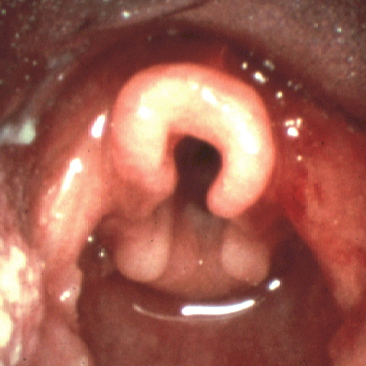
Laringomalacia congênita
📋 Origem dos dados
Esta página agrega dados de fontes públicas e oficiais. Dados sobre cobertura no SUS (PCDT, CEAF) são verificados ativamente por agente proativo (ver badge no infobox). Demais dados têm atribuição de fonte + data da última sincronização — clique para abrir o original.
- Doença rara (ontologia)
- fonte: Orphanet
- Identificador unificado
- fonte: MONDO
- Genética mendeliana
- fonte: OMIM
- Codificação WHO/SUS
- fonte: WHO ICD-10 / DATASUS
- CID-11 (futuro)
- fonte: WHO ICD-11
- NIH/GARD
- fonte: GARD (NIH)
- Indexação biomédica
- fonte: MeSH (NLM)
- Dado público estruturado
- fonte: Wikidata
- Ensaios clínicos
- fonte: ClinicalTrials.gov

