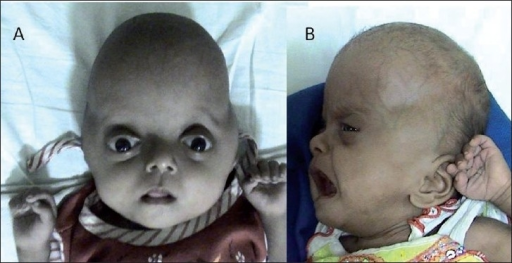
A síndrome de Pfeiffer (SP) é uma forma comum de acrocefalossindactilia, um grupo de doenças hereditárias (passadas de pais para filhos) que causam malformações congênitas (presentes desde o nascimento). Ela se caracteriza por diferentes graus de fechamento precoce dos ossos da parte superior da cabeça (craniossinostose bicoronal), malformações variadas nas mãos e nos pés, e outras manifestações associadas diversas.
Introdução
O que você precisa saber de cara
A Síndrome Pfeiffer é uma doença genética rara que causa o fechamento precoce dos ossos do crânio e alterações nos dedos das mãos e dos pés desde o nascimento. Os sinais mais visíveis incluem o formato encurtado da cabeça, olhos mais salientes e polegares ou dedões dos pés mais largos ou desviados. O acompanhamento envolve cirurgias reparadoras craniofaciais e apoio para possíveis dificuldades respiratórias ou de visão. No SUS, não existem medicamentos específicos dispensados para a síndrome, mas são disponibilizados procedimentos diagnósticos genéticos e acompanhamento em reabilitação.
A síndrome de Pfeiffer (SP) é uma forma comum de acrocefalossindactilia, um grupo de doenças hereditárias (passadas de pais para filhos) que causam malformações congênitas (presentes desde o nascimento). Ela se caracteriza por diferentes graus de fechamento precoce dos ossos da parte superior da cabeça (craniossinostose bicoronal), malformações variadas nas mãos e nos pés, e outras manifestações associadas diversas.
Escala de raridade
<1/50kMuito rara
1/20kRara
1/10kPouco freq.
1/5kIncomum
1/2k
Encontrou um erro ou informação desatualizada? Sugira uma correção →
Entender a doença
Do básico ao detalhe, leia no seu ritmo
Preparando trilha educativa...
Sinais e sintomas
O que aparece no corpo e com que frequência cada sintoma acontece
Partes do corpo afetadas
+ 24 sintomas em outras categorias
Características mais comuns
Os sintomas variam de pessoa para pessoa. Abaixo estão as 81 características clínicas mais associadas, ordenadas por frequência.
Linha do tempo da pesquisa
Encontrou um erro ou informação desatualizada? Sugira uma correção →
Genética e causas
O que está alterado no DNA e como passa nas famílias
Genes associados
2 genes identificados com associação a esta condição. Padrão de herança: Autosomal dominant.
Curadoria gene-doença
fontes oficiaisCrouzon syndrome
An autosomal dominant syndrome characterized by craniosynostosis, hypertelorism, exophthalmos and external strabismus, parrot-beaked nose, short upper lip, hypoplastic maxilla, and a relative mandibular prognathism.
Pfeiffer syndrome
A syndrome characterized by the association of craniosynostosis, broad and deviated thumbs and big toes, and partial syndactyly of the fingers and toes. Three subtypes are known: mild autosomal dominant form (type 1); cloverleaf skull, elbow ankylosis, early death, sporadic (type 2); craniosynostosis, early demise, sporadic (type 3).
Variantes genéticas (ClinVar)
776 variantes patogênicas registradas no ClinVar.
Classificação de variantes (ClinVar)
Distribuição de 858 variantes classificadas pelo ClinVar.
Vias biológicas (Reactome)
34 vias biológicas associadas aos genes desta condição.
Diagnóstico
Os sinais que médicos procuram e os exames que confirmam
Tratamento e manejo
Remédios, cuidados de apoio e o que precisa acompanhar
Onde tratar no SUS
Hospitais de referência no Brasil e o protocolo oficial do SUS (PCDT)
🇧🇷 Atendimento SUS — Síndrome Pfeiffer
Selecione um estado ou use sua localização para ver resultados.
Dados de DATASUS/CNES, SBGM, ABNeuro e Ministério da Saúde. Sempre confirme a disponibilidade diretamente com o estabelecimento.
Pesquisa ativa
Ensaios clínicos abertos e novidades científicas recentes
Ensaios em destaque
Com ensaio aberto em 1 país. O ponto verde marca onde há vaga agora.
🟢 Recrutando agora
1 pesquisa recrutando participantes. Converse com seu médico sobre a possibilidade de participar.
Outros ensaios clínicos
Publicações mais relevantes
Prenatal and Postmortem Characterization of FGFR2-Related Fetal Craniosynostosis: Emphasizing Rare and Atypical Anomalies.
Craniosynostosis (CS) is the second most common craniofacial birth defect after orofacial clefts. Genetic counseling is essential for reproductive planning in affected families. Nine fetal CS cases-six Apert syndrome (AS) and three Pfeiffer syndrome (PS)-with established genetic causes were retrospectively analyzed for clinical, radiological, and molecular features. Mean gestational age at first examination was 26.2 weeks. Four AS and two PS cases were diagnosed during the prenatal stage by ultrasonography (USG), whereas two AS and one PS cases were identified during postmortem. Common prenatal findings included polyhydramnios, high flat forehead, and syndactyly. Two of the three cases diagnosed at the postmortem stage had multiple congenital anomalies (MCA), while in the third, CS was suspected due to frontal bossing and proptosis despite the absence of classic signs. All cases carried pathogenic FGFR2 variants. Proptosis, frontal bossing, and trigonocephaly are key prenatal indicators of CS, but their absence-especially with systemic anomalies-can challenge diagnosis. In cases with MCA, CS should be suspected even if classic signs are absent, particularly when syndactyly accompanies other complex abnormalities. Postmortem evaluation and molecular genetic testing are essential for definitive diagnosis, especially when clinical features are ambiguous.
Tracheal cartilaginous sleeve prevalence in syndromic craniosynostosis: A single institution study.
This study aimed to evaluate the incidence of tracheal cartilaginous sleeve (TCS) among syndromic craniosynostosis patients, as well as describe their genetic profiles, associated co-morbidities, and operative outcomes. We performed a retrospective analysis of syndromic craniosynostosis patients (Apert, Crouzon, and Pfeiffer) at a single tertiary academic center between January 1, 2002, and February 1, 2024. 39 patients with syndromic craniosynostosis were identified, with 17 patients (17/39, 43.6%) undergoing airway evaluation. 1 patient (1/17, 5.9%) was diagnosed with TCS, but 5 patients (5/17, 29.4%) had other airway abnormalities, all reflecting abnormalities of the airway wall or some type of airway stenosis. 28 patients (28/39, 73.7%) presented with a diagnosis of OSA, and 7 patients (7/39, 17.9%) of patients presented with choanal anomaly (atresia or stenosis). 32 patients (32/39, 82.1%) had genetic sequencing information available, with the most common mutations affecting p.P253R within the FGFR2 gene in 7 patients. No patients in our cohort presented with a p.W290 mutation and 7 patients presented with a p.C342 mutation, of which 4 patients had the p.C342Y mutation. The true prevalence of TCS may be likely lower than prior reports, which may aid with alleviating some familial anxiety and provide additional context and data for medical counseling and decision-making. Nonetheless, all patients should be strongly recommended to undergo airway evaluation given the risks associated with TCS, the high prevalence of structural airway anomalies, and the overall low risk of airway evaluation.
Cranial base and midfacial morphology in pfeiffer syndrome: A 3D quantitative analysis.
Pfeiffer syndrome is characterized by craniosynostosis, midfacial hypoplasia, and severe ocular proptosis, with complex surgical management and a high risk of relapse. Despite recent advances in surgical techniques and multidisciplinary care, evidence on the craniofacial morphology and growth patterns remains limited. This study aims to provide a comprehensive analysis of cranial base and midfacial morphology and growth pattern in patients with Pfeiffer syndrome. Twelve CT scans from patients with Pfeiffer syndrome and ten age-matched controls were retrospectively accessed for research purposes between 01/11/2015 and 31/12/ 2023. Using high-quality 3D morphometric analyses, various cranial base and midface landmarks were measured. The data were analyzed using Mann-Whitney U test to compare the deviations. The study revealed significant craniofacial deformities in Pfeiffer syndrome, particularly within the first year of life. There was a shortening in the middle cranial fossa and a tendency towards cranial base kyphosis. The deformity of sphenoid bone involved in body and pterygoid plates exhibited restricted growth in anteroposterior, sagittal, and transverse directions. The lengths of the maxilla, zygoma and plate were shortened. There was more retrusion in the orbital floor and zygoma compared to the rest of the midface. The developmental abnormalities of the sphenoid bone have a massive impact on the overall midfacial morphology and function. The maxilla-zygomatic-orbit complex deformities are characterized by localized underdevelopment rather than uniform growth deficiency. Early and precise surgical interventions and improved surgical methods are crucial for better prognosis.
Analysis of the Learning Curve for a Surgeon Newly Trained in Frontofacial Monobloc Advancement.
Frontofacial monobloc advancement (FFMBA) is among the most complex craniofacial surgeries performed; however, the learning curve for this procedure has not been previously documented. In this study, we retrospectively investigated the learning process of a newly trained surgeon performing FFMBA. Twenty patients who underwent FFMBA between 2015 and 2024 were included in this study. All surgeries were performed by the same craniofacial surgeon and pediatric neurosurgeons. Operative time, blood loss, and complications were retrospectively analyzed using the Wilcoxon matched-pairs signed-rank test, with statistical significance set at P <0.01. The study included 14 patients with Crouzon syndrome, 5 with Pfeiffer syndrome, and 1 with Beare-Stevenson syndrome (mean age: 10.6±12.7 y; range: 3-62 y). Operative time ranged from 218 to 510 minutes (mean: 321.9±83.5 min), and blood loss ranged from 350 to 2822 mL (mean: 944.1±621.3 mL), gradually decreasing over time. The patients were categorized into two groups based on their history of frontal surgery. Operative time and blood loss were significantly higher in patients with previous surgeries ( P <0.01). Complications, including meningitis, distractor prolapse, frontal bone resorption, and recurrent nerve palsy, occurred only in the previously treated group. The learning curve for FFMBA is influenced by the patient's surgical history, particularly previous frontal surgeries. Careful case selection and collaboration within a multidisciplinary craniofacial team are essential for safely and effectively implementing this complex procedure.
Absence of Syndactyly Associated With the Common Apert FGFR2 S252W Mutation: A Clinical Report and Likely Molecular Explanation.
Apert syndrome is a recognizable craniofacial condition characterized by craniosynostosis, hypertelorism, exorbitism, midface hypoplasia, and complex symmetrical bony and cutaneous 'mitten' syndactyly of all four limbs. Around 98% of affected patients have one of two heterozygous missense variants in the FGFR2 gene, encoding either p.(Ser252Trp) (S252W) or p.(Pro253Arg) (P253R). We report a patient with unicoronal craniosynostosis and near normal limbs, in whom we unexpectedly identified a heterozygous FGFR2 S252W variant. Her mother, who had no history suggestive of craniosynostosis and only mild brachydactyly, was also found to carry the variant. We discuss evidence that the presence of a second novel FGFR2 p.(Gly261Arg) missense variant, identified in cis in both patients, could explain the mild phenotype. A similar mechanism may be responsible for occasional reports of Pfeiffer syndrome associated with a common Apert genotype, for which no molecular mechanism has been elucidated previously. Our findings provide further insight into the mechanism of the severe syndactyly that is usually characteristic of Apert syndrome.
Publicações recentes
Prenatal and Postmortem Characterization of FGFR2-Related Fetal Craniosynostosis: Emphasizing Rare and Atypical Anomalies.
Tracheal cartilaginous sleeve prevalence in syndromic craniosynostosis: A single institution study.
Cranial base and midfacial morphology in pfeiffer syndrome: A 3D quantitative analysis.
Analysis of the Learning Curve for a Surgeon Newly Trained in Frontofacial Monobloc Advancement.
Positive Impact of Frontofacial Advancement on Intracranial Volumes in Patients With Syndromic Craniofaciosynostosis.
📚 EuropePMC175 artigos no totalmostrando 143
Prenatal and Postmortem Characterization of FGFR2-Related Fetal Craniosynostosis: Emphasizing Rare and Atypical Anomalies.
Prenatal diagnosisTracheal cartilaginous sleeve prevalence in syndromic craniosynostosis: A single institution study.
International journal of pediatric otorhinolaryngologyCranial base and midfacial morphology in pfeiffer syndrome: A 3D quantitative analysis.
Journal of stomatology, oral and maxillofacial surgeryAnalysis of the Learning Curve for a Surgeon Newly Trained in Frontofacial Monobloc Advancement.
The Journal of craniofacial surgeryPositive Impact of Frontofacial Advancement on Intracranial Volumes in Patients With Syndromic Craniofaciosynostosis.
Plastic and reconstructive surgery. Global openAbsence of Syndactyly Associated With the Common Apert FGFR2 S252W Mutation: A Clinical Report and Likely Molecular Explanation.
American journal of medical genetics. Part AHighlighting posterior cranial vault expansion remodeling for treating various types of craniosynostosis in children.
Child's nervous system : ChNS : official journal of the International Society for Pediatric NeurosurgeryPfeiffer Syndrome (Acrocephalosyndactyly) With Significant Syndactyly and Brachydactyly: A Case Report.
Clinical medicine insights. Case reportsIntrafamilial Phenotypic Variability of the FGFR1 p.Cys277Tyr Variant: A Case Report and Review of the Literature.
GenesA Rare Case of Prenatally Diagnosed Pfeiffer Syndrome with Multicystic Kidney.
Journal of obstetrics and gynaecology of IndiaNew Phenotypic Features in FGFR1-Related Osteoglophonic Dysplasia.
American journal of medical genetics. Part AUpper Airway Obstruction Trends in Craniofacial Syndromes: A Comparative Study.
The Journal of craniofacial surgeryAn early prenatal diagnosis of type III Pfeiffer syndrome: a case description.
Quantitative imaging in medicine and surgeryProlonged Ventilator Dependency in a Pediatric ICU Patient With Pfeiffer Syndrome Following Le Fort I Osteotomy and Distraction Osteogenesis: A Case Report.
CureusAnesthetic Management of a Pediatric Patient With Pfeiffer Syndrome.
Anesthesia progressFrontal Bone Resorption after Frontofacial Monobloc Advancement in FGFR -Related Craniosynostoses: Predictive Factors.
Plastic and reconstructive surgeryAI-based diagnosis and phenotype - Genotype correlations in syndromic craniosynostoses.
Journal of cranio-maxillo-facial surgery : official publication of the European Association for Cranio-Maxillo-Facial SurgeryPerinatal imaging findings of a fetus with Pfeiffer syndrome and a heterozygous c.1019A>G, p.Tyr340Cys (Y340C) mutation in FGFR2 presenting a cloverleaf skull, craniosynostosis and short limbs on prenatal ultrasound mimicking thanatophoric dysplasia type II.
Taiwanese journal of obstetrics & gynecologyThirty-Year Experience Treating Syndromic Craniosynostosis: Long-Term Outcomes following Cranial Expansions.
Plastic and reconstructive surgeryCase report: A girl with witnessed sleep apnea.
Frontiers in neurologySyndromic Craniosynostosis: A Comprehensive Review.
CureusThe influence of orbital architecture on strabismus in craniosynostosis.
Journal of AAPOS : the official publication of the American Association for Pediatric Ophthalmology and StrabismusApproaches to ventriculoperitoneal shunt scalp erosion: countersinking into the calvarium. Illustrative case.
Journal of neurosurgery. Case lessonsA Complex Case of Clino-Syndactyly with Fourth Metacarpal Aplasia.
Life (Basel, Switzerland)The Role of Airway Management on Feeding Difficulties in Children With Pfeiffer Syndrome.
The Journal of craniofacial surgeryType II Pfieffer misdiagnosed as Crouzon syndrome with additional features of supernumerary teeth and localized symmetrical gigantism: a case report.
Journal of medical case reportsClinical and Genetic Studies of the First Monozygotic Twins with Pfeiffer Syndrome.
GenesDe Novo Heterozygous Mutation in FGFR2 Causing Type II Pfeiffer Syndrome.
Case reports in geneticsPrenatal imaging of a fetus with the rare combination of Pfeiffer syndrome and hypoplastic left heart syndrome.
Journal of medical ultrasonics (2001)Mother and Daughter Carrying of the Same Pathogenic Variant in FGFR2 with Discordant Phenotype.
GenesSubcranial Midface Advancement in Patients with Syndromic Craniosynostosis.
Oral and maxillofacial surgery clinics of North AmericaFrontofacial Reconstruction Technique Modification With Preservation of Blood Supply to the Monobloc Segment.
The Journal of craniofacial surgery[A case of Pfeiffer syndrome caused by FGFR2 gene variation].
[Zhonghua yan ke za zhi] Chinese journal of ophthalmology[Perioperative management and complication control of Le Fort Ⅲ osteotomy in children with syndromic craniosynostosis].
Zhonghua kou qiang yi xue za zhi = Zhonghua kouqiang yixue zazhi = Chinese journal of stomatologyEffect of Growth Hormone Therapy on a 4-Year-Old Girl with Pfeiffer Syndrome and Short Stature: A Case Report.
Children (Basel, Switzerland)Growth charts in FGFR2- and FGFR3-related faciocraniosynostoses.
Bone reportsAbsence of Bilateral Multiple Cyclovertical Muscle Insertions in a Patient With Pfeiffer Syndrome.
Journal of pediatric ophthalmology and strabismusFronto-orbital Advancement and Anterior Cranial Vault Reconstruction.
Atlas of the oral and maxillofacial surgery clinics of North AmericaPhenotypic variability of syndromic craniosynostosis caused by c.833G > T in FGFR2: Clinical and genetic evaluation of eight patients from a five-generation family.
Molecular genetics & genomic medicineComputer-Assisted Frontofacial Monobloc Advancement and Facial Bipartition for Pfeiffer Syndrome: Surgical Technique.
World neurosurgeryOrbital and Periorbital Dysmorphology in Untreated Pfeiffer Syndrome.
Plastic and reconstructive surgeryCraniofacial Orthodontic Experience in CODA-Accredited Orthodontic Residency Programs.
The Cleft palate-craniofacial journal : official publication of the American Cleft Palate-Craniofacial AssociationPfeiffer syndrome type 3 with FGR2 c.1052C>G (p.Ser351Cys) variant in West Africa: a case report.
The Pan African medical journalCase Report: Anisometropic Astigmatism Secondary to Unilateral Coronal Synostosis.
Optometry and vision science : official publication of the American Academy of OptometryPrenatal diagnosis of Pfeiffer syndrome type 2 with increased nuchal translucency.
Clinical case reportsPerioperative airway complications in infants and children with Crouzon and Pfeiffer syndromes: A single-center experience.
Paediatric anaesthesiaManagement of ventriculomegaly in pediatric patients with syndromic craniosynostosis: a single center experience.
Acta neurochirurgicaAutopsy Case of Pfeiffer Syndrome Type 2, a Phenotype of Fibroblast Growth Factor Receptor-Associated Craniosynostosis Syndromes, with Tracheal Cartilage Sleeve and Abnormal Hyperplasia of Bronchial Cartilages.
The American journal of case reportsPfeiffer syndrome in an adult with previous surgical correction: A case report of CT findings.
Radiology case reportsOptic canal characteristics in pediatric syndromic craniosynostosis.
Journal of cranio-maxillo-facial surgery : official publication of the European Association for Cranio-Maxillo-Facial SurgeryFamilial Pfeiffer Syndrome: Variable Manifestations and Role of Multidisciplinary Team Care.
The Cleft palate-craniofacial journal : official publication of the American Cleft Palate-Craniofacial AssociationPrenatal diagnosis of Pfeiffer syndrome and role of three-dimensional ultrasound: case report and review of literature.
The journal of maternal-fetal & neonatal medicine : the official journal of the European Association of Perinatal Medicine, the Federation of Asia and Oceania Perinatal Societies, the International Society of Perinatal ObstetriciansComplex Airway Management in Patients with Tracheal Cartilaginous Sleeves.
The LaryngoscopeTreating Syndromic Craniosynostosis with Monobloc Facial Bipartition and Internal Distractor Devices: Destigmatizing the Syndromic Face.
Clinics in plastic surgerySyndrome-related outcomes following posterior vault distraction osteogenesis.
Child's nervous system : ChNS : official journal of the International Society for Pediatric NeurosurgeryNasopharyngeal airway and subcranial space analysis in Pfeiffer syndrome.
The British journal of oral & maxillofacial surgeryCraniosynostosis and hydrocephalus: relevance and treatment modalities.
Child's nervous system : ChNS : official journal of the International Society for Pediatric NeurosurgeryTracheal cartilaginous sleeve in Pfeiffer syndrome: lesson learnt from its rarity.
BMJ case reportsCraniosynostosis: Neonatal Perspectives.
NeoReviewsCephalocranial Disproportionate Fossa Volume and Normal Skull Base Angle in Pfeiffer Syndrome.
The Journal of craniofacial surgeryVirtual planning in Le Fort III distraction osteogenesis: A case series.
Journal of cranio-maxillo-facial surgery : official publication of the European Association for Cranio-Maxillo-Facial SurgerySevere craniolacunae and upper and lower extremity anomalies resulting from Crouzon syndrome, FGFR2 mutation, and Ser347Cys variant.
Child's nervous system : ChNS : official journal of the International Society for Pediatric NeurosurgeryCortical Thickness in Crouzon-Pfeiffer Syndrome: Findings in Relation to Primary Cranial Vault Expansion.
Plastic and reconstructive surgery. Global openNervous system involvement in Pfeiffer syndrome.
Child's nervous system : ChNS : official journal of the International Society for Pediatric NeurosurgeryFeeding, Communication, Hydrocephalus, and Intracranial Hypertension in Patients With Severe FGFR2-Associated Pfeiffer Syndrome.
The Journal of craniofacial surgeryAssessment of long-term quality of life in patients with syndromic craniosynostosis.
Journal of plastic, reconstructive & aesthetic surgery : JPRASPfeiffer Syndrome type 2; A case report of cranio-orbitofaciostenosis with bilateral choanal atresia at Muhimbili National Hospital, Tanzania.
Clinical case reportsTracheal cartilaginous sleeve diagnosed on ultrasound in a child with Pfeiffer syndrome.
International journal of pediatric otorhinolaryngologyPrenatal Diagnosis of Pfeiffer Syndrome Patient with FGFR2 C.940-1G>C Variant: A Case Report.
The application of clinical geneticsCircummaxillary Sutures in Patients With Apert, Crouzon, and Pfeiffer Syndromes Compared to Nonsyndromic Children: Growth, Orthodontic, and Surgical Implications.
The Cleft palate-craniofacial journal : official publication of the American Cleft Palate-Craniofacial AssociationLong Term Speech Outcomes Following Midface Advancement in Syndromic Craniosynostosis.
The Journal of craniofacial surgerySimultaneous Midface Advancement and Orthognathic Surgery: A Powerful Technique for Managing Midface Hypoplasia and Malocclusion.
Plastic and reconstructive surgeryPfeiffer Syndrome: A Therapeutic Algorithm Based on a Modified Grading Scale.
Plastic and reconstructive surgery. Global openTiming of Ossification of the Anterior Skull Base in Syndromic Synostosis.
The Journal of craniofacial surgeryLong-Term Follow-Up on Bone Stability and Complication Rate after Monobloc Advancement in Syndromic Craniosynostosis.
Plastic and reconstructive surgeryKleeblattschädel in Pfeiffer syndrome type II.
Radiology case reportsHigh-flow nasal cannula for children not compliant with continuous positive airway pressure.
Sleep medicineThe growth of the posterior cranial fossa in FGFR2-induced faciocraniosynostosis: A review.
Neuro-ChirurgieNovel synonymous and missense variants in FGFR1 causing Hartsfield syndrome.
American journal of medical genetics. Part APfeiffer type 2 syndrome: review with updates on its genetics and molecular biology.
Child's nervous system : ChNS : official journal of the International Society for Pediatric NeurosurgeryMandibular dysmorphology due to abnormal embryonic osteogenesis in FGFR2-related craniosynostosis mice.
Disease models & mechanismsExpanding the phenotype for the recurrent p.Ala391Glu variant in FGFR3: Beyond crouzon syndrome and acanthosis nigricans.
Molecular genetics & genomic medicinePfeiffer Syndrome Type 3 and Prune Belly Anomaly in a Female: Case Report and Review.
Fetal and pediatric pathologyCorrecting Exorbitism by Monobloc Frontofacial Advancement in Crouzon-Pfeiffer Syndrome: An Age-Specific, Time-Related, Controlled Study.
Plastic and reconstructive surgeryOvercorrected Midface Advancement to Improve Airway Problems in Severe Pfeiffer Syndrome Types II and III.
The Journal of craniofacial surgeryUp-regulation of fibroblast growth factor receptor 1 due to prenatal tobacco exposure can lead to developmental defects in new born.
The journal of maternal-fetal & neonatal medicine : the official journal of the European Association of Perinatal Medicine, the Federation of Asia and Oceania Perinatal Societies, the International Society of Perinatal ObstetriciansPrenatal sonographic findings and prognosis of craniosynostosis diagnosed during the fetal and neonatal periods.
Congenital anomaliesUltrasound diagnosis of tracheal cartilaginous sleeve in a patient with Pfeiffer syndrome.
Pediatric radiologyA genotype-specific surgical approach for patients with Pfeiffer syndrome due to W290C pathogenic variant in FGFR2 is associated with improved developmental outcomes and reduced mortality.
Genetics in medicine : official journal of the American College of Medical GeneticsAssociation between the FGFR1 rs13317 single nucleotide polymorphism and orbitale-nasion depth based on cephalometric images.
Journal of human geneticsChinese patients with p.Ala172Phe-related Pfeiffer syndrome: a case and literature review.
Clinical dysmorphologyLess invasive treatment of sleep-disordered breathing in children with syndromic craniosynostosis.
Orphanet journal of rare diseasesModified Le Fort III osteotomy: A simple solution to severe midfacial hypoplasia.
Journal of cranio-maxillo-facial surgery : official publication of the European Association for Cranio-Maxillo-Facial SurgeryPleural effusion from intrathoracic migration of a ventriculo-peritoneal shunt catheter: pediatric case report and review of the literature.
Italian journal of pediatricsPermanent Childhood Hearing Impairment: Aetiological Evaluation of Infants identified through the Irish Newborn Hearing Screening Programme.
Irish medical journalClinical Significance of Venous Anomalies in Syndromic Craniosynostosis.
Plastic and reconstructive surgery. Global openVariable prenatal presentation of Pfeiffer syndrome: Suggested aids to prenatal sonographic diagnosis.
Prenatal diagnosisCraniosynostosis as a clinical and diagnostic problem: molecular pathology and genetic counseling.
Journal of applied geneticsChoanal Atresia and Craniosynostosis: Development and Disease.
Plastic and reconstructive surgeryMinimally Invasive Hallux Interphalangeal Joint Arthrodesis for Hallux Varus in Pfeiffer Syndrome: A Case Report.
The Journal of foot and ankle surgery : official publication of the American College of Foot and Ankle SurgeonsAnterior Skull Base and Pericranial Flap Ossification after Frontofacial Monobloc Advancement.
Plastic and reconstructive surgeryImaging of Skeletal Disorders Caused by Fibroblast Growth Factor Receptor Gene Mutations.
Radiographics : a review publication of the Radiological Society of North America, IncGrowth curves for intracranial volume in normal Asian children fortify management of craniosynostosis.
Journal of cranio-maxillo-facial surgery : official publication of the European Association for Cranio-Maxillo-Facial SurgeryPfeiffer syndrome: oral healthcare management and description of new dental findings in a craniosynostosis.
Special care in dentistry : official publication of the American Association of Hospital Dentists, the Academy of Dentistry for the Handicapped, and the American Society for Geriatric DentistryFive-Year Follow-Up of Midface Distraction in Growing Children with Syndromic Craniosynostosis.
Plastic and reconstructive surgeryA novel heterozygous mutation in FGFR2 gene causing Pfeiffer syndrome.
American journal of medical genetics. Part AA de novo missense mutation of FGFR2 causes facial dysplasia syndrome in Holstein cattle.
BMC geneticsA Case of Pediatric Post-Traumatic Stress Disorder Presenting as Attention Deficit Hyperactivity Disorder: A Case Report.
CureusPfeiffer syndrome with FGFR2 C342R mutation presenting extreme proptosis, craniosynostosis, hearing loss, ventriculomegaly, broad great toes and thumbs, maxillary hypoplasia, and laryngomalacia.
Taiwanese journal of obstetrics & gynecologyAlar Pinning in Rigid External Distraction for Midfacial Hypoplasia.
Annals of plastic surgeryTracheal Cartilaginous Sleeve in Syndromic Craniosynostosis: An Underrecognized Source of Significant Morbidity and Mortality.
The Journal of craniofacial surgeryCorrigendum to "Ophthalmic considerations in patients with pfeiffer syndrome." [Am. J. Ophthalmol. Case Reports (2) 2016 1-3].
American journal of ophthalmology case reportsRectus muscle excyclorotation and V-pattern strabismus: a quantitative appraisal of clinical relevance in syndromic craniosynostosis.
The British journal of ophthalmologyContribution of FGFR1 Variants to Craniofacial Variations in East Asians.
PloS oneEvaluating the Efficacy of Monobloc Distraction in the Crouzon-Pfeiffer Craniofacial Deformity Using Geometric Morphometrics.
Plastic and reconstructive surgeryAnalysis of the Fgfr2C342Y mouse model shows condensation defects due to misregulation of Sox9 expression in prechondrocytic mesenchyme.
Biology openPfeiffer syndrome: literature review of prenatal sonographic findings and genetic diagnosis.
The journal of maternal-fetal & neonatal medicine : the official journal of the European Association of Perinatal Medicine, the Federation of Asia and Oceania Perinatal Societies, the International Society of Perinatal ObstetriciansSyndromic Craniosynostosis.
Facial plastic surgery clinics of North AmericaMutation analysis of FGFR1-3 in 11 Japanese patients with syndromic craniosynostoses.
American journal of medical genetics. Part AFronto-facial advancement and bipartition in Crouzon-Pfeiffer and Apert syndromes: Impact of fronto-facial surgery upon orbital and airway parameters in FGFR2 syndromes.
Journal of cranio-maxillo-facial surgery : official publication of the European Association for Cranio-Maxillo-Facial SurgeryProposed caudal appendage classification system; spinal cord tethering associated with sacrococcygeal eversion.
Child's nervous system : ChNS : official journal of the International Society for Pediatric NeurosurgeryFGFR-associated craniosynostosis syndromes and gastrointestinal defects.
American journal of medical genetics. Part AThe ophthalmic sequelae of Pfeiffer syndrome and the long-term visual outcomes after craniofacial surgery.
Journal of AAPOS : the official publication of the American Association for Pediatric Ophthalmology and StrabismusPrevention and management of hearing loss in syndromic craniosynostosis: A case series.
International journal of pediatric otorhinolaryngologyGenetic Syndromes Associated with Craniosynostosis.
Journal of Korean Neurosurgical SocietyOphthalmic considerations in patients with Pfeiffer syndrome.
American journal of ophthalmology case reportsTransmaxillary Sinus Approach for Le Fort II Osteotomy.
Plastic and reconstructive surgery. Global openUltrasound and MR imaging findings in prenatal diagnosis of craniosynostosis syndromes.
Pediatric radiologyCochlear Implantation in a Patient With Pfeiffer Syndrome and Temporal Bone Vascular Anomalies.
Otology & neurotology : official publication of the American Otological Society, American Neurotology Society [and] European Academy of Otology and NeurotologyAvoidance of a potential tracheoinnominate fistula by innominate artery re-implantation in a four year old girl with tracheostomy dependence and Pfeiffer syndrome.
International journal of pediatric otorhinolaryngologyA low-cost method of craniofacial distraction osteogenesis.
Journal of plastic, reconstructive & aesthetic surgery : JPRASThe prevalence of obstructive sleep apnea in symptomatic patients with syndromic craniosynostosis.
International journal of oral and maxillofacial surgeryAppropriate indication of fronto-orbital advancement by distraction osteogenesis in syndromic craniosynostosis: Beyond the conventional technique.
Journal of cranio-maxillo-facial surgery : official publication of the European Association for Cranio-Maxillo-Facial SurgeryFirst Vault Expansion in Apert and Crouzon-Pfeiffer Syndromes: Front or Back?
Plastic and reconstructive surgeryFGFR2 mutation in 46,XY sex reversal with craniosynostosis.
Human molecular geneticsA Delayed Finding of a Tracheal Cartilaginous Sleeve in a Patient with Pfeiffer Syndrome Type 2 and a Complex Airway History.
A & A case reportsFGFR2 mutation in a patient without typical features of Pfeiffer syndrome--The emerging role of combined NGS and phenotype based strategies.
European journal of medical geneticsProgressive postnatal pansynostosis: an insidious and pernicious form of craniosynostosis.
Journal of neurosurgery. PediatricsRadiographic manifestations in Pfeiffer syndrome.
Arthritis & rheumatology (Hoboken, N.J.)Skull base morphology in fibroblast growth factor receptor type 2-related faciocraniosynostosis: a descriptive analysis.
NeurosurgeryDescribing Crouzon and Pfeiffer syndrome based on principal component analysis.
Journal of cranio-maxillo-facial surgery : official publication of the European Association for Cranio-Maxillo-Facial SurgeryFast dynamic imaging technique to identify obstructive lesions in the CSF space: report of 2 cases.
Journal of neurosurgery. PediatricsComplications in 54 frontofacial distraction procedures in patients with syndromic craniosynostosis.
The Journal of craniofacial surgeryAssociações
Organizações que acompanham esta doença — pra ter apoio e orientação
Ainda não temos associações cadastradas para Síndrome Pfeiffer.
É de uma associação que acompanha esta doença? Fale com a gente →
Doença com base genética
Um médico geneticista pode ajudar no diagnóstico de Síndrome Pfeiffer e no aconselhamento genético da família.
Doenças relacionadas
Doenças com sintomas parecidos — ajudam quem ainda está buscando diagnóstico
Perguntas frequentes
O que as famílias mais perguntam sobre esta doença — cada resposta com a fonte de onde saiu
A Síndrome Pfeiffer é causada por alterações genéticas nos genes FGFR1 ou FGFR2. Esses genes regulam o desenvolvimento dos ossos, e as mutações seguem um padrão de herança autossômica dominante.
Referências
Fontes citadas no texto, publicações do grafo e bases de dados usadas neste verbete
6 publicações do grafo RarasNet (PubMed) · 8 bases de dados. Títulos, periódicos e PMIDs vêm direto da fonte, sem intermediação de IA.
Dados compilados pelo RarasNet a partir de fontes abertas (Orphanet, OMIM, MONDO, PubMed/EuropePMC, ClinicalTrials.gov, DATASUS, PCDT/MS). Este conteúdo é informativo e não substitui avaliação médica.
Citar este verbete
Raras. (s.d.). Síndrome Pfeiffer. Em Raras — Enciclopédia de Doenças Raras do Brasil. https://raras.org/doenca/sindrome-pfeiffer
Formato APA. Conteúdo sob CC BY 4.0 — reuso livre com atribuição.
Conteúdo mantido por Agente Raras · Médicos e pesquisadores podem colaborar
Síndrome Pfeiffer
📋 Origem dos dados
Esta página agrega dados de fontes públicas e oficiais. Dados sobre cobertura no SUS (PCDT, CEAF) são verificados ativamente por agente proativo (ver badge no infobox). Demais dados têm atribuição de fonte + data da última sincronização — clique para abrir o original.
- Doença rara (ontologia)
- fonte: Orphanet
- Identificador unificado
- fonte: MONDO
- Genética mendeliana
- fonte: OMIM
- Codificação WHO/SUS
- fonte: WHO ICD-10 / DATASUS
- CID-11 (futuro)
- fonte: WHO ICD-11
- NIH/GARD
- fonte: GARD (NIH)
- Indexação biomédica
- fonte: MeSH (NLM)
- Dado público estruturado
- fonte: Wikidata
- Ensaios clínicos
- fonte: ClinicalTrials.gov

