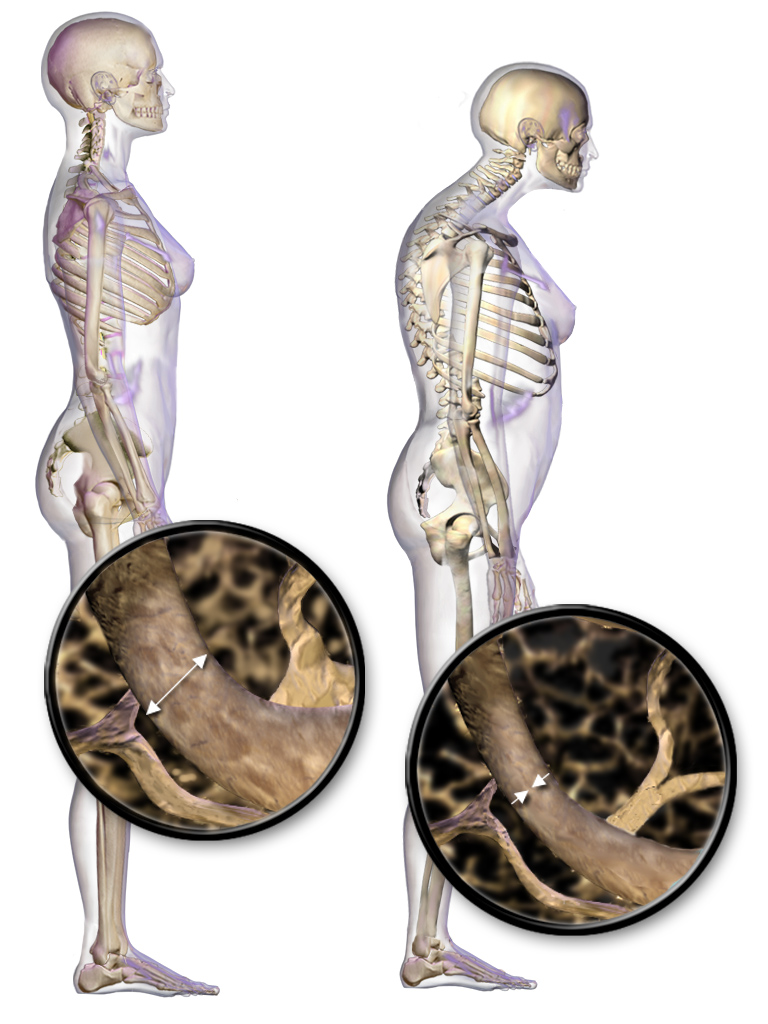
A osteoporose juvenil idiopática (OIJ) é uma condição primária de desmineralização óssea na infância ou adolescência que se apresenta com dor nas costas e nas extremidades, dificuldades de locomoção, fraturas múltiplas e evidência radiológica de osteoporose. O início geralmente ocorre no período pré-púbere, entre 8 e 12 anos de idade.
Introdução
O que você precisa saber de cara
A osteoporose juvenil é uma condição rara que provoca enfraquecimento e perda mineral dos ossos em crianças e adolescentes, iniciando-se com frequência entre 8 e 12 anos. A família costuma notar queixas frequentes de dor óssea, dificuldades para caminhar e fraturas repetidas sem causas graves aparentes. Embora a doença não tenha um protocolo exclusivo na lista de doenças raras do governo, o SUS dispensa Alendronato de sódio comprimido 10 mg dentro do seu PCDT geral de Osteoporose. O diagnóstico médico é realizado por meio de exames radiológicos que mostram a desmineralização óssea e pode ser complementado por avaliação genética especializada.
A osteoporose juvenil idiopática (OIJ) é uma condição primária de desmineralização óssea na infância ou adolescência que se apresenta com dor nas costas e nas extremidades, dificuldades de locomoção, fraturas múltiplas e evidência radiológica de osteoporose. O início geralmente ocorre no período pré-púbere, entre 8 e 12 anos de idade.
Tem tratamento?
Escala de raridade
<1/50kMuito rara
1/20kRara
1/10kPouco freq.
1/5kIncomum
1/2k
Encontrou um erro ou informação desatualizada? Sugira uma correção →
Entender a doença
Do básico ao detalhe, leia no seu ritmo
Preparando trilha educativa...
Sinais e sintomas
O que aparece no corpo e com que frequência cada sintoma acontece
Características mais comuns
Os sintomas variam de pessoa para pessoa. Abaixo estão as 6 características clínicas mais associadas, ordenadas por frequência.
Linha do tempo da pesquisa
Encontrou um erro ou informação desatualizada? Sugira uma correção →
Genética e causas
O que está alterado no DNA e como passa nas famílias
Genes associados
3 genes identificados com associação a esta condição. Padrão de herança: Multigenic/multifactorial, Not applicable.
Curadoria gene-doença
fontes oficiaisOsteoporosis
A systemic skeletal disorder characterized by decreased bone mass and deterioration of bone microarchitecture without alteration in the composition of bone. The result is fragile bones and an increased risk of fractures, even after minimal trauma. Osteoporosis is a chronic condition of multifactorial etiology and is usually clinically silent until a fracture occurs.
Variantes genéticas (ClinVar)
142 variantes patogênicas registradas no ClinVar.
Vias biológicas (Reactome)
14 vias biológicas associadas aos genes desta condição.
Diagnóstico
Os sinais que médicos procuram e os exames que confirmam
Tratamento e manejo
Remédios, cuidados de apoio e o que precisa acompanhar
Onde tratar no SUS
Hospitais de referência no Brasil e o protocolo oficial do SUS (PCDT)
🇧🇷 Atendimento SUS — Osteoporose juvenil
Selecione um estado ou use sua localização para ver resultados.
Dados de DATASUS/CNES, SBGM, ABNeuro e Ministério da Saúde. Sempre confirme a disponibilidade diretamente com o estabelecimento.
Pesquisa ativa
Ensaios clínicos abertos e novidades científicas recentes
Ensaios em destaque
Nenhum país com ensaio aberto no momento.
Pesquisa e ensaios clínicos
4 ensaios clínicos encontrados.
Publicações mais relevantes
Idiopathic Juvenile Osteoporosis Diagnosed in Adulthood: The First Documented Case in Georgia.
Idiopathic juvenile osteoporosis (IJO) is a rare metabolic bone disorder characterized by bone fragility in otherwise healthy children and adolescents, with typical onset before puberty. To our knowledge, this represents the first documented case of IJO in Georgia, with a delayed diagnosis in adulthood despite a clinical history suggestive of earlier onset. A 24-year-old male with a history of childhood nephrolithiasis and intermittent vitamin D deficiency presented with progressive bone pain, joint crepitus, and worsening mobility. Imaging revealed severe osteopenia and osteoporosis, prompting an extensive metabolic and endocrine evaluation. Laboratory findings were largely unremarkable aside from episodic hypercalciuria, normal parathyroid hormone levels, and fluctuating vitamin D levels. Major secondary causes, including malignancy, hyperparathyroidism, thyroid dysfunction, chronic inflammatory disease, and malabsorption syndromes, were ruled out. A diagnosis of IJO was made by exclusion. The patient was started on calcium and vitamin D supplementation with close monitoring. This case highlights the diagnostic challenges of IJO when presentation extends into adulthood and underscores the importance of considering this condition in young adults with unexplained bone fragility, particularly in regions where it remains undocumented.
Idiopathic Juvenile Osteoporosis: A Case Report and Literature Review.
This case report describes the rare occurrence of idiopathic juvenile osteoporosis (IJO) in an 11-year-old boy with bone fragility and fractures, particularly in the thoracic and lumbar vertebrae. After excluding discernible underlying causes, the diagnosis was confirmed using clinical and radiological assessments. Treatment commenced with oral bisphosphonates, leading to notable bone mineral density (BMD) improvements and the absence of subsequent fractures. IJO presents diagnostic challenges owing to its multifaceted nature, necessitating the exclusion of other common causes of pediatric osteoporosis. Although the pathophysiology of IJO remains poorly understood, this case underscores the potential efficacy of bisphosphonate therapy in managing the condition and improving patient outcomes. Notably, the patient's symptoms ameliorated as puberty commenced, aligning with the typical IJO patterns reported in the literature. Although the long-term impact of bisphosphonate treatment in pediatric IJO cases warrants further investigation, this case exemplifies the potential to enhance the quality of life of affected individuals.
Idiopathic juvenile osteoporosis-a polygenic disorder?
Idiopathic juvenile osteoporosis (IJO) is a rare condition presenting with vertebral and metaphyseal fractures that affects otherwise healthy prepubertal children. Bone mineral density (BMD) measurements are very low. The primary problem appears to be deficient bone formation, with a failure to accrue bone normally during growth. The onset in childhood suggests IJO is a genetic disorder, and a number of reports indicate that some children carry heterozygous pathogenic variants in genes known to be associated with defective osteoblast function and low bone mass, most commonly LRP5 or PLS3. However, a positive family history is unusual in IJO, suggesting the genetic background can be complex. We describe a young man with classical IJO who was investigated with a bone fragility gene panel and whole genome sequencing. The proband was found to carry four variants in three different genes potentially affecting osteoblast function. From his mother he had inherited mutations in ALPL (p.Asn417Ser) and LRP5 (p.Arg1036Gln), and from his father mutations in LRP5 (p.Asp1551Alsfs*13) and activating transcription factor 4 (ATF4) (p.Leu306Ile). His sister had also inherited the LRP5 (p.Asp1551Alsfs*13) from her father, but not the ATF4 mutation. Their spinal BMD z-scores differed substantially (sister -1.6, father -3.2) pointing to the potential importance of the ATF4 mutation. Activating transcription factor 4 acts downstream from RUNX2 and osterix and plays an important role in osteoblast differentiation and function. This case, together with others recently published, supports the view that IJO can result from clustering of mutations in genes related to osteoblast development and function. Novel genes in these pathways may be involved. Our case also emphasizes the value of detailed study of other family members. After a bone biopsy had excluded a mineralization defect due to hypophosphatasia, the proband was treated with zoledronate infusions with good clinical effect.
Sclerostin and Wnt Signaling in Idiopathic Juvenile Osteoporosis Using High-Resolution Confocal Microscopy for Three-Dimensional Analyses.
Idiopathic juvenile osteoporosis (IJO) is a rare condition characterized by low bone mass that can increase the risk of fractures in children. Treatment options for these patients are limited as the molecular mechanisms of disease initiation and progression are incompletely understood. Sclerostin inhibits canonical Wnt signaling, which is important for the bone formation activity of osteoblasts, and elevated sclerostin has been implicated in adult osteoporosis. To evaluate the role of sclerostin in IJO, high-resolution confocal microscopy analyses were performed on bone biopsies collected from 13 pediatric patients. Bone biopsies were stained with sclerostin, and β-catenin antibodies showed elevated expression across osteocytes and increased sclerostin-positive osteocytes in 8 of the 13 total IJO patients (62%). Skeletal sclerostin was associated with static and dynamic histomorphometric parameters. Further, colocalization analyses showed that bone sclerostin colocalized with phosphorylated β-catenin, a hallmark of Wnt signaling that indicates Wnt inhibition. In contrast, sclerostin-positive osteocytes were not colocalized with an "active" unphosphorylated form of β-catenin. These results support a model that altered levels of sclerostin and Wnt signaling activity occur in IJO patients.
Severity of acute phase reaction in children receiving the first dose of zoledronic acid and the impact of the underlying condition: a cross-sectional study.
Zoledronic acid (ZA), used for treatment of children with osteoporosis, can cause acute phase reaction (APR) following the first infusion. Many institutions have a policy to admit and monitor all children for their first ZA infusion. To determine if the APR with the first ZA dose warrants hospital-level care and evaluate if its severity correlates with the underlying condition. Retrospective cross-sectional analysis. Two tertiary centres across the UK that run paediatric metabolic bone disease services. Children who received first ZA infusion as inpatients at these centres. Nil. The Paediatric Early Warning Score (PEWS) and length of hospital stay to assess the severity of APR. 107 patients were included. Peak PEWS≤3 was found in 85% of children. 83% required admission for <24 hours. The various patient populations (osteogenesis imperfecta (OI), immobility-induced osteoporosis, idiopathic juvenile osteoporosis, systemic inflammatory disorders and steroid-induced osteoporosis, Duchenne muscular dystrophy (DMD)) did not differ significantly in the mean peak PEWS and the length of hospital stay. However, when compared directly, the group with DMD and that with systemic inflammatory disorders and steroid-induced osteoporosis differed significantly in the mean peak PEWS (p=0.011) and the length of hospital stay (p=0.048), respectively, as compared with the OI group. Most patients had a mild APR not requiring overnight hospital admission, after their first ZA dose. However, certain groups seem to suffer more severe APR and may warrant consideration of inpatient monitoring with the first infusion.
Publicações recentes
Idiopathic Juvenile Osteoporosis Diagnosed in Adulthood: The First Documented Case in Georgia.
Idiopathic Juvenile Osteoporosis: A Case Report and Literature Review.
Idiopathic juvenile osteoporosis-a polygenic disorder?
Sclerostin and Wnt Signaling in Idiopathic Juvenile Osteoporosis Using High-Resolution Confocal Microscopy for Three-Dimensional Analyses.
Severity of acute phase reaction in children receiving the first dose of zoledronic acid and the impact of the underlying condition: a cross-sectional study.
📚 EuropePMC66 artigos no totalmostrando 20
Idiopathic Juvenile Osteoporosis Diagnosed in Adulthood: The First Documented Case in Georgia.
CureusIdiopathic Juvenile Osteoporosis: A Case Report and Literature Review.
CureusIdiopathic juvenile osteoporosis-a polygenic disorder?
JBMR plusSclerostin and Wnt Signaling in Idiopathic Juvenile Osteoporosis Using High-Resolution Confocal Microscopy for Three-Dimensional Analyses.
Children (Basel, Switzerland)Severity of acute phase reaction in children receiving the first dose of zoledronic acid and the impact of the underlying condition: a cross-sectional study.
Archives of disease in childhoodClinical Characteristics and Treatment Outcomes of Children with Primary Osteoporosis.
Turkish archives of pediatricsDiagnostic yield of bone fragility gene panel sequencing in children and young adults referred for idiopathic primary osteoporosis at a single regional reference centre.
Bone reportsIdiopathic juvenile osteoporosis in a child: a four-year follow-up with review of literature.
Journal of pediatric endocrinology & metabolism : JPEMEfficacy and safety of intravenous pamidronate infusion for treating osteoporosis in children and adolescents.
Annals of pediatric endocrinology & metabolismProgressive idiopathic juvenile osteoporosis in pregnancy: A case report of two successive pregnancies in the same woman.
Case reports in women's healthDo Bisphosphonates Alleviate Pain in Children? A Systematic Review.
Current osteoporosis reportsNovel PLS3 variants in X-linked osteoporosis: Exploring bone material properties.
American journal of medical genetics. Part APrimary osteoporosis in children.
BMJ case reports[Osteoporosis - epidemiology and pathogenesis].
Vnitrni lekarstviA Subtrochanteric Femoral Stress Fracture following Bisphosphonate Treatment in an Adolescent Girl.
Hormone research in paediatricsEvidence of altered matrix composition in iliac crest biopsies from patients with idiopathic juvenile osteoporosis.
Connective tissue researchIdiopathic Juvenile Osteoporosis: A Case Report.
Journal of clinical and diagnostic research : JCDRIdiopathic Juvenile Osteoporosis: Clinical Experience from a Single Centre and Screening of LRP5 and LRP6 Genes.
Calcified tissue internationalIdiopathic juvenile osteoporosis: A case report and review of the literature.
International journal of surgery case reportsRadiographic and MR Imaging Findings of the Spine after Bisphosphonate Treatment, in a Child with Idiopathic Juvenile Osteoporosis.
Case reports in radiologyAssociações
Organizações que acompanham esta doença — pra ter apoio e orientação
Ainda não temos associações cadastradas para Osteoporose juvenil.
É de uma associação que acompanha esta doença? Fale com a gente →
Doença com base genética
Um médico geneticista pode ajudar no diagnóstico de Osteoporose juvenil e no aconselhamento genético da família.
Doenças relacionadas
Doenças com sintomas parecidos — ajudam quem ainda está buscando diagnóstico
Perguntas frequentes
O que as famílias mais perguntam sobre esta doença — cada resposta com a fonte de onde saiu
É uma doença rara de desmineralização óssea primária que atinge crianças ou adolescentes, frequentemente manifestada entre os 8 e 12 anos de vida. Ela se caracteriza pelo surgimento de ossos frágeis, fraturas múltiplas e queixas de dor.
Referências
Fontes citadas no texto, publicações do grafo e bases de dados usadas neste verbete
5 publicações do grafo RarasNet (PubMed) · 7 bases de dados. Títulos, periódicos e PMIDs vêm direto da fonte, sem intermediação de IA.
Dados compilados pelo RarasNet a partir de fontes abertas (Orphanet, OMIM, MONDO, PubMed/EuropePMC, ClinicalTrials.gov, DATASUS, PCDT/MS). Este conteúdo é informativo e não substitui avaliação médica.
Citar este verbete
Raras. (s.d.). Osteoporose juvenil. Em Raras — Enciclopédia de Doenças Raras do Brasil. https://raras.org/doenca/osteoporose-juvenil
Formato APA. Conteúdo sob CC BY 4.0 — reuso livre com atribuição.
Conteúdo mantido por Agente Raras · Médicos e pesquisadores podem colaborar
Osteoporose juvenil
📋 Origem dos dados
Esta página agrega dados de fontes públicas e oficiais. Dados sobre cobertura no SUS (PCDT, CEAF) são verificados ativamente por agente proativo (ver badge no infobox). Demais dados têm atribuição de fonte + data da última sincronização — clique para abrir o original.
- Doença rara (ontologia)
- fonte: Orphanet
- Identificador unificado
- fonte: MONDO
- Genética mendeliana
- fonte: OMIM
- Codificação WHO/SUS
- fonte: WHO ICD-10 / DATASUS
- CID-11 (futuro)
- fonte: WHO ICD-11
- NIH/GARD
- fonte: GARD (NIH)
- Indexação biomédica
- fonte: MeSH (NLM)
- Dado público estruturado
- fonte: Wikidata
- Reposicionamento
- fonte: Drug Repurposing Hub

