
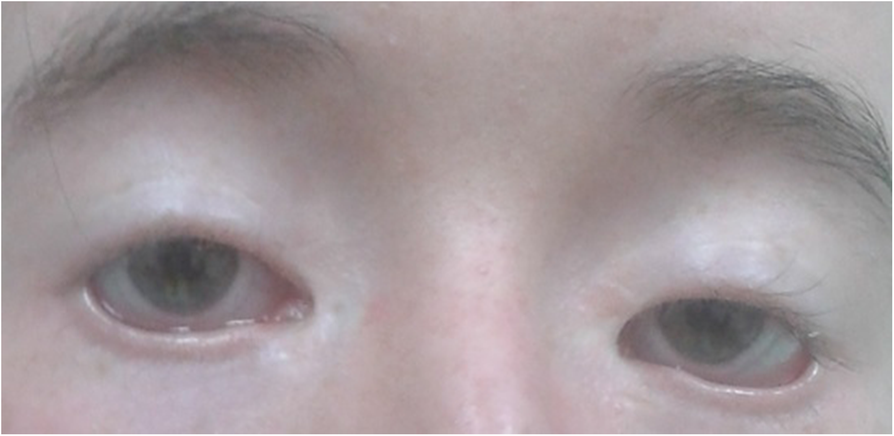
A Síndrome de Blefarofimose, Ptose e Epicanto Inverso (BPES) é uma condição dos olhos (oftalmológica) caracterizada por: pálpebras mais curtas ou com uma abertura menor do que o normal (blefarofimose), pálpebra caída (ptose), uma dobra de pele no canto interno do olho que aponta para baixo (epicanto inverso), e maior distância entre os cantos internos dos olhos (telecanto). Essa síndrome pode ser associada (tipo I) ou não (tipo II) à falência ovariana prematura (FOP).
Introdução
O que você precisa saber de cara
A Síndrome de Blefarofimose, Ptose e Epicanto Inverso (BPES) é uma condição dos olhos (oftalmológica) caracterizada por: pálpebras mais curtas ou com uma abertura menor do que o normal (blefarofimose), pálpebra caída (ptose), uma dobra de pele no canto interno do olho que aponta para baixo (epicanto inverso), e maior distância entre os cantos internos dos olhos (telecanto). Essa síndrome pode ser associada (tipo I) ou não (tipo II) à falência ovariana prematura (FOP).
Escala de raridade
<1/50kMuito rara
1/20kRara
1/10kPouco freq.
1/5kIncomum
1/2k
Encontrou um erro ou informação desatualizada? Sugira uma correção →
Entender a doença
Do básico ao detalhe, leia no seu ritmo
Preparando trilha educativa...
Sinais e sintomas
O que aparece no corpo e com que frequência cada sintoma acontece
Partes do corpo afetadas
+ 11 sintomas em outras categorias
Características mais comuns
Os sintomas variam de pessoa para pessoa. Abaixo estão as 29 características clínicas mais associadas, ordenadas por frequência.
Linha do tempo da pesquisa
Encontrou um erro ou informação desatualizada? Sugira uma correção →
Genética e causas
O que está alterado no DNA e como passa nas famílias
Genes associados
1 gene identificado com associação a esta condição. Padrão de herança: Autosomal dominant, Not applicable.
Curadoria gene-doença
fontes oficiaisTranscriptional regulator. Critical factor essential for ovary differentiation and maintenance, and repression of the genetic program for somatic testis determination. Prevents trans-differentiation of ovary to testis through transcriptional repression of the Sertoli cell-promoting gene SOX9 (By similarity). Has apoptotic activity in ovarian cells. Suppresses ESR1-mediated transcription of PTGS2/COX2 stimulated by tamoxifen (By similarity). Is a regulator of CYP19 expression (By similarity). Par
Nucleus
Blepharophimosis, ptosis, and epicanthus inversus syndrome
A disorder characterized by eyelid dysplasia, small palpebral fissures, drooping eyelids and a skin fold curving in the mediolateral direction, inferior to the inner canthus. In type I BPSE (BPES1) eyelid abnormalities are associated with female infertility. Affected females show an ovarian deficit due to primary amenorrhea or to premature ovarian failure (POF). In type II BPSE (BPES2) affected individuals show only the eyelid defects.
Variantes genéticas (ClinVar)
214 variantes patogênicas registradas no ClinVar.
Vias biológicas (Reactome)
1 via biológica associada aos genes desta condição.
Diagnóstico
Os sinais que médicos procuram e os exames que confirmam
Tratamento e manejo
Remédios, cuidados de apoio e o que precisa acompanhar
Onde tratar no SUS
Hospitais de referência no Brasil e o protocolo oficial do SUS (PCDT)
🇧🇷 Atendimento SUS — Síndrome de blefarofimose-ptose-epicanto inverso
Selecione um estado ou use sua localização para ver resultados.
Dados de DATASUS/CNES, SBGM, ABNeuro e Ministério da Saúde. Sempre confirme a disponibilidade diretamente com o estabelecimento.
Pesquisa ativa
Ensaios clínicos abertos e novidades científicas recentes
Ensaios em destaque
🟢 Recrutando agora
1 pesquisa recrutando participantes. Converse com seu médico sobre a possibilidade de participar.
Outros ensaios clínicos
Publicações mais relevantes
Genetic and Clinical Features of FOXL2-Associated Blepharophimosis-Ptosis-Epicanthus Inversus Syndrome Based on 11 Chinese Families and Literature Review.
Blepharophimosis-ptosis-epicanthus inversus syndrome (BPES), caused by FOXL2 variants, has been divided into two subtypes by eyelid abnormalities with (BPES-I) or without (BPES-II) primary ovarian insufficiency (POI). This study investigated the genetic and phenotypic characteristics of FOXL2-associated BPES and their genotype-phenotype correlations. FOXL2 variants were identified by in-house next-generation sequencing and compared with public databases. Clinical features were also summarized. Eleven FOXL2 variants, including four novel, were detected in 11 families from our cohort. Based on literature, 273 FOXL2 pathogenic/likely pathogenic variants were reviewed in 650 patients from 548 families. Nearly half (47.6%, 130/273) of the variants were truncation. The most frequent (24.0%, 132/549) variant was p.A225_A234dup. In the polyalanine tract, variants leading to the deletion of 1-10 or expansion/insertion of 2 alanine residues were likely benign, whereas variants causing the expansion/insertion of 10-15 alanine residues were pathogenic. The proportion of truncation variants was significantly higher in patients with BPES-I (73.8%, 48/65) than in those with BPES-II (19.6%, 19/97). In conclusion, the pathogenicity of in-frame variants within the polyalanine tract was associated with the number of polyalanine residues. Truncation variants were frequently linked to the severe phenotype (BPES-I), highlighting their potential value in clinical diagnosis and patient management, particularly for preventing or treating POI.
Blepharophimosis-ptosis-epicanthus inversus syndrome (BPES) due to polyAla site variant in FOXL2: diagnostic challenges with NGS.
This report presents a case of blepharophimosis-ptosis-epicanthus inversus syndrome (BPES) identified in a term neonate. This patient presented with the four typical ophthalmic signs: short horizontal palpebral fissures (blepharophimosis), impaired levator palpebrae superioris muscle function leading to drooping of upper eyelids (ptosis), skin folding on the medial lower eyelid ascending to the upper eyelid (epicanthus inversus) and increased medial intercanthal distance (telecanthus). On genetic analysis, a polyalanine (polyAla) tract expansion in the FOXL2 gene was identified. Through this report, we highlight the importance of understanding the limitations of different genetic tests when investigating diseases with polyalanine tract expansion mutations such as BPES.
One-stage versus two-stage surgical correction of blepharophimosis-ptosis-epicanthus inversus syndrome: a retrospective comparative study.
To compare the surgical outcomes of one-stage and two-stage correction of blepharophimosis-ptosis-epicanthus inversus syndrome (BPES) in children <3 years of age. This retrospective comparative study included children <3 years with BPES who underwent surgical correction at Cairo University. Medial canthoplasty was performed using the Y-V, C-U, or five-flap technique, while ptosis was corrected by frontalis suspension using polytetrafluoroethylene sling. Patients were divided into one-stage and two-stage groups. Surgical outcomes were assessed based on horizontal palpebral fissure length (HPFL), interpalpebral fissure height (IPFH), inner intercanthal distance (IICD) and IICD/HPFL ratio. Twenty-four patients were included: 11 in the one-stage group and 13 in the two-stage group. Both groups showed significant postoperative improvements in HPFL, IPFH, IICD and IICD/HPFL (P < 0.005), with no statistically significant difference between them. The two-stage group had a higher proportion of patients with good blepharophimosis outcome (46% vs 27%), whereas the one-stage group showed a higher proportion of good ptosis outcomes (64% vs 46%); however, these differences were not statistically significant. Complications were minimal and comparable between both groups. Outcomes of one- and two-stage approaches were comparable in our cohort. One-stage correction may be preferable in patients with severe ptosis, although two-stage repair may better address severe blepharophimosis.
A rare case of Blepharophimosis-Ptosis-Epicanthus inversus syndrome (BPES) associated with keratoconus: a multidisciplinary approach to diagnosis and management.
Blepharophimosis-Ptosis-Epicanthus Inversus Syndrome (BPES) is a rare congenital condition typically associated with mutations in the FOXL2 gene. It is characterized by eyelid malformations and, in some cases, premature ovarian insufficiency. Although visual complications such as astigmatism and amblyopia are well recognized, an association between BPES-like features and keratoconus has not been previously reported. We report a 41-year-old Saudi female presenting with progressive visual decline and congenital eyelid abnormalities. Clinical evaluation revealed features consistent with BPES, and corneal topography confirmed bilateral keratoconus. Genetic testing identified a homozygous pathogenic variant in the COLEC10 gene, with no FOXL2 mutations detected. A multidisciplinary management plan involving oculoplasty consult, corneal rehabilitation, and endocrine evaluation was implemented. This case represents a novel association between a COLEC10 mutation and a BPES-like phenotype with coexisting keratoconus. The findings suggest a potential genetic and mechanical basis for corneal ectasia in patients with congenital eyelid anomalies. The absence of FOXL2 involvement emphasizes the importance of broad genetic testing in atypical presentations. Routine corneal imaging and comprehensive genetic analysis should be considered in patients with syndromic eyelid malformations. This case expands the clinical spectrum of COLEC10-related disorders and supports the need for further research into its role in ocular development and corneal biomechanics. The online version contains supplementary material available at 10.1186/s12886-025-04368-2.
Chromosome 3q22.2-q26.2 Interstitial Deletion in a Patient With Wisconsin Syndrome, Blepharophimosis-Ptosis-Epicanthus Inversus Syndrome, Dandy-Walker Malformation, Pierre Robin Sequence, and Recurrent Infections.
Wisconsin syndrome is a very rare genetic condition characterized by coarse facies, prominent nasal tip, bushy high arched/upsweeping eyebrows, and a full/everted lower lip. Deletion of chromosome 3q24q25 region is considered critical for its manifestation. Deletion of the adjoining chromosome region 3q24 is associated with Dandy-Walker malformation, while 3q22.3 deletion is associated with blepharophimosis-ptosis-epicanthus inversus syndrome. Here, we report an individual with chromosome 3q22.2-q26.2 interstitial deletion presenting with Wisconsin syndrome, blepharophimosis-ptosis-epicanthus inversus syndrome, Dandy-Walker malformation, Pierre Robin sequence, global developmental delays, and recurrent infections. This is the largest contiguous gene deletion reported in this region, and the combination of clinical features seen in this individual has not been reported before. Additionally, we propose that STAG1 is a candidate gene for recurrent infections in addition to cognitive impairment.
Publicações recentes
Genetic and Clinical Features of FOXL2-Associated Blepharophimosis-Ptosis-Epicanthus Inversus Syndrome Based on 11 Chinese Families and Literature Review.
One-stage versus two-stage surgical correction of blepharophimosis-ptosis-epicanthus inversus syndrome: a retrospective comparative study.
A rare case of Blepharophimosis-Ptosis-Epicanthus inversus syndrome (BPES) associated with keratoconus: a multidisciplinary approach to diagnosis and management.
Blepharophimosis-ptosis-epicanthus inversus syndrome (BPES) due to polyAla site variant in FOXL2: diagnostic challenges with NGS.
Chromosome 3q22.2-q26.2 Interstitial Deletion in a Patient With Wisconsin Syndrome, Blepharophimosis-Ptosis-Epicanthus Inversus Syndrome, Dandy-Walker Malformation, Pierre Robin Sequence, and Recurrent Infections.
📚 EuropePMC121 artigos no totalmostrando 68
Genetic and Clinical Features of FOXL2-Associated Blepharophimosis-Ptosis-Epicanthus Inversus Syndrome Based on 11 Chinese Families and Literature Review.
American journal of medical genetics. Part AOne-stage versus two-stage surgical correction of blepharophimosis-ptosis-epicanthus inversus syndrome: a retrospective comparative study.
Journal of AAPOS : the official publication of the American Association for Pediatric Ophthalmology and StrabismusA rare case of Blepharophimosis-Ptosis-Epicanthus inversus syndrome (BPES) associated with keratoconus: a multidisciplinary approach to diagnosis and management.
BMC ophthalmologyBlepharophimosis-ptosis-epicanthus inversus syndrome (BPES) due to polyAla site variant in FOXL2: diagnostic challenges with NGS.
BMJ case reportsChromosome 3q22.2-q26.2 Interstitial Deletion in a Patient With Wisconsin Syndrome, Blepharophimosis-Ptosis-Epicanthus Inversus Syndrome, Dandy-Walker Malformation, Pierre Robin Sequence, and Recurrent Infections.
American journal of medical genetics. Part AFunctional analysis of a novel FOXL2 mutation in blepharophimosis, ptosis, and epicanthus inversus syndrome type II and elucidation of the genotype-phenotype correlation.
Human genomicsCorrigendum: Novel FOXL2 variants in two Chinese families with blepharophimosis, ptosis, and epicanthus inversus syndrome.
Frontiers in geneticsLambda-double-fixation for medial epicanthoplasty in Blepharophimosis - Ptosis - Epicanthus Inversus Syndrome.
Orbit (Amsterdam, Netherlands)Novel FOXL2 variants in two Chinese families with blepharophimosis, ptosis, and epicanthus inversus syndrome.
Frontiers in geneticsDeletion of cis-regulatory Element in FOXL2 Promoter in a Chinese Family of Type II Blepharophimosis-ptosis-epicanthus Inversus Syndrome with Polydactyly.
The Journal of craniofacial surgeryFOXL2: a gene central to ovarian function.
Journal of clinical pathologyImprovement of 1-Stage Comprehensive Operation Technique for Blepharophimosis-Ptosis-Epicanthus Inversus Syndrome.
Plastic and reconstructive surgeryIdentification and functional analyses of a novel FOXL2 pathogenic variant causing blepharophimosis, ptosis, and epicanthus inversus syndrome.
International journal of ophthalmologyEvaluation of ovarian reserve in young females with non-iatrogenic ovarian insufficiency to establish criteria for ovarian tissue cryopreservation.
Reproductive biomedicine onlineNext-generation sequencing of 500 POI patients identified novel responsible monogenic and oligogenic variants.
Journal of ovarian researchClinical and genetic studies of 17 Han Chinese pedigrees and 31 sporadic patients with blepharophimosis-ptosis-epicanthus inversus syndrome.
Molecular visionSurgical outcome of epicanthus and telecanthus correction by C-U medial canthoplasty with lateral canthoplasty in treatment of Blepharophimosis syndrome.
BMC ophthalmologyOvarian Reserve and ART Outcomes in Blepharophimosis-Ptosis-Epicanthus Inversus Syndrome Patients With FOXL2 Mutations.
Frontiers in endocrinologyBilateral cataract in a child with blepharophimosis-ptosis-epicanthus inversus syndrome: A surgical challenge.
International journal of surgery case reportsITGB5 mutation discovered in a Chinese family with blepharophimosis-ptosis-epicanthus inversus syndrome.
Open life sciencesAssociation between blepharophimosis-ptosis-epicanthus inversus syndrome and lacrimal system anomalies.
Orbit (Amsterdam, Netherlands)Planned oocyte cryopreservation in women with blepharophimosis-ptosis-epicanthus inversus syndrome: a case series.
F&S reportsA Novel Forkhead Box L2 Missense Mutation, c.1068G>C, in a Chinese Family With Blepharophimosis/Ptosis/ Epicanthus Inversus Syndrome.
The Journal of craniofacial surgeryFollicular Dowling-Degos Disease and Blepharophimosis-Ptosis-Epicanthus Inversus Syndrome: A Chance or Significant Association.
Indian journal of dermatology"Blepharophimosis-plus" syndromes: Frequency of systemic genetic disorders that also include blepharophimosis.
Clinical & experimental ophthalmologyIdentification of a novel FOXL2 mutation in a fourth-generation Chinese family with blepharophimosis-ptosis-epicanthus inversus syndrome.
International journal of ophthalmologyFunctional Studies of Novel FOXL2 Variants in Chinese Families With Blepharophimosis-Ptosis-Epicanthus Inversus Syndrome.
Frontiers in geneticsManagement of congenital lacrimal gland agenesis in a patient with blepharophimosis-ptosis-epicanthus inversus syndrome (BPES).
Journal francais d'ophtalmologie[Management of blepharophimosis, ptosis, epicanthus inversus syndrome at a referral center in Tunisia].
Journal francais d'ophtalmologieWiedemann-steiner syndrome with a de novo mutation in KMT2A: A case report.
MedicineA novel FOXL2 mutation in two infertile patients with blepharophimosis-ptosis-epicanthus inversus syndrome.
Journal of assisted reproduction and geneticsA rare association of blepharophimosis-ptosis-epicanthus inversus case with congenital nasolacrimal duct obstruction.
European journal of ophthalmologyPremature ovarian insufficiency as a variable feature of blepharophimosis, ptosis, and epicanthus inversus syndrome associated with c.223C > T p.(Leu75Phe) FOXL2 mutation: a case report.
BMC medical geneticsNew STAT3-FOXL2 pathway and its function in cancer cells.
BMC molecular and cell biologyBlepharophimosis, Ptosis, Epicanthus Inversus Syndrome: New Report with a 197-kb Deletion Upstream of FOXL2 and Review of the Literature.
Molecular syndromologyClinical characterization and identification of five novel FOXL2 pathogenic variants in a cohort of 12 Mexican subjects with the syndrome of blepharophimosis-ptosis-epicanthus inversus.
GeneGenomic Disruption of FOXL2 in Blepharophimosis-Ptosis-Epicanthus Inversus Syndrome Type 2: A Novel Deletion-Insertion Compound Mutation.
Chinese medical journalGenetic and Functional Analyses of Two Missense Mutations in the Transcription Factor FOXL2 in Two Chinese Families with Blepharophimosis-Ptosis-Epicanthus Inversus Syndrome.
Genetic testing and molecular biomarkers[Analysis of FOXL2 gene mutation and genotype-phenotype correlation in a Chinese pedigree affected with blepharophimosis-ptosis-epicanthus inversus syndrome].
Zhonghua yi xue yi chuan xue za zhi = Zhonghua yixue yichuanxue zazhi = Chinese journal of medical geneticsFunctional study on new FOXL2 mutations found in Chinese patients with blepharophimosis, ptosis, epicanthus inversus syndrome.
BMC medical genetics[Effectiveness of levator muscle resection combined with Mustarde's double Z-plasty for blepharophimosis-ptosis-epicanthus inversus syndrome].
Zhongguo xiu fu chong jian wai ke za zhi = Zhongguo xiufu chongjian waike zazhi = Chinese journal of reparative and reconstructive surgeryBlepharophimosis-ptosis-epicanthus inversus syndrome caused by a 54-kb microdeletion in a FOXL2 cis-regulatory element.
Clinical dysmorphologyUltrasound biomicroscopy image patterns in normal upper eyelid and congenital ptosis in the Indian population.
Indian journal of ophthalmologyLoss of Function of the Nuclear Receptor NR2F2, Encoding COUP-TF2, Causes Testis Development and Cardiac Defects in 46,XX Children.
American journal of human genetics[Identification of de novo chromosomal structural abnormalities using whole genome sequencing].
Zhonghua yi xue yi chuan xue za zhi = Zhonghua yixue yichuanxue zazhi = Chinese journal of medical geneticsNovel FOXL2 mutations cause blepharophimosis-ptosis-epicanthus inversus syndrome with premature ovarian insufficiency.
Molecular genetics & genomic medicineA Novel FOXL2 Mutation Implying Blepharophimosis-Ptosis-Epicanthus Inversus Syndrome Type I.
Cellular physiology and biochemistry : international journal of experimental cellular physiology, biochemistry, and pharmacologySIX2 gene haploinsufficiency leads to a recognizable phenotype with ptosis, frontonasal dysplasia, and conductive hearing loss.
Clinical dysmorphologyRe: Duarte et al.: Lacrimal gland involvement in blepharophimosis-ptosis-epicanthus inversus syndrome (Ophthalmology. 2017;124:399-406).
OphthalmologyFunctional Analysis of a Novel FOXL2 Indel Mutation in Chinese Families with Blepharophimosis-Ptosis-Epicanthus Inversus Syndrome Type I.
International journal of biological sciencesIdentification of a novel FOXL2 mutation in a single family with both types of blepharophimosis‑-ptosis-epicanthus inversus syndrome.
Molecular medicine reportsDe Novo 3q22.3q24 Microdeletion in a Patient With Blepharophimosis-Ptosis-Epicanthus Inversus Syndrome, Dandy-Walker Malformation, and Wisconsin Syndrome.
Child neurology openFurther evidence that a blepharophimosis syndrome phenotype is associated with a specific class of mutation in the ADNP gene.
American journal of medical genetics. Part A[Blepharophimosis-ptosis-epicanthus inversus syndrome].
Ceska a slovenska oftalmologie : casopis Ceske oftalmologicke spolecnosti a Slovenske oftalmologicke spolecnostiBlepharophimosis Ptosis Epicanthus Inversus Syndrome (BPES) Type 1 in an Indian Family.
Journal of the ASEAN Federation of Endocrine SocietiesLacrimal Gland Involvement in Blepharophimosis-Ptosis-Epicanthus Inversus Syndrome.
OphthalmologyUnilateral anterior persistent fetal vasculature in a child with blepharophimosis-ptosis-epicanthus inversus syndrome: A surgical challenge.
Indian journal of ophthalmologyAnalysis of FOXL2 detects three novel mutations and an atypical phenotype of blepharophimosis-ptosis-epicanthus inversus syndrome.
Clinical & experimental ophthalmologyThe Emerging Role of FOXL2 in Regulating the Transcriptional Activation Function of Estrogen Receptor β: An Insight Into Ovarian Folliculogenesis.
Reproductive sciences (Thousand Oaks, Calif.)Blepharophimosis Ptosis Epicanthus Inversus Syndrome With Congenital Hypothyroidism and Brachydactyly in a 7-Year-Old Girl.
Ophthalmic plastic and reconstructive surgery[Clinical diagnose and significance of congenital sensorineural hearing loss combined with BPES].
Lin chuang er bi yan hou tou jing wai ke za zhi = Journal of clinical otorhinolaryngology head and neck surgeryNovel FOXL2 mutations in two Chinese families with blepharophimosis-ptosis-epicanthus inversus syndrome.
BMC medical geneticsA Rare Association of Childhood Alopecia Areata and Blepharophimosis-Ptosis-Epicanthus Inversus Syndrome: Successfully Treated with Diphenylcyclopropenone.
International journal of trichologyFOXL2 modulates cartilage, skeletal development and IGF1-dependent growth in mice.
BMC developmental biologyCharacterization of endocrine features and genotype-phenotypes correlations in blepharophimosis-ptosis-epicanthus inversus syndrome type 1.
Journal of endocrinological investigationA Modified One-Stage Early Correction of Blepharophimosis Syndrome Using Tutopatch Slings.
Orbit (Amsterdam, Netherlands)A novel FOXL2 gene mutation and BMP15 variants in a woman with primary ovarian insufficiency and blepharophimosis-ptosis-epicanthus inversus syndrome.
Menopause (New York, N.Y.)A novel FOXL2 mutation in a Chinese family with blepharophimosis, ptosis, epicanthus inversus syndrome.
Human genome variationAssociações
Organizações que acompanham esta doença — pra ter apoio e orientação
Ainda não temos associações cadastradas para Síndrome de blefarofimose-ptose-epicanto inverso.
É de uma associação que acompanha esta doença? Fale com a gente →
Comunidades
Grupos ativos de quem convive com esta doença aqui no Raras
Ainda não existe comunidade no Raras para Síndrome de blefarofimose-ptose-epicanto inverso
Pacientes, familiares e cuidadores se organizam em comunidades pra compartilhar experiências, fazer perguntas e se apoiar. Você pode ser o primeiro.
Tire suas dúvidas
Perguntas, dicas e experiências compartilhadas aqui na página
Participe da discussão
Faça login para postar dúvidas, compartilhar experiências e interagir com especialistas.
Fazer loginDoenças relacionadas
Doenças com sintomas parecidos — ajudam quem ainda está buscando diagnóstico
Referências e fontes
Bases de dados externas citadas neste artigo
Publicações científicas
Artigos indexados no PubMed ligados a esta doença no grafo RarasNet — título, periódico e PMID direto da fonte, sem intermediação de IA.
- Genetic and Clinical Features of FOXL2-Associated Blepharophimosis-Ptosis-Epicanthus Inversus Syndrome Based on 11 Chinese Families and Literature Review.
- Blepharophimosis-ptosis-epicanthus inversus syndrome (BPES) due to polyAla site variant in FOXL2: diagnostic challenges with NGS.
- One-stage versus two-stage surgical correction of blepharophimosis-ptosis-epicanthus inversus syndrome: a retrospective comparative study.Journal of AAPOS : the official publication of the American Association for Pediatric Ophthalmology and Strabismus· 2025· PMID 41265558mais citado
- A rare case of Blepharophimosis-Ptosis-Epicanthus inversus syndrome (BPES) associated with keratoconus: a multidisciplinary approach to diagnosis and management.
- Chromosome 3q22.2-q26.2 Interstitial Deletion in a Patient With Wisconsin Syndrome, Blepharophimosis-Ptosis-Epicanthus Inversus Syndrome, Dandy-Walker Malformation, Pierre Robin Sequence, and Recurrent Infections.
Bases de dados e fontes oficiais
Identificadores e referências canônicas usadas para montar este verbete.
- ORPHA:126(Orphanet)
- OMIM OMIM:110100(OMIM)
- MONDO:0007201(MONDO)
- GARD:23(GARD (NIH))
- Variantes catalogadas(ClinVar)
- Busca completa no PubMed(PubMed)
- Q18554819(Wikidata)
Dados compilados pelo RarasNet a partir de fontes abertas (Orphanet, OMIM, MONDO, PubMed/EuropePMC, ClinicalTrials.gov, DATASUS, PCDT/MS). Este conteúdo é informativo e não substitui avaliação médica.
Conteúdo mantido por Agente Raras · Médicos e pesquisadores podem colaborar
Síndrome de blefarofimose-ptose-epicanto inverso
📋 Origem dos dados
Esta página agrega dados de fontes públicas e oficiais. Dados sobre cobertura no SUS (PCDT, CEAF) são verificados ativamente por agente proativo (ver badge no infobox). Demais dados têm atribuição de fonte + data da última sincronização — clique para abrir o original.
- Doença rara (ontologia)
- fonte: Orphanet
- Identificador unificado
- fonte: MONDO
- Genética mendeliana
- fonte: OMIM
- Codificação WHO/SUS
- fonte: WHO ICD-10 / DATASUS
- CID-11 (futuro)
- fonte: WHO ICD-11
- NIH/GARD
- fonte: GARD (NIH)
- Indexação biomédica
- fonte: MeSH (NLM)
- Dado público estruturado
- fonte: Wikidata