
A deficiência congênita do fator XII é uma condição hereditária que causa um mau funcionamento generalizado no processo de coagulação do sangue. É causada por uma falha no fator de coagulação XII (também conhecido como FXII ou fator de Hageman). A condição pode não apresentar sintomas, ou se manifestar por um exame de sangue (o tempo de tromboplastina parcial ativada) que mostra que o sangue leva mais tempo para coagular, além de um risco maior de desenvolver coágulos de sangue que podem entupir veias e artérias. A deficiência de FXII está fortemente associada a abortos de repetição, que acontecem desde a primeira gravidez.
Introdução
O que você precisa saber de cara
A deficiência congênita do fator XII é uma condição hereditária que causa um mau funcionamento generalizado no processo de coagulação do sangue. É causada por uma falha no fator de coagulação XII (também conhecido como FXII ou fator de Hageman). A condição pode não apresentar sintomas, ou se manifestar por um exame de sangue (o tempo de tromboplastina parcial ativada) que mostra que o sangue leva mais tempo para coagular, além de um risco maior de desenvolver coágulos de sangue que podem entupir veias e artérias. A deficiência de FXII está fortemente associada a abortos de repetição, que acontecem desde a primeira gravidez.
Escala de raridade
<1/50kMuito rara
1/20kRara
1/10kPouco freq.
1/5kIncomum
1/2k
Encontrou um erro ou informação desatualizada? Sugira uma correção →
Entender a doença
Do básico ao detalhe, leia no seu ritmo
Preparando trilha educativa...
Sinais e sintomas
O que aparece no corpo e com que frequência cada sintoma acontece
Partes do corpo afetadas
+ 4 sintomas em outras categorias
Características mais comuns
Os sintomas variam de pessoa para pessoa. Abaixo estão as 11 características clínicas mais associadas, ordenadas por frequência.
Linha do tempo da pesquisa
Encontrou um erro ou informação desatualizada? Sugira uma correção →
Genética e causas
O que está alterado no DNA e como passa nas famílias
Genes associados
1 gene identificado com associação a esta condição. Padrão de herança: Autosomal recessive.
Curadoria gene-doença
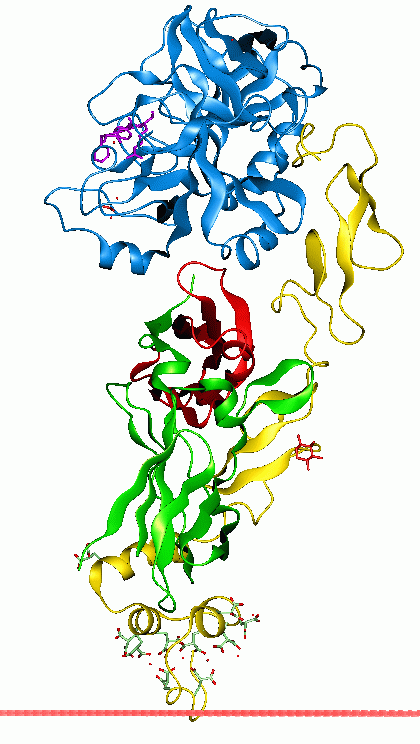
fontes oficiaisFactor XII is a serum glycoprotein that participates in the initiation of blood coagulation, fibrinolysis, and the generation of bradykinin and angiotensin. Prekallikrein is cleaved by factor XII to form kallikrein, which then cleaves factor XII first to alpha-factor XIIa and then trypsin cleaves it to beta-factor XIIa. Alpha-factor XIIa activates factor XI to factor XIa (PubMed:2019570, PubMed:21304106, PubMed:8427954)
Secreted
Factor XII deficiency
An asymptomatic anomaly of in vitro blood coagulation. Its diagnosis is based on finding a low plasma activity of the factor in coagulating assays. It is usually only accidentally discovered through pre-operative blood tests. Factor XII deficiency is divided into two categories, a cross-reacting material (CRM)-negative group (negative F12 antigen detection) and a CRM-positive group (positive F12 antigen detection).
Medicamentos aprovados (FDA)
5 medicamentos encontrados nos registros da FDA americana.
Variantes genéticas (ClinVar)
85 variantes patogênicas registradas no ClinVar.
Vias biológicas (Reactome)
3 vias biológicas associadas aos genes desta condição.
Diagnóstico
Os sinais que médicos procuram e os exames que confirmam
Tratamento e manejo
Remédios, cuidados de apoio e o que precisa acompanhar
Onde tratar no SUS
Hospitais de referência no Brasil e o protocolo oficial do SUS (PCDT)
🇧🇷 Atendimento SUS — Deficiência de fator XII congênita
Centros de Referência SUS
24 centros habilitados pelo SUS para Deficiência de fator XII congênita
Centros para Deficiência de fator XII congênita
Detalhes dos centros
Hospital Universitário Prof. Edgard Santos (HUPES)
R. Dr. Augusto Viana, s/n - Canela, Salvador - BA, 40110-060 · CNES 0003808
Serviço de Referência
Hospital Infantil Albert Sabin
R. Tertuliano Sales, 544 - Vila União, Fortaleza - CE, 60410-794 · CNES 2407876
Serviço de Referência
Hospital de Apoio de Brasília (HAB)
AENW 3 Lote A Setor Noroeste - Plano Piloto, Brasília - DF, 70684-831 · CNES 0010456
Serviço de Referência
Hospital Estadual Infantil e Maternidade Alzir Bernardino Alves (HIABA)
Av. Min. Salgado Filho, 918 - Soteco, Vila Velha - ES, 29106-010 · CNES 6631207
Serviço de Referência
Hospital das Clínicas da UFG
Rua 235 QD. 68 Lote Área, Nº 285, s/nº - Setor Leste Universitário, Goiânia - GO, 74605-050 · CNES 2338424
Serviço de Referência
Hospital Universitário da UFJF
R. Catulo Breviglieri, Bairro - s/n - Santa Catarina, Juiz de Fora - MG, 36036-110 · CNES 2297442
Atenção Especializada
Hospital das Clínicas da UFMG
Av. Prof. Alfredo Balena, 110 - Santa Efigênia, Belo Horizonte - MG, 30130-100 · CNES 2280167
Serviço de Referência
Hospital Universitário Julio Müller (HUJM)
R. Luis Philippe Pereira Leite, s/n - Alvorada, Cuiabá - MT, 78048-902 · CNES 2726092
Atenção Especializada
Hospital Universitário João de Barros Barreto
R. dos Mundurucus, 4487 - Guamá, Belém - PA, 66073-000 · CNES 2337878
Serviço de Referência
Hospital Universitário Lauro Wanderley (HULW)
R. Tabeliao Estanislau Eloy, 585 - Castelo Branco, João Pessoa - PB, 58050-585 · CNES 0002470
Atenção Especializada
Instituto de Medicina Integral Prof. Fernando Figueira (IMIP)
R. dos Coelhos, 300 - Boa Vista, Recife - PE, 50070-902 · CNES 0000647
Serviço de Referência
Hospital Pequeno Príncipe
R. Des. Motta, 1070 - Água Verde, Curitiba - PR, 80250-060 · CNES 3143805
Serviço de Referência
Hospital Universitário Regional de Maringá (HUM)
Av. Mandacaru, 1590 - Parque das Laranjeiras, Maringá - PR, 87083-240 · CNES 2216108
Atenção Especializada
Hospital de Clínicas da UFPR
R. Gen. Carneiro, 181 - Alto da Glória, Curitiba - PR, 80060-900 · CNES 2364980
Serviço de Referência
Hospital Universitário Pedro Ernesto (HUPE-UERJ)
Blvd. 28 de Setembro, 77 - Vila Isabel, Rio de Janeiro - RJ, 20551-030 · CNES 2280221
Serviço de Referência
Instituto Nacional de Saúde da Mulher, da Criança e do Adolescente Fernandes Figueira (IFF/Fiocruz)
Av. Rui Barbosa, 716 - Flamengo, Rio de Janeiro - RJ, 22250-020 · CNES 2269988
Serviço de Referência
Hospital São Lucas da PUCRS
Av. Ipiranga, 6690 - Jardim Botânico, Porto Alegre - RS, 90610-000 · CNES 2232928
Serviço de Referência
Hospital de Clínicas de Porto Alegre (HCPA)
Rua Ramiro Barcelos, 2350 Bloco A - Av. Protásio Alves, 211 - Bloco B e C - Santa Cecília, Porto Alegre - RS, 90035-903 · CNES 2237601
Serviço de Referência
Hospital Universitário da UFSC (HU-UFSC)
R. Profa. Maria Flora Pausewang - Trindade, Florianópolis - SC, 88036-800 · CNES 2560356
Serviço de Referência
Hospital das Clínicas da FMUSP
R. Dr. Ovídio Pires de Campos, 225 - Cerqueira César, São Paulo - SP, 05403-010 · CNES 2077485
Serviço de Referência
Hospital de Base de São José do Rio Preto
Av. Brg. Faria Lima, 5544 - Vila Sao Jose, São José do Rio Preto - SP, 15090-000 · CNES 2079798
Atenção Especializada
Hospital de Clínicas da UNICAMP
R. Vital Brasil, 251 - Cidade Universitária, Campinas - SP, 13083-888 · CNES 2748223
Serviço de Referência
Hospital de Clínicas de Ribeirão Preto (HCRP-USP)
R. Ten. Catão Roxo, 3900 - Vila Monte Alegre, Ribeirão Preto - SP, 14015-010 · CNES 2082187
Serviço de Referência
UNIFESP / Hospital São Paulo
R. Napoleão de Barros, 715 - Vila Clementino, São Paulo - SP, 04024-002 · CNES 2688689
Serviço de Referência
Dados de DATASUS/CNES, SBGM, ABNeuro e Ministério da Saúde. Sempre confirme a disponibilidade diretamente com o estabelecimento.
Pesquisa ativa
Ensaios clínicos abertos e novidades científicas recentes
Ensaios em destaque
Pesquisa e ensaios clínicos
1 ensaios clínicos encontrados.
Publicações mais relevantes
Critical limb ischemia leading to amputation as a presentation of acquired hemophilia A with congenital factor XII deficiency: a case report.
Acquired Hemophilia A (AHA) is a rare autoimmune bleeding disorder caused by autoantibodies against factor VIII. Diagnosis is often delayed when confounding factors coexist. We report a 70-year-old male with peripheral arterial disease presenting with critical limb ischemia, severe anemia, and prolonged APTT. Investigations revealed factor VIII inhibitor, concomitant factor XII deficiency, and lupus anticoagulant positivity. The combination of FXII deficiency and lupus anticoagulant created significant diagnostic confusion, as both are associated with prolonged APTT but not with bleeding. This overlap risked masking the hemorrhagic tendency of AHA. Management required bypassing agents, surgery, immunosuppressive therapy with corticosteroids and rituximab, and multidisciplinary care. This case highlights the importance of considering acquired hemophilia A in unexplained bleeding with prolonged APTT, especially when coexisting conditions such as FXII deficiency and lupus anticoagulant may obscure diagnosis.
Characterization of congenital factor XII deficiency in Taiwanese patients: identification of one novel and one common mutation.
Factor XII (FXII) deficiency is an interesting condition that causes prolonged activated partial thromboplastin time without bleeding diathesis. FXII may be not important in hemostasis, but still plays roles in thrombosis and inflammation. In order to raise clinical awareness about this condition, we studied patients with severe FXII deficiency and their relatives. Consecutive severely FXII deficient patients presenting from 1995 to 2020 were recruited from two medical centers in Taiwan. Index patients and their families were tested for FXII function, antigen and F12 gene. F12 variants were constructed into the pIRES-hrGFP vector and expressed on human embryonic kidney cells (HEK293T). FXII antigen and activity were analyzed. We found five severely FXII deficient patients, three women and two men, aged 44-71 years. FXII antigen results ranged from undetectable to 43.7%. Three different mutations were identified: c.1681C>A (p.Gly542Ser), c.1561G>A (p.Glu502Lys), and a novel mutation c.1556T>A (p.Leu500Gln). HEK293T cells expressed consistently low FXII activity with all mutations. FXII antigen expression was similar to the wild type in c.1681C>A (p.Gly542Ser), but reduced in c.1556T>A (p.Leu500Gln) and c.1561G>A (p.Glu502Lys). We report five unrelated patients with severe FXII deficiency, one of whom carried a novel, cross-reacting material negative mutation c.1556T>A (p.Leu500Gln).
Novel mutations in congenital factor XII deficiency.
Several mutations in factor XII have been reported in patients with factor XII deficiency. Here, we described three mutations in the F12 gene (c. 6635G more than A (p. G259E), c. 6658G more than C (p. R267G) and c. 8489G more than A (p. E521K)) of five patients with congenital FXII deficiency. Among these, two were heterozygous mutations. All five patients had prolonged activated partial thromboplastin time, as well as markedly decreased FXII activity and antigen levels. In vitro studies in transiently transfected HEK 293T cells demonstrated that these mutations significantly lowered the FXII levels in the culture media, but had no impact on transcription. Further protein degradation inhibition experiments with various inhibitors suggested that the three mutants were degraded intracellularly through the proteasome pathway in the pre-Golgi compartment. Moreover, G259E and R267G mutations exhibited dominant negative effects, consistent with the phenotypes observed in the heterozygous carriers. Such dominant negative effects were not due to the dimerization of FXII. Our findings suggest that the three mutations in the F12 gene are the causing reasons for the cross-reactive material-negative FXII deficiencies.
Factor XI and factor XII as targets for new anticoagulants.
Although the non-vitamin antagonist oral anticoagulants produce less intracranial bleeding than warfarin, serious bleeding still occurs. Therefore, the search for safer anticoagulants continues. Factor XII and factor XI have emerged as promising targets whose inhibition has the potential to prevent thrombosis with little or no disruption of hemostasis. Thus, thrombosis is attenuated in mice deficient in factor XII or factor XI and patients with congenital factor XII deficiency do not bleed and those with factor XI deficiency rarely have spontaneous bleeding. Strategies targeting factor XII and XI include antisense oligonucleotides to decrease their synthesis, inhibitory antibodies or aptamers, and small molecule inhibitors. These strategies attenuate thrombosis in various animal models and factor XI knockdown with an antisense oligonucleotide in patients undergoing knee replacement surgery reduced postoperative venous thromboembolism to a greater extent than enoxaparin without increasing bleeding. Therefore, current efforts are focused on evaluating the efficacy and safety of factor XII and factor XI directed anticoagulant strategies.
Publicações recentes
Critical limb ischemia leading to amputation as a presentation of acquired hemophilia A with congenital factor XII deficiency: a case report.
Characterization of congenital factor XII deficiency in Taiwanese patients: identification of one novel and one common mutation.
Factor XI and factor XII as targets for new anticoagulants.
🥈 ObservacionalNovel mutations in congenital factor XII deficiency.
🥈 Ensaio clínicoMolecular analysis of factor XII gene in Thai patients with factor XII deficiency.
📚 EuropePMC18 artigos no totalmostrando 4
Critical limb ischemia leading to amputation as a presentation of acquired hemophilia A with congenital factor XII deficiency: a case report.
International journal of surgery case reportsCharacterization of congenital factor XII deficiency in Taiwanese patients: identification of one novel and one common mutation.
International journal of hematologyFactor XI and factor XII as targets for new anticoagulants.
Thrombosis researchNovel mutations in congenital factor XII deficiency.
Frontiers in bioscience (Landmark edition)Associações
Organizações que acompanham esta doença — pra ter apoio e orientação
Ainda não temos associações cadastradas para Deficiência de fator XII congênita.
É de uma associação que acompanha esta doença? Fale com a gente →
Comunidades
Grupos ativos de quem convive com esta doença aqui no Raras
Ainda não existe comunidade no Raras para Deficiência de fator XII congênita
Pacientes, familiares e cuidadores se organizam em comunidades pra compartilhar experiências, fazer perguntas e se apoiar. Você pode ser o primeiro.
Tire suas dúvidas
Perguntas, dicas e experiências compartilhadas aqui na página
Participe da discussão
Faça login para postar dúvidas, compartilhar experiências e interagir com especialistas.
Fazer loginDoenças relacionadas
Doenças com sintomas parecidos — ajudam quem ainda está buscando diagnóstico
Referências e fontes
Bases de dados externas citadas neste artigo
Publicações científicas
Artigos indexados no PubMed ligados a esta doença no grafo RarasNet — título, periódico e PMID direto da fonte, sem intermediação de IA.
- Critical limb ischemia leading to amputation as a presentation of acquired hemophilia A with congenital factor XII deficiency: a case report.
- Characterization of congenital factor XII deficiency in Taiwanese patients: identification of one novel and one common mutation.
- Novel mutations in congenital factor XII deficiency.
- Factor XI and factor XII as targets for new anticoagulants.
- Molecular analysis of factor XII gene in Thai patients with factor XII deficiency.
Bases de dados e fontes oficiais
Identificadores e referências canônicas usadas para montar este verbete.
- ORPHA:330(Orphanet)
- OMIM OMIM:234000(OMIM)
- MONDO:0009315(MONDO)
- GARD:6558(GARD (NIH))
- Variantes catalogadas(ClinVar)
- Busca completa no PubMed(PubMed)
- Q2841213(Wikidata)
Dados compilados pelo RarasNet a partir de fontes abertas (Orphanet, OMIM, MONDO, PubMed/EuropePMC, ClinicalTrials.gov, DATASUS, PCDT/MS). Este conteúdo é informativo e não substitui avaliação médica.
Conteúdo mantido por Agente Raras · Médicos e pesquisadores podem colaborar
Deficiência de fator XII congênita
📋 Origem dos dados
Esta página agrega dados de fontes públicas e oficiais. Dados sobre cobertura no SUS (PCDT, CEAF) são verificados ativamente por agente proativo (ver badge no infobox). Demais dados têm atribuição de fonte + data da última sincronização — clique para abrir o original.
- Doença rara (ontologia)
- fonte: Orphanet
- Identificador unificado
- fonte: MONDO
- Genética mendeliana
- fonte: OMIM
- Codificação WHO/SUS
- fonte: WHO ICD-10 / DATASUS
- CID-11 (futuro)
- fonte: WHO ICD-11
- NIH/GARD
- fonte: GARD (NIH)
- Indexação biomédica
- fonte: MeSH (NLM)
- Dado público estruturado
- fonte: Wikidata
- Medicamentos aprovados FDA
- fonte: FDA OpenFDA