
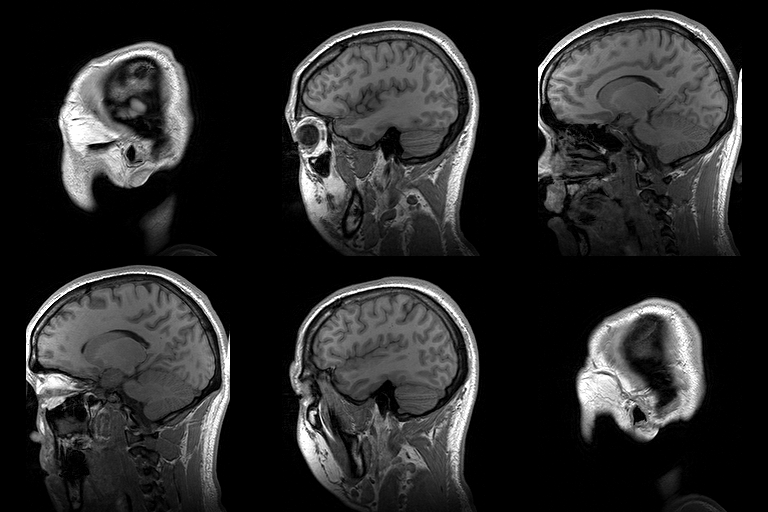
A Síndrome de Adams-Oliver (SAO) é uma doença rara que se caracteriza pela combinação de malformações nos braços e pernas (presentes desde o nascimento) e falhas no couro cabeludo, sendo muitas vezes acompanhada por problemas na formação dos ossos da cabeça (o crânio).
Introdução
O que você precisa saber de cara
A Síndrome de Adams-Oliver (SAO) é uma doença rara que se caracteriza pela combinação de malformações nos braços e pernas (presentes desde o nascimento) e falhas no couro cabeludo, sendo muitas vezes acompanhada por problemas na formação dos ossos da cabeça (o crânio).
Escala de raridade
<1/50kMuito rara
1/20kRara
1/10kPouco freq.
1/5kIncomum
1/2k
Encontrou um erro ou informação desatualizada? Sugira uma correção →
Entender a doença
Do básico ao detalhe, leia no seu ritmo
Preparando trilha educativa...
Sinais e sintomas
O que aparece no corpo e com que frequência cada sintoma acontece
Partes do corpo afetadas
+ 43 sintomas em outras categorias
Características mais comuns
Os sintomas variam de pessoa para pessoa. Abaixo estão as 133 características clínicas mais associadas, ordenadas por frequência.
Linha do tempo da pesquisa
Encontrou um erro ou informação desatualizada? Sugira uma correção →
Genética e causas
O que está alterado no DNA e como passa nas famílias
Genes associados
6 genes identificados com associação a esta condição. Padrão de herança: Autosomal dominant, Autosomal recessive.
Curadoria gene-doença
fontes oficiaisFunctions as a GTPase-activating protein (GAP) for RAC1 and CDC42. Required for cell spreading, polarized lamellipodia formation and cell migration
Cell projection, lamellipodiumCell junction, focal adhesion
Adams-Oliver syndrome 1
A disorder characterized by the congenital absence of skin (aplasia cutis congenita) in combination with transverse limb defects. Aplasia cutis congenita can be located anywhere on the body, but in the vast majority of the cases, it is present on the posterior parietal region where it is often associated with an underlying defect of the parietal bones. Limb abnormalities are typically limb truncation defects affecting the distal phalanges or entire digits (true ectrodactyly). Only rarely, metatarsals/metacarpals or more proximal limb structures are also affected. Apart from transverse limb defects, syndactyly, most commonly of second and third toes, can also be observed. The clinical features are highly variable and can also include cardiovascular malformations, brain abnormalities and vascular defects such as cutis marmorata and dilated scalp veins.
Functions as a receptor for membrane-bound ligands Jagged-1 (JAG1), Jagged-2 (JAG2) and Delta-1 (DLL1) to regulate cell-fate determination. Upon ligand activation through the released notch intracellular domain (NICD) it forms a transcriptional activator complex with RBPJ/RBPSUH and activates genes of the enhancer of split locus. Affects the implementation of differentiation, proliferation and apoptotic programs. Involved in angiogenesis; negatively regulates endothelial cell proliferation and m
Cell membraneLate endosome membraneNucleus
Aortic valve disease 1
A common defect in the aortic valve in which two rather than three leaflets are present. It is often associated with aortic valve calcification, stenosis and insufficiency. In extreme cases, the blood flow may be so restricted that the left ventricle fails to grow, resulting in hypoplastic left heart syndrome.
Acts as a guanine nucleotide exchange factor (GEF) for CDC42 and RAC1 small GTPases. Through its activation of CDC42 and RAC1, may regulate neurite outgrowth (By similarity)
CytoplasmCytoplasm, perinuclear region
Adams-Oliver syndrome 2
A disorder characterized by the congenital absence of skin (aplasia cutis congenita) in combination with transverse limb defects. Aplasia cutis congenita can be located anywhere on the body, but in the vast majority of the cases, it is present on the posterior parietal region where it is often associated with an underlying defect of the parietal bones. Limb abnormalities are typically limb truncation defects affecting the distal phalanges or entire digits (true ectrodactyly). Only rarely, metatarsals/metacarpals or more proximal limb structures are also affected. Apart from transverse limb defects, syndactyly, most commonly of second and third toes, can also be observed. The clinical features are highly variable and can also include cardiovascular malformations, brain abnormalities and vascular defects such as cutis marmorata and dilated scalp veins.
Catalyzes the transfer of a single N-acetylglucosamine from UDP-GlcNAc to a serine or threonine residue in extracellular proteins resulting in their modification with a beta-linked N-acetylglucosamine (O-GlcNAc). Specifically glycosylates the Thr residue located between the fifth and sixth conserved cysteines of folded EGF-like domains
Endoplasmic reticulum lumen
Adams-Oliver syndrome 4
A form of Adams-Oliver syndrome, a disorder characterized by the congenital absence of skin (aplasia cutis congenita) in combination with transverse limb defects. Aplasia cutis congenita can be located anywhere on the body, but in the vast majority of the cases, it is present on the posterior parietal region where it is often associated with an underlying defect of the parietal bones. Limb abnormalities are typically limb truncation defects affecting the distal phalanges or entire digits (true ectrodactyly). Only rarely, metatarsals/metacarpals or more proximal limb structures are also affected. Apart from transverse limb defects, syndactyly, most commonly of second and third toes, can also be observed. The clinical features are highly variable and can also include cardiovascular malformations, brain abnormalities and vascular defects such as cutis marmorata and dilated scalp veins.
Involved in the Notch signaling pathway as Notch ligand (PubMed:11134954). Activates NOTCH1 and NOTCH4. Involved in angiogenesis; negatively regulates endothelial cell proliferation and migration and angiogenic sprouting (PubMed:20616313). Essential for retinal progenitor proliferation. Required for suppressing rod fates in late retinal progenitors as well as for proper generation of other retinal cell types (By similarity). During spinal cord neurogenesis, inhibits V2a interneuron fate (PubMed:
Cell membrane
Adams-Oliver syndrome 6
A form of Adams-Oliver syndrome, a disorder characterized by the congenital absence of skin (aplasia cutis congenita) in combination with transverse limb defects. Aplasia cutis congenita can be located anywhere on the body, but in the vast majority of the cases, it is present on the posterior parietal region where it is often associated with an underlying defect of the parietal bones. Limb abnormalities are typically limb truncation defects affecting the distal phalanges or entire digits (true ectrodactyly). Only rarely, metatarsals/metacarpals or more proximal limb structures are also affected. Apart from transverse limb defects, syndactyly, most commonly of second and third toes, can also be observed. The clinical features are highly variable and can also include cardiovascular malformations, brain abnormalities and vascular defects such as cutis marmorata and dilated scalp veins.
Transcriptional regulator that plays a central role in Notch signaling, a signaling pathway involved in cell-cell communication that regulates a broad spectrum of cell-fate determinations. Acts as a transcriptional repressor when it is not associated with Notch proteins. When associated with some NICD product of Notch proteins (Notch intracellular domain), it acts as a transcriptional activator that activates transcription of Notch target genes. Probably represses or activates transcription via
NucleusCytoplasm
Adams-Oliver syndrome 3
An autosomal dominant form of Adams-Oliver syndrome, a disorder characterized by the congenital absence of skin (aplasia cutis congenita) in combination with transverse limb defects. Aplasia cutis congenita can be located anywhere on the body, but in the vast majority of the cases, it is present on the posterior parietal region where it is often associated with an underlying defect of the parietal bones. Limb abnormalities are typically limb truncation defects affecting the distal phalanges or entire digits (true ectrodactyly). Only rarely, metatarsals/metacarpals or more proximal limb structures are also affected. Apart from transverse limb defects, syndactyly, most commonly of second and third toes, can also be observed. The clinical features are highly variable and can also include cardiovascular malformations, brain abnormalities and vascular defects such as cutis marmorata and dilated scalp veins. AOS3 patients manifest characteristic vertex scalp defects and terminal limb defects, but without congenital heart defects, other associated defects, or immune defects.
Variantes genéticas (ClinVar)
1.083 variantes patogênicas registradas no ClinVar.
Classificação de variantes (ClinVar)
Distribuição de 3.807 variantes classificadas pelo ClinVar.
Vias biológicas (Reactome)
29 vias biológicas associadas aos genes desta condição.
Diagnóstico
Os sinais que médicos procuram e os exames que confirmam
Tratamento e manejo
Remédios, cuidados de apoio e o que precisa acompanhar
Onde tratar no SUS
Hospitais de referência no Brasil e o protocolo oficial do SUS (PCDT)
🇧🇷 Atendimento SUS — Síndrome Adams-Oliver
Selecione um estado ou use sua localização para ver resultados.
Dados de DATASUS/CNES, SBGM, ABNeuro e Ministério da Saúde. Sempre confirme a disponibilidade diretamente com o estabelecimento.
Pesquisa ativa
Ensaios clínicos abertos e novidades científicas recentes
Pesquisa e ensaios clínicos
Nenhum ensaio clínico registrado para esta condição.
Publicações mais relevantes
Noncirrhotic Portopulmonary Hypertension Due to Hepatoportal Sclerosis in Adams-Oliver Syndrome.
A 13-year-old girl presented for evaluation of pulmonary hypertension after symptoms of dyspnea and exercise intolerance. Full evaluation was negative except for abdominal ultrasonography with splenomegaly and esophageal varices suggestive of portal hypertension. Cardiac and hepatic vein catheterization confirmed portopulmonary hypertension. Liver biopsy demonstrated sinusoidal dilatation, nodularity, and minimal fibrosis, which was interpreted as possible nodular regenerative hyperplasia but not cirrhosis. Radiographic imaging, including computed tomography venography, demonstrated an elongated and severely stenotic extrahepatic portal vein, and portal hypertension was presumed to be secondary to congenital portal vein hypoplasia. She was treated with ambrisentan with initial improvement in symptoms and estimated pulmonary pressure. Whole-exome sequencing revealed a likely pathogenic missense mutation in Delta-like canonical Notch ligand 4 associated with Adams-Oliver syndrome. After 2 years, pulmonary hypertension and right heart failure symptoms worsened, along with liver failure. She then had fulminant liver failure and cardiorespiratory arrest. Resuscitative efforts included extracorporeal membranous oxygenation (ECMO), but because of hypoxic brain injury, care was compassionately withdrawn. Autopsy limited to the thorax and abdomen revealed high-grade pulmonary plexiform arteriopathy, splenomegaly, esophageal varices, and large splenorenal shunt. The liver was small with a nodular surface but not fibrotic. The entire length of the extrahepatic portal vein was severely stenotic, and intrahepatic portal veins were missing or diminutive-findings diagnostic of hepatoportal sclerosis. Noncirrhotic portopulmonary hypertension is rare and should include evaluation of immunologic, infectious, toxic, thrombotic, and genetic etiologies. Unfortunately, there is no known treatment of hepatoportal sclerosis.
Adams-Oliver Syndrome Type 3: A Case Report of Concurrent RBPJ, CACNA1A, and Double-Heterozygous MTHFR Variants.
Background and Clinical Significance: Adams-Oliver syndrome type 3 (AOS3) is a rare congenital disorder typically characterised by terminal transverse limb defects and variable involvement of other organ systems. Although pathogenic variants in RBPJ are well established in AOS3, associated neurodevelopmental or psychiatric features have been only sporadically documented. Case Presentation: We describe a male patient first evaluated at the age of 10 years and subsequently re-evaluated at 14 years, with AOS3 presenting terminal limb defects together with autistic-like behaviour, cognitive difficulties, dyslexia, and recurrent depressive symptoms. Whole-exome sequencing (WES) identified a heterozygous pathogenic variant in RBPJ (c.505A>G; p.Lys169Glu), confirming the molecular diagnosis of autosomal dominant AOS3. Additional findings included a heterozygous missense variant in CACNA1A (p.Arg1678Cys), a gene linked to neurological disorders with broad phenotypic variability. Because of elevated homocysteine levels, the patient was also tested for MTHFR variants and was found to be heterozygous for C677T and A1298C. Conclusions: This case illustrates a rare combination of a validated AOS3-associated RBPJ variant, along with additional CACNA1A and MTHFR variants that may influence the patient's neurocognitive and psychiatric characteristics. The results underscore the importance of comprehensive genetic testing in atypical AOS presentations and highlight the complexity of interpreting overlapping genetic factors.
Aplasia Cutis Congenita and Congenital Heart Disease: A Case Report, Highlighting the Limitation of Antenatal Screening.
BACKGROUND Aplasia cutis congenita (ACC) is a rare congenital defect involving localized absence of skin, occasionally associated with deeper tissue anomalies and congenital malformations. CASE REPORT We report the case of a full-term newborn presenting with extensive ACC involving 40% of the scalp, alongside multiple congenital heart defects, ultimately consistent with tetralogy of Fallot (ToF). Initial management included conservative wound care, cardiologic and neurologic evaluations, and genetic testing. Despite clinical stability at discharge, the infant was readmitted 3 weeks later with hemorrhagic shock secondary to sagittal sinus bleeding, requiring surgical intervention and intensive care. Subsequent follow-up revealed tonic seizures and radiological findings suggestive of prior mild hypoxic injury. While the Rapid Aneuploidy Detection test confirmed a normal female karyotype (46,XX), whole-exome sequencing was pending; however, Adams-Oliver syndrome was strongly suspected. This case illustrates the diagnostic and management challenges posed by extensive ACC with syndromic associations. It also highlights the limitations of antenatal screening, as no abnormalities were detected during pregnancy despite fetal growth restriction. CONCLUSIONS The case underscores the need for a multidisciplinary approach, parental education, and long-term follow-up. Early recognition and coordinated care are essential for managing potential complications and guiding prognosis in complex cases of ACC with associated congenital anomalies.
Adams-Oliver Syndrome: A Comprehensive Literature Review of Clinical, Nutritional, Genetic, and Molecular Aspects with Nursing Care Considerations.
The present review aims to provide a comprehensive overview of the current literature on Adams-Oliver syndrome (AOS), synthesizing information on its clinical features, genetic and molecular underpinnings, nutritional aspects, and key nursing care considerations. AOS is a rare congenital disorder. Its genetic basis is heterogeneous, involving mutations in at least six key genes (ARHGAP31, RBPJ, NOTCH1, DLL4, DOCK6, and EOGT), which primarily affect vascular development through pathways like Notch signaling and Rho GTPase regulation. The management of AOS is complex and requires a multidisciplinary approach. The clinical presentation of AOS is highly variable, ranging from mild to severe and includes a wide spectrum of clinical manifestations, most notably aplasia cutis congenita and terminal transverse limb defects. The underlying molecular mechanisms predominantly point towards vasculopathy, disrupting embryonic development. Emerging evidence also highlights the presence of nutritional issues, such as poor feeding and growth failure, which are often overlooked. Management demands an integrated, multidisciplinary management approach, requiring coordinated effort from specialists in pediatrics, genetics, molecular biology, cardiology, surgery, and nutrition. Specialized nursing care is crucial for managing complex symptoms, particularly wound care for aplasia cutis, and for providing family support.
Case Report: A novel DLL4 variant in a neonate with Adams-Oliver syndrome.
Adams-Oliver syndrome is a rare congenital disorder with six subtypes that have been identified. Subtypes 1, 3, 5, and 6 have an autosomal dominant inheritance pattern, whereas subtypes 2 and 4 have an autosomal recessive inheritance pattern. The clinical phenotype of Adams-Oliver syndrome is heterogeneous and can be accompanied by abnormalities in other organs, especially the cardiovascular system, such as cutis marmorata telangiectatica congenita, pulmonary hypertension, vascular abnormalities in other organs, and congenital heart defects. Herein, we report a case of Adams-Oliver syndrome caused by a de novo variant in DLL4. The patient was a neonate with clinical manifestations of skin defects who was diagnosed with Adams-Oliver syndrome on the basis of genetic testing.
Publicações recentes
Mutations in VCP cause Adams-Oliver syndrome with or without pulmonary hypertension.
Molecular mechanism study of novel compound heterozygous EOGT mutations leading to Adams-Oliver syndrome type 4.
Adams-Oliver Syndrome Type 3: A Case Report of Concurrent RBPJ, CACNA1A, and Double-Heterozygous MTHFR Variants.
Adams-Oliver Syndrome: A Clinical Diagnosis in the Genomic Era.
Adams-Oliver Syndrome: A Comprehensive Literature Review of Clinical, Nutritional, Genetic, and Molecular Aspects with Nursing Care Considerations.
📚 EuropePMC178 artigos no totalmostrando 119
Adams-Oliver Syndrome Type 3: A Case Report of Concurrent RBPJ, CACNA1A, and Double-Heterozygous MTHFR Variants.
Diagnostics (Basel, Switzerland)Adams-Oliver Syndrome: A Clinical Diagnosis in the Genomic Era.
CureusAdams-Oliver Syndrome: A Comprehensive Literature Review of Clinical, Nutritional, Genetic, and Molecular Aspects with Nursing Care Considerations.
International journal of molecular sciencesAplasia Cutis Congenita and Congenital Heart Disease: A Case Report, Highlighting the Limitation of Antenatal Screening.
The American journal of case reportsROP mimicker in a big premature baby: Adams-Oliver syndrome with DOCK6 mutation: a case report and review of the literature.
Ophthalmic geneticsNoncirrhotic Portopulmonary Hypertension Due to Hepatoportal Sclerosis in Adams-Oliver Syndrome.
PediatricsMouse scalp development requires Rac1 and SRF for the maintenance of mechanoresponsive mesenchyme.
Development (Cambridge, England)Defective Notch1 signaling in endothelial cells drives pathogenesis in a mouse model of Adams-Oliver syndrome.
The Journal of clinical investigationNovel De Novo DLL4 Missense and Highly Accurate Protein Structure Prediction in Adams-Oliver Type 6 Syndrome.
Clinical case reportsAdams-Oliver syndrome: an unusual congenital disorder.
Oxford medical case reportsCutaneous Features of Adams-Oliver Syndrome: Diagnosis, Differentiation, and Management.
Pediatric dermatologyFamilial Exudative Vitreoretinopathy-Like Retinal Findings in Adams-Oliver Syndrome Type 2.
Clinical & experimental ophthalmologyAdams-Oliver Syndrome in a Newborn: A Case Report and Comprehensive Literature Review.
CureusNovel compound heterozygous DOCK6 variants expand the mutational spectrum in prenatal diagnosis of Adams-Oliver syndrome 2.
BMC medical genomicsA case of congenital heart defects and familial exudative vitreoretinopathy caused by activation of a cryptic splice donor in NOTCH1.
BMC medical genomicsPerinatal outcomes in cases of umbilical-portal-systemic venous shunts: experience of a tertiary center.
BMC pregnancy and childbirthAplasia Cutis: From Diagnosis to Management-2 Decades of Clinical Insights.
Plastic and reconstructive surgeryCase Report: A novel DLL4 variant in a neonate with Adams-Oliver syndrome.
Frontiers in pediatricsMouse scalp development requires Rac1 and SRF for the maintenance of mechanosensing mesenchyme.
bioRxiv : the preprint server for biologyEffective in vivo binding energy landscape illustrates kinetic stability of RBPJ-DNA binding.
Nature communicationsOutpatient management of large scalp aplasia cutis congenita without skull defect in a case of Adams-Oliver syndrome.
The Kaohsiung journal of medical sciencesHuman Genetics of Ventricular Septal Defect.
Advances in experimental medicine and biologyAdams-Oliver syndrome associated with refractory glaucoma.
Journal of AAPOS : the official publication of the American Association for Pediatric Ophthalmology and StrabismusCharacterization of a New Variant in ARHGAP31 Probably Involved in Adams-Oliver Syndrome in a Family with a Variable Phenotypic Spectrum.
GenesExpanding the phenotypic spectrum of NOTCH1 variants: clinical manifestations in families with congenital heart disease.
European journal of human genetics : EJHGAdams-Oliver syndrome: About a case.
Clinical case reportsEncephalocele as a rare complication of conservatively managed cranial aplasia cutis in a boy with Adams-Oliver syndrome.
Pediatrics and neonatologyCutis marmorata telangiectatica congenita: Incidence of extracutaneous manifestations and a proposed clinical definition.
Pediatric dermatologyAdams-Oliver Syndrome - A Case Report.
Indian dermatology online journalA novel pathogenic variation of DOCK6 gene: the genotype-phenotype correlation in Adams-Oliver syndrome.
Molecular biology reportsNOTCH1 loss of the TAD and PEST domain: An antimorph?
American journal of medical genetics. Part ACase report: Recombinant human epidermal growth factor gel plus kangfuxin solution in the treatment of aplasia cutis congenita in a case with Adams-Oliver syndrome.
Frontiers in surgeryThe role of Notch signaling pathway in metabolic bone diseases.
Biochemical pharmacologyAdams-Oliver syndrome and associated complications: Report of a family in Colombia and review of the literature.
Biomedica : revista del Instituto Nacional de SaludIntrafamilial phenotypic variability in autosomal recessive DOCK6-related Adams-Oliver syndrome.
European journal of medical geneticsFOSL2 truncating variants in the last exon cause a neurodevelopmental disorder with scalp and enamel defects.
Genetics in medicine : official journal of the American College of Medical GeneticsSynergistic effects of rare variants of ARHGAP31 and FBLN1 in vitro in terminal transverse limb defects.
Frontiers in geneticsCutaneous squamous cell carcinoma in an autosomal-recessive Adams-Oliver syndrome patient with a novel frameshift pathogenic variant in the EOGT gene.
American journal of medical genetics. Part AAtypical Adams-Oliver syndrome with typical ocular signs of familial exudative vitreoretinopathy.
International journal of ophthalmologyA Drosophila Su(H) model of Adams-Oliver Syndrome reveals cofactor titration as a mechanism underlying developmental defects.
PLoS geneticsHeterozygous NOTCH1 Variants Cause CNS Immune Activation and Microangiopathy.
Annals of neurologyAdams-Oliver Syndrome: Vestigial Tail and Genetics Update.
Archives of plastic surgeryAdams-Oliver Syndrome: A Rare Congenital Disorder.
CureusSevere Adams-Oliver Syndrome after Maternal COVID-19 Infection Could Be Another Effect of the SARS-CoV-2 Inflammatory Storm? Case Report.
Fetal and pediatric pathologyTrichorhinophalangeal syndrome type II associated with aplasia cutis congenita in a neonate.
Pediatric dermatologyAdams-Oliver syndrome, intestinal obstruction and heart defects: a case series of aplasia cutis congenita.
Oxford medical case reportsA novel DLL4 mutation in Adams-Oliver syndrome with absence of the right pulmonary artery in newborn.
American journal of medical genetics. Part AMurine Model of Cardiac Defects Observed in Adams-Oliver Syndrome Driven by Delta-Like Ligand-4 Haploinsufficiency.
Stem cells and developmentCase report and review of literature of a rare congenital disorder: Adams-Oliver syndrome.
BMC anesthesiologyBorn in the Purple: An Exceptional Case of Cutis Marmorata Telangiectatica Congenita.
Acta dermatovenerologica Croatica : ADCTwo AOS genes attributed to familial exudative vitreoretinopathy with microcephaly: Two case reports.
Medicine"Health status of children with chronic liver disease during the SARS-CoV-2 outbreak: results from a multicentre study".
Clinics and research in hepatology and gastroenterologyMultiomics Integration in Skin Diseases with Alterations in Notch Signaling Pathway: PlatOMICs Phase 1 Deployment.
International journal of molecular sciencesThe prognosis of common arterial trunk from a fetal perspective: A prenatal cohort study and systematic literature review.
Prenatal diagnosisEx Vivo Models to Decipher the Molecular Mechanisms of Genetic Notch Cardiovascular Disorders.
Tissue engineering. Part C, MethodsDiseases related to Notch glycosylation.
Molecular aspects of medicinePROLIFERATIVE RETINOPATHY IN A 13-YEAR-OLD WITH ADAMS-OLIVER SYNDROME.
Retinal cases & brief reportsAplasia cutis congenita in a CDC42-related developmental phenotype.
American journal of medical genetics. Part AFrom Skin to Kidneys: Cutaneous Clues of Renal Disease in Children.
Dermatology practical & conceptualAplasia cutis congenita: a report of two cases from National Hospital Abuja, Nigeria and review of the literature.
The Pan African medical journalPleiotropic Role of Notch Signaling in Human Skin Diseases.
International journal of molecular sciencesAdams-Oliver syndrome: a case of bilateral progressive ischemic maculopathy.
Journal of AAPOS : the official publication of the American Association for Pediatric Ophthalmology and StrabismusA novel variant in DOCK6 gene associated with Adams-Oliver syndrome type 2.
Ophthalmic geneticsAdams Oliver syndrome: A mimicker of familial exudative vitreoretinopathy.
American journal of ophthalmology case reportsMultiple Aplasia Cutis Congenita Lesions of the Scalp: A Case Study.
Neonatal network : NNTreatment of a Large Skull Defect and Brain Herniation in a Newborn With Adams-Oliver Syndrome.
CureusNovel In-Frame Deletion Mutation in NOTCH1 in a Chinese Sporadic Case of Adams-Oliver Syndrome.
DNA and cell biologyFunctional genomics and gene-environment interaction highlight the complexity of congenital heart disease caused by Notch pathway variants.
Human molecular geneticsExpanding the phenotype in Adams-Oliver syndrome correlating with the genotype.
American journal of medical genetics. Part AAdams-Oliver syndrome caused by mutations of the EOGT gene.
American journal of medical genetics. Part AA novel DLL4 missense mutation in a Chinese patient with Adams-Oliver syndrome.
Chinese medical journalOcular Manifestations of Cutis Marmorata Telangiectatica Congenita.
Ophthalmology. RetinaFamilial aggregation of "apple peel" intestinal atresia and cardiac left-sided obstructive lesions: A possible causal relationship with NOTCH1 gene mutations.
American journal of medical genetics. Part A[Analysis of DOCK6 gene mutation in a child affected with Adams-Oliver syndrome type 2].
Zhonghua yi xue yi chuan xue za zhi = Zhonghua yixue yichuanxue zazhi = Chinese journal of medical geneticsNovel compound heterozygous mutations of the DOCK6 gene in a familial case of Adams-Oliver syndrome 2.
GeneStructure and function of extracellular O-GlcNAc.
Current opinion in structural biology[Adams-Oliver syndrome and cutis marmorata telangiectatica congenita].
Annales de dermatologie et de venereologieCongenital diseases caused by defective O-glycosylation of Notch receptors.
Nagoya journal of medical scienceDermatoscopy of Common Lesions in Pediatric Dermatology.
Dermatologic clinicsIntracranial Calcifications in Young Children.
Seminars in pediatric neurologyAdams-Oliver Syndrome: Limited Expression.
Indian journal of pediatricsElucidating the genetic architecture of Adams-Oliver syndrome in a large European cohort.
Human mutationOverlapping but distinct roles for NOTCH receptors in human cardiovascular disease.
Clinical geneticsAdams Oliver syndrome with cerebellar cortical dysplasia.
Child's nervous system : ChNS : official journal of the International Society for Pediatric NeurosurgeryEpileptic Encephalopathy in Adams-Oliver Syndrome Associated to a New DOCK6 Mutation: A Peculiar Behavioral Phenotype.
NeuropediatricsCdGAP/ARHGAP31 is regulated by RSK phosphorylation and binding to 14-3-3β adaptor protein.
OncotargetImportance of complete phenotyping in prenatal whole exome sequencing.
Human geneticsA Case of Adams-Oliver Syndrome.
Advanced biomedical researchAdams-Oliver Syndrome With Moyamoya Disease for Cerebral Revascularisation Surgery.
Journal of neurosurgical anesthesiologyAdams-Oliver Syndrome Type 2 in Association with Compound Heterozygous DOCK6 Mutations.
Pediatric dermatologyCorrigendum: Novel missense mutation in DLL4 in a Japanese sporadic case of Adams-Oliver syndrome.
Journal of human geneticsThe scaffold protein Ajuba suppresses CdGAP activity in epithelia to maintain stable cell-cell contacts.
Scientific reportsAdams-Oliver Syndrome with Unusual Central Nervous System Findings and an Extrahepatic Portosystemic Shunt.
Pediatric reportsUse of an epidermal growth factor-infused foam dressing in a complicated case of Adams-Oliver syndrome.
Journal of wound careVisual Diagnosis: A Baby with a Scalp Lesion, Rash, and Left-Foot Deformity.
Pediatrics in reviewThe developmental biology of genetic Notch disorders.
Development (Cambridge, England)Novel missense mutation in DLL4 in a Japanese sporadic case of Adams-Oliver syndrome.
Journal of human geneticsEOGT and O-GlcNAc on secreted and membrane proteins.
Biochemical Society transactionsMechanism of cell-intrinsic adaptation to Adams-Oliver Syndrome gene DOCK6 disruption highlights ubiquitin-like modifier ISG15 as a regulator of RHO GTPases.
Small GTPasesAdams-Oliver syndrome review of the literature: Refining the diagnostic phenotype.
American journal of medical genetics. Part AAdams-Oliver syndrome associated with gastrointestinal malformations.
BMJ case reports[Aplasia cutis congenita: Update and management].
Annales de chirurgie plastique et esthetiqueCell-Intrinsic Adaptation Arising from Chronic Ablation of a Key Rho GTPase Regulator.
Developmental cellAdams-Oliver Syndrome: A Case with Full Expression.
Pediatric reportsLetter regarding "Distal Limb Defects and Aplasia Cutis: Adams-Oliver Syndrome".
The Journal of hand surgeryDistal Limb Defects and Aplasia Cutis: Adams-Oliver Syndrome.
The Journal of hand surgeryNovel copy number variants and major limb reduction malformation: Report of three cases.
American journal of medical genetics. Part ADOCK6 Mutations Are Responsible for a Distinct Autosomal-Recessive Variant of Adams-Oliver Syndrome Associated with Brain and Eye Anomalies.
Human mutationDLL4 loss-of-function heterozygous mutations cause Adams-Oliver syndrome.
Clinical geneticsNetwork-Informed Gene Ranking Tackles Genetic Heterogeneity in Exome-Sequencing Studies of Monogenic Disease.
Human mutationHeterozygous Loss-of-Function Mutations in DLL4 Cause Adams-Oliver Syndrome.
American journal of human geneticsIntracellular and extracellular O-linked N-acetylglucosamine in the nervous system.
Experimental neurologyIdiopathic non-cirrhotic portal hypertension: a review.
Orphanet journal of rare diseasesAplasia cutis congenita: report of 22 cases.
International journal of dermatologyHaploinsufficiency of the NOTCH1 Receptor as a Cause of Adams-Oliver Syndrome With Variable Cardiac Anomalies.
Circulation. Cardiovascular geneticsCardiovascular malformations in Adams-Oliver syndrome.
American journal of medical genetics. Part AN-acetylglucosamine modification in the lumen of the endoplasmic reticulum.
Biochimica et biophysica actaMultiple tics in a patient with Adams-Oliver syndrome.
The Journal of neuropsychiatry and clinical neurosciencesAdams-Oliver syndrome: a case report.
Pediatric dermatologyAssociações
Organizações que acompanham esta doença — pra ter apoio e orientação
Ainda não temos associações cadastradas para Síndrome Adams-Oliver.
É de uma associação que acompanha esta doença? Fale com a gente →
Comunidades
Grupos ativos de quem convive com esta doença aqui no Raras
Ainda não existe comunidade no Raras para Síndrome Adams-Oliver
Pacientes, familiares e cuidadores se organizam em comunidades pra compartilhar experiências, fazer perguntas e se apoiar. Você pode ser o primeiro.
Tire suas dúvidas
Perguntas, dicas e experiências compartilhadas aqui na página
Participe da discussão
Faça login para postar dúvidas, compartilhar experiências e interagir com especialistas.
Fazer loginDoenças relacionadas
Doenças com sintomas parecidos — ajudam quem ainda está buscando diagnóstico
Referências e fontes
Bases de dados externas citadas neste artigo
Publicações científicas
Artigos indexados no PubMed ligados a esta doença no grafo RarasNet — título, periódico e PMID direto da fonte, sem intermediação de IA.
- Noncirrhotic Portopulmonary Hypertension Due to Hepatoportal Sclerosis in Adams-Oliver Syndrome.
- Adams-Oliver Syndrome Type 3: A Case Report of Concurrent RBPJ, CACNA1A, and Double-Heterozygous MTHFR Variants.
- Aplasia Cutis Congenita and Congenital Heart Disease: A Case Report, Highlighting the Limitation of Antenatal Screening.
- Adams-Oliver Syndrome: A Comprehensive Literature Review of Clinical, Nutritional, Genetic, and Molecular Aspects with Nursing Care Considerations.
- Case Report: A novel DLL4 variant in a neonate with Adams-Oliver syndrome.
- Mutations in VCP cause Adams-Oliver syndrome with or without pulmonary hypertension.
- Molecular mechanism study of novel compound heterozygous EOGT mutations leading to Adams-Oliver syndrome type 4.
- Adams-Oliver Syndrome: A Clinical Diagnosis in the Genomic Era.
Bases de dados e fontes oficiais
Identificadores e referências canônicas usadas para montar este verbete.
- ORPHA:974(Orphanet)
- MONDO:0007034(MONDO)
- GARD:5739(GARD (NIH))
- Variantes catalogadas(ClinVar)
- Busca completa no PubMed(PubMed)
- Q351708(Wikidata)
Dados compilados pelo RarasNet a partir de fontes abertas (Orphanet, OMIM, MONDO, PubMed/EuropePMC, ClinicalTrials.gov, DATASUS, PCDT/MS). Este conteúdo é informativo e não substitui avaliação médica.
Conteúdo mantido por Agente Raras · Médicos e pesquisadores podem colaborar
Síndrome Adams-Oliver
📋 Origem dos dados
Esta página agrega dados de fontes públicas e oficiais. Dados sobre cobertura no SUS (PCDT, CEAF) são verificados ativamente por agente proativo (ver badge no infobox). Demais dados têm atribuição de fonte + data da última sincronização — clique para abrir o original.
- Doença rara (ontologia)
- fonte: Orphanet
- Identificador unificado
- fonte: MONDO
- Codificação WHO/SUS
- fonte: WHO ICD-10 / DATASUS
- CID-11 (futuro)
- fonte: WHO ICD-11
- NIH/GARD
- fonte: GARD (NIH)
- Indexação biomédica
- fonte: MeSH (NLM)
- Dado público estruturado
- fonte: Wikidata