
A síndrome de Crisponi (SC) é uma doença grave caracterizada por contrações musculares ao nascimento, hipertermia intermitente, anomalias faciais e camptodactilia.
Introdução
O que você precisa saber de cara
A síndrome de Crisponi (SC) é uma doença grave caracterizada por contrações musculares ao nascimento, hipertermia intermitente, anomalias faciais e camptodactilia.
Escala de raridade
<1/50kMuito rara
1/20kRara
1/10kPouco freq.
1/5kIncomum
1/2k
Encontrou um erro ou informação desatualizada? Sugira uma correção →
Entender a doença
Do básico ao detalhe, leia no seu ritmo
Preparando trilha educativa...
Sinais e sintomas
O que aparece no corpo e com que frequência cada sintoma acontece
Partes do corpo afetadas
+ 15 sintomas em outras categorias
Características mais comuns
Os sintomas variam de pessoa para pessoa. Abaixo estão as 48 características clínicas mais associadas, ordenadas por frequência.
Linha do tempo da pesquisa
Encontrou um erro ou informação desatualizada? Sugira uma correção →
Genética e causas
O que está alterado no DNA e como passa nas famílias
Genes associados
2 genes identificados com associação a esta condição. Padrão de herança: Autosomal recessive.
Curadoria gene-doença
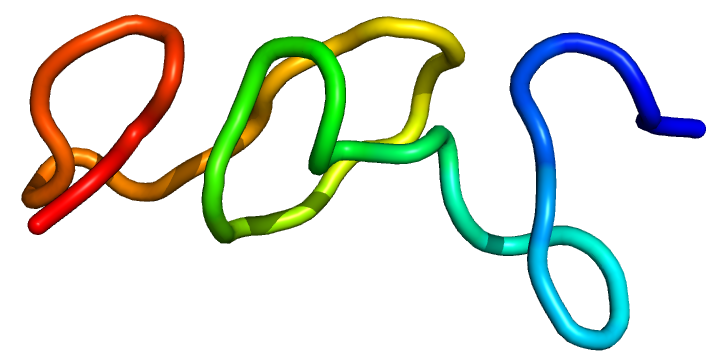
fontes oficiaisIn complex with CLCF1, forms a heterodimeric neurotropic cytokine that plays a crucial role during neuronal development (Probable). May also play a regulatory role in the immune system
Secreted
Crisponi/Cold-induced sweating syndrome 1
An autosomal recessive disorder characterized by profuse sweating induced by cool surroundings (temperatures of 7 to 18 degrees Celsius). Patients manifest, in the neonatal period, orofacial weakness with impaired sucking and swallowing, resulting in poor feeding. Affected infants show a tendency to startle, with contractions of the facial muscles in response to tactile stimuli or during crying, trismus, abundant salivation, and opisthotonus. These features are referred to as Crisponi syndrome and can result in early death in infancy. Patients who survive into childhood have hyperhidrosis, mainly of the upper body, in response to cold temperatures, and sweat very little with heat. Additional abnormalities include a high-arched palate, nasal voice, depressed nasal bridge, inability to fully extend the elbows and kyphoscoliosis.
In complex with CRLF1, forms a heterodimeric neurotropic cytokine that plays a crucial role during neuronal development (Probable). Also stimulates B-cells. Binds to and activates the ILST/gp130 receptor
Secreted
Crisponi/Cold-induced sweating syndrome 2
An autosomal recessive disorder characterized by profuse sweating induced by cool surroundings (temperatures of 7 to 18 degrees Celsius). Patients manifest, in the neonatal period, orofacial weakness with impaired sucking and swallowing, resulting in poor feeding. Affected infants show a tendency to startle, with contractions of the facial muscles in response to tactile stimuli or during crying, trismus, abundant salivation, and opisthotonus. These features are referred to as Crisponi syndrome and can result in early death in infancy. Patients who survive into childhood have hyperhidrosis, mainly of the upper body, in response to cold temperatures, and sweat very little with heat. Additional abnormalities include a high-arched palate, nasal voice, depressed nasal bridge, inability to fully extend the elbows and kyphoscoliosis.
Variantes genéticas (ClinVar)
73 variantes patogênicas registradas no ClinVar.
Vias biológicas (Reactome)
2 vias biológicas associadas aos genes desta condição.
Diagnóstico
Os sinais que médicos procuram e os exames que confirmam
Tratamento e manejo
Remédios, cuidados de apoio e o que precisa acompanhar
Onde tratar no SUS
Hospitais de referência no Brasil e o protocolo oficial do SUS (PCDT)
🇧🇷 Atendimento SUS — Síndrome Crisponi
Selecione um estado ou use sua localização para ver resultados.
Dados de DATASUS/CNES, SBGM, ABNeuro e Ministério da Saúde. Sempre confirme a disponibilidade diretamente com o estabelecimento.
Pesquisa ativa
Ensaios clínicos abertos e novidades científicas recentes
Pesquisa e ensaios clínicos
Nenhum ensaio clínico registrado para esta condição.
Publicações mais relevantes
Anesthesia Management in a Crisponi Syndrome Patient Undergoing Tracheotomy Surgery.
Increased salivation and contractions of the oropharyngeal muscles are frequently observed in Crisponi syndrome. This causes frequent recurrent lung infections. Anesthesia management can be challenging due to the frequent convulsions that occur during the intubation and extubation of the patient and subsequent cyanosis and hyperthermia attacks. Cold-induced sweating attacks may also occur due to the low operating room temperature. Hyperthermia attacks can lead to rhabdomyolysis and disseminated intravascular coagulation. Sudden deaths may occur in children with Crisponi syndrome. Hyperthermia, paroxysmal muscular contractions and trismus due to autonomic dysfunction are held responsible for sudden deaths.
Early Diagnostic Markers in Crisponi Syndrome: Two Cases and Review.
Background: Crisponi/cold-induced sweating syndrome (CS/CISS) is a rare autosomal recessive disorder characterized by severe neonatal manifestations including paroxysmal muscle contractions, tendency for hyperthermia, and feeding and swallowing difficulties with high neonatal mortality. Pathogenic variants in the Cytokine Receptor-Like Factor 1 (CRLF1) gene have been associated with CS/CISS. These variants result in a loss of function of the encoded protein, which disrupts the formation of a functional heterodimer with Cardiotrophin-Like Cytokine Factor 1 (CLCF1). This complex is essential for the development of autonomic and sensory nervous systems, as well as for bone remodeling. We report two patients affected by CS harboring pathogenic variants in the CRLF1 gene. Methods-case reports: The first patient was diagnosed postnatally, presenting with non-epileptic paroxysmal events characterized by opisthotonus and orofacial contractions. He survived beyond infancy, later developing scoliosis and persistent episodes of hyperthermia. In the second patient, a prenatal ultrasound at 20 weeks of gestation revealed bilateral camptodactyly, also referred to as the 'horn's sign', raising early suspicion of CS. The diagnosis was subsequently confirmed both clinically and genetically. After birth, the infant developed severe dysphagia, apnea, and paroxysmal events not associated with epileptiform activity on EEG. Sanger sequencing identified a homozygous c.708_709delinsT frameshift variant in the CRLF1 gene. The patient died at 30 days of age due to respiratory failure. Results and conclusions: With this manuscript, we aim to further delineate the phenotypic spectrum of this rare condition and propose the 'horn's sign' as a targeted prenatal marker for early diagnosis in populations with known founder mutations or familial risk factors.
Do Rare Genetic Conditions Exhibit a Specific Phonotype? A Comprehensive Description of the Vocal Traits Associated with Crisponi/Cold-Induced Sweating Syndrome Type 1.
Background: Perceptual analysis has highlighted that the voice characteristics of patients with rare congenital genetic syndromes differ from those of normophonic subjects. In this paper, we describe the voice phenotype, also called the phonotype, of patients with Crisponi/cold-induced sweating syndrome type 1 (CS/CISS1). Methods: We conducted an observational study at the Department of Life Sciences and Public Health, Rome. Thirteen patients were included in this study (five males; mean age: 16 years; SD: 10.63 years; median age: 12 years; age range: 6-44 years), and five were adults (38%). We prospectively recorded and analyzed acoustical features of three corner vowels [a], [i], and [u]. For perceptual analysis, the GIRBAS (grade, instability, roughness, breathiness, asthenia, and strain) scale was utilized. Acoustic analysis was performed through BioVoice software. Results: We found that CS/CISS1 patients share a common phonotype characterized by articulation disorders and hyper-rhinophonia. Conclusions: This study contributes to delineating the voice of CS/CISS1 syndrome. The phonotype can represent one of the earliest indicators for detecting rare congenital conditions, enabling specialists to reduce diagnosis time and better define a spectrum of rare and ultra-rare diseases.
Feeding and Nutritional Key Features of Crisponi/Cold-Induced Sweating Syndrome.
Feeding difficulties are constantly present in patients with Crisponi/cold-induced sweating syndrome type 1 (CS/CISS1). The aim of our study was to describe their prevalence and evolution from birth to adult age. We performed an observational study at the Department of Life Sciences and Public Health, Rome. Fourteen patients were included in this study (six M; mean age: 18 years; SD: 10.62 years; median age: 15 years; age range: 6-44 years); six were adults (43%). Data on oral motor abilities from birth were collected. Meal duration, presence of swallowing reflex, dysphagia symptoms, difficulty chewing, and drooling management were assessed. At birth, all patients needed enteral feeding. Introduction of solid food was postponed beyond the age of 18 months in 43% of patients. During childhood and adolescence, mealtime was characterized by increased duration (43%) accompanied by fatigue during chewing (43%), food spillage from the nasal cavities (21%), sialorrhea (86%), and poor/reduced appetite (57%). A mature rotatory chewing skill was never achieved. This report expands the phenotype description of CS/CISS1 and also improves the overall management and prevention of complications in this ultra-rare disease.
Novel Mutations in CRLF1: Case Reports with Crisponi Syndrome.
Crisponi syndrome (CS) is a rare autosomal recessive syndrome, characterized by episodic facial muscle contraction with trismus, abundant salivation along with intermittent hyperthermia, feeding difficulties, characteristic facial dysmorphism, and camptodactyly. Here the authors report two South Indian neonates with confirmed diagnosis of Crisponi syndrome, caused by novel pathogenic variants in cytokine receptor-like factor 1 (CRLF1) gene. The classical clinical findings observed in the present cases were feeding difficulty, facial dysmorphism, tachypnea, contractures, camptodactyly, opisthotonus, hyperthermia, poor growth, and facial muscle contraction resembling probable tetanus. The patients with variants identified in the signal peptide domain had typical spasms from day one of life as compared to the variants in other domains who had later onset at neonatal period. The authors provide a review of the cases described, so far, from India highlighting that no common variants attribute to this rare syndrome. Recognizing this syndrome is crucial to differentiate it from infective conditions and for effective genetic counseling. Though tetanus is almost eradicated in developing countries, genetic causes should be suspected in new cases.
Publicações recentes
Early Diagnostic Markers in Crisponi Syndrome: Two Cases and Review.
Anesthesia Management in a Crisponi Syndrome Patient Undergoing Tracheotomy Surgery.
🥇 Revisão sistemáticaNovel Mutations in CRLF1: Case Reports with Crisponi Syndrome.
Cold-Induced Sweating Syndrome Including Crisponi Syndrome.
Three new cases of Crisponi /cold induced sweating syndrome (CS/CISS1) in Turkish families.
📚 EuropePMC22 artigos no totalmostrando 30
Early Diagnostic Markers in Crisponi Syndrome: Two Cases and Review.
Journal of clinical medicineDo Rare Genetic Conditions Exhibit a Specific Phonotype? A Comprehensive Description of the Vocal Traits Associated with Crisponi/Cold-Induced Sweating Syndrome Type 1.
GenesAnesthesia Management in a Crisponi Syndrome Patient Undergoing Tracheotomy Surgery.
Case reports in pediatricsFeeding and Nutritional Key Features of Crisponi/Cold-Induced Sweating Syndrome.
GenesNovel Mutations in CRLF1: Case Reports with Crisponi Syndrome.
Indian journal of pediatricsClinical and molecular genetic findings of Crisponi/cold-induced sweating syndrome (CS/CISS) spectrum in patients from Turkey.
Clinical geneticsDental management in a patient with Crisponi/cold-induced sweating syndrome type 1: a case report.
Clinical dysmorphologyCRLF1 and CLCF1 in Development, Health and Disease.
International journal of molecular sciencesThree new cases of Crisponi /cold induced sweating syndrome (CS/CISS1) in Turkish families.
European journal of medical geneticsCrisponi/Cold Induced Sweating Syndrome Type 1 With a Private Cytokine Receptor Like Factor 1 (CRLF1) Mutation in an Indian Family.
Indian pediatricsCrisponi syndrome/cold-induced sweating syndrome type 2: Reprogramming of CS/CISS2 individual derived fibroblasts into three clones of one iPSC line.
Stem cell research[General anesthesia for Crisponi syndrome: case report].
Brazilian journal of anesthesiology (Elsevier)Generation of induced pluripotent stem cell lines from a Crisponi/Cold induced sweating syndrome type 1 individual.
Stem cell researchInfant developmental profile of Crisponi syndrome due to compound heterozygosity for CRLF1 deletion.
Clinical dysmorphologyA novel PTC mutation in the BTB domain of KLHL7 gene in two patients with Bohring-Opitz syndrome-like features.
European journal of medical geneticsCrisponi/cold-induced sweating syndrome: Differential diagnosis, pathogenesis and treatment concepts.
Clinical geneticsNew macular findings in individuals with biallelic KLHL7 gene mutation.
BMJ open ophthalmologyExome sequencing in Crisponi/cold-induced sweating syndrome-like individuals reveals unpredicted alternative diagnoses.
Clinical geneticsTwo siblings with a novel nonsense variant provide further delineation of the spectrum of recessive KLHL7 diseases.
European journal of medical geneticsBi-allelic c.181_183delTGT in BTB domain of KLHL7 is associated with overlapping phenotypes of Crisponi/CISS1-like and Bohring-Opitz like syndrome.
European journal of medical geneticsAutonomic Reflex Screen Test Abnormalities in Cold-Induced Sweating Syndrome Type 1.
Journal of clinical neuromuscular diseaseExpanding the clinical spectrum of recessive truncating mutations of KLHL7 to a Bohring-Opitz-like phenotype.
Journal of medical geneticsA new case series of Crisponi syndrome in a Turkish family and review of the literature.
Clinical dysmorphologyMutations in CRLF1 cause familial achalasia.
Clinical geneticsPERIOPERATIVE CARE OF A CHILD WITH CRISPONI SYNDROME.
Middle East journal of anaesthesiologyBi-allelic Mutations in KLHL7 Cause a Crisponi/CISS1-like Phenotype Associated with Early-Onset Retinitis Pigmentosa.
American journal of human geneticsCorneal alterations in Crisponi/CISS1 syndrome: A slit-lamp biomicroscopy and in vivo confocal microscopy corneal report.
Ophthalmic geneticsCrisponi/CISS1 syndrome: A case series.
American journal of medical genetics. Part AWarmth and nociceptive evoked potentials in cold-induced sweating syndrome type 1.
Muscle & nerveCardiotrophin-like cytokine factor 1 (CLCF1) and neuropoietin (NP) signalling and their roles in development, adulthood, cancer and degenerative disorders.
Cytokine & growth factor reviewsAssociações
Organizações que acompanham esta doença — pra ter apoio e orientação
Ainda não temos associações cadastradas para Síndrome Crisponi.
É de uma associação que acompanha esta doença? Fale com a gente →
Comunidades
Grupos ativos de quem convive com esta doença aqui no Raras
Ainda não existe comunidade no Raras para Síndrome Crisponi
Pacientes, familiares e cuidadores se organizam em comunidades pra compartilhar experiências, fazer perguntas e se apoiar. Você pode ser o primeiro.
Tire suas dúvidas
Perguntas, dicas e experiências compartilhadas aqui na página
Participe da discussão
Faça login para postar dúvidas, compartilhar experiências e interagir com especialistas.
Fazer loginDoenças relacionadas
Doenças com sintomas parecidos — ajudam quem ainda está buscando diagnóstico
Referências e fontes
Bases de dados externas citadas neste artigo
Publicações científicas
Artigos indexados no PubMed ligados a esta doença no grafo RarasNet — título, periódico e PMID direto da fonte, sem intermediação de IA.
- Anesthesia Management in a Crisponi Syndrome Patient Undergoing Tracheotomy Surgery.
- Early Diagnostic Markers in Crisponi Syndrome: Two Cases and Review.
- Do Rare Genetic Conditions Exhibit a Specific Phonotype? A Comprehensive Description of the Vocal Traits Associated with Crisponi/Cold-Induced Sweating Syndrome Type 1.
- Feeding and Nutritional Key Features of Crisponi/Cold-Induced Sweating Syndrome.
- Novel Mutations in CRLF1: Case Reports with Crisponi Syndrome.
- Cold-Induced Sweating Syndrome Including Crisponi Syndrome.
- Three new cases of Crisponi /cold induced sweating syndrome (CS/CISS1) in Turkish families.
Bases de dados e fontes oficiais
Identificadores e referências canônicas usadas para montar este verbete.
- ORPHA:1545(Orphanet)
- OMIM OMIM:272430(OMIM)
- MONDO:0010091(MONDO)
- GARD:1611(GARD (NIH))
- Variantes catalogadas(ClinVar)
- Busca completa no PubMed(PubMed)
- Q55998740(Wikidata)
Dados compilados pelo RarasNet a partir de fontes abertas (Orphanet, OMIM, MONDO, PubMed/EuropePMC, ClinicalTrials.gov, DATASUS, PCDT/MS). Este conteúdo é informativo e não substitui avaliação médica.
Conteúdo mantido por Agente Raras · Médicos e pesquisadores podem colaborar
Síndrome Crisponi
📋 Origem dos dados
Esta página agrega dados de fontes públicas e oficiais. Dados sobre cobertura no SUS (PCDT, CEAF) são verificados ativamente por agente proativo (ver badge no infobox). Demais dados têm atribuição de fonte + data da última sincronização — clique para abrir o original.
- Doença rara (ontologia)
- fonte: Orphanet
- Identificador unificado
- fonte: MONDO
- Genética mendeliana
- fonte: OMIM
- Codificação WHO/SUS
- fonte: WHO ICD-10 / DATASUS
- CID-11 (futuro)
- fonte: WHO ICD-11
- NIH/GARD
- fonte: GARD (NIH)
- Indexação biomédica
- fonte: MeSH (NLM)
- Dado público estruturado
- fonte: Wikidata