
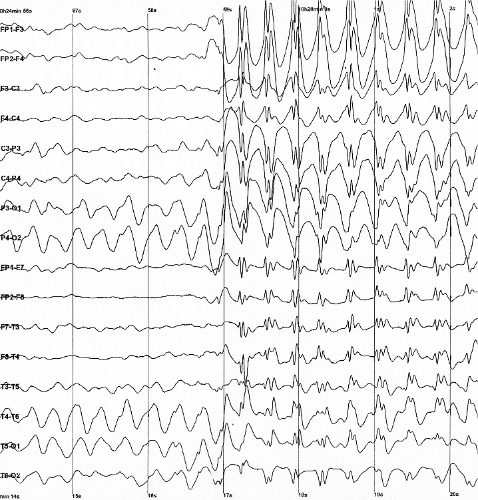
Uma epilepsia genética que começa por volta da puberdade. A epilepsia de ausência juvenil é caracterizada pela ocorrência esporádica de crises de ausência, frequentemente associada a uma presença que dura a vida toda de crises tônico-clônicas generalizadas (CTCGs) e espasmos mioclônicos esporádicos.
Introdução
O que você precisa saber de cara
Uma epilepsia genética que começa por volta da puberdade. A epilepsia de ausência juvenil é caracterizada pela ocorrência esporádica de crises de ausência, frequentemente associada a uma presença que dura a vida toda de crises tônico-clônicas generalizadas (CTCGs) e espasmos mioclônicos esporádicos.
Tem tratamento?
Escala de raridade
<1/50kMuito rara
1/20kRara
1/10kPouco freq.
1/5kIncomum
1/2k
Encontrou um erro ou informação desatualizada? Sugira uma correção →
Entender a doença
Do básico ao detalhe, leia no seu ritmo
Preparando trilha educativa...
Sinais e sintomas
O que aparece no corpo e com que frequência cada sintoma acontece
Partes do corpo afetadas
+ 1 sintomas em outras categorias
Características mais comuns
Os sintomas variam de pessoa para pessoa. Abaixo estão as 13 características clínicas mais associadas, ordenadas por frequência.
Linha do tempo da pesquisa
Encontrou um erro ou informação desatualizada? Sugira uma correção →
Genética e causas
O que está alterado no DNA e como passa nas famílias
Genes associados
1 gene identificado com associação a esta condição. Padrão de herança: Multigenic/multifactorial, Unknown.
Microtubule inner protein (MIP) part of the dynein-decorated doublet microtubules (DMTs) in cilia axoneme, which is required for motile cilia beating (PubMed:36191189). Microtubule-associated protein which regulates cell division and neuronal migration during cortical development (PubMed:19734894, PubMed:28370826). Necessary for radial and tangential cell migration during brain development, possibly acting as a regulator of cell morphology and process formation during migration (PubMed:22926142)
Cytoplasm, cytoskeleton, cilium axonemeCytoplasm, cytoskeleton, flagellum axonemeCytoplasm, cytoskeleton, microtubule organizing center, centrosomeCytoplasm, cytoskeleton, spindleCytoplasm, cytoskeleton, spindle pole
Juvenile myoclonic epilepsy 1
A subtype of idiopathic generalized epilepsy. Patients have afebrile seizures only, with onset in adolescence (rather than in childhood) and myoclonic jerks which usually occur after awakening and are triggered by sleep deprivation and fatigue.
Medicamentos e terapias
Mecanismo: Synaptic vesicle glycoprotein 2A modulator
Variantes genéticas (ClinVar)
46 variantes patogênicas registradas no ClinVar.
Diagnóstico
Os sinais que médicos procuram e os exames que confirmam
Tratamento e manejo
Remédios, cuidados de apoio e o que precisa acompanhar
Onde tratar no SUS
Hospitais de referência no Brasil e o protocolo oficial do SUS (PCDT)
🇧🇷 Atendimento SUS — Epilepsia de ausências juvenil
Selecione um estado ou use sua localização para ver resultados.
Dados de DATASUS/CNES, SBGM, ABNeuro e Ministério da Saúde. Sempre confirme a disponibilidade diretamente com o estabelecimento.
Pesquisa ativa
Ensaios clínicos abertos e novidades científicas recentes
Ensaios em destaque
🟢 Recrutando agora
2 pesquisas recrutando participantes. Converse com seu médico sobre a possibilidade de participar.
Outros ensaios clínicos
17 ensaios clínicos encontrados, 3 ativos.
Publicações mais relevantes
Investigation of adolescent cases diagnosed with idiopathic/genetic generalized epilepsy in terms of self-esteem, aggression, body perception, and alexithymia.
This study examined self-esteem, body image, alexithymia, and aggression in adolescents with idiopathic/genetic generalized epilepsy (IGE). These domains were selected because they may be affected not only by epilepsy itself but also by stigma, difficulties in emotional regulation, or treatment-related effects. Assessing these domains together was intended to examine whether IGE might be associated with additional psychosocial strain in otherwise clinically stable adolescents. We carried out a case-control study including 45 adolescents with IGE and 45 controls matched for age and sex. Controls were selected from outpatient services and were required to have no neurological disorders. Psychiatric disorders were assessed using the K-SADS (Kiddie Schedule for Affective Disorders and Schizophrenia) interview; no clinically significant psychiatric diagnoses were identified in the control group. All participants completed standardized Turkish questionnaires on the same day.Within the epilepsy group, 20.0% were diagnosed with juvenile absence epilepsy (JAE), 22.2% with juvenile myoclonic epilepsy (JME), and 57.8% with epilepsy with generalized tonic-clonic seizures alone (EGTCSA). Across all four psychological measures, the epilepsy and control groups showed no statistically significant differences (all p > 0.05). No significant differences were found in subgroup analyses based on epilepsy syndrome or seizure frequency. Adolescents with well-controlled IGE and minimal psychiatric comorbidities demonstrated comparable levels of psychosocial functioning to their healthy peers. This finding is consistent with evidence suggesting that psychosocial difficulties in epilepsy are often linked to comorbidity and contextual factors rather than to the diagnosis alone. Studies conducted in broader settings and with larger, more varied samples will be needed to better understand how medical, emotional, and environmental factors jointly influence psychosocial outcomes in this population. • Adolescents with epilepsy are frequently considered at increased risk for psychosocial difficulties, including lower self-esteem, emotional instability, and body image concerns. • In this study, no significant differences were found in self-esteem, body image, alexithymia, or aggression among Turkish adolescents with idiopathic/genetic generalized epilepsy compared with healthy controls. These findings suggest that, when seizures are well controlled and psychiatric comorbidities are limited, epilepsy itself may not confer additional psychosocial vulnerability.
Causal effect of Helicobacter pylori infection on brain health and potential mediation by immune cells.
Increasing evidence suggests an association between Helicobacter pylori(HP) infection and brain health and its clinical manifestations. A growing body of evidence underscored the profound influence of immune cells on brain health. However, the existing evidence is equivocal, and the causal link remains uncertain. This study aims to determine if there is a causal connection between Hp infections and 42 brain-related diseases, as well as 1,325 distinct brain structures, and to explore the potential role of immune cells in mediating these associations. Both univariable and multivariable mendelian randomization (UVMR and MVMR) was applied to evaluate the causal relationships between Hp protein antibodies and 1325 brain structure, as well as various brain-related diseases. Finally, we assessed the relationship between immune cells and HP protein antibodies and brain health, and then calculated the mediating effect of immune cells on the significant causal associations. Hp antibodies exhibited disease-specific effects: CagA conferred protection against anorexia nervosa(OR = 0.94, p = 0.015) and schizophrenia(OR = 0.91, p = 0.038).Conversely, catalase antibodies increased risks for frontotemporal dementia(OR = 1.47, p = 0.002) and juvenile absence epilepsy(OR = 1.01, p = 0.007). MVMR confirmed persistent associations with 61 brain structural alterations, such as IgG's impact on anterior cingulate morphology(OR = 1.06, p = 6.09E-05).Immune cells mediated 8.6-47.4% of Hp-brain effects: CD27⁺IgD⁺CD24⁺ B cells linked IgG to depression(18.2% mediation), while HLA-DR⁺ dendritic cells mediated UreA-associated white matter changes (10.9%). Hp infection may exert dual neuroprotective and pathogenic effects via antibody-specific mechanisms, modulated by immune cell phenotypes.This study underscores the gut-brain-immune axis as a pivotal frontier in neuropsychiatric research, with implications for precision interventions targeting Hp-related immune dysregulation.
Effects of lipid-lowering drugs on epilepsy and its subtypes: A drug-target Mendelian randomization study.
Statins, commonly used lipid-lowering drugs to reduce cardiovascular risk, have also been suggested to have protective effects against epilepsy. However, whether this association is causal remains unclear. We conducted a drug-target Mendelian randomization study to examine the effects of genetically predicted inhibition of 3 established lipid-lowering targets (3-hydroxy-3-methylglutaryl coenzyme A reductase [statins], Niemann-Pick C1-Like 1 [ezetimibe], and proprotein convertase subtilisin/kexin type 9 [PCSK9 inhibitors]) on epilepsy and its subtypes. The inverse-variance weighted approach served as the primary analysis, supplemented with multiple sensitivity tests to ensure robustness. Genetically proxied 3-hydroxy-3-methylglutaryl coenzyme A reductase inhibition was associated with decreased risks of epilepsy (odds ratio [OR] = 0.87; 95% confidence interval [CI]: 0.82-0.92; P = 1.4 × 10⁻⁶) and focal epilepsy (OR = 0.83; 95% CI: 0.76-0.92; P = 1.5 × 10⁻⁴). Inhibition of Niemann-Pick C1-Like 1 corresponded to a lower risk of generalized epilepsy with tonic-clonic seizures (OR = 0.98; 95% CI: 0.97-0.98; P = 1.2 × 10⁻³⁴) but increased risks of focal epilepsy (lesion negative, OR = 1.08; 95% CI: 1.06-1.09; P = 5.9 × 10⁻³¹), childhood absence epilepsy (OR = 1.06; 95% CI: 1.05-1.07; P = 1.8 × 10⁻²¹), and juvenile absence epilepsy (OR = 1.03; 95% CI: 1.01-1.05; P = 9.7 × 10⁻³). PCSK9 inhibition was linked to reduced risks of generalized epilepsy with tonic-clonic seizures (OR = 0.99; 95% CI: 0.98-1.00; P = 1.4 × 10⁻²), juvenile absence epilepsy (OR = 0.96; 95% CI: 0.93-1.00; P = 2.7 × 10⁻²), and juvenile myoclonic epilepsy (OR = 0.96; 95% CI: 0.93-1.00; P = 2.9 × 10⁻²). The effects of lipid-lowering drug targets on epilepsy risk vary by target and exhibit pleiotropy. Statins and PCSK9 inhibitors appear protective against epilepsy and several subtypes, whereas ezetimibe may increase susceptibility to certain subtypes. These results underscore the importance of considering target-specific effects when choosing lipid-lowering therapies for patients with or at risk of epilepsy.
Specialization challenges and improvement strategies in pediatric epilepsy diagnosis and treatment under the leadership of tertiary hospitals: A multi-center cross-sectional survey in Chongqing.
To analyze the current state of primary pediatric epilepsy care, providing evidence for regional capacity-building strategies. The cross-sectional survey design was adopted to assess the epilepsy diagnostic and therapeutic capabilities of pediatric physicians from 37 medical institutions in the nine main urban districts and surrounding counties of Chongqing. Tertiary (56.8%, 21/37) and general hospitals (75.7%, 28/37) dominated healthcare, yet pediatric neurology lagged: only 48.7% (18/37) had dedicated teams. Key technologies like Video-EEG (43.2%) and genetic testing (54.1%) were underutilized; novel therapies (ketogenic diet 13.5%, neuromodulation 8.1%) were rarely applied. The median annual outpatient volume was 50 cases, and 33.3% of hospitals achieved >50% seizure freedom rate, yet 20.8% had >15% treatment inefficacy. Evident deficiencies of physician training: 52.4% (87/166) lacked systematic epilepsy training, and only 1.2% (2/166) had passed advanced EEG certification, resulting in only 19.3% (32/166) fully mastering epilepsy classification systems, while 31.9% demonstrated medication selection errors. Significant discrepancies in clinical decision-making: 18.7% (31/166) of physicians inappropriately selected carbamazepine for juvenile absence epilepsy, while 3.6% (6/166) adopted a high-risk immediate medication switching strategy. Fragmented patient management: 8.4% of physicians did not provide health education, and 59.0% (98/166) cited poor family adherence due to insufficient disease awareness. The regional referral rates varied widely (median: 17.5%, IQR: 35-5%). Tertiary hospitals undertake the main clinical burden but lack the construction of specialized infrastructure; lagging staff training leads to undermining the standardization of diagnosis and management; and the problem of the lack of systematic solutions in patient management persists. To enhance the overall service delivery, there are some proposed solutions including establishing hierarchical diagnosis and treatment networks, enhancing specialist training, and implementing regional quality control systems.
Syndrome-specific and familial imaging traits in juvenile absence epilepsy.
Juvenile absence epilepsy (JAE) is an idiopathic generalized epilepsy characterized by absences, generalized tonic-clonic seizures, and cognitive difficulties. In contrast to juvenile myoclonic epilepsy (JME), where distinct functional and structural brain alterations are well established, it remains unclear whether comparable changes are identifiable in absence-predominant syndromes. We aimed to delineate functional and structural correlates of the cognitive profile in people with JAE and to explore potential familial imaging traits. We acquired working memory functional magnetic resonance imaging (MRI) and high-resolution T1-weighted MRI in 23 individuals with JAE, 18 unaffected siblings, and 28 controls. Compared with both siblings and controls, patients showed increased motor cortex activation during the attention-only condition, but relative suppression of motor activity and inadequate default mode network deactivation with increasing working memory demand. Gray matter volume was reduced in sensorimotor regions and in the left inferior and middle frontal gyri in patients. Larger volumes in these frontal regions correlated with better language function. In contrast, increased gray matter volume in the dorsal midcingulate cortex was present in both patients and their siblings relative to controls. Our findings in JAE differ from the patterns of functional reorganization reported in JME, indicating that each syndrome involves distinct motor-cognitive pathophysiological mechanisms aligned with its seizure profile. Inferior frontal structural abnormalities likely contribute to the well-recognized language difficulties in JAE, whereas increased midcingulate gray matter volume may serve as a familial marker linked to attentional vulnerability.
Publicações recentes
Effects of lipid-lowering drugs on epilepsy and its subtypes: A drug-target Mendelian randomization study.
Investigation of adolescent cases diagnosed with idiopathic/genetic generalized epilepsy in terms of self-esteem, aggression, body perception, and alexithymia.
Specialization challenges and improvement strategies in pediatric epilepsy diagnosis and treatment under the leadership of tertiary hospitals: A multi-center cross-sectional survey in Chongqing.
Syndrome-specific and familial imaging traits in juvenile absence epilepsy.
Bidirectional causal relationships between epilepsy subtypes and psychiatric disorders: A two-sample mendelian randomization study.
📚 EuropePMC44 artigos no totalmostrando 115
Effects of lipid-lowering drugs on epilepsy and its subtypes: A drug-target Mendelian randomization study.
MedicineInvestigation of adolescent cases diagnosed with idiopathic/genetic generalized epilepsy in terms of self-esteem, aggression, body perception, and alexithymia.
European journal of pediatricsSpecialization challenges and improvement strategies in pediatric epilepsy diagnosis and treatment under the leadership of tertiary hospitals: A multi-center cross-sectional survey in Chongqing.
Epileptic disorders : international epilepsy journal with videotapeSyndrome-specific and familial imaging traits in juvenile absence epilepsy.
EpilepsiaBidirectional causal relationships between epilepsy subtypes and psychiatric disorders: A two-sample mendelian randomization study.
Journal of affective disordersEpilepsy and stroke: A mendelian Randomization study.
Epilepsy researchClinical and EEG predictors of treatment response in pediatric absence epilepsy - a single-center experience.
Neurologia i neurochirurgia polskaCausal effect of Helicobacter pylori infection on brain health and potential mediation by immune cells.
European archives of psychiatry and clinical neuroscienceLong-term seizure outcomes and the likelihood of antiseizure medication withdrawal in patients with juvenile absence epilepsy: A 10-year follow-up study.
SeizureIncreased volumes of the precuneus and the pallidum in idiopathic generalized epilepsy.
Scientific reports[Clinical response to brivaracetam in two cases of drug-resistant juvenile absence epilepsy].
Anales del sistema sanitario de NavarraFocus on epilepsy and epilepsy syndromes in children with autism spectrum disorders: a study of 74 patients.
Brain & developmentAbsence-to-bilateral-tonic-clonic seizure with focal features: A diagnostic challenge.
Epileptic disorders : international epilepsy journal with videotapeAutobiographical memory impairment in genetic generalized epilepsies: neurocognitive and pathophysiological determinants.
Arquivos de neuro-psiquiatriaPower Spectral Density and Default Mode Network Connectivity in Generalized Epilepsy Syndromes: What to Expect from Drug-Resistant Patients.
BiomedicinesUnsupervised clustering of a deeply phenotyped cohort of adults with idiopathic generalized epilepsy.
EpilepsiaAssessing the Need for Repeat EEG in Pediatric Patients with Idiopathic Generalized Epilepsy After Anti-Seizure Medication Withdrawal Following Seizure Freedom.
Journal of child neurologyMetabolite Associations with Childhood and Juvenile Absence Epilepsy: A Bidirectional Mendelian Randomization Study.
Psychiatry and clinical psychopharmacologyGenetic heterogeneity in familial forms of genetic generalized epilepsy: from mono- to oligogenism.
Human genomicsGeneralized spike-waves in idiopathic generalized epilepsies: Does their frequency matter?
Brain and behaviorLamotrigine vs levetiracetam in female patients of childbearing age with juvenile absence epilepsy: A Bayesian reanalysis.
EpilepsiaCausal links between serum micronutrients and epilepsy: a Mendelian randomization analysis.
Frontiers in neurologyAssessing the impact of circulating inflammatory cytokines and proteins as drivers and therapeutic targets in epilepsy: A Mendelian randomization study.
Epilepsy & behavior : E&BChallenges in the Management of Narcolepsy in a Resource Limited Setting: A Case Report.
CureusExploring brain network oscillations during seizures in drug-naïve patients with juvenile absence epilepsy.
Frontiers in neurologyAnalyzing the causal relationship between lipid-lowering drug target genes and epilepsy: a Mendelian randomization study.
Frontiers in neurologyLong-term prognosis of patients with photosensitive idiopathic generalized epilepsy.
SeizureDrug-resistant generalized epilepsies: Revisiting the frontiers of idiopathic generalized epilepsies.
Revue neurologiqueClearance for Driving in Genetic Generalized Epilepsy.
Journal of child neurologyThyroid function and epilepsy: a two-sample Mendelian randomization study.
Frontiers in human neuroscienceLack of causal association between epilepsy and dementia: A Mendelian randomization analysis.
Epilepsy & behavior : E&BExploring causal correlations between systemic inflammatory cytokines and epilepsy: A bidirectional Mendelian randomization study.
SeizureAdolescent-Onset Epilepsy: Clinical Features and Predictive Factors for First-Year Seizure Freedom.
NeuropediatricsDynamic alterations of striatal-related functional networks in juvenile absence epilepsy.
Epilepsy & behavior : E&BNonconvulsive Status Epilepticus With Generalized Spike-and-Wave Discharges: Pathophysiological and Nosological Considerations.
Cureus[Idiopathic generalized epilepsies].
MedicinaRelationship Between Electroencephalography and Seizure Outcome in Typical Absence Seizures in Children.
Pediatric neurologyCognitive phenotype of juvenile absence epilepsy: An investigation of patients and unaffected siblings.
EpilepsiaOutcome of Absence Epilepsy With Onset at 8-11 Years of Age: Watershed Ages When Syndromes Overlap.
Journal of child neurologyChanges in awake and sleep electroencephalography characteristics after 1-year treatment for childhood and juvenile absence epilepsy.
SeizureEEG phase synchronization during absence seizures.
Frontiers in neuroinformaticsAntiseizure medications for idiopathic generalized epilepsies: a systematic review and network meta-analysis.
Journal of neurologyAlzheimer Disease and Epilepsy: A Mendelian Randomization Study.
NeurologyThe causal effect of serum 25-hydroxyvitamin D levels on epilepsy: A two-sample Mendelian randomization study.
Epilepsia openSub-region analysis of DMD gene in cases with idiopathic generalized epilepsy.
NeurogeneticsClinical application of trio-based whole-exome sequencing in idiopathic generalized epilepsy.
SeizureA cross-sectional investigation of cognition and epileptiform discharges in juvenile absence epilepsy.
EpilepsiaClinical and Electrophysiological Features Predicting Response to Antiseizure Medications in Juvenile Absence Epilepsy.
NeuropediatricsSevere Raynaud's phenomenon from ethosuximide raised concern over possible onset of systemic vasculitis: a case report.
Pediatric rheumatology online journalJuvenile absence epilepsy: integrating photosensitivity and autonomic focal epileptic symptoms.
Acta neurologica BelgicaChildhood vs. juvenile absence epilepsy: How to make a diagnosis.
SeizureIdiopathic generalized epilepsies: Analysis of 101 patients.
Medicina clinicaEfficacy and tolerability of brivaracetam monotherapy in childhood and juvenile absence epilepsy: An innovative adaptive trial design.
Epilepsia openSchool performance and psychiatric comorbidity in juvenile absence epilepsy and juvenile myoclonic epilepsy: a Danish population-based cohort study.
Journal of neurologyILAE definition of the Idiopathic Generalized Epilepsy Syndromes: Position statement by the ILAE Task Force on Nosology and Definitions.
EpilepsiaValidation of Pediatric Idiopathic Generalized Epilepsy Diagnoses from the Danish National Patient Register During 1994‒2019.
Clinical epidemiologyRecurrence rates and risk factors for seizure recurrence following antiseizure medication withdrawal in adolescent patients with genetic generalized epilepsy.
Epilepsia openEffect of Sleep on Epileptic Discharges in Patients with Idiopathic Generalized Epilepsy.
Clinical EEG and neuroscienceDifferent circuitry dysfunction in drug-naive patients with juvenile myoclonic epilepsy and juvenile absence epilepsy.
Epilepsy & behavior : E&BGenetic generalized epilepsies in adults - challenging assumptions and dogmas.
Nature reviews. NeurologyInvolvement of ADGRV1 Gene in Familial Forms of Genetic Generalized Epilepsy.
Frontiers in neurologyNeuropsychiatric comorbidities in genetic/idiopathic generalized epilepsies and their effects on psychosocial outcomes.
Epilepsy & behavior : E&BAssociation Analysis of Candidate Variants in Admixed Brazilian Patients With Genetic Generalized Epilepsies.
Frontiers in geneticsTherapeutic approach to difficult-to-treat typical absences and related epilepsy syndromes.
Expert review of clinical pharmacologyPortrait of My Father: Frida Kahlo's Intimate Relation to Epilepsy.
European neurologyAge-related morphological differences in the spike-and-wave complexes of absence epilepsy.
Epilepsy researchSocial outcome and psychiatric comorbidity of generalized epilepsies - A case-control study.
EpilepsiaAlternatives to valproate in girls and women of childbearing potential with Idiopathic Generalized Epilepsies: state of the art and guidance for the clinician proposed by the Epilepsy and Gender Commission of the Italian League Against Epilepsy (LICE).
SeizureAberrant basal ganglia-thalamo-cortical network topology in juvenile absence epilepsy: A resting-state EEG-fMRI study.
SeizureGenetic Landscape of Common Epilepsies: Advancing towards Precision in Treatment.
International journal of molecular sciencesNetwork characteristics of genetic generalized epilepsy: Are the syndromes distinct?
SeizureComputationally-Efficient Algorithm for Real-Time Absence Seizure Detection in Wearable Electroencephalography.
International journal of neural systemsHow to diagnose and classify idiopathic (genetic) generalized epilepsies.
Epileptic disorders : international epilepsy journal with videotapeTrait impulsivity correlates with active myoclonic seizures in genetic generalized epilepsy.
Epilepsy & behavior : E&BClinico-electrographic characteristics and classification of genetic generalized epilepsy in Oman.
Epilepsy researchGenetic generalized epilepsies with frontal lesions mimicking migratory disorders on the epilepsy monitoring unit.
Epilepsia openIdiopathic (genetic) generalized epilepsies with absences: clinical and electrographic characteristics and seizure outcome.
Neurological sciences : official journal of the Italian Neurological Society and of the Italian Society of Clinical NeurophysiologyHigh-power, frontal-dominant ripples in absence status epilepticus during childhood.
Clinical neurophysiology : official journal of the International Federation of Clinical NeurophysiologyCognitive Function in Genetic Generalized Epilepsies: Insights From Neuropsychology and Neuroimaging.
Frontiers in neurologySocial impairment and stigma in genetic generalized epilepsies.
Epilepsy & behavior : E&BDefault mode network dysfunction in idiopathic generalised epilepsy.
Epilepsy researchPraxis induction and its relationship with cognition in genetic generalized epilepsy.
Epilepsy & behavior : E&BSingle-subject manual independent component analysis and resting state fMRI connectivity outcomes in patients with juvenile absence epilepsy.
Magnetic resonance imagingGenomic and Personalized Medicine Perspective in Genetic Generalized Epilepsy.
Archives of Iranian medicineSynaptic clustering differences due to different GABRB3 mutations cause variable epilepsy syndromes.
Brain : a journal of neurologyPeripapillary retinal nerve fibre layer thinning in genetic generalized epilepsy.
SeizureJuvenile absence epilepsy relapsing as recurrent absence status, mimicking transient global amnesia, in an elderly patient.
Epileptic disorders : international epilepsy journal with videotapePractice guideline update summary: Efficacy and tolerability of the new antiepileptic drugs I: Treatment of new-onset epilepsy: Report of the American Epilepsy Society and the Guideline Development, Dissemination, and Implementation Subcommittee of the American Academy of Neurology.
Epilepsy currentsPerampanel in routine clinical use in idiopathic generalized epilepsy: The 12-month GENERAL study.
EpilepsiaMulti-gene panel testing in Korean patients with common genetic generalized epilepsy syndromes.
PloS onePractice guideline update summary: Efficacy and tolerability of the new antiepileptic drugs I: Treatment of new-onset epilepsy: Report of the Guideline Development, Dissemination, and Implementation Subcommittee of the American Academy of Neurology and the American Epilepsy Society.
NeurologyRelapse after treatment withdrawal of antiepileptic drugs for Juvenile Absence Epilepsy and Juvenile Myoclonic Epilepsy.
SeizureElectroclinical and prognostic characteristics of epilepsy patients with photosensitivity.
Ideggyogyaszati szemleSource analysis of epileptiform discharges in absence epilepsy using Magnetoencephalography (MEG).
Epilepsy research[Pathomorphosis of idiopathic generalized epilepsy. Juvenile forms].
Zhurnal nevrologii i psikhiatrii imeni S.S. KorsakovaLacosamide for refractory generalized tonic-clonic seizures of non-focal origin in clinical practice: A clinical and VEEG study.
Epilepsy & behavior case reportsLong-term outcome in adolescent-onset generalized genetic epilepsies.
EpilepsiaGene expression analysis in untreated absence epilepsy demonstrates an inconsistent pattern.
Epilepsy researchResistance to valproic acid as predictor of treatment resistance in genetic generalized epilepsies.
Epilepsia[Classification of idiopathic generalised epilepsies in patients over 16 years of age].
Revista de neurologiaImpaired consciousness in patients with absence seizures investigated by functional MRI, EEG, and behavioural measures: a cross-sectional study.
The Lancet. NeurologyCan EEG Differentiate Among Syndromes in Genetic Generalized Epilepsy?
Journal of clinical neurophysiology : official publication of the American Electroencephalographic SocietyCortical and subcortical brain alterations in Juvenile Absence Epilepsy.
NeuroImage. ClinicalAnalysis of rare copy number variation in absence epilepsies.
Neurology. GeneticsRole for serotonin2A (5-HT2A) and 2C (5-HT2C) receptors in experimental absence seizures.
Neuropharmacology[Anticonvulsive Therapy after the First Unprovoked Seizure – Pros and Cons].
PraxisFocal EEG features and therapeutic response in patients with juvenile absence and myoclonic epilepsy.
Clinical neurophysiology : official journal of the International Federation of Clinical NeurophysiologyCeliac Disease and Juvenile Absence Epilepsy.
Pediatric emergency careEpileptiform K-Complexes and Sleep Spindles: An Underreported Phenomenon in Genetic Generalized Epilepsy.
Journal of clinical neurophysiology : official publication of the American Electroencephalographic SocietySeizure outcome in patients with juvenile absence epilepsy.
Neurological sciences : official journal of the Italian Neurological Society and of the Italian Society of Clinical NeurophysiologySeizure and Psychosocial Outcomes of Childhood and Juvenile Onset Generalized Epilepsies: Wolf in Sheep's Clothing, or Well-Dressed Wolf?
Epilepsy currentsInvestigation of GRIN2A in common epilepsy phenotypes.
Epilepsy researchFocal seizure symptoms in idiopathic generalized epilepsies.
NeurologyTreatment of pediatric epilepsy in Poland.
European journal of paediatric neurology : EJPN : official journal of the European Paediatric Neurology Society[Antiepileptic drugs and seizure aggravation].
Zhurnal nevrologii i psikhiatrii imeni S.S. KorsakovaAssociações
Organizações que acompanham esta doença — pra ter apoio e orientação
Ainda não temos associações cadastradas para Epilepsia de ausências juvenil.
É de uma associação que acompanha esta doença? Fale com a gente →
Comunidades
Grupos ativos de quem convive com esta doença aqui no Raras
Ainda não existe comunidade no Raras para Epilepsia de ausências juvenil
Pacientes, familiares e cuidadores se organizam em comunidades pra compartilhar experiências, fazer perguntas e se apoiar. Você pode ser o primeiro.
Tire suas dúvidas
Perguntas, dicas e experiências compartilhadas aqui na página
Participe da discussão
Faça login para postar dúvidas, compartilhar experiências e interagir com especialistas.
Fazer loginDoenças relacionadas
Doenças com sintomas parecidos — ajudam quem ainda está buscando diagnóstico
Referências e fontes
Bases de dados externas citadas neste artigo
Publicações científicas
Artigos indexados no PubMed ligados a esta doença no grafo RarasNet — título, periódico e PMID direto da fonte, sem intermediação de IA.
- Investigation of adolescent cases diagnosed with idiopathic/genetic generalized epilepsy in terms of self-esteem, aggression, body perception, and alexithymia.
- Causal effect of Helicobacter pylori infection on brain health and potential mediation by immune cells.
- Effects of lipid-lowering drugs on epilepsy and its subtypes: A drug-target Mendelian randomization study.
- Specialization challenges and improvement strategies in pediatric epilepsy diagnosis and treatment under the leadership of tertiary hospitals: A multi-center cross-sectional survey in Chongqing.
- Syndrome-specific and familial imaging traits in juvenile absence epilepsy.
- Bidirectional causal relationships between epilepsy subtypes and psychiatric disorders: A two-sample mendelian randomization study.
Bases de dados e fontes oficiais
Identificadores e referências canônicas usadas para montar este verbete.
- ORPHA:1941(Orphanet)
- MONDO:0800453(MONDO)
- Epilepsia(PCDT · Ministério da Saúde)
- GARD:2162(GARD (NIH))
- Variantes catalogadas(ClinVar)
- Busca completa no PubMed(PubMed)
- Q3726905(Wikidata)
Dados compilados pelo RarasNet a partir de fontes abertas (Orphanet, OMIM, MONDO, PubMed/EuropePMC, ClinicalTrials.gov, DATASUS, PCDT/MS). Este conteúdo é informativo e não substitui avaliação médica.
Conteúdo mantido por Agente Raras · Médicos e pesquisadores podem colaborar
Epilepsia de ausências juvenil
📋 Origem dos dados
Esta página agrega dados de fontes públicas e oficiais. Dados sobre cobertura no SUS (PCDT, CEAF) são verificados ativamente por agente proativo (ver badge no infobox). Demais dados têm atribuição de fonte + data da última sincronização — clique para abrir o original.
- Doença rara (ontologia)
- fonte: Orphanet
- Identificador unificado
- fonte: MONDO
- Codificação WHO/SUS
- fonte: WHO ICD-10 / DATASUS
- CID-11 (futuro)
- fonte: WHO ICD-11
- NIH/GARD
- fonte: GARD (NIH)
- Indexação biomédica
- fonte: MeSH (NLM)
- Dado público estruturado
- fonte: Wikidata
- Medicamentos (literatura)
- fonte: Orphanet
- Reposicionamento
- fonte: Drug Repurposing Hub
- Ensaios clínicos
- fonte: ClinicalTrials.gov