
A braquidactilia tipo B2 é uma doença genética rara de malformação congênita dos membros, caracterizada por hipoplasia/aplasia das falanges distais e/ou médias nos dedos das mãos e dos pés II-V (frequentemente grave nos dedos das mãos/pés IV-V, mais leve nos dedos das mãos/pés II-III) em associação com simfalangismo proximal e ocasionalmente distal, fusão dos ossos do carpo/tarso e sindactilia cutânea parcial. Características adicionais relatadas incluem posicionamento proximal dos polegares, perda auditiva neurossensorial e hipermetropia.
Introdução
O que você precisa saber de cara
A braquidactilia tipo B2 é uma doença genética rara de malformação congênita dos membros, caracterizada por hipoplasia/aplasia das falanges distais e/ou médias nos dedos das mãos e dos pés II-V (frequentemente grave nos dedos das mãos/pés IV-V, mais leve nos dedos das mãos/pés II-III) em associação com simfalangismo proximal e ocasionalmente distal, fusão dos ossos do carpo/tarso e sindactilia cutânea parcial. Características adicionais relatadas incluem posicionamento proximal dos polegares, perda auditiva neurossensorial e hipermetropia.
Encontrou um erro ou informação desatualizada? Sugira uma correção →
Entender a doença
Do básico ao detalhe, leia no seu ritmo
Preparando trilha educativa...
Sinais e sintomas
O que aparece no corpo e com que frequência cada sintoma acontece
Partes do corpo afetadas
+ 12 sintomas em outras categorias
Características mais comuns
Os sintomas variam de pessoa para pessoa. Abaixo estão as 26 características clínicas mais associadas, ordenadas por frequência.
Linha do tempo da pesquisa
Encontrou um erro ou informação desatualizada? Sugira uma correção →
Genética e causas
O que está alterado no DNA e como passa nas famílias
Genes associados
1 gene identificado com associação a esta condição.
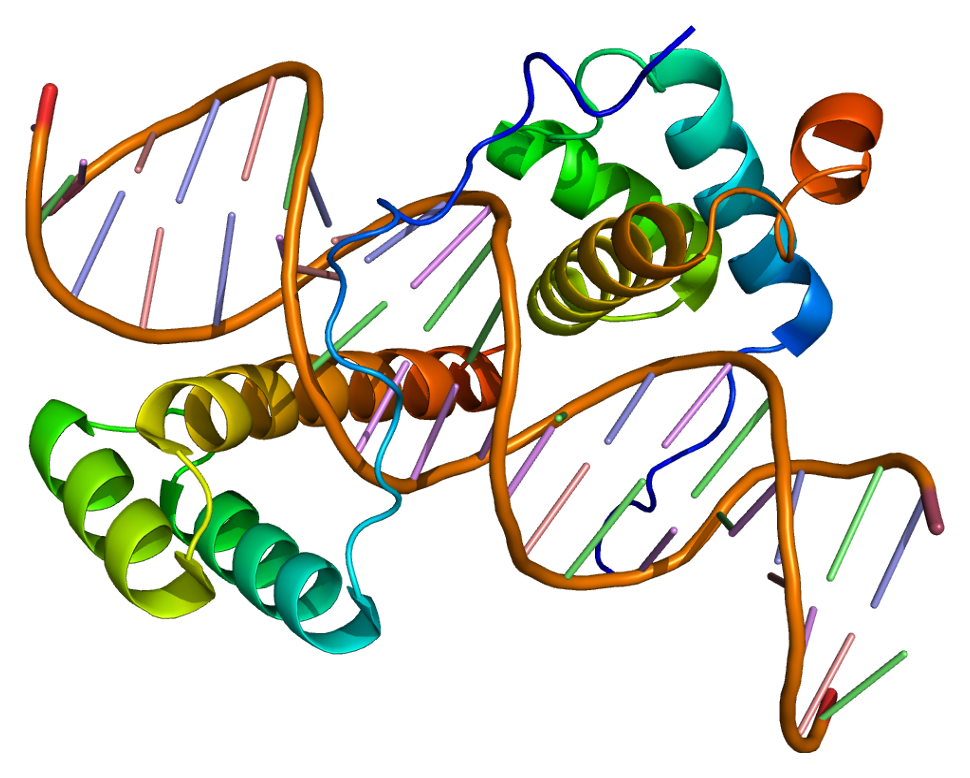
Inhibitor of bone morphogenetic proteins (BMP) signaling which is required for growth and patterning of the neural tube and somite. Essential for cartilage morphogenesis and joint formation. Inhibits chondrocyte differentiation through its interaction with GDF5 and, probably, GDF6 (PubMed:21976273, PubMed:26643732)
Secreted
Symphalangism, proximal 1A
A disease characterized by the hereditary absence of the proximal interphalangeal joints. Distal interphalangeal joints are less frequently involved and metacarpophalangeal joints are rarely affected whereas carpal bone malformation and fusion are common. In the lower extremities, tarsal bone coalition is common. Conductive hearing loss is seen and is due to fusion of the stapes to the petrous part of the temporal bone.
Variantes genéticas (ClinVar)
76 variantes patogênicas registradas no ClinVar.
Classificação de variantes (ClinVar)
Distribuição de 1.192 variantes classificadas pelo ClinVar.
Vias biológicas (Reactome)
2 vias biológicas associadas aos genes desta condição.
Diagnóstico
Os sinais que médicos procuram e os exames que confirmam
Tratamento e manejo
Remédios, cuidados de apoio e o que precisa acompanhar
Onde tratar no SUS
Hospitais de referência no Brasil e o protocolo oficial do SUS (PCDT)
🇧🇷 Atendimento SUS — Braquidatilia tipo B2
Selecione um estado ou use sua localização para ver resultados.
Dados de DATASUS/CNES, SBGM, ABNeuro e Ministério da Saúde. Sempre confirme a disponibilidade diretamente com o estabelecimento.
Pesquisa ativa
Ensaios clínicos abertos e novidades científicas recentes
Pesquisa e ensaios clínicos
Nenhum ensaio clínico registrado para esta condição.
Publicações mais relevantes
A novel variant in the ROR2 gene underlying brachydactyly type B: a case report.
Brachydactyly type B is an autosomal dominant disorder that is characterized by hypoplasia of the distal phalanges and nails and can be divided into brachydactyly type B1 (BDB1) and brachydactyly type B2 (BDB2). BDB1 is the most severe form of brachydactyly and is caused by truncating variants in the receptor tyrosine kinase-like orphan receptor 2 (ROR2) gene. Here, we report a five-generation Chinese family with brachydactyly with or without syndactyly. The proband and her mother underwent digital separation in syndactyly, and the genetic analyses of the proband and her parents were provided. The novel heterozygous frameshift variant c.1320dupG, p.(Arg441Alafs*18) in the ROR2 gene was identified in the affected individuals by whole-exome sequencing and Sanger sequencing. The c.1320dupG variant in ROR2 is predicted to produce a truncated protein that lacks tyrosine kinase and serine/threonine- and proline-rich structures and remarkably alters the tertiary structures of the mutant ROR2 protein. The c.1320dupG, p.(Arg441Alafs*18) variant in the ROR2 gene has not been reported in any databases thus far and therefore is novel. Our study extends the gene variant spectrum of brachydactyly and may provide information for the genetic counselling of family members.
BMP antagonists in tissue development and disease.
Bone morphogenic proteins (BMPs) are important growth regulators in embryogenesis and postnatal homeostasis. Their tight regulation is crucial for successful embryonic development as well as tissue homeostasis in the adult organism. BMP inhibition by natural extracellular biologic antagonists represents the most intensively studied mechanistic concept of BMP growth factor regulation. It was shown to be critical for numerous developmental programs, including germ layer specification and spatiotemporal gradients required for the establishment of the dorsal-ventral axis and organ formation. The importance of BMP antagonists for extracellular matrix homeostasis is illustrated by the numerous human connective tissue disorders caused by their mutational inactivation. Here, we will focus on the known functional interactions targeting BMP antagonists to the ECM and discuss how these interactions influence BMP antagonist activity. Moreover, we will provide an overview about the current concepts and investigated molecular mechanisms modulating BMP inhibitor function in the context of development and disease.
A Novel Role for the BMP Antagonist Noggin in Sensitizing Cells to Non-canonical Wnt-5a/Ror2/Disheveled Pathway Activation.
Mammalian limb development is driven by the integrative input from several signaling pathways; a failure to receive or a misinterpretation of these signals results in skeletal defects. The brachydactylies, a group of overlapping inherited human hand malformation syndromes, are mainly caused by mutations in BMP signaling pathway components. Two closely related forms, Brachydactyly type B2 (BDB2) and BDB1 are caused by mutations in the BMP antagonist Noggin (NOG) and the atypical receptor tyrosine kinase ROR2 that acts as a receptor in the non-canonical Wnt pathway. Genetic analysis of Nog and Ror2 functional interaction via crossing Noggin and Ror2 mutant mice revealed a widening of skeletal elements in compound but not in any of the single mutants, thus indicating genetic interaction. Since ROR2 is a non-canonical Wnt co-receptor specific for Wnt-5a we speculated that this phenotype might be a result of deregulated Wnt-5a signaling activation, which is known to be essential for limb skeletal elements growth and patterning. We show that Noggin potentiates activation of the Wnt-5a-Ror2-Disheveled (Dvl) pathway in mouse embryonic fibroblast (MEF) cells in a Ror2-dependent fashion. Rat chondrosarcoma chondrocytes (RCS), however, are not able to respond to Noggin in this fashion unless growth arrest is induced by FGF2. In summary, our data demonstrate genetic interaction between Noggin and Ror2 and show that Noggin can sensitize cells to Wnt-5a/Ror2-mediated non-canonical Wnt signaling, a feature that in cartilage may depend on the presence of active FGF signaling. These findings indicate an unappreciated function of Noggin that will help to understand BMP and Wnt/PCP signaling pathway interactions.
A novel nonsense mutation in the NOG gene causes familial NOG-related symphalangism spectrum disorder.
The human noggin (NOG) gene is responsible for a broad spectrum of clinical manifestations of NOG-related symphalangism spectrum disorder (NOG-SSD), which include proximal symphalangism, multiple synostoses, stapes ankylosis with broad thumbs (SABTT), tarsal-carpal coalition syndrome, and brachydactyly type B2. Some of these disorders exhibit phenotypes associated with congenital stapes ankylosis. In the present study, we describe a Japanese pedigree with dactylosymphysis and conductive hearing loss due to congenital stapes ankylosis. The range of motion in her elbow joint was also restricted. The family showed multiple clinical features and was diagnosed with SABTT. Sanger sequencing analysis of the NOG gene in the family members revealed a novel heterozygous nonsense mutation (c.397A>T; p.K133*). In the family, the prevalence of dactylosymphysis and hyperopia was 100% while that of stapes ankylosis was less than 100%. Stapes surgery using a CO2 laser led to a significant improvement of the conductive hearing loss. This novel mutation expands our understanding of NOG-SSD from clinical and genetic perspectives.
Novel NOG mutation in Japanese patients with stapes ankylosis with broad thumbs and toes.
Human noggin (NOG) gene mutation causes multiple bony disorders showing up as stapes ankylosis with broad thumbs and toes (SABTT), proximal symphalangism (SYM1), multiple synostoses syndrome 1 (SYNS1), tarsal-carpal coalition syndrome (TCC) and brachydactyly type B2 (BDB2). These phenotypes are defined as NOG-related syndromes with the same mutation. Some of these syndromes feature stapes ankylosis as one of the several bony symptoms. Here, we report a Japanese family with conductive hearing loss due to congenital stapes ankylosis. This family showed multiple features and was diagnosed with SABTT. We performed analysis of the NOG in the family by direct sequence analysis, and found a novel NOG mutation: c.682 T> G (p.C228G). Our results and a review of previous cases with NOG protein conformation suggest that this mutated NOG protein lead to a change in antagonist activity in BMPs and/or a haploinsufficiency that likely impaired finger 2 structure.
Publicações recentes
A novel variant in the ROR2 gene underlying brachydactyly type B: a case report.
BMP antagonists in tissue development and disease.
A Novel Role for the BMP Antagonist Noggin in Sensitizing Cells to Non-canonical Wnt-5a/Ror2/Disheveled Pathway Activation.
A novel nonsense mutation in the NOG gene causes familial NOG-related symphalangism spectrum disorder.
Novel NOG mutation in Japanese patients with stapes ankylosis with broad thumbs and toes.
📚 EuropePMC477 artigos no totalmostrando 5
A novel variant in the ROR2 gene underlying brachydactyly type B: a case report.
BMC pediatricsBMP antagonists in tissue development and disease.
Matrix biology plusA Novel Role for the BMP Antagonist Noggin in Sensitizing Cells to Non-canonical Wnt-5a/Ror2/Disheveled Pathway Activation.
Frontiers in cell and developmental biologyA novel nonsense mutation in the NOG gene causes familial NOG-related symphalangism spectrum disorder.
Human genome variationNovel NOG mutation in Japanese patients with stapes ankylosis with broad thumbs and toes.
European journal of medical geneticsAssociações
Organizações que acompanham esta doença — pra ter apoio e orientação
Ainda não temos associações cadastradas para Braquidatilia tipo B2.
É de uma associação que acompanha esta doença? Fale com a gente →
Comunidades
Grupos ativos de quem convive com esta doença aqui no Raras
Ainda não existe comunidade no Raras para Braquidatilia tipo B2
Pacientes, familiares e cuidadores se organizam em comunidades pra compartilhar experiências, fazer perguntas e se apoiar. Você pode ser o primeiro.
Tire suas dúvidas
Perguntas, dicas e experiências compartilhadas aqui na página
Participe da discussão
Faça login para postar dúvidas, compartilhar experiências e interagir com especialistas.
Fazer loginDoenças relacionadas
Doenças com sintomas parecidos — ajudam quem ainda está buscando diagnóstico
Referências e fontes
Bases de dados externas citadas neste artigo
Publicações científicas
Artigos indexados no PubMed ligados a esta doença no grafo RarasNet — título, periódico e PMID direto da fonte, sem intermediação de IA.
- A novel variant in the ROR2 gene underlying brachydactyly type B: a case report.
- BMP antagonists in tissue development and disease.
- A Novel Role for the BMP Antagonist Noggin in Sensitizing Cells to Non-canonical Wnt-5a/Ror2/Disheveled Pathway Activation.
- A novel nonsense mutation in the NOG gene causes familial NOG-related symphalangism spectrum disorder.
- Novel NOG mutation in Japanese patients with stapes ankylosis with broad thumbs and toes.
Bases de dados e fontes oficiais
Identificadores e referências canônicas usadas para montar este verbete.
- ORPHA:140908(Orphanet)
- OMIM OMIM:611377(OMIM)
- MONDO:0012658(MONDO)
- GARD:16963(GARD (NIH))
- Variantes catalogadas(ClinVar)
- Busca completa no PubMed(PubMed)
- Q32145508(Wikidata)
Dados compilados pelo RarasNet a partir de fontes abertas (Orphanet, OMIM, MONDO, PubMed/EuropePMC, ClinicalTrials.gov, DATASUS, PCDT/MS). Este conteúdo é informativo e não substitui avaliação médica.
Conteúdo mantido por Agente Raras · Médicos e pesquisadores podem colaborar
Braquidatilia tipo B2
📋 Origem dos dados
Esta página agrega dados de fontes públicas e oficiais. Dados sobre cobertura no SUS (PCDT, CEAF) são verificados ativamente por agente proativo (ver badge no infobox). Demais dados têm atribuição de fonte + data da última sincronização — clique para abrir o original.
- Doença rara (ontologia)
- fonte: Orphanet
- Identificador unificado
- fonte: MONDO
- Genética mendeliana
- fonte: OMIM
- Codificação WHO/SUS
- fonte: WHO ICD-10 / DATASUS
- CID-11 (futuro)
- fonte: WHO ICD-11
- NIH/GARD
- fonte: GARD (NIH)
- Dado público estruturado
- fonte: Wikidata