
A ataxia espinocerebelar tipo 29 (SCA29) é um subtipo raro de ataxia cerebelar autossômica dominante tipo I (ADCA tipo I) caracterizada por ataxia muito lentamente progressiva ou não progressiva, disartria, anormalidades oculomotoras e deficiência intelectual.
Introdução
O que você precisa saber de cara
A ataxia espinocerebelar tipo 29 (SCA29) é um subtipo raro de ataxia cerebelar autossômica dominante tipo I (ADCA tipo I) caracterizada por ataxia muito lentamente progressiva ou não progressiva, disartria, anormalidades oculomotoras e deficiência intelectual.
Escala de raridade
<1/50kMuito rara
1/20kRara
1/10kPouco freq.
1/5kIncomum
1/2k
Encontrou um erro ou informação desatualizada? Sugira uma correção →
Entender a doença
Do básico ao detalhe, leia no seu ritmo
Preparando trilha educativa...
Sinais e sintomas
O que aparece no corpo e com que frequência cada sintoma acontece
Partes do corpo afetadas
+ 67 sintomas em outras categorias
Características mais comuns
Os sintomas variam de pessoa para pessoa. Abaixo estão as 143 características clínicas mais associadas, ordenadas por frequência.
Linha do tempo da pesquisa
Encontrou um erro ou informação desatualizada? Sugira uma correção →
Genética e causas
O que está alterado no DNA e como passa nas famílias
Genes associados
1 gene identificado com associação a esta condição. Padrão de herança: Autosomal dominant, Autosomal recessive.
Curadoria gene-doença
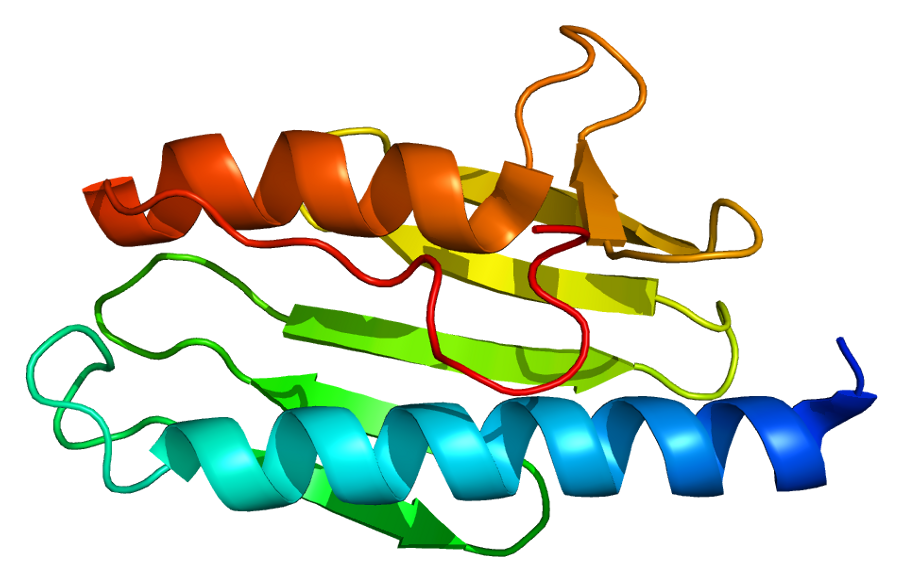
fontes oficiaisInositol 1,4,5-trisphosphate-gated calcium channel that, upon inositol 1,4,5-trisphosphate binding, mediates calcium release from the endoplasmic reticulum (ER) (PubMed:10620513, PubMed:27108797). Undergoes conformational changes upon ligand binding, suggesting structural flexibility that allows the channel to switch from a closed state, capable of interacting with its ligands such as 1,4,5-trisphosphate and calcium, to an open state, capable of transferring calcium ions across the ER membrane (
Endoplasmic reticulum membraneCytoplasmic vesicle, secretory vesicle membraneCytoplasm, perinuclear region
Spinocerebellar ataxia 15
Spinocerebellar ataxia is a clinically and genetically heterogeneous group of cerebellar disorders. Patients show progressive incoordination of gait and often poor coordination of hands, speech and eye movements, due to degeneration of the cerebellum with variable involvement of the brainstem and spinal cord. SCA15 is an autosomal dominant cerebellar ataxia (ADCA). It is very slow progressing form with a wide range of onset, ranging from childhood to adult. Most patients remain ambulatory.
Variantes genéticas (ClinVar)
477 variantes patogênicas registradas no ClinVar.
Classificação de variantes (ClinVar)
Distribuição de 83 variantes classificadas pelo ClinVar.
Vias biológicas (Reactome)
15 vias biológicas associadas aos genes desta condição.
Diagnóstico
Os sinais que médicos procuram e os exames que confirmam
Tratamento e manejo
Remédios, cuidados de apoio e o que precisa acompanhar
Onde tratar no SUS
Hospitais de referência no Brasil e o protocolo oficial do SUS (PCDT)
🇧🇷 Atendimento SUS — Ataxia espinocerebelar tipo 29
Selecione um estado ou use sua localização para ver resultados.
Dados de DATASUS/CNES, SBGM, ABNeuro e Ministério da Saúde. Sempre confirme a disponibilidade diretamente com o estabelecimento.
Pesquisa ativa
Ensaios clínicos abertos e novidades científicas recentes
Ensaios em destaque
🟢 Recrutando agora
1 pesquisa recrutando participantes. Converse com seu médico sobre a possibilidade de participar.
Outros ensaios clínicos
Publicações mais relevantes
Detailed Analysis of ITPR1 Missense Variants Guides Diagnostics and Therapeutic Design.
The ITPR1 gene encodes the inositol 1,4,5-trisphosphate (IP3 ) receptor type 1 (IP3 R1), a critical player in cerebellar intracellular calcium signaling. Pathogenic missense variants in ITPR1 cause congenital spinocerebellar ataxia type 29 (SCA29), Gillespie syndrome (GLSP), and severe pontine/cerebellar hypoplasia. The pathophysiological basis of the different phenotypes is poorly understood. We aimed to identify novel SCA29 and GLSP cases to define core phenotypes, describe the spectrum of missense variation across ITPR1, standardize the ITPR1 variant nomenclature, and investigate disease progression in relation to cerebellar atrophy. Cases were identified using next-generation sequencing through the Deciphering Developmental Disorders study, the 100,000 Genomes project, and clinical collaborations. ITPR1 alternative splicing in the human cerebellum was investigated by quantitative polymerase chain reaction. We report the largest, multinational case series of 46 patients with 28 unique ITPR1 missense variants. Variants clustered in functional domains of the protein, especially in the N-terminal IP3 -binding domain, the carbonic anhydrase 8 (CA8)-binding region, and the C-terminal transmembrane channel domain. Variants outside these domains were of questionable clinical significance. Standardized transcript annotation, based on our ITPR1 transcript expression data, greatly facilitated analysis. Genotype-phenotype associations were highly variable. Importantly, while cerebellar atrophy was common, cerebellar volume loss did not correlate with symptom progression. This dataset represents the largest cohort of patients with ITPR1 missense variants, expanding the clinical spectrum of SCA29 and GLSP. Standardized transcript annotation is essential for future reporting. Our findings will aid in diagnostic interpretation in the clinic and guide selection of variants for preclinical studies. © 2023 The Authors. Movement Disorders published by Wiley Periodicals LLC on behalf of International Parkinson and Movement Disorder Society.
[Diagnosis of a patient with Spinocerebellar ataxia type 29 due to a novel variant of ITPR1 gene].
To explore the clinical and genetic characteristics of a child with spinocerebellar ataxia type 29 (SCA29) due to novel variant of the inositol 1,4,5-trisphosphate receptor type 1 (ITPR1) gene. The child was subjected high-throughput sequencing, and candidate variant was verified by Sanger sequencing of his family members. The child was found to harbor a c.800C>T (p.T267M) variant of the ITPR1 gene, which was not found in his parents and their fetus. The variant has occurred in a hotspot of the ITPR1 gene variants and was unreported before in China. Based on his clinical and genetic characteristics, the child was diagnosed with SCA29. The novel heterozygous c.800C>T (p.T267M) of the ITPR1 gene probably underlay the SCA29 in this child.
Spinocerebellar Ataxia type 29 in a family of Māori descent.
Mutations in the Inositol 1,4,5-Trisphosphate Receptor Type 1 (ITPR1) gene cause spinocerebellar ataxia type 29 (SCA29), a rare congenital-onset autosomal dominant non-progressive cerebellar ataxia. The Māori, indigenous to New Zealand, are an understudied population for genetic ataxias. We investigated the genetic origins of spinocerebellar ataxia in a family of Māori descent consisting of two affected sisters and their unaffected parents. Whole exome sequencing identified a pathogenic variant, p.Thr267Met, in ITPR1 in both sisters, establishing their diagnosis as SCA29. We report the identification of a family of Māori descent with a mutation causing SCA29, extending the worldwide scope of this disease. Although this mutation has occurred de novo in other populations, suggesting a mutational hotspot, the children in this family inherited it from their unaffected mother who was germline mosaic.
Aberrant IP3 receptor activities revealed by comprehensive analysis of pathological mutations causing spinocerebellar ataxia 29.
Spinocerebellar ataxia type 29 (SCA29) is autosomal dominant congenital ataxia characterized by early-onset motor delay, hypotonia, and gait ataxia. Recently, heterozygous missense mutations in an intracellular Ca2+ channel, inositol 1,4,5-trisphosphate (IP3) receptor type 1 (IP3R1), were identified as a cause of SCA29. However, the functional impacts of these mutations remain largely unknown. Here, we determined the molecular mechanisms by which pathological mutations affect IP3R1 activity and Ca2+ dynamics. Ca2+ imaging using IP3R-null HeLa cells generated by genome editing revealed that all SCA29 mutations identified within or near the IP3-binding domain of IP3R1 completely abolished channel activity. Among these mutations, R241K, T267M, T267R, R269G, R269W, S277I, K279E, A280D, and E497K impaired IP3 binding to IP3R1, whereas the T579I and N587D mutations disrupted channel activity without affecting IP3 binding, suggesting that T579I and N587D compromise channel gating mechanisms. Carbonic anhydrase-related protein VIII (CA8) is an IP3R1-regulating protein abundantly expressed in cerebellar Purkinje cells and is a causative gene of congenital ataxia. The SCA29 mutation V1538M within the CA8-binding site of IP3R1 completely eliminated its interaction with CA8 and CA8-mediated IP3R1 inhibition. Furthermore, pathological mutations in CA8 decreased CA8-mediated suppression of IP3R1 by reducing protein stability and the interaction with IP3R1. These results demonstrated the mechanisms by which pathological mutations cause IP3R1 dysfunction, i.e., the disruption of IP3 binding, IP3-mediated gating, and regulation via the IP3R-modulatory protein. The resulting aberrant Ca2+ homeostasis may contribute to the pathogenesis of cerebellar ataxia.
Spinocerebellar ataxia type 29 due to mutations in ITPR1: a case series and review of this emerging congenital ataxia.
Spinocerebellar ataxia type 29 (SCA29) is an autosomal dominant, non-progressive cerebellar ataxia characterized by infantile-onset hypotonia, gross motor delay and cognitive impairment. Affected individuals exhibit cerebellar dysfunction and often have cerebellar atrophy on neuroimaging. Recently, missense mutations in ITPR1 were determined to be responsible. Clinical information on 21 individuals from 15 unrelated families with ITPR1 mutations was retrospectively collected using standardized questionnaires, including 11 previously unreported singletons and 2 new patients from a previously reported family. We describe the genetic, clinical and neuroimaging features of these patients to further characterize the clinical features of this rare condition and assess for any genotype-phenotype correlation for this disorder. Our cohort consisted of 9 males and 12 females, with ages ranging from 28 months to 49 years. Disease course was non-progressive with infantile-onset hypotonia and delays in motor and speech development. Gait ataxia was present in all individuals and 10 (48%) were not ambulating independently between the ages of 3-12 years of age. Mild-to-moderate cognitive impairment was present in 17 individuals (85%). Cerebellar atrophy developed after initial symptom presentation in 13 individuals (72%) and was not associated with disease progression or worsening functional impairment. We identified 12 different mutations including 6 novel mutations; 10 mutations were missense (with 4 present in >1 individual), 1 a splice site mutation leading to an in-frame insertion and 1 an in-frame deletion. No specific genotype-phenotype correlations were observed within our cohort. Our findings document significant clinical heterogeneity between individuals with SCA29 in a large cohort of molecularly confirmed cases. Based on the retrospective observed clinical features and disease course, we provide recommendations for management. Further research into the natural history of SCA29 through prospective studies is an important next step in better understanding the condition.
Publicações recentes
Detailed Analysis of ITPR1 Missense Variants Guides Diagnostics and Therapeutic Design.
[Diagnosis of a patient with Spinocerebellar ataxia type 29 due to a novel variant of ITPR1 gene].
Spinocerebellar Ataxia type 29 in a family of Māori descent.
Aberrant IP(3) receptor activities revealed by comprehensive analysis of pathological mutations causing spinocerebellar ataxia 29.
Spinocerebellar ataxia type 29 due to mutations in ITPR1: a case series and review of this emerging congenital ataxia.
📚 EuropePMC3.032 artigos no totalmostrando 7
Detailed Analysis of ITPR1 Missense Variants Guides Diagnostics and Therapeutic Design.
Movement disorders : official journal of the Movement Disorder Society[Diagnosis of a patient with Spinocerebellar ataxia type 29 due to a novel variant of ITPR1 gene].
Zhonghua yi xue yi chuan xue za zhi = Zhonghua yixue yichuanxue zazhi = Chinese journal of medical geneticsSpinocerebellar Ataxia type 29 in a family of Māori descent.
Cerebellum & ataxiasAberrant IP3 receptor activities revealed by comprehensive analysis of pathological mutations causing spinocerebellar ataxia 29.
Proceedings of the National Academy of Sciences of the United States of AmericaSpinocerebellar ataxia type 29 due to mutations in ITPR1: a case series and review of this emerging congenital ataxia.
Orphanet journal of rare diseasesA novel gain-of-function mutation in the ITPR1 suppressor domain causes spinocerebellar ataxia with altered Ca2+ signal patterns.
Journal of neurologySporadic infantile-onset spinocerebellar ataxia caused by missense mutations of the inositol 1,4,5-triphosphate receptor type 1 gene.
Journal of neurologyAssociações
Organizações que acompanham esta doença — pra ter apoio e orientação
Ainda não temos associações cadastradas para Ataxia espinocerebelar tipo 29.
É de uma associação que acompanha esta doença? Fale com a gente →
Comunidades
Grupos ativos de quem convive com esta doença aqui no Raras
Ainda não existe comunidade no Raras para Ataxia espinocerebelar tipo 29
Pacientes, familiares e cuidadores se organizam em comunidades pra compartilhar experiências, fazer perguntas e se apoiar. Você pode ser o primeiro.
Tire suas dúvidas
Perguntas, dicas e experiências compartilhadas aqui na página
Participe da discussão
Faça login para postar dúvidas, compartilhar experiências e interagir com especialistas.
Fazer loginDoenças relacionadas
Doenças com sintomas parecidos — ajudam quem ainda está buscando diagnóstico
Referências e fontes
Bases de dados externas citadas neste artigo
Publicações científicas
Artigos indexados no PubMed ligados a esta doença no grafo RarasNet — título, periódico e PMID direto da fonte, sem intermediação de IA.
- Detailed Analysis of ITPR1 Missense Variants Guides Diagnostics and Therapeutic Design.Movement disorders : official journal of the Movement Disorder Society· 2024· PMID 37964426mais citado
- [Diagnosis of a patient with Spinocerebellar ataxia type 29 due to a novel variant of ITPR1 gene].Zhonghua yi xue yi chuan xue za zhi = Zhonghua yixue yichuanxue zazhi = Chinese journal of medical genetics· 2023· PMID 36585006mais citado
- Spinocerebellar Ataxia type 29 in a family of Māori descent.
- Aberrant IP3 receptor activities revealed by comprehensive analysis of pathological mutations causing spinocerebellar ataxia 29.Proceedings of the National Academy of Sciences of the United States of America· 2018· PMID 30429331mais citado
- Spinocerebellar ataxia type 29 due to mutations in ITPR1: a case series and review of this emerging congenital ataxia.
Bases de dados e fontes oficiais
Identificadores e referências canônicas usadas para montar este verbete.
- ORPHA:208513(Orphanet)
- OMIM OMIM:117360(OMIM)
- MONDO:0007298(MONDO)
- GARD:10480(GARD (NIH))
- Variantes catalogadas(ClinVar)
- Busca completa no PubMed(PubMed)
- Q21097773(Wikidata)
Dados compilados pelo RarasNet a partir de fontes abertas (Orphanet, OMIM, MONDO, PubMed/EuropePMC, ClinicalTrials.gov, DATASUS, PCDT/MS). Este conteúdo é informativo e não substitui avaliação médica.
Conteúdo mantido por Agente Raras · Médicos e pesquisadores podem colaborar
Ataxia espinocerebelar tipo 29
📋 Origem dos dados
Esta página agrega dados de fontes públicas e oficiais. Dados sobre cobertura no SUS (PCDT, CEAF) são verificados ativamente por agente proativo (ver badge no infobox). Demais dados têm atribuição de fonte + data da última sincronização — clique para abrir o original.
- Doença rara (ontologia)
- fonte: Orphanet
- Identificador unificado
- fonte: MONDO
- Genética mendeliana
- fonte: OMIM
- Codificação WHO/SUS
- fonte: WHO ICD-10 / DATASUS
- CID-11 (futuro)
- fonte: WHO ICD-11
- NIH/GARD
- fonte: GARD (NIH)
- Indexação biomédica
- fonte: MeSH (NLM)
- Dado público estruturado
- fonte: Wikidata
- Reposicionamento
- fonte: Drug Repurposing Hub
- Ensaios clínicos
- fonte: ClinicalTrials.gov