
A Degeneração Cerebelar e da Retina em Bebês (ICRD) é uma condição genética presente desde o nascimento que afeta o cérebro e os olhos. Pessoas com essa condição geralmente desenvolvem sintomas por volta dos seis meses de idade, como atrasos no desenvolvimento, tônus muscular fraco (hipotonia) e convulsões. Outros sintomas podem incluir movimentos da cabeça que balançam, contrações e movimentos musculares incomuns, e a perda de células cerebrais no cerebelo, uma parte importante do cérebro. Nos olhos, podem ser observados: degeneração da retina (um enfraquecimento da camada de tecido no fundo do olho que capta a luz), estrabismo (olhos desalinhados ou vesgos) e nistagmo (movimentos rápidos e incontroláveis dos olhos). A ICRD é causada por alterações no gene ACO2 e é herdada de forma autossômica recessiva, o que significa que a criança precisa receber uma cópia do gene alterado de cada um dos pais para desenvolver a condição. Ainda não há cura para essa condição, mas as opções de tratamento dependem do tipo e da gravidade dos sintomas.
Introdução
O que você precisa saber de cara
A Degeneração Cerebelar e da Retina em Bebês (ICRD) é uma condição genética presente desde o nascimento que afeta o cérebro e os olhos. Pessoas com essa condição geralmente desenvolvem sintomas por volta dos seis meses de idade, como atrasos no desenvolvimento, tônus muscular fraco (hipotonia) e convulsões. Outros sintomas podem incluir movimentos da cabeça que balançam, contrações e movimentos musculares incomuns, e a perda de células cerebrais no cerebelo, uma parte importante do cérebro. Nos olhos, podem ser observados: degeneração da retina (um enfraquecimento da camada de tecido no fundo do olho que capta a luz), estrabismo (olhos desalinhados ou vesgos) e nistagmo (movimentos rápidos e incontroláveis dos olhos). A ICRD é causada por alterações no gene ACO2 e é herdada de forma autossômica recessiva, o que significa que a criança precisa receber uma cópia do gene alterado de cada um dos pais para desenvolver a condição. Ainda não há cura para essa condição, mas as opções de tratamento dependem do tipo e da gravidade dos sintomas.
Escala de raridade
<1/50kMuito rara
1/20kRara
1/10kPouco freq.
1/5kIncomum
1/2k
Encontrou um erro ou informação desatualizada? Sugira uma correção →
Entender a doença
Do básico ao detalhe, leia no seu ritmo
Preparando trilha educativa...
Sinais e sintomas
O que aparece no corpo e com que frequência cada sintoma acontece
Partes do corpo afetadas
+ 6 sintomas em outras categorias
Características mais comuns
Os sintomas variam de pessoa para pessoa. Abaixo estão as 25 características clínicas mais associadas, ordenadas por frequência.
Linha do tempo da pesquisa
Encontrou um erro ou informação desatualizada? Sugira uma correção →
Genética e causas
O que está alterado no DNA e como passa nas famílias
Genes associados
1 gene identificado com associação a esta condição. Padrão de herança: Autosomal recessive.
Curadoria gene-doença
fontes oficiaisCatalyzes the isomerization of citrate to isocitrate via cis-aconitate
Mitochondrion
Infantile cerebellar-retinal degeneration
A severe autosomal recessive neurodegenerative disorder characterized by onset between ages 2 and 6 months of truncal hypotonia, athetosis, seizures, and ophthalmologic abnormalities, particularly optic atrophy and retinal degeneration. Affected individuals show profound psychomotor retardation, with only some achieving rolling, sitting, or recognition of family. Brain MRI shows progressive cerebral and cerebellar degeneration.
Variantes genéticas (ClinVar)
177 variantes patogênicas registradas no ClinVar.
Classificação de variantes (ClinVar)
Distribuição de 59 variantes classificadas pelo ClinVar.
Vias biológicas (Reactome)
4 vias biológicas associadas aos genes desta condição.
Diagnóstico
Os sinais que médicos procuram e os exames que confirmam
Tratamento e manejo
Remédios, cuidados de apoio e o que precisa acompanhar
Onde tratar no SUS
Hospitais de referência no Brasil e o protocolo oficial do SUS (PCDT)
🇧🇷 Atendimento SUS — Degenerescência cerebelar-retiniana da infância
Selecione um estado ou use sua localização para ver resultados.
Dados de DATASUS/CNES, SBGM, ABNeuro e Ministério da Saúde. Sempre confirme a disponibilidade diretamente com o estabelecimento.
Pesquisa ativa
Ensaios clínicos abertos e novidades científicas recentes
Ensaios em destaque
🟢 Recrutando agora
1 pesquisa recrutando participantes. Converse com seu médico sobre a possibilidade de participar.
Outros ensaios clínicos
Publicações mais relevantes
Infantile Cerebellar-Retinal Degeneration Associated With Novel ACO2 Variants: Clinical Features and Insights From a Drosophila Model.
Infantile Cerebellar-Retinal Degeneration (ICRD) is an autosomal recessive neuro-disability associated with hypotonia, seizures, optic atrophy, and retinal degeneration. Recessive variants of the mitochondrial aconitase gene (ACO2) are a known cause of ICRD. Here, we present a paediatric male patient with ICRD, where whole genome sequencing of the family trio revealed segregating heterozygous variants of unknown significance in ACO2. At 4 months, he displayed generalised hypotonia, and by 6 years, visual electrophysiology indicated bilateral optic atrophy. Magnetic Resonance Imaging (MRI) at age seven confirmed optic nerve and cerebellar atrophy, and together with symptoms of developmental delay, align with ICRD. We established a Drosophila animal model to explore the impact of ACO2 loss- and gain-of-function. Manipulating the fly ortholog, mAcon1, through pan-neuronal knock-down or over-expression negatively affected longevity, locomotion, activity, whilst disrupting sleep and circadian rhythms. Mis-expression of mAcon1 in the eye led to impaired visual synaptic transmission and neurodegeneration. These experiments mirrored certain aspects of the human disease, providing a foundation for understanding its biological processes and pathogenic mechanisms, and offering insights into potential targets to screen for future treatments or preventive measures for ACO2-related ICRD.
Transcriptome analyses reveal molecular mechanisms of novel compound heterozygous ACO2 variants causing infantile cerebellar retinal degeneration.
Infantile cerebellar retinal degeneration (ICRD) (OMIM #614559) is a rare autosomal recessive inherited disease associated with mutations in the aconitase 2 (ACO2) gene. We report a Chinese girl with novel compound heterozygous variants in ACO2, who presented at 7 months of age with psychomotor retardation, truncal hypotonia, and ophthalmologic abnormalities. This study aims to investigate the potential molecular mechanisms underlying ACO2 deficiency-induced neuropathy. Whole exome sequencing was performed on family members to screen for potential pathogenic mutations, followed by Sanger sequencing for validation. Mitochondrial aconitase activity and mitochondrial DNA (mtDNA) copy number were measured using an aconitase activity detection kit and quantitative PCR, respectively. Transcriptome expression profiles from patient cells, and cerebellar and retinal organoids retrieved from the GEO database were integrated. Functional enrichment analysis and protein-protein interaction networks were used to identify key molecules, and their expression levels were validated using Western blot analysis. Genetic testing revealed novel compound heterozygous variations in the proband's ACO2 gene (NM:001098), including c.854A>G (p.Asn285Ser) and c.1183C>T (p.Arg395Cys). Predictive analysis of the tertiary structure of the ACO2 protein suggests that both p.Asn285Ser and p.Arg395Cys affect the binding ability of ACO2 to ligands. The mitochondrial aconitase activity and mtDNA copy number in the proband's leukocytes were significantly reduced. Transcriptomic data analysis identified 80 key candidate genes involved in ACO2-related neuropathy. Among these, LRP8 and ANK3, whose gene expression levels were significantly positively correlated with ACO2, were further validated by Western blot analysis. This study expands the spectrum of pathogenic ACO2 variants, elucidates the potential molecular mechanisms underlying ACO2-related neuropathy, provides in-depth support for the pathogenicity of ACO2 genetic variations, and offers new insights into the pathogenesis of ICRD.
Child Neurology: Progressive Cerebellar Atrophy and Retinal Dystrophy: Clues to an Ultrarare ACO2-Related Neurometabolic Diagnosis.
Pathogenic biallelic variants in ACO2, which encodes the enzyme mitochondrial aconitase, are associated with the very rare diagnosis of ACO2-related infantile cerebellar retinal degeneration (OMIM 614559). We describe the diagnostic odyssey of a 4-year-old female patient with profound global developmental delays, microcephaly, severe hypotonia, retinal dystrophy, seizures, and progressive cerebellar atrophy. Whole-exome sequencing revealed 2 variants in ACO2; c.2105_2106delAG (p.Gln702ArgfsX9), a likely pathogenic variant, and c.988C>T (p.Pro330Ser) which was classified as a variant of uncertain significance (VUS). While the VUS was confirmed to be maternally inherited, the phase of the other variant could not be confirmed due to lack of a paternal sample. Functional biochemical studies were performed on a research basis to clarify the interpretation of the VUS, which enabled clinical confirmation of the diagnosis of ACO2-related infantile cerebellar retinal degeneration for our patient.
Case Report: Infantile Cerebellar-Retinal Degeneration With Compound Heterozygous Variants in ACO2 Gene-Long-Term Follow-Up of a Sibling.
Infantile cerebellar-retinal degeneration (ICRD) is an extremely rare, infantile-onset neuro-degenerative disease, characterized by autosomal recessive inherited, global developmental delay (GDD), progressive cerebellar and cortical atrophy, and retinal degeneration. In 2012, a biallelic pathogenic variant in ACO2 gene (NM_001098.3) was found to be causative of this disease. To date, approximately 44 variants displaying various clinical features have been reported. Here, we report a case of two siblings with compound heterozygous variants in the ACO2 gene. Two siblings without perinatal problems were born to healthy non-consanguineous Korean parents. They showed GDD and seizures since infancy. Their first brain magnetic resonance imaging (MRI), electroencephalography, and metabolic workup revealed no abnormal findings. As they grew, they developed symptoms including ataxia, dysmetria, poor sitting balance, and myopia. Follow-up brain MRI findings revealed atrophy of the cerebellum and optic nerve. Through exome sequencing of both siblings and their parents, we identified the following compound heterozygous variants in the ACO2: c.85C > T (p.Arg29Trp) and c.2303C > A (p.Ala768Asp). These two variants were categorized as likely pathogenic based on ACMG/AMP guidelines. In conclusion, this case help to broaden the genetic and clinical spectrum of the ACO2 variants associated with ICRD. We have also documented the long-term clinical course and serial brain MRI findings for two patients with this extremely rare disease.
Dominant ACO2 mutations are a frequent cause of isolated optic atrophy.
Biallelic mutations in ACO2, encoding the mitochondrial aconitase 2, have been identified in individuals with neurodegenerative syndromes, including infantile cerebellar retinal degeneration and recessive optic neuropathies (locus OPA9). By screening European cohorts of individuals with genetically unsolved inherited optic neuropathies, we identified 61 cases harbouring variants in ACO2, among whom 50 carried dominant mutations, emphasizing for the first time the important contribution of ACO2 monoallelic pathogenic variants to dominant optic atrophy. Analysis of the ophthalmological and clinical data revealed that recessive cases are affected more severely than dominant cases, while not significantly earlier. In addition, 27% of the recessive cases and 11% of the dominant cases manifested with extraocular features in addition to optic atrophy. In silico analyses of ACO2 variants predicted their deleterious impacts on ACO2 biophysical properties. Skin derived fibroblasts from patients harbouring dominant and recessive ACO2 mutations revealed a reduction of ACO2 abundance and enzymatic activity, and the impairment of the mitochondrial respiration using citrate and pyruvate as substrates, while the addition of other Krebs cycle intermediates restored a normal respiration, suggesting a possible short-cut adaptation of the tricarboxylic citric acid cycle. Analysis of the mitochondrial genome abundance disclosed a significant reduction of the mitochondrial DNA amount in all ACO2 fibroblasts. Overall, our data position ACO2 as the third most frequently mutated gene in autosomal inherited optic neuropathies, after OPA1 and WFS1, and emphasize the crucial involvement of the first steps of the Krebs cycle in the maintenance and survival of retinal ganglion cells.
Publicações recentes
Infantile Cerebellar-Retinal Degeneration Associated With Novel ACO2 Variants: Clinical Features and Insights From a Drosophila Model.
Transcriptome analyses reveal molecular mechanisms of novel compound heterozygous ACO2 variants causing infantile cerebellar retinal degeneration.
Child Neurology: Progressive Cerebellar Atrophy and Retinal Dystrophy: Clues to an Ultrarare ACO2-Related Neurometabolic Diagnosis.
Case Report: Infantile Cerebellar-Retinal Degeneration With Compound Heterozygous Variants in ACO2 Gene-Long-Term Follow-Up of a Sibling.
Dominant ACO2 mutations are a frequent cause of isolated optic atrophy.
📚 EuropePMC4 artigos no totalmostrando 11
Infantile Cerebellar-Retinal Degeneration Associated With Novel ACO2 Variants: Clinical Features and Insights From a Drosophila Model.
Clinical geneticsTranscriptome analyses reveal molecular mechanisms of novel compound heterozygous ACO2 variants causing infantile cerebellar retinal degeneration.
Frontiers in cellular neuroscienceChild Neurology: Progressive Cerebellar Atrophy and Retinal Dystrophy: Clues to an Ultrarare ACO2-Related Neurometabolic Diagnosis.
NeurologyCase Report: Infantile Cerebellar-Retinal Degeneration With Compound Heterozygous Variants in ACO2 Gene-Long-Term Follow-Up of a Sibling.
Frontiers in geneticsDominant ACO2 mutations are a frequent cause of isolated optic atrophy.
Brain communicationsComplex hereditary spastic paraplegia associated with episodic visual loss caused by ACO2 variants.
Human genome variationNovel compound heterozygous ACO2 mutations in an infant with progressive encephalopathy: A newly identified neurometabolic syndrome.
Brain & developmentRecessive ACO2 variants as a cause of isolated ophthalmologic phenotypes.
American journal of medical genetics. Part AClinical, radiological, and genetic characteristics of 16 patients with ACO2 gene defects: Delineation of an emerging neurometabolic syndrome.
Journal of inherited metabolic diseasePlasma metabolomics reveals a diagnostic metabolic fingerprint for mitochondrial aconitase (ACO2) deficiency.
PloS oneFunctional cellular analyses reveal energy metabolism defect and mitochondrial DNA depletion in a case of mitochondrial aconitase deficiency.
Molecular genetics and metabolismAssociações
Organizações que acompanham esta doença — pra ter apoio e orientação
Ainda não temos associações cadastradas para Degenerescência cerebelar-retiniana da infância.
É de uma associação que acompanha esta doença? Fale com a gente →
Comunidades
Grupos ativos de quem convive com esta doença aqui no Raras
Ainda não existe comunidade no Raras para Degenerescência cerebelar-retiniana da infância
Pacientes, familiares e cuidadores se organizam em comunidades pra compartilhar experiências, fazer perguntas e se apoiar. Você pode ser o primeiro.
Tire suas dúvidas
Perguntas, dicas e experiências compartilhadas aqui na página
Participe da discussão
Faça login para postar dúvidas, compartilhar experiências e interagir com especialistas.
Fazer loginDoenças relacionadas
Doenças com sintomas parecidos — ajudam quem ainda está buscando diagnóstico
Referências e fontes
Bases de dados externas citadas neste artigo
Publicações científicas
Artigos indexados no PubMed ligados a esta doença no grafo RarasNet — título, periódico e PMID direto da fonte, sem intermediação de IA.
- Infantile Cerebellar-Retinal Degeneration Associated With Novel ACO2 Variants: Clinical Features and Insights From a Drosophila Model.
- Transcriptome analyses reveal molecular mechanisms of novel compound heterozygous ACO2 variants causing infantile cerebellar retinal degeneration.
- Child Neurology: Progressive Cerebellar Atrophy and Retinal Dystrophy: Clues to an Ultrarare ACO2-Related Neurometabolic Diagnosis.
- Case Report: Infantile Cerebellar-Retinal Degeneration With Compound Heterozygous Variants in ACO2 Gene-Long-Term Follow-Up of a Sibling.
- Dominant ACO2 mutations are a frequent cause of isolated optic atrophy.
Bases de dados e fontes oficiais
Identificadores e referências canônicas usadas para montar este verbete.
- ORPHA:313850(Orphanet)
- OMIM OMIM:614559(OMIM)
- MONDO:0013802(MONDO)
- GARD:13264(GARD (NIH))
- Variantes catalogadas(ClinVar)
- Busca completa no PubMed(PubMed)
- Q18553533(Wikidata)
Dados compilados pelo RarasNet a partir de fontes abertas (Orphanet, OMIM, MONDO, PubMed/EuropePMC, ClinicalTrials.gov, DATASUS, PCDT/MS). Este conteúdo é informativo e não substitui avaliação médica.
Conteúdo mantido por Agente Raras · Médicos e pesquisadores podem colaborar
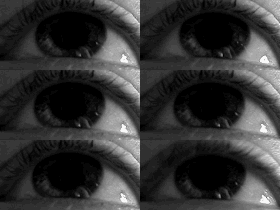
Degenerescência cerebelar-retiniana da infância
📋 Origem dos dados
Esta página agrega dados de fontes públicas e oficiais. Dados sobre cobertura no SUS (PCDT, CEAF) são verificados ativamente por agente proativo (ver badge no infobox). Demais dados têm atribuição de fonte + data da última sincronização — clique para abrir o original.
- Doença rara (ontologia)
- fonte: Orphanet
- Identificador unificado
- fonte: MONDO
- Genética mendeliana
- fonte: OMIM
- Codificação WHO/SUS
- fonte: WHO ICD-10 / DATASUS
- NIH/GARD
- fonte: GARD (NIH)
- Dado público estruturado
- fonte: Wikidata